Under the sea where there is little or no light, the foraging, communication, and orientation of whales and many other marine animals depend on sound. But increasing human activity has transformed the soundscape of seas and oceans. This change affects the behaviour of species and presents challenges in managing a problem of global scale.
It is easy to feel uneasy when we hear a siren on the street. An ambulance, fire fighters, or the police can remind us of times when we or someone close to us suffered a heart attack, a fire, or a robbery. Animals can also associate sounds with risky situations they have experienced before, such as an attack from a predator, in their own lives or in the evolutionary history of their species.
For example, many types of whales are prey to killer whales (1) [watch predatory scenes here, here, here], and not only do they recognise the presence of their main predator by sound, but the vocalisations of some species have evolved to fall outside the killer whale’s hearing range (2). When faced with such a threatening sound, species must decide whether the risk of being hunted is great enough to justify interrupting essential activities such as feeding or mating (3). Interestingly, there are alarm signals that are so general in the animal kingdom, like a simple noise, that prey animals might react to them by spending time and energy to protect themselves, even when there is no real threat (4).
Naval sonar and killer whales
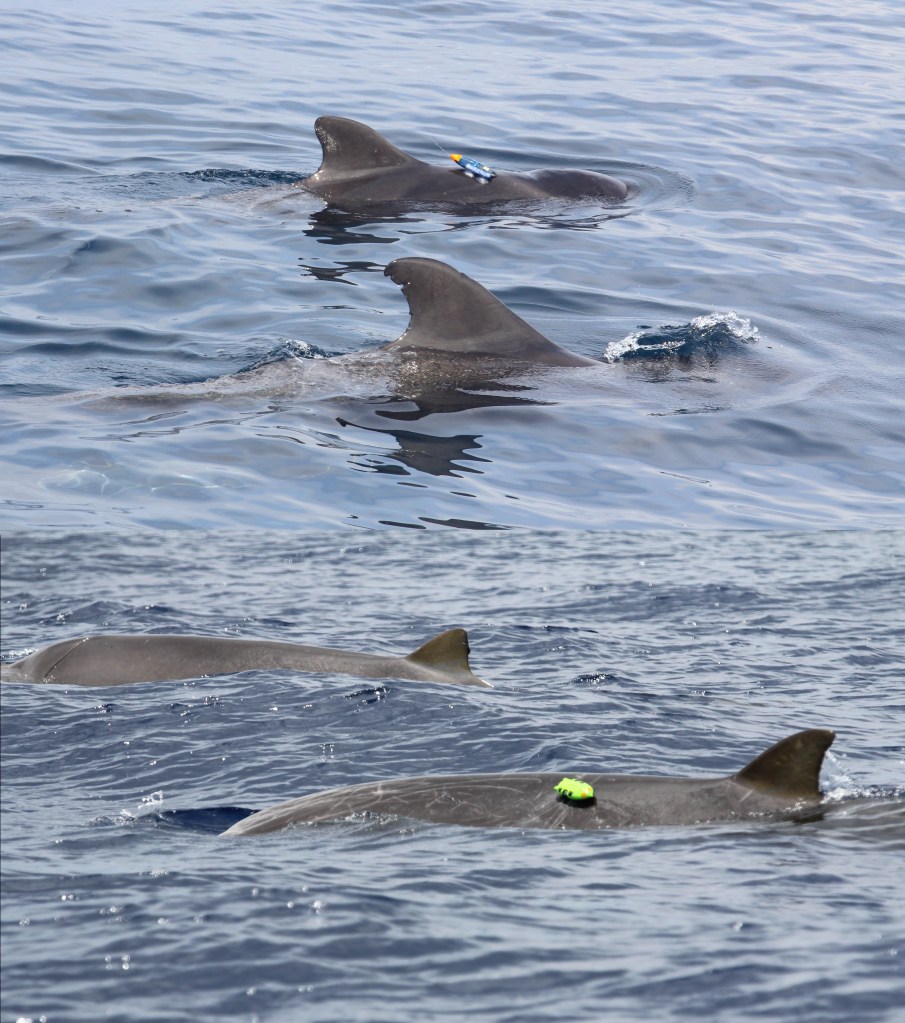
To examine this issue, Patrick Miller and his colleagues used underwater microphones to play recordings of killer whale sounds and ship sonar in the presence of 43 individuals from four cetacean species off the coasts of Norway and its Svalbard Archipelago (5): northern bottlenose whale (Hyperoodon ampullatus), humpback whale (Megaptera novaeangliae), long-finned pilot whale (Globicephala melas), and sperm whale (Physeter macrocephalus) [see press release for this research paper, listen to a podcast discussing findings]. During the experiment, each of the 43 individuals studied was fitted with a digital device attached to the skin using a suction cup. These devices recorded the animals’ movements and vocalisations. In total, the researchers collected 179 hours of baseline behaviour data in natural background noise, along with 7 hours of behavioural data in response to experimental playbacks of sonar [listen] and killer whale [listen] sounds.
Read the rest of this entry »




 ConservationBytes.com