Have you ever done any research that relied to any degree on Indigenous Knowledges? How did you cite those Knowledges, if at all?
It’s probably time we rethink how we engage with Indigenous Knowledge systems.
In a new article published in BioScience, we — a large group of Indigenous and non-Indigenous scholars in Australia — call for a fundamental shift in how universities and scientists publish research that draws on Indigenous Knowledges (proper noun; the sum of the understandings, skills, and philosophies developed by Indigenous societies with long histories of interaction with and custodianship of their natural surroundings).
Therein we warn that current academic practices risk sidelining First Nations authority while benefiting from their expertise.
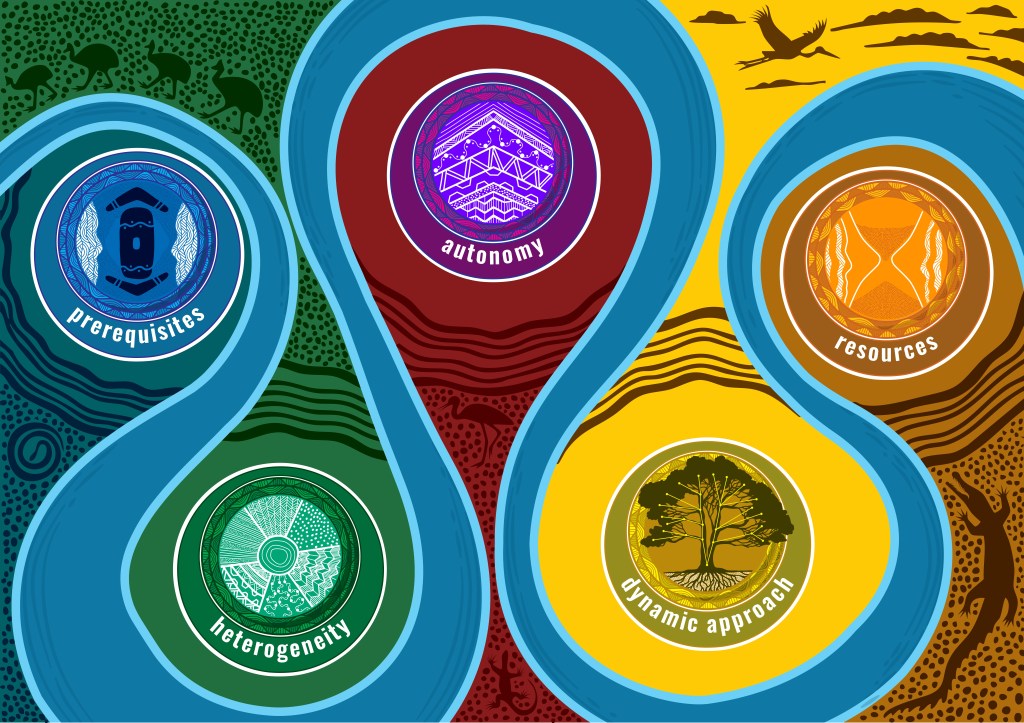
Without question, Indigenous groups must be treated as active partners in research publications — not just contributors acknowledged in footnotes or ‘personal communications’.
Governments, funding bodies, and other institutions increasingly emphasise Indigenous engagement, yet publication practices have failed to keep pace, leaving communities without real control over how their Knowledges are used, cited, or shared.
Our paper focuses on Australia’s First Nations communities, which include more than 250 distinct language groups with their own governance structures, cultural protocols, and systems of authority. Although we draw on our collective experience within an Australian context, the principles we discuss and recommendations we make are applicable to Indigenous Peoples around the world, and to the non-Indigenous researchers working with them.
Across Australia, Indigenous Knowledges already underpin some of the country’s most important research, from cultural fire management and biodiversity conservation to marine science and climate adaptation. Despite this reliance, there are few formal systems to ensure Indigenous consent, authority, and data sovereignty are respected once findings are published.
Indigenous Knowledges are not historical artefacts, they are living, evolving systems of knowing that are actively shaping contemporary science, but the way research is published often obscures that reality.
Therefore, a single national or international citation standard is not only impractical, but potentially harmful, because it risks flattening this diversity and reproducing colonial power imbalances within academia.
Instead, we propose a dynamic, community-led approach that embeds Indigenous consent and decision-making throughout the research and publication process. That process includes recognising when Indigenous groups prefer co-authorship over citation, when Knowledges should be attributed to Country (the ancestral lands, waterways, seas, and skies to which a particular Indigenous group is connected and belongs, and of which it is custodian) rather than individuals, and when certain information should not be published at all.
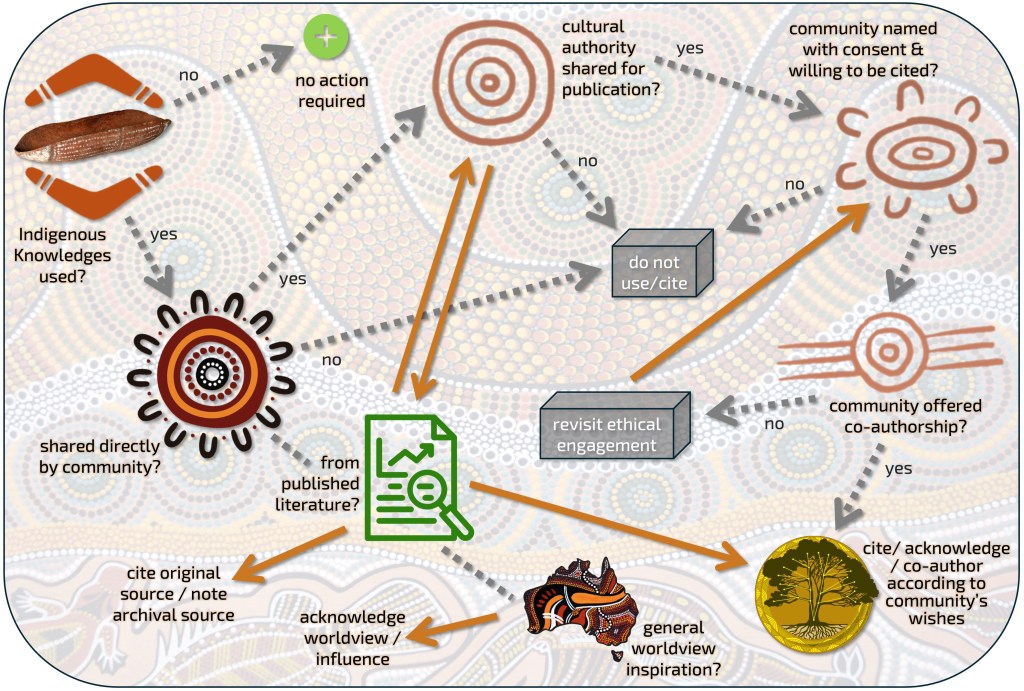
Long-term collaborations show what good practice can look like when Indigenous groups are involved from the outset. Rather than treating engagement as a compliance exercise, such projects embed Indigenous authority into how co-designed research questions are framed and how results are communicated.
Trust cannot be retrofitted at the publication stage, because meaningful engagement takes time, resources, and institutional support, and we should not assume communities want their Knowledges cited or published.
The right to say “no” — including the right to withdraw consent — is therefore central to genuine Indigenous data sovereignty, even though this challenges conventional academic expectations of permanence and open access.
Improving how Indigenous Knowledges are cited is not about adding another layer of bureaucracy, but about recognising First Nations Peoples as authorities whose rights continue beyond the fieldwork stage.
The lack of a one-size-fits-all approach also means that we genuinely invite different perspectives to the discussion. One paper is certainly not enough to cover all ground.
The paper in question — Crediting and citing Indigenous Knowledges within research — was authored by: Christine Barry, Uncle Bob Muir, Vincent Backhaus, Cynthia Coyne, Libby Evans-Illidge, Luciana Ferreira, David Flagg, Michael-Shawn Fletcher, Adrian Gleiss, Matt Harris, Jenna Hounslow, Danielle Kampers, Linda Keevers-Lock, Charmaine Koroi, Jayshree Mamtora, Melissa Marshall, Mark Meekan, Auntie Anne Poelina, Yanti Ropeyarn (who also acknowledged her Countries as part of her authorship identity: Angkamuthi, Yadhaykenu, Woppaburra, Meriam), Lynette Russell, Michele Thums, Ray Tobler, Sean Ulm, and Corey Bradshaw.





Leave a comment