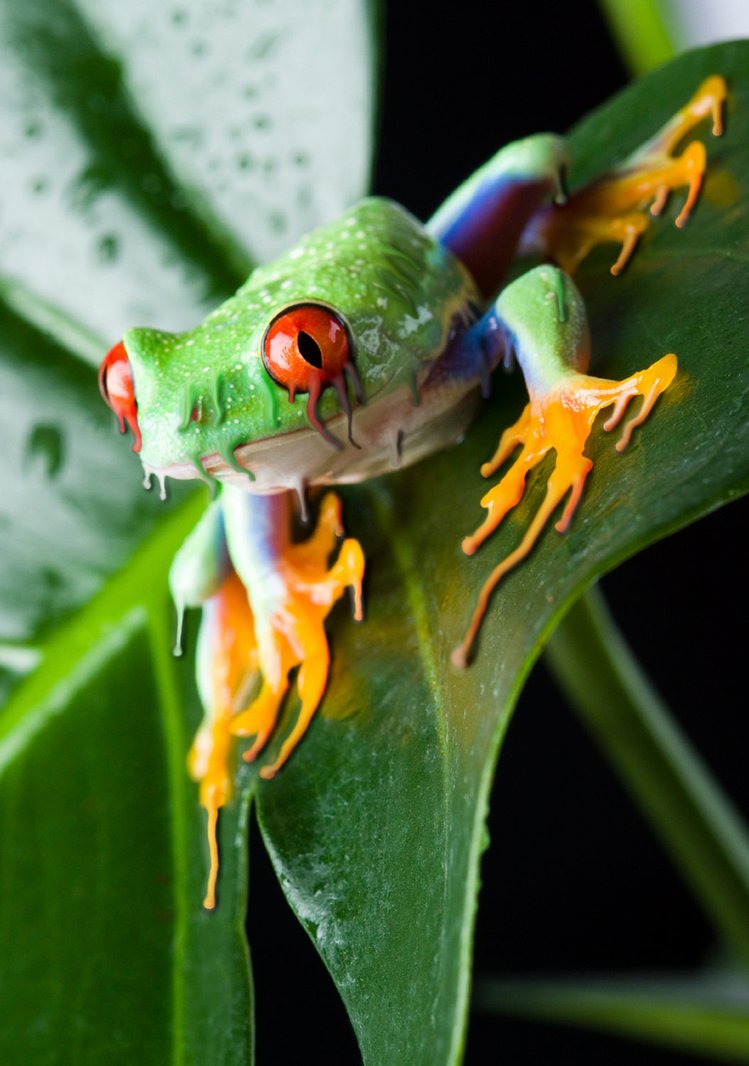
 A paper my colleagues and I published earlier last year in the open-access journal PLoS One describes one of the largest databases of amphibian threat risk ever compiled. Our main aims were to determine which factors drive amphibians toward extinction – this being especially topical considering that amphibians epitomise the modern biodiversity crisis: major population declines, disease outbreaks, deformities and recent confirmed extinctions dominate the biodiversity news. 32 % of all amphibians worldwide are threatened with extinction, 43 % of described species are declining, and about 160 species have already gone extinct in the last few decades.
In our paper (Sodhi and colleagues) entitled Measuring the meltdown: drivers of global amphibian extinction and decline, we found that the range size occupied by a species was overwhelmingly the principal driver of threat risk. This means that although other factors are involved, the number one (by far and away) thing threatening amphibians is habitat loss – everything else is minor by comparison.
Of course, we shouldn’t ignore other issues – increasing climate seasonality (temperature and precipitation) also contributed to higher threat risk. This is exactly the sort of thing that is predicted to increase with climate change (more variable weather patterns). In many cases, it’s the variability that’s worse than the mean trend when it comes to biodiversity.
So what should we do? Our results suggest that areas containing high numbers of restricted-range amphibians should have conservation priority. Although captive breeding might help to buffer some declining populations in the short term, such interventions cannot substitute for habitat protection and restoration. The synergies between ecological/life history traits and environmental conditions demonstrate how management must address each of the major drivers of decline together for any success – there is no magic bullet to prevent extinctions. We also recommend that substantial increases in international research on the long-term monitoring of amphibian populations is required to mitigate effectively the current meltdown of amphibian biodiversity.





 ConservationBytes.com

[…] Measuring the amphibian meltdown […]
LikeLike
[…] frogs being eaten to extinction? We’re used to hearing about how disease, climate change, and habitat degradation are endangering amphibians, but conservationists are warning that frogs could be going the same way as the cod. Gastronomic […]
LikeLike
Limited range size also increases the risks posed to populations by disease. The smaller and more homogeneous the range of an animal population, the greater the impact of introducing an exotic pathogen or having a new disease emerge in the population. Both of Australia’s gastric brooding frogs became extinct despite large areas of their known native range being well protected (most of the known range of the northern gastric-brooding frog was contained within the Eungella National Park). In Costa Rica, the extinction of the golden toad occurred in similar circumstances.
Ecotourists and other visitors who visit high biodiversity areas need to be educated about disease threats to wildlife and ways to manage threats to prevent disease incursions need to be developed and implemented.
Marty Deveney
Subprogram Leader, Aquatic Biosecurity
SARDI Aquatic Sciences
LikeLike
Hi Corey, I can’t help wondering why it’s so so blinding – the worlds biodiversity is largely in tropical areas, mostly developing nations where habitat destruction is staggering…it doesn’t matter how many scientific publications are published about this or that endangered species or group. Why? Because the solutions are unrelated to conservation, they are to do with development (especially agricultural), economies, poverty alleviation. I have a question for you to chew on – what do you think will be the impact of the latest trend that the west and middle eastern countries are buying or taking long leases on land in Africa and Asia for agriculture to feed hungry people back home. In Kenya we are feebly trying to keep Monsanto and GMO’s at bay to protect indigenous crops…its hopeless. Our wonderful president is busy giving land away to Qattar…in exchange for the development of a port in Lamu – a Biosphere Reserve….As an African ecologist/conservationist I’m wondering if it’s time to give up, retire from trying to fight these bastards, and go on a world tour to see whats left of the world while I can.
LikeLike