 I’ve covered this sad state of affairs and one of Australia’s more notable biodiversity embarrassments over the last year (see Shocking continued loss of Australian mammals and Can we solve Australia’s mammal extinction crisis?), and now the most empirical demonstration of this is now published.
The biodiversity guru of Australia’s tropical north, John Woinarksi, has just published the definitive demonstration of the magnitude of mammal declines in Kakadu National Park (Australia’s largest national park, World Heritage Area, emblem of ‘co-management’ and supposed biodiversity and cultural jewel in Australia’s conservation crown). According to Woinarski and colleagues, most of those qualifiers are rubbish.
The paper published in Wildlife Research is entitled Monitoring indicates rapid and severe decline of native small mammals in Kakadu National Park, northern Australia and it concludes:
The native mammal fauna of Kakadu National Park is in rapid and severe decline. The cause(s) of this decline are not entirely clear, and may vary among species. The most plausible causes are too frequent fire, predation by feral cats and invasion by cane toads (affecting particularly one native mammal species).
I’ve done quite a bit of work in Kakadu myself, and the one thing that hits you every time you travel through it is the lack of visible wildlife. Sure, you’ll see horses, pigs and buffalo, as well as cane toads and cats, but getting a glimpse of anything native, from Conilurus to Varanus, and you’d consider yourself extremely lucky.
We’ve written a lot about the feral animal problem in Kakadu and even developed software tools to assist in density-reduction programmes. It doesn’t appear that anyone is listening.
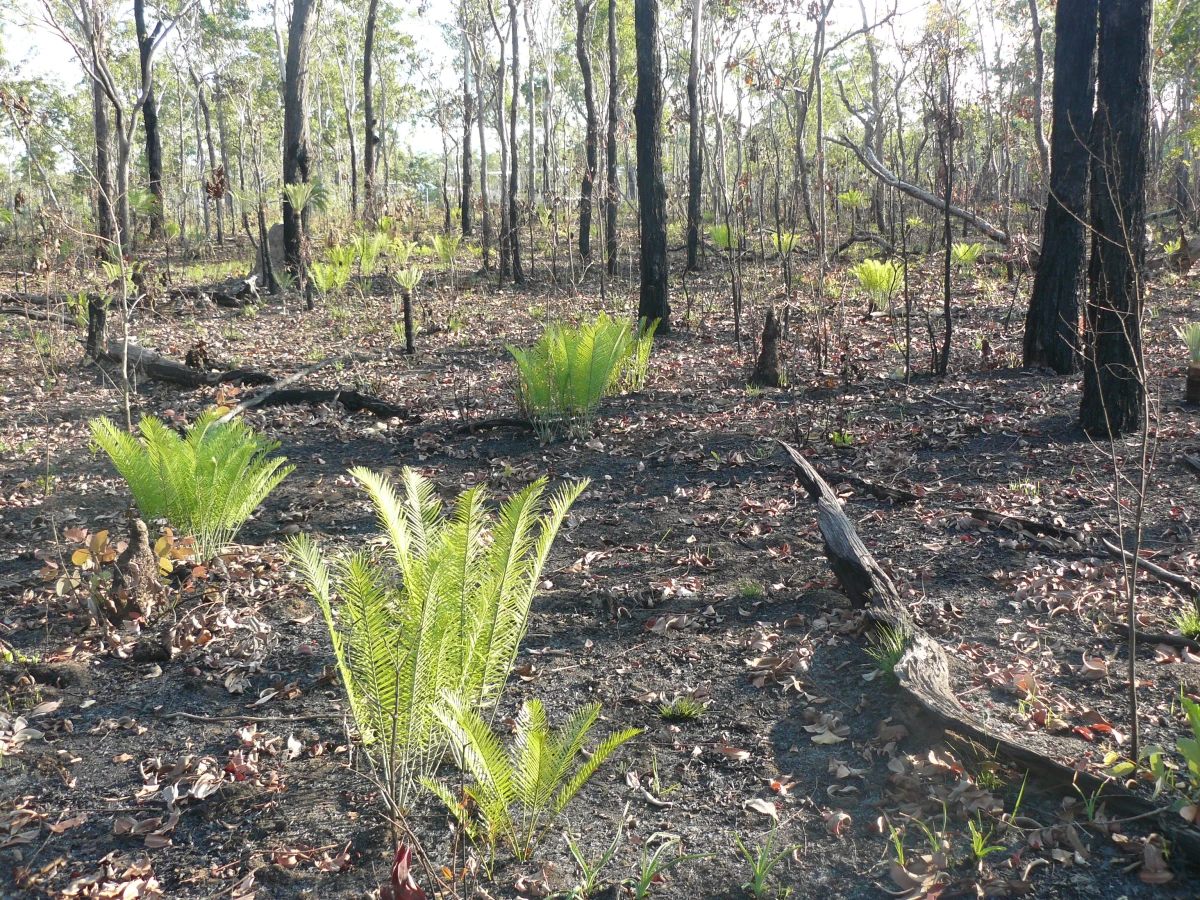
Another gob-smacking vista you’ll get when travelling through Kakadu any time from April to December is that it’s either been burnt, actively burning or targeted for burning. They burn the shit out of the place every year. No wonder the native mammals are having such a hard time.
Combine all this with the dysfunctional management arrangement, and you cease to have a National Park. Kakadu is now a lifeless shell that does precious little for conservation of biodiversity (and 3 of the 5 criteria it had to satisfy to become a World Heritage Area are specifically related to natural resource ‘values’). I say, delist Kakadu now and let’s stop fooling ourselves.
Ok, back from the rant. Woinarski and others superimposed a mammal monitoring programme over top a fire-regime experiment for vegetation. Although they couldn’t sample every plot every season, they staggered the sampling to cover the area as best they could over the 13 years of monitoring (1996-2009). What they observed was staggering.
- overall, the number of mammals and species per plot decreased
- decreases were 71 % for total number of individuals and 54 % for number of species per plot
- the proportion of plots with no mammals increased from 13 % in 1996 to 55 % in 2009
- of 19 native species recorded from three or more samples, 10 species declined, 9 species showed no change, and no species increased
- declines were fastest for northern quoll Dasyurus hallucatus, fawn antechinus Antechinus bellus, northern brown bandicoot Isoodon macrourus, common brushtail possum Trichosurus vulpecula and pale field-rat Rattus tunneyi
They also found that the change in the number of mammal species and individuals per plot was correlated with the percentage of years in which the plot was burnt. Well, there’s a surprise.
I concede that cane toads are an intractable problem, and removing large feral ungulates is difficult and expensive. But (and that’s a big ‘but’), why can’t Kakadu impose ecologically informed fire management? Why can’t it invest in targeted, scientifically directed feral animal culls at the scale necessary to reduce environmental damage? Why is it letting Australia’s conservation jewel go the way of the Thylacine? Every Australian should be up-in-arms over this.
Kakadu is no longer Australia’s conservation jewel. It is now its conservation dunny.
 Woinarski, J., Armstrong, M., Brennan, K., Fisher, A., Griffiths, A., Hill, B., Milne, D., Palmer, C., Ward, S., Watson, M., Winderlich, S., & Young, S. (2010). Monitoring indicates rapid and severe decline of native small mammals in Kakadu National Park, northern Australia Wildlife Research, 37 (2) DOI: 10.1071/WR09125




 ConservationBytes.com
[…] In northern Australia, there is a widely held view among conservation biologists that too much prescribed burning takes place, driving excessively high fire frequencies, severely disadvantaging […]
LikeLike
Hi Corey you may be interested to read Lawes et al.’s follow-up to John’s paper mentioned above, which has just been accepted in International Journal of Wildland Fire: Small mammals decline with increasing fire extent in northern Australia: evidence from long-term monitoring in Kakadu National Park.
LikeLike
[…] over half of tropical protected areas are still losing their biodiversity, and Australia’s largest national park is experiencing a pathetic collapse of its vertebrates. Add all this to our governments’ charge to remove protections of our […]
LikeLike
[…] Australian ecosystems are teetering on the edge of collapse. Across much of northern Australia, resident populations of smaller mammals are rapidly plummeting. Native vegetation is being eroded almost everywhere one looks and invasive species are burgeoning. […]
LikeLike
[…] than the states. Kakadu National Park – our biggest and possibly most important national park – is a global conservation embarrassment. Undermined by internal management bickering and insufficient funding, its unique biodiversity has […]
LikeLike
[…] – our biggest and possibly most important national park, and managed by the Commonwealth – is a global conservation embarrassment. Undermined by internal management bickering and insufficient funding, its unique biodiversity has […]
LikeLike
[…] is based. As my readers will know, Australia has an awful environmental history of deforestation, mammal extinctions, invasive species and wretched water management. Too few of our major Commonwealth environmental […]
LikeLike
[…] is key. Given the poor performance of some of the best-funded protected areas in the world such as Kakadu National Park and the Great Barrier Reef in Australia, this cannot be overstated – being financially well off […]
LikeLike
[…] across our tropics as well. Our largest national park, Kakadu, is a particularly good example of a struggling protected area. The region as a whole is rife with feral animals, the bushfire burning frequency is too high, and […]
LikeLike
Craig – I agree with you in many ways and it seems as if the political will lines up with your thinking, i.e. there is nothing that can be done. And here we part company. I am one of those who thinks remediation is possible and I’ll stick to my guns, burdened as I am in many ways by a sense that I didn’t do more when I has two years of opportunity. But the evidence is so much clearer now and I think we have a chance to jolt ourselves out of the cynicism (I mean in the best sense of the word), philosophical acceptance if you like, that seems to prevail. We’ll see…Cheers, Chris
LikeLike
It is a tragedy, but somehow I see it as an inevitabilty given the prevalence of us humans across Northern Australia. We bring fire, ferals, weeds and disease and soon tides once again lapping against the kombolgie sandstone. Are we all too naive to think this isn’t happening right across the continent?
LikeLike
Corey, I didn’t see this until much too late in a way – just a few hours ago. I’ve been thinking about what can be said by way of reply. That nothing much has happened in over two years shows how little interest has been shown in this issue, how little bite it has.
When I heard John speaking on ABC RN Breakfast last year I thought at least something will start to take effect but no, it’s stagnated and John is allowed to feel as if his life’s work has been purely monitoring this gross decline, not only on Kakadu but also across the Top End.
I’d like to hope there’s a bit stirring now, for example Gavin Bedford’s recent permission to catch a couple of breeding pairs of Oenpelli Pythons, apparently made possible by media coverage.
In many ways I feel as if I’m one of those responsible for this state of affairs. As you know I was Park Manager from 2002 to 2004 and did little to support this issue when I was a central actor. I partly excuse myself on two grounds, one that there were so many other difficult issues confronting me and I admit to making only tactical moves to keep the place going; and the other, that the evidence of biological decline was so much less clear back then. In many ways this points to a central issue about Kakadu, especially since the old Australian National Parks and Wildlife Service was abolished, that continuity of biologically trained staff, people who know and care that the park is not only the pleasure dome of tourists and an icon but also a place where conservation values are properly curated – and not just because it’s a WH site.
In many ways KNP is a basket case, as you say. It’s annual budget is about $20 million: about $5 million of which is for Canberra office overheads, including the running of a sophisticated computer network that brings everyone in the park into the departmental web. (I have always been at a loss to know why in park communication can’t be ordinary email, similar to how places like Maningrida and even remote bush camps like Kapalwarnamyu, the nerve centre of the West Arnhemland IPA. If there is need for strict security, as sometimes happens but hardly at all in the ‘open’ setting of a national park, that could be achieved by speaking by phone to Canberra from Park Headquarters in Jabiru.)
If there’s a problem with allocating resources for nature conservation projects – and there seems to be because very little active work is being done – then that’s where I’d now turn to find some good solid dollars.
One issue I’ve often spoken about, with little traction so far unfortunately, is that Kakadu is conservatively valued by the tourism economists at about $15 million annually. This means that the park pretty well pays for itself – in fact it does pay for itself if the Canberra generated overheads are eliminated. If ever there was conservation on the cheap this would be a good example.
I enjoyed working with you briefly in 2007. Sorry our paths have not crossed since then…
Cheers
Chris
LikeLike
Corey,
Is there a specific department or (dare I say) environmental advocacy group people could write to about this, addressing the problems with the management of Kakadu? I’m sure you’ve already done so (perhaps repeatedly). I’d be happy to send something too – the more pressure the better.
LikeLike
Thanks, Tom. The most directly responsible unit is Parks Australia (well, Parks Australia North), but I think even a direct line to them would fall on deaf ears (they know it’s not working). Going to the top (Garrett) would be wise, but also engaging advocacy groups like WWF Australia and any of the big conservation NGOs with subsidiaries entirely or partly in Australia could also be effective.
LikeLike