 I really like my coffee. I’m sure there are a few billion humans who claim likewise, but I think I could safely categorise myself as a coffee snob. I cannot even contemplate placing powdery crystals into a cup of hot water and calling it ‘coffee’, let alone imbibing the toxic concoction. I spend way too much money on very slow-roasted, dark, oily beans that have to be ground to the exact espresso consistency to use in my Bialetti cafettiera, and I’ll search high and low for the best coffee produced in any city in which I live or to where I travel (N.B. Still haven’t found what I call a ‘great’ coffee in the CBD of Adelaide – suggestions welcome). I really, really like good coffee.
What the hell does all this meandering preamble have to do with biodiversity conservation? I’m happy you asked. With environmentally conscious consumers now demanding some sort of ‘green’ certification for many products (e.g., no palm oil, carbon-neutral, fair trade, etc.), coffee has also been targeted as a good product to certify for harvest and production of lower environmental impact than has been done traditionally. Well, how do you measure ‘green-ness’ in a product? For coffee, there are some good ways.
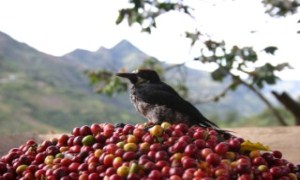
A recent paper (and candidate for the Potential list) by Aaron Gove and colleagues published in Conservation Letters entitled Ethiopian coffee cultivation – implications for bird conservation and environmental certification demonstrates how the cultivation of this NATIVE Ethiopian plant (Coffea arabica) can enhance or restore the biological value of lowland agricultural areas. This species of ‘highland coffee’ is harvested from forests (where it evolved and now grows naturally) and from more intensive farmland. Interestingly, this species needs some shade to grow, so trees must generally be planted in the agricultural areas to allow this. Result? Gove and colleagues found that birds who otherwise wouldn’t be seen dead in the agricultural areas were attracted there by the maintenance and proliferation of the shade trees, thus reducing regional extinction risk for fragmented populations dependent on forest remnants. The flip side was that coffee cultivation in forest remnants reduced bird diversity because of the obvious trade-off between some native trees and intensive agricultural crops.
So, the next time you’re thinking of buying certified coffee, think of this – the cultivation of INDIGENOUS (did I say that loudly enough?) coffee species requiring shade promotes the proliferation of native forest trees to reduce the extinction risk of threatened birds. The number of boxes to tick on my coffee-snobbery list has just grown by two.




 ConservationBytes.com