Australia is home to about one in 12 of the world’s species of animals, birds, plants and insects – between 600,000 and 700,000 species. More than 80% of Australian plants and mammals and just under 50% of our birds are found nowhere else.
But habitat destruction, climate change, and invasive species are wreaking havoc on Earth’s rich biodiversity, and Australia is no exception.
More and more species stand on the edge of oblivion. That’s just the ones we know enough about to list formally as threatened. Many more are in trouble, especially in the oceans. Change is the new constant. As the world heats up and ecosystems warp, new combinations of species can emerge without an evolutionary connection, creating novel communities.
It is still possible to stop species from dying out. But it will take an unprecedented effort.
The vulnerable southern bell (growling grass) frog (Litoria raniformis). Rupert Mathwin/Flinders University
The island of Mauritius is known, particularly in conservation circles, for the ill-fated extinction of the dodo, but also for its many conservation success stories. These include the recovery of emblematic birds such as the Mauritius kestrel (Falco punctatus) and the pink pigeon (Nesoenas mayeri) that narrowly avoided extinction several decades ago.
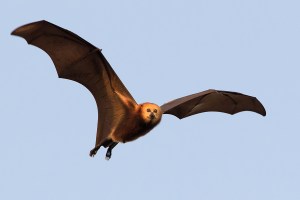
Mauritius (greater Mascarene) flying fox Pteropus niger
Behind this veil of achievements, however, local political realities are increasingly making the protection and management of Mauritian biodiversity more complex and challenging as new conservation issues emerge.
Emergence of human-wildlife conflict
In the midst of the third government-led mass cull of the Endangered Mauritian flying fox (Pteropus niger) in 2018, a paper published in the Journal for Nature Conservation shed light on the events that led to the government’s choice to do the first two mass culls of the Mauritian flying fox in 2015 and 2016. Documentation of human-wildlife conflict in Mauritius is relatively new, as noted by the authors, but provides a unique case study.
Given that the mass-culling opted for did not increase fruit growers’ profits (in fact, fruit production dropped substantially after the mass-culls) and that the flying fox, a keystone species for the native biodiversity, became more threatened with extinction following the mass culls, it appears that Mauritius provides a rare opportunity to study what precisely should be avoided when trying to resolve such a HWC [Human-wildlife conflict],
Indeed, to mitigate rising conflicts between fruit farmers and the Mauritian flying fox, the Mauritian government opted in 2006 to cull this threatened species (only six individuals were culled at the time). Despite disputes over the population size of the Mauritian flying fox and the extent of damage it caused to commercial fruit growers, as well as scientific arguments against the cull, culling continues to be the preferred approach.
Here’s a depressing emergency post by Fabiola Monty.
—
I started working on this article to discuss how useful science is being ignored in Mauritius.
The Mauritian government has decided to implement a fruit bat cull as an ‘urgent response’ to the claims of huge economic losses by fruit farmers, a decision not supported by scientific evidence. We have now received confirmation in Mauritius through a local press communiqué that on 7 November 2015, The Mauritian Ministry of Agro Industry and Food Security in collaboration with the local Police Department and Special Mobile Force will start the culling of 18,000 bats in their natural habitats “with a view to reducing the extent of damages caused to fruits by bats”.
Tackling human-wildlife conflicts can indeed be challenging, but can the culling of 18,000 endemic Mauritian flying fox (Pteropus niger) resolve ‘human-wildlife conflict’ in the land of the dodo? In the case of Mauritius, scientific evidence not only demonstrates that the situation has been exaggerated, but that there are alternatives to bat culling that have been completely brushed aside by policy makers.
Are the Mauritius fruit bats agricultural pests?
While fruit bats are being labelled as serious pests, scientific evidence shows instead that their impacts have been exaggerated. A recent (2014) study indicates that bats damage only 3-11% of fruit production, with birds also contributing to 1-8% of fruit loss. Rats are also probable contributors to fruit damage, but the extent remains unquantified. Interestingly, more fruits are lost (13-20%) because they are not collected in time and are left to over-ripen.
While the results of the studywere communicated to legislators a few months before they made the decision to cull, it is clear that these were ignored in favour of preconceived assumptions.
Australia boasts over 500 national parks covering 28 million hectares of land, or about 3.6% of Australia. You could be forgiven for thinking we’re doing well in the biodiversity-conservation game.
But did you know that of those more than 500 national parks, only six are managed by the Commonwealth Government? For marine parks, it’s a little more: 61 of the 130-plus are managed primarily by the Commonwealth. This means that the majority of our important biodiversity refuges are managed exclusively by state and territory governments. In other words, our national parks aren’t “national” at all.
In a world of perfect governance, this wouldn’t matter. But we’re seeing the rapid “relaxation” of laws designed to protect our “national” and marine parks by many state governments. Would making all of them truly national do more to conserve biodiversity?
One silly decision resulting in a major ecosystem disturbance in a national park can take decades if not hundreds of years to heal. Ecosystems are complex interactions of millions of species that take a long time to evolve – they cannot be easily repaired once the damage is done.
Those of us living with cats share our homes with an ancestral predator, one adapted for hunting and the frequent, exclusive consumption of meat. These instincts become fully activated outside the domestic environment, where cats pose a global threat to wildlife. Pets are family. We celebrate their arrival with the same joy as a grand…
Many animals avoid contact with people. In protected areas of the African savanna, mammals flee more intensely upon hearing human conversations than when they hear lions or sounds associated with hunting. This fear of humans affects how species use and move in their habitat. Throughout our lives, we interact with hundreds of wildlife species without…
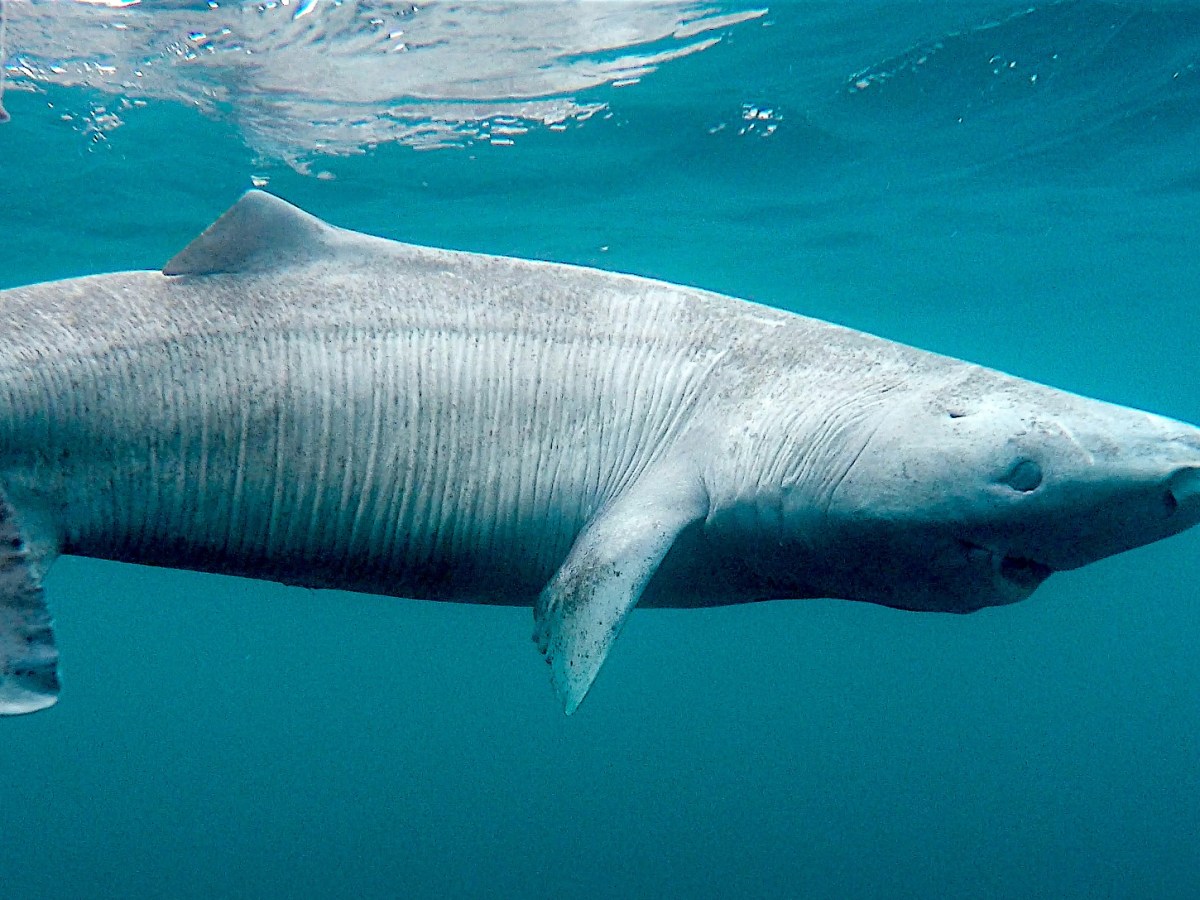
Deep-sea sharks include some of the longest-lived vertebrates known. The record holder is the Greenland shark, with a recently estimated maximum age of nearly 400 years. Their slow life cycle makes them vulnerable to fisheries. Humans rarely live longer than 100 years. But many other animals and plants can live for several centuries or even millennia, particularly…


 Here’s a depressing emergency post by
  Are the Mauritius fruit bats agricultural pests?





 ConservationBytes.com