Using animals as sport symbols reflects the integration of biodiversity into cultural identity and the transmission of collective values. This raises the possibility that the economic muscle of the sport industry could translate its symbolic capital into tangible commitments to biodiversity conservation.
Those who have had the privilege of travelling in remote areas might have come across an unexpected scene: a football pitch in the middle of the Amazon rain forest or on the slopes of the Andes, a basketball court on the side of a Buddhist temple, or an ice hockey rink on a snow-ploughed lake in remote northern Canada.
Sport is a global industry that generates identity, belonging, education, and shared emotions for both athletes and their avid spectators (1). Sporting affinities now rival the sense of nationhood once shared by citizens during warfare (2).
Now in our heavily monetised world, sport clubs rely on their fans through tickets and merchandising, and indirectly through television rights and advertising. In this both emotional and commercial relationship, expressions such as being true to the badge reflect the central role of corporate symbols in building bonds between a club and its supporters (3).
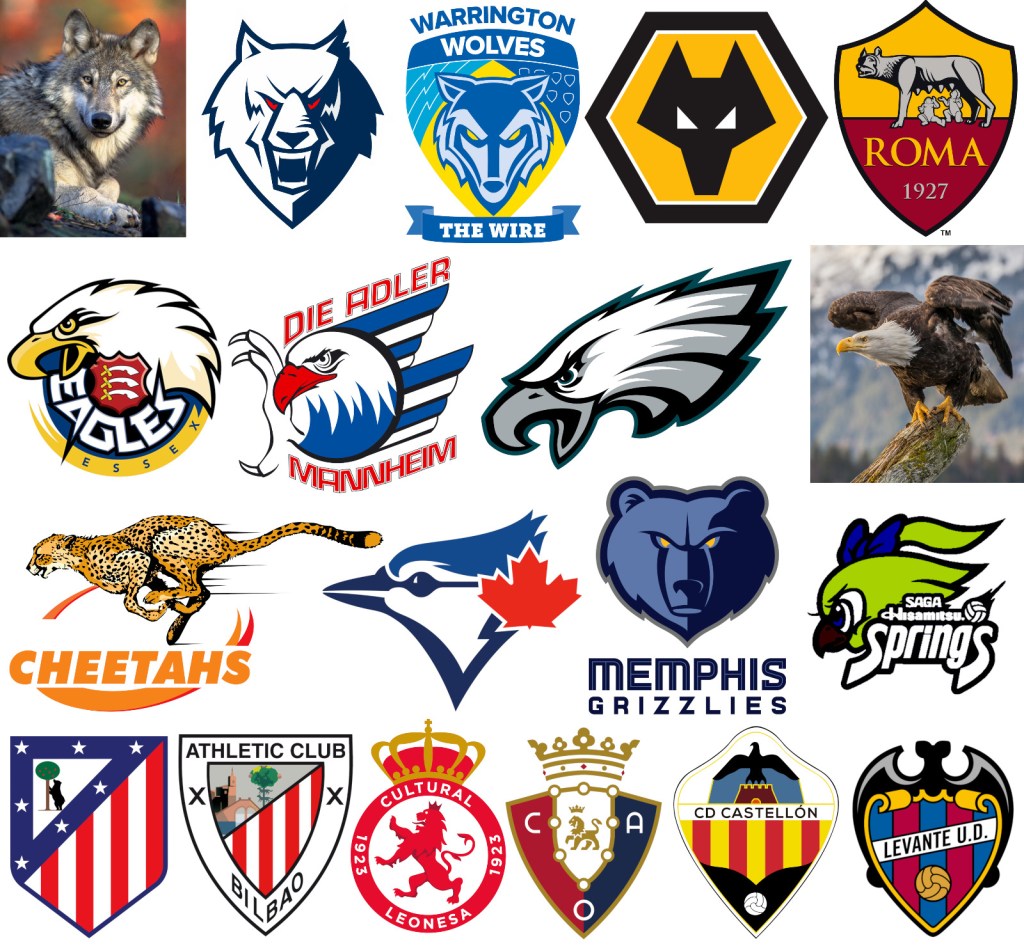
In professional sport such as football, clubs increasingly function as brands (4) where even traditional logos are modified to enhance a team’s commercial value and strengthen audience loyalty (5). In this process, biodiversity becomes relevant because the iconography of many sport organisations incorporates representations of plants and animals.
Sport fauna
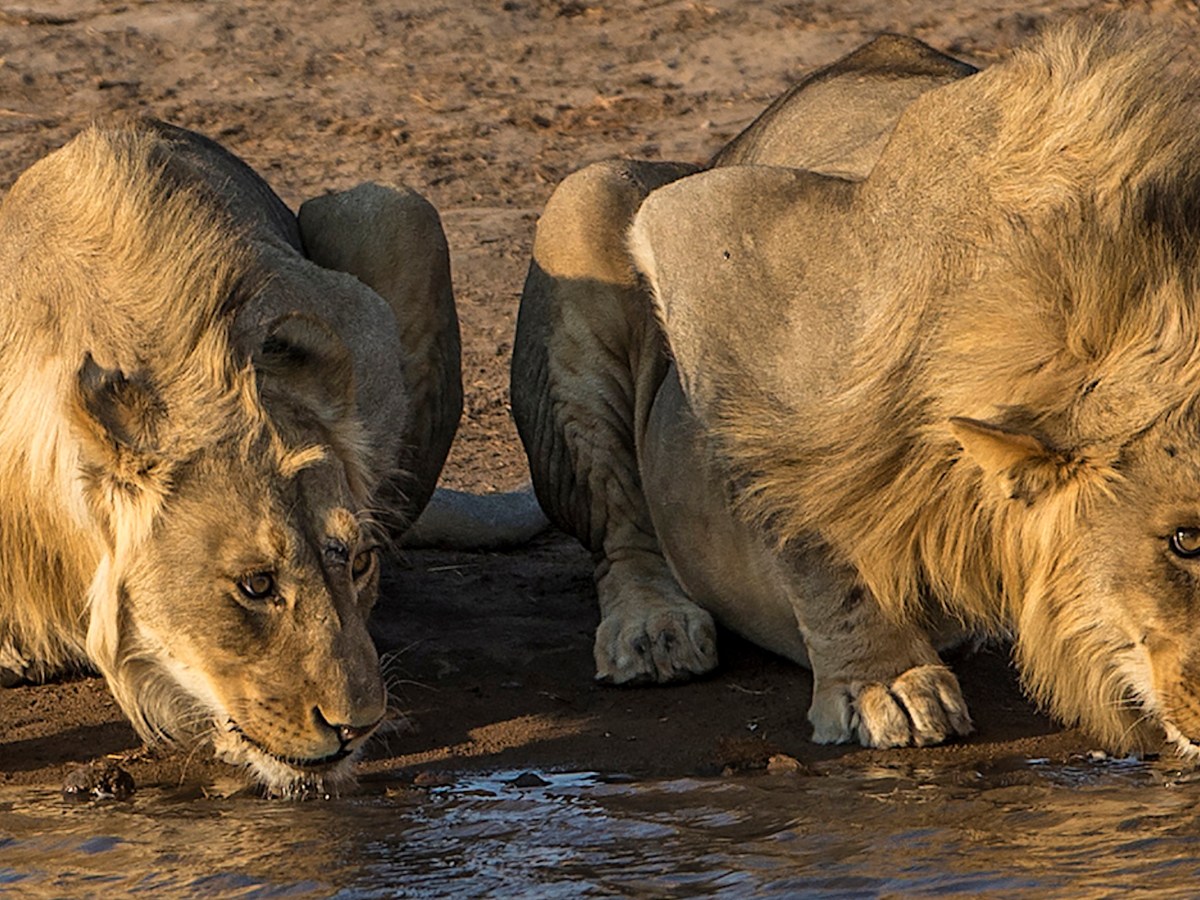
To quantify this phenomenon, Ugo Arbieu and collaborators analysed the presence of animals in club names, crests, and fan nicknames among 10 professional team sports across 50 countries (6). They found that 727 teams use 161 different animal species in their corporate imagery. Football and basketball lead in the number of species represented due to the large number of clubs worldwide, but American football, rugby and baseball display greater symbolic fauna diversity per club. Mammals and birds are the most common, particularly carnivores and raptors.
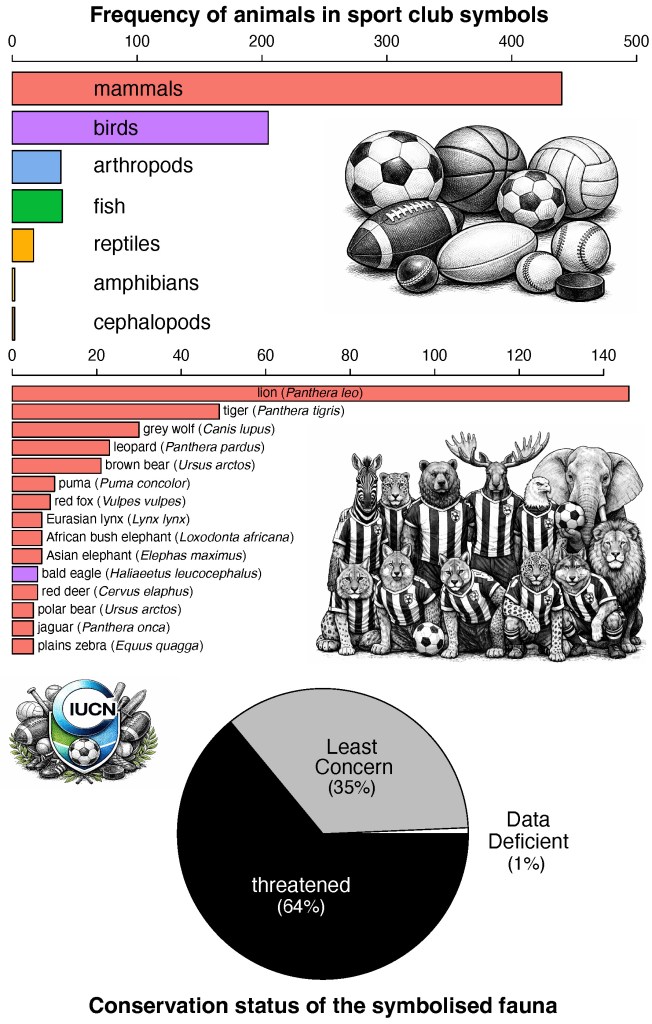
This pattern is not coincidental, for it reflects the historical bias of science and conservation towards large, charismatic vertebrates (7), but also the uneven availability of biological information and our social preferences for certain species (8). These preferences are even reflected in the animal emojis we share regularly on social media (9).
Arbieu’s study also revealed that clubs tend to favour images of threatened fauna (6), possibly due to their higher symbolic impact and media visibility (10). Moreover, although clubs in Europe and the Americas more often depict exotic animals, native species dominate in Africa, Asia, and Oceania (6). This suggests that the choice of an animal as an emblem is the product of not only aesthetic or symbolic criteria, but also of cultural roots and the historical relationship of societies with their local fauna.
Cultural service
Using fauna as corporate symbols goes beyond the stadium. Many socio-economic sectors adopt animals in their branding strategies (11), because they are often more effective than human figures in conveying socio-cultural values (12). Adverts can feature jaguars on wheels, swans endorsing diamonds, or even tigers eating breakfast cereals. Animals embody qualities projected onto products and brands, such as strength, elegance or tradition. Some species serve as totems of regional or national identity, while others acquire an almost magical dimension as fetishes attributed with powers that people wish to possess (13).
However, this symbolic appropriation is rarely accompanied by support for any concrete biodiversity conservation (14). Moreover, consumers rarely associate the image of an animal on a product or badge with its conservation status (15), and media exposure of charismatic species can convey the mistaken impression that these species are abundant in their natural habitats (16).
Corporations using fauna in crests, logos, and advertising gain profit and reputational benefits that can be interpreted as a cultural ecosystem service (17). Recognising this value could pave the way for compensation measures for such benefits (18). Within the framework of collective commitment to biodiversity (19), the corporate use of animal imagery could be regulated through a system of taxes under a legal framework, or integrated into species donation or sponsorship programs promoted with tax benefits.
Beyond emblems
The United Nations’ program Sport for Nature aims to catalyse this type of action, playing the role of a fund for sports organisations wishing to contribute to a sustainable world (20) by, for example, reducing the environmental impacts of sporting events (21). However, the program’s penetration into major professional clubs is limited, and it does not link sport emblems with the conservation of the species they represent.
For clubs with a global reach (4), integrating an environmental profile would strengthen their image of social responsibility and could attract new audiences internationally. More importantly, if even a small fraction of the profit turned for selling access to sporting events could be transferred to on-the-ground conservation of species, biodiversity loss could be lessened substantially.
The message to fans is simple but powerful: enjoying a match, whether in the stadium or on television, can be a tangible way to support the conservation of the animals that identify the club, adding meaning to the bond between teams and their supporters.
Salvador Herrando-Pérez & Corey Bradshaw
References
- Giulianotti R 2018. Global sport. In: The Oxford Handbook of Global Studies, M Juergensmeyer, S Sassen, MB Steger & V Faessel, Eds. (Oxford University Press), pp 597-612
- Ward T 2009. Sport and national identity. Soccer & Society 10: 518-531
- Bishop R 2001. Stealing the signs: a semiotic analysis of the changing nature of professional sports logos. Social Semiotics 11: 23-41
- Richelieu A 2016. Sport teams’ brands going international: The “Integrated Marketing Strategy on the Internationalisation in Sport” (IMSIS). Journal of Brand Strategy 5: 218-231.
- Barnes A 2023. Kissing the badge: club crests or corporate logos? Soccer & Society 24: 607-621
- Arbieu U et al. 2025. Wildlife diversity in global team sport branding. BioScience. 76: 179-187
- Titley MA et al. (2017). Scientific research on animal biodiversity is systematically biased towards vertebrates and temperate regions. PLoS One 12: e0189577
- Troudet J et al. 2017. Taxonomic bias in biodiversity data and societal preferences. Scientific Reports 7: 9132
- Mammola S et al. 2023. Biodiversity communication in the digital era through the Emoji tree of life. iScience 26: 108569
- Verissimo D et al. 2011. Toward a systematic approach for identifying conservation flagships. Conservation Letters 4: 1-8
- Spears NE et al. 1996. Symbolic role of animals in print advertising: content analysis and conceptual development. Journal of Business Research 37: 87-95
- Keller B, Gierl, H 2020. Effectiveness of animal images in advertising. Marketing, Zeitschrift fur Forschung und Praxis 42: 3-32
- Lloyd S, Woodside, AG 2013. Animals, archetypes, and advertising (A3): the theory and the practice of customer brand symbolism. Journal of Marketing Management 29: 5-25
- Braczkowski A et al. 2021. Marketing products with wildlife: how to make it benefit conservation. Frontiers in Conservation Science 2: 649686
- Good C et al. 2021. Connecting the spots: leopard print fashion and Panthera pardus conservation. Journal for Nature Conservation 61: 125976
- Courchamp F et al. 2018. The paradoxical extinction of the most charismatic animals. PLoS Biology 16: e2003997
- Arbieu U et al. 2025. Professional sport organizations as potential champions of biodiversity conservation. Frontiers in Ecology and the Environment 23: e2862
- Good C et al. 2017. A cultural conscience for conservation. Animals 7: 52
- Barbier EB et al. 2018. How to pay for saving biodiversity. Science 360: 486-488
- Orr M et al. 2022. Sports for nature: setting a baseline. United Nations Environment Programme, Nairobi, Kenya: 1-35
- Koenig-Lewis N et al. 2025.The game is on! – Sports (events) as a driving force for sustainability. In: The Routledge Companion to Marketing and Sustainability, K Peattie, R De Angelis, N Koenig-Lewis & C Strong, Eds. (Routhledge), pp 331-345



 ConservationBytes.com
Leave a comment