Sydney’s 1789 smallpox epidemic came from the First Fleet and killed up to 220,000 Indigenous Australians

11 07 2026
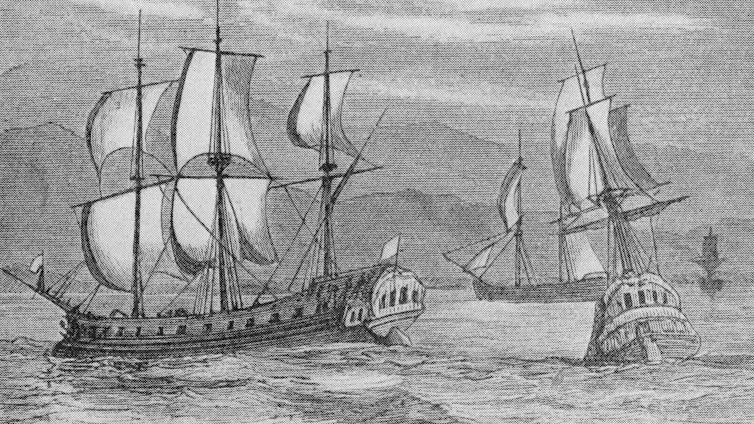
Etching of tall ships

Hulton Archive / Getty Images


We warn readers that the content of this study is confronting and may be distressing.

In April 1789, the first smallpox epidemic among Aboriginal people in the Sydney region began, just 16 months after Europeans arrived on the First Fleet.

Little is known of the true scale of the epidemic, and historians have sometimes argued it was not caused by the newcomers.

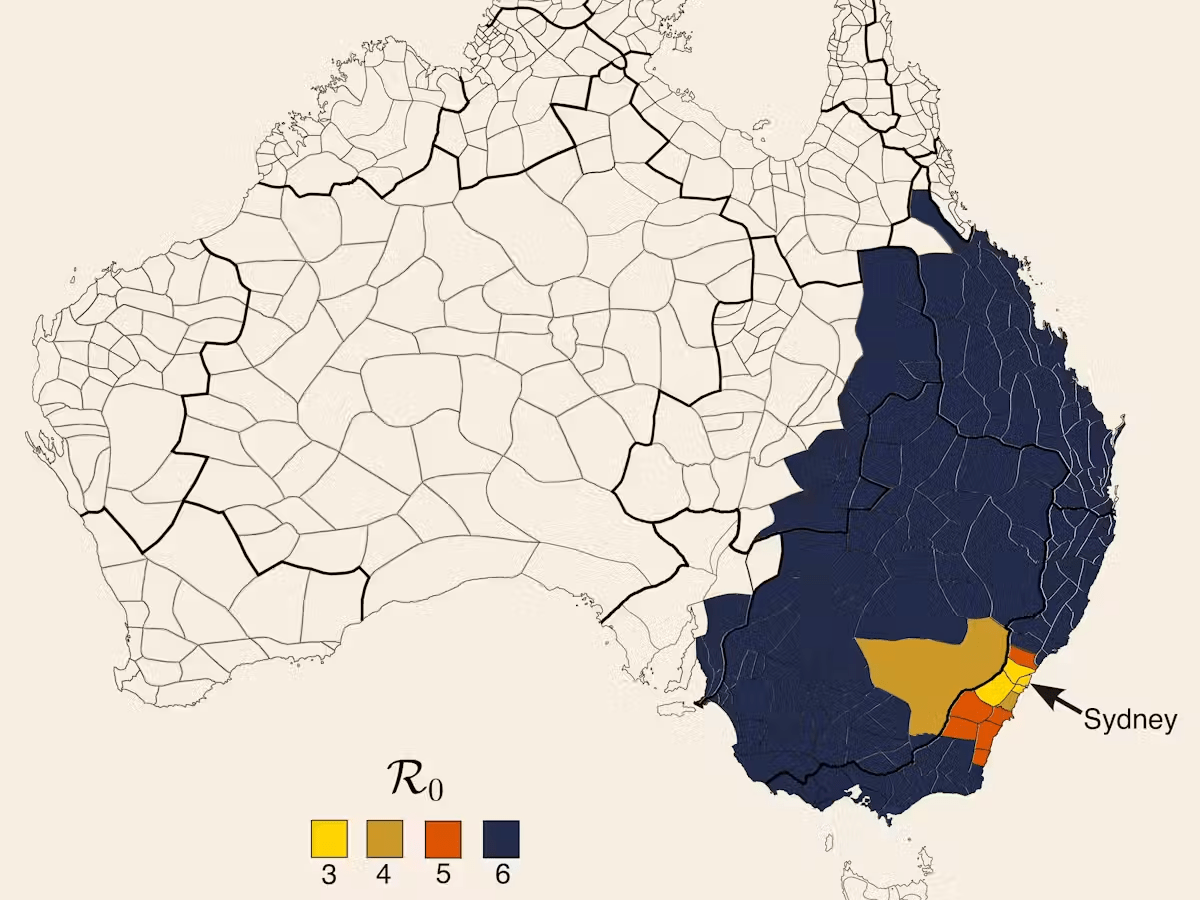
In new research published in Nature Human Behaviour, we used modelling of smallpox transmission and the connections between Indigenous societies to understand how it could have spread.

The results strongly suggest the disease did come from the British outpost. What’s more, it might have spread thousands of kilometres north and west, lasting decades and killing as many as 220,000 Aboriginal people.

A destructive force throughout history

Infectious disease has long been one of history’s most destructive forces. The COVID pandemic, which killed an estimated 15 million people in 2020–2021, is only the most recent entry in a list including the Black Death, which killed up to half of Europe’s population in the 14th century, and the “Spanish” influenza of 1918 that was responsible for some 17 million deaths.

One of the earliest recorded – and most feared – diseases was the now-eradicated smallpox, caused by the variola virus.

Evidence of smallpox has been identified in Egyptian mummies dating to as early as 1500 BCE. In 18th century Europe, an average 400,000 people died every year from smallpox. An estimated 300 million people died of the disease during the 20th century, about double the total deaths from wars fought during the same period.

For Indigenous peoples around the world, smallpox was one of the most devastating diseases introduced by Europeans. The disease was a major driver of the catastrophe that killed countless Native Americans from Canada to Tierra del Fuego after the arrival of Spanish and Portuguese in the 16th century.

Smallpox caused fever, severe illness, and high death rates, especially in Indigenous populations with no previous exposure. Survivors were left with severe scarring.

What caused the 1789 smallpox epidemic?

A persistent narrative in Australia’s colonial history is that the disease did not come from the First Fleet. Instead, the argument goes, it was introduced earlier by Makassan traders in the far north of the country. Supporters of this idea proposed that it just happened to make its way to Sydney by the time the British established a colony there.
Read the rest of this entry »


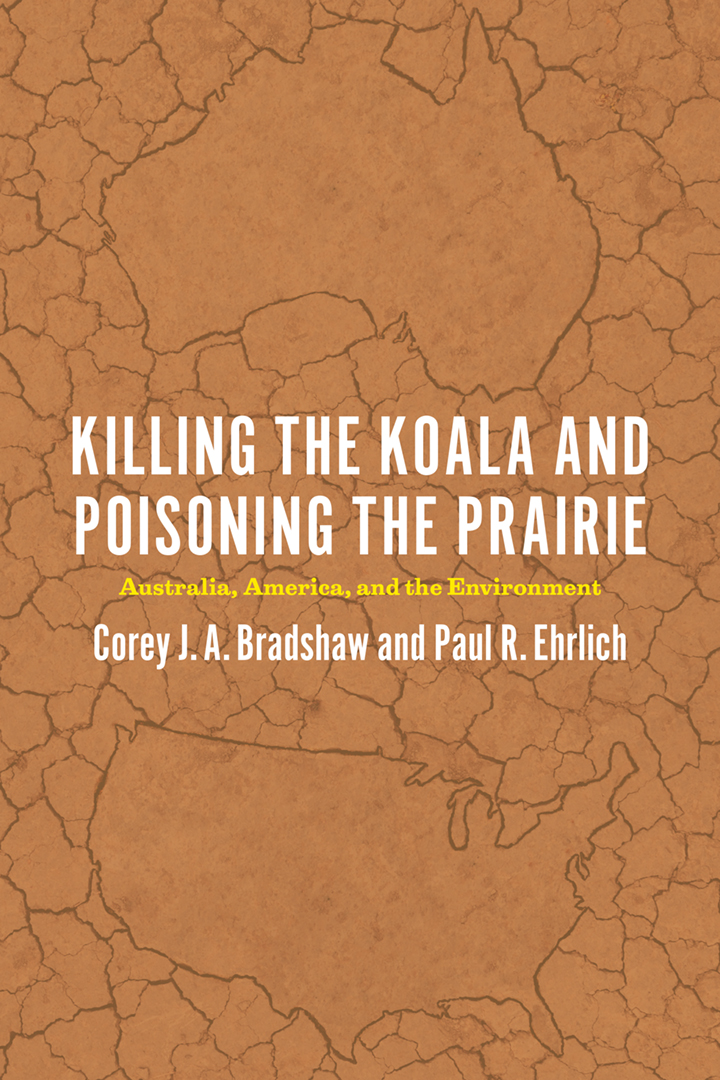
Killing the Koala and Poisoning the Prairie

19 10 2015

Cover-Bradshaw&Ehrlich-final

Man and the environment are meant for each other” — Tony Abbott, former Prime Minister of Australia (2014)

I know the human being and the fish can co-exist peacefully” — George W. Bush, former President of the USA (2000)

It. Has. Finally. Been. Published.

Yes, my new book with Paul Ehrlich, published by University of Chicago Press, is now available to purchase in book shops and online distributors around the world. The blog post today is a little explanatory synopsis of why we wrote the book and what it contains, but of course the real ‘meat’ is in the book. I hope you enjoy it.

In Australia, you can purchase the hard copy through Footprint Books, and the Kindle version at Amazon Australia. I also suggest that Australians might find the best deals through Booko. Electronic versions are also available through Kobo and Google Play. In the US you can order directly from University of Chicago Press, Amazon, Barnes & Noble, and many other book sellers. In the UK and Europe, the book is available from your country’s Amazon distributor. I imagine many chain and independent book sellers will be carrying the book by now, or will be soon.

My deepest thanks to all those who made it possible.

Our chance meeting in 2009 at Stanford University turned out to be auspicious, not least of which because of the publication this week of our co-authored book, Killing the Koala and Poisoning the Prairie. Australia, America and the Environment by University of Chicago Press. As a mid-career ecologist (Bradshaw) based at the University of Adelaide, it was indeed an honour to meet one of the most famous scientists (Ehrlich) in my field. With a list of books and hundreds of scientific papers under his belt, Ehrlich has been tackling major environmental issues since the 1960s. Ehrlich also has a long-time interest in Australia, having visited nearly every year during the last four decades and experienced more of the country than most Australians. Together we have observed firsthand the similarities and differences of Australia and the US, and the eyes we see through are trained as those of environmental scientists and evolutionary biologists.

So why write a book about the environmental tragedies currently unfolding in two completely different countries at opposite ends of the Earth? As it turns out, Australia and the US have much more in common environmentally than one might think, and not necessarily in a good way. Despite our vastly different floras and faunas, population densities, histories of human colonisation and soil productivities, there is an almost spooky similarity in the environmental and political problems both our countries are now experiencing. As such, we have a lot to learn about avoiding each other’s mistakes.

Ausmerica

Australia and the contiguous US are roughly equivalent in land area, both cultures are derived originally and principally from what is now the United Kingdom, and both are examples of super-consuming, super-wasting, wealthy, literate countries. Both countries also have environmental footprints that exceed most other countries on Earth, with some of the world’s highest per capita rates of greenhouse-gas emissions, water consumption, species extinctions and deforestation.  Read the rest of this entry »