Sydney’s 1789 smallpox epidemic came from the First Fleet and killed up to 220,000 Indigenous Australians

11 07 2026
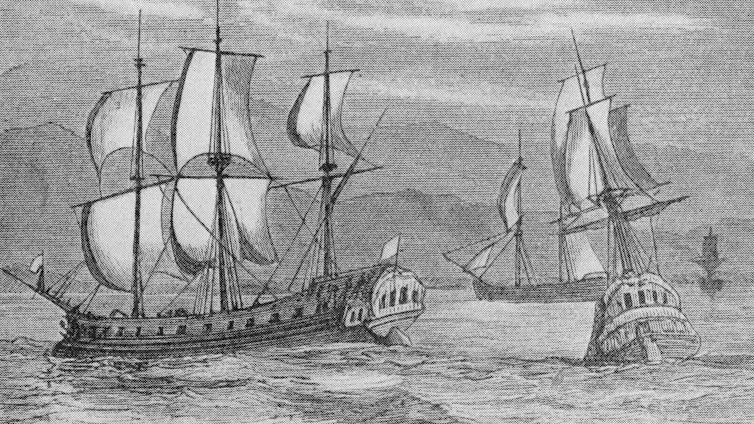
Etching of tall ships

Hulton Archive / Getty Images


We warn readers that the content of this study is confronting and may be distressing.

In April 1789, the first smallpox epidemic among Aboriginal people in the Sydney region began, just 16 months after Europeans arrived on the First Fleet.

Little is known of the true scale of the epidemic, and historians have sometimes argued it was not caused by the newcomers.

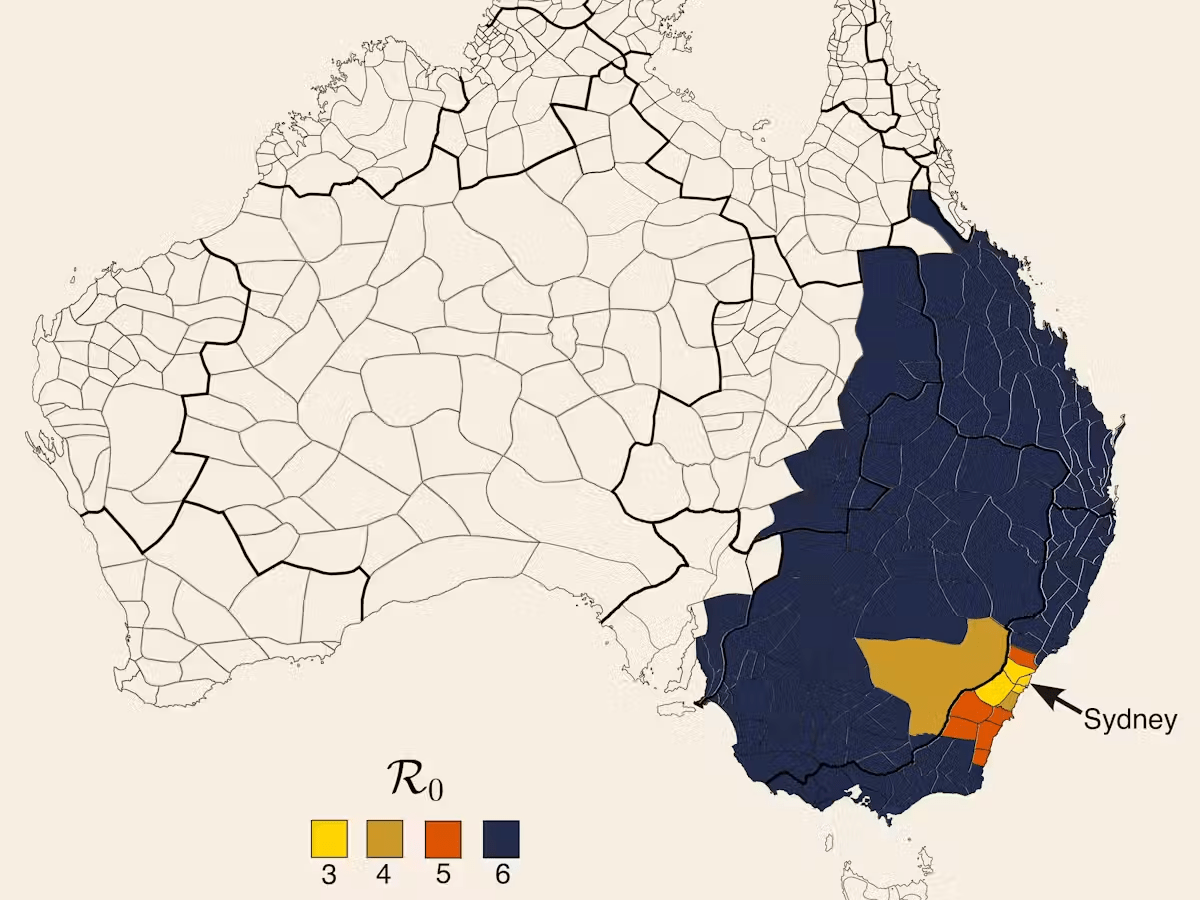
In new research published in Nature Human Behaviour, we used modelling of smallpox transmission and the connections between Indigenous societies to understand how it could have spread.

The results strongly suggest the disease did come from the British outpost. What’s more, it might have spread thousands of kilometres north and west, lasting decades and killing as many as 220,000 Aboriginal people.

A destructive force throughout history

Infectious disease has long been one of history’s most destructive forces. The COVID pandemic, which killed an estimated 15 million people in 2020–2021, is only the most recent entry in a list including the Black Death, which killed up to half of Europe’s population in the 14th century, and the “Spanish” influenza of 1918 that was responsible for some 17 million deaths.

One of the earliest recorded – and most feared – diseases was the now-eradicated smallpox, caused by the variola virus.

Evidence of smallpox has been identified in Egyptian mummies dating to as early as 1500 BCE. In 18th century Europe, an average 400,000 people died every year from smallpox. An estimated 300 million people died of the disease during the 20th century, about double the total deaths from wars fought during the same period.

For Indigenous peoples around the world, smallpox was one of the most devastating diseases introduced by Europeans. The disease was a major driver of the catastrophe that killed countless Native Americans from Canada to Tierra del Fuego after the arrival of Spanish and Portuguese in the 16th century.

Smallpox caused fever, severe illness, and high death rates, especially in Indigenous populations with no previous exposure. Survivors were left with severe scarring.

What caused the 1789 smallpox epidemic?

A persistent narrative in Australia’s colonial history is that the disease did not come from the First Fleet. Instead, the argument goes, it was introduced earlier by Makassan traders in the far north of the country. Supporters of this idea proposed that it just happened to make its way to Sydney by the time the British established a colony there.

Read the rest of this entry »


Projecting global deaths from covid19

18 03 2020

covid

I know that it’s not the best way to project expected deaths from a pandemic disease, but being something of a demographer, I just couldn’t help myself.

I therefore took the liberty of punching in some basic probabilities into our world population model to see how many people could potentially die from covid19. But this is not an epidemiological model, so I’m probably vastly over-estimating the total death rates.

Nonetheless, the results were revealing.

I first took the expected mortality by age class based on the Chinese data so far. I then assumed a worst-case scenario of a 60% infection rate (i.e., 3 out of 5 of us will eventually catch the virus). I assumed these values across the entire globe (not taking into account greater or lesser susceptibility or probability of death among countries or regions).

I also considered two more scenarios: (i) double the mortality rate (in each age class), and (ii) the disease outbreak lasting two years instead of just one.

The graph below shows the four different outcomes based on these scenarios relative to the baseline (no covid): Read the rest of this entry »


Want to work with us?

22 03 2013

© Beboy-Fotolia

© Beboy-Fotolia

Today we announced a HEAP of positions in our Global Ecology Lab for hot-shot, up-and-coming ecologists. If you think you’ve got what it takes, I encourage you to apply. The positions are all financed by the Australian Research Council from grants that Barry Brook, Phill Cassey, Damien Fordham and I have all been awarded in the last few years. We decided to do a bulk advertisement so that we maximise the opportunity for good science talent out there.

We’re looking for bright, mathematically adept people in palaeo-ecology, wildlife population modelling, disease modelling, climate change modelling and species distribution modelling.

The positions are self explanatory, but if you want more information, just follow the links and contacts given below. For my own selfish interests, I provide a little more detail for two of the positions for which I’m directly responsible – but please have a look at the lot.

Good luck!

CJA Bradshaw

Job Reference Number: 17986 & 17987

The world-leading Global Ecology Group within the School of Earth and Environmental Sciences currently has multiple academic opportunities. For these two positions, we are seeking a Postdoctoral Research Associate and a Research Associate to work in palaeo-ecological modelling. Read the rest of this entry »


Where the sick buffalo roam

28 10 2011

It’s been some time coming, but today I’m proud to announce a new paper of ours that has just come out in Journal of Applied Ecology. While not strictly a conservation paper, it does provide some novel tools for modelling populations of threatened species in ways not available before.

The Genesis

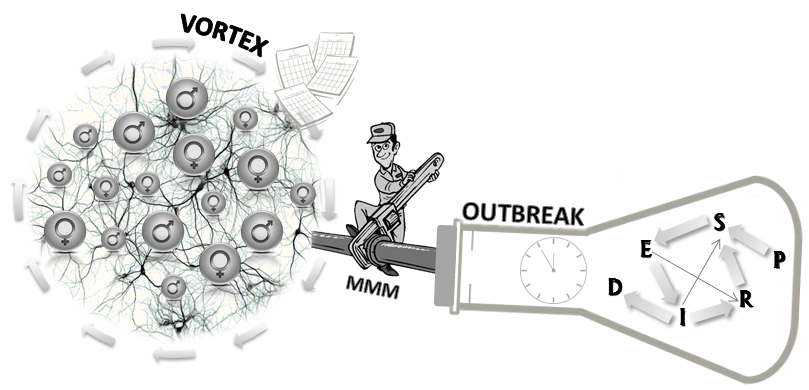
A few years ago, a few of us (Bob LacyPhil Miller and JP Pollak of Vortex fame, Barry Brook, and a few others) got together in a little room at the Brookfield Zoo in the suburban sprawl of Chicago to have a crack at some new modelling approaches the Vortex crew had recently designed. The original results were pleasing, so we had a follow-up meeting last year (thanks to a few generous Zoo benefactors) and added a few post-docs and students to the mix (Damien FordhamClive McMahon, Tom Prowse, Mike Watts, Michelle Verant). The great population modeller Resit Akçakaya also came along to assist and talk about linkages with RAMAS.

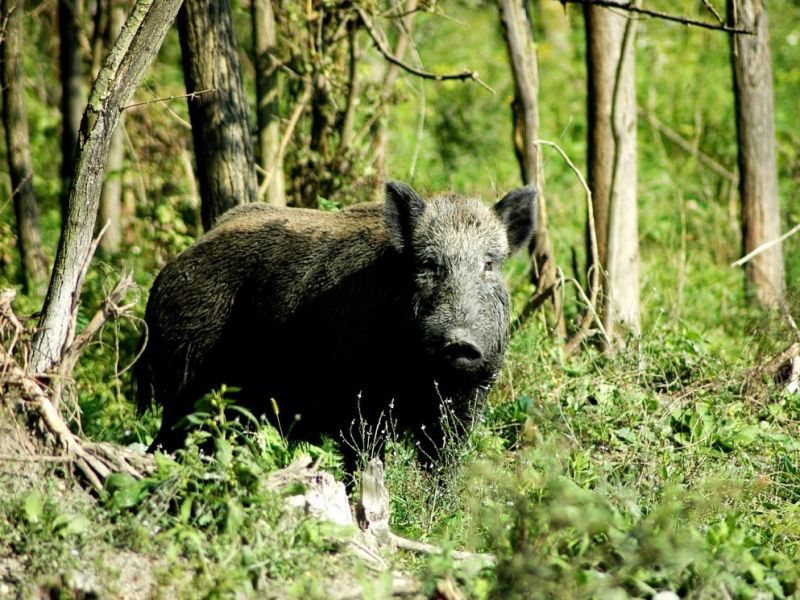
Out of that particular meeting a series of projects was spawned, and one of those has now been published online: Novel coupling of individual-based epidemiological and demographic models predicts realistic dynamics of tuberculosis in alien buffalo.

The Coupling

So what’s so novel about modelling disease in buffalo, and why would one care? Well, here’s the interesting part. The buffalo-tuberculosis example was a great way to examine just how well a new suite of models – and their command-centre module – predicted disease dynamics in a wild population. The individual-based population modelling software Vortex has been around for some time, and is now particularly powerful for predicting the extinction risk of small populations; the newest addition to the Vortex family, called Outbreak, is also an individual-based epidemiological model that allows a population of individuals exposed to a pathogen to progress over time (e.g., from susceptible, exposed, infectious, recovered/dead). Read the rest of this entry »