Intricate dance of nature — predicting extinction risks in terrestrial ecosystems

30 06 2023

Have you ever watched a nature documentary and marvelled at the intricate dance of life unfolding on screen? From the smallest insect to the largest predator, every creature plays a role in the grand performance of our planet’s biosphere. But what happens when one of these performers disappears? 

In this post, we delve into our recent article Estimating co-extinction risks in terrestrial ecosystems just published in Global Change Biology, in which we discuss the cascading effects of species loss and the risks of ‘co-extinction’.

But what does ‘co-extinction’ really mean?

Imagine an ecosystem as a giant web of interconnected species. Each thread represents a relationship between two species — for example, a bird that eats a certain type of insect, or a plant that relies on a specific species of bee for pollination. Now, what happens if one of these species in the pair disappears? The thread breaks and the remaining species loses an interaction. This could potentially lead to its co-extinction, which is essentially the domino effect of multiple species losses in an ecosystem. 

A famous example of this effect can be seen with the invasion of the cane toad (Rhinella marina) across mainland Australia, which have caused trophic cascades and species compositional changes in these communities. 

The direct extinction of one species, caused by effects such as global warming for example, has the potential to cause other species also to become extinct indirectly. 

Read the rest of this entry »


Cartoon guide to biodiversity loss LXXIV

5 09 2022

Welcome to the fourth set of 7 cartoons for 2022. See full stock of previous ‘Cartoon guide to biodiversity loss’ compendia here.


Read the rest of this entry »


Cartoon guide to biodiversity loss LXXIII

15 07 2022

Welcome to the fourth set of 6 cartoons for 2022. See full stock of previous ‘Cartoon guide to biodiversity loss’ compendia here.


Read the rest of this entry »


Cartoon guide to biodiversity loss LXXII

30 05 2022

Welcome to the third set of 6 cartoons for 2022. See full stock of previous ‘Cartoon guide to biodiversity loss’ compendia here.


Read the rest of this entry »


Extinction cascades

3 06 2020

A recent online interview I did on the role of extinction cascades in mass extinctions:


Global warming causes the worst kind of extinction domino effect

25 11 2018

Dominos_Rough1-500x303Just under two weeks ago, Giovanni Strona and I published a paper in Scientific Reports on measuring the co-extinction effect from climate change. What we found even made me — an acknowledged pessimist — stumble in shock and incredulity.
But a bit of back story is necessary before I launch into describing what we discovered.

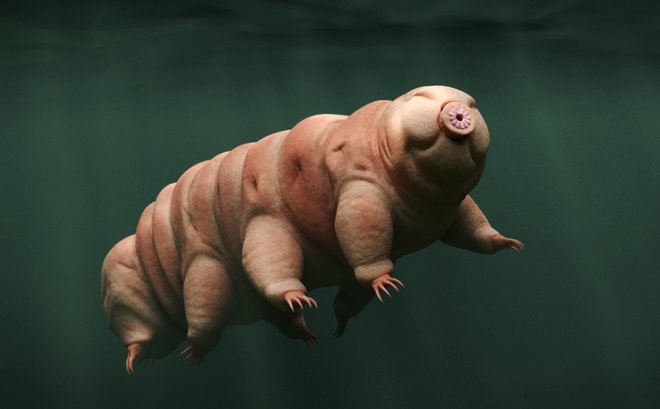
Last year, some Oxbridge astrophysicists (David Sloan and colleagues) published a rather sensational paper in Scientific Reports claiming that life on Earth would likely survive in the face of cataclysmic astrophysical events, such as asteroid impacts, supernovae, or gamma-ray bursts. This rather extraordinary conclusion was based primarily on the remarkable physiological adaptations and tolerances to extreme conditions displayed by tardigrades— those gloriously cute, but tiny (most are around 0.5 mm long as adults) ‘water bears’ or ‘moss piglets’ — could you get any cuter names?

aHR0cDovL3d3dy5saXZlc2NpZW5jZS5jb20vaW1hZ2VzL2kvMDAwLzA5OC81NzMvb3JpZ2luYWwvc3dpbW1pbmctdGFyZGlncmFkZS5qcGc=

Found almost everywhere and always (the first fossils of them date back to the early Cambrian over half a billion years ago), these wonderful little creatures are some of the toughest metazoans (multicellular animals) on the planet. Only a few types of extremophile bacteria are tougher.

So, boil, fry or freeze the Earth, and you’ll still have tardigrades around, concluded Sloan and colleagues.

When Giovanni first read this, and then passed the paper along to me for comment, our knee-jerk reaction as ecologists was a resounding ‘bullshit!’. Even neophyte ecologists know intuitively that because species are all interconnected in vast networks linked by trophic (who eats whom), competitive, and other ecological functions (known collectively as ‘multiplex networks’), they cannot be singled out using mere thermal tolerances to predict the probability of annihilation. Read the rest of this entry »