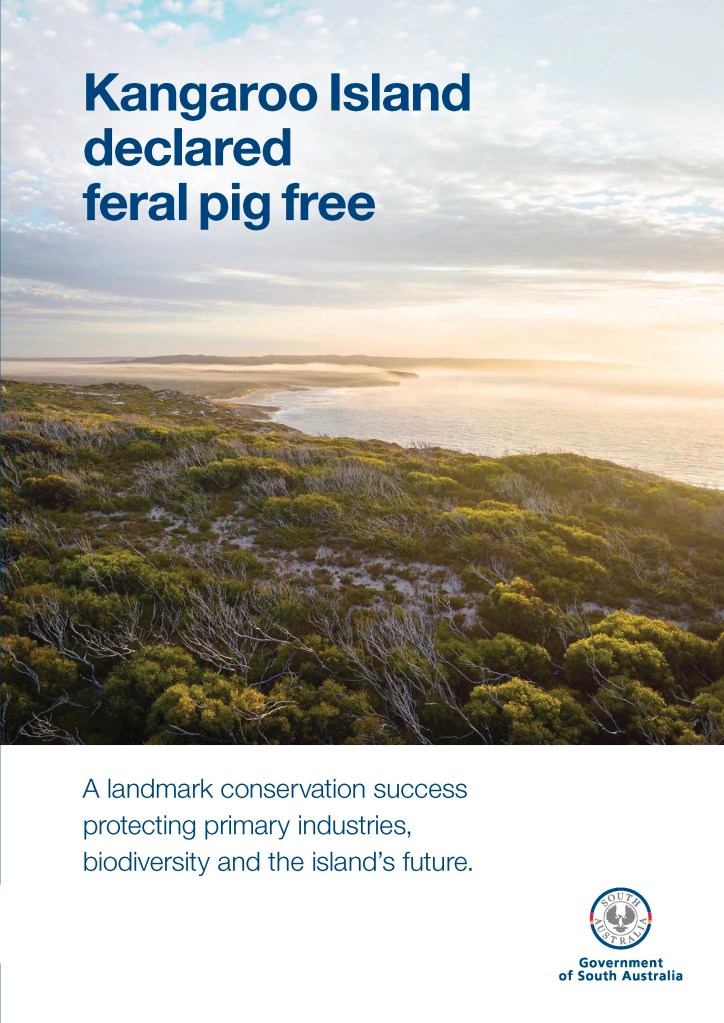
Just over two years ago I reported the ‘likely’ eradication of feral pigs from Australia’s third-largest (4,405 km2) island — Kangaroo Island. I indicated ‘likely’ because the program still required the proof-of-eradication phase to be completed before an official declaration could be made.
Yesterday I had the immense honour to take part in the official declaration ceremony held on Kangaroo Island near Karatta in the island’s southwest.
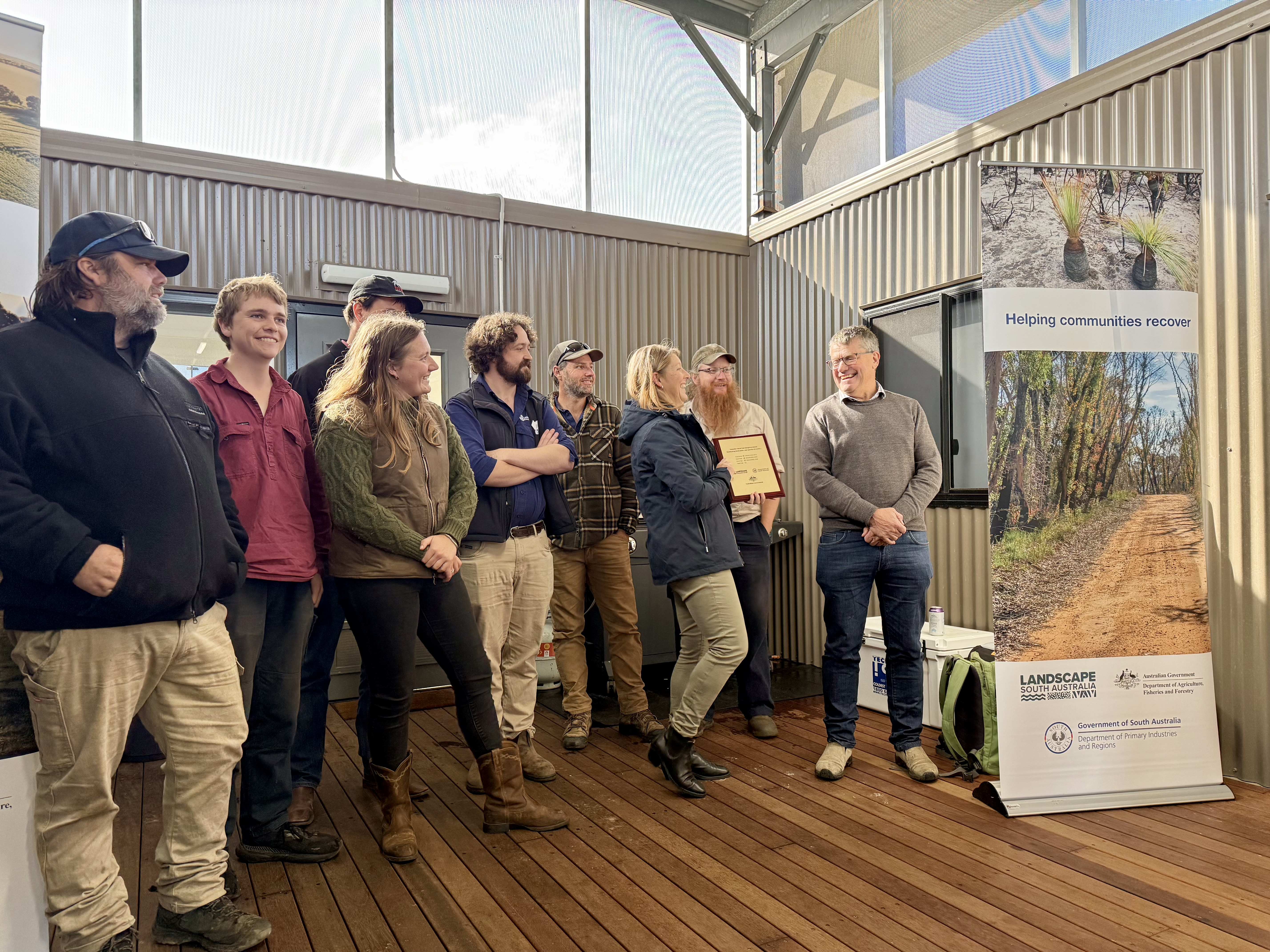
I can’t begin to emphasise enough how monumental this outcome is for biodiversity conservation, not just for South Australia, or even Australia, but globally.
This is without a doubt the largest island eradication of pigs anywhere in the world. Considering that most eradication (or even density-reduction) programs fail, the success is even more outstanding.
Feral pigs are identified as a ‘Key Threatening Process‘ under the Australian Environment Protection and Biodiversity Conservation Act 1999. They are also the fifth-costliest single species in the country, with only cats, rabbits, fire ants, and ragweed engendering higher costs.
I am also taking some personal pride in the outcome because I had a small part to play. One dreary Sunday morning back in 2022, the head of PIRSA’s Invasive Species Unit Dr Brad Page rang me with an urgent request. “Corey”, he said without much preamble, “I need a model to tell me how much it would cost to get rid of pigs on Kangaroo Island, and I need it by this afternoon”.
Normally, I would probably tell someone ringing me on a Sunday morning and asking that I do something like this to go and auto-reproduce in not-so-polite terms, but Brad is a good mate who I’ve known for nearly a quarter of a century, and I couldn’t say ‘no’. He was pressed to get a proposal into the Commonwealth government to fund a program to eradicate pigs following the devastating 2019–2020 fires on the Island that some estimated to have killed nearly 90% of the pig population.
Brad had to capitalise on this moment, because pigs recover quickly.
So, I dutifully produced an extremely simple, yet realistic model based on general pig demography and approximate cost structures (then Honours student Peter Hamnett went on to produce and publish a much better model). That very afternoon I e-mailed Brad the numbers emerging from the model. Brad inserted the information in the proposal, and a few weeks later, he got the money he needed.
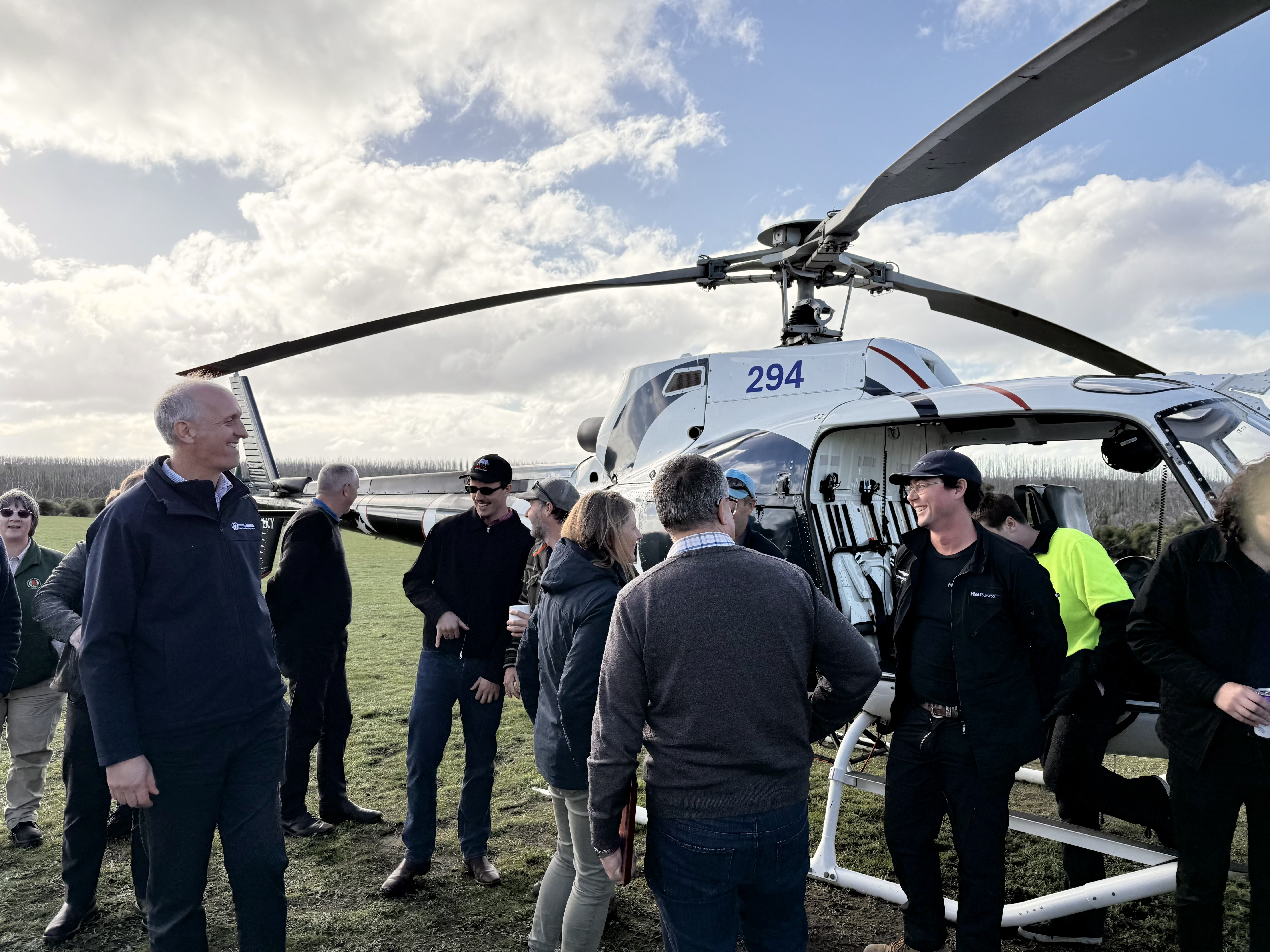
Four years and $7.5 million later, pigs have been eradicated from the island. Just … wow.
That amount of money might seem like a lot, but considering that some estimates placed pig damage at a conservative $1.6 million/year for Kangaroo Island producers alone, that money will be returned after only a few years. It’s a no-brainer.
Of course, killing the ‘last’ pig on the island isn’t enough to declare the species eradicated by itself. In July 2024, the eradication program entered a two-year ‘proof of freedom’ phase (Peter Hamnett and I were members of the advisory committee), which included an extensive and targeted surveillance program across high-risk areas. During that time, there were no detections or signs of feral pigs found, providing high confidence that pigs are no longer present on the island.
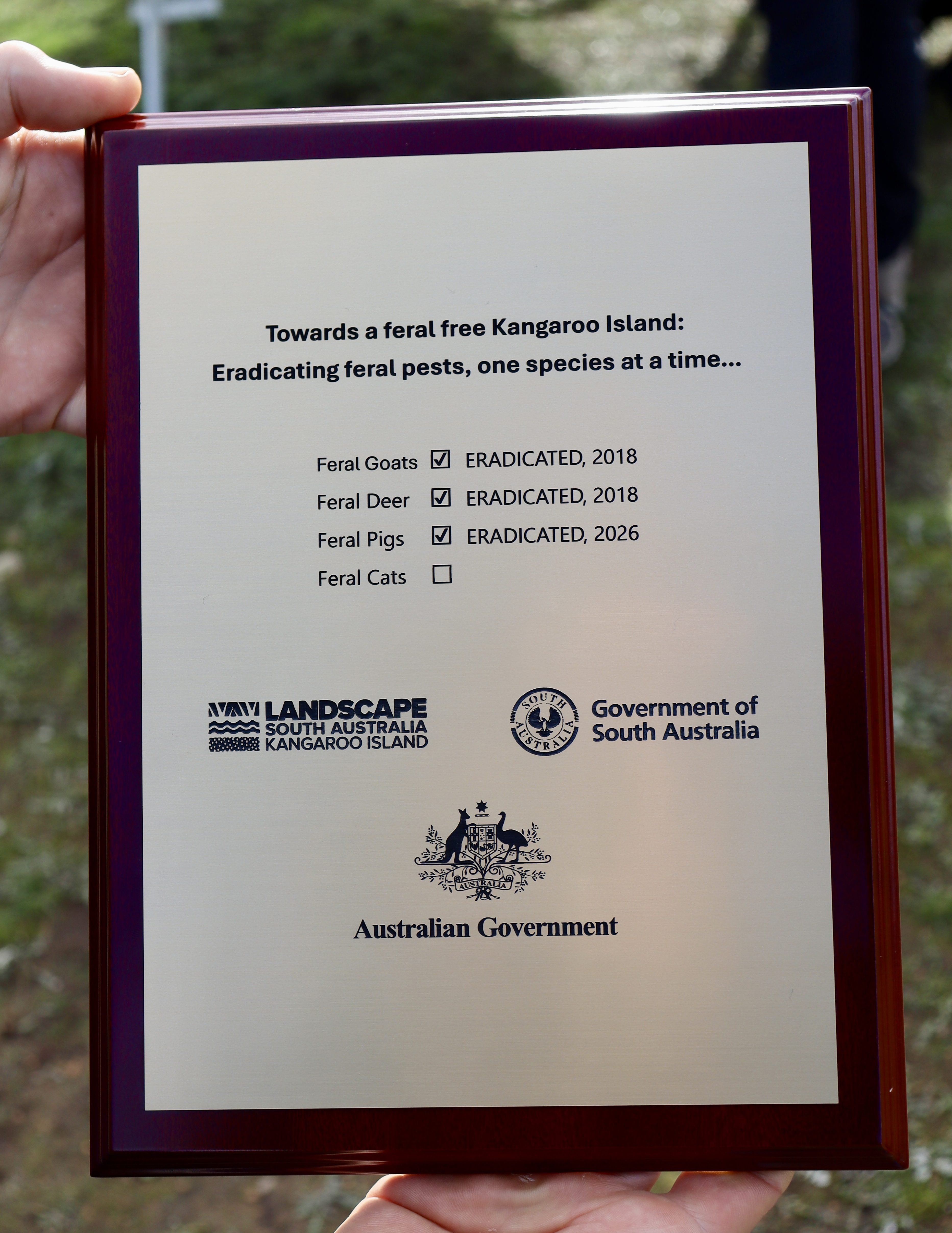
Feral pigs now join the list of other invasive species recently eradicated from the island, including goats and deer. Now, the focus will shift more to removing cats, although that is a much more challenging goal.
These achievements do not happen by accident. They come from years of persistence, skilled people on the ground, strong partnerships, landholder support, good science and smart technology. Everyone involves deserves a good pat on the shoulder.
But I want to single out the role of one person in particular — Brad Page. Having a scientist at the helm of a state biosecurity agency who not only understands the science required to achieve such important outcomes, but also values the role of models to direct decision making, is a rarity in the biosecurity world. We need more Brads in biosecurity management. I also thank Brad personally for inviting me to be involved in my small way, and for nurturing the way I should ask the scientific questions that matter.
It was indeed a pleasure to work with the team on this project. But our partnership doesn’t end there! Now we are focussing on feral deer across the state, with many other nasty pests will soon feature in our scientific crosshairs over the coming years.
We will also be producing peer-reviewed summaries, analyses, and descriptions of the process — what worked well, what didn’t, how we overcame challenges, and what had to fall into place to make the program work. That way, others can hopefully profit from the collective experience.




 ConservationBytes.com
Leave a comment