Woodland Recovery Initiative

12 03 2009

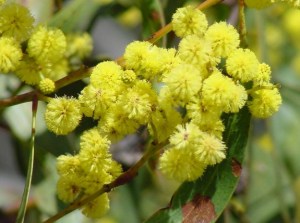
golden wattle (Acacia pycnantha)I’m recommending you view a video presentation (can be accessed by clicking the link below) by A/Prof. David Paton which demonstrates the urgency of reforesting the region around Adelaide. Glenthorne is a 208-ha property 17 km south of the Adelaide’s central business district owned and operated by the University of Adelaide. A major revegetation project called the Woodland Recovery Initative is being organised to achieve the following:

  • reclaim approximately 100 ha of farmland and reconstruct a suitable habitat that encourages the return of native species
  • establish a world-class research centre
  • employ scientists, technicians, teachers and managers to deliver research, educational, community engagement, monitoring and on-ground works
  • develop educational programs that involve local schools in the environmental works, so that young South Australians are engaged in the project and see it as important to the future of their community

In my view, this is a really exciting opportunity to test experimentally the best ways to restore woodlands to maximise biodiversity retention. Once revegetated, the Glenthorne property will link existing reserves to maximise forested area (and as we know, increasing habitat area is one of most effective ways to prevent extinction). The next step is to apply the knowledge gained from the long-term experimentation at Glenthorne to revegetate the regions surrounding Adelaide that have suffered 200 years of heavy deforestation.

I strongly encourage local support of this initiative – it’s not only biodiversity that will benefit – ecosystem services on which the human residents of the greater Adelaide region depend (including extremely important things such as water retention and carbon sequestration) will also be efficiently enhanced by evidence-based ecological restoration of the region. We could certainly use better natural water retention and more carbon sequestration in addition to the re-establishment of many extirpated native species!

VIEW VIDEO BY CLICKING HERE

CJA Bradshaw


One more (excellent) reason to conserve tropical forests

26 02 2009

© K. Sloan Brown

© K. Sloan Brown

Another nail in the deforesters’ justification coffin – tropical forests are worth more intact than cut down. This one from Mongabay.com and one for the Potential section:

Undisturbed tropical forests are absorbing nearly a fifth of carbon dioxide released annually by the burning of fossil fuels, according to an analysis of 40 years of data from rainforests in the Central African country of Gabon.

Writing in the journal Nature, Simon Lewis and colleagues report that natural forests are an immense carbon sink, helping slow the rise in atmospheric CO2 levels.

“We are receiving a free subsidy from nature,” said Simon Lewis, a Royal Society research fellow at the University of Leeds. “Tropical forest trees are absorbing about 18% of the CO2 added to the atmosphere each year from burning fossil fuels, substantially buffering the rate of climate change.”

But the good news may not last for long. Other research suggests that as tropical forests fall to loggers, dry out due to rising temperatures, and burn, their capacity to absorb carbon is reduced.

The research, which combined the new data from African rainforests with previously published data from the Americas and Asia, lends support to the idea that old-growth forests are critical to addressing climate change. Recent climate negotiations have included debates on compensating tropical countries for reducing emissions from deforestation and forest degradation (“REDD” or “avoided deforestation”).

“To get an idea of the value of the sink, the removal of nearly 5 billion tonnes of carbon dioxide from the atmosphere by intact tropical forests, based on realistic prices for a tonne of carbon, should be valued at around £13 billion per year,” said study co-author Lee White, Gabon’s Chief Climate Change Scientist. “This is a compelling argument for conserving tropical forests.”

“Predominantly rich polluting countries should be transferring substantial resources to countries with tropical forests to reduce deforestation rates and promote alternative development pathways,” added Lewis.

The new findings show that tropical forests account for roughly half of the 8.5 billion tons of carbon that is sequestered in terrestrial sources each year, the balance is absorbed by soils and other types of vegetation. Another 8.5 billion tons dissolved in oceans, leaving 15 billion of the 32 billion tons emitted by humans each year in the atmosphere. Deforestation accounts for roughly 6 billion tons of greenhouse gas emissions – greater than the emissions from all the world’s planes, ships, trucks, and cars.

Note – the contention by Muller-Landau that the Lewis and colleagues’ findings are not realistic due to ‘regeneration’ demonstrates her ignorance of recent work demonstrating the sequestration aspect of mature forests. But more importantly, this cherry-picked gripe, even if it were plausible, is almost of no consequence. With much of the world’s tropical forests already badly degraded or destroyed, there will inevitably be large areas of regenerating forests for centuries to come (i.e., time periods relevant to climate change projections). We haven’t even managed to reduce the RATE of tropical deforestation, so the opportunities for regeneration will persist, making the Lewis result all the more important. Muller-Landau is known for her unrealistic and anti-conservationist views, so her comments are hardly surprising. My advice – take her opinions with a very large shaker of salt (or better yet, ignore entirely).

CJA Bradshaw


Wake Up, Freak Out

9 10 2008
© Leo Murray

© Leo Murray

An excellent, short animated film about the perils of climate change and its implications for biodiversity (including humans). Highly recommended.

This really isn’t about polar bears any more. At this very moment, the fate of civilization itself hangs in the balance.

It turns out that the way we have been calculating the future impacts of climate change up to now has been missing a really important piece of the picture. It seems we are now dangerously close to the tipping point in the world’s climate system; this is the point of no return, after which truly catastrophic changes become inevitable.

Wake Up, Freak Out – then Get a Grip is a short, animated film about climate change by Leo Murray.


Primary forests as global carbon sinks

13 09 2008

Certainly one for the Potential list…

p00zbhgzA new paper by Sebastien Luyssaert  and colleagues in Nature entitled Old-growth forests as global carbon sinks deserves a mention here.

Many have argued under the climate change mitigation banner that so-called ‘old-growth’ (let’s call them primary forests henceforth to distinguish them from [usually] younger secondary forests) do not provide net carbon uptake because most of their growth has occurred in the past. In other words, they provide a carbon store, but do not take much more out of the atmosphere once they’ve attained a certain ecological equilibrium. This was a major impediment for the argument that protecting such forests could be achieved economically by valuing them in national or global carbon-trading schemes. It was a shame considering that it seems the economic incentives to protect such forests were falling on deaf ears because (a) governments and industry tend to regard the quick turn-around option of timber extraction as more economically sensible and (b) of the difficulty of valuing ecosystem services provided by primary forests.

But not so, say Luyssaert and colleagues! After scouring an array of studies and databases they conclude that forests between 15 and 800 years of age do in fact continue to uptake carbon and so are not carbon ‘neutral’. Brilliant! With this latest evidence in hand, I hope the economic incentives to preserve the little remaining primary forests around the world and the ecosystem services they provide will encourage governments and industry to invest more in their preservation than their destruction. It’s worth noting here too that once such forests are destroyed (e.g., timber extraction), the majority of their stored carbon (both actual and potential via future carbon uptake) are released back to the atmosphere, thus exacerbating climate change. As such, valuing the preservation of pristine forests on the carbon-trading market should receive a far higher weighting that secondary plantations or other sequestration schemes.

CJA Bradshaw

Add to FacebookAdd to NewsvineAdd to DiggAdd to Del.icio.usAdd to StumbleuponAdd to RedditAdd to BlinklistAdd to Ma.gnoliaAdd to TechnoratiAdd to Furl


Classics: Ecosystem Services

2 09 2008

‘Classics’ is a category of posts highlighting research that has made a real difference to biodiversity conservation. All posts in this category will be permanently displayed on the Classics page of ConservationBytes.com

tobewell_homeEhrlich, P.R., H. A. Mooney. (1983). Extinction, substitution, and ecosystem services. BioScience 33, 248-254

I may be mistaken, but I think this is one of the earliest appearances of the term ‘ecosystem services‘, which is essentially the concept that intact biological communities and functioning species interactions provide humanity with a host of ‘services’ that support or improve our quality of life. The ongoing assault on species and habitats around the globe are, to use Ehrlich & Mooney’s words “accompanied by severe degradation of the public service functions of the systems”.

What are ecosystem services? The list is long and varied, and much of them remain largely unquantified, but I’ll attempt to list the more important ones here:

Add your favourite to the list – there are plenty of sources that expand on these. For starters try the Millennium Ecosystem Assessment, the Wikipedia entry, the Ecological Society of America and Gretchen Daily’s lab at Standford University.

What is the value of ecosystem services to humanity?

This is a fairly controversial area because of the difficulty of measuring the link between ecosystem function and the services they provide, but also by the decision to include direct and direct costs of providing the services artificially. However, many people have attempted to put them into financial terms – Robert Costanza and colleagues put together some figures (see here, here, and here for examples) that attracted some criticism. Nonetheless, ecosystems are estimated to provide us with trillions of dollars worth of goods and services. Some examples from the Ecological Society of America:

  • Much of the Mississippi River Valley’s natural flood protection services were destroyed when adjacent wetlands were drained and channels altered. As a result, the 1993 floods resulted in property damages estimated at twelve billion dollars partially from the inability of the Valley to lesson the impacts of the high volumes of water.
  • Over 100,000 different animal species – including bats, bees, flies, moths, beetles, birds, and butterflies – provide free pollination services. One third of human food comes from plants pollinated by wild pollinators. The value of pollination services from wild pollinators in the U.S. alone is estimated at four to six billion dollars per year.
  • Eighty percent of the world’s population relies upon natural medicinal products. Of the top 150 prescription drugs used in the U.S., 118 originate from natural sources: 74 percent from plants, 18 percent from fungi, 5 percent from bacteria, and 3 percent from one vertebrate (snake species). Nine of the top 10 drugs originate from natural plant products.

What does this mean for conservation of biodiversity? Well, since scientists and policy makers alike have embraced the concept, we now have a much more convincing argument for maintaining the intactness of natural ecosystems. In the past we found it hard to convince those struggling to make ends meet (or even to obtain their next meal) about the importance of preventing species extinctions. Why should someone worried about whether or not his or her family will survive another day give a rat’s arse about species conservation? Well, the degradation of ecosystem services ensuing from species extinctions means that everyone’s – including the poorest – lives are reduced in quality and duration as we destroy these systems. See a previous post on Conservation for the People for more information.

CJA Bradshaw

Add to FacebookAdd to NewsvineAdd to DiggAdd to Del.icio.usAdd to StumbleuponAdd to RedditAdd to BlinklistAdd to Ma.gnoliaAdd to TechnoratiAdd to Furl


Australian Wet Tropics Biosequestration Project

28 08 2008

Guest post from Penny van Oosterzee, Degree Celsius:

© P. van Oosterzee
© P. van Oosterzee

The Wet Tropics Regional Biosequestration Project Development Document was launched last week on the global stage, for public scrutiny, via the Climate Community and Biodiversity (CCB) website. There are only a dozen other cases in the world that have managed to reach this level of scrutiny.

The CCB standards are used in both the voluntary global markets and also for CDM (clean development mechanism) projects (only afforestation and reforestation) that have significant biodiversity outcomes. It is well known that land use, land use change, and forestry provides the most cost-effective means of reducing greenhouse gas emissions globally, and we believe the Wet Tropics project is at the leading edge of showing how.

The Wet Tropics Project is the world’s first regional biocarbon verification case based on community NRM (Natural Resource Management) activities, aggregating different bio-sequestration activities (reforestation, assisted natural regeneration, avoided deforestation, grazing land management, reduced use of fertiliser in agriculture) of myriad landholders in one verification case.

The initiative of using NRM Regional Plan’s as a basis for biosequestration project design is an innovation that can be rolled out across the state and nationally. Using Regional Plans ensures scientifically robust monitoring outcomes because of the adoption of systems already in place for monitoring. Economically the approach allows trading to occur at the regional and landholder level, and sets the stage for new livelihoods in regional Australia in a climate constrained world.

The Wet Tropics Project is itself a pilot for the NRM regions comprising the catchments of the Great Barrier Reef which are pivotal for its the survival. The Wet Tropics Project also helps to inform national policy debates since both Garnaut and the Federal Government’s Green Paper point out the importance of forestry and agriculture but fail to provide any way forward, and are on a watching brief for solutions.

The Wet Tropics initiative with its link to regional plans immediately enables entry into other global developments such as water quality credits and biodiversity credits.

See also the Degree Celsius website for more information.

Add to FacebookAdd to NewsvineAdd to DiggAdd to Del.icio.usAdd to StumbleuponAdd to RedditAdd to BlinklistAdd to Ma.gnoliaAdd to TechnoratiAdd to Furl


Native forests reduce the risk of catastrophic floods

20 08 2008

A-Pakistan-Army-helicopte-004Each year extreme floods kill or displace hundreds of thousands of people and cause billions of dollars in damage to property. The consequences of floods are particularly catastrophic in developing countries generally lacking the infrastructure to deal adequately with above-average water levels.

For centuries it has been believed that native forest cover reduced the risk and severity of catastrophic flooding, but there has been strong scientific debate over the role of forests in flood mitigation.

Forest loss is currently estimated at 13 million hectares each year, with 6 million hectares of that being primary forest previously untouched by human activities. These primary forests are considered the most biologically diverse ecosystems on the planet, but this realisation has not halted their immense rate of loss.

Last year my colleagues and I published a paper entitled Global evidence that deforestation amplifies flood risk and severity in the developing world in Global Change Biology (highlighted in Nature and Faculty of 1000) that has finally provided tangible evidence that there is a strong link between deforestation and flood risk. Read the rest of this entry »


Beef is bad; Skippy is better

7 08 2008

© AWBC

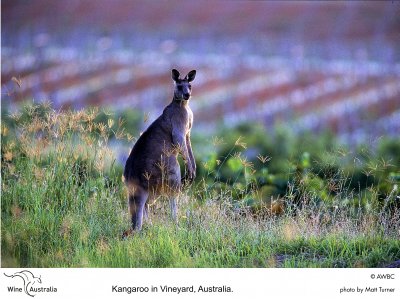
One for the ‘potential‘ list – George Wilson and Melanie Edwards of Australian Wildlife Services have just published a paper in the Early View section of Conservation Letters entitled Native wildlife on rangelands to minimize methane and produce lower-emission meat: kangaroos versus livestock.I am particularly moved by this one for several reasons: (1) it is one of the first really good policy pieces on why we should be eating more kangaroos and fewer sheep and cattle in Australia, (2) it moves past the ridiculous welfare issues that have prevented people from embracing kangaroo harvest in this country, (3) it provides an excellent model for reducing our reliance on non-native livestock for protein worldwide, (4) I love eating macropods (flavour, nutritional value, tenderness – see basic cooking instructions below), and (4) I was responsible for editing the manuscript for publication in Conservation Letters.

Hard-hoofed livestock pastoralism has been the economic backbone of Australia since Europeans first managed to scratch out a living on this harsh land. It has always been a bit of a battle raising largely European-adapted livestock (cattle, sheep, goats) on the driest inhabited continent in the world, but the innovative and persevering Australian cocky has managed to pull it off. However, such livestock pastoralism has been implicated in the extinction of at least 20 mammal species and threatens around 25 % of the plant species listed as endangered in Australia (Wilson & Edwards 2008). It’s also becoming more difficult to raise water-thirsty livestock as our rainfall dwindles with climate change.

Now as Wilson and Edwards point out, there are many carbon-related benefits for switching our protein dependency to kangaroos. Read the rest of this entry »


The Great Disruption

6 08 2008

If ever there was a plea for conservation actions that really do something to reverse the catastrophic ecosystem and ensuing economic crashes that are happening worldwide, its embodied in this essay by Paul Gilding. I won’t write much more on the subject because Paul says it so much more eloquently and thoroughly than I can. Please read his Scream Crash Boom 2: The Great Disruption.

CJA Bradshaw