How I feel about climate change

7 10 2014

pissed offAngry. Furious. Livid. And a just little bit sad.

Well, I’m not pissed off with ‘climate change’ per se – that would be ridiculous. I am extremely pissed off with those who are doing their damnedest to prevent society from doing anything meaningful about it.

The reason I’m thinking and writing about this at the moment is because last week I was approached by Joe Duggan of The Australian National University who has put together a rather clever and engaging website. The point of the website is simple – demonstrate to people that those studying climate-change science are human beings with feelings; we are not autistic, empirical automatons that conspire to ruin your day. We measure, we model and we analyse, but we’re also very much affected personally by what we observe every day in our careers.

So I grabbed a pen (not something I do very often, and my finger joints complained bitterly as a result) and hand-wrote the following letter. You might be take aback a little by my sentiment, but I assure you it’s an honest representation of my emotional state at the moment:

Dear Joe,

My overwhelming emotion is anger; anger that is fuelled not so much by ignorance, but by greed and profiteering at the expense of future generations. I am not referring to some vague, existential bonding to the future human race; rather, I am speaking as a father of a seven year-old girl who loves animals and nature in general. As a biologist, I see irrefutable evidence every day that human-driven climate disruption will turn out to be one of the main drivers of the Anthropocene mass extinction event now well under way.

Read the rest of this entry »


A convenient truth: global push for carbon-based conservation

19 05 2014

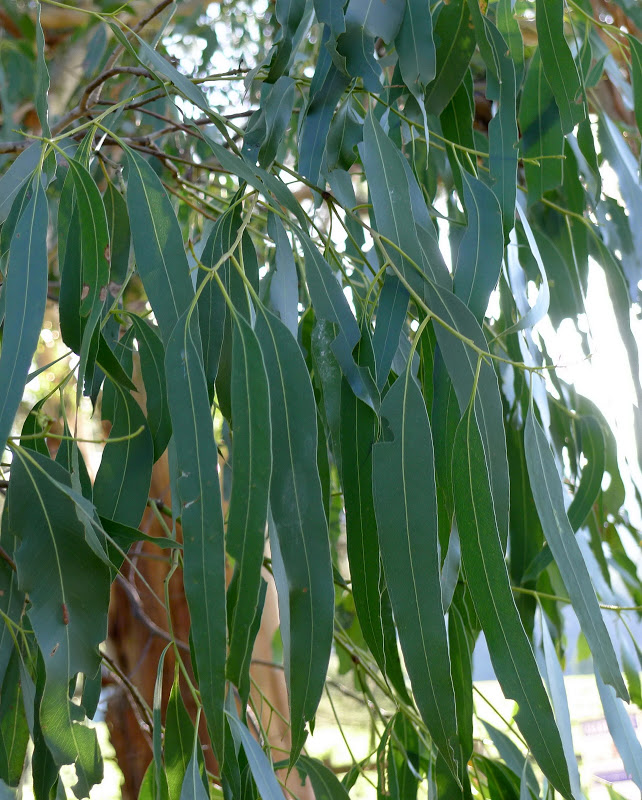
Eucalyptus viminalis (Manna Gum) - leaf, adultI’ve just written an article for the Australian River Restoration Centre‘s RipRap magazine, and they have given me permission to reproduce it here.

The brave, new green world of the carbon economy hasn’t exactly taken off as desired. Perhaps it’s because it wasn’t really planned from the outset, or maybe it is still too abstract for most people to accept, digest and incorporate into their daily lives. An emergent property of society’s generally slow awakening to the challenge of climate disruption, is that it will be a long time before we accept its full suite of incarnations.

The infant carbon economy is, however, well and truly alive and kicking, so it is important to try and plan for its growing influence on our decision making. Bumps in the road aside, the carbon economy has mostly been a blessing (actual and potential) for biodiversity conservation projects the world over.

In principle, the aim of the carbon economy is rather straight-forward: charge people a certain amount for each unit of carbon dioxide equivalents they release, and then use that money to develop approaches that further increase carbon sequestration or limit emissions. It’s a ‘build-it-and-they-will-come’ framework, where increasing financial impetus to restrict emissions is enhanced by society’s evolution towards better approaches and technology.

The operational side of the carbon economy is unfortunately much more muddled, with vested interests and political gaming weakening its implementation. Nonetheless, we persevere. Read the rest of this entry »


You know it’s hot when it’s too hot to ….

16 01 2014
© T. Brandon

© T. Brandon

My post’s title might be a good candidate title for a punk song in the 2030s (maybe by a re-incarnation of the Dead Kennedys).

I am currently sitting under my solar-powered ceiling fan as Adelaide is declared the world’s hottest city (and not in the funky, cultural, fun way), and I can’t help but contemplate climate change models predicting the fate of biodiversity over the coming decades. Because it’s far, far too hot to work outside, I’m perusing the latest interesting articles on the subject and I came across this recent little gem.

Also recommended on F1000Prime by Ary Hoffman, the paper, Using physiology to predict the responses of ants to climatic warming, by Sarah Diamond and colleagues touches on many aspects of climate predictions that need to be considered. I summarise these briefly here.

While no physiologist, I have dabbled in the past, although up until quite recently I didn’t see that physiology per se had much to do with conservation. It turns out that climate change has spawned an entire sub-discipline called ‘conservation physiology‘, which focuses inter alia on how species can/will/might respond and adapt to a warmer, climatically disrupted world.

What struck me about Diamond & colleagues’ paper was that yet again, it’s not as simple as heat-stressing a species experimentally and making a prediction on its future distribution (ecology is complex). No, the complexity comes in various forms that makes each species a little different from each other. Using North American ant species subjected to various warming scenarios in large (5 m) enclosures, they found the following: Read the rest of this entry »


The climate of climate change

4 09 2012

The primary scientific literature on climate change spawns hundreds of debates on an array of topics. When the technical debate among experts, and the obvious uncertainties, are taken up by the media, they are typically treated as any other topic, which ends up in some people not trusting science and others exploiting the ‘debate’ for their own interests.

Many media debates consist of one moderator and several speakers with two confronting views. When the topic under discussion affects our daily life (e.g., unemployment), the average spectator will often agree with one of the views. When the topic affects people (apparently) in a general fashion (e.g., climate change), the spectator might distrust or simply ignore both views. Thus, the media shapes public opinion such that people’s perception of the news becomes black, white, “I don’t believe it” or “it doesn’t exist”. Public debates on climate change are like a ‘contact sport’ (1), a team has to win in a contest where both parties alternate attack and defence. The participation of speakers without specialised expertise on climate change, especially if they represent short-term political and economic interests, instigates public mistrust and inhibition (2). This situation erodes the informative role that science and scientists must play in the creation of novel environmental policies aiming to improve the present and future wellbeing of our society (3, a Science paper unsurprisingly challenged by US administration’ bastion Fred Singer: 4). Read the rest of this entry »


You’re not even remotely concerned enough

31 08 2012

I’ve just returned from a 6-week trip to the United States and I am now dealing with the intensity of things left undone for so long [sigh]. But that trip was interesting for many reasons. First, and as I’ve already posted, I finished a book with Paul Ehrlich that will be out sometime early in 2013 (but I won’t deal with that here). I also attended an interesting, if slightly confusing, conference on ecosystem services. And finally, I had the pleasure of meeting Tony Barnosky in person, and we decided that we should definitely collaborate on a few things.

Another thing that struck me – and this happens no matter how often I visit the U.S., is just how completely insane that country’s politics are. The extremist, libertarian, plutotheocratic bullshit spewed by the far right to the detriment of the very people who support them is enough to make you vomit. And this startling and thoroughly backward world-view is now starting to penetrate more and more into Australian society and politics. From an environmental perspective, it’s a continuation of a downhill slide that started with Reagan’s destruction of environmentalism in the U.S., and Joh Bjelke-Petersen‘s war on the environment in Australia, and will only continue to get worse.

Of course, the main victim of reason in all these polemic politics is that we are doing next to nothing to mitigate horrendous climate disruption. Only yesterday, George Monbiot was lamenting (nay, pleading) that our governments are doing practically nil to avoid what can only be described as the greatest threat to our way of life since the World War II – in fact, the War and its associated holocaust is small bikkies compared to what awaits us.

And this is the most stressing part – even people who choose to use their brains and accept that we have an immense, global problem on our hands generally are not even remotely concerned enough. Read the rest of this entry »