Wobbling to extinction

31 08 2009

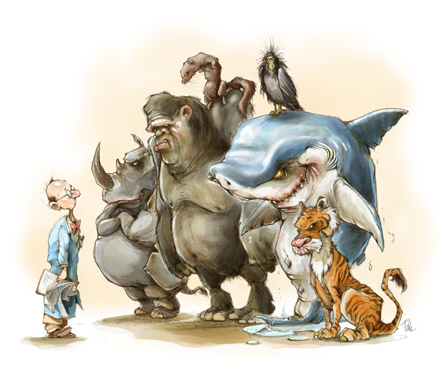
crashI’ve been meaning to highlight for a while a paper that I’m finding more and more pertinent as a citation in my own work. The general theme is concerned with estimating extinction risk of a particular population, species (or even ecosystem), and more and more we’re finding that different drivers of population decline and eventual extinction often act synergistically to drive populations to that point of no return.

In other words, the whole is greater than the sum of its parts.

In other, other words, extinction risk is usually much higher than we generally appreciate.

This might seem at odds with my previous post about the tendency of the stochastic exponential growth model to over-estimate extinction risk using abundance time series, but it’s really more of a reflection of our under-appreciation of the complexity of the extinction process.

In the early days of ConservationBytes.com I highlighted a paper by Fagan & Holmes that described some of the few time series of population abundances right up until the point of extinction – the reason these datasets are so rare is because it gets bloody hard to find the last few individuals before extinction can be confirmed. Most recently, Melbourne & Hastings described in a paper entitled Extinction risk depends strongly on factors contributing to stochasticity published in Nature last year how an under-appreciated component of variation in abundance leads to under-estimation of extinction risk.

‘Demographic stochasticity’ is a fancy term for variation in the probability of births deaths at the individual level. Basically this means that there will be all sorts of complicating factors that move any individual in a population away from its expected (mean) probability of dying or reproducing. When taken as a mean over a lot of individuals, it has generally been assumed that demographic stochasticity is washed out by other forms of variation in mean (population-level) birth and death probability resulting from vagaries of the environmental context (e.g., droughts, fires, floods, etc.).

‘No, no, no’, say Melbourne & Hastings. Using some relatively simple laboratory experiments where environmental stochasticity was tightly controlled, they showed that demographic stochasticity dominated the overall variance and that environmental variation took a back seat. The upshot of all these experiments and mathematical models is that for most species of conservation concern (i.e., populations already reduced below to their minimum viable populations size), not factoring in the appropriate measures of demographic wobble means that most people are under-estimating extinction risk.

Bloody hell – we’ve been saying this for years; a few hundred individuals in any population is a ridiculous conservation target. People must instead focus on getting their favourite endangered species to number at least in the several thousands if the species is to have any hope of persisting (this is foreshadowing a paper we have coming out shortly in Biological Conservationstay tuned for a post thereupon).

Melbourne & Hastings have done a grand job in reminding us how truly susceptible small populations are to wobbling over the line and disappearing forever.

CJA Bradshaw

Add to FacebookAdd to NewsvineAdd to DiggAdd to Del.icio.usAdd to StumbleuponAdd to RedditAdd to BlinklistAdd to Ma.gnoliaAdd to TechnoratiAdd to Furl


Not-so-scary maths and extinction risk

27 08 2009
© P. Horn

© P. Horn

Population viability analysis (PVA) and its cousin, minimum viable population (MVP) size estimation, are two generic categories for mathematically assessing a population’s risk of extinction under particular environmental scenarios (e.g., harvest regimes, habitat loss, etc.) (a personal plug here, for a good overview of general techniques in mathematical conservation ecology, check out our new chapter entitled ‘The Conservation Biologist’s Toolbox…’ in Sodhi & Ehrlich‘s edited book Conservation Biology for All by Oxford University Press [due out later this year]). A long-standing technique used to estimate extinction risk when the only available data for a population are in the form of population counts (abundance estimates) is the stochastic exponential growth model (SEG). Surprisingly, this little beauty is relatively good at predicting risk even though it doesn’t account for density feedback, age structure, spatial complexity or demographic stochasticity.

So, how does it work? Well, it essentially calculates the mean and variance of the population growth rate, which is just the logarithm of the ratio of an abundance estimate in one year to the abundance estimate in the previous year. These two parameters are then resampled many times to estimate the probability that abundance drops below a certain small threshold (often set arbitrarily low to something like < 50 females, etc.).

It is simple (funny how maths can become so straightforward to some people when you couch them in words rather than mathematical symbols), and rather effective. This is why a lot of people use it to prescribe conservation management interventions. You don’t have to be a modeller to use it (check out Morris & Doak’s book Quantitative Conservation Biology for a good recipe-like description).

But (there’s always a but), a new paper just published online in Conservation Letters by Bruce Kendall entitled The diffusion approximation overestimates extinction risk for count-based PVA questions the robustness when the species of interest breeds seasonally. You see, the diffusion approximation (the method used to estimate that extinction risk described above) generally assumes continuous breeding (i.e., there are always some females producing offspring). Using some very clever mathematics, simulation and a bloody good presentation, Kendall shows quite clearly that the diffusion approximation SEG over-estimates extinction risk when this happens (and it happens frequently in nature). He also offers a new simulation method to get around the problem.

Who cares, apart from some geeky maths types (I include myself in that group)? Well, considering it’s used so frequently, is easy to apply and it has major implications for species threat listings (e.g., IUCN Red List), it’s important we estimate these things as correctly as we can. Kendall shows how several species have already been misclassified for threat risk based on the old technique.

So, once again mathematics has the spotlight. Thanks, Bruce, for demonstrating how sound mathematical science can pave the way for better conservation management.

CJA Bradshaw

Add to FacebookAdd to NewsvineAdd to DiggAdd to Del.icio.usAdd to StumbleuponAdd to RedditAdd to BlinklistAdd to Ma.gnoliaAdd to TechnoratiAdd to Furl


Vortex of travel to RAMAStan

9 06 2009


Just a short post to say that the frequency of posts might decline somewhat over the coming weeks. I’m currently travelling in the US on a mixture of leave and work.

From the work side of things, I’ll be heading shortly to Harvard University in Boston to spend some time with colleague Navjot Sodhi of the National University of Singapore who’s finishing up a year-long Hrdy Fellowship there. We’ll be joined by my close friend and colleague, Barry Brook, and Resit Akçakaya of RAMAS fame. We’ll be working on a few ideas regarding extinction dynamics, modelling and climate change projections for species distributions and risk.

We’ll be heading next to visit Bob Lacy of VORTEX fame at the Chicago Zoological Society. We’ll be joined by Phil Miller of the IUCN‘s Species Survival Commission (SSC) Conservation Breeding Specialist Group, JP Pollak of Cornell University, and maybe Jon Ballou of the Smithsonian National Zoological Park. We’re hoping to help take the next generation of species vulnerability software into a more realistic framework that accounts for the complexities of climate change.

I’m looking forward to the trip and meeting new colleagues.

CJA Bradshaw


Classics: Ecological Triage

27 03 2009

It is a truism that when times are tough, only the strongest pull through. This isn’t a happy concept, but in our age of burgeoning biodiversity loss (and economic belt-tightening), we have to make some difficult decisions.In this regard, I suggest Brian Walker’s1992 paper Biodiveristy and ecological redundancy makes the Classics list.

Ecological triage is, of course, taken from the medical term triage used in emergency or wartime situations. Ecological triage refers to the the conservation prioritisation of species that provide unique or necessary functions to ecosystems, and the abandonment of those that do not have unique ecosystem roles or that face almost certain extinction given they fall well below their minimum viable population size (Walker 1992). Financial resources such as investment in recovery programmes, purchase of remaining habitats for preservation, habitat restoration, etc. are allocated accordingly; the species that contribute the most to ecosystem function and have the highest probability of persisting are earmarked for conservation and others are left to their own devices (Hobbs & Kristjanson 2003).

This emotionally empty and accounting-type conservation can be controversial because public favourites like pandas, kakapo and some dolphin species just don’t make the list in many circumstances. As I’ve stated before, it makes no long-term conservation or economic sense to waste money on the doomed and ecologically redundant. Many in the conservation business apply ecological triage without being fully aware of it. Finite pools of money (generally the paltry left-overs from some green-guilty corporation or under-funded government initiative) for conservation mean that we have to set priorities – this is an entire discipline in its own right in conservation biology. Reserve design is just one example of this sacrifice-the-doomed-for-the good-of-the-ecosystem approach.

Walker (1992) advocated that we should endeavour to maintain ecosystem function first, and recommended that we abandon programmes to restore functionally ‘redundant’ species (i.e., some species are more ecologically important than others, e.g., pollinators, prey). But how do you make the choice? The wrong selection might mean an extinction cascade (Noss 1990; Walker 1992) whereby tightly linked species (e.g., parasites-hosts, pollinators-plants, predators-prey) will necessarily go extinct if one partner in the mutualism disappears (see Koh et al. 2004 on co-extinctions). Ecological redundancy is a terribly difficult thing to determine, especially given that we still understand relatively little about how complex ecological systems really work (Marris 2007).

The more common (and easier, if not theoretically weaker) approach is to prioritise areas and not species (e.g., biodiversity hotspots), but even the criteria used for area prioritisation can be somewhat arbitrary and may not necessarily guarantee the most important functional groups are maintained (Orme et al. 2005; Brooks et al. 2006). There are many different ways of establishing ‘priority’, and it depends partially on your predilections.

More recent mathematical approaches such as cost-benefit analyses (Possingham et al. 2002; Murdoch et al. 2007) advocate conservation like a CEO would run a profitable business. In this case the ‘currency’ is biodiversity, and so a fixed financial investment must maximise long-term biodiversity gains (Possingham et al. 2002). This essentially estimates the potential biodiversity saved per dollar invested, and allocates funds accordingly (Wilson et al. 2007). Where the costs outweigh the benefits, conservationists move on to more beneficial goals. Perhaps the biggest drawback with this approach is that it’s particularly data-hungry. When ecosystems are poorly measured, then the investment curve is unlikely to be very realistic.

CJA Bradshaw

Add to FacebookAdd to NewsvineAdd to DiggAdd to Del.icio.usAdd to StumbleuponAdd to RedditAdd to BlinklistAdd to Ma.gnoliaAdd to TechnoratiAdd to Furl

(Many thanks to Lochran Traill and Barry Brook for co-developing these ideas with me)


Classics: the Allee effect

22 12 2008

220px-Vortex_in_draining_bottle_of_waterAs humanity plunders its only home and continues destroying the very life that sustains our ‘success’, certain concepts in ecology, evolution and conservation biology are being examined in greater detail in an attempt to apply them to restoring at least some elements of our ravaged biodiversity.

One of these concepts has been largely overlooked in the last 30 years, but is making a conceptual comeback as the processes of extinction become better quantified. The so-called Allee effect can be broadly defined as a “…positive relationship between any component of individual fitness and either numbers or density of conspecifics” (Stephens et al. 1999, Oikos 87:185-190) and is attributed to Warder Clyde Allee, an American ecologist from the early half of the 20th century, although he himself did not coin the term. Odum referred to it as “Allee’s principle”, and over time, the concept morphed into what we now generally call ‘Allee effects’.

Nonetheless, I’m using Allee’s original 1931 book Animal Aggregations: A Study in General Sociology (University of Chicago Press) as the Classics citation here. In his book, Allee discussed the evidence for the effects of crowding on demographic and life history traits of populations, which he subsequently redefined as “inverse density dependence” (Allee 1941, American Naturalist 75:473-487).

What does all this have to do with conservation biology? Well, broadly speaking, when populations become small, many different processes may operate to make an individual’s average ‘fitness’ (measured in many ways, such as survival probability, reproductive rate, growth rate, et cetera) decline. The many and varied types of Allee effects can work together to drive populations even faster toward extinction than expected by chance alone because of self-reinforcing feedbacks (see also previous post on the small population paradigm). Thus, ignorance of potential Allee effects can bias everything from minimum viable population size estimates, restoration attempts and predictions of extinction risk.

A recent paper in the journal Trends in Ecology and Evolution by Berec and colleagues entitled Multiple Allee effects and population management gives a more specific breakdown of Allee effects in a series of definitions I reproduce here for your convenience:

Allee threshold: critical population size or density below which the per capita population growth rate becomes negative.

Anthropogenic Allee effect: mechanism relying on human activity, by which exploitation rates increase with decreasing population size or density: values associated with rarity of the exploited species exceed the costs of exploitation at small population sizes or low densities (see related post).

Component Allee effect: positive relationship between any measurable component of individual fitness and population size or density.

Demographic Allee effect: positive relationship between total individual fitness, usually quantified by the per capita population growth rate, and population size or density.

Dormant Allee effect: component Allee effect that either does not result in a demographic Allee effect or results in a weak Allee effect and which, if interacting with a strong Allee effect, causes the overall Allee threshold to be higher than the Allee threshold of the strong Allee effect alone.

Double dormancy: two component Allee effects, neither of which singly result in a demographic Allee effect, or result only in a weak Allee effect, which jointly produce an Allee threshold (i.e. the double Allee effect becomes strong).

Genetic Allee effect: genetic-level mechanism resulting in a positive relationship between any measurable fitness component and population size or density.

Human-induced Allee effect: any component Allee effect induced by a human activity.

Multiple Allee effects: any situation in which two or more component Allee effects work simultaneously in the same population.

Nonadditive Allee effects: multiple Allee effects that give rise to a demographic Allee effect with an Allee threshold greater or smaller than the algebraic sum of Allee thresholds owing to single Allee effects.

Predation-driven Allee effect: a general term for any component Allee effect in survival caused by one or multiple predators whereby the per capita predation-driven mortality rate of prey increases as prey numbers or density decline.

Strong Allee effect: demographic Allee effect with an Allee threshold.

Subadditive Allee effects: multiple Allee effects that give rise to a demographic Allee effect with an Allee threshold smaller than the algebraic sum of Allee thresholds owing to single Allee effects.

Superadditive Allee effects: multiple Allee effects that give rise to a demographic Allee effect with an Allee threshold greater than the algebraic sum of Allee thresholds owing to single Allee effects.

Weak Allee effect: demographic Allee effect without an Allee threshold.

For even more detail, I suggest you obtain the 2008 book by Courchamp and colleagues entitled Allee Effects in Ecology and Conservation (Oxford University Press).

CJA Bradshaw

Add to FacebookAdd to NewsvineAdd to DiggAdd to Del.icio.usAdd to StumbleuponAdd to RedditAdd to BlinklistAdd to Ma.gnoliaAdd to TechnoratiAdd to Furl

(Many thanks to Salvador Herrando-Pérez for his insight on terminology)


Moving forward with extinction risk predictions from climate change

15 10 2008

A little belated, but I thought this was worth mentioning for the Potential list…

182kydeee9pyxjpgOne from Keith and colleagues in Biology Letters entitled Predicting extinction risks under climate change: coupling stochastic population models with dynamic bioclimatic habitat models is a nice example of a way forward to predict the extremely complex array of ecological processes and patterns that may arise from rapid climate change.

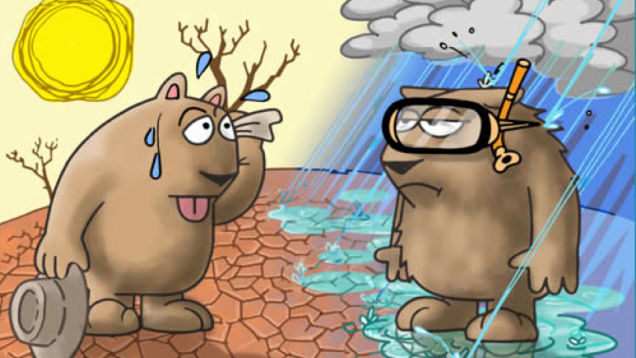
One of the major problems with predicting how biodiversity might respond to climate change is the typical simplicity of single-species ‘envelope’ models – these models basically use tolerance limits (generally, physiological) or optimum conditions to predict how a species’ distribution might change. Unfortunately, this usually negates the complex dynamics of populations, the dispersal capacity of individuals, and interactions with other species that may all dominate possible responses. In other words, climatic envelope models may be way, way off (and probably vastly optimistic).

Keith and colleagues have brought us a step closer to better predictions of (and hopefully, better responses to) climate change effects on species. They linked a time series of habitat suitability models with spatially explicit stochastic population models to explore factors that influence the viability of plant species populations in South African fynbos, a global biodiversity hotspot. They discovered that complex interactions between life history, disturbance regimes and distribution patterns mediate species extinction risks under climate change.

Well done! Our next challenge is to incorporate multiple species’ interactions into such models (just to make them as mind-bogglingly complex as possible) to give us better approaches for managing our depauperate future.

CJA Bradshaw

Add to FacebookAdd to NewsvineAdd to DiggAdd to Del.icio.usAdd to StumbleuponAdd to RedditAdd to BlinklistAdd to Ma.gnoliaAdd to TechnoratiAdd to Furl