Biowealth – a lexical leap forward for biodiversity appreciation

17 12 2010

Here’s a little idea I’ve been kicking around in my head that I’d like to invite you to debate. Call it an ‘Open Thread’ in the spirit of BraveNewClimate.com’s successful series.

© The Economist

Let’s face it, ‘biodiversity’ is a slippery and abstract concept for most people. Hell, even most ecologists have a hard time describing what biodiversity means. To the uninitiated, it seems simple enough. It’s just the number of species, isn’t it?

Well, no. It isn’t.

Unfortunately, it’s far, far more complicated. First, the somewhat arbitrary pigeon-holing of organisms into Linnaean taxonomic boxes doesn’t really do justice to the genetic gradients within species, among populations and even between individuals. We use the pigeon-hole taxonomy because it’s convenient, that’s all. Sure, molecular genetics has revolutionised the concept, but to most people, a kangaroo is a kangaroo, a robin is a robin and an earthworm is an earthworm. Hierarchical Linnaean taxonomy prevails.

Then there’s the more prickly issue of α, β and γ diversity. α diversity essentially quantifies species richness within a particular area, whereas β diversity is the difference in α diversity between ecosystems. γ diversity is used to measure overall diversity for the different constituent ecosystems of a region. Scale is very, very important (see our recent book chapter for more on this). Read the rest of this entry »


Global erosion of ecosystem services

14 09 2010

A few months ago I was asked to give a lecture about erosion of ecosystem services to students in the University of Adelaide‘s Issues in Sustainable Environments unit. I gave that lecture last week and just uploaded a slidecast of the presentation (with audio) today.

I’ve reproduced the lecture here for your viewing pleasure. I hope you find the 45-minute presentation useful. Note that the first few minutes cover me referring to the Biodiversity film short that I posted not too long ago.

CJA Bradshaw


Simple educational tool to explain biodiversity

26 08 2010

I just came across this little educational video explaining what biodiversity is, what it does, and what we’re doing to it. If you’re looking to explain biodiversity and its importance to someone, this is a good place to start. Not a bad tool for school children either.


CJA Bradshaw


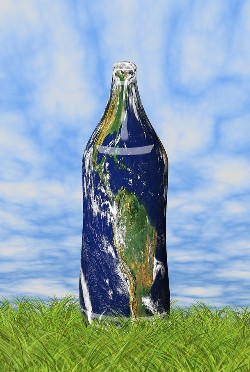
The planet is our bottle

22 05 2010

Professor Chris Thomas, conservation ecologist extraordinaire, tells it like it is. This might be a little basic for many ConservationBytes.com readers, but it’s the kind of pitch that might convince even the stupidest of yobs. I reproduce the Guardian article here in full.

Why do we care about nature, and can we actually quantify what the benefits are? This is what the UN’s The Economics of Ecosystems and Biodiversity (Teeb) project is all about, and the answer is remarkable. The natural world – biodiversity – provides us with food, materials and energy. We eat animals and plants; insects pollinate many of the foods we consume; microbes in the soil provide the nutrients the plants to grow; vegetation and soil biodiversity reduce flooding and release clean drinking water; vegetation soaks up a substantial proportion of the climate warming carbon dioxide gasses that we emit. The list goes on and on. Urban and rural citizens alike rely on these natural products and benefits.

The real cost of damaging nature, it turns out, is at least 10 times greater than the cost of maintaining the ecosystem as it is so that we can reap the associated benefits. To take an example close to the University of York where I work, the costs of flood defence construction and flood-related insurance claims in the Vale of York hugely outweigh the agricultural benefits of drainage ditches and overgrazing in the River Ouse catchment. Rather than treating nature as a pleasant luxury, Teeb argues that we should integrate the real costs and benefits within our decision-making. It should not be the preserve solely of environment and conservation ministries, but it should be at the core of the activities of finance departments. Teeb argues that we should get rid of subsidies that are environmentally damaging and reward beneficial activities that maintain natural ecosystems. This might be by including the costs of damage within the purchase price of products to encourage us to buy the least damaging items, and potentially by paying land owners and countries directly to maintain natural ecosystems. Farmers in the Ouse catchment have recently received payments for blocking their drainage ditches; and the perverse subsidies that rewarded farmers by the animal – resulting in over-grazing, trampling and erosion – have been removed. It can be done. Achieving this at a global scale is far more difficult. Read the rest of this entry »


A world of hurt – the webinar

19 05 2010

Ah – finally. The World of Hurt webinar (many thanks to @fang for showing me how to do this).

CJA Bradshaw


A world of hurt – the video

19 05 2010

In case you couldn’t be there in person, here’s the podcast of last week’s talk I gave at the University of Adelaide’s Research Tuesdays seminar series – A world of hurt. The true global death count of environmental degradation.

View video here. See also the ‘Between the Buttons’ preamble AudioBoo here.

CJA Bradshaw

Add to FacebookAdd to DiggAdd to Del.icio.usAdd to StumbleuponAdd to RedditAdd to BlinklistAdd to TwitterAdd to TechnoratiAdd to Yahoo BuzzAdd to Newsvine


A world of hurt

11 05 2010

Just a quick link to an AudioBoo sound bite preamble about my University of Adelaide‘s Research Tuesdays talk tonight on the human health implications of environmental degradation. Follows on nicely from last week’s ‘environmental reprobates‘ post. Full podcast of talk to come shortly.

Many thanks to Allan and Ian of ‘Between the Buttons‘.

CJA Bradshaw


The maggot of the plant world – mangroves

12 04 2010

I don’t know how many of my readers have waded through a mangrove swamp before – if you have, you’ll know it’s no ‘walk in the park’. They are generally mosquito-infested with waist-deep mud, have more creepy-crawlies than you can poke a stick at, and in some places (such as my former stomping ground, the Northern Territory of Australia) are down-right dangerous due to lovelies such as saltwater crocodiles.

But, most people probably don’t know just how important mangroves are. Just like the maggot who can sicken the hardiest of individual, under-appreciated mangroves provide major ecosystem services.

For example, did you know that mangroves:

  1. Protect inland human communities from damage caused by coastal erosion and storms?
  2. Provide critical habitat for a variety of terrestrial, estuarine and marine species? Indeed, it has been estimated that ~80 % of fish catches globally depend directly or indirectly  on mangroves.
  3. Are a source and sink for nutrients and sediments for other inshore marine habitats including seagrass beds and coral reefs?
  4. Protect coasts from floods?
  5. Process nutrient and organic matter?
  6. Control sediment?
  7. Provide at least US$1.6 billion per year in ecosystem services worldwide?
  8. Sequester up to 25.5 million tonnes of carbon per year?
  9. Provide more than 10% of essential organic carbon to the global oceans?
  10. Occupy only 0.12% of the world’s total land area?

Pretty staggering, no?

So, even if you don’t like them, it’s difficult to deny that they’re important.

But, like almost every other habitats worldwide, mangroves are on the big downward slide. In a new paper in PLoS One by Polidoro & colleagues entitled The loss of species: mangrove extinction risk and geographic areas of global concern, the authors not only highlight the above benefits, they quantify just how badly the 70 mangrove species around the world are faring. Read the rest of this entry »


Global pollinator declines

11 03 2010

Mention anything about ecosystem services – those ecological functions arising from the interactions between species that provide some benefit (source of food/clean water, health, etc.) to humanity1 – and one of the most cited examples is pollination.

It’s really a no-brainer, hence its popularity as an example. Pollinators (mainly insects, but birds, bats and other assorted species too) don’t exist to pollinate plants; rather, their principal source of food acquisition happens to spread around the gametes of the plants they regularly visit. Evolution has favoured the dependence of species in such ways because the mutualism benefits all involved, and in some cases, this dependence has become obligate. So when the habitats that pollinators need to survive are reduced or destroyed, inevitably their population sizes decline and the plants on which they feed lose their main sources of gene-spreading.

So what? Well, about 80 % of all wild plant species require insect pollinators for fruit and seed set, and about 75 % of all human crops require pollination by insects (mostly bees). So it’s pretty frightening to consider that although our global population is at 6.8 billion and growing rapidly, our main food pollinators (bees) are declining globally (see also previous post on bee declines). Indeed, domestic honey bee stocks have declined in the USA by 59 % since 1947 and in Europe by 25 % since 1985. Scared yet?

Another thing people don’t tend to get is that a bee cannot live on rapeseed alone. Most pollinators require intact forests to complete many of their other life history requirements (breeding, shelter, etc.) and merely forage occasionally in crop lands. Cut down all the adjacent bush, and your crops will suffer accordingly.

These, and other titbits to keep you awake at night and worry about what your grandchildren might eat are highlighted in a recent review in Trends in Ecology and Evolution by Potts and colleagues entitled Global pollinator declines: trends, impacts and drivers.

What’s driving all this loss? Several things, but it’s mainly due to ‘land-use change’ (a bullshit word people use generally to mean habitat loss, fragmentation and degradation). However, invasive species competition, pathogens and parasites, and climate change (and the synergies amongst all of these) are all contributing.

It always amazes me when people ask me why biodiversity is important. Despite the overwhelming knowledge we’ve accumulated about how functioning ecosystems make the planet liveable, despite it just being plainly stupid to think that humans are somehow removed from normal biological processes, and even with such in-your-face examples of global pollinator declines and the real, extremely worrying implication for food supplies, many people just don’t seem to get it. Every tree you cut down, every molecule of carbon dioxide you release, every drop of water you waste will punish you and your family directly for generations to come. How much more self-evident can you get?

Humanity seems to have a very poorly developed sense of self-preservation.

CJA Bradshaw

1It’s amazingly arrogant and anthropocentric to think of anything in ecosystems as ‘providing benefits to humanity’. After all, we’re just another species in a complex array of species within ecosystems – we just happen to be one of the numerically dominant ones, excel at ecosystem ‘engineering’ and as far as we know, are the only (semi-) sentient of the biologicals. Although the concept of ecosystem services is, I think, an essential abstraction to place emphasis on the importance of biodiversity conservation to the biodiversity ignorant, it does rub me a little the wrong way. It’s almost ascribing some sort of illogical religious perspective that the Earth was placed in its current form for our eventual benefit. We might be a fairly new species in geological time scales, but don’t think of ecosystems as mere provisions for our well-being.

ResearchBlogging.orgPotts, S., Biesmeijer, J., Kremen, C., Neumann, P., Schweiger, O., & Kunin, W. (2010). Global pollinator declines: trends, impacts and drivers Trends in Ecology & Evolution DOI: 10.1016/j.tree.2010.01.007

Add to FacebookAdd to DiggAdd to Del.icio.usAdd to StumbleuponAdd to RedditAdd to BlinklistAdd to TwitterAdd to TechnoratiAdd to Yahoo BuzzAdd to Newsvine


Band-aid approach to fix ecological and economic ruin

10 04 2009

An excellent article by Andrew Simms (policy director of the New Economics Foundation) posted by the BBC:

It is like having a Commission on Household Renovation agonise over which expensive designer wallpaper to use for papering over plaster cracks whilst ignoring the fact that the walls themselves are collapsing on subsiding foundations.

While most governments’ eyes are on the banking crisis, a much bigger issue – the environmental crisis – is passing them by, says Andrew Simms. In the Green Room this week, he argues that failure to organise a bailout for ecological debt will have dire consequences for humanity.

“Nature Doesn’t Do Bailouts!” said the banner strung across Bishopsgate in the City of London.

Civilisation’s biggest problem was outlined in five words over the entrance to the small, parallel reality of the peaceful climate camp. Their tents bloomed on the morning of 1 April faster than daisies in spring, and faster than the police could stop them.

Across the city, where the world’s most powerful people met simultaneously at the G20 summit, the same problem was almost completely ignored, meriting only a single, afterthought mention in a long communiqué.

World leaders dropped everything to tackle the financial debt crisis that spilled from collapsing banks.

Gripped by a panic so complete, there was no policy dogma too deeply engrained to be dug out and instantly discarded. We went from triumphant, finance-driven free market capitalism, to bank nationalisation and moving the decimal point on industry bailouts quicker than you can say sub-prime mortgage.

But the ecological debt crisis, which threatens much more than pension funds and car manufacturers, is left to languish.

It is like having a Commission on Household Renovation agonise over which expensive designer wallpaper to use for papering over plaster cracks whilst ignoring the fact that the walls themselves are collapsing on subsiding foundations.

Read the rest of this entry »


Potsdam Initiative: Economics of Ecosystems and Biodiversity

1 10 2008

moneygamiA recent report from the European Union with which I was marginally involved has been published online.

The meeting of the environment ministers of the G8 countries and upcoming industrialising countries took part in what has been dubbed the ‘Potsdam Initiative‘ have commissioned a series of reports on the ‘Economic significance of the global loss of biological diversity’.

I quote:

‘In a global study we will initiate the process of analysing the global economic benefit of biological diversity, the costs of the loss of biodiversity and the failure to take protective measures versus the costs of effective conservation.’

The first stage was the report was entitled ‘The Economics of Ecosystems & Biodiversity (TEEB)’. Mr Pavan Sukhdev, Managing Director and Head of Deutsche Bank’s Global Markets business in India, and a Founder-Director of the ‘Green Accounting for Indian States Project’, an initiative of the Green Indian States Trust (GIST) to set up an economic valuation and national accounting framework to measure sustainability for India, was recently appointed as the independent Study Leader.

The overall aims of the study are to evaluate the costs of the loss of biodiversity and the associated decline in ecosystem services, and to compare them with the costs of effective conservation and ‘sustainable’ use. The overall aim is to increase awareness of the value of biodiversity and ecosystem services to facilitate the development of cost-effective policy responses to the problem.

The interim report is available here, and the final report will be published shortly on the dedicated website here. The title of the final report of the first phase is THE ECONOMICS OF ECOSYSTEMS AND BIODIVERSITY: SCOPING THE SCIENCE.

I was involved specifically in Section 4.13 ‘Regulation of Natural Hazards’ which are defined ‘as infrequent natural phenomena that – during a relatively short period of time – pose a high level of threat to [human] life, health or property. These include seismic events (volcanic eruptions, earthquakes, tsunamis), extreme weather events (hurricanes, floods), avalanches and land slides. My contribution was mainly with respect to the role of deforestation on flood risk.

The report was jointly prepared by Ana Rodrigues and Andrew Balmford.

CJA Bradshaw

Add to FacebookAdd to NewsvineAdd to DiggAdd to Del.icio.usAdd to StumbleuponAdd to RedditAdd to BlinklistAdd to Ma.gnoliaAdd to TechnoratiAdd to Furl