I’d be surprised if any Australians with even a passing interest in science could claim not to have listened to the Science Show before, and I suspect a fair mob of people overseas would be in the same boat.
It was a real privilege to talk with Robyn about our work on the ghastly future, and as always, the production value is outstanding.
After the rather astounding response to our Ghastly Future paper published in January this year (> 443,000 views and counting; 61 citations and counting), we received a Commentary that was rather critical of our article.
A Malthusian slur
We have finally published a Response to the Commentary, which is now available online (accepted version) in Frontiers in Conservation Science. Given that it is published under a Creative Commons Attribution License (CC BY), I can repost the Response here:
In their comment on our paper Underestimating the challenges of avoiding a ghastly future, Bluwstein et al.2 attempt to contravene our exposé of the enormous challenges facing the entire human population from a rapidly degrading global environment. While we broadly agree with the need for multi-disciplinary solutions, and we worry deeply about the inequality of those who pay the costs of biodiversity loss and ecological collapse, we feel obligated to correct misconceptions and incorrect statements that Bluwstein et al.2 made about our original article.
After incorrectly assuming that our message implied the existence of “one science” and a “united scientific community”, the final paragraph of their comment contradicts their own charge by calling for the scientific community to “… stand in solidarity”. Of course, there is no “one science” — we never made such a claim. Science is by its nature necessarily untidy because it is a bottom-up process driven by different individuals, cultures, perspectives, and goals. But it is solid at the core. Scientific confluence is reached by curiosity, rigorous testing of assumptions, and search for contradictions, leading to many — sometimes counter-intuitive or even conflicting — insights about how the world works. There is no one body of scientific knowledge, even though there is good chance that disagreements are eventually resolved by updated, better evidence, although perhaps too slowly. That was, in fact, a main message of our original article — that obligatory specialisation of disparate scientific fields, embedded within a highly unequal and complex socio-cultural-economic framework, reduces the capacity of society to appreciate, measure, and potentially counter the complexity of its interacting existential challenges. We agree that scientists play a role in political struggles, but we never claimed, as Bluwstein et al.2 contended, that such struggles can be “… reduced to science-led processes of positive change”. Indeed, this is exactly the reason our paper emphasized the political impotence surrounding the required responses. We obviously recognize the essential role social scientists play in creating solutions to avoid a ghastly future. Science can only provide the best available evidence that individuals and policymakers can elect to use to inform their decisions.
We certainly recognise that there is no single policy or polity capable of addressing compounding and mounting problems, and we agree that that there is no “universal understanding of the intertwined socio-ecological challenges we face”. Bluwstein et al.2 claimed that we had suggested scientific messaging alone can “… adequately communicate to the public how socio-ecological crises should be addressed”. We did not state or imply such ideas of unilateral scientific power anywhere in our article. Indeed, the point of framing our message as pertaining to a complex adaptive system means that we cannot, and should not, work towards a single goal. Instead, humanity will be more successful tackling challenges simultaneously and from multiple perspectives, by exploiting manifold institutions, technologies, approaches, and governances to match the complexity of the predicament we are attempting to resolve.
Those of us living with cats share our homes with an ancestral predator, one adapted for hunting and the frequent, exclusive consumption of meat. These instincts become fully activated outside the domestic environment, where cats pose a global threat to wildlife. Pets are family. We celebrate their arrival with the same joy as a grand…
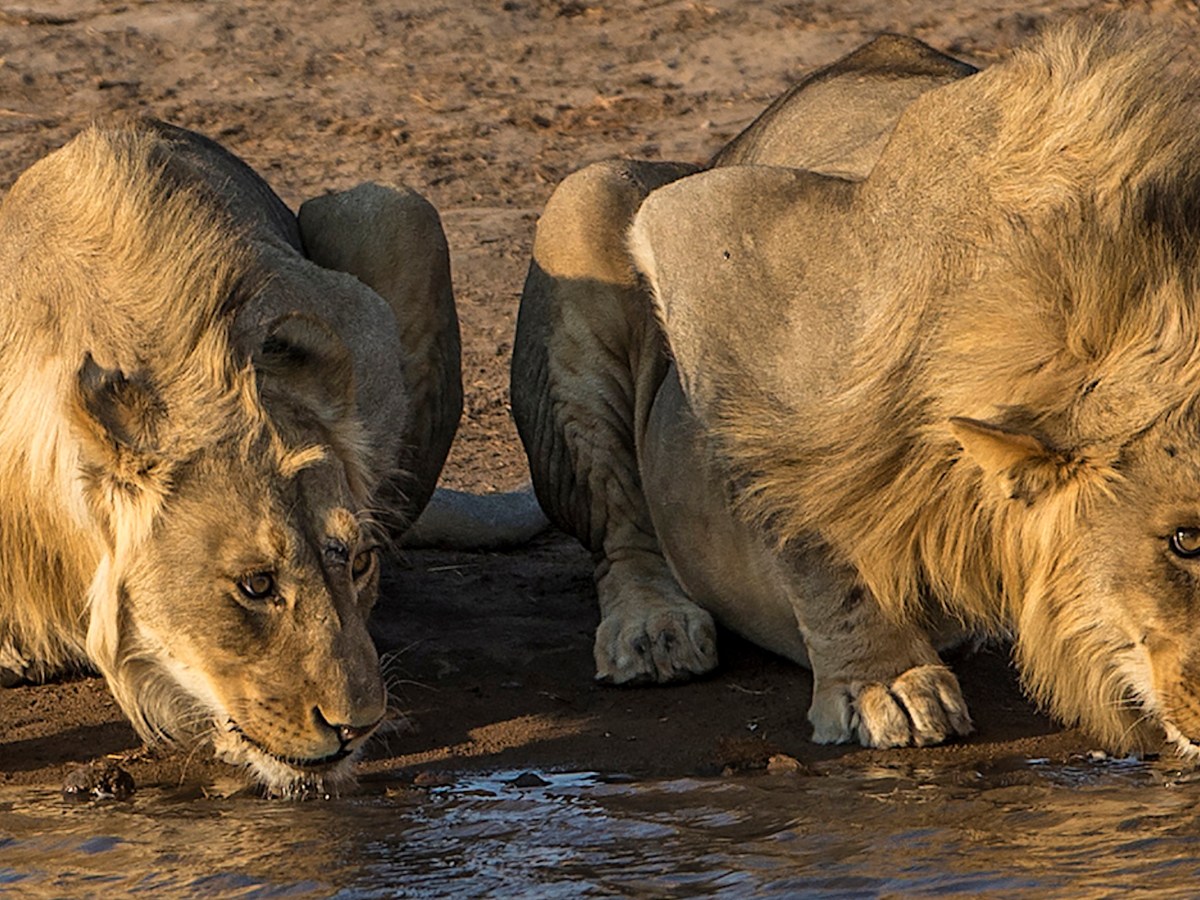
Many animals avoid contact with people. In protected areas of the African savanna, mammals flee more intensely upon hearing human conversations than when they hear lions or sounds associated with hunting. This fear of humans affects how species use and move in their habitat. Throughout our lives, we interact with hundreds of wildlife species without…
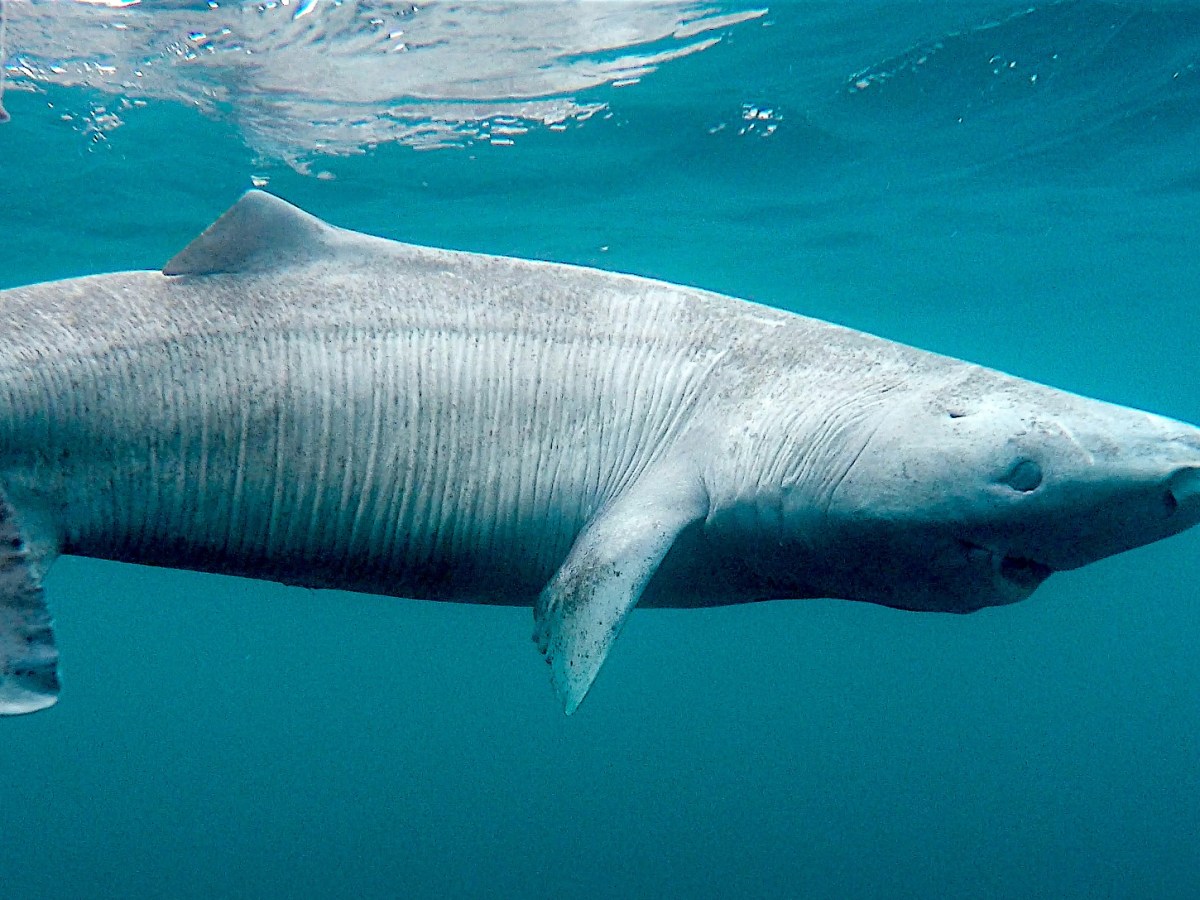
Deep-sea sharks include some of the longest-lived vertebrates known. The record holder is the Greenland shark, with a recently estimated maximum age of nearly 400 years. Their slow life cycle makes them vulnerable to fisheries. Humans rarely live longer than 100 years. But many other animals and plants can live for several centuries or even millennia, particularly…




 ConservationBytes.com
The very worn slur of “neo-Malthusian”
7 09 2021After the rather astounding response to our Ghastly Future paper published in January this year (> 443,000 views and counting; 61 citations and counting), we received a Commentary that was rather critical of our article.
We have finally published a Response to the Commentary, which is now available online (accepted version) in Frontiers in Conservation Science. Given that it is published under a Creative Commons Attribution License (CC BY), I can repost the Response here:
In their comment on our paper Underestimating the challenges of avoiding a ghastly future, Bluwstein et al.2 attempt to contravene our exposé of the enormous challenges facing the entire human population from a rapidly degrading global environment. While we broadly agree with the need for multi-disciplinary solutions, and we worry deeply about the inequality of those who pay the costs of biodiversity loss and ecological collapse, we feel obligated to correct misconceptions and incorrect statements that Bluwstein et al.2 made about our original article.
After incorrectly assuming that our message implied the existence of “one science” and a “united scientific community”, the final paragraph of their comment contradicts their own charge by calling for the scientific community to “… stand in solidarity”. Of course, there is no “one science” — we never made such a claim. Science is by its nature necessarily untidy because it is a bottom-up process driven by different individuals, cultures, perspectives, and goals. But it is solid at the core. Scientific confluence is reached by curiosity, rigorous testing of assumptions, and search for contradictions, leading to many — sometimes counter-intuitive or even conflicting — insights about how the world works. There is no one body of scientific knowledge, even though there is good chance that disagreements are eventually resolved by updated, better evidence, although perhaps too slowly. That was, in fact, a main message of our original article — that obligatory specialisation of disparate scientific fields, embedded within a highly unequal and complex socio-cultural-economic framework, reduces the capacity of society to appreciate, measure, and potentially counter the complexity of its interacting existential challenges. We agree that scientists play a role in political struggles, but we never claimed, as Bluwstein et al.2 contended, that such struggles can be “… reduced to science-led processes of positive change”. Indeed, this is exactly the reason our paper emphasized the political impotence surrounding the required responses. We obviously recognize the essential role social scientists play in creating solutions to avoid a ghastly future. Science can only provide the best available evidence that individuals and policymakers can elect to use to inform their decisions.
We certainly recognise that there is no single policy or polity capable of addressing compounding and mounting problems, and we agree that that there is no “universal understanding of the intertwined socio-ecological challenges we face”. Bluwstein et al.2 claimed that we had suggested scientific messaging alone can “… adequately communicate to the public how socio-ecological crises should be addressed”. We did not state or imply such ideas of unilateral scientific power anywhere in our article. Indeed, the point of framing our message as pertaining to a complex adaptive system means that we cannot, and should not, work towards a single goal. Instead, humanity will be more successful tackling challenges simultaneously and from multiple perspectives, by exploiting manifold institutions, technologies, approaches, and governances to match the complexity of the predicament we are attempting to resolve.
Read the rest of this entry »Share:
Comments : Leave a Comment »
Tags: commentary, complex adaptive system, consumption, critique, human population, Malthusian, neo-Malthusian, over-population, overshoot, Population
Categories : agriculture, anthropocene, biodiversity, climate change, demography, economics, education, Endarkenment, environmental economics, environmental policy, extinction, food, governance, human overpopulation, poverty, science, societies, sustainability