A very pissed-off New Guinean versus the Destroyer of Forests

31 03 2011

I really don’t know where this came from (weird e-mail trail), but it was too good not to share.

For those of you who follow ConservationBytes.com, you might remember a fairly recent post where a group of leading conservation biologists exposed one of the most dangerous men in the world – Alan Oxley, the (very embarrassing to admit) Australian destroyer of tropical biodiversity and future welfare of hundreds of millions of people.

It seems he and his commercial interests (and my, do those fellas lay it on thick) have turned their attention to destroying the last tracts of intact South-East Asian forests (and associated biodiversity) in Papua New Guinea. Kiss some of the most endemic, biodiverse and biowealthy areas on the planet good-bye.

So it was interesting to receive this email that had been sent to Oxley’s front-company, International Trade Strategies (ITS) Global, by one very pissed off Papua New Guinean. I have no idea who ‘Bush Kanaka Mangi’ is, but he sounds the real deal and I wouldn’t want to be Oxley if he ever came across him. I cite verbatim1:

Mr Alan Oxley,

HONESTLY : I am sick of getting this bloody rubbish, bullshit from you and your company ITS Global about palm oil is good for PNG, logging is good for PNG. Who the hell do you think you are ????, you seem in all your articles and consultancy reports as the expert about our country and more knowledgeable about the Melanesian society very well. My assessment of all your electronic newsletter which you circulate widely, your reflections and recommendations all are in no way closer or nearer to the way we Papua New Guineans think and want to do things and develop our nation, all of what you say are totally and purely and absolutely RUBBISH and yet you claim to know everything and know the problems of PNG and our people and on ways to solve our problems and continue your bullshit campaign in support of R&H and all its doing here destroying our forests, our society, manipulating our systems and creating confusion and hell is loose here. Read the rest of this entry »


Classics: Tragedy of the Commons

28 02 2011

Although not a conservation biology paper per se, Hardin’s classic essay (Hardin, 1968) changed the way we think about managing natural resources that lack definitive ownership.

The thesis of the “tragedy of the commons” is that individuals are inherently selfish and usually place their own interests first in using commonly owned resources, thereby resulting in their depletion. Hardin used a hypothetical and simplified situation based on medieval land tenure in Europe (herders sharing a common parcel of land) on which each herder was entitled to graze his cattle. Each herder maximized his gains by putting additional cattle onto the land, even if the carrying capacity of the common was exceeded and overgrazing ensued. The herder, by making an “individually rational decision,” received all the benefits from his cattle, but could in the process deplete the common resource for the entire group. If all herders make such selfish decisions then the common will be depleted, jeopardizing the livelihoods of all.

Read the rest of this entry »


Disaster coming to a coastline near you

24 02 2011

Many of you already know that against all better judgement, the spectacularly audacious Australian Commonwealth government has granted BP offshore drilling rights in our southern waters.

You’d think that with all the evidence that BP is a company that cannot be trusted with this particular form of resource exploitation, we’d be a little bit more discerning when granting exploration permits to them. Apparently not.

In protest and within my rights as an Australian citizen, I wrote to the Minister responsible for the decision, MP Martin Ferguson (Federal Minister for Resources and Energy) to register my protest:

Dear Minister Ferguson,

As an ecologist, academic and citizen, I find it rather astounding that Australia has permitted the deep-sea exploration of oil by BP in our own back garden. The unreasonable environmental risk aside, it simply equates to poor economics – the very real probability of a disaster on the same scale (or larger) than the Gulf of Mexico’s fiasco last year will effectively destroy the commercial fishing and aquaculture industry of our southern coastline overnight. The loss of tourism dollars could arguably exceed even that.

This is most definitely not in Australia’s best interest, and will represent yet another blight on our already poor environmental record (see http://wp.me/phhT4-1cf and http://wp.me/phhT4-Zt). I urge you to reconsider your permission and revoke the licence to drill in our waters. It is a mistake you and your government will regret for decades, and will make the recent flooding disaster in Queensland appear mild in comparison.

Sincerely,
Professor Corey J. A. Bradshaw

I certainly wasn’t expecting the Minister to say suddenly “Oh my. You are right, Prof. Bradshaw. It is a bad decision. I’ll revoke that permission forthwith”, but I was expecting a little bit more than the jumbled form letter I received in reply: Read the rest of this entry »


One billion people still hungry

12 11 2010


overpopulationA few days ago, that printed mouthpiece of Murdoch’s News Corporation in Australia – The Australiani, attacked Paul Ehrlich with a spectacular piece of uninformed gibberish (‘Population bomb still a fizzer 40 years on‘) that we both feel compelled to contest.

The Australian, well-known for its ‘War on Science’, refused to give us the opportunity to respond officially in an Opinion Editorial, so we are compelled to fight back using the blogosphere and our collective networks (which, we might add, probably exceed the distribution of said newspaper). Frankly, it was no surprise that The Australian chose to ignore us.

The article in question was written by Oliver Marc Hartwich of the so-called ‘Centre for Independent Studies’, the hyper-conservative Australian propaganda machine reminiscent of the ultra-right wing American Enterprise Institute, made up of some of Australia’s most powerful business magnates and with no academic affiliation whatsoever. Anything vaguely left-of-centre and even remotely promoting environmental responsibility is considered a viable target.

Recently, we blew the whistle on an equally dangerous man and the institutes he represents – climate-denier Alan Oxley; he and the business interests he represents are responsible for more deforestation, biodiversity loss and financial inequity in South East Asia over the last few decades than almost any single group.

Now we turn our attention to expose the true colours of the Centre for Independent Studies and Mr. Hartwich. Read the rest of this entry »


Wolves in sheep’s clothing: industrial lobbyists and the destruction of tropical forests

25 10 2010


As of this morning, a group of distinguished scientists (which I have had the honour of being invited to join) has released an Open Letter to be published in various media outlets worldwide. The letter addresses some of our major concerns over the misinterpretation of facts, and openly misleading statements, by proponents of deforestation in the Asian tropical region. Professor Bill Laurance, an old favourite on ConservationBytes.com, has led the charge and organised a most impressive and shocking list of assertions. I produce the letter below – I encourage all my readers to distribute it as far and wide as possible in the social media-verse.

An Open Letter about Scientific Credibility and the Conservation of Tropical Forests

To whom it may concern:

As professional scientists employed by leading academic and research institutions, we are writing to alert the general public about some of the claims and practices being used by the World Growth Institute (WGI) and International Trade Strategies Global (ITS), and their affiliated leadership.

WGI and ITS operate in close association. ITS is owned by Alan Oxley, an Australian industrial lobbyist, former trade representative, and former Ambassador who also heads WGI. According to its website1, ITS also has “close associations” with several politically conservative US think tanks, including the American Enterprise Institute, the Competitive Enterprise Institute, and the Heritage Foundation.

In our personal view, WGI and ITS — which are frequently involved in promoting industrial logging and oil palm and wood pulp plantations internationally — have at times treaded a thin line between reality and a significant distortion of facts. Specifically, we assert that: Read the rest of this entry »


Who are the world’s biggest environmental reprobates?

5 05 2010

Everyone is a at least a little competitive, and when it comes to international relations, there could be no higher incentive for trying to do better than your neighbours than a bit of nationalism (just think of the Olympics).

We rank the world’s countries for pretty much everything, relative wealth, health, governance quality and even happiness. There are also many, many different types of ‘environmental’ indices ranking countries. Some attempt to get at that nebulous concept of ‘sustainability’, some incorporate human health indices, and other are just plain black box (see Böhringer et al. 2007 for a review).

With that in mind, we have just published a robust (i.e., to missing data, choices for thresholds, etc.), readily quantifiable (data available for most countries) and objective (no arbitrary weighting systems) index of a country’s relative environmental impact that focuses ONLY on environment (i.e., not human health or economic indicators) – something no other metric does. We also looked at indices relative to opportunity – that is, looking at how much each country has degraded relative to what it had to start with.

We used the following metrics to create a combined environmental impact rank: natural forest loss, habitat conversion, fisheries and other marine captures, fertiliser use, water pollution, carbon emissions from land-use change and threatened species.

The paper, entitled Evaluating the relative environmental impact of countries was just published in the open-access journal PLoS One with my colleagues Navjot Sodhi of the National University of Singapore (NUS) and Xingli Giam, formerly of NUS but now at Princeton University in the USA.

So who were the worst? Relative to resource availability (i.e,. how much forest area, coastline, water, arable land, species, etc. each country has), the proportional environmental impact ranked (from worst) the following ten countries:

  1. Singapore
  2. Korea
  3. Qatar
  4. Kuwait
  5. Japan
  6. Thailand
  7. Bahrain
  8. Malaysia
  9. Philippines
  10. Netherlands

When considering just the absolute impact (i.e., not controlling for resource availability), the worst ten were:

  1. Brazil
  2. USA
  3. China
  4. Indonesia
  5. Japan
  6. Mexico
  7. India
  8. Russia
  9. Australia
  10. Peru

Interestingly (and quite unexpectedly), the authors’ home countries (Singapore, Australia, USA) were in either the worst ten proportional or absolute ranks. Embarrassing, really (for a full list of all countries, see supporting information). Read the rest of this entry »


Greenwash, blackwash: two faces of conservation evil

21 11 2009

Beware false prophets, and especially those masquerading as conservationists (or at least ‘green’) when they are not, in fact, doing anything for conservation at all. But this blog site isn’t about typical greenie evil-corporation-making-a-mess-of-the-Earth sermons (there are plenty of those); it’s instead about real conservation science that has/should/could have a real biodiversity benefits. This is why I highlight the bitey and the toothless together.

With the slow (painfully, inadequately, insufficiently slow) maturation of environmental awareness and the rising plight of biodiversity in general (including our own health and prosperity), it has become almost chic to embrace a so-called ‘green’ perspective. This approach has blown out into a full-scale business model where in many wealthier nations especially, it’s just plain good business to attract the green-conscious consumer to buy more ‘environmentally friendly’ products. Problem is, so many of these products are the farthest thing from green you can imagine (see examples here, here & here). This stimulated the environmentalist Jay Westerveld to coin the term greenwashing in 1986. Greenwashing is basically defined as activities that misleadingly give the impression of environmentally sound management that thereby deflect attention away from the continued pursuit of environmentally destructive activities.

Well, not that the problem has disappeared, or even dissipated (if anything, it’s growing), but I don’t want to focus on that here. Instead, I want to highlight a recent paper in which I was involved that outlines too how environmental groups can be guilty of almost the same sin – claiming businesses, practices, individuals, corporations, etc. are far more environmentally destructive than they really are. This, we termed blackwashing.

The paper by Koh and colleagues entitled Wash and spin cycle threats to tropical biodiversity just came out online in the journal Biotropica, and therein we describe the greenwashing-blackwashing twin conservation evils using the oil palm controversy as an excellent example case. Just in case you didn’t know, much of the tropical world (especially South East Asia) is undergoing massive conversion of native forests to oil palm plantations, to the overwhelming detriment of biodiversity. I’ve covered the issue in several posts on ConservationBytes.com before (see for example Tropical forests worth more standing, Indonesia’s precious peatlands under oil palm fire & More greenwashing from the Malaysian oil palm industry).

Briefly, we demonstrate how the palm oil industry is guilty of the following greenwashes:

On the either side, various environmental groups such as Greenpeace, have promoted the following blackwashes:

  • Orang-utan will be extinct imminently – A gross exaggeration, although something we believe is eventually possible.
  • Avoided deforestation schemes (e.g., REDD) will crash carbon-trading – Again, even economists don’t believe this.

For details, see the paper online.

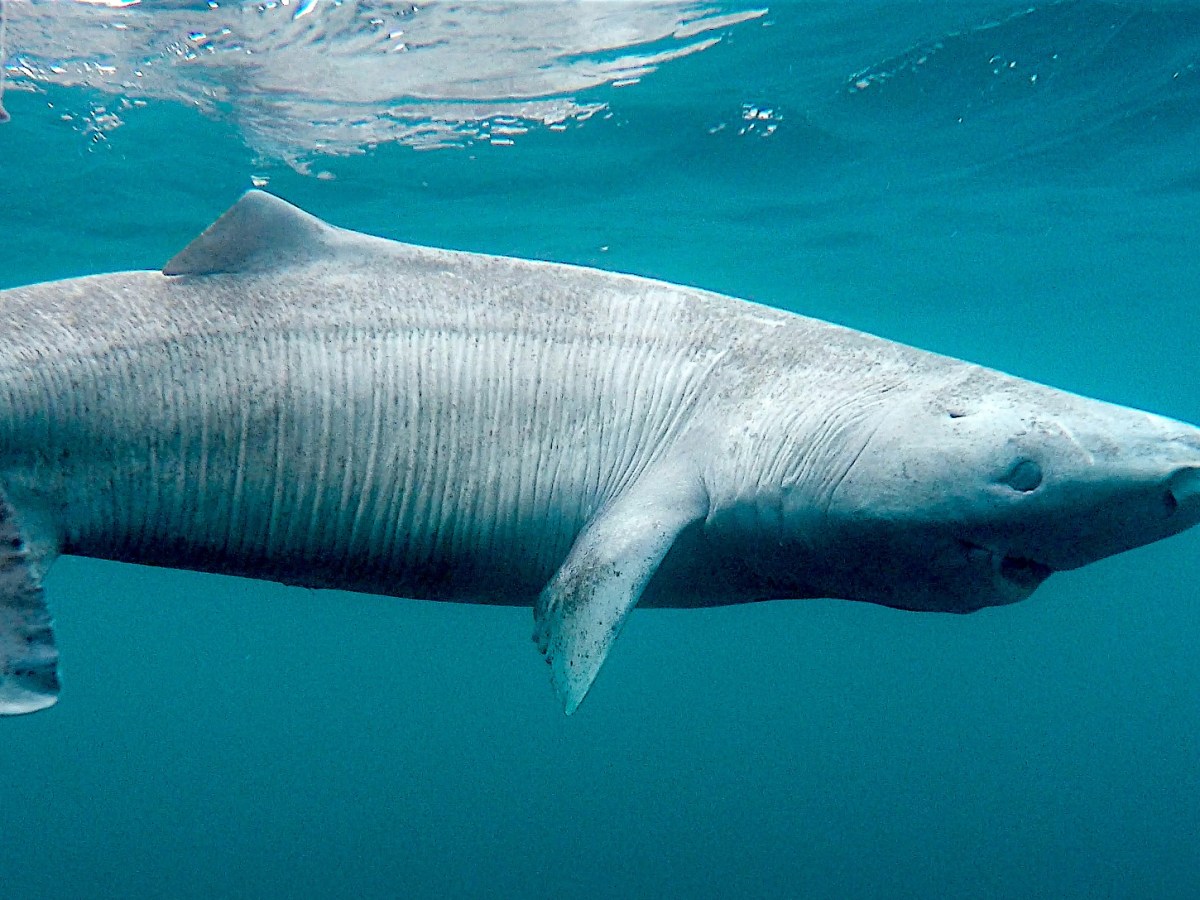
Now, I’d probably tend to believe some of the less outrageous claims made by some environmental groups because if anything, the state of biodiversity is probably overall worse than what most people realise. However, when environmental groups are exposed for exaggerations, or worse, lies, then their credibility goes out the window and even those essentially promoting their cause (e.g., conservation biologists like myself) will have nothing to do with them. The quasi-religious zealotry of anti-whaling campaigns is an example of a terrible waste of funds, goodwill and conservation resources that could be otherwise spent on real conservation gains. Instead, political stunts simply alienate people who would otherwise reasonably contribute to improving the state of biodiversity. Incidentally, an environmental advocacy group in Australia emailed me to support their campaign to highlight the plight of sharks. I am a firm supporter of better conservation of sharks (see recent paper and post about this here). However, when I read their campaign propaganda, the first sentence read:

Almost 90 % of sharks have been wiped out

I immediately distanced myself from them. This is a blatant lie and terrible over-exaggeration. Ninety per cent of sharks HAVE NOT been wiped out. Some localised depletions have occurred, and not one single shark species has been recorded going extinct since records began. While I agree the world has a serious shark problem, saying outrageous things like this will only serve to weaken your cause. My advice to any green group is to get your facts straight and avoid the sensationlist game – you won’t win it, and you probably won’t be successful in doing anything beneficial for the species you purport to save.
CJA Bradshaw

Add to FacebookAdd to NewsvineAdd to DiggAdd to Del.icio.usAdd to StumbleuponAdd to RedditAdd to BlinklistAdd to Ma.gnoliaAdd to TechnoratiAdd to Furl

ResearchBlogging.orgKoh, L., Ghazoul, J., Butler, R., Laurance, W., Sodhi, N., Mateo-Vega, J., & Bradshaw, C. (2009). Wash and Spin Cycle Threats to Tropical Biodiversity Biotropica DOI: 10.1111/j.1744-7429.2009.00588.x




Celebrities actually doing something positive for conservation?

7 05 2009

When I first saw this on the BBC I thought to myself, “Well, just another toothless celebrity ego-stroke to make rich people feel better about the environmental mess we’re in” (well, I am a cynic by nature). I have blogged before on the general irrelevancy of celebrity conservation. But then I looked closer and saw that this was more than just an ‘awareness’ campaign (which alone is unlikely to change anything of substance). The good Prince of Wales and his mates/offspring have put forward The Prince’s Rainforest Project, which (thankfully) not only endeavours to raise awareness about the true value of rain forests, it actually proposes a mechanism to do so. It took a bit to find, but the 52-page report on the PRP website outlines from very sensible approaches. In essence, it all comes down to money (doesn’t everything?).

Their proposed plan to the United Nations Framework Convention on Climate Change (UNFCCC) details some of the following required changes:

  1. Payments to rain forest nations for not deforesting (establish transaction costs and setting short-term ‘conservation aid’ programmes)

  2. Multi-year service agreements (countries sign up for multi-year targets based on easily monitored performance indicators)

  3. Fund alternative, low-carbon economic development plans (fundamental shifts in development targets that explicitly avoid deforestation)

  4. Multi-stakeholder disbursement mechanisms (using funds equitably and minimising corruption)

  5. Tropical Forests Facility (a World Bank equivalent with the express purpose of organising, disbursing and monitoring anti-deforestation money flow)

  6. Country financing from public and private sources (funding initially derived from developed nations in form of ‘aid’)

  7. Rain forest bonds in private capital markets (value country-level ‘income’ as interest payments and incentives within a trade framework)

  8. Nations participate when ready (giving countries the option to advance at the pace dictated by internal politics and existing development rates)

  9. Accelerating long-term UNFCCC agreement on forests (transition to independence post-package)

  10. Global action to address drivers of deforestation (e.g., taxing/banning products grown on deforested land; ‘sustainability’ certification; consumer pressure; national procurement policies)

Now, I’m no economist, nor do I understand all the market nuances of the proposal, but it seems they are certainly on the right track. The value of tropical (well, ALL) forests to humanity are undeniable, and we’re currently in a state of crisis. Let’s hope the Prince and his mob can get the ball rolling.

For what it’s worth, here’s the video promoting the PRP. I could really care less what Harrison Ford and Pele have to say about this issue because I just don’t believe celebrities have any net effect on public behaviour (perceptions, yes, but not behaviour). But look beyond the superficiality and the cute computer-generated frog to the seriousness underneath. Despite my characteristically cynical tone, I give the PRP full support.

Vodpod videos no longer available.

more about “Rainforest film brings out stars“, posted with vodpod


CJA Bradshaw

Add to FacebookAdd to NewsvineAdd to DiggAdd to Del.icio.usAdd to StumbleuponAdd to RedditAdd to BlinklistAdd to Ma.gnoliaAdd to TechnoratiAdd to Furl


Band-aid approach to fix ecological and economic ruin

10 04 2009

An excellent article by Andrew Simms (policy director of the New Economics Foundation) posted by the BBC:

It is like having a Commission on Household Renovation agonise over which expensive designer wallpaper to use for papering over plaster cracks whilst ignoring the fact that the walls themselves are collapsing on subsiding foundations.

While most governments’ eyes are on the banking crisis, a much bigger issue – the environmental crisis – is passing them by, says Andrew Simms. In the Green Room this week, he argues that failure to organise a bailout for ecological debt will have dire consequences for humanity.

“Nature Doesn’t Do Bailouts!” said the banner strung across Bishopsgate in the City of London.

Civilisation’s biggest problem was outlined in five words over the entrance to the small, parallel reality of the peaceful climate camp. Their tents bloomed on the morning of 1 April faster than daisies in spring, and faster than the police could stop them.

Across the city, where the world’s most powerful people met simultaneously at the G20 summit, the same problem was almost completely ignored, meriting only a single, afterthought mention in a long communiqué.

World leaders dropped everything to tackle the financial debt crisis that spilled from collapsing banks.

Gripped by a panic so complete, there was no policy dogma too deeply engrained to be dug out and instantly discarded. We went from triumphant, finance-driven free market capitalism, to bank nationalisation and moving the decimal point on industry bailouts quicker than you can say sub-prime mortgage.

But the ecological debt crisis, which threatens much more than pension funds and car manufacturers, is left to languish.

It is like having a Commission on Household Renovation agonise over which expensive designer wallpaper to use for papering over plaster cracks whilst ignoring the fact that the walls themselves are collapsing on subsiding foundations.

Read the rest of this entry »


Tropical Turmoil II

8 03 2009

In August last year I covered a paper my colleagues (Navjot Sodhi and Barry Brook) and I had in press in Frontiers in Ecology and the Environment entitled Tropical turmoil – a biodiversity tragedy in progress. The paper is now available in the March 2009 issue of the journal (click here to access). We were also fortunate enough to grab the front cover (shown here) and have a dedicated podcast that you can listen to by clicking here about the paper and its findings. I encourage ConservationBytes.com readers to have a listen if they’re interested in learning more about the woeful state of tropical biotas worldwide, and maybe some ways to rectify the problems. The intro to the podcast can be viewed by clicking here.

CJA Bradshaw


More greenwashing from the Malaysian oil palm industry

17 11 2008

© ?

© ?

A recent article from Mongabay.com. What the good doctor Basiron appears to gloss over rather well is that his own country’s very economic future, well-being of its citizenry and long-term sustainability absolutely depends on maintaining large tracts of intact primary forest. The value of its forests far outweighs the short-term ‘development’ gains from palm oil. The backflips, greenwashing and overt profiteering will only be a blip in Malaysia’s economic development, so keep on with the propaganda while you can, Basiron. Why don’t you call a spade a spade – it’s greed, not so-called ‘development’ that’s raping your own country.

Dr. Yusof Basiron, the controversial CEO of the Malaysian Palm Oil Council (MPOC), blogs about the sustainability of palm oil.

Scientists should compare the biodiversity oil palm plantations to other industrial monocultures, not the rainforests they replace, said Dr. Yusof Basiron, CEO of the Malaysian Palm Oil Council (MPOC), in a post on his blog.

“I would also like to encourage environmental scientists not to compare the biodiversity of an agricultural crop such as the oil palm with that of rain forests,” he wrote. “The findings would not win you a Nobel price [sic].”

“If a comparison is to be made, the biodiversity of the oil palm, an agricultural crop, should be compared with that for soyabean or rapeseed, corn or sugarcane or other agricultural crops,” he continued. “Biodiversity that exists in the oil palm plantations is a bonus for all to benefit, while we enjoy the supply of oil for our food need, in addition to palm oil – an agricultural commodity – helping to promote economic growth not only in the developing countries but also in all other countries involved in using the product.”

Oil palm plantations and logged over forest in Malaysian Borneo. While much of the forest land converted for oil palm plantations in Malaysia has been logged or otherwise been zoned for logging, expansion at the expense of natural and protected forest does occur in the country. Reserve borders are sometimes redrawn to facilitate logging and conversion to plantations.
Basiron’s comments are noteworthy because until now he has maintained that oil palm plantations are “planted forests” rather than an industrial crop. Oil palm plantations are indeed biologically impoverished relative to even heavily logged forests – a study published earlier this year showed that oil palm plantations retain less than one-sixth the biodiversity of old growth forests and less than a quarter of that in secondary forests. However when compared with soy or rapeseed farms, which support almost no wildlife, oil palm plantations look a little less like biological deserts. Small measures – like maintaining and restoring forest cover along waterways, conserving peatlands and high value conservation areas, and reducing the use of fertilizers and pesticides – can help augment the biodiversity of existing plantations.

Basiron also noted that oil palm is the highest yielding conventional oilseed on the market – far outstripping the production per unit of area for rapeseed and soy. While its high yield makes oil palm exceedingly profitable – especially during the recent boom in palm oil prices, which recently ended, coinciding with falling oil prices – it also theoretically means that less land needs to be converted to produce the same amount of oil had the land been cultivated with other crops. The problem, say environmentalists, stems from the practice of clearing natural forest for oil palm plantations, which reduces biodiversity, hurts ecosystem functioning, and results in greenhouse gas emissions. While Basiron and the MPOC have flatly denied that natural forest has been cleared for the establishment of oil palm plantations, ground and satellite evidence proves the claims quite false. Nevertheless there are opportunities to covert degraded and abandoned agricultural lands for oil palm, mostly in Indonesia, rather than Malaysia where most land is already under cultivation or forested. While returns would be lower without the “logging subsidy” generated by selling the timber harvested from forest land prior to planting with oil palm, such plantations would face less criticism from the environmental community.

A third point made by Basiron is that Malaysia is a sovereign nation that has same rights to develop its economy as industrialized nations have had. The same concept has been put forth by Brazil over deforestation of the Amazon and China with regards to its rising greenhouse gas emissions.

Basiron writes,

“It is also unethical, immoral and somewhat patronizing for NGOs of the developed countries in Europe to ask developing countries such as Malaysia to stop developing its land. Asking Malaysia to stop developing its land will lead to conflicts and misunderstanding because some states in Malaysia have not yet had the opportunity to develop their agricultural land as they were until a few decades ago under oppressive colonial rule.”

“Sarawak [a state on the island of Borneo] which achieved independence from the British later than Peninsular Malaysia had only developed 8% of its land for agriculture compared to the UK which has over 70% of its land under agriculture. But there are still opportunities in Sarawak and other parts of Malaysia to develop degraded logged over land for planting rubber and oil palm to increase the country’s sources of foreign exchange while not involving the deforestation of the pristine permanent forests.”

While Basiron’s comments will likely be dismissed or ignored by many environmental groups, his points are not the sort that typically provoke outcry from the green lobby. MPOC lands in the most trouble with the environmental community when it attempts to deliberately mislead the marketplace on the environmental performance of palm oil, an approach the group has used repeatedly in recent years with advertising campaigns, “greenwashing” and “astroturfing” techniques, and other propaganda. Of course MPOC is not alone in using these tactics – it follows the model employed widely by industries ranging from U.S. ethanol producers to big oil. The problem for MPOC – and other industries – is that misleading campaigns are only providing more fodder for its enemies. But MPOC is hedging itself. The palm oil marketing group is also employing a second strategy that may pay better dividends in the long run – an effort to improve the environmental performance of palm oil. While the initiative – known as the Roundtable on Sustainable Palm Oil (RSPO) – has stumbled a bit coming out of the blocks, it appears there may be a market for certified palm oil, which would offer producers a premium for mitigating the environmental and social impacts of producing the vegetable oil. The first RSPO-certified palm oil is expected the reach Europe today. Unilever, one of the world’s largest consumers of palm oil, has already pledged to buy only certified palm oil by 2015.

See also previous posts on oil palm at ConservationBytes.com:

Unexpected benefits of falling palm oil prices

Oil palm plantatations destroying tropical biodiversity

Another nail in Borneo’s biodiversity coffin


Wake Up, Freak Out

9 10 2008
© Leo Murray

© Leo Murray

An excellent, short animated film about the perils of climate change and its implications for biodiversity (including humans). Highly recommended.

This really isn’t about polar bears any more. At this very moment, the fate of civilization itself hangs in the balance.

It turns out that the way we have been calculating the future impacts of climate change up to now has been missing a really important piece of the picture. It seems we are now dangerously close to the tipping point in the world’s climate system; this is the point of no return, after which truly catastrophic changes become inevitable.

Wake Up, Freak Out – then Get a Grip is a short, animated film about climate change by Leo Murray.


Tropical Conservation Biology

8 09 2008

An obvious personal plug – but I’m allowed to do that on my own blog ;-)

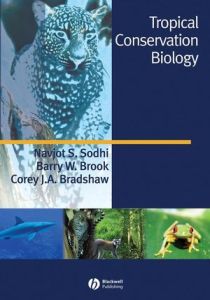
1405150734I’d like to introduce a (relatively) new textbook that my colleagues, Navjot Sodhi and Barry Brook, and I wrote and published last year with Blackwell (now Wiley-Blackwell) Scientific Publishing – Tropical Conservation Biology.

We’re rather proud of this book because it was a timely summary and assessment of the scientific evidence for the degree of devastation facing tropical biodiversity today and in the future. I’ve summarised some of the main issues in a previous post covering a paper we have ‘in press’ that was born of the text book, but obviously the book is a far more detailed account of the problems facing the tropics.

This introductory textbook examines diminishing terrestrial and aquatic habitats in the tropics, covering a broad range of topics including the fate of the coral reefs; the impact of agriculture, urbanisation, and logging on habitat depletion; and the effects of fire on plants and animal survival.

One of the highlights of the book is that each chapter (see below) Includes case studies and interviews with prominent conservation scientists to help situate key concepts in a real world context: Norman Myers (Chapter 1), Gretchen Daily (Chapter 2), William Laurance (Chapter 3), Mark Cochrane (Chapter 4), Daniel Simberloff (Chapter 5), Bruce Campbell (Chapter 6), Daniel Pauly (Chapter 7), Stephen Schneider (Chapter 8), Stuart Pimm (Chapter 9) and Peter Raven (Chapter 10). These biographies are followed by a brief set of questions and answers that focus on some of the most pertinent and pressing issues in tropical conservation biology today. It is our intention that readers of Tropical Conservation Biology will benefit from the knowledge and be inspired by the passion of these renowned conservation experts.

TABLE OF CONTENTS

  1. Chapter 1: Diminishing habitats in regions of high biodiversity. We report on the loss of tropical habitats across the tropics (e.g., deforestation rates). We also highlight the drivers of habitat loss such as human population expansion. Finally, we identify the areas in immediate need of conservation action by elucidating the concept of biodiversity hotspots. Read the rest of this entry »


Tropical turmoil – a biodiversity tragedy in progress

18 08 2008

fragmentationWe recently published (online) a major review showing that the world is losing the battle over tropical habitat loss with potentially disastrous implications for biodiversity and human well-being.

Published online in the Ecological Society of America’s journal Frontiers in Ecology and the Environment, our review Tropical turmoil – a biodiversity crisis in progress concludes that we are “on a trajectory towards disaster” and calls for an immediate global, multi-pronged conservation approach to avert the worst outcomes.

Tropical forests support more than 60 % of all known species, but represent only about 7 % of the Earth’s land surface. But up to 15 million hectares of tropical rainforest are being lost every year and species are being lost at a rate of up to 10000 times higher than would happen randomly without humans present.

This is not just a tragedy for tropical biodiversity, this is a crisis that will directly affect human livelihoods. This is not just about losing tiny species found in the canopies of big rain forest trees few people will ever see, this is about a complete change in ecosystem services that directly benefit human life. Read the rest of this entry »


IUCN Chief Scientist & Asia

15 07 2008

I’m currently attending the Society for Conservation Biology‘s Annual Meeting in Chattanooga, Tennessee, USA and blogging on presentations I think are worth mentioning.

The first plenary talk was given by the IUCN’s Chief Scientist, Jeffrey McNeely, about the issues surrounding biodiversity conservation in Asia. Dr. McNeely gave an interesting background to the human cultural history and diversity of the region, followed by a brief exposé of the conservation issues there (habitat loss, over-exploitation, invasive species, etc). Overall, however, I was disappointed by his lack of emphasis on the magnitude of the conservation crisis Asia is undergoing. There was no mention of the perverse subsidies buffering unsustainable forestry and fishing, the corruption driving habitat loss and habitat degradation, or the massive problems driven by human over-population.

We recently published (currently online) a paper regarding the conservation crisis facing this (and similar regions) in the tropics Tropical turmoil – a biodiversity crisis in progress (see related post), and several of my colleagues have recently outlined just how badly biodiversity is faring in Asia (e.g., see Brook et al. 2003; Sodhi et al. 2004). While I was happy to see Dr. McNeely mention the need for more research on these issues, his statement that he had “depressed [us] with the problems” was a major understatement. He did not nearly go far enough to ‘depress’ his audience of conservation scientists. We are squarely within a crisis in the region, and if the Chief Scientist of the IUCN who has intimate knowledge of Asia is not singing that song loudly and clearly, I fear it will get far worse before we see any real positive change.

CJA Bradshaw


‘Conservation for the people’

11 07 2008

This, the title of Peter Kareiva and Michelle Marvier’s paper in Scientific American, embodies in some ways, what this website is all about. Certainly not the first researchers to conclude that people will only value biodiversity if it has direct implications for their own well-being (economic prosperity, health, longevity, etc.), Kareiva and Marvier’s paper nicely summarises, however, the extent to which conservation research MUST quantify these links. The corollary is that if we don’t, conservation research will pass into oblivion (along with the species we are attempting to protect from extinction). Nice paper, and certainly one to watch.

CJA Bradshaw

Add to FacebookAdd to NewsvineAdd to DiggAdd to Del.icio.usAdd to StumbleuponAdd to RedditAdd to BlinklistAdd to Ma.gnoliaAdd to TechnoratiAdd to Furl