Classics: Declining and small population paradigms

23 08 2008

‘Classics’ is a category of posts highlighting research that has made a real difference to biodiversity conservation. All posts in this category will be permanently displayed on the Classics page of ConservationBytes.com

image0032Caughley, G. (1994). Directions in conservation biology. Journal of Animal Ecology, 63, 215-244.

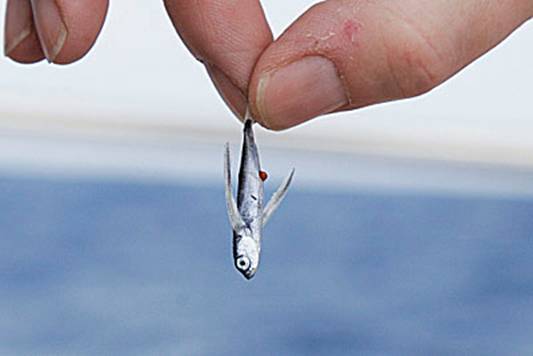
Cited around 800 times according to Google Scholar, this classic paper demonstrated the essential difference between the two major paradigms dominating the discipline of conservation biology: (1) the ‘declining’ population paradigm, and the (2) ‘small’ population paradigm. The declining population paradigm is the identification and management of the processes that depress the demographic rate of a species and cause its populations to decline deterministically, whereas the small population paradigm is the study of the dynamics of small populations that have declined owing to some (deterministic) perturbation and which are more susceptible to extinction via chance (stochastic) events. Put simply, the forces that drive populations into decline aren’t necessarily those that drive the final nail into a species’ coffin – we must manage for both types of processes  simultaneously , and the synergies between them, if we want to reduce the likelihood of species going extinct.

CJA Bradshaw

Add to FacebookAdd to NewsvineAdd to DiggAdd to Del.icio.usAdd to StumbleuponAdd to RedditAdd to BlinklistAdd to Ma.gnoliaAdd to TechnoratiAdd to Furl


Classics: Minimum Viable Population size

21 08 2008

‘Classics’ is a category of posts highlighting research that has made a real difference to biodiversity conservation. All posts in this category will be permanently displayed on the Classics page of ConservationBytes.com

Too-Few-CaloriesShaffer, M.L. (1981). Minimum population sizes for species conservation. BioScience 31, 131–134

Small and isolated populations are particularly vulnerable to extinction through random variation in birth and death rates, variation in resource or habitat availability, predation, competitive interactions and single-event catastrophes, and inbreeding. Enter the concept of the Minimum Viable Population (MVP) size, which was originally defined as the smallest number of individuals required for an isolated population to persist (at some predefined ‘high’ probability) for some ‘long’ time into the future. In other words, the MVP size is the number of individuals in the population that is needed to withstand normal (expected) variation in all the things that affect individual persistence through time. Drop below your MVP size, and suddenly your population’s risk of extinction sky-rockets. In some ways, MVP size can be considered the threshold dividing the ‘small’ and ‘declining’ population paradigms (see Caughley 1994), so that different management strategies can be applied to populations depending on their relative distance to (population-specific) MVP size.

This wonderfully simply, yet fundamental concept of extinction dynamics provides the target for species recovery, minimum reserve size and sustainable harvest if calculated correctly. Indeed, it is a concept underlying threatened species lists worldwide, including the most well-known (IUCN Red List of Threatened Species). While there are a host of methods issues, genetic considerations and policy implementation problems, Shaffer’s original paper spawned an entire generation of research and mathematical techniques in conservation biology, and set the stage for tangible, mathematically based conservation targets.

Want more information? We have published some papers and articles on the subject that elaborate more on the methods, expected ranges, subtleties and implications of the MVP concept that you can access below.

CJA Bradshaw

Add to FacebookAdd to NewsvineAdd to DiggAdd to Del.icio.usAdd to StumbleuponAdd to RedditAdd to BlinklistAdd to Ma.gnoliaAdd to TechnoratiAdd to Furl


Classics: Island Biogeography

19 08 2008

‘Classics’ is a category of posts highlighting research that has made a real difference to biodiversity conservation. All posts in this category will be permanently displayed on the Classics page of ConservationBytes.com

cimage_4c1402ed91-thumbbMacArthur, R.H. & Wilson, E.O. (1967). The Theory of Island Biogeography. Princeton University Press, Princeton, NJ

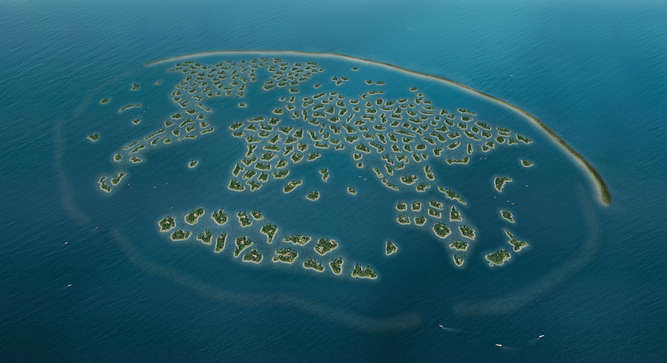
Although this classic book was written before the discipline of conservation biology really kicked off, it has to be one of the more influential in terms of reserve design and the estimation of extinction rates. The original theory was proposed as a determinant of total species richness on islands as a function of island size. Put (almost too) simply the bigger the island, the more species it contains. This ultimately lead to the branch of biogeography/conservation biology that applied ‘species-area’ relationships to habitat fragments to extrapolate total species number and more importantly (in the context of the extinction crisis), estimate rates of species loss. The species-area literature is a hot-bed of critique and polemic, yet no one can deny that this seminal book really kicked off the idea that reduced and fragmented areas are bad for biodiversity. We wouldn’t have nature reserves today if it wasn’t for this simple, yet brilliant piece of work.

CJA Bradshaw

Add to FacebookAdd to NewsvineAdd to DiggAdd to Del.icio.usAdd to StumbleuponAdd to RedditAdd to BlinklistAdd to Ma.gnoliaAdd to TechnoratiAdd to Furl


When ‘conservationists’ …aren’t

12 08 2008

There is the concept of “conservation” and its vital counterpart, “preservation”. “Conservation” is defined as the preservation and careful management of the environment and of natural resources. Although preservation is necessarily an inherent aspect of conservation, in recent years it has come to symbolise a form of environmental zealotry that would preclude, if given the chance, any advancement of knowledge in ecology and biology in general. Conservation embraces understanding – knowledge that enables a defined management of the systems we seek to conserve.

Most people are familiar with emotive zealots such as those subscribing to the extreme views in abortion laws, religion and animal rights. I am reminded here of Barry Horne, the British animal-rights activist who died in a prison hospital from hunger strike. Mr. Horne was serving an 18-year sentence after being convicted of a nation-wide fire-bombing campaign in 1997. The misplaced passion exuded by Mr. Horne not only cost him his own life, but millions of pounds to shop owners around the country. One might ask the question: What was it all for? Even the slightly more humoristic saga of eco-terrorists in Edward Abbey’s 1975 novel Monkey Wrench Gang reminds us that zealots can embrace issues with a dedication that denies the logic of constructive improvement.

A far more insidious and malignant form of zealotry is that demonstrated by individuals or organisations that on the surface advocate a particular opinion, when underneath, do not actually subscribe to their own stated convictions. A common diatribe of such preservation zealots is that researchers do “science for science’s sake”. Read the rest of this entry »


Wasting precious money on the conservation-irrelevant

30 07 2008
© Michael H.

© Michael H.

I’ve just attended the Joint Meeting of Ichthyologists and Herpetologists held in Montréal, Canada (by the way, if you are ever thinking of staying at Le Centre Sheraton in Montréal, my advice is to make a wide berth – one of the least-satisfying, over-priced, deliberately scrooging hotels I have ever had the displeasure of occupying).

The conference itself was interesting, if not somewhat tangential to most of the major conservation issues facing fish, amphibians and reptiles in the modern context (it is only fair though to state that it wasn’t a ‘conservation’ conference per se). One thing that did astound me though was an open-microphone presentation by someone from the Oceanário de Lisboa in Portugal who described the €100000 operation to release a very large (> 3.5 m wingspan) manta ray (Manta birostris) from its restrictive enclosure. Yes, you read correctly – €100000 to save one individual manta ray. Not even a threatened species (currently classified as ‘Near Threatened’ on the IUCN Red List), these good people at what I am sure is an excellent aquarium spent more money on one animal than most projects spend on the conservation of entire species.

Have these people not heard of ecological (or ‘conservation’) triage? Similar to medical triage in emergency or wartime situations, ecological triage directs finite resources to those species that require the most attention and have the highest chance of long-term persistence. I’m not sure who coined the term (perhaps Holt & Viney 2001), but the concept has been developed by a number of excellent conservation planning researchers over the last few years to become the cornerstone of modern conservation investment strategies (see Possingham et al. 2002; Hobbs & Kristjanson 2003; Wilson et al. 2007). Ecological triage essentially means that immediate conservation action and resources are directed toward populations that are highly threatened but where the probability of persistence is high. The flip side is that we shouldn’t waste our precious resources either on irrelevant and useless actions like the one described above.

Saving one manta ray would not change the species’ long-term persistence probability – full stop. In an age where conservation action and research are suffering from human apathy and stupidity, surely we can spend our money more wisely. For example, that €100000 could have purchased some primary rain forest somewhere and saved literally thousands of species from extinction. What a waste.

Add to FacebookAdd to NewsvineAdd to DiggAdd to Del.icio.usAdd to StumbleuponAdd to RedditAdd to BlinklistAdd to Ma.gnoliaAdd to TechnoratiAdd to Furl


From the mountains to the sea

18 07 2008

The theme of this year’s Society for Conservation Biology annual meeting in Chattanooga, Tennessee, USA.

The positives: I was fortunate to meet some great established and up-and-coming conservation biologists that I had not yet met face to face; the people were friendly; the organisation was efficient; and many of the talks were good, solid science.

The negatives: I truly felt a lack of excitement or passion at the conference. There was nothing to suggest that we are in the midst of a conservation crisis; perhaps we as scientists have seen and heard it so much that the ‘crisis’ tone has been lost in our delivery. Have we given up? The quality of the the research and the dedication of those involved suggest otherwise, but I can’t help think that there is a spark missing from those responsible for convincing the rest of the world that we are in serious trouble. It’s almost as if we’ve come full circle – the early days of conservation biology (the discipline) struggled to find its place among the more classic scientific research fields, but over 50 years of excellent and ground-breaking research has secured its place among the most relevant of today’s scientific endeavours. Conservation scientists began to take on bolder roles as advocates in addition to being purely objective information providers. The world’s sad state has ratified the importance of what we do like never before, but it would be sadder still if we slipped back into the passionless role of mere data providers.

I hope the next conference inspires me more. No offence intended to the conference organisers – my statements reflect the apparent laissez-faire of all of us.


Realistic conservation investment

18 07 2008

I’m currently attending the Society for Conservation Biology‘s Annual Meeting in Chattanooga, Tennessee, USA and blogging on presentations I think are worth mentioning.

In a surprise shift from the previously planned final plenary talk, Prof. Helene Marsh of James Cook University gave a nice example of how good research can be melded with non-technical opinion to weight threatened species for recovery investment. Using a north Queensland example, she described how technical assessments of relative threat risk combined with weightings from non-technical policy makers can provide the most realistic and relevant conservation investment when used simultaneously. Based on their paper in 2007 (‘Optimizing allocation of management resources for wildlife‘), Prof. Marsh outlined a quantitative approach to meld these decision-making components with real-world outcomes. I’d like to see some of the real outcomes in terms of recovery of north Queensland threatened species, but at least the State appears to be on the right track by using this tool.

CJA Bradshaw


IUCN Chief Scientist & Asia

15 07 2008

I’m currently attending the Society for Conservation Biology‘s Annual Meeting in Chattanooga, Tennessee, USA and blogging on presentations I think are worth mentioning.

The first plenary talk was given by the IUCN’s Chief Scientist, Jeffrey McNeely, about the issues surrounding biodiversity conservation in Asia. Dr. McNeely gave an interesting background to the human cultural history and diversity of the region, followed by a brief exposé of the conservation issues there (habitat loss, over-exploitation, invasive species, etc). Overall, however, I was disappointed by his lack of emphasis on the magnitude of the conservation crisis Asia is undergoing. There was no mention of the perverse subsidies buffering unsustainable forestry and fishing, the corruption driving habitat loss and habitat degradation, or the massive problems driven by human over-population.

We recently published (currently online) a paper regarding the conservation crisis facing this (and similar regions) in the tropics Tropical turmoil – a biodiversity crisis in progress (see related post), and several of my colleagues have recently outlined just how badly biodiversity is faring in Asia (e.g., see Brook et al. 2003; Sodhi et al. 2004). While I was happy to see Dr. McNeely mention the need for more research on these issues, his statement that he had “depressed [us] with the problems” was a major understatement. He did not nearly go far enough to ‘depress’ his audience of conservation scientists. We are squarely within a crisis in the region, and if the Chief Scientist of the IUCN who has intimate knowledge of Asia is not singing that song loudly and clearly, I fear it will get far worse before we see any real positive change.

CJA Bradshaw


‘Conservation for the people’

11 07 2008

This, the title of Peter Kareiva and Michelle Marvier’s paper in Scientific American, embodies in some ways, what this website is all about. Certainly not the first researchers to conclude that people will only value biodiversity if it has direct implications for their own well-being (economic prosperity, health, longevity, etc.), Kareiva and Marvier’s paper nicely summarises, however, the extent to which conservation research MUST quantify these links. The corollary is that if we don’t, conservation research will pass into oblivion (along with the species we are attempting to protect from extinction). Nice paper, and certainly one to watch.

CJA Bradshaw

Add to FacebookAdd to NewsvineAdd to DiggAdd to Del.icio.usAdd to StumbleuponAdd to RedditAdd to BlinklistAdd to Ma.gnoliaAdd to TechnoratiAdd to Furl


Conservation Letters – a scientific journal with a difference?

5 07 2008

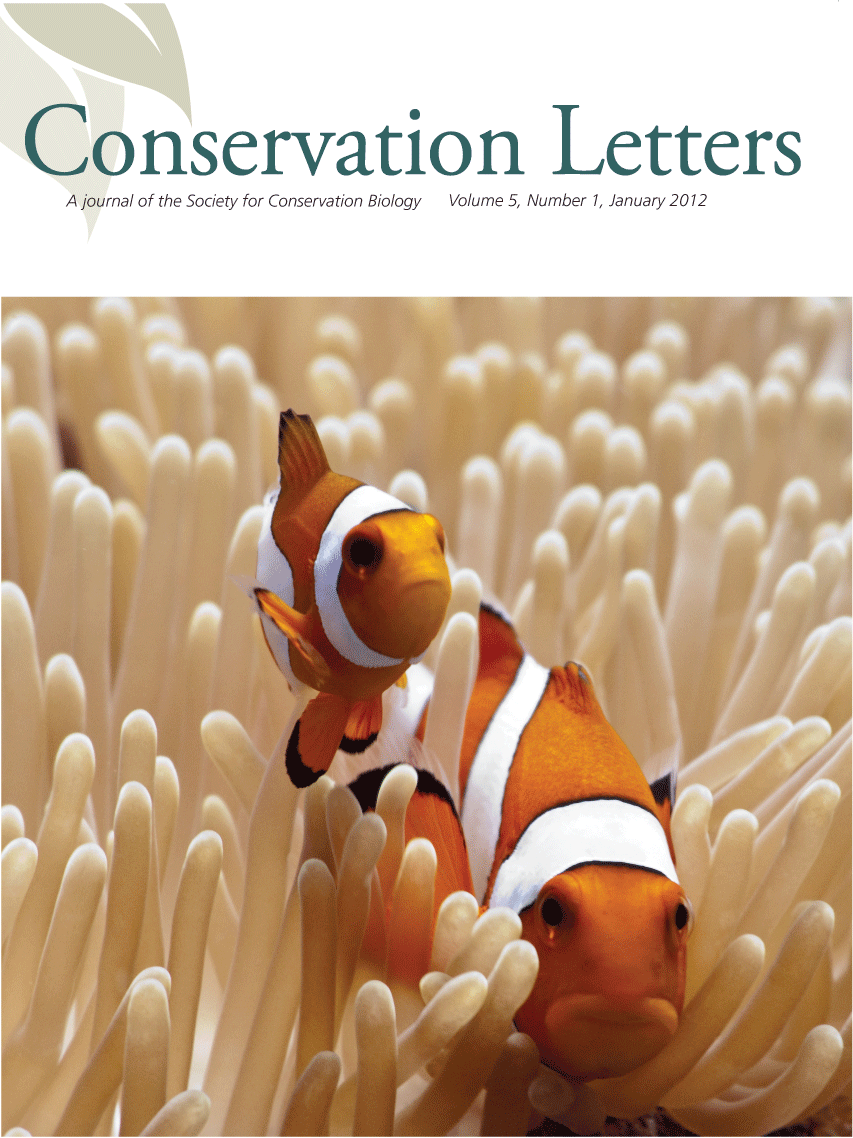
ConLetters-Jan12I’d like to introduce the latest scientific conservation journal – Conservation Letters (Wiley-Blackwell). If you are a publishing conservation scientist then you will have undoubtedly heard about this already. I must admit my biased opinion up front – I have the role of Senior Editor for the journal under the auspices of the venerable Editors-in-Chief, Professor Richard Cowling, Professor Hugh Possingham, Professor Bill Sutherland and Dr. Michael Mascia.

We’ve been doing conservation science now for well over 50 years, and there has been some fantastic, hard-hitting, brilliant research done. However, extinction rates continue to soar, habitat loss and fragmentation abound, bushmeat hunting and other forms of direct over-exploitation show no signs of slowing and invasive species are penetrating into the most ‘pristine’ habitats. To top it all off, climate change is exacerbating each and every one of these extinction drivers.

So what have we been doing wrong?

Clearly the best research is going unheeded – this is not to say that some progress has not been made, and I hope to highlight the best examples of the hardest-hitting research on this site – it simply means that we are losing the battle. Enter Conservation Letters – a journal designed to make conservation research more available to policy makers and managers to make true strides forward in biodiversity conservation. I’m not suggesting for a moment that other well-known, respected and established conservation journals have not done their job; without the research those journals publish we’d certainly be much worse off. However, we have recognised that our research isn’t affecting as many people as it should.

With Conservation Letters now well into its first year, I hope that we start to see some changes here, and I hope that the discipline will have a much greater net effect on slowing (and perhaps) reversing the extinction trends we observe today. Climate change is making this much more challenging, as well as the ever-increasing human population. Can we make better progress? – I certainly hope so.

CJA Bradshaw

Add to FacebookAdd to NewsvineAdd to DiggAdd to Del.icio.usAdd to StumbleuponAdd to RedditAdd to BlinklistAdd to Ma.gnoliaAdd to TechnoratiAdd to Furl