Australian Wet Tropics Biosequestration Project

28 08 2008

Guest post from Penny van Oosterzee, Degree Celsius:

© P. van Oosterzee
© P. van Oosterzee

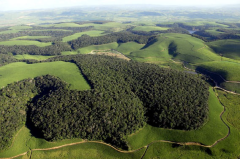
The Wet Tropics Regional Biosequestration Project Development Document was launched last week on the global stage, for public scrutiny, via the Climate Community and Biodiversity (CCB) website. There are only a dozen other cases in the world that have managed to reach this level of scrutiny.

The CCB standards are used in both the voluntary global markets and also for CDM (clean development mechanism) projects (only afforestation and reforestation) that have significant biodiversity outcomes. It is well known that land use, land use change, and forestry provides the most cost-effective means of reducing greenhouse gas emissions globally, and we believe the Wet Tropics project is at the leading edge of showing how.

The Wet Tropics Project is the world’s first regional biocarbon verification case based on community NRM (Natural Resource Management) activities, aggregating different bio-sequestration activities (reforestation, assisted natural regeneration, avoided deforestation, grazing land management, reduced use of fertiliser in agriculture) of myriad landholders in one verification case.

The initiative of using NRM Regional Plan’s as a basis for biosequestration project design is an innovation that can be rolled out across the state and nationally. Using Regional Plans ensures scientifically robust monitoring outcomes because of the adoption of systems already in place for monitoring. Economically the approach allows trading to occur at the regional and landholder level, and sets the stage for new livelihoods in regional Australia in a climate constrained world.

The Wet Tropics Project is itself a pilot for the NRM regions comprising the catchments of the Great Barrier Reef which are pivotal for its the survival. The Wet Tropics Project also helps to inform national policy debates since both Garnaut and the Federal Government’s Green Paper point out the importance of forestry and agriculture but fail to provide any way forward, and are on a watching brief for solutions.

The Wet Tropics initiative with its link to regional plans immediately enables entry into other global developments such as water quality credits and biodiversity credits.

See also the Degree Celsius website for more information.

Add to FacebookAdd to NewsvineAdd to DiggAdd to Del.icio.usAdd to StumbleuponAdd to RedditAdd to BlinklistAdd to Ma.gnoliaAdd to TechnoratiAdd to Furl


Synergies among extinction drivers

24 08 2008

Hopefully one for the Potential list:

© J. Hance

Brook, BW, NS Sodhi, CJA Bradshaw. (2008) Synergies among extinction drivers under global change. Trends in Ecology and Evolution 23, 453-460

A review my colleagues, Barry Brook and Navjot Sodhi, and I have just published in Trends in Ecology and Evolution demonstrates how separate drivers of extinction (e.g., habitat loss, over-exploitation [hunting, fishing, etc.], climate change, invasive species, etc.) tend to work together to heighten the extinction probability of the species they affect more than the simple sum of the individual effects alone.

In what we termed ‘synergies’, the review compiles evidence from observational, experimental and meta-analytic research demonstrating the positive and self-reinforcing actions of multiple drivers of population decline and eventual extinction. Examples include experimental evidence that wild radishes experiencing inbreeding depression have lower fitness than expected from simple population reduction (Elam et al. 2007), inter-tidal polychaetes succumb to pollution effects much more so at low densities than when populations are abundant (Hollows et al. 2007), and habitat fragmentation, harvest and simulated climate warming increase rotifer extinction risk up to 50 times more than expected from the additive effects of the threatening processes (Mora et al. 2007).

We argued that conservation actions only targeting single drivers will more than likely be inadequate because of the cascading effects caused by unmanaged synergies. Climate change will also interact with and accelerate ongoing threats to biodiversity, so the importance of accounting for these interactions cannot be understated.

CJA Bradshaw

Add to FacebookAdd to NewsvineAdd to DiggAdd to Del.icio.usAdd to StumbleuponAdd to RedditAdd to BlinklistAdd to Ma.gnoliaAdd to TechnoratiAdd to Furl


Investor creates first tropical biodiversity credits

23 08 2008

Post reproduced from TakeCover08:

An Australian investment company has launched what it describes as the first tropical biodiversity credit scheme, Mongabay.com reports (more detail here).

New Forests, a Sydney-based firm, has established the Malua Wildlife Habitat Conservation Bank in Malaysia as an attempt to raise funds for rainforest conservation.
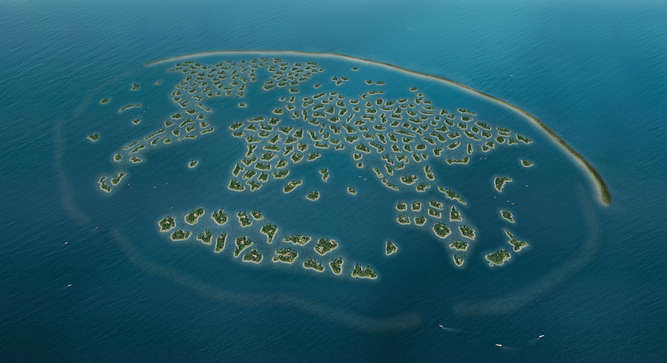
The “Malua BioBank” will use an investment from a private equity fund to restore and protect 34,000 hectares of formerly logged forest.

The area will serve as a buffer between biological-rich forest reserve and oil palm plantations.

The credit scheme will generate “Biodiversity Conservation Certificates”, which will be sold to bankroll a perpetual conservation trust and produce a return on investment for the Sabah Government and the private equity fund.

Add to FacebookAdd to NewsvineAdd to DiggAdd to Del.icio.usAdd to StumbleuponAdd to RedditAdd to BlinklistAdd to Ma.gnoliaAdd to TechnoratiAdd to Furl


Native forests reduce the risk of catastrophic floods

20 08 2008

A-Pakistan-Army-helicopte-004Each year extreme floods kill or displace hundreds of thousands of people and cause billions of dollars in damage to property. The consequences of floods are particularly catastrophic in developing countries generally lacking the infrastructure to deal adequately with above-average water levels.

For centuries it has been believed that native forest cover reduced the risk and severity of catastrophic flooding, but there has been strong scientific debate over the role of forests in flood mitigation.

Forest loss is currently estimated at 13 million hectares each year, with 6 million hectares of that being primary forest previously untouched by human activities. These primary forests are considered the most biologically diverse ecosystems on the planet, but this realisation has not halted their immense rate of loss.

Last year my colleagues and I published a paper entitled Global evidence that deforestation amplifies flood risk and severity in the developing world in Global Change Biology (highlighted in Nature and Faculty of 1000) that has finally provided tangible evidence that there is a strong link between deforestation and flood risk. Read the rest of this entry »


Classics: Island Biogeography

19 08 2008

‘Classics’ is a category of posts highlighting research that has made a real difference to biodiversity conservation. All posts in this category will be permanently displayed on the Classics page of ConservationBytes.com

cimage_4c1402ed91-thumbbMacArthur, R.H. & Wilson, E.O. (1967). The Theory of Island Biogeography. Princeton University Press, Princeton, NJ

Although this classic book was written before the discipline of conservation biology really kicked off, it has to be one of the more influential in terms of reserve design and the estimation of extinction rates. The original theory was proposed as a determinant of total species richness on islands as a function of island size. Put (almost too) simply the bigger the island, the more species it contains. This ultimately lead to the branch of biogeography/conservation biology that applied ‘species-area’ relationships to habitat fragments to extrapolate total species number and more importantly (in the context of the extinction crisis), estimate rates of species loss. The species-area literature is a hot-bed of critique and polemic, yet no one can deny that this seminal book really kicked off the idea that reduced and fragmented areas are bad for biodiversity. We wouldn’t have nature reserves today if it wasn’t for this simple, yet brilliant piece of work.

CJA Bradshaw

Add to FacebookAdd to NewsvineAdd to DiggAdd to Del.icio.usAdd to StumbleuponAdd to RedditAdd to BlinklistAdd to Ma.gnoliaAdd to TechnoratiAdd to Furl


Tropical turmoil – a biodiversity tragedy in progress

18 08 2008

fragmentationWe recently published (online) a major review showing that the world is losing the battle over tropical habitat loss with potentially disastrous implications for biodiversity and human well-being.

Published online in the Ecological Society of America’s journal Frontiers in Ecology and the Environment, our review Tropical turmoil – a biodiversity crisis in progress concludes that we are “on a trajectory towards disaster” and calls for an immediate global, multi-pronged conservation approach to avert the worst outcomes.

Tropical forests support more than 60 % of all known species, but represent only about 7 % of the Earth’s land surface. But up to 15 million hectares of tropical rainforest are being lost every year and species are being lost at a rate of up to 10000 times higher than would happen randomly without humans present.

This is not just a tragedy for tropical biodiversity, this is a crisis that will directly affect human livelihoods. This is not just about losing tiny species found in the canopies of big rain forest trees few people will ever see, this is about a complete change in ecosystem services that directly benefit human life. Read the rest of this entry »


Saving species does not harm poor

17 08 2008

Poor-Amongst-YouHere’s a great one for the Potential list:

A paper just published online in the journal Oryx by Kent Redford and colleagues entitled What is the role for conservation organizations in poverty alleviation in the world’s wild places? challenges one argument used by anti-conservation humanists to avoid preserving intact habitats.

When rainforests and other high conservation-value habitats are set aside for protection, humanists will often complain that it destroys the livelihoods of the people living there because the listing prevents them from farming, hunting or otherwise providing themselves with income. Not so say Redford and colleagues – they found that most of the world’s poor (measured by proxy using infant mortality rates) were predominately associated with high-density urban areas and not with more intact wild areas.

Critics of the finding argue that this should not take the onus away from richer nations or governments to bolster the economic prosperity of these people, and I agree. However, this is a major finding that in some ways validates what we are beginning to understand about habitat intactness and ecosystem services. Destroy the ecosystems around you and you generally have lower water quality, higher incidence of catastrophic events, poor agricultural returns, greater disease prevalence, etc. that will drive people into poverty, rather than drop them further down the economic scale.

If this conclusion stands up to analytical scrutiny and supporting evidence from other analyses, I dearly hope that it is noticed and embraced by governments worldwide struggling to find the balance between economic development, poverty alleviation and conservation of biodiversity to maintain ecosystem services.

CJA Bradshaw

Add to FacebookAdd to NewsvineAdd to DiggAdd to Del.icio.usAdd to StumbleuponAdd to RedditAdd to BlinklistAdd to Ma.gnoliaAdd to TechnoratiAdd to Furl


IUCN Chief Scientist & Asia

15 07 2008

I’m currently attending the Society for Conservation Biology‘s Annual Meeting in Chattanooga, Tennessee, USA and blogging on presentations I think are worth mentioning.

The first plenary talk was given by the IUCN’s Chief Scientist, Jeffrey McNeely, about the issues surrounding biodiversity conservation in Asia. Dr. McNeely gave an interesting background to the human cultural history and diversity of the region, followed by a brief exposé of the conservation issues there (habitat loss, over-exploitation, invasive species, etc). Overall, however, I was disappointed by his lack of emphasis on the magnitude of the conservation crisis Asia is undergoing. There was no mention of the perverse subsidies buffering unsustainable forestry and fishing, the corruption driving habitat loss and habitat degradation, or the massive problems driven by human over-population.

We recently published (currently online) a paper regarding the conservation crisis facing this (and similar regions) in the tropics Tropical turmoil – a biodiversity crisis in progress (see related post), and several of my colleagues have recently outlined just how badly biodiversity is faring in Asia (e.g., see Brook et al. 2003; Sodhi et al. 2004). While I was happy to see Dr. McNeely mention the need for more research on these issues, his statement that he had “depressed [us] with the problems” was a major understatement. He did not nearly go far enough to ‘depress’ his audience of conservation scientists. We are squarely within a crisis in the region, and if the Chief Scientist of the IUCN who has intimate knowledge of Asia is not singing that song loudly and clearly, I fear it will get far worse before we see any real positive change.

CJA Bradshaw


‘Conservation for the people’

11 07 2008

This, the title of Peter Kareiva and Michelle Marvier’s paper in Scientific American, embodies in some ways, what this website is all about. Certainly not the first researchers to conclude that people will only value biodiversity if it has direct implications for their own well-being (economic prosperity, health, longevity, etc.), Kareiva and Marvier’s paper nicely summarises, however, the extent to which conservation research MUST quantify these links. The corollary is that if we don’t, conservation research will pass into oblivion (along with the species we are attempting to protect from extinction). Nice paper, and certainly one to watch.

CJA Bradshaw

Add to FacebookAdd to NewsvineAdd to DiggAdd to Del.icio.usAdd to StumbleuponAdd to RedditAdd to BlinklistAdd to Ma.gnoliaAdd to TechnoratiAdd to Furl


Conservation Letters – a scientific journal with a difference?

5 07 2008

ConLetters-Jan12I’d like to introduce the latest scientific conservation journal – Conservation Letters (Wiley-Blackwell). If you are a publishing conservation scientist then you will have undoubtedly heard about this already. I must admit my biased opinion up front – I have the role of Senior Editor for the journal under the auspices of the venerable Editors-in-Chief, Professor Richard Cowling, Professor Hugh Possingham, Professor Bill Sutherland and Dr. Michael Mascia.

We’ve been doing conservation science now for well over 50 years, and there has been some fantastic, hard-hitting, brilliant research done. However, extinction rates continue to soar, habitat loss and fragmentation abound, bushmeat hunting and other forms of direct over-exploitation show no signs of slowing and invasive species are penetrating into the most ‘pristine’ habitats. To top it all off, climate change is exacerbating each and every one of these extinction drivers.

So what have we been doing wrong?

Clearly the best research is going unheeded – this is not to say that some progress has not been made, and I hope to highlight the best examples of the hardest-hitting research on this site – it simply means that we are losing the battle. Enter Conservation Letters – a journal designed to make conservation research more available to policy makers and managers to make true strides forward in biodiversity conservation. I’m not suggesting for a moment that other well-known, respected and established conservation journals have not done their job; without the research those journals publish we’d certainly be much worse off. However, we have recognised that our research isn’t affecting as many people as it should.

With Conservation Letters now well into its first year, I hope that we start to see some changes here, and I hope that the discipline will have a much greater net effect on slowing (and perhaps) reversing the extinction trends we observe today. Climate change is making this much more challenging, as well as the ever-increasing human population. Can we make better progress? – I certainly hope so.

CJA Bradshaw

Add to FacebookAdd to NewsvineAdd to DiggAdd to Del.icio.usAdd to StumbleuponAdd to RedditAdd to BlinklistAdd to Ma.gnoliaAdd to TechnoratiAdd to Furl