Fishing for conservation

3 04 2009

Here’s a guest post from one of my newest PhD students, Jarod Lyon of the Arthur Rylah Institute in Victoria. He’s introducing some of his ongoing work and how he incorporates anglers into conservation research.

As most conservationists know, snags (fallen trees and branches in rivers) are the riverine equivalent of marine reefs, providing critical habitat for many plants and animals, from microscopic bacteria, fungi and algae through to large native fish. They are the places where the greatest numbers and diversity of organisms occur in lowland sections of rivers. Their presence has an important influence on the overall health of these rivers.
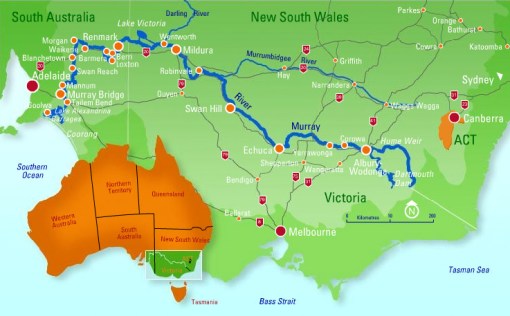
Murray River, Australia
Figure 1

Ins southern Australia, Murray cod, trout cod and golden perch are three iconic fish species that occur in the Murray River (Figure 1). Recent investigations into the ecology of these species have demonstrated a strong dependence on the presence of snags – a relationship well-known to recreational anglers who target both Murray cod and golden perch. Unfortunately, the abundance of these species has declined over the past 100 years and they are now considered threatened. Excessive removal of snags has been identified as a primary cause for this decline. For example, in the Lake Hume to Lake Mulwala reach of the Murray River, over 25000 snags were removed in the 1970s and 1980s to improve the passage of water between Lake Hume and the large irrigation channels at Yarrawonga.

Figure 2
Figure 2

The largest resnagging project ever undertaken in Australia is now in full swing. It aims to reverse the legacy of clearing snags that has occurred along the Murray reaches since European settlement. The resnagging is occurring in the Hume-Mulwala reach of the Murray using trees that were cleared for the Hume Highway extension between Albury and Tarcutta, and will create substantially more physical habitat for native fish in this reach of the river. By creating this habitat, the size of the native fish population in this reach is expected to increase thereby improving the conservation status of the native species present, and improving the quality of the recreational fishery for native species (particularly Murray cod and golden perch). It is the largest project of its kind ever undertaken in Australia, and is a great step towards recovering fish populations. The project is funded under the Murray Darling Basin Commission‘s Living Murray Program, and is being undertaken by a variety of state and national organisations, in particular NSW Department of Primary Industries and Victorian Department of Sustainability and Environment (DSE).

To ensure that the resnagging is having a beneficial effect on the numbers of native fish in the reach, a comprehensive monitoring and evaluation program is being implemented by scientists from the DSE’s Arthur Rylah Institute. This program is determining whether an increase in the size of the native fish populations is the result of:

  • Increased recruitment in the reach
  • Increased survival of adults in the reach
  • Increased immigration of adults and juveniles form Lake Mulwala and the Ovens River
  • Decreased emigration form the reach

To measure these changes, the fish populations between Hume Dam and Lake Mulwala are being surveyed once a year to determine the population size and level of recruitment. For the purpose of comparison, surveying between Yarrawonga and Tocumwal, in the lower Ovens River, and in Lake Mulwala, is also being undertaken.

Figure 2
Figure 3

Some of the fish caught (Figure 2) will be tagged with an external tag, internal tag or radio transmitter (Figures 3 & 4). All tags have a unique number that identifies the individual. The recapture of these individuals, both by researchers and by anglers, allows survival and movement patterns to be measured.

The external tags are plastic polymer tags and are easily visible, protruding from the dorsal fin area. These tags are used to allow information from anglers to be directly used in the monitoring. A phone number is printed on each tag and when anglers call this number to report that they have caught a tagged fish, this provides valuable information on the not only fish survival and growth, but also the performance of the recreational fishery. These tags have a lifespan of 2-5 years. Anglers who call in tag information are also eligible for a reward (usually a stubby holder or lure) and get sent a certificate which gives details of the history of the fish which they have captured and reported.

The internal tags are implanted into the area to the front of the pectoral fin, are not visible, and unlike the external tags, are permanent. The tags are passive integrated transponder (PIT) tags (Figure 4), similar to those used in the pet and livestock industry. The tags are important as they allow a long-term record of fish survival, growth and movement to be measured. Fishways across the Murray Darling Basin are increasingly being installed with readers that can detect these tags. This can give researchers valuable information on long-range movements. For example, one fish (a 20-kg Murray cod) that was tagged in the Murray river near Corowa, was picked up on a PIT tag reader at the bottom of the Torrumbarry Weir fishway – a fair feat when you consider that this fish has had to get through both Mulwala and Torrumbarry Weirs, as well as travel a distance of over 200 river km downstream!
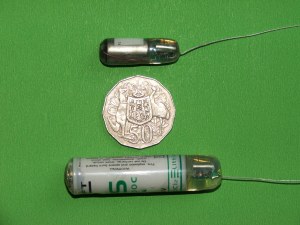
Figure 3
Figure 4

Radio transmitters are surgically inserted into the body cavity of the fish (Figure 3). These tags emit a radio signal that can be tracked continuously (Figure 5), and allow a rapid assessment of the movements (i.e., emigration and immigration rates) of a population to be determined. The tags are also detected by an array of 18 logging stations located along the river between Lake Hume and Barmah (Figure 1). Approximately 1000 radio tags will be implanted over the life of the project – making it possibly the largest radio-tagging program in the country.

If you catch a tagged fish, please record the type of fish, its number, its length (and its weight if possible) and the location of its capture and report this information on the phone number printed on the tag. These angler records improve the quality of the data collected and reporting of angler captures is encouraged through the rewards program.

As well as the general tag return program, a more targeted “Research Angler Program” is being undertaken. The angler program commenced operations in July 2007. The project was developed to assist with the scientific monitoring and communication requirements of the native fish habitat restoration project.

This section of the monitoring recognises that local anglers can contribute information about the state of native fish in the River Murray by recording their fishing effort and the amount of fish captured. Such information, in addition to greatly increasing the community awareness of the monitoring program, also adds another ‘string to the monitoring bow’ in that it will form a long-term dataset of fish captures, which can eventually be linked to the resnagging effort. The information gathered will be entered into a database and analysed to help assess changes in fish population size in relation to the habitat rehabilitation project.
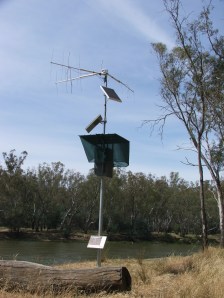
Figure 5

Figure 5

Instream woody habitat is a vital component to the lifecycle of Murray Cod and the endangered trout cod. The resnagging of the River Murray – Hume Dam to Yarrawonga, will conserve and enhance native fish communities. Continual monitoring and interactions with the local angling fraternity is a crucial part of the success of this project.

The anglers have logbooks and have been trained in removing the otoliths, which are the earbones, from fish that they are taking for the table. We can then use the otoliths to determine the age and growth of the fish in response to the resnagging work.

Since December 2007 the fishers with the resnagging Angler Monitoring Program have captured over 65 Murray Cod, with over 95% of these fish released. Anglers have caught and released other native species such as golden perch and the endangered trout cod.

Add to FacebookAdd to NewsvineAdd to DiggAdd to Del.icio.usAdd to StumbleuponAdd to RedditAdd to BlinklistAdd to Ma.gnoliaAdd to TechnoratiAdd to Furl


Our new Environment Institute: tackling environmental crises

9 12 2008

© T. Hampel

© T. Hampel

It’s official, the University of Adelaide has put in some major investment to get its environmental research specialists together to turns things into high gear. I’m privileged to be a part of the Institute, and I hopefully will be blogging about many of the exciting, topical and revolutionary research coming out this new ‘think tank’ (also, a ‘do tank’) over the coming years.

This report from AdelaideNow:

THE University of Adelaide will bring together experts in water management, climate change, economics, marine research, energy technology and ancient DNA to tackle Australia’s most pressing environmental challenges.

The new Environment Institute will be headed by water policy expert Mike Young who said Australia faced diabolical policy problems in relation to climate change and water resources.

“While climate change is the issue of greatest national importance, it is arguable that water is the issue of most interest to South Australia,” Professor Young said.
“The River Murray, our greatest ecological icon, is under terminal stress and we need to find alternative water sources.

“We should expect the adverse effects of climate change to first be expressed in water.”

Professor Young said research was needed to help reduce Australia’s carbon footprint, to restore and improve native habitats and restructure agricultural systems.

“Many of these issues have been dealt with in isolation in the past but this is no longer an option,” he said.

“All are linked and must be dealt with in a holistic and co-ordinated way.”

Also involved in the institute will be the university’s climate change expert Barry Brook and conservationist David Paton.

University vice-chancellor James McWha said all of the institute’s researchers had an outstanding track record and were internationally recognised in their fields.

“Collectively, they have been growing their research at a phenomenal rate over the past five years and they will play a critical role in building the state’s reputation as a global leader in environmental research,” Professor McWha said.


Classics: Invasion Meltdown

26 10 2008

One for the Classics page…

melting_rat_by_xenatalhaoui-d71xr1yDaniel Simberloff is probably best known for his work on the implications of invasive (non-indigenous) species for biodiversity, although he has contributed to a wide range of conservation disciplines.

A seminal paper that he co-wrote with Betsy Von Holle is one I consider to be a conservation Classic: their 1999 paper in the inaugural issue of Biological Invasions entitled Positive interactions of nonindigenous species: Invasional meltdown?

The establishment of non-indigenous species can have severe negative impacts on ecosystems. Introduced species that become invasive (widespread and locally dominant) transform habitats, degrade ecosystem services, reduce biodiversity and are some of the greatest threats to ecosystems today (perhaps nearly as important as habitat loss and over-exploitation).

The so-called ‘invasion meltdown‘ describes the process by which the negative impacts induced on native ecosystems by one invading non-indigenous species are exacerbated by interactions with another exotic species.

Although there isn’t a lot of information on invasion meltdowns, one good example comes from Christmas Island in tropical Australia. The introduced yellow crazy ant (Anoplolepis gracilipes) exploded in numbers when another exotic species, a scale insect, was introduced about the same time that a native scale insect species also had a local outbreak.  Because ants protect scale insects from predators and parasites in return for scale honeydew, the crazy ant suddenly had a much more abundant food source, leading to the huge increase in the ant population. This large ant population devastated the population of native red crab (Gecarcoidea natalis) and resulted in massive increase in forest undergrowth due to reduced herbivory by crabs (see O’Dowd et al. 2003). The great decline in red crabs may also make the island more vulnerable to other plant invasions.

What did Simberloff & Van Holle’s idea and subsequent examples of invasion meltdowns teach us? I believe their paper really hit home the idea that invasive species were not only a threat to biodiversity, but the self-reinforcing mutualisms of invasive species could rival other forms of human-induced biodiversity decline. Indeed, many of the effects of invasive species will be reinforced by global climate change through increasing temperatures, rising sea levels and changing rainfall patterns that increase the potential range and spread of invading species, so the problem is only going to get worse. This is why the U.N. began the Global Invasive Species Programme (GISP), and world-wide, countries are attempting to restrict the flow of invasive species so that their negative effects are lessened. Identifying the extent of the problem has stimulated a lot of people to act accordingly.

CJA Bradshaw

Add to FacebookAdd to NewsvineAdd to DiggAdd to Del.icio.usAdd to StumbleuponAdd to RedditAdd to BlinklistAdd to Ma.gnoliaAdd to TechnoratiAdd to Furl


Classics: Island Biogeography

19 08 2008

‘Classics’ is a category of posts highlighting research that has made a real difference to biodiversity conservation. All posts in this category will be permanently displayed on the Classics page of ConservationBytes.com

cimage_4c1402ed91-thumbbMacArthur, R.H. & Wilson, E.O. (1967). The Theory of Island Biogeography. Princeton University Press, Princeton, NJ

Although this classic book was written before the discipline of conservation biology really kicked off, it has to be one of the more influential in terms of reserve design and the estimation of extinction rates. The original theory was proposed as a determinant of total species richness on islands as a function of island size. Put (almost too) simply the bigger the island, the more species it contains. This ultimately lead to the branch of biogeography/conservation biology that applied ‘species-area’ relationships to habitat fragments to extrapolate total species number and more importantly (in the context of the extinction crisis), estimate rates of species loss. The species-area literature is a hot-bed of critique and polemic, yet no one can deny that this seminal book really kicked off the idea that reduced and fragmented areas are bad for biodiversity. We wouldn’t have nature reserves today if it wasn’t for this simple, yet brilliant piece of work.

CJA Bradshaw

Add to FacebookAdd to NewsvineAdd to DiggAdd to Del.icio.usAdd to StumbleuponAdd to RedditAdd to BlinklistAdd to Ma.gnoliaAdd to TechnoratiAdd to Furl


From the mountains to the sea

18 07 2008

The theme of this year’s Society for Conservation Biology annual meeting in Chattanooga, Tennessee, USA.

The positives: I was fortunate to meet some great established and up-and-coming conservation biologists that I had not yet met face to face; the people were friendly; the organisation was efficient; and many of the talks were good, solid science.

The negatives: I truly felt a lack of excitement or passion at the conference. There was nothing to suggest that we are in the midst of a conservation crisis; perhaps we as scientists have seen and heard it so much that the ‘crisis’ tone has been lost in our delivery. Have we given up? The quality of the the research and the dedication of those involved suggest otherwise, but I can’t help think that there is a spark missing from those responsible for convincing the rest of the world that we are in serious trouble. It’s almost as if we’ve come full circle – the early days of conservation biology (the discipline) struggled to find its place among the more classic scientific research fields, but over 50 years of excellent and ground-breaking research has secured its place among the most relevant of today’s scientific endeavours. Conservation scientists began to take on bolder roles as advocates in addition to being purely objective information providers. The world’s sad state has ratified the importance of what we do like never before, but it would be sadder still if we slipped back into the passionless role of mere data providers.

I hope the next conference inspires me more. No offence intended to the conference organisers – my statements reflect the apparent laissez-faire of all of us.


IUCN Chief Scientist & Asia

15 07 2008

I’m currently attending the Society for Conservation Biology‘s Annual Meeting in Chattanooga, Tennessee, USA and blogging on presentations I think are worth mentioning.

The first plenary talk was given by the IUCN’s Chief Scientist, Jeffrey McNeely, about the issues surrounding biodiversity conservation in Asia. Dr. McNeely gave an interesting background to the human cultural history and diversity of the region, followed by a brief exposé of the conservation issues there (habitat loss, over-exploitation, invasive species, etc). Overall, however, I was disappointed by his lack of emphasis on the magnitude of the conservation crisis Asia is undergoing. There was no mention of the perverse subsidies buffering unsustainable forestry and fishing, the corruption driving habitat loss and habitat degradation, or the massive problems driven by human over-population.

We recently published (currently online) a paper regarding the conservation crisis facing this (and similar regions) in the tropics Tropical turmoil – a biodiversity crisis in progress (see related post), and several of my colleagues have recently outlined just how badly biodiversity is faring in Asia (e.g., see Brook et al. 2003; Sodhi et al. 2004). While I was happy to see Dr. McNeely mention the need for more research on these issues, his statement that he had “depressed [us] with the problems” was a major understatement. He did not nearly go far enough to ‘depress’ his audience of conservation scientists. We are squarely within a crisis in the region, and if the Chief Scientist of the IUCN who has intimate knowledge of Asia is not singing that song loudly and clearly, I fear it will get far worse before we see any real positive change.

CJA Bradshaw


‘Conservation for the people’

11 07 2008

This, the title of Peter Kareiva and Michelle Marvier’s paper in Scientific American, embodies in some ways, what this website is all about. Certainly not the first researchers to conclude that people will only value biodiversity if it has direct implications for their own well-being (economic prosperity, health, longevity, etc.), Kareiva and Marvier’s paper nicely summarises, however, the extent to which conservation research MUST quantify these links. The corollary is that if we don’t, conservation research will pass into oblivion (along with the species we are attempting to protect from extinction). Nice paper, and certainly one to watch.

CJA Bradshaw

Add to FacebookAdd to NewsvineAdd to DiggAdd to Del.icio.usAdd to StumbleuponAdd to RedditAdd to BlinklistAdd to Ma.gnoliaAdd to TechnoratiAdd to Furl


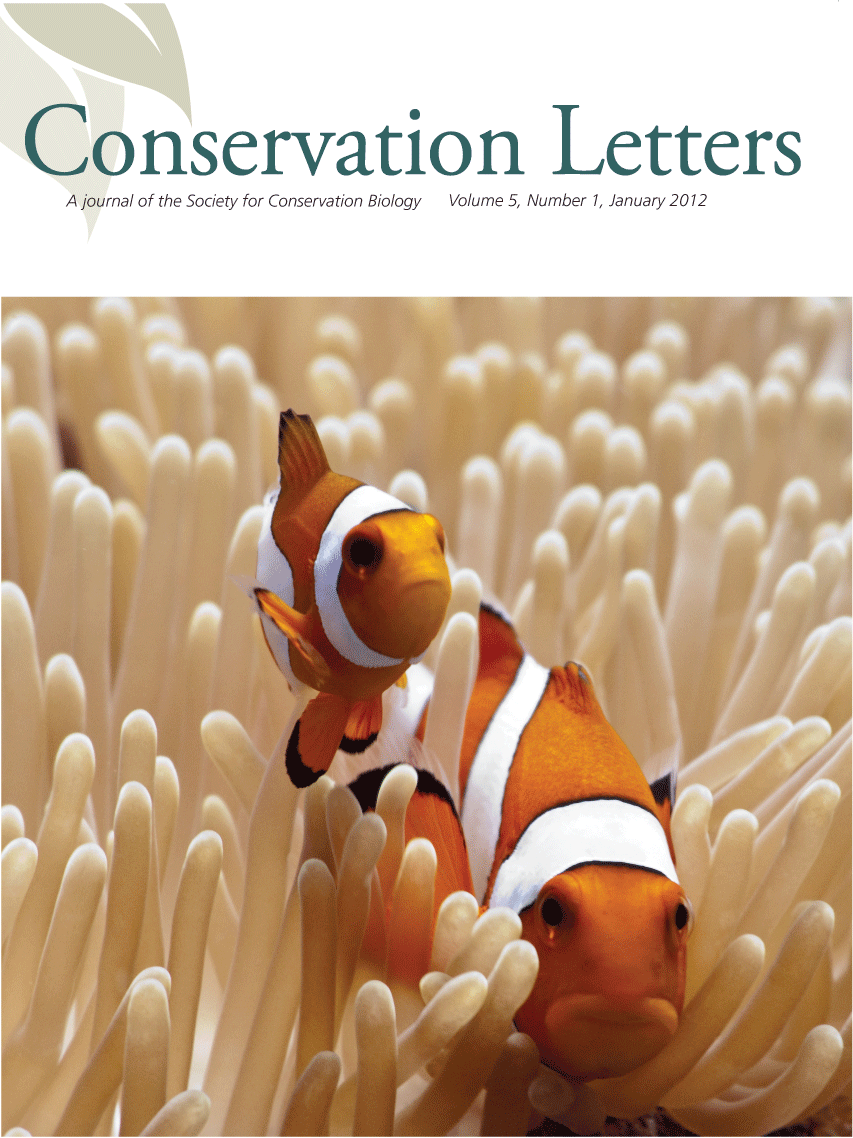
Conservation Letters – a scientific journal with a difference?

5 07 2008

ConLetters-Jan12I’d like to introduce the latest scientific conservation journal – Conservation Letters (Wiley-Blackwell). If you are a publishing conservation scientist then you will have undoubtedly heard about this already. I must admit my biased opinion up front – I have the role of Senior Editor for the journal under the auspices of the venerable Editors-in-Chief, Professor Richard Cowling, Professor Hugh Possingham, Professor Bill Sutherland and Dr. Michael Mascia.

We’ve been doing conservation science now for well over 50 years, and there has been some fantastic, hard-hitting, brilliant research done. However, extinction rates continue to soar, habitat loss and fragmentation abound, bushmeat hunting and other forms of direct over-exploitation show no signs of slowing and invasive species are penetrating into the most ‘pristine’ habitats. To top it all off, climate change is exacerbating each and every one of these extinction drivers.

So what have we been doing wrong?

Clearly the best research is going unheeded – this is not to say that some progress has not been made, and I hope to highlight the best examples of the hardest-hitting research on this site – it simply means that we are losing the battle. Enter Conservation Letters – a journal designed to make conservation research more available to policy makers and managers to make true strides forward in biodiversity conservation. I’m not suggesting for a moment that other well-known, respected and established conservation journals have not done their job; without the research those journals publish we’d certainly be much worse off. However, we have recognised that our research isn’t affecting as many people as it should.

With Conservation Letters now well into its first year, I hope that we start to see some changes here, and I hope that the discipline will have a much greater net effect on slowing (and perhaps) reversing the extinction trends we observe today. Climate change is making this much more challenging, as well as the ever-increasing human population. Can we make better progress? – I certainly hope so.

CJA Bradshaw

Add to FacebookAdd to NewsvineAdd to DiggAdd to Del.icio.usAdd to StumbleuponAdd to RedditAdd to BlinklistAdd to Ma.gnoliaAdd to TechnoratiAdd to Furl


Conservation that bites

2 07 2008

This new website will post examples of conservation science with real-world impacts to policy that improves biodiversity outcomes. Stay tuned.

CJA Bradshaw