Inbreeding does matter

29 03 2010

I’ve been busy with Bill Laurance visiting the University of Adelaide over the last few days, and will be so over the next few as well (and Bill has promised us a guest post shortly), but I wanted to get a post in before the week got away on me.

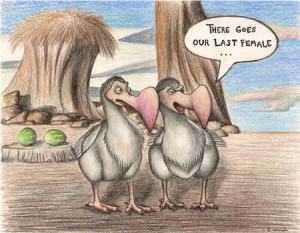
I’ve come across what is probably the most succinct description of why inbreeding depression is an important aspect of extinctions in free-ranging species (see also previous posts here and here) by Mr. Conservation Genetics himself, Professor Richard Frankham.

Way back in the 1980s (oh, so long ago), Russ Lande produced a landmark paper in Science arguing that population demography was a far more important driver of extinctions than reduced genetic diversity per se. He stated:

“…demography may usually be of more immediate importance than population genetics in determining the minimum viable size of wild populations”

We now know, however, that genetics in fact DO matter, and no one could put it better than Dick Frankham in his latest commentary in Heredity.

I paraphrase some of his main points below:

  • Controversy broke out in the 1970 s when it was suggested that inbreeding was deleterious for captive wildlife, but Ralls and Ballou (1983) reported that 41/44 mammal populations had higher juvenile mortality among inbred than outbred individuals.
  • Crnokrak and Roff (1999) established that inbreeding depression occurred in 90 % of the datasets they examined, and was similarly deleterious across major plant and animal taxa.
  • They estimated that inbreeding depression in the wild has approximately seven times greater impact than in captivity.
  • It is unrealistic to omit inbreeding depression from population viability analysis models.
  • Lande’s contention was rejected when Spielman et al. (2004) found that genetic diversity in 170 threatened taxa was lower than in related non-threatened taxa

Lande might have been incorrect, but his contention spawned the entire modern discipline of conservation genetics. Dick sums up all this so much more eloquently than I’ve done here, so I encourage you to read his article.

CJA Bradshaw

ResearchBlogging.orgFrankham, R. (2009). Inbreeding in the wild really does matter Heredity, 104 (2), 124-124 DOI: 10.1038/hdy.2009.155

Lande, R. (1988). Genetics and demography in biological conservation Science, 241 (4872), 1455-1460 DOI: 10.1126/science.3420403

Add to FacebookAdd to DiggAdd to Del.icio.usAdd to StumbleuponAdd to RedditAdd to BlinklistAdd to TwitterAdd to TechnoratiAdd to Yahoo BuzzAdd to Newsvine


The biodiversity extinction numbers game

4 01 2010

© Ferahgo the Assassin

Not an easy task, measuring extinction. For the most part, we must use techniques to estimate extinction rates because, well, it’s just bloody difficult to observe when (and where) the last few individuals in a population finally kark it. Even Fagan & Holmes’ exhaustive search of extinction time series only came up with 12 populations – not really a lot to go on. It’s also nearly impossible to observe species going extinct if they haven’t even been identified yet (and yes, probably still the majority of the world’s species – mainly small, microscopic or subsurface species – have yet to be identified).

So conservation biologists do other things to get a handle on the rates, relying mainly on the species-area relationship (SAR), projecting from threatened species lists, modelling co-extinctions (if a ‘host’ species goes extinct, then its obligate symbiont must also) or projecting declining species distributions from climate envelope models.

But of course, these are all estimates and difficult to validate. Enter a nice little review article recently published online in Biodiversity and Conservation by Nigel Stork entitled Re-assessing current extinction rates which looks at the state of the art and how the predictions mesh with the empirical data. Suffice it to say, there is a mismatch.

Stork writes that the ‘average’ estimate of losing about 100 species per day has hardly any empirical support (not surprising); only about 1200 extinctions have been recorded in the last 400 years. So why is this the case?

As mentioned above, it’s difficult to observe true extinction because of the sampling issue (the rarer the individuals, the more difficult it is to find them). He does cite some other problems too – the ‘living dead‘ concept where species linger on for decades, perhaps longer, even though their essential habitat has been destroyed, forest regrowth buffering some species that would have otherwise been predicted to go extinct under SAR models, and differing extinction proneness among species (I’ve blogged on this before).

Of course, we could just all be just a pack of doomsday wankers vainly predicting the end of the world ;-)

Well, I think not – if anything, Stork concludes that it’s all probably worse than we currently predict because of extinction synergies (see previous post about this concept) and the mounting impact of rapid global climate change. If anything, the “100 species/day” estimate could look like a utopian ideal in a few hundred years. I do disagree with Stork on one issue though – he claims that deforestation isn’t probably as bad as we make it out. I’d say the opposite (see here, here & here) – we know so little of how tropical forests in particular function that I dare say we’ve only just started measuring the tip of the iceberg.

CJA Bradshaw

Add to FacebookAdd to NewsvineAdd to DiggAdd to Del.icio.usAdd to StumbleuponAdd to RedditAdd to BlinklistAdd to Ma.gnoliaAdd to TechnoratiAdd to Furl

This post was chosen as an Editor's Selection for ResearchBlogging.org

ResearchBlogging.orgStork, N. (2009). Re-assessing current extinction rates Biodiversity and Conservation DOI: 10.1007/s10531-009-9761-9


Life and death on Earth: the Cronus hypothesis

13 10 2009
Cronus

Cronus

Bit of a strange one for you today, but here’s a post I hope you’ll enjoy.

My colleague, Barry Brook, and I recently published a paper in the very new and perhaps controversial online journal , the Journal of Cosmology. Cosmology? According to the journal, ‘cosmology’ is:

“the study and understanding of existence in its totality, encompassing the infinite and eternal, and the origins and evolution of the cosmos, galaxies, stars, planets, earth, life, woman and man”.

The journal publishes papers dealing with ‘cosmology’ and is a vehicle for those who wish to publish on subjects devoted to the study of existence in its totality.

Ok. Quite an aim.

Our paper is part of the November (second ever) issue of the journal entitled Asteroids, Meteors, Comets, Climate and Mass Extinctions, and because we were the first to submit, we managed to secure the first paper in the issue.

Our paper, entitled The Cronus hypothesis – extinction as a necessary and dynamic balance to evolutionary diversification, introduces a new idea in the quest to find that perfect analogy for understanding the mechanisms dictating how life on our planet has waxed and waned over the billions of years since it first appeared.

Gaia

Gaia

In the 1960s, James Lovelock conceived the novel idea of Gaia – that the Earth functions like a single, self-regulating organism where life itself interacts with the physical environment to maintain conditions favourable for life (Gaia was the ancient Greeks’ Earth mother goddess). Embraced, contested, denounced and recently re-invigorated, the idea has evolved substantially since it first appeared. More recently (this year, in fact), Peter Ward countered the Gaia hypothesis with his own Greek metaphor – the Medea hypothesis. Essentially this view holds that life instead ‘seeks’ to destroy itself in an anti-Gaia manner (Medea was the siblicidal wife of Jason of the Argonauts). Ward described his Medea hypothesis as “Gaia’s evil twin”.

One can marvel at the incredible diversity of life on Earth (e.g., conservatively, > 4 million protists, 16600 protozoa, 75000-300000 helminth parasites, 1.5 million fungi, 320000 plants, 4-6 million arthropods, > 6500 amphibians, 10000 birds and > 5000 mammals) and wonder that there might be something in the ‘life makes it easier for life’ idea underlying Gaia. However, when one considers that over 99 % of all species that have ever existed are today extinct, then a Medea perspective might dominate.

Medea

Medea

Enter Cronus. Here we posit a new way of looking at the tumultuous history of life and death on Earth that effectively relegates Gaia and Medea to opposite ends of a spectrum. Cronus (patricidal son of Gaia overthrown by his own son, Zeus, and banished to Hades) treats speciation and extinction as birth and death in a ‘metapopulation’ of species assemblages split into biogeographic realms. Catastrophic extinction events can be brought about via species engineering their surroundings by passively modifying the delicate balance of oxygen, carbon dioxide and methane – indeed, humans might be the next species to fall victim to our own Medean tendencies. But extinction opens up new niches that eventually elicit speciation, and under conditions of relative environmental stability, specialists evolve because they are (at least temporarily) competitive under those conditions. When conditions change again, extinction ensues because not all can adapt quickly enough. Just as all individuals born in a population must eventually die, extinction is a necessary termination.

We think the Cronus metaphor has a lot of advantages over Gaia and Medea. The notion of a community of species as a population of selfish individuals retains the Darwinian view of contestation; self-regulation in Cronus occurs naturally as a result of extinction modifying the course of future evolution. Cronus also makes existing mathematical tools developed for metapopulation theory amenable to broader lines of inquiry.

For example, species as individuals with particular ‘mortality’ (extinction) rates, and lineages with particular ‘birth’ (speciation) rates, could interact and disperse among ‘habitats’ (biogeographical realms). ‘Density’ feedback could be represented as competitive exclusion or symbioses. As species dwindle, feedbacks such as reduced community resilience that further exacerbate extinction risk (Medea-like phase), and stochastic fluctuation around a ‘carrying capacity’ (niche saturation) arising when environmental conditions are relatively stable is the Gaia-like phase. Our Cronus framework is also scale-invariant – it could be applied to microbial diversity on another organism right up to inter-planetary exchange of life (panspermia).

What’s the relevance to conservation? We’re struggling to prevent extinction, so understanding how it works is an essential first step. Without the realisation that extinction is necessary (albeit, at rates preferably slower than they are currently), we cannot properly implement conservation triage, i.e., where do we invest in conservation and why?

We had fun with this, and I hope you enjoy it too.

CJA Bradshaw

ResearchBlogging.orgBradshaw, C.J.A., & Brook, B.W. (2009). The Cronus Hypothesis – extinction as a necessary and dynamic balance to evolutionary diversification Journal of Cosmology, 2, 201-209 Other: http://journalofcosmology.com/Extinction100.html

Add to FacebookAdd to NewsvineAdd to DiggAdd to Del.icio.usAdd to StumbleuponAdd to RedditAdd to BlinklistAdd to Ma.gnoliaAdd to TechnoratiAdd to Furl


Connectivity paradigm in extinction biology

6 10 2009

networkI’m going to do a double review here of two papers currently online in Proceedings of the Royal Society B: Biological Sciences. I’m lumping them together because they both more or less challenge the pervasive conservation/restoration paradigm that connectivity is the key to reducing extinction risk. It’s just interesting (and slightly amusing) that the two were published in the same journal and at about the same time, but by two different groups.

From our own work looking at the correlates of extinction risk (measured mainly by proxy as threat risk), the range of a population (i.e., the amount of area and number of habitats it covers) is the principal determinant of risk – the smaller your range, the greater your chance of shuffling off this mortal coil (see also here). This is, of course, because a large range usually means that you have some phenotypic plasticity in your habitat requirements, you can probably disperse well, and your not going to succumb to localised ‘catastrophes’ as often. It also probably means (but not always) that your population size increases as your range size increases; as we all know, populations must be beyond their minimum viable population size to have a good chance of persisting random demographic and environmental vagaries.

Well, the two papers in question, ‘Both population size and patch quality affect local extinctions and colonizations‘ by Franzén & Nilssen and ‘Environment, but not migration rate, influences extinction risk in experimental metapopulations‘ by Griffen & Drake, show that connectivity (i.e., the probability that populations are connected via migration) are probably the least important components in the extinction-persistence game.

Using a solitary bee (Andrena hattorfiana) metapopulation in Sweden, Franzén & Nilssen show that population size and food patch quality (measured by number of pollen-producing plants) were directly (but independently) correlated with extinction risk. Bigger populations in stable, high-quality patches persisted more readily. However, connectivity between patches was uncorrelated with risk.

Griffen & Drake took quite a different approach and stacked experimental aquaria full of daphnia (Daphnia magna) on top of one another to influence the amount of light (and hence, amount of food from algal growth) to which the populations had access (it’s interesting to note here that this was unplanned in the experiment – the different algal growth rates related to the changing exposure to light was a serendipitous discovery that allowed them to test the ‘food’ hypothesis!). They also controlled the migration rate between populations by varying the size of holes connecting the aquaria. In short, they found that environmentally influenced (i.e., food-influenced) variation was far more important at dictating population size and fluctuation than migration, showing again that conditions promoting large population size and reducing temporal variability are essential for reducing extinction risk.

So what’s the upshot for conservation? Well, many depressed populations are thought to be recoverable by making existing and fragmented habitat patches more connected via ‘corridors’ of suitable habitat. The research highlighted here suggests that more emphasis should be placed instead on building up existing population sizes and ensuring food availability is relatively constant instead of worrying about how many trickling migrants might be moving back and forth. This essentially means that a few skinny corridors connecting population fragments will probably be insufficient to save our imperilled species.

CJA Bradshaw

Add to FacebookAdd to NewsvineAdd to DiggAdd to Del.icio.usAdd to StumbleuponAdd to RedditAdd to BlinklistAdd to Ma.gnoliaAdd to TechnoratiAdd to Furl

ResearchBlogging.org

This post was chosen as an Editor's Selection for ResearchBlogging.org

Franzen, M., & Nilsson, S. (2009). Both population size and patch quality affect local extinctions and colonizations Proceedings of the Royal Society B: Biological Sciences DOI: 10.1098/rspb.2009.1584

Griffen, B., & Drake, J. (2009). Environment, but not migration rate, influences extinction risk in experimental metapopulations Proceedings of the Royal Society B: Biological Sciences DOI: 10.1098/rspb.2009.1153


Destroyed or Destroyer?

23 03 2009

Last year our group published a paper in Journal of Ecology that examined, for the first time, the life history correlates of a species’ likelihood to become invasive or threatened.

The paper is entitled Threat or invasive status in legumes is related to opposite extremes of the same ecological and life-history attributes and was highlighted by the Editor of the journal.

The urgency and scale of the global biodiversity crisis requires being able to predict a species’ likelihood of going extinct or becoming invasive. Why? Well, without good predictive tools about a species’ fate, we can’t really prepare for conservation actions (in the case of species more likely to go extinct) or eradication (in the case of vigorous invasive species).

We considered the problem of threat and invasiveness in unison based on analysis of one of the largest-ever databases (8906 species) compiled for a single plant family (Fabaceae = Leguminosae). We chose this family because it is one of the most speciose (i.e., third highest number of species) in the Plant kingdom, its found throughout all continents and terrestrial biomes except Antarctica, its species range in size from dwarf herbs to large tropical trees, and its life history, form and functional diversity makes it one of the most important plant groups for humans in terms of food production, fodder, medicines, timber and other commercial products. Choosing only one family within which to examine cross-species trends also makes the problem of shared evolutionary histories less problematic from the perspective of confounded correlations.

We found that tall, annual, range-restricted species with tree-like growth forms, inhabiting closed-forest and lowland sites are more likely to be threatened. Conversely, climbing and herbaceous species that naturally span multiple floristic kingdoms and habitat types are more likely to become invasive.

Our results support the idea that species’ life history and ecological traits correlate with a fate response to anthropogenic global change. In other words, species do demonstrate particular susceptibility to either fate based on their evolved traits, and that traits generally correlated with invasiveness are also those that correlate with a reduced probability of becoming threatened.

Conservation managers can therefore benefit from these insights by being able to rank certain plant species according to their risk of becoming threatened. When land-use changes are imminent, poorly documented species can essentially be ranked according to those traits that predispose them to respond negatively to habitat modification. Here, species inventories combined with known or expected life history information (e.g., from related species) can identify which species may require particular conservation attention. The same approach can be used to rank introduced plant species for their probability of spreading beyond the point of introduction and threatening native ecosystems, and to prioritise management interventions.

I hope more taxa are examined with such scrutiny so that we can have ready-to-go formulae for predicting a wider array of potential fates.

CJA Bradshaw

Add to FacebookAdd to NewsvineAdd to DiggAdd to Del.icio.usAdd to StumbleuponAdd to RedditAdd to BlinklistAdd to Ma.gnoliaAdd to TechnoratiAdd to Furl


The extinction vortex

25 08 2008

One for the Potential list:

vortexFirst coined by Gilpin & Soulé in 1986, the extinction vortex is the term used to describe the process that declining populations undergo when”a mutual reinforcement occurs among biotic and abiotic processes that drives population size downward to extinction” (Brook, Sodhi & Bradshaw 2008).

Although several types of ‘vortices’ were labelled by Gilpin & Soulé, the concept was subsequently simplified by Caughley (1994) in his famous paper on the declining and small population paradigms, but only truly quantified for the first time by Fagan & Holmes (2006) in their Ecology Letters paper entitled Quantifying the extinction vortex.

Fagan and Holmes compiled a small time-series database of ten vertebrate species (two mammals, five birds, two reptiles and a fish) whose final extinction was witnessed via monitoring. They confirmed that the time to extinction scales to the logarithm of population size. In other words, as populations decline, the time elapsing before extinction occurs becomes rapidly (exponentially) smaller and smaller. They also found greater rates of population decline nearer to the time of extinction than earlier in the population’s history, confirming the expectation that genetic deterioration contributes to a general corrosion of individual performance (fitness). Finally, they found that the variability in abundance was also highest as populations approached extinction, irrespective of population size, thus demonstrating indirectly that random environmental fluctuations take over to cause the final extinction regardless of what caused the population to decline in the first place.
What does this mean for conservation efforts? It was fundamentally the first empirical demonstration that the theory of accelerating extinction proneness occurs as populations decline, meaning that all attempts must be made to ensure large population sizes if there is any chance of maintaining long-term persistence. This relates to the minimum viable population size concept that should underscore each and every recovery and target set or desired for any population in trouble or under conservation scrutiny.

CJA Bradshaw

Add to FacebookAdd to NewsvineAdd to DiggAdd to Del.icio.usAdd to StumbleuponAdd to RedditAdd to BlinklistAdd to Ma.gnoliaAdd to TechnoratiAdd to Furl


Synergies among extinction drivers

24 08 2008

Hopefully one for the Potential list:

© J. Hance

Brook, BW, NS Sodhi, CJA Bradshaw. (2008) Synergies among extinction drivers under global change. Trends in Ecology and Evolution 23, 453-460

A review my colleagues, Barry Brook and Navjot Sodhi, and I have just published in Trends in Ecology and Evolution demonstrates how separate drivers of extinction (e.g., habitat loss, over-exploitation [hunting, fishing, etc.], climate change, invasive species, etc.) tend to work together to heighten the extinction probability of the species they affect more than the simple sum of the individual effects alone.

In what we termed ‘synergies’, the review compiles evidence from observational, experimental and meta-analytic research demonstrating the positive and self-reinforcing actions of multiple drivers of population decline and eventual extinction. Examples include experimental evidence that wild radishes experiencing inbreeding depression have lower fitness than expected from simple population reduction (Elam et al. 2007), inter-tidal polychaetes succumb to pollution effects much more so at low densities than when populations are abundant (Hollows et al. 2007), and habitat fragmentation, harvest and simulated climate warming increase rotifer extinction risk up to 50 times more than expected from the additive effects of the threatening processes (Mora et al. 2007).

We argued that conservation actions only targeting single drivers will more than likely be inadequate because of the cascading effects caused by unmanaged synergies. Climate change will also interact with and accelerate ongoing threats to biodiversity, so the importance of accounting for these interactions cannot be understated.

CJA Bradshaw

Add to FacebookAdd to NewsvineAdd to DiggAdd to Del.icio.usAdd to StumbleuponAdd to RedditAdd to BlinklistAdd to Ma.gnoliaAdd to TechnoratiAdd to Furl


Global warming and biodiversity extinction

14 08 2008

My colleague Barry Brook recently posted a discussion on the impacts of climate change on biodiversity extinction rates and patterns. A very good introduction to the subject.

CJA Bradshaw