Fragmen borealis: degradation of the world’s last great forest

12 08 2009
© energyportal.eu

© energyportal.eu

I have the dubious pleasure today of introducing a recently published paper of ours that was at the same time both intellectually stimulating and demoralising to write. I will make no apologies for becoming emotionally involved in the scientific issues about which my colleagues and I write (as long as I can maintain with absolute sincerity that the data used and conclusions drawn are as objectively presented as I am capable), and this paper probably epitomises that stance more than most I’ve written during my career.

The topic is especially important to me because of its subtle, yet potentially disastrous consequences for biodiversity and climate change. It’s also a personal issue because it’s happening in a place I used to (many, many years ago) call home.

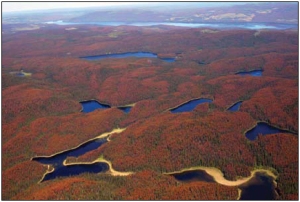
Despite comprising about a third of the world’s entire forested area and harbouring some of the lowest human densities anywhere, the great boreal forest that stretches across Alaska, Canada, Scandinavia and a huge chunk of Russia is under severe threat.

Surprised that we’re not talking about tropical deforestation for once? Surprised that so-called ‘developed’ nations are pilfering the last great carbon sink and biodiversity haven left on the planet? If you have read any of the posts on this blog, you probably shouldn’t be.

The paper today appeared online in Trends in Ecology and Evolution and is entitled Urgent preservation of boreal carbon stocks and biodiversity (by CJA Bradshaw, IG Warkentin & NS Sodhi). It’s essentially a review of the status of the boreal forest from a biodiversity perspective, and includes a detailed assessment of the degree of its fragmentation, species threat, climate- and human-influenced disturbance regime, and its carbon sequestration/emission status. I’ll summarise some of the main findings below:

borealfire

© NASA

  • Russia contains ~53 % of the boreal forest, followed by Canada (25 %), USA (18 %, mostly in Alaska), Sweden (2 %) and Finland and Norway (~1 % each); there are small areas of boreal forest in northern China and Mongolia.
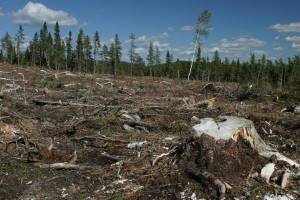
  • Fire is the main driver of change in the boreal forest. Although clearing for logging and mining abounds, it pales in comparison to the massive driver that is fire.
  • There is evidence that climate change is increasing the frequency and possibly extent of fires in the boreal zone. That said, most fires are started by humans, and this is particularly the case in the largest expanse in Russia (in Russia alone, 7.5 and 14.5 million hectares burnt in 2002 and 2003, respectively).
  • While few countries report an overall change in boreal forest extent, the degree of fragmentation and ‘quality’ is declining – only about 40 % of the total forested area is considered ‘intact’ (defined here as areas ≥ 500 km2, internally undivided by things such as roads, and with linear dimensions ≥ 10 km).
  • Russian boreal forest is the most degraded and least ‘intact’, and has suffered the greatest decline in the last few decades compared to other boreal countries.
  • Boreal countries have only < 10 % of their forests protected from wood exploitation, except Sweden where it’s about 20 %.
  • There are over 20000 species described in the boreal forest – a number much less than that estimated for tropical forests even of much smaller size.
  • 94 % of the 348 IUCN Red Listed boreal species are considered to be threatened with extinction, but other estimates from local assessments compiled together in 2000 (the United Nations’ Temperate and Boreal Forest Resources Assessment) place the percentages of threatened species up to 46 % for some taxa in some countries (e.g., mosses in Sweden). The latter assessment placed the Fennoscandian countries as having the highest proportions of at-risk taxa (ferns, mosses, lichens, vascular plants, butterflies, birds, mammals and ‘other vertebrates’), with Sweden having the highest proportion in almost all categories.
  • Boreal forest ecosystems contain about 30 % of the terrestrial carbon stored on Earth (~ 550 Gigatonnes).
  • © BC Ministry For Range/L. Maclaughlan

    Warmer temperatures have predisposed coniferous forest in western Canada to a severe outbreak of mountain pine beetle (Dendroctonus ponderosae) extending over > 13 M ha. © BC Ministry For Range/L. Maclaughlan

  • Mass insect outbreaks killing millions of trees across the entire boreal region are on the rise.
  • Although considered in the past as a global carbon sink, recent disturbances (e.g., increasing fire and insect outbreak) and refinements of measurement mean that much of the area is probably a carbon source (at least, temporarily).
  • A single insect outbreak in western Canada earlier this decade thought to be the direct result of a warming planet contributed more carbon to the atmosphere than all of that country’s transport industry and fire-caused release combined.
  • Current timber harvest management is inadequately prepared to emulate natural fire regimes and account for shifting fire patterns with climate change.
  • No amount of timber management can offset the damage done by increasing fire – we must manage fire better to have any chance of saving the boreal forest as a carbon sink and biodiversity haven.
Those include the main take-home messages. I invite you to read the paper in full and contact us (the authors) if you have any questions.

CJA Bradshaw

Full reference: Bradshaw, CJA, IG Warkentin, NS Sodhi. 2009. Urgent preservation of boreal carbon stocks and biodiversity. Trends in Ecology and Evolution DOI: 10.1016/j.tree.2009.03.019

Add to FacebookAdd to NewsvineAdd to DiggAdd to Del.icio.usAdd to StumbleuponAdd to RedditAdd to BlinklistAdd to Ma.gnoliaAdd to TechnoratiAdd to Furl


Ray of conservation light for Borneo

25 07 2009

This was the most interesting 20 minutes I’ve spent in the last wee while.

Up until just now, I had never heard of Willie Smits or what he’s been doing in Indonesia. I’ve been fairly hard on Indonesia in some of my papers and blog posts because of the ecological tragedy taking place there. I’ve focussed on the immense rate and extent of deforestation, the oil palm explosion, peatland destruction and air pollution arising from runaway fires there – I have thus far ignored any real positives because I didn’t really believe there were any.

Then I saw Smits’ TED talk. Two words – very impressed. I usually enjoy and even barrack for TED talks, and this is no exception.

This man and his organisation have really been applying a great deal of the research mentioned on ConservationBytes.com, as well as collecting data proving beyond a shadow of a doubt that if you integrate people’s needs with those of biodiversity, you can restore not only entire ecosystems, you can make humans benefit immensely in the process. A chronic pessimist, I can scarcely believe it.

He talks about a whole-system approach where agriculture, full rain forest restoration, climate control, carbon sequestration, monitoring and local governance all work together to turn once bare, fire-prone, species-poor deforested grasslands into teaming jungles that support happy, healthy, wealthy and well-governed human communities. Please watch this.

Vodpod videos no longer available.

CJA Bradshaw

Add to FacebookAdd to NewsvineAdd to DiggAdd to Del.icio.usAdd to StumbleuponAdd to RedditAdd to BlinklistAdd to Ma.gnoliaAdd to TechnoratiAdd to Furl


June Issue of Conservation Letters

6 06 2009

Quick off the mark this month is the new issue of Conservation Letters. There are some exciting new papers (listed below). I encourage readers to have a look:

Policy Perspectives

Letters

CJA Bradshaw


Celebrities actually doing something positive for conservation?

7 05 2009

When I first saw this on the BBC I thought to myself, “Well, just another toothless celebrity ego-stroke to make rich people feel better about the environmental mess we’re in” (well, I am a cynic by nature). I have blogged before on the general irrelevancy of celebrity conservation. But then I looked closer and saw that this was more than just an ‘awareness’ campaign (which alone is unlikely to change anything of substance). The good Prince of Wales and his mates/offspring have put forward The Prince’s Rainforest Project, which (thankfully) not only endeavours to raise awareness about the true value of rain forests, it actually proposes a mechanism to do so. It took a bit to find, but the 52-page report on the PRP website outlines from very sensible approaches. In essence, it all comes down to money (doesn’t everything?).

Their proposed plan to the United Nations Framework Convention on Climate Change (UNFCCC) details some of the following required changes:

  1. Payments to rain forest nations for not deforesting (establish transaction costs and setting short-term ‘conservation aid’ programmes)

  2. Multi-year service agreements (countries sign up for multi-year targets based on easily monitored performance indicators)

  3. Fund alternative, low-carbon economic development plans (fundamental shifts in development targets that explicitly avoid deforestation)

  4. Multi-stakeholder disbursement mechanisms (using funds equitably and minimising corruption)

  5. Tropical Forests Facility (a World Bank equivalent with the express purpose of organising, disbursing and monitoring anti-deforestation money flow)

  6. Country financing from public and private sources (funding initially derived from developed nations in form of ‘aid’)

  7. Rain forest bonds in private capital markets (value country-level ‘income’ as interest payments and incentives within a trade framework)

  8. Nations participate when ready (giving countries the option to advance at the pace dictated by internal politics and existing development rates)

  9. Accelerating long-term UNFCCC agreement on forests (transition to independence post-package)

  10. Global action to address drivers of deforestation (e.g., taxing/banning products grown on deforested land; ‘sustainability’ certification; consumer pressure; national procurement policies)

Now, I’m no economist, nor do I understand all the market nuances of the proposal, but it seems they are certainly on the right track. The value of tropical (well, ALL) forests to humanity are undeniable, and we’re currently in a state of crisis. Let’s hope the Prince and his mob can get the ball rolling.

For what it’s worth, here’s the video promoting the PRP. I could really care less what Harrison Ford and Pele have to say about this issue because I just don’t believe celebrities have any net effect on public behaviour (perceptions, yes, but not behaviour). But look beyond the superficiality and the cute computer-generated frog to the seriousness underneath. Despite my characteristically cynical tone, I give the PRP full support.

Vodpod videos no longer available.

more about “Rainforest film brings out stars“, posted with vodpod


CJA Bradshaw

Add to FacebookAdd to NewsvineAdd to DiggAdd to Del.icio.usAdd to StumbleuponAdd to RedditAdd to BlinklistAdd to Ma.gnoliaAdd to TechnoratiAdd to Furl


Protein mining the world’s oceans

31 03 2009

Last month David Agnew and colleagues published a paper in PLoS One examining the global extent of illegal, unreported and unregulated (IUU) fishing (Estimating the worldwide extent of illegal fishing), estimating its value from US$10-23.5 billion and representing between 11 and 26 million tonnes of fish annually. The value is roughly the same as that lost from illegal logging each year. Wow.
Of perhaps most interest is that Agnew and colleagues found evidence for a negative relationship between IUU fishing as a proportion of total catch and an international (World Bank) governance quality index. This suggests that improving governance and eradicating corruption may be the best way to curtail the extent of the illegal harvest.

We have just published a paper online in Fish and Fisheries about the extent and impact of IUU fishing in northern Australia. Entitled Protein mining the world’s oceans: Australasia as an example of illegal expansion-and-displacement fishing, the paper by Iain Field and colleagues advocates a multi-lateral response to a problem that has grown out of control in recent decades.

IUU fishing is devastating delicate ecosystems and fish breeding grounds in waters to Australia’s north, and can no longer be managed effectively by individual nations. The problem now requires an urgent regional solution if food security into the future is to be maintained.

The paper is the first big-picture account of the problem from Australia’s perspective. Although there had been a decline in IUU fishing in Australian waters over the past two years, possibly linked to large Australian government expenditure on enforcement and rising fuel prices, the forces driving illegal fishing have not gone away and are likely to resurface in our waters.

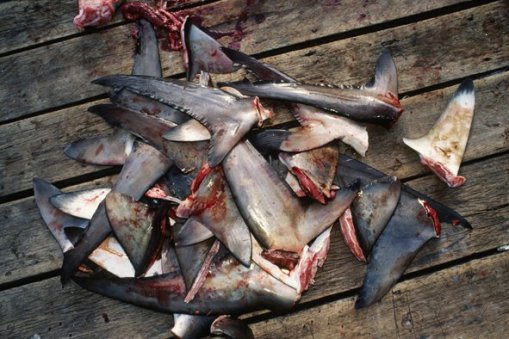
We expect that the small-scale illegal fishers will be back to prey on other species such as snapper, trochus and trepang as soon as it is economically viable for them to do so. To date, these IUU fishers have focused mostly on high-value sharks mainly for the fin trade, to the extent that the abundance of some shark species has dropped precipitously. IUU fishing, which has devastated fish resources and their associated ecosystems throughout Southeast Asian waters, is driven by deep economic and societal forces. For example, the Asian economic crisis in the late 1990s drove a large number of people out of cities and into illegal fishing.

It is not enough to maintain just a national response as the problem crosses national maritime zones, and it poses one of the biggest threats known to marine ecosystems throughout the region. These IUU fishers are mining protein, and there is no suggestion of sustainability or factoring in fish breeding or ecosystem protection into the equation. They just come into a fishing area and strip-mine it, leaving it bare.

Illegal fishing in Australian waters started increasing steeply about 10 years ago, largely because of over-exploitation of waters farther north, peaking in 2005-06 then falling away just as steeply. There are three factors behind the recent downturn: Australian government enforcement measures estimated to have cost at least AU$240 million since 2006; the high price of fuel for the fishing boats; and, most importantly, the fact that the high-value species may have been fished out and are now economically and ecologically extinct.

The $240 million has funded surveillance, apprehension, transportation, processing and accommodation of the several thousand illegal foreign fishermen detained each year since 2006. These activities have been successful, but it is doubtful whether they can hold back the IUU tide indefinitely – the benefits to the illegal fishers of their activities far outweigh the penalties if caught.

With increasing human populations in the region, the pressure to fish illegally is likely to increase. Regional responses are required to deter and monitor the illegal over-exploitation of fisheries resources, which is critical to secure ecosystem stability as climate change and other destructive human activities threaten food security.

CJA Bradshaw (with IC Field, MG Meekan and RC Buckworth)

Add to FacebookAdd to NewsvineAdd to DiggAdd to Del.icio.usAdd to StumbleuponAdd to RedditAdd to BlinklistAdd to Ma.gnoliaAdd to TechnoratiAdd to Furl


One year later: Conservation Letters

17 02 2009

Conservation Letters

I have been very proud to be a part of Conservation Letters‘ success since its inaugural issue in April 2008. I thought I’d share our Chief Editors’ retrospective editorial after the first year. Thanks to all who have made CL such a success!

In the editorial that launched Conservation Letters, we promised a journal that would publish novel and innovative papers drawing on a diversity of disciplines, and including perspectives and case studies from across the globe. We anticipated first class research that would help deliver effective policy and management solutions. Furthermore, we pledged rapid publication: a review time of six weeks and submission-to-publication time of 20 weeks. So let’s see how we have done in the first volume.

The five issues of the first volume comprise 37 papers drawn from 146 submissions. Of these submissions, 40% were rejected without review. We did better than our target for processing manuscripts: average review time was five weeks and submission-to-publication time was 17.5 weeks.

Coverage of topics has been diverse. Several papers dealt with mainstream conservation science: habitat and population decline, climate change impacts and assessments for conservation planning. Many dealt with “hot” topics, namely natural capital and ecosystem services, conservation economics, and monitoring and evaluation. Few papers had a strictly biological focus – most also considered social dynamics and focused on production land and waterscapes. Most straddled disciplines. Although all papers articulated implications for policy and practice, two documented research that was engaged with the stakeholders responsible for developing policy or implementing practice.

We are disappointed that the geographic spread of the submissions was strongly biased in favor of developed, English-speaking nations: 36% of first authors hailed from the USA, 19% from UK, 16% from Australia and 6% from Canada. Only 11% of submissions originated from mainland Europe, 5% from Asia, 3% from Africa, 2% from Latin America. More encouraging was that almost half the papers published dealt with topics that transcended biome boundaries; the remainder was equally shared between land and water ecosystems.

At this early stage, it is difficult to assess whether any of the papers have had an impact on conservation policy and practice. However, the editorial team is pursuing ways of monitoring the extent to which papers are influential in catalyzing actions that safeguard nature and its services in a secure, just, and sustainable way. What we can report is that research published in Conservation Letters aroused considerable interest from major television networks (BBC, ABC, National Geographic), magazines (Economist, American Scientist), newspapers (New York Times, Christian Science Monitor, Sydney Morning Herald) and conservation organizations (BirdLife International, The Nature Conservancy). Two papers attracted most of the media interest: Wilson and Edwards’ paper on low emission kangaroo meat (issue 3, 119-128) and Reed and Merenlender’s contribution that assessed the impact on carnivore populations of non-consumptive recreation in protected areas (issue 3, 146-154). Along with Kapos et al’s paper on measuring conservation success (issue 4, 155-164) and Koh and Wilcove’s article on the impacts of oil palm agriculture on tropical biodiversity (issue 2, 60-64), as of November these contributions also had the highest impact as measured by downloads. Conservation Letters will apply for ISI listing in early 2009 so it will soon be possible to track impact via citation analysis.

Overall, we are very pleased with the first volume of the journal. The papers are scientifically rigorous, innovative and – importantly – likely to have a real impact on policy and practice. Moreover, we believe that the quality and speed of the review process has been good. However, the journal does face certain challenges in maintaining this high quality of content and process. We need to attract more contributions with social science perspectives, that involve scientists from developing countries, and that are socially engaged in processes leading to implementation of conservation actions. As Conservation Letters grows and becomes even more diverse, we will also need to recruit to our editorial board more rare individuals like the ones we already have: leading scientists who are willing to allocate time to editorial chores that advance conservation science and policy.

Our success is attributed to the conservation science community who has so enthusiastically supported the journal by submitting their top-notch papers to a fledgling journal. Of key importance has been our outstanding editorial board. Its members have ensured a rigorous, fair and speedy review process. We wish to thank in particular those who dealt with four or more submissions for the first volume, namely Bill Adams, James Blignaut, Justin Brashares, Nicholas Dulvy, Richard Krannich, David Lindenmayer, Atte Moilanen, Mathieu Rouget, Javier Simonetti and Kerrie Wilson. At the helm is Corey Bradshaw, our Senior Editor whose dedication and commitment have underpinned our achievement thus far. Corey shouldered the lion’s share of editorial responsibilities for the early issues, personally handling 18 submissions. Thanks too for the sterling work by the team at Wiley-Blackwell: Managing Editor Jen Mahar and Associate Publisher Marjorie Spencer. Finally the entire team is hugely appreciative of the guidance of our Editorial Advisor, Michael Hochberg, whose experience as editor of our sister journal Ecology Letters, provided important direction for the editorial team.

By any measure conservation research is booming – both in terms of its scientific and real world impact. The remarkable early enthusiasm for Conservation Letters is testimony to the excitement that surrounds our discipline. We, the Chief Editors, are very grateful for your support.

Richard M. Cowling
Michael B. Mascia
Hugh Possingham
William J. Sutherland


Wake Up, Freak Out

9 10 2008
© Leo Murray

© Leo Murray

An excellent, short animated film about the perils of climate change and its implications for biodiversity (including humans). Highly recommended.

This really isn’t about polar bears any more. At this very moment, the fate of civilization itself hangs in the balance.

It turns out that the way we have been calculating the future impacts of climate change up to now has been missing a really important piece of the picture. It seems we are now dangerously close to the tipping point in the world’s climate system; this is the point of no return, after which truly catastrophic changes become inevitable.

Wake Up, Freak Out – then Get a Grip is a short, animated film about climate change by Leo Murray.


Potsdam Initiative: Economics of Ecosystems and Biodiversity

1 10 2008

moneygamiA recent report from the European Union with which I was marginally involved has been published online.

The meeting of the environment ministers of the G8 countries and upcoming industrialising countries took part in what has been dubbed the ‘Potsdam Initiative‘ have commissioned a series of reports on the ‘Economic significance of the global loss of biological diversity’.

I quote:

‘In a global study we will initiate the process of analysing the global economic benefit of biological diversity, the costs of the loss of biodiversity and the failure to take protective measures versus the costs of effective conservation.’

The first stage was the report was entitled ‘The Economics of Ecosystems & Biodiversity (TEEB)’. Mr Pavan Sukhdev, Managing Director and Head of Deutsche Bank’s Global Markets business in India, and a Founder-Director of the ‘Green Accounting for Indian States Project’, an initiative of the Green Indian States Trust (GIST) to set up an economic valuation and national accounting framework to measure sustainability for India, was recently appointed as the independent Study Leader.

The overall aims of the study are to evaluate the costs of the loss of biodiversity and the associated decline in ecosystem services, and to compare them with the costs of effective conservation and ‘sustainable’ use. The overall aim is to increase awareness of the value of biodiversity and ecosystem services to facilitate the development of cost-effective policy responses to the problem.

The interim report is available here, and the final report will be published shortly on the dedicated website here. The title of the final report of the first phase is THE ECONOMICS OF ECOSYSTEMS AND BIODIVERSITY: SCOPING THE SCIENCE.

I was involved specifically in Section 4.13 ‘Regulation of Natural Hazards’ which are defined ‘as infrequent natural phenomena that – during a relatively short period of time – pose a high level of threat to [human] life, health or property. These include seismic events (volcanic eruptions, earthquakes, tsunamis), extreme weather events (hurricanes, floods), avalanches and land slides. My contribution was mainly with respect to the role of deforestation on flood risk.

The report was jointly prepared by Ana Rodrigues and Andrew Balmford.

CJA Bradshaw

Add to FacebookAdd to NewsvineAdd to DiggAdd to Del.icio.usAdd to StumbleuponAdd to RedditAdd to BlinklistAdd to Ma.gnoliaAdd to TechnoratiAdd to Furl


Tropical Conservation Biology

8 09 2008

An obvious personal plug – but I’m allowed to do that on my own blog ;-)

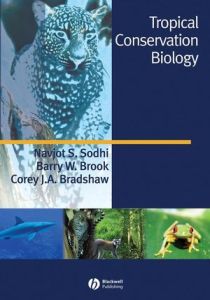
1405150734I’d like to introduce a (relatively) new textbook that my colleagues, Navjot Sodhi and Barry Brook, and I wrote and published last year with Blackwell (now Wiley-Blackwell) Scientific Publishing – Tropical Conservation Biology.

We’re rather proud of this book because it was a timely summary and assessment of the scientific evidence for the degree of devastation facing tropical biodiversity today and in the future. I’ve summarised some of the main issues in a previous post covering a paper we have ‘in press’ that was born of the text book, but obviously the book is a far more detailed account of the problems facing the tropics.

This introductory textbook examines diminishing terrestrial and aquatic habitats in the tropics, covering a broad range of topics including the fate of the coral reefs; the impact of agriculture, urbanisation, and logging on habitat depletion; and the effects of fire on plants and animal survival.

One of the highlights of the book is that each chapter (see below) Includes case studies and interviews with prominent conservation scientists to help situate key concepts in a real world context: Norman Myers (Chapter 1), Gretchen Daily (Chapter 2), William Laurance (Chapter 3), Mark Cochrane (Chapter 4), Daniel Simberloff (Chapter 5), Bruce Campbell (Chapter 6), Daniel Pauly (Chapter 7), Stephen Schneider (Chapter 8), Stuart Pimm (Chapter 9) and Peter Raven (Chapter 10). These biographies are followed by a brief set of questions and answers that focus on some of the most pertinent and pressing issues in tropical conservation biology today. It is our intention that readers of Tropical Conservation Biology will benefit from the knowledge and be inspired by the passion of these renowned conservation experts.

TABLE OF CONTENTS

  1. Chapter 1: Diminishing habitats in regions of high biodiversity. We report on the loss of tropical habitats across the tropics (e.g., deforestation rates). We also highlight the drivers of habitat loss such as human population expansion. Finally, we identify the areas in immediate need of conservation action by elucidating the concept of biodiversity hotspots. Read the rest of this entry »


Cost, not biodiversity, dictates decision to conserve

26 08 2008

One for the Potential list:

originalEuroGreen_LogoI’ve just read a great new paper by Bode et al. (2008) entitled Cost-effective global conservation spending is robust to taxonomic group.

After the hugely influential biodiversity ‘hotspot concept hit the global stage, there was a series of subsequent research papers examining just how we should measure the ‘biodiversity’ component of areas needing to be conserved (and invested in). The problem was that depending on which taxa you looked at, and what measure of ‘biodiversity’ you used (e.g., species richness, endemism, latent threat, evolutionary potential, functional redundancy), the priority list of where, how much and when to invest in conservation differed quite a lot. In other words, the congruency among listed areas was rather low (summarised nicely in Thomas Brooks‘ paper in Science Global biodiversity conservation priorities and examined also by Orme et al. 2005). This causes all sorts of problems for conservation investment planners – what to invest in and where?

Bode and colleagues’ newest paper demonstrates at least for endemism, the taxon on which you base your assessment is much less important for maximising species conservation than factors such as land cost and the degree of threat (e.g., as measured by the IUCN Red List).

Of course, their findings could be considered too simplistic because they don’t (couldn’t) evaluate other potentially more important components of ‘biodiversity’ such as genetic history (evolutionary potential) or ecological functional redundancy (the idea that a species becomes more important to conserve if no other species provide the same ecosystem functions); however, I think this paper is something of a landmark in that it shows that ‘socio-economic’ uncertainty generally outweighs uncertainty due to biodiversity measures. The long and short of this is that planners should start investing if there is evidence of heightened threat and land is cheap.

A few other missing bits means that the paper is more heuristic than prescriptive (something the authors state right up front). There is no attempt to take biodiversity, threat or land cost changes arising from climate change into account (see relevant post here), so some of the priorities are questionable. Related to this is the idea of latent risk (see relevant paper by Cardillo et al. 2006) – what’s not necessarily threatened now but likely will be in the very near future. Also, only a small percentage of species are listed in the IUCN Red List (see relevant post here), so perhaps we’re missing some important trends. Finally, I had to note that almost all the priority areas outlined in the paper happened to be in the tropics, which stands to reason given the current and ongoing extinction crisis occurring in this realm. See a more detailed post on ‘tropical turmoil‘.

Despite the caveats, I think this could provide a way forward to the conservation planning stalemate.

CJA Bradshaw

Add to FacebookAdd to NewsvineAdd to DiggAdd to Del.icio.usAdd to StumbleuponAdd to RedditAdd to BlinklistAdd to Ma.gnoliaAdd to TechnoratiAdd to Furl


Native forests reduce the risk of catastrophic floods

20 08 2008

A-Pakistan-Army-helicopte-004Each year extreme floods kill or displace hundreds of thousands of people and cause billions of dollars in damage to property. The consequences of floods are particularly catastrophic in developing countries generally lacking the infrastructure to deal adequately with above-average water levels.

For centuries it has been believed that native forest cover reduced the risk and severity of catastrophic flooding, but there has been strong scientific debate over the role of forests in flood mitigation.

Forest loss is currently estimated at 13 million hectares each year, with 6 million hectares of that being primary forest previously untouched by human activities. These primary forests are considered the most biologically diverse ecosystems on the planet, but this realisation has not halted their immense rate of loss.

Last year my colleagues and I published a paper entitled Global evidence that deforestation amplifies flood risk and severity in the developing world in Global Change Biology (highlighted in Nature and Faculty of 1000) that has finally provided tangible evidence that there is a strong link between deforestation and flood risk. Read the rest of this entry »


Tropical turmoil – a biodiversity tragedy in progress

18 08 2008

fragmentationWe recently published (online) a major review showing that the world is losing the battle over tropical habitat loss with potentially disastrous implications for biodiversity and human well-being.

Published online in the Ecological Society of America’s journal Frontiers in Ecology and the Environment, our review Tropical turmoil – a biodiversity crisis in progress concludes that we are “on a trajectory towards disaster” and calls for an immediate global, multi-pronged conservation approach to avert the worst outcomes.

Tropical forests support more than 60 % of all known species, but represent only about 7 % of the Earth’s land surface. But up to 15 million hectares of tropical rainforest are being lost every year and species are being lost at a rate of up to 10000 times higher than would happen randomly without humans present.

This is not just a tragedy for tropical biodiversity, this is a crisis that will directly affect human livelihoods. This is not just about losing tiny species found in the canopies of big rain forest trees few people will ever see, this is about a complete change in ecosystem services that directly benefit human life. Read the rest of this entry »


Saving species does not harm poor

17 08 2008

Poor-Amongst-YouHere’s a great one for the Potential list:

A paper just published online in the journal Oryx by Kent Redford and colleagues entitled What is the role for conservation organizations in poverty alleviation in the world’s wild places? challenges one argument used by anti-conservation humanists to avoid preserving intact habitats.

When rainforests and other high conservation-value habitats are set aside for protection, humanists will often complain that it destroys the livelihoods of the people living there because the listing prevents them from farming, hunting or otherwise providing themselves with income. Not so say Redford and colleagues – they found that most of the world’s poor (measured by proxy using infant mortality rates) were predominately associated with high-density urban areas and not with more intact wild areas.

Critics of the finding argue that this should not take the onus away from richer nations or governments to bolster the economic prosperity of these people, and I agree. However, this is a major finding that in some ways validates what we are beginning to understand about habitat intactness and ecosystem services. Destroy the ecosystems around you and you generally have lower water quality, higher incidence of catastrophic events, poor agricultural returns, greater disease prevalence, etc. that will drive people into poverty, rather than drop them further down the economic scale.

If this conclusion stands up to analytical scrutiny and supporting evidence from other analyses, I dearly hope that it is noticed and embraced by governments worldwide struggling to find the balance between economic development, poverty alleviation and conservation of biodiversity to maintain ecosystem services.

CJA Bradshaw

Add to FacebookAdd to NewsvineAdd to DiggAdd to Del.icio.usAdd to StumbleuponAdd to RedditAdd to BlinklistAdd to Ma.gnoliaAdd to TechnoratiAdd to Furl


The Great Disruption

6 08 2008

If ever there was a plea for conservation actions that really do something to reverse the catastrophic ecosystem and ensuing economic crashes that are happening worldwide, its embodied in this essay by Paul Gilding. I won’t write much more on the subject because Paul says it so much more eloquently and thoroughly than I can. Please read his Scream Crash Boom 2: The Great Disruption.

CJA Bradshaw


Realistic conservation investment

18 07 2008

I’m currently attending the Society for Conservation Biology‘s Annual Meeting in Chattanooga, Tennessee, USA and blogging on presentations I think are worth mentioning.

In a surprise shift from the previously planned final plenary talk, Prof. Helene Marsh of James Cook University gave a nice example of how good research can be melded with non-technical opinion to weight threatened species for recovery investment. Using a north Queensland example, she described how technical assessments of relative threat risk combined with weightings from non-technical policy makers can provide the most realistic and relevant conservation investment when used simultaneously. Based on their paper in 2007 (‘Optimizing allocation of management resources for wildlife‘), Prof. Marsh outlined a quantitative approach to meld these decision-making components with real-world outcomes. I’d like to see some of the real outcomes in terms of recovery of north Queensland threatened species, but at least the State appears to be on the right track by using this tool.

CJA Bradshaw


IUCN Chief Scientist & Asia

15 07 2008

I’m currently attending the Society for Conservation Biology‘s Annual Meeting in Chattanooga, Tennessee, USA and blogging on presentations I think are worth mentioning.

The first plenary talk was given by the IUCN’s Chief Scientist, Jeffrey McNeely, about the issues surrounding biodiversity conservation in Asia. Dr. McNeely gave an interesting background to the human cultural history and diversity of the region, followed by a brief exposé of the conservation issues there (habitat loss, over-exploitation, invasive species, etc). Overall, however, I was disappointed by his lack of emphasis on the magnitude of the conservation crisis Asia is undergoing. There was no mention of the perverse subsidies buffering unsustainable forestry and fishing, the corruption driving habitat loss and habitat degradation, or the massive problems driven by human over-population.

We recently published (currently online) a paper regarding the conservation crisis facing this (and similar regions) in the tropics Tropical turmoil – a biodiversity crisis in progress (see related post), and several of my colleagues have recently outlined just how badly biodiversity is faring in Asia (e.g., see Brook et al. 2003; Sodhi et al. 2004). While I was happy to see Dr. McNeely mention the need for more research on these issues, his statement that he had “depressed [us] with the problems” was a major understatement. He did not nearly go far enough to ‘depress’ his audience of conservation scientists. We are squarely within a crisis in the region, and if the Chief Scientist of the IUCN who has intimate knowledge of Asia is not singing that song loudly and clearly, I fear it will get far worse before we see any real positive change.

CJA Bradshaw


‘Conservation for the people’

11 07 2008

This, the title of Peter Kareiva and Michelle Marvier’s paper in Scientific American, embodies in some ways, what this website is all about. Certainly not the first researchers to conclude that people will only value biodiversity if it has direct implications for their own well-being (economic prosperity, health, longevity, etc.), Kareiva and Marvier’s paper nicely summarises, however, the extent to which conservation research MUST quantify these links. The corollary is that if we don’t, conservation research will pass into oblivion (along with the species we are attempting to protect from extinction). Nice paper, and certainly one to watch.

CJA Bradshaw

Add to FacebookAdd to NewsvineAdd to DiggAdd to Del.icio.usAdd to StumbleuponAdd to RedditAdd to BlinklistAdd to Ma.gnoliaAdd to TechnoratiAdd to Furl


Conservation Letters – a scientific journal with a difference?

5 07 2008

ConLetters-Jan12I’d like to introduce the latest scientific conservation journal – Conservation Letters (Wiley-Blackwell). If you are a publishing conservation scientist then you will have undoubtedly heard about this already. I must admit my biased opinion up front – I have the role of Senior Editor for the journal under the auspices of the venerable Editors-in-Chief, Professor Richard Cowling, Professor Hugh Possingham, Professor Bill Sutherland and Dr. Michael Mascia.

We’ve been doing conservation science now for well over 50 years, and there has been some fantastic, hard-hitting, brilliant research done. However, extinction rates continue to soar, habitat loss and fragmentation abound, bushmeat hunting and other forms of direct over-exploitation show no signs of slowing and invasive species are penetrating into the most ‘pristine’ habitats. To top it all off, climate change is exacerbating each and every one of these extinction drivers.

So what have we been doing wrong?

Clearly the best research is going unheeded – this is not to say that some progress has not been made, and I hope to highlight the best examples of the hardest-hitting research on this site – it simply means that we are losing the battle. Enter Conservation Letters – a journal designed to make conservation research more available to policy makers and managers to make true strides forward in biodiversity conservation. I’m not suggesting for a moment that other well-known, respected and established conservation journals have not done their job; without the research those journals publish we’d certainly be much worse off. However, we have recognised that our research isn’t affecting as many people as it should.

With Conservation Letters now well into its first year, I hope that we start to see some changes here, and I hope that the discipline will have a much greater net effect on slowing (and perhaps) reversing the extinction trends we observe today. Climate change is making this much more challenging, as well as the ever-increasing human population. Can we make better progress? – I certainly hope so.

CJA Bradshaw

Add to FacebookAdd to NewsvineAdd to DiggAdd to Del.icio.usAdd to StumbleuponAdd to RedditAdd to BlinklistAdd to Ma.gnoliaAdd to TechnoratiAdd to Furl