Synergies among extinction drivers

24 08 2008

Hopefully one for the Potential list:

© J. Hance

Brook, BW, NS Sodhi, CJA Bradshaw. (2008) Synergies among extinction drivers under global change. Trends in Ecology and Evolution 23, 453-460

A review my colleagues, Barry Brook and Navjot Sodhi, and I have just published in Trends in Ecology and Evolution demonstrates how separate drivers of extinction (e.g., habitat loss, over-exploitation [hunting, fishing, etc.], climate change, invasive species, etc.) tend to work together to heighten the extinction probability of the species they affect more than the simple sum of the individual effects alone.

In what we termed ‘synergies’, the review compiles evidence from observational, experimental and meta-analytic research demonstrating the positive and self-reinforcing actions of multiple drivers of population decline and eventual extinction. Examples include experimental evidence that wild radishes experiencing inbreeding depression have lower fitness than expected from simple population reduction (Elam et al. 2007), inter-tidal polychaetes succumb to pollution effects much more so at low densities than when populations are abundant (Hollows et al. 2007), and habitat fragmentation, harvest and simulated climate warming increase rotifer extinction risk up to 50 times more than expected from the additive effects of the threatening processes (Mora et al. 2007).

We argued that conservation actions only targeting single drivers will more than likely be inadequate because of the cascading effects caused by unmanaged synergies. Climate change will also interact with and accelerate ongoing threats to biodiversity, so the importance of accounting for these interactions cannot be understated.

CJA Bradshaw

Add to FacebookAdd to NewsvineAdd to DiggAdd to Del.icio.usAdd to StumbleuponAdd to RedditAdd to BlinklistAdd to Ma.gnoliaAdd to TechnoratiAdd to Furl


Tropical turmoil – a biodiversity tragedy in progress

18 08 2008

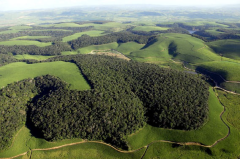
fragmentationWe recently published (online) a major review showing that the world is losing the battle over tropical habitat loss with potentially disastrous implications for biodiversity and human well-being.

Published online in the Ecological Society of America’s journal Frontiers in Ecology and the Environment, our review Tropical turmoil – a biodiversity crisis in progress concludes that we are “on a trajectory towards disaster” and calls for an immediate global, multi-pronged conservation approach to avert the worst outcomes.

Tropical forests support more than 60 % of all known species, but represent only about 7 % of the Earth’s land surface. But up to 15 million hectares of tropical rainforest are being lost every year and species are being lost at a rate of up to 10000 times higher than would happen randomly without humans present.

This is not just a tragedy for tropical biodiversity, this is a crisis that will directly affect human livelihoods. This is not just about losing tiny species found in the canopies of big rain forest trees few people will ever see, this is about a complete change in ecosystem services that directly benefit human life. Read the rest of this entry »


More on ‘roos

8 08 2008
Couldn’t resist posting this. Brilliant. Copyright Cathy Wilcox and the Sydney Morning Herald (in reference to previous post).


Beef is bad; Skippy is better

7 08 2008

© AWBC

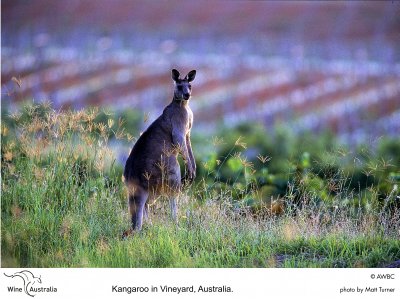
One for the ‘potential‘ list – George Wilson and Melanie Edwards of Australian Wildlife Services have just published a paper in the Early View section of Conservation Letters entitled Native wildlife on rangelands to minimize methane and produce lower-emission meat: kangaroos versus livestock.I am particularly moved by this one for several reasons: (1) it is one of the first really good policy pieces on why we should be eating more kangaroos and fewer sheep and cattle in Australia, (2) it moves past the ridiculous welfare issues that have prevented people from embracing kangaroo harvest in this country, (3) it provides an excellent model for reducing our reliance on non-native livestock for protein worldwide, (4) I love eating macropods (flavour, nutritional value, tenderness – see basic cooking instructions below), and (4) I was responsible for editing the manuscript for publication in Conservation Letters.

Hard-hoofed livestock pastoralism has been the economic backbone of Australia since Europeans first managed to scratch out a living on this harsh land. It has always been a bit of a battle raising largely European-adapted livestock (cattle, sheep, goats) on the driest inhabited continent in the world, but the innovative and persevering Australian cocky has managed to pull it off. However, such livestock pastoralism has been implicated in the extinction of at least 20 mammal species and threatens around 25 % of the plant species listed as endangered in Australia (Wilson & Edwards 2008). It’s also becoming more difficult to raise water-thirsty livestock as our rainfall dwindles with climate change.

Now as Wilson and Edwards point out, there are many carbon-related benefits for switching our protein dependency to kangaroos. Read the rest of this entry »


IUCN Chief Scientist & Asia

15 07 2008

I’m currently attending the Society for Conservation Biology‘s Annual Meeting in Chattanooga, Tennessee, USA and blogging on presentations I think are worth mentioning.

The first plenary talk was given by the IUCN’s Chief Scientist, Jeffrey McNeely, about the issues surrounding biodiversity conservation in Asia. Dr. McNeely gave an interesting background to the human cultural history and diversity of the region, followed by a brief exposé of the conservation issues there (habitat loss, over-exploitation, invasive species, etc). Overall, however, I was disappointed by his lack of emphasis on the magnitude of the conservation crisis Asia is undergoing. There was no mention of the perverse subsidies buffering unsustainable forestry and fishing, the corruption driving habitat loss and habitat degradation, or the massive problems driven by human over-population.

We recently published (currently online) a paper regarding the conservation crisis facing this (and similar regions) in the tropics Tropical turmoil – a biodiversity crisis in progress (see related post), and several of my colleagues have recently outlined just how badly biodiversity is faring in Asia (e.g., see Brook et al. 2003; Sodhi et al. 2004). While I was happy to see Dr. McNeely mention the need for more research on these issues, his statement that he had “depressed [us] with the problems” was a major understatement. He did not nearly go far enough to ‘depress’ his audience of conservation scientists. We are squarely within a crisis in the region, and if the Chief Scientist of the IUCN who has intimate knowledge of Asia is not singing that song loudly and clearly, I fear it will get far worse before we see any real positive change.

CJA Bradshaw


Conservation Letters – a scientific journal with a difference?

5 07 2008

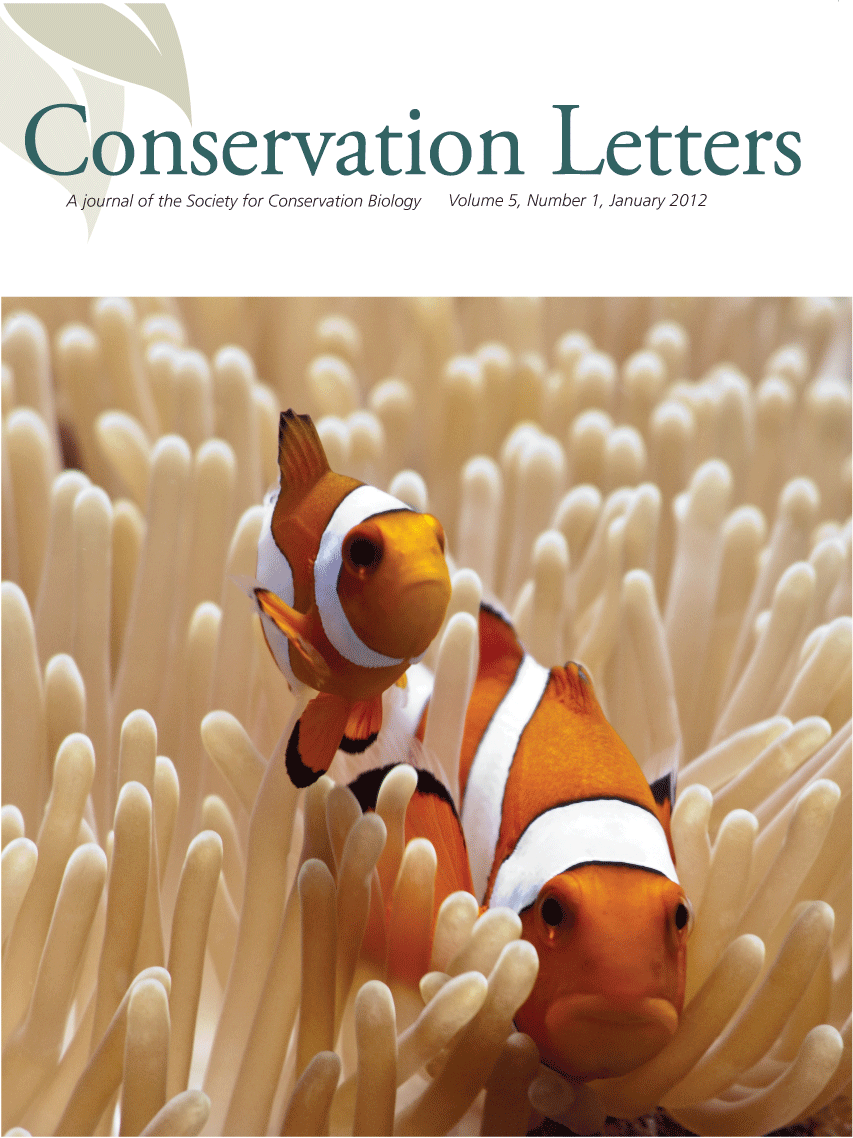
ConLetters-Jan12I’d like to introduce the latest scientific conservation journal – Conservation Letters (Wiley-Blackwell). If you are a publishing conservation scientist then you will have undoubtedly heard about this already. I must admit my biased opinion up front – I have the role of Senior Editor for the journal under the auspices of the venerable Editors-in-Chief, Professor Richard Cowling, Professor Hugh Possingham, Professor Bill Sutherland and Dr. Michael Mascia.

We’ve been doing conservation science now for well over 50 years, and there has been some fantastic, hard-hitting, brilliant research done. However, extinction rates continue to soar, habitat loss and fragmentation abound, bushmeat hunting and other forms of direct over-exploitation show no signs of slowing and invasive species are penetrating into the most ‘pristine’ habitats. To top it all off, climate change is exacerbating each and every one of these extinction drivers.

So what have we been doing wrong?

Clearly the best research is going unheeded – this is not to say that some progress has not been made, and I hope to highlight the best examples of the hardest-hitting research on this site – it simply means that we are losing the battle. Enter Conservation Letters – a journal designed to make conservation research more available to policy makers and managers to make true strides forward in biodiversity conservation. I’m not suggesting for a moment that other well-known, respected and established conservation journals have not done their job; without the research those journals publish we’d certainly be much worse off. However, we have recognised that our research isn’t affecting as many people as it should.

With Conservation Letters now well into its first year, I hope that we start to see some changes here, and I hope that the discipline will have a much greater net effect on slowing (and perhaps) reversing the extinction trends we observe today. Climate change is making this much more challenging, as well as the ever-increasing human population. Can we make better progress? – I certainly hope so.

CJA Bradshaw

Add to FacebookAdd to NewsvineAdd to DiggAdd to Del.icio.usAdd to StumbleuponAdd to RedditAdd to BlinklistAdd to Ma.gnoliaAdd to TechnoratiAdd to Furl


Feral predators – ‘super’ cats, foxes and dingoes

3 07 2008

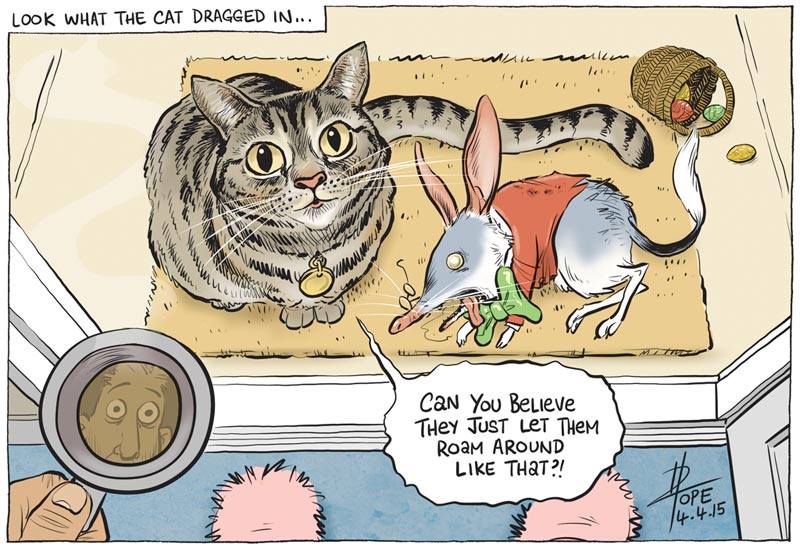
cat and bilbyHere’s one to get us going. A recent news item on ABC News discusses the prospect of importing so-called ‘super cats’ (‘savannah cats’ = domestic cat x African serval) into Australia. Although most of the items and people commenting on the subject deplore the very notion, I cannot believe that there was the legal capacity to import these things in the first place! Or indeed, that the company attempting to commit the heinous conservation crime has the right even to exist in this country. You’d think we’d learn after swamp buffalo, cane toads, foxes and a host of other alien nasties have caused Australian fauna to experience some of the higher rates of extinction known in the modern context. Indeed, it is my opinion that all cats (domestic and otherwise) should be declared illegal in Australia and destroyed. This is where it gets interesting though. One for the ‘papers to watch’ categories is by a mate and colleague of mine, Professor Chris Johnson of James Cook University in Townsville. He and his colleagues last year published a paper in Proc. R. Soc. B. called ‘Rarity of a top predator triggers continent-wide collapse of mammal prey: dingoes and marsupials in Australia‘.

dingo-21Here, they showed how dingoes (themselves ‘alien species’, but from some time ago) actually appear to suppress the populations of more recent alien predator arrivals (e.g., cats and foxes). The upshot is that more dingoes = fewer cats/foxes = more native fauna. Brilliant! I hope we can say in a few years how the careful management of dingoes and promotion of their conservation has benefitted an array of threatened marsupials in Australia. Well done Chris and colleagues.

CJA Bradshaw


Conservation that bites

2 07 2008

This new website will post examples of conservation science with real-world impacts to policy that improves biodiversity outcomes. Stay tuned.

CJA Bradshaw