Rise of the phycologists

22 09 2011

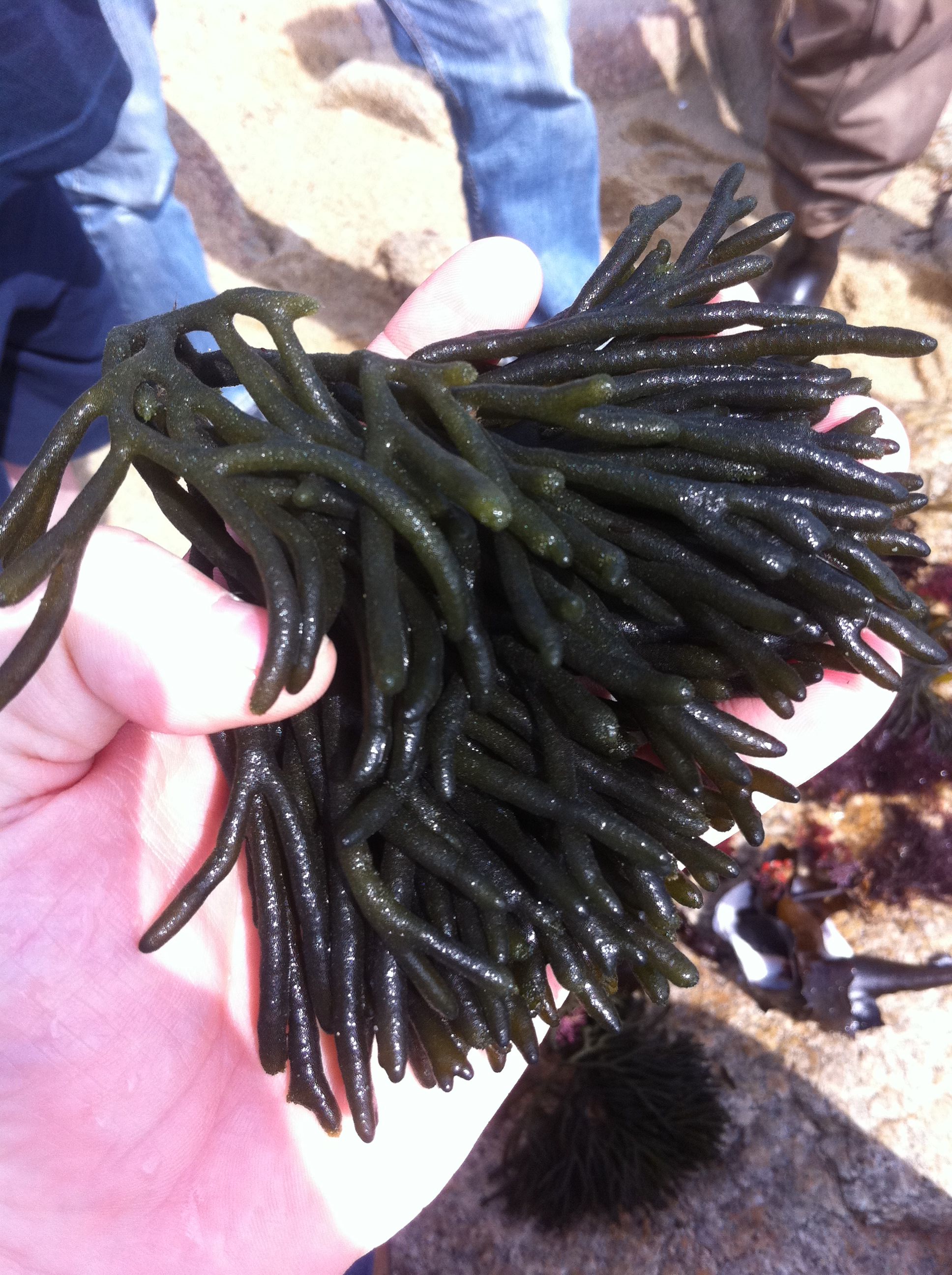
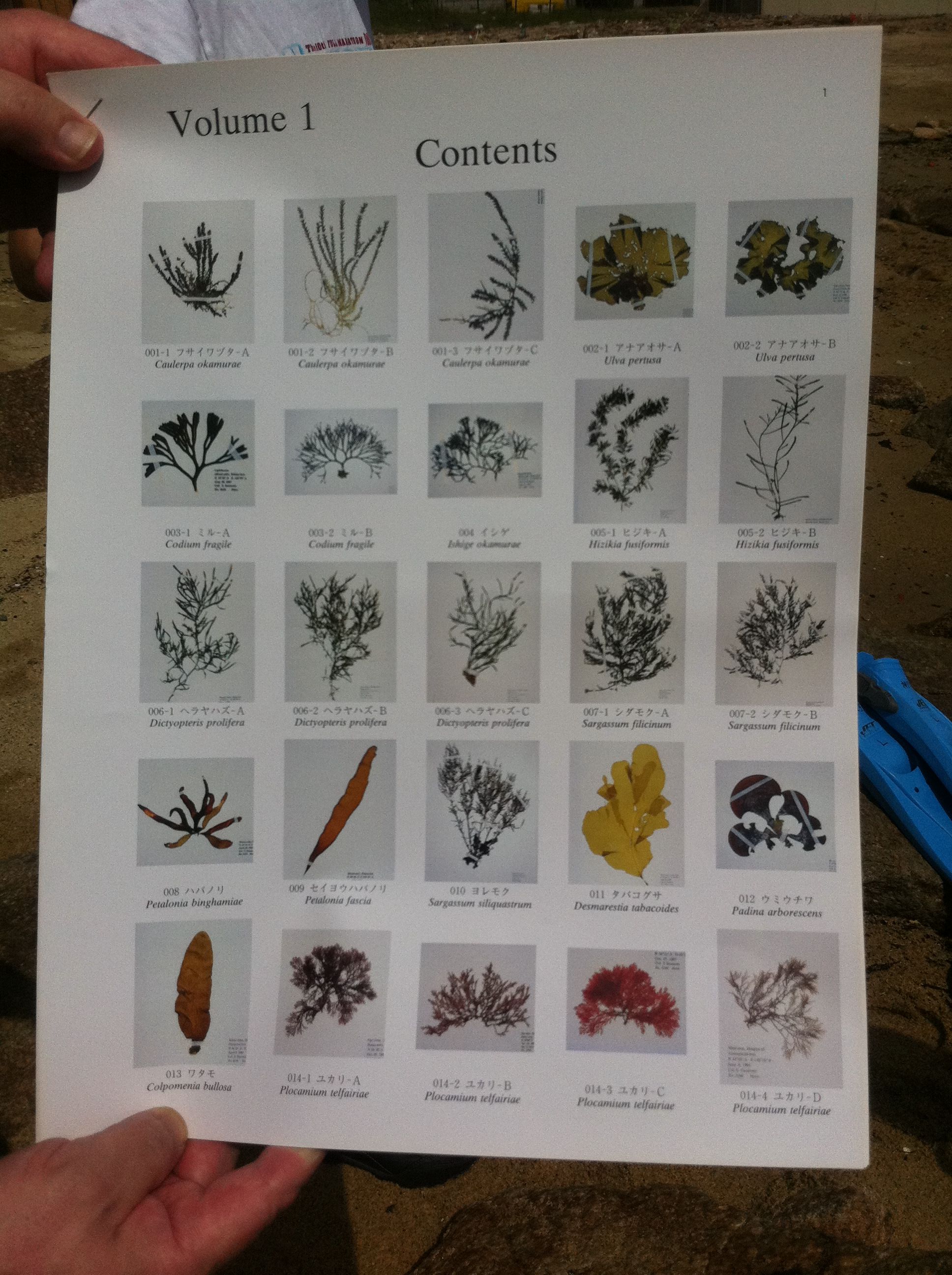
Dead man's fingers (Codium fragile) - © CJA Bradshaw

I’ve had an interesting week. First, it’s been about 6 years since I was last in Japan, and I love coming here; the food is exquisite, the people are fantastic (polite, happy, accommodating), everything works (trains, buses, etc.) and most importantly, it has an almost incredible proportion of its native forests intact.

But it wasn’t for forests that I travelled to Japan (nor the sumo currently showing on the guest-room telly where I’m staying – love the sumo): I was here for a calcareous macroalgae workshop.

What?

First, what are ‘macroalgae’, and why are some ‘calcareous’? And why should anyone in their right mind care?

Good questions. Answers: 1. Seaweeds; 2. Many incorporate calcium carbonate into their structures as added structural support; 3. Read on.

Now, I’m no phycologist (seaweed scientist), but I’m fascinated by this particular taxon. I’ve written a few posts about their vital ecological roles (see here and here), but let me regale you with some other important facts about these amazing species.

Some Japanese macroalgae - © CJA Bradshaw

There are about 12,000 known species of macroalgae described by phycologists, but as I’ve learnt this week, this is obviously a vast underestimate. For most taxa that people are investigating now using molecular techniques, the genetic diversity is so high and so geographically structured that there are obviously a huge number of ‘cryptic’ species within our current taxonomic divisions. This could mean that we’re out by up to a factor of 2 in the number of species in the world.

Another amazing fact – about 50 % of all known seaweed species are found in just two countries – Japan and Australia (hence the workshop between Japanese and Australian phycologists). Southern Australia in particular is an endemism hotspot.

Ok. Cool. So far so good. But so what? Read the rest of this entry »


No substitute for primary forest

15 09 2011

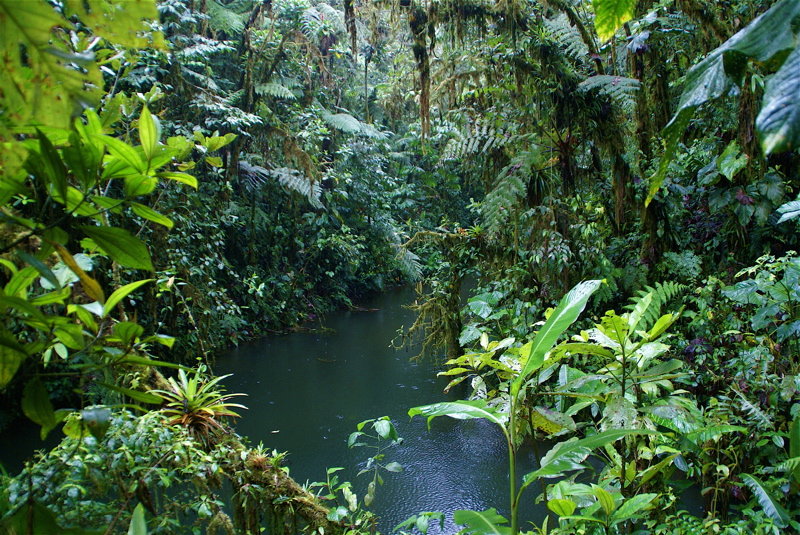
© Romulo Fotos http://goo.gl/CrAsE

A little over five years ago, a controversial and spectacularly erroneous paper appeared in the tropical ecology journal Biotropica, the flagship journal of the Association for Tropical Biology and Conservation. Now, I’m normally a fan of Biotropica (I have both published there several times and acted as a Subject Editor for several years), but we couldn’t let that paper’s conclusions go unchallenged.

That paper was ‘The future of tropical forest species‘ by Joseph Wright and Helene Muller-Landau, which essentially concluded that the severe deforestation and degradation of tropical forests was not as big a deal as nearly all the rest of the conservation biology community had concluded (remind you of climate change at all?), and that regenerating, degraded and secondary forests would suffice to preserve the enormity and majority of dependent tropical biodiversity.

What rubbish.

Our response, and those of many others (including from Toby Gardner and colleagues and William Laurance), were fast and furious, essentially destroying the argument so utterly that I think most people merely moved on. We know for a fact that tropical biodiversity is waning rapidly, and in many parts of the world, it is absolutely [insert expletive here]. However, the argument has reared its ugly head again and again over the intervening years, so it’s high time we bury this particular nonsense once and for all.

In fact, a few anecdotes are worthy of mention here. Navjot once told me one story about the time when both he and Wright were invited to the same symposium around the time of the initial dust-up in Biotropica. Being Navjot, he tore off strips from Wright in public for his outrageous and unsubstantiated claims – something to which Wright didn’t take too kindly.  On the way home, the two shared the same flight, and apparently Wright refused to acknowledge Navjot’s existence and only glared looks that could kill (hang on – maybe that had something to do with Navjot’s recent and untimely death? Who knows?). Similar public stoushes have been chronicled between Wright and Bill Laurance.

Back to the story. I recall a particular coffee discussion at the National University of Singapore between Navjot Sodhi (may his legacy endure), Barry Brook and me some time later where we planned the idea of a large meta-analysis to compare degraded and ‘primary’ (not overly disturbed) forests. The ideas were fairly fuzzy back then, but Navjot didn’t drop the ball for a moment. He immediately went out and got Tien Ming Lee and his new PhD student, Luke Gibson, to start compiling the necessary studies. It was a thankless job that took several years.

However, the fruits of that labour have now just been published in Nature: ‘Primary forests are irreplaceable for sustaining tropical biodiversity‘, led by Luke and Tien Ming, along with Lian Pin Koh, Barry Brook, Toby Gardner, Jos Barlow, Carlos Peres, me, Bill Laurance, Tom Lovejoy and of course, Navjot Sodhi [side note: Navjot died during the review and didn’t survive to hear the good news that the paper was finally accepted].

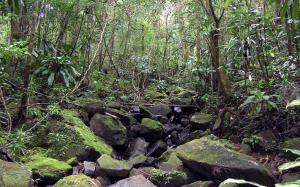
Using data from 138 studies from Asia, South America and Africa comprising 2220 pair-wise comparisons of biodiversity ‘values’ between forests that had undergone some sort of disturbance (everything from selective logging through to regenerating pasture) and adjacent primary forests, we can now hammer the final nails into the coffin containing the putrid remains of Wright and Muller-Landau’s assertion – there is no substitute for primary forest. Read the rest of this entry »


How buggered are our hairy red cousins?

23 08 2011

Here’s a post from one of our lab’s post-doctoral fellows, Dr. Stephen Gregory. Stephen just got back from Borneo (jammy bastard), and will now regale you with his exploits.

© Danau Girang Field Centre

When asked to name a Bornean animal, I’ll bet the Bornean orangutan (Pongo pygmaeus) would top a public survey. This charismatic animal shares over 95 % of its genome with Homo sapiens, and so it’s little wonder that we find their infants so adorable and their popularity in the pet trade so deplorable.

Yet, I wonder how many people know that the biggest threat to our hairy red cousin is actually human eating and hygiene habits? Palm oil (oil extracted from the kernel of Elaeis spp.) is used in many foods – particularly snack foods – and hygiene products. It is our addiction to these convenient products that is destroying the orangutan’s habitat.

I’ve just returned from a trip to Sabah, the northernmost Malaysian state on Borneo, where I witnessed this distressing truth firsthand. I was meeting with the Sabah Wildlife Department, French NGO Hutan and staff at the Danau Girang Field Centre  to discuss early results from my Sabah orangutan project and seek their expert opinions. Read the rest of this entry »


More to bees than queens and honey

11 02 2011

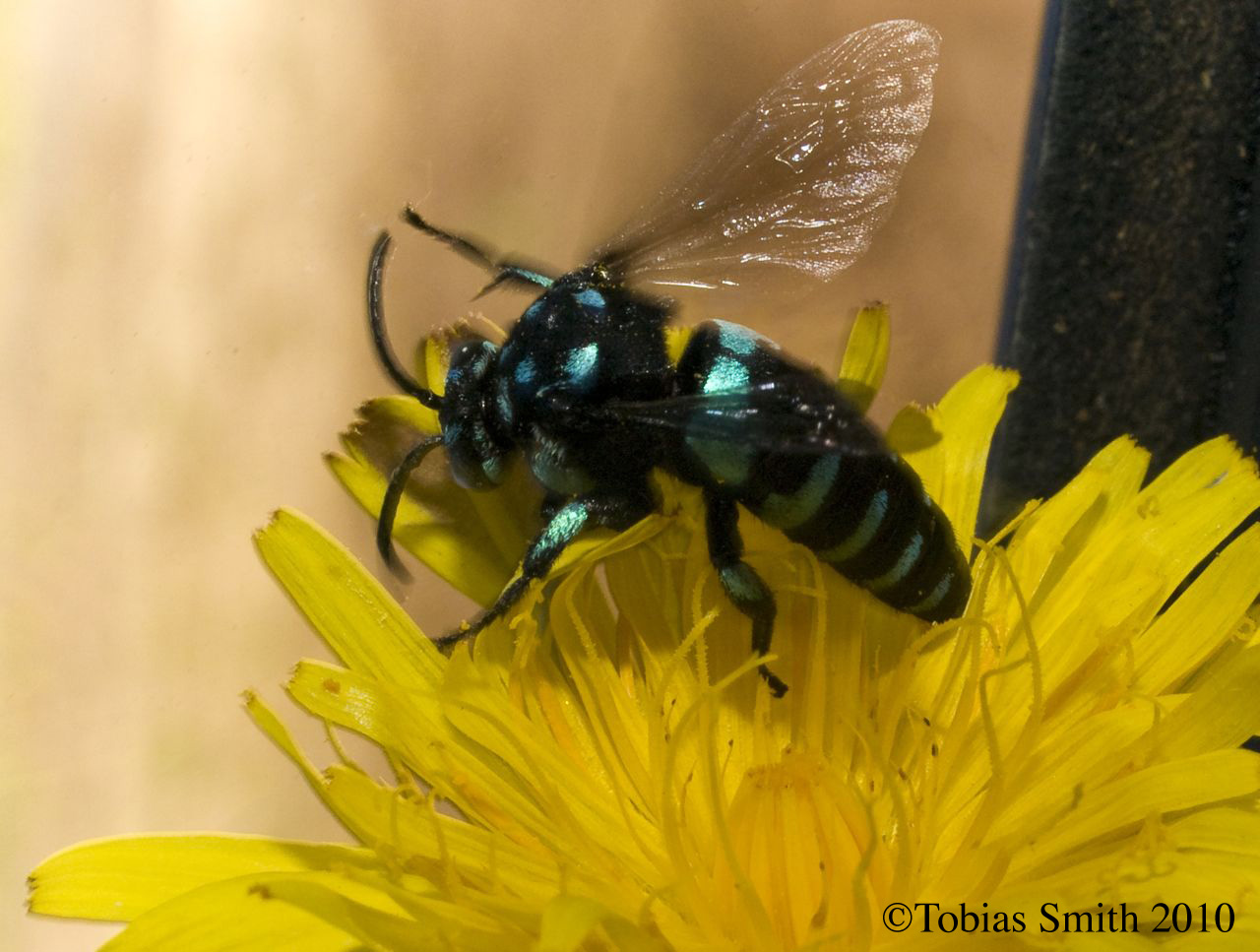
Another great guest post, this time from Tobias Smith, a PhD candidate at the University of Queensland’s School of Biological Sciences. Tobias is investigating bee community shifts across a fragmented tropical landscape in far north Queensland, aiming to identify landscape variation in community composition of two important rainforest pollinator groups, bees and flies. I met Tobias a few years ago as part of the Thiaki rainforest reforestation project for which he is doing baseline surveys of bees and flies.

I asked him a while ago to write a ‘primer’ on bees for ConservationBytes.com since so many people really don’t much about the taxon (I include myself in that group). He’s done a brilliant job – everything you wanted to know about bees but were afraid to ask (in 1000 words).

The frequently reported, gloomy news about bee declines is hard not to notice. Bees are in dire trouble around the world, and this trend has worrying implications for both ecosystems and human food production. As a result, popular media often reports on the plight of bees, regularly reciting the figure of one in three mouthfuls of food being dependent on the work of bees. While bees certainly are in major trouble, it can be easy to misinterpret statements often made in these kind of articles without a little general bee knowledge. So here are a few bee facts that, at the very least, we ecological representatives should be familiar with. This information should help give some perspective when interpreting bee news, and when engaging in exciting bee conversations at the shops.

There are approximately 20,000 bees species globally. Yet when most people think of bees they think of a single species, Apis mellifera, the western honey bee (introduced in most of its range, and also referred to as the European honeybee). This bee is certainly an important bee. It is managed as the usual pollinator of crops requiring biotic pollination, and it makes the honey we usually eat here in the developed world. Some say our domestication of this bee has been an important contributing factor in achieving the level of development that we humans have. There are however, about 19,999 other bee species out there, and most of them are very different to the western honeybee. Read the rest of this entry »


Wolves in sheep’s clothing: industrial lobbyists and the destruction of tropical forests

25 10 2010


As of this morning, a group of distinguished scientists (which I have had the honour of being invited to join) has released an Open Letter to be published in various media outlets worldwide. The letter addresses some of our major concerns over the misinterpretation of facts, and openly misleading statements, by proponents of deforestation in the Asian tropical region. Professor Bill Laurance, an old favourite on ConservationBytes.com, has led the charge and organised a most impressive and shocking list of assertions. I produce the letter below – I encourage all my readers to distribute it as far and wide as possible in the social media-verse.

An Open Letter about Scientific Credibility and the Conservation of Tropical Forests

To whom it may concern:

As professional scientists employed by leading academic and research institutions, we are writing to alert the general public about some of the claims and practices being used by the World Growth Institute (WGI) and International Trade Strategies Global (ITS), and their affiliated leadership.

WGI and ITS operate in close association. ITS is owned by Alan Oxley, an Australian industrial lobbyist, former trade representative, and former Ambassador who also heads WGI. According to its website1, ITS also has “close associations” with several politically conservative US think tanks, including the American Enterprise Institute, the Competitive Enterprise Institute, and the Heritage Foundation.

In our personal view, WGI and ITS — which are frequently involved in promoting industrial logging and oil palm and wood pulp plantations internationally — have at times treaded a thin line between reality and a significant distortion of facts. Specifically, we assert that: Read the rest of this entry »


Party with future conservation leaders

11 07 2010

I’ve just come back from the 2010 International Congress for Conservation Biology in Edmonton, Canada. I thought it would be good to tweet and blog my way through on topics that catch my attention. This is my third post from the conference, and a full conference ‘assessment’ post will follow in a few days.

I haven’t been a member of the Society for Conservation Biology for a very long time, and I’ve only now attended three annual meetings of the Society. I’ve been somewhat lukewarm about the social events at these conferences in the past, but this time I had much better experience.

After a less-than-inspiring barbecue meal and a general under-abundance of ethanol-based social lubricant, someone in our group whispered that we should ‘crash’ a party being held ‘secretly’ back at the conference venue. I had heard around the traps that the Conservation Leadership Programme (CLP) bashes were good, but I hadn’t attended one before. Well, not only was it a bloody good party, I’ve learned a little more about the programme and the kinds of people it promotes. Read the rest of this entry »


Who are the world’s biggest environmental reprobates?

5 05 2010

Everyone is a at least a little competitive, and when it comes to international relations, there could be no higher incentive for trying to do better than your neighbours than a bit of nationalism (just think of the Olympics).

We rank the world’s countries for pretty much everything, relative wealth, health, governance quality and even happiness. There are also many, many different types of ‘environmental’ indices ranking countries. Some attempt to get at that nebulous concept of ‘sustainability’, some incorporate human health indices, and other are just plain black box (see Böhringer et al. 2007 for a review).

With that in mind, we have just published a robust (i.e., to missing data, choices for thresholds, etc.), readily quantifiable (data available for most countries) and objective (no arbitrary weighting systems) index of a country’s relative environmental impact that focuses ONLY on environment (i.e., not human health or economic indicators) – something no other metric does. We also looked at indices relative to opportunity – that is, looking at how much each country has degraded relative to what it had to start with.

We used the following metrics to create a combined environmental impact rank: natural forest loss, habitat conversion, fisheries and other marine captures, fertiliser use, water pollution, carbon emissions from land-use change and threatened species.

The paper, entitled Evaluating the relative environmental impact of countries was just published in the open-access journal PLoS One with my colleagues Navjot Sodhi of the National University of Singapore (NUS) and Xingli Giam, formerly of NUS but now at Princeton University in the USA.

So who were the worst? Relative to resource availability (i.e,. how much forest area, coastline, water, arable land, species, etc. each country has), the proportional environmental impact ranked (from worst) the following ten countries:

  1. Singapore
  2. Korea
  3. Qatar
  4. Kuwait
  5. Japan
  6. Thailand
  7. Bahrain
  8. Malaysia
  9. Philippines
  10. Netherlands

When considering just the absolute impact (i.e., not controlling for resource availability), the worst ten were:

  1. Brazil
  2. USA
  3. China
  4. Indonesia
  5. Japan
  6. Mexico
  7. India
  8. Russia
  9. Australia
  10. Peru

Interestingly (and quite unexpectedly), the authors’ home countries (Singapore, Australia, USA) were in either the worst ten proportional or absolute ranks. Embarrassing, really (for a full list of all countries, see supporting information). Read the rest of this entry »


Global rates of forest loss – everyone’s a bastard

29 04 2010

© A. Hesse

I’ve written rather a lot about rates of forest loss around the world, including accumulated estimates of tropical forest loss and increasing fragmentation/loss in the boreal forest (see Bradshaw et al. 2009 Front Ecol Evol & Bradshaw et al. 2009 Trends Ecol Evol). For the tropics in particular, we used the index that an area of rain forest about the size of Bangladesh (> 15 million hectares) was disappearing each year, and in Russia alone, annual decline in forest area averaged 1.1 million hectares between 1988 and 1993. Mind boggling, really.

But some of these estimates were a bit old, relied on some imprecise satellite data, and didn’t differentiate forest types well. In addition, many have questioned whether the rates are continuing and which countries are being naughty or nice with respect to forest conservation.

It was great therefore when I came across a new paper in PNAS by Hansen & colleagues entitled Quantification of global gross forest cover loss because it answered many of the latter questions.

Part of the problem in assessing worldwide forest cover loss in the past was the expense of satellite imagery, access problems, data storage and processing issues. Happily, new satellite streams and easing of access has rectified many of these limitations. Hansen & colleagues took advantage of data from the MODIS sensor to create a stratification for forest cover loss. They then used the Landsat ETM+ sensor as the primary data for quantifying gross forest cover loss for the entire planet from 2000 to 2005. They defined ‘forest cover’ as “… 25% or greater canopy closure at the Landsat pixel scale (30-m × 30-m spatial resolution) for trees > 5 m in height”.

For your reading pleasure (and conservation horror), the salient features were: Read the rest of this entry »


China’s insatiable lust for tropical timber

4 04 2010

If you’ve been following ConservationBytes.com for the past few weeks, you’ll know that William Laurance was in town and gave a fantastic set of talks (download podcasts here). As a parting gift, he put together a brief post on one huge aspect of the tropical deforestation crisis we know face. Thanks, Bill.

© AAAS

I greatly enjoyed my recent visit to the University of Adelaide, and especially want to thank my host, Corey Bradshaw, for showing me a wonderful time there.

Corey asked me to contribute a brief blog for ConservationBytes.com and so I thought I’d highlight a paper in Science last week by my old friend Jianguo “Jack” Liu at Michigan State University. In his paper China’s road to sustainability, Jack describes the battle to improve environmental sustainability in China–a battle that is not progressing very well, all factors considered.

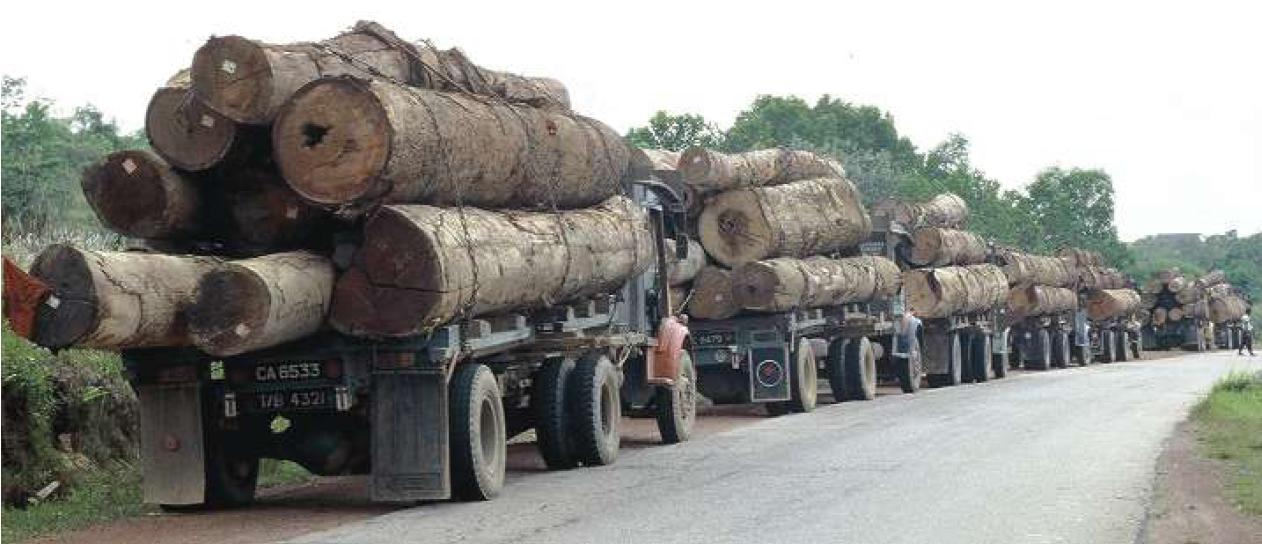
China’s explosive economic growth and environmental deterioration is also affecting other countries, especially those with timber, minerals or other resources that China wants. Today, more than half of the timber shipped anywhere in the world is destined for China–some 45 million m3 per year, an incredible total. Read the rest of this entry »


Breaking the waves – conservation conundrum of bioshields

9 12 2009

Today’s post covers a neat little review just published online in Conservation Letters by Feagin and colleagues entitled Shelter from the storm? Use and misuse of coastal vegetation bioshields for managing natural disasters. I’m covering this for three reasons: (1) it’s a great summary and wake-up call for those contemplating changing coastal ecosystems in the name of disaster management, (2) I have a professional interest in the ecosystem integrity-disaster interface and (3) I had the pleasure of editing this article.

I’ve blogged about quite a few papers on ecosystem services (including some of my own) because I think making the link between ecosystem integrity and human health, wealth and well-being are some of the best ways to convince Joe Bloggs that saving species he’ll never probably see are in his and his family’s best (and selfish) interests. Convincing the poverty-stricken, the greedy and the downright stupid of biodiversity’s inherent value will never, ever work (at least, it hasn’t worked yet).

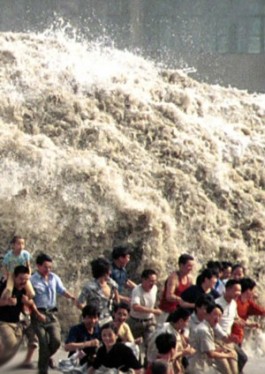
Today’s feature paper discusses an increasingly relevant policy conundrum in conservation – altering coastal ecosystems such that planted/restored/conserved vegetation minimises the negative impacts of extreme weather events (e.g., tsunamis, cyclones, typhoons and hurricanes): the so-called ‘bioshield’ effect. The idea is attractive – coastal vegetation acts to buffer human development and other land features from intense wave action, so maintain/restore it at all costs.

The problem is, as Feagin and colleagues point out in their poignant review, ‘bioshields’ don’t really seem to have much effect in attenuating the big waves resulting from the extreme events, the very reason they were planted in the first place. Don’t misunderstand them – keeping ecosystems like mangroves and other coastal communities intact has enormous benefits in terms of biodiversity conservation, minimised coastal erosion and human livelihoods. However, with massive coastal development in many parts of the world, the knee-jerk reaction has been to plant up coasts with any sort of tree/shrub going without heeding these species’ real effects. Indeed, many countries have active policies now to plant invasive species along coastal margins, which not only displace native species, they can displace humans and likely play little part in any wave attenuation.

This sleeping giant of a conservation issue needs some serious re-thinking, argue the authors, especially in light of predicted increases in extreme storm events resulting from climate change. I hope policy makers listen to that plea. I highly recommend the read.

CJA Bradshaw

Add to FacebookAdd to NewsvineAdd to DiggAdd to Del.icio.usAdd to StumbleuponAdd to RedditAdd to BlinklistAdd to Ma.gnoliaAdd to TechnoratiAdd to Furl

ResearchBlogging.orgFeagin, R., Mukherjee, N., Shanker, K., Baird, A., Cinner, J., Kerr, A., Koedam, N., Sridhar, A., Arthur, R., Jayatissa, L., Lo Seen, D., Menon, M., Rodriguez, S., Shamsuddoha, M., & Dahdouh-Guebas, F. (2009). Shelter from the storm? Use and misuse of coastal vegetation bioshields for managing natural disasters Conservation Letters DOI: 10.1111/j.1755-263X.2009.00087.x


Greenwash, blackwash: two faces of conservation evil

21 11 2009

Beware false prophets, and especially those masquerading as conservationists (or at least ‘green’) when they are not, in fact, doing anything for conservation at all. But this blog site isn’t about typical greenie evil-corporation-making-a-mess-of-the-Earth sermons (there are plenty of those); it’s instead about real conservation science that has/should/could have a real biodiversity benefits. This is why I highlight the bitey and the toothless together.

With the slow (painfully, inadequately, insufficiently slow) maturation of environmental awareness and the rising plight of biodiversity in general (including our own health and prosperity), it has become almost chic to embrace a so-called ‘green’ perspective. This approach has blown out into a full-scale business model where in many wealthier nations especially, it’s just plain good business to attract the green-conscious consumer to buy more ‘environmentally friendly’ products. Problem is, so many of these products are the farthest thing from green you can imagine (see examples here, here & here). This stimulated the environmentalist Jay Westerveld to coin the term greenwashing in 1986. Greenwashing is basically defined as activities that misleadingly give the impression of environmentally sound management that thereby deflect attention away from the continued pursuit of environmentally destructive activities.

Well, not that the problem has disappeared, or even dissipated (if anything, it’s growing), but I don’t want to focus on that here. Instead, I want to highlight a recent paper in which I was involved that outlines too how environmental groups can be guilty of almost the same sin – claiming businesses, practices, individuals, corporations, etc. are far more environmentally destructive than they really are. This, we termed blackwashing.

The paper by Koh and colleagues entitled Wash and spin cycle threats to tropical biodiversity just came out online in the journal Biotropica, and therein we describe the greenwashing-blackwashing twin conservation evils using the oil palm controversy as an excellent example case. Just in case you didn’t know, much of the tropical world (especially South East Asia) is undergoing massive conversion of native forests to oil palm plantations, to the overwhelming detriment of biodiversity. I’ve covered the issue in several posts on ConservationBytes.com before (see for example Tropical forests worth more standing, Indonesia’s precious peatlands under oil palm fire & More greenwashing from the Malaysian oil palm industry).

Briefly, we demonstrate how the palm oil industry is guilty of the following greenwashes:

On the either side, various environmental groups such as Greenpeace, have promoted the following blackwashes:

  • Orang-utan will be extinct imminently – A gross exaggeration, although something we believe is eventually possible.
  • Avoided deforestation schemes (e.g., REDD) will crash carbon-trading – Again, even economists don’t believe this.

For details, see the paper online.

Now, I’d probably tend to believe some of the less outrageous claims made by some environmental groups because if anything, the state of biodiversity is probably overall worse than what most people realise. However, when environmental groups are exposed for exaggerations, or worse, lies, then their credibility goes out the window and even those essentially promoting their cause (e.g., conservation biologists like myself) will have nothing to do with them. The quasi-religious zealotry of anti-whaling campaigns is an example of a terrible waste of funds, goodwill and conservation resources that could be otherwise spent on real conservation gains. Instead, political stunts simply alienate people who would otherwise reasonably contribute to improving the state of biodiversity. Incidentally, an environmental advocacy group in Australia emailed me to support their campaign to highlight the plight of sharks. I am a firm supporter of better conservation of sharks (see recent paper and post about this here). However, when I read their campaign propaganda, the first sentence read:

Almost 90 % of sharks have been wiped out

I immediately distanced myself from them. This is a blatant lie and terrible over-exaggeration. Ninety per cent of sharks HAVE NOT been wiped out. Some localised depletions have occurred, and not one single shark species has been recorded going extinct since records began. While I agree the world has a serious shark problem, saying outrageous things like this will only serve to weaken your cause. My advice to any green group is to get your facts straight and avoid the sensationlist game – you won’t win it, and you probably won’t be successful in doing anything beneficial for the species you purport to save.
CJA Bradshaw

Add to FacebookAdd to NewsvineAdd to DiggAdd to Del.icio.usAdd to StumbleuponAdd to RedditAdd to BlinklistAdd to Ma.gnoliaAdd to TechnoratiAdd to Furl

ResearchBlogging.orgKoh, L., Ghazoul, J., Butler, R., Laurance, W., Sodhi, N., Mateo-Vega, J., & Bradshaw, C. (2009). Wash and Spin Cycle Threats to Tropical Biodiversity Biotropica DOI: 10.1111/j.1744-7429.2009.00588.x


Sleuthing the Chinese green slime monster

21 10 2009

greenslimemonsterI just returned from a week-long scientific mission in China sponsored by the Australian Academy of Science, the Australian Academy of Technological Sciences and Engineering and the Chinese Academy of Sciences. I was invited to attend a special symposium on Marine and Deltaic Systems where research synergies between Australian and Chinese scientists were to be explored. The respective academies really rolled out the red carpet for the 30 or so Australian scientists on board, so I feel very honoured to have been invited.

During our marine workshop, one of my Chinese counterparts, Dongyan Liu from the Yantai Institute for Coastal Zone Research, presented a brilliant piece of ecological sleuthing that I must share with readers of ConservationBytes.com.

The first time you go to China the thing that strikes you is that everything is big – big population, big cities, big buildings, big projects, big budgets and big, big, big environmental problems. After many years of overt environmental destruction in the name of development, the Chinese government (aided by some very capable scientists) is now starting to address the sins of the past.

Liu and colleagues published their work earlier this year in Marine Pollution Bulletin in a paper entitled World’s largest macroalgal bloom caused by expansion of seaweed aquaculture in China, which describes a bloody massive outbreak of a particularly nasty ‘green tide’.

What’s a ‘green tide’? In late June 2008 in the coastal city of Qingdao not far from Beijing (and just before the 2008 Olympics), a whopping 1 million tonnes of green muck washed up along approximately 400 km2 of coastline. It took 10,000 volunteers 2 weeks to clean up the mess. At the time, many blamed the rising eutrophication of coastal China as the root cause, and a lot of people got their arse kicked over it. However, the reality was that it wasn’t so simple.

The Yellow Sea abutting this part of the Chinese coast is so named because of its relatively high productivity. Warm waters combined with good mixing mean that there are plenty of essential nutrients for green things to grow. So, adding thousands of tonnes of fertilisers from Chinese agricultural run-off seems like a logical explanation for the bloom.

Qingdoa green tide 2008 © Elsevier

Qingdao green tide 2008 © Elsevier

However, it turns out that the bulk of the green slime was comprised of a species called Enteromorpha prolifera, and it just so happens that this particularly unsavoury seaweed loves to grow on the infrastructure used for the aquaculture of nori (a.k.a. amanori or zicai) seaweed (mainly, Porphyra yezoensis). Problem is, P. yezoensis is grown mainly on the coast hundreds of kilometres to the south.

Liu and colleagues examined both satellite imagery and detailed oceanographic data from the period prior to the green tide and not only spotted green splotches many kilometres long, they also determined that the current flow and wind direction placed the trajectory of any green slime mats straight for Qingdao.

So, how does it happen? Biofouling by E. prolifera on P. yezoensis aquaculture frames is dealt with mainly by manual cleaning and then dumping the unwanted muck on the tidal flats. When the tide comes back in, it washes many thousands of kilos of this stuff back out to sea, which then accumulates in rafts and continues to grow in the warm, rich seas. Subsequent genetic work also confirmed that the muck at sea was the same stock as the stuff growing on the aquaculture frames.

Apart from some lovely sleuthing work, the implications are pretty important from a biodiversity perspective. Massive eutrophication coupled with aquaculture that inadvertently spawns a particularly nasty biofouling species is a good recipe for oxygen depletion in areas where the eventual slime monster starts to decay. This can lead to so-called ‘dead’ zones that can kill off huge numbers of marine species. So, the proper management of aquaculture in the hungry Goliath that is China becomes essential to reduce the incidence of dead zones.

Fortunately, it looks like Liu and colleagues’ work is being taken seriously by the Chinese government who is now contemplating financial support for aquaculturists to clean their infrastructure properly without dumping the sludge to sea. A simple policy shift could save a lot of species, a lot of money, and a lot of embarrassment (not to mention prevent a lot of bad smells).

CJA Bradshaw

Add to FacebookAdd to NewsvineAdd to DiggAdd to Del.icio.usAdd to StumbleuponAdd to RedditAdd to BlinklistAdd to Ma.gnoliaAdd to TechnoratiAdd to Furl

This post was chosen as an Editor's Selection for ResearchBlogging.org

ResearchBlogging.orgLiu, D., Keesing, J., Xing, Q., & Shi, P. (2009). World’s largest macroalgal bloom caused by expansion of seaweed aquaculture in China Marine Pollution Bulletin, 58 (6), 888-895 DOI: 10.1016/j.marpolbul.2009.01.013


Ray of conservation light for Borneo

25 07 2009

This was the most interesting 20 minutes I’ve spent in the last wee while.

Up until just now, I had never heard of Willie Smits or what he’s been doing in Indonesia. I’ve been fairly hard on Indonesia in some of my papers and blog posts because of the ecological tragedy taking place there. I’ve focussed on the immense rate and extent of deforestation, the oil palm explosion, peatland destruction and air pollution arising from runaway fires there – I have thus far ignored any real positives because I didn’t really believe there were any.

Then I saw Smits’ TED talk. Two words – very impressed. I usually enjoy and even barrack for TED talks, and this is no exception.

This man and his organisation have really been applying a great deal of the research mentioned on ConservationBytes.com, as well as collecting data proving beyond a shadow of a doubt that if you integrate people’s needs with those of biodiversity, you can restore not only entire ecosystems, you can make humans benefit immensely in the process. A chronic pessimist, I can scarcely believe it.

He talks about a whole-system approach where agriculture, full rain forest restoration, climate control, carbon sequestration, monitoring and local governance all work together to turn once bare, fire-prone, species-poor deforested grasslands into teaming jungles that support happy, healthy, wealthy and well-governed human communities. Please watch this.

Vodpod videos no longer available.

CJA Bradshaw

Add to FacebookAdd to NewsvineAdd to DiggAdd to Del.icio.usAdd to StumbleuponAdd to RedditAdd to BlinklistAdd to Ma.gnoliaAdd to TechnoratiAdd to Furl


June Issue of Conservation Letters

6 06 2009

Quick off the mark this month is the new issue of Conservation Letters. There are some exciting new papers (listed below). I encourage readers to have a look:

Policy Perspectives

Letters

CJA Bradshaw


Tropical forests worth more standing

4 06 2009
© R. Butler

© R. Butler

Keeping with the oil palm theme…

A paper just published online in Conservation Letters by Venter and colleagues entitled Carbon payments as a safeguard for threatened tropical mammals gets my vote for the Potential list.

We’ve been saying it again and again and again… tropical forests, the biodiversity they harbour and the ecosystem services they provide are worth more to humanity than the potential timber they represent. Now we find they’re even worth more than cash crops (e.g., oil palm) planned to replace them.

A few years ago some very clever economists and environmental policy makers came up with the concept of ‘REDD’ (reducing carbon emissions from deforestation and forest degradation), which is basically as system “… to provide financial incentives for developing countries that voluntarily reduce national deforestation rates and associated carbon emissions below a reference level”. Compensation can occur either via grant funding or through a carbon-trading scheme in international markets.

Now, many cash-greedy corporations argue that REDD could in no way compete with the classic rip-it-down-and-plant-the-shit-out-of-it-with-a-cash-crop approach, but Venter and colleagues now show this argument to be a bit of a furphy.

The authors asses the financial feasibility of REDD in all planned oil palm plantations in Kalimantan – Indonesia’s part of the island of Borneo in South East Asia. Borneo is also the heart of the environmental devastation typical of the tropics. They conclude that REDD is in fact a rather financially competitive scheme if we can manage to obtain carbon prices of around US$10-33/tonne. In fact, even when carbon prices are as low as US$2/tonne (as they are roughly now on the voluntary market), REDD is still competitive for areas of high forest carbon content and lower agricultural potential.

But the main advantage isn’t just the positive cash argument – many endangered mammals (and there are 46 of them in Kalimantan) such as the South East Asian equivalent of the panda (the orang-utan – ‘equivalent’ in the media-hype and political sensitivity sense, not taxonomic, of course) and the Bornean elephant (yes, they have them) are currently found in areas planned for plantation. So saving the forest obviously saves these and countless other taxa that only exist on this highly endemic island. Finally, Venter and colleagues found that where emission reductions were cheapest, these are also areas with higher-than-average densities of endangered mammals, suggesting that REDD is a fantastic option to keep developing countries in the black without compromising their extensive species richness and endemism.

Brilliant. Now if we can just get the economists and pollies to agree on a REDD model that actually works.

CJA Bradshaw

Add to FacebookAdd to NewsvineAdd to DiggAdd to Del.icio.usAdd to StumbleuponAdd to RedditAdd to BlinklistAdd to Ma.gnoliaAdd to TechnoratiAdd to Furl


Indonesia’s precious peatlands under oil palm fire

31 05 2009
© Cockroach Productions

© Cockroach Productions

A small opinion piece about to be published in Frontiers in Ecology and the Environment (June 2009 issue) discusses a major concern we (Lian Pin Koh, Rhett Butler and I) have with Indonesia’s decision to allow peatlands less than 3 m deep to be converted to oil palm. Is nothing immune to the spread of this crop (see previous posts here and here on oil palm plantations)?

Why is this such a big deal? Well, we list five main reasons why it’s a bad idea for Indonesia, the world in general and biodiversity:

  1. Peatlands are amazing carbon sinks, so their destruction necessarily equates to a large release of carbon into the atmosphere (Page et al. 2002)
  2. Tropical peatlands take a hell of a long time to generate – 100s to 1000s of years (Chimner and Ewel 2005)
  3. Tropical peatlands harbour a massive biodiversity, but they are still poorly described and their ecosystems only superficially understood
  4. The burning of peatlands to provide the conditions necessary to plant oil palm will contribute to the massive ‘haze’ problem in South East Asia (Lohman et al. 2007)
  5. The decision goes against the principles of ‘reducing carbon emissions from deforestation and forest degradation‘ (REDD), which means it will be more difficult to implement carbon trading schemes that intrinsically value intact forests

More detail can be found in the Write Back piece that will be published shortly in Frontiers in Ecology and the Environment. For more information on oil palm and its conservation implications, see the following:

CJA Bradshaw

Add to FacebookAdd to NewsvineAdd to DiggAdd to Del.icio.usAdd to StumbleuponAdd to RedditAdd to BlinklistAdd to Ma.gnoliaAdd to TechnoratiAdd to Furl


Celebrities actually doing something positive for conservation?

7 05 2009

When I first saw this on the BBC I thought to myself, “Well, just another toothless celebrity ego-stroke to make rich people feel better about the environmental mess we’re in” (well, I am a cynic by nature). I have blogged before on the general irrelevancy of celebrity conservation. But then I looked closer and saw that this was more than just an ‘awareness’ campaign (which alone is unlikely to change anything of substance). The good Prince of Wales and his mates/offspring have put forward The Prince’s Rainforest Project, which (thankfully) not only endeavours to raise awareness about the true value of rain forests, it actually proposes a mechanism to do so. It took a bit to find, but the 52-page report on the PRP website outlines from very sensible approaches. In essence, it all comes down to money (doesn’t everything?).

Their proposed plan to the United Nations Framework Convention on Climate Change (UNFCCC) details some of the following required changes:

  1. Payments to rain forest nations for not deforesting (establish transaction costs and setting short-term ‘conservation aid’ programmes)

  2. Multi-year service agreements (countries sign up for multi-year targets based on easily monitored performance indicators)

  3. Fund alternative, low-carbon economic development plans (fundamental shifts in development targets that explicitly avoid deforestation)

  4. Multi-stakeholder disbursement mechanisms (using funds equitably and minimising corruption)

  5. Tropical Forests Facility (a World Bank equivalent with the express purpose of organising, disbursing and monitoring anti-deforestation money flow)

  6. Country financing from public and private sources (funding initially derived from developed nations in form of ‘aid’)

  7. Rain forest bonds in private capital markets (value country-level ‘income’ as interest payments and incentives within a trade framework)

  8. Nations participate when ready (giving countries the option to advance at the pace dictated by internal politics and existing development rates)

  9. Accelerating long-term UNFCCC agreement on forests (transition to independence post-package)

  10. Global action to address drivers of deforestation (e.g., taxing/banning products grown on deforested land; ‘sustainability’ certification; consumer pressure; national procurement policies)

Now, I’m no economist, nor do I understand all the market nuances of the proposal, but it seems they are certainly on the right track. The value of tropical (well, ALL) forests to humanity are undeniable, and we’re currently in a state of crisis. Let’s hope the Prince and his mob can get the ball rolling.

For what it’s worth, here’s the video promoting the PRP. I could really care less what Harrison Ford and Pele have to say about this issue because I just don’t believe celebrities have any net effect on public behaviour (perceptions, yes, but not behaviour). But look beyond the superficiality and the cute computer-generated frog to the seriousness underneath. Despite my characteristically cynical tone, I give the PRP full support.

Vodpod videos no longer available.

more about “Rainforest film brings out stars“, posted with vodpod


CJA Bradshaw

Add to FacebookAdd to NewsvineAdd to DiggAdd to Del.icio.usAdd to StumbleuponAdd to RedditAdd to BlinklistAdd to Ma.gnoliaAdd to TechnoratiAdd to Furl


Tropical Turmoil II

8 03 2009

In August last year I covered a paper my colleagues (Navjot Sodhi and Barry Brook) and I had in press in Frontiers in Ecology and the Environment entitled Tropical turmoil – a biodiversity tragedy in progress. The paper is now available in the March 2009 issue of the journal (click here to access). We were also fortunate enough to grab the front cover (shown here) and have a dedicated podcast that you can listen to by clicking here about the paper and its findings. I encourage ConservationBytes.com readers to have a listen if they’re interested in learning more about the woeful state of tropical biotas worldwide, and maybe some ways to rectify the problems. The intro to the podcast can be viewed by clicking here.

CJA Bradshaw


How many frogs do we eat?

20 01 2009

IMG_20130209_141200A paper that my colleagues and I wrote soon to appear in Conservation Biology describes the massive worldwide trade in frog parts for human consumption. I bet you had no idea…

This report from New Scientst:

Are frogs being eaten to extinction? We’re used to hearing about how disease, climate change, and habitat degradation are endangering amphibians, but conservationists are warning that frogs could be going the same way as the cod. Gastronomic demand, they report, is depleting regional populations to the point of no return.

David Bickford of the National University of Singapore and colleagues have called for more regulation and monitoring in the global frog meat market in order to avoid species being “eaten to extinction”.

Statistics on imports and exports of frog legs are sparse as few countries keep track of the amount of meat harvested and consumed domestically.

According to UN figures, global trade has increased in the past 20 years. France – not surprisingly – and the US are the two largest importers; with France importing between 2500 and 4000 tonnes of frog meat each year since 1995.

But although frog legs are often thought of in the West as a quintessentially French dish, they are also very popular in Asia.

Bickford estimates that between 180 million to over a billion frogs are harvested each year. “That is based on both sound data and an estimate of local consumption for just Indonesia and China,” he says. “The actual number I suspect is quite a bit larger and my 180 million bare minimum is almost laughably conservative.”
Local depletion

Even top French chefs may be unaware of where their frogs are coming from. Bruno Stril, teaching chef at the Cordon Bleu school in Paris, France, is unsure where his suppliers source their frog legs. “I would like for them to come from France,” he says. But he expects that most of the meat comes from other countries.

Stril is on the right track. Indonesia is the world’s largest exporter of frog meat, exporting more than 5000 tonnes of frog meat each year, mostly to France, Belgium and Luxemburg.

Bickford and colleagues say European kitchens initially found their own supplies in the surrounding countryside, but the fact that they are now importing from Asia suggests local populations were over-harvested. This, they say, could be a sign that frog populations, like many fish populations, will be harvested to near extinction.

“Overexploitation in the seas has caused a chain reaction of fisheries collapses around the world,” the researchers write. “This experience should motivate better management of other exploited wild populations.”
Anonymous legs

James Collins, of the World Conservation Union, says the Californian red-legged frog offers some evidence for the theory. This species was first harvested for food in the 19th-century California gold rush and eventually the population began to crash.

However, Collins cautions that “at the moment we have no data indicating that commercial exploitation has led to the extinction of any amphibian species.” He says the Bickford team’s evidence is worrisome, but inconclusive.

Most harvested frogs are skinned, butchered and frozen before being shipped overseas. This makes it difficult to know exactly what species are being killed. Indonesia is thought to mostly export crab-eating frogs, giant Jana frogs, and American bullfrogs. How much meat is consumed within Indonesia’s borders is also something of a mystery. Some studies suggest it could be between two and seven times what is exported.

“There are a hell of a lot of frogs being eaten,” says Bickford. “Much more than most people have a clue about.”

Original article soon to appear: Warkentin, IG, D Bickford, NS Sodhi, CJA Bradshaw. 2009. Eating frogs into extinction. Conservation Biology DOI: 10.1111/j.1523-1739.2008.01165.x

Add to FacebookAdd to NewsvineAdd to DiggAdd to Del.icio.usAdd to StumbleuponAdd to RedditAdd to BlinklistAdd to Ma.gnoliaAdd to TechnoratiAdd to Furl


Unexpected benefits of falling palm oil prices

10 11 2008

© Google Earth

© Google Earth

This one from Mongabay.com and the Jakarta Post. It would almost be humorous, if it weren’t so pathetic. After years of so-called ‘greenwashing’ tactics to downplay the environmental degradation caused by expanding oil palm plantations (see also related post here), falling world palm oil prices may just be the thing needed to curb the greed. As a side note, I recently visited China and now realise where a good proportion of the oil palm is going – while the food was fantastic, the amount of oil used in almost everything is a bit over the top. For a ‘developing’ nation, there sure were quite a few fatties on the street. Convincing China to eat less oil will also reduce demand for oil palm and save SE Asia’s dwindling biodiversity.

The agricultural ministers for both countries [Indonesia and Malaysia] agreed to initiate a 300,000-hectare replanting program that will replace aging trees with seedlings of higher-yielding varieties. The seedlings will begin to bear oil palm fruit “fresh fruit bunches” for harvest in three to four years’ time.

“Demand is projected to slow down in every sector next year as a result of global recession. We’re preventing a possible oversupply of palm oil that may occur next year by replanting trees,” Achmad Mangga Barani, the director general for plantations for Indonesia’s Agriculture Ministry, was quoted as saying. “This hopefully will help boost the palm oil price to a normal level — at around US$700 to $800 per metric ton.”

Palm oil prices in Malaysia have fallen from more than $1200 per ton earlier this year to a three-year low of around $376 per ton on Oct. 28. Palm oil prices have lately moved in step with the price crude oil, which has also rapidly retreated from recent record high nominal prices.

The decline in palm oil prices is expected to slow expansion of oil palm plantations in Indonesia and Malaysia, a development that will please environmentalists who blame the palm oil industry for large-scale destruction of rainforests across Southeast Asia.

The new plan calls for replanting of 50,000 hectares in Indonesia and 250,000 in Malaysia. Indonesia, which has significantly lower palm oil yields than Malaysia due to marginal oil palm varieties and fewer industrial producers, will aim to replant 125,000 ha by 2011.