Simple educational tool to explain biodiversity

26 08 2010

I just came across this little educational video explaining what biodiversity is, what it does, and what we’re doing to it. If you’re looking to explain biodiversity and its importance to someone, this is a good place to start. Not a bad tool for school children either.


CJA Bradshaw


Conservation research rarely equals conservation

21 07 2010

This post was chosen as an Editor's Selection for ResearchBlogging.org

I am currently attending the 2010 International Meeting of the Association for Tropical Biology and Conservation (ATBC) in Sanur, Bali (Indonesia). As I did a few weeks ago at the ICCB in Canada, I’m tweeting and blogging my way through.

Yesterday I attended a talk by my good friend Trish Shanley (formerly of CIFOR) where she highlighted the disconnect between conservation research and actual conservation. I’ve posted about this before (see Out of touch, impractical and irrelevantMake your conservation PhD relevant), but this was a sobering reminder of how conservation research can be a self-perpetuating phenomenon and often not touch the people who need it most.

Presenting the highlights of her paper published earlier this year in Biotropica entitled Out of the loop: why research rarely reaches policy makers and the public and what can be done, one comment she made during the talk that really caught my attention was the following (I’m paraphrasing, of course).

Most of the world’s poor living off the land are unconcerned about biodiversity per se. As conservationists we should not therefore adopt the typical preamble that biodiversity (e.g., forests) represent the “lungs of our planet” – what people (and especially women) need to know is how biodiversity loss affects “food for my children”.

The paper itself was an interview 268 researchers from 29 countries (of which I was one) about their views on the relevance of their work. Not surprisingly (but amazingly that we were so honest), most respondents stated that their principal target was other scientists, with policy makers and other marginalised groups/local people holding a distant second place. Corporate targets were also pretty rare – I guess we feel as a group that that’s generallly a lost cause.
Neither a surprise was that we generally view peer-reviewed scientific publications as the main vehicle for the dissemination of our results. What was a bit of a surprise though is that we fully admit papers aren’t the best way to trickle down the information (again, more of that brutal honesty); apparently we mainly believe ‘stakeholder meetings’
are more effective (I have my doubts).


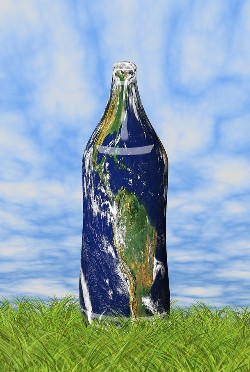
The planet is our bottle

22 05 2010

Professor Chris Thomas, conservation ecologist extraordinaire, tells it like it is. This might be a little basic for many ConservationBytes.com readers, but it’s the kind of pitch that might convince even the stupidest of yobs. I reproduce the Guardian article here in full.

Why do we care about nature, and can we actually quantify what the benefits are? This is what the UN’s The Economics of Ecosystems and Biodiversity (Teeb) project is all about, and the answer is remarkable. The natural world – biodiversity – provides us with food, materials and energy. We eat animals and plants; insects pollinate many of the foods we consume; microbes in the soil provide the nutrients the plants to grow; vegetation and soil biodiversity reduce flooding and release clean drinking water; vegetation soaks up a substantial proportion of the climate warming carbon dioxide gasses that we emit. The list goes on and on. Urban and rural citizens alike rely on these natural products and benefits.

The real cost of damaging nature, it turns out, is at least 10 times greater than the cost of maintaining the ecosystem as it is so that we can reap the associated benefits. To take an example close to the University of York where I work, the costs of flood defence construction and flood-related insurance claims in the Vale of York hugely outweigh the agricultural benefits of drainage ditches and overgrazing in the River Ouse catchment. Rather than treating nature as a pleasant luxury, Teeb argues that we should integrate the real costs and benefits within our decision-making. It should not be the preserve solely of environment and conservation ministries, but it should be at the core of the activities of finance departments. Teeb argues that we should get rid of subsidies that are environmentally damaging and reward beneficial activities that maintain natural ecosystems. This might be by including the costs of damage within the purchase price of products to encourage us to buy the least damaging items, and potentially by paying land owners and countries directly to maintain natural ecosystems. Farmers in the Ouse catchment have recently received payments for blocking their drainage ditches; and the perverse subsidies that rewarded farmers by the animal – resulting in over-grazing, trampling and erosion – have been removed. It can be done. Achieving this at a global scale is far more difficult. Read the rest of this entry »


A world of hurt – the webinar

19 05 2010

Ah – finally. The World of Hurt webinar (many thanks to @fang for showing me how to do this).

CJA Bradshaw


A world of hurt – the video

19 05 2010

In case you couldn’t be there in person, here’s the podcast of last week’s talk I gave at the University of Adelaide’s Research Tuesdays seminar series – A world of hurt. The true global death count of environmental degradation.

View video here. See also the ‘Between the Buttons’ preamble AudioBoo here.

CJA Bradshaw

Add to FacebookAdd to DiggAdd to Del.icio.usAdd to StumbleuponAdd to RedditAdd to BlinklistAdd to TwitterAdd to TechnoratiAdd to Yahoo BuzzAdd to Newsvine


Ecosystem functions breaking down from climate change

17 05 2010

I’m particularly proud to present to ConservationBytes.com readers a new paper we’ve just had published online in Journal of Animal Ecology: Mechanisms driving change: altered species interactions and ecosystem function through global warming (Lochran Traill, Matt Lim, Navjot Sodhi and me).

It wasn’t easy to write a review discussing climate change effects on biodiversity, mainly because so many have been written already and we needed to examine the issue from a fresh perspective. The evidence for single species’ responses to rapidly shifting climates around the world is overwhelming (see for a few thousand examples, see the following: Stenseth et al. 2002; Parmesan et al. 2003, 2006; Roessig et al. 2004; Thomas et al. 2004; Poloczanska et al. 2007; Skelly et al. 2004; Dunn et al. 2009). It’s rather remarkable how many things are moving in response, with reduction in range size being more common than expansion.

However, predicting extinction risk from climate change is far more problematic because traditionally there have been too few data on species interactions to make heads or tails of a particular species’ eventual response (e.g., see comment on Chris Thomas’ famous paper regarding this matter). As systems heat up, some species will change in abundance, thereby affecting the abundance of others (think predators and prey, pollinators and their host plants, etc.) – this whole complicated process combined with single-species’ responses makes predicting what a future ecosystem might look like nearly impossible. Add in all the other ecosystem damage we’ve done from forest clearance, invasive species and over-harvesting, it’s a right mess.

It is for this reason we focussed on reviewing the links between species rather than on the species’ responses per se. We looked specifically at ecosystem function, that is, “the processes that facilitate energy transfer along food webs, and the major processes that allow the cycling of carbon, oxygen and nitrogen. ‘Function’ also includes ecosystem services.” Read the rest of this entry »


A world of hurt

11 05 2010

Just a quick link to an AudioBoo sound bite preamble about my University of Adelaide‘s Research Tuesdays talk tonight on the human health implications of environmental degradation. Follows on nicely from last week’s ‘environmental reprobates‘ post. Full podcast of talk to come shortly.

Many thanks to Allan and Ian of ‘Between the Buttons‘.

CJA Bradshaw


The maggot of the plant world – mangroves

12 04 2010

I don’t know how many of my readers have waded through a mangrove swamp before – if you have, you’ll know it’s no ‘walk in the park’. They are generally mosquito-infested with waist-deep mud, have more creepy-crawlies than you can poke a stick at, and in some places (such as my former stomping ground, the Northern Territory of Australia) are down-right dangerous due to lovelies such as saltwater crocodiles.

But, most people probably don’t know just how important mangroves are. Just like the maggot who can sicken the hardiest of individual, under-appreciated mangroves provide major ecosystem services.

For example, did you know that mangroves:

  1. Protect inland human communities from damage caused by coastal erosion and storms?
  2. Provide critical habitat for a variety of terrestrial, estuarine and marine species? Indeed, it has been estimated that ~80 % of fish catches globally depend directly or indirectly  on mangroves.
  3. Are a source and sink for nutrients and sediments for other inshore marine habitats including seagrass beds and coral reefs?
  4. Protect coasts from floods?
  5. Process nutrient and organic matter?
  6. Control sediment?
  7. Provide at least US$1.6 billion per year in ecosystem services worldwide?
  8. Sequester up to 25.5 million tonnes of carbon per year?
  9. Provide more than 10% of essential organic carbon to the global oceans?
  10. Occupy only 0.12% of the world’s total land area?

Pretty staggering, no?

So, even if you don’t like them, it’s difficult to deny that they’re important.

But, like almost every other habitats worldwide, mangroves are on the big downward slide. In a new paper in PLoS One by Polidoro & colleagues entitled The loss of species: mangrove extinction risk and geographic areas of global concern, the authors not only highlight the above benefits, they quantify just how badly the 70 mangrove species around the world are faring. Read the rest of this entry »


Global pollinator declines

11 03 2010

Mention anything about ecosystem services – those ecological functions arising from the interactions between species that provide some benefit (source of food/clean water, health, etc.) to humanity1 – and one of the most cited examples is pollination.

It’s really a no-brainer, hence its popularity as an example. Pollinators (mainly insects, but birds, bats and other assorted species too) don’t exist to pollinate plants; rather, their principal source of food acquisition happens to spread around the gametes of the plants they regularly visit. Evolution has favoured the dependence of species in such ways because the mutualism benefits all involved, and in some cases, this dependence has become obligate. So when the habitats that pollinators need to survive are reduced or destroyed, inevitably their population sizes decline and the plants on which they feed lose their main sources of gene-spreading.

So what? Well, about 80 % of all wild plant species require insect pollinators for fruit and seed set, and about 75 % of all human crops require pollination by insects (mostly bees). So it’s pretty frightening to consider that although our global population is at 6.8 billion and growing rapidly, our main food pollinators (bees) are declining globally (see also previous post on bee declines). Indeed, domestic honey bee stocks have declined in the USA by 59 % since 1947 and in Europe by 25 % since 1985. Scared yet?

Another thing people don’t tend to get is that a bee cannot live on rapeseed alone. Most pollinators require intact forests to complete many of their other life history requirements (breeding, shelter, etc.) and merely forage occasionally in crop lands. Cut down all the adjacent bush, and your crops will suffer accordingly.

These, and other titbits to keep you awake at night and worry about what your grandchildren might eat are highlighted in a recent review in Trends in Ecology and Evolution by Potts and colleagues entitled Global pollinator declines: trends, impacts and drivers.

What’s driving all this loss? Several things, but it’s mainly due to ‘land-use change’ (a bullshit word people use generally to mean habitat loss, fragmentation and degradation). However, invasive species competition, pathogens and parasites, and climate change (and the synergies amongst all of these) are all contributing.

It always amazes me when people ask me why biodiversity is important. Despite the overwhelming knowledge we’ve accumulated about how functioning ecosystems make the planet liveable, despite it just being plainly stupid to think that humans are somehow removed from normal biological processes, and even with such in-your-face examples of global pollinator declines and the real, extremely worrying implication for food supplies, many people just don’t seem to get it. Every tree you cut down, every molecule of carbon dioxide you release, every drop of water you waste will punish you and your family directly for generations to come. How much more self-evident can you get?

Humanity seems to have a very poorly developed sense of self-preservation.

CJA Bradshaw

1It’s amazingly arrogant and anthropocentric to think of anything in ecosystems as ‘providing benefits to humanity’. After all, we’re just another species in a complex array of species within ecosystems – we just happen to be one of the numerically dominant ones, excel at ecosystem ‘engineering’ and as far as we know, are the only (semi-) sentient of the biologicals. Although the concept of ecosystem services is, I think, an essential abstraction to place emphasis on the importance of biodiversity conservation to the biodiversity ignorant, it does rub me a little the wrong way. It’s almost ascribing some sort of illogical religious perspective that the Earth was placed in its current form for our eventual benefit. We might be a fairly new species in geological time scales, but don’t think of ecosystems as mere provisions for our well-being.

ResearchBlogging.orgPotts, S., Biesmeijer, J., Kremen, C., Neumann, P., Schweiger, O., & Kunin, W. (2010). Global pollinator declines: trends, impacts and drivers Trends in Ecology & Evolution DOI: 10.1016/j.tree.2010.01.007

Add to FacebookAdd to DiggAdd to Del.icio.usAdd to StumbleuponAdd to RedditAdd to BlinklistAdd to TwitterAdd to TechnoratiAdd to Yahoo BuzzAdd to Newsvine


Parochial conservation

30 01 2010
© cagiecartoons.com

A little bit of conservation wisdom for you this weekend.

In last week’s issue of Nature, well-known conservation planner and all-round smart bloke, Reed Noss (who just happens to be an editor for Conservation Letters and Conservation Biology), provided some words of extreme wisdom. Not pulling any punches in his Correspondence piece entitled Local priorities can be too parochial for biodiversity, Noss essentially says ‘don’t leave the important biodiversity decisions to the locals’.

He argues rather strongly in his response to Smith and colleagues’ opinion piece (Let the locals lead) that local administrators just can’t be trusted to make good conservation decisions given their focus on local economic development and other political imperatives. He basically says that the big planning decisions should be made at grander scales that over-ride local concerns because, well, the big fish in their little ponds can’t be trusted (nor do they have the training) to do what’s best for regional biodiversity conservation.

I couldn’t agree more – he states:

“Academic researchers, conservation non-governmental organizations and other ‘foreign’ interests tend to be better informed, less subject to local political influence and more experienced in conservation planning than local agencies.”

Of course, being part of the first group, I’m probably a little biased, but I dare say that we’ve got a lot better handle on the science beyond saving biodiversity, as well as a better understanding of why that’s important, than your average regional representative, village council, chief, Lord Mayor or state member. Sure, ‘engage your stakeholders’ (I have images of shooting missiles at people holding star pickets with this gem of business jargon wankery, but there you go), but please base the decision on science first. I think Smith and colleagues have some good points, but I am more in favour of a broad-scale benevolent dictatorship in conservation planning than fine-scale democracy. Granted, the best formula is likely to be very context-specific, and of course, you need some people with local implementation power to make it happen.

Dear Honourable Minister, you may sign on the dotted line to make policy real, but please, please listen to us before you do. Your very life and those of your children depend on it.

CJA Bradshaw

ResearchBlogging.orgNoss, R. (2010). Local priorities can be too parochial for biodiversity Nature, 463 (7280), 424-424 DOI: 10.1038/463424a

Smith, R., Veríssimo, D., Leader-Williams, N., Cowling, R., & Knight, A. (2009). Let the locals lead Nature, 462 (7271), 280-281 DOI: 10.1038/462280a

Add to FacebookAdd to DiggAdd to Del.icio.usAdd to StumbleuponAdd to RedditAdd to BlinklistAdd to TwitterAdd to TechnoratiAdd to Yahoo BuzzAdd to Newsvine


Biodiversity important? The simple case of bees

30 12 2009

If you can’t convince people that biodiversity is important, then you have to use the lowest common denominator. Even a 3-year old understands the importance of bees for pollination (see previous post on loss of pollination services). Another entertaining TED talk to drive the point home as my last post for 2009 – hidden message: don’t put all your (biodiversity) eggs in one basket. I’ll let you figure that out for yourself. Warning – a little Ameri-centric, but gets the point across.

Catch you in 2010.

CJA Bradshaw


Conservation Biology for All

26 12 2009

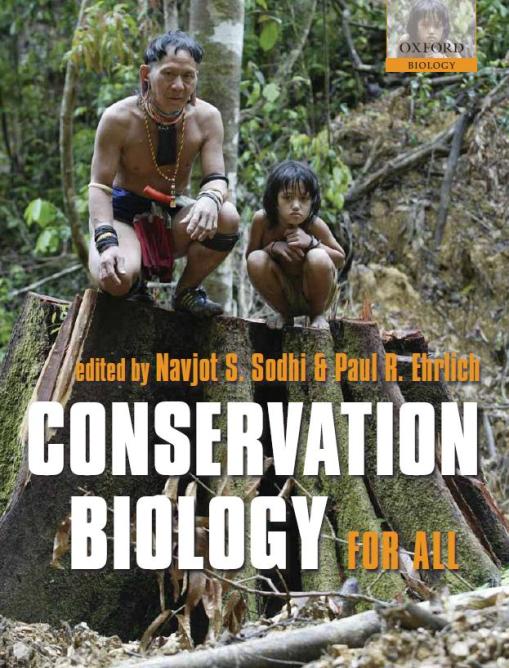
A new book that I’m proud to have had a hand in writing is just about to come out with Oxford University Press called Conservation Biology for All. Edited by the venerable Conservation Scholars, Professors Navjot Sodhi (National University of Singapore) and Paul Ehrlich (Stanford University), it’s a powerhouse of some of the world’s leaders in conservation science and application.

The book strives to “…provide cutting-edge but basic conservation science to a global readership”. In short, it’s written to bring the forefront of conservation science to the general public, with OUP promising to make it freely available online within about a year from its release in early 2010 (or so the rumour goes). The main idea here is that those in most need of such a book – the conservationists in developing nations – can access the wealth of information therein without having to sacrifice the village cow to buy it.

I won’t go into any great detail about the book’s contents (mainly because I have yet to receive my own copy and read most of the chapters!), but I have perused early versions of Kevin Gaston‘s excellent chapter on biodiversity, and Tom Brook‘s overview of conservation planning and prioritisation. Our chapter (Chapter 16 by Barry Brook and me), is an overview of statistical and modelling philosophy and application with emphasis on conservation mathematics. It’s by no means a complete treatment, but it’s something we want to develop further down the track. I do hope many people find it useful.

I’ve reproduced the chapter title line-up below, with links to each of the authors websites.

  1. Conservation Biology: Past and Present (C. Meine)
  2. Biodiversity (K. Gaston)
  3. Ecosystem Functions and Services (C. Sekercioglu)
  4. Habitat Destruction: Death of a Thousand Cuts (W. Laurance)
  5. Habitat Fragmentation and Landscape Change (A. Bennett & D. Saunders)
  6. Overharvesting (C. Peres)
  7. Invasive Species (D. Simberloff)
  8. Climate Change (T. Lovejoy)
  9. Fire and Biodiversity (D. Bowman & B. Murphy)
  10. Extinctions and the Practice of Preventing Them (S. Pimm & C. Jenkins)
  11. Conservation Planning and Priorities (T. Brooks)
  12. Endangered Species Management: The US Experience (D. Wilcove)
  13. Conservation in Human-Modified Landscapes (L.P. Koh & T. Gardner)
  14. The Roles of People in Conservation (A. Claus, K. Chan & T. Satterfield)
  15. From Conservation Theory to Practice: Crossing the Divide (M. Rao & J. Ginsberg)
  16. The Conservation Biologist’s Toolbox – Principles for the Design and Analysis of Conservation Studies (C. Bradshaw & B. Brook)

As you can see, it’s a pretty impressive collection of conservation stars and hard-hitting topics. Can’t wait to get my own copy! I will probably blog individual chapters down the track, so stay tuned.

CJA Bradshaw

Add to FacebookAdd to NewsvineAdd to DiggAdd to Del.icio.usAdd to StumbleuponAdd to RedditAdd to BlinklistAdd to Ma.gnoliaAdd to TechnoratiAdd to Furl


Carbon = biodiversity

21 12 2009

I’ve decided to blog this a little earlier than I would usually simply because the COP15 is still fresh in everyone’s minds and the paper is now online as an ‘Accepted Article’, so it is fully citable.

The paper published in Conservation Letters by Strassburg and colleagues is entitled Global congruence of carbon storage and biodiversity in terrestrial ecosystems is noteworthy because it provides a very useful answer to a very basic question. If one were to protect natural habitats based on their carbon storage potential, would one also be protecting the most biodiversity (and of course, vice versa)?

Turns out, one would.

Using a global dataset of ~ 20,000 species of mammal, bird and amphibian, they compared three indices of biodiversity distribution (species richness, species threat & range-size rarity) to a new global above- and below-ground carbon biomass dataset. It turns out that at least for species richness, the correlations were fairly strong (0.8-ish, with some due to spatial autocorrelation); for threat and rarity indices, the correlations were rather weaker (~0.3-ish).

So what does this all mean for policy? Biodiversity hotspots – those areas around the globe with the highest biodiversity and greatest threats – have some of the greatest potential to store carbon as well as guard against massive extinctions if we prioritise them for conservation. Places such as the Amazon, Borneo Sumatra and New Guinea definitely fall within this category.

However, not all biodiversity hotspots are created equal; areas such as Brazil’s Cerrado or the savannas of the Rift Valley in East Africa have relatively lower carbon storage, and so carbon-trading schemes wouldn’t necessarily do much for biodiversity in these areas.

The overall upshot is that we should continue to pursue carbon-trading schemes such as REDD (Reduced Emissions from Deforestation and forest Degradation) because they will benefit biodiversity (contrary to what certain ‘green’ organisations say about it), but we can’t sit back and hope that REDD will solve all of biodiversity’s problems world wide.

CJAB

Add to FacebookAdd to NewsvineAdd to DiggAdd to Del.icio.usAdd to StumbleuponAdd to RedditAdd to BlinklistAdd to Ma.gnoliaAdd to TechnoratiAdd to Furl

ResearchBlogging.orgStrassburg, B., Kelly, A., Balmford, A., Davies, R., Gibbs, H., Lovett, A., Miles, L., Orme, C., Price, J., Turner, R., & Rodrigues, A. (2009). Global congruence of carbon storage and biodiversity in terrestrial ecosystems Conservation Letters DOI: 10.1111/j.1755-263X.2009.00092.x


Breaking the waves – conservation conundrum of bioshields

9 12 2009

Today’s post covers a neat little review just published online in Conservation Letters by Feagin and colleagues entitled Shelter from the storm? Use and misuse of coastal vegetation bioshields for managing natural disasters. I’m covering this for three reasons: (1) it’s a great summary and wake-up call for those contemplating changing coastal ecosystems in the name of disaster management, (2) I have a professional interest in the ecosystem integrity-disaster interface and (3) I had the pleasure of editing this article.

I’ve blogged about quite a few papers on ecosystem services (including some of my own) because I think making the link between ecosystem integrity and human health, wealth and well-being are some of the best ways to convince Joe Bloggs that saving species he’ll never probably see are in his and his family’s best (and selfish) interests. Convincing the poverty-stricken, the greedy and the downright stupid of biodiversity’s inherent value will never, ever work (at least, it hasn’t worked yet).

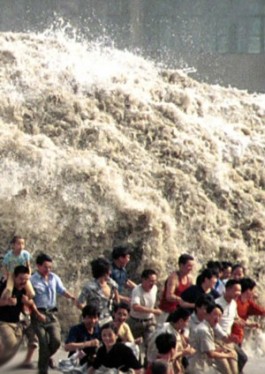
Today’s feature paper discusses an increasingly relevant policy conundrum in conservation – altering coastal ecosystems such that planted/restored/conserved vegetation minimises the negative impacts of extreme weather events (e.g., tsunamis, cyclones, typhoons and hurricanes): the so-called ‘bioshield’ effect. The idea is attractive – coastal vegetation acts to buffer human development and other land features from intense wave action, so maintain/restore it at all costs.

The problem is, as Feagin and colleagues point out in their poignant review, ‘bioshields’ don’t really seem to have much effect in attenuating the big waves resulting from the extreme events, the very reason they were planted in the first place. Don’t misunderstand them – keeping ecosystems like mangroves and other coastal communities intact has enormous benefits in terms of biodiversity conservation, minimised coastal erosion and human livelihoods. However, with massive coastal development in many parts of the world, the knee-jerk reaction has been to plant up coasts with any sort of tree/shrub going without heeding these species’ real effects. Indeed, many countries have active policies now to plant invasive species along coastal margins, which not only displace native species, they can displace humans and likely play little part in any wave attenuation.

This sleeping giant of a conservation issue needs some serious re-thinking, argue the authors, especially in light of predicted increases in extreme storm events resulting from climate change. I hope policy makers listen to that plea. I highly recommend the read.

CJA Bradshaw

Add to FacebookAdd to NewsvineAdd to DiggAdd to Del.icio.usAdd to StumbleuponAdd to RedditAdd to BlinklistAdd to Ma.gnoliaAdd to TechnoratiAdd to Furl

ResearchBlogging.orgFeagin, R., Mukherjee, N., Shanker, K., Baird, A., Cinner, J., Kerr, A., Koedam, N., Sridhar, A., Arthur, R., Jayatissa, L., Lo Seen, D., Menon, M., Rodriguez, S., Shamsuddoha, M., & Dahdouh-Guebas, F. (2009). Shelter from the storm? Use and misuse of coastal vegetation bioshields for managing natural disasters Conservation Letters DOI: 10.1111/j.1755-263X.2009.00087.x


How to restore a tropical rain forest

6 11 2009

thiakiHere’s a little story for you about how a casual chat over a glass of wine (or many) can lead to great scientific endeavours.

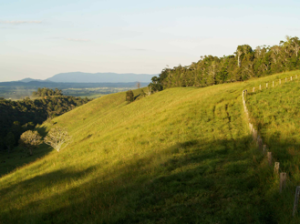
A few years ago I was sitting in the living room of my good friends Noel Preece and Penny van Oosterzee in Darwin chatting about life, the universe, and everything. They rather casually mentioned that they would be selling their environmental consulting company and their house and moving to the Queensland rain forest. Ok – sounded like a pretty hippy thing to do when you’re thinking about ‘retiring’ (only from the normal grindstone, at least). But it wasn’t about the easy life away from it all (ok, partially, perhaps) – they wanted to do something with their reasonably large (181 ha), partially deforested (51-ha paddock) property investment. By ‘something’, I mean science.

So they asked me – how would we go about getting money to investigate the best way to reforest a tropical rain forest? I had no idea. As it turns out, no one really knows how to restore rain forests properly. Sure, planting trees happens a lot, but the random, willy-nilly, unquantified ways in which it is done means that no one can tell you what the biggest biodiversity bang for your buck is, or even if it can compete on the carbon sequestration front.

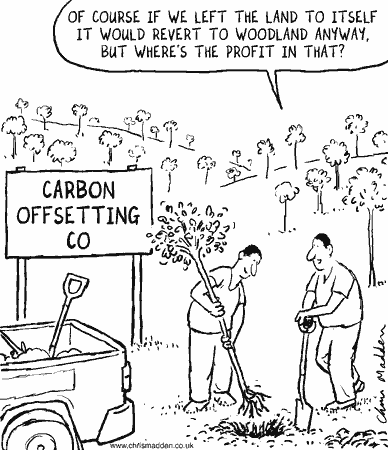
Why carbon sequestration? Well, in case you’ve had your head up your bum for the last decade, one of the major carbon mitigating schemes going is the offset idea – for every tonne of carbon you emit as a consumer, you (or more commonly, someone else you pay) plant a certain number of trees (because trees need carbon to grow and so suck it out of the atmosphere). Nice idea, but if you deforest native ecosystems just to bash up quick-growing monoculture plantations of (usually) exotic species with little benefit to native biota, biodiversity continues to spiral down the extinction vortex. So, there has to be a happy medium, and there has to be a way to measure it.

So I said to Penny and Noel “Why don’t we bash together a proposal and get some experts in the field involved and submit it to the Australian Research Council (ARC) for funding?” They thought that was a smashing idea, and so we did.

Fast forward a few years and … success! The Thiaki Project was born (‘Thiaki’ is the name of the Creek flowing through the property north of Atherton – seems to be of Greek origin). We were extremely lucky to find a new recruit to the University of Queensland, Dr. Margie Mayfield (who worked previously with Paul Ehrlich), who was not only an expert in the area of tropical reforestation for biodiversity, she also had the time and energy to lead the project. We garnered several other academic and industry partners and came up with a pretty sexy experiment that is just now getting underway thanks to good old Mr. ARC.

The project is fairly ambitious, even though the experiments per se are fairly straight forward. We’re using a randomised block design where we are testing 3 tree diversity treatments (monoculture, 1 species each from 6 families, and 5 species each from those same 6 families) and two planting densities (high and low). The major objective is to see what combination of planting density and native tree species provides the most habitat for the most species. We’re starting small, looking mainly at various insects as they start to use the newly planted blocks, but might expand the assessments (before planting and after) to reptiles, amphibians and possibly birds later on.

But we’re not stopping there – we were fortunate enough to get get a clever soil scientist, Dr. David Chittleborough of the University of Adelaide, involved so we could map the change in soil carbon during the experiment. Our major challenge is to find the right combination of tree species and planting techniques that restore native biodiversity the most effectively, all the while maximising carbon sequestration from the growing forest. And of course, we’re trying to do this as most cost-effectively as we can – measuring the relative costs will give landowners contemplating reforestation the scale of expenditures expected.

I’m pretty proud of what Margie, Noel, Penny and the rest of the team have accomplished so far, and what’s planned. Certainly the really exciting results are years away yet, but stay tuned – Thiaki could become the model for tropical reforestation worldwide. Follow the Thiaki Project website for regular updates.

I’d also love to recreate the Thiaki Project in southern Australia because as it turns out, no one knows how to maximise biodiversity and carbon sequestration for the lowest cost in temperate reforestation projects either. All we need is a few hundred hectares of deforested land (shouldn’t be hard to find), about $1 million to start, and a bit of time. Any takers?

CJA Bradshaw

Add to FacebookAdd to NewsvineAdd to DiggAdd to Del.icio.usAdd to StumbleuponAdd to RedditAdd to BlinklistAdd to Ma.gnoliaAdd to TechnoratiAdd to Furl

carbon offset

© C. Madden


Sick environment, sick people

30 10 2009

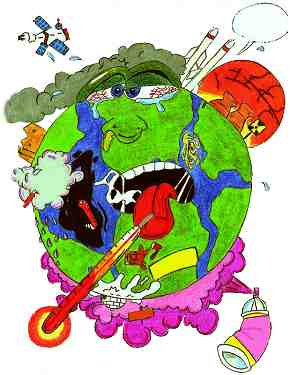
sickplanetA quick post to talk about a subject I’m more and more interested in – the direct link between environmental degradation (including biodiversity loss) and human health.

To many conservationists, people are the problem, and so they focus naturally on trying to maintain biodiversity in spite of human development and spread. Well, it’s 60+ years since we’ve been doing ‘conservation biology’ and biodiversity hasn’t been this badly off since the Cretaceous mass extinction event 146-64 million years ago. We now sit squarely within the geological era more and more commonly known as the ‘Anthropocene’, so if we don’t consider people as an integral part of any ecosystem, then we are guaranteed to fail biodiversity.

I haven’t posted in a week because I was in Shanghai attending the rather clumsily entitled “Thematic Reference Group (TRG) on Environment, Agriculture and Infectious Disease’, which is a part of the UNICEF/UNDP/World Bank/World Health Organization Special Programme for Research and Training in Tropical Diseases (TDR) (what a mouthful that is). What’s this all about and why is a conservation ecologist (i.e., me) taking part in the group?

It’s taken humanity a while to realise that what we do to the planet, we eventually end up doing to ourselves. The concept of ecosystem services1 demonstrates this rather well – our food, weather, wealth and well-being are all derived from healthy, functioning ecosystems. When we start to bugger up the inter-species relationships that define one element of an ecosystem, then we hurt ourselves. I’ve blogged about this topic a few times before with respect to flooding, pollination, disease emergence and carbon sequestration.

Our specific task though on the TRG is to define the links between environmental degradation, agriculture, poverty and infectious disease in humans. Turns out, there are quite a few examples of how we’re rapidly making ourselves more susceptible to killer infectious diseases simply by our modification of the landscape and seascape.

Some examples are required to illustrate the point. Schistosomiasis is a snail-borne fluke that infects millions worldwide, and it is on the rise again from expanding habitat of its host due to poor agricultural practices, bad hygiene, damming of large river systems and climate warming. Malaria too is on the rise, with greater and greater risk in the endemic areas of its mosquito hosts. Chagas (a triatomine bug-borne trypanosome) is also increasing in extent and risk. Some work I’m currently doing under the auspices of the TRG is also showing some rather frightening correlations between the degree of environmental degradation within a country and the incidence of infectious disease (e.g., HIV, malaria, TB), non-infectious disease (e.g., cancer, cardiovascular disease) and indices of life expectancy and child mortality.

I won’t bore you with more details of the group because we are still drafting a major World Health Organization report on the issues and research priorities. Suffice it to say that if we want to convince policy makers that resilient functioning ecosystems with healthy biodiversity are worth saving, we have to show them the link to infectious disease in humans, and how this perpetuates poverty, rights injustices, gender imbalances and ultimately, major conflicts. An absolute pragmatist would say that the value of keeping ecosystems intact for this reason alone makes good economic sense (treating disease is expensive, to say the least). A humanitarian would argue that saving human lives by keeping our ecosystems intact is a moral obligation. As a conservation biologist, I argue that biodiversity, human well-being and economies will all benefit if we get this right. But of course, we have a lot of work to do.

CJA Bradshaw

Add to FacebookAdd to NewsvineAdd to DiggAdd to Del.icio.usAdd to StumbleuponAdd to RedditAdd to BlinklistAdd to Ma.gnoliaAdd to TechnoratiAdd to Furl

1Although Bruce Wilcox (another of the TRG expert members), who I will be highlighting soon as a Conservation Scholar, challenges the notion of ecosystem services as a tradeable commodity and ‘service’ as defined. More on that topic soon.


August issue of Conservation Letters

6 08 2009

© Discovery Channel/W. Sloss

© Discovery Channel/W. Sloss

The latest edition of Conservation Letters is now out. Click here for full access (yes, all articles are still free!).

Papers in this issue:


Ray of conservation light for Borneo

25 07 2009

This was the most interesting 20 minutes I’ve spent in the last wee while.

Up until just now, I had never heard of Willie Smits or what he’s been doing in Indonesia. I’ve been fairly hard on Indonesia in some of my papers and blog posts because of the ecological tragedy taking place there. I’ve focussed on the immense rate and extent of deforestation, the oil palm explosion, peatland destruction and air pollution arising from runaway fires there – I have thus far ignored any real positives because I didn’t really believe there were any.

Then I saw Smits’ TED talk. Two words – very impressed. I usually enjoy and even barrack for TED talks, and this is no exception.

This man and his organisation have really been applying a great deal of the research mentioned on ConservationBytes.com, as well as collecting data proving beyond a shadow of a doubt that if you integrate people’s needs with those of biodiversity, you can restore not only entire ecosystems, you can make humans benefit immensely in the process. A chronic pessimist, I can scarcely believe it.

He talks about a whole-system approach where agriculture, full rain forest restoration, climate control, carbon sequestration, monitoring and local governance all work together to turn once bare, fire-prone, species-poor deforested grasslands into teaming jungles that support happy, healthy, wealthy and well-governed human communities. Please watch this.

Vodpod videos no longer available.

CJA Bradshaw

Add to FacebookAdd to NewsvineAdd to DiggAdd to Del.icio.usAdd to StumbleuponAdd to RedditAdd to BlinklistAdd to Ma.gnoliaAdd to TechnoratiAdd to Furl


Global conservation priorities based on human need

13 07 2009
nf2

© Wiley-Blackwell

A paper recently posted online in Conservation Letters caught my eye as a Potential on ConservationBytes.com.

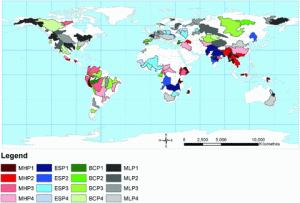
Gary Luck and colleagues’ paper Protecting ecosystem services and biodiversity in the world’s watersheds is a novel approach to an admittedly problematic aspect of conservation biology – global prioritisation schemes. While certainly coming in as a Conservation Classic, the first real global conservation prioritisation scheme (Myers and colleagues’ global biodiversity hotspots) was rather subjective in its approach, and many subsequent schemes have failed to reproduce the same kinds of priorities (the congruency problem). I’m certainly not knocking biodiversity hotspots because I believe it was one of the true paradigm shifts in conservation biology, but I am cognisant of its limitations.

Another big problem with conservation prioritisation schemes is that they are a hard sell to governments – how do you convince nations (especially poor ones) to forgo the immediate gains of resource exploitation to protect what many (incorrectly and short-sightedly) deem as irrelevant centres of biotic endemism?

Well, Luck and colleagues have taken us one step closer to global acceptance of conservation prioritisation schemes by basing this latest addition on ecosystem services. In their paper they divided the world by catchments (watersheds) and then estimated the services of water provision, flood prevention and carbon storage that each provides to humanity. Water provision was a estimated as a complex combination of variables that together can be interpreted as the capacity of ecosystems to regulate water flows and quality that benefit humans (e.g., influencing seasonal water availability or nutrient levels). Flood mitigation was estimated as the system’s capacity to reduce the impact of floods on communities, and carbon storage was estimated as the system’s capacity to uptake carbon in soils and vegetation.

In general, the catchments in need of the highest priority protection were found in the poorest areas (namely, South East Asia and Africa) because their protection would be the least costly and benefit the most people. Luck and colleagues are therefore the first to incorporate cost–benefit trade-offs explicitly in developing global priorities for protecting ecosystem services and biodiversity. I take my hat off to them for a modern and highly relevant twist on an old idea. Great paper and I hope people take notice.

CJA Bradshaw

Add to FacebookAdd to NewsvineAdd to DiggAdd to Del.icio.usAdd to StumbleuponAdd to RedditAdd to BlinklistAdd to Ma.gnoliaAdd to TechnoratiAdd to Furl


Official Environment Institute video

11 06 2009

I’ve written about The University of Adelaide‘s new Environment Institute not too long ago (see post here), and now we’ve had the official launch. The people behind scenes have put together a great introductory video that we all witnessed for the first time last week. Happy to share it with ConservationBytes.com readers here.

Vodpod videos no longer available.

A couple of other excellent parts of this evening include the venerable Robyn Williams‘ speech (listen here), and our Director’s, Professor Mike Young, encouraging kick off (listen here).

I’ve very proud to be a part of this exciting initiative.

CJA Bradshaw