Climate change’s ugly cousin – biodiversity loss

17 05 2009

uglybaby…nobody puts a value on pollination; national accounts do not reflect the value of ecosystem services that stop soil erosion or provide watershed protection.

Barry Gardiner, Labour MP for Brent North (UK), Co-chairman, Global Legislators Organisation‘s International Commission on Land Use Change and Ecosystems

Last week I read with great interest the BBC’s Green Room opinion article by Barry Gardiner, Labour MP in the UK, about how the biodiversity crisis takes very much the back seat to climate change in world media, politics and international agreements.

He couldn’t be more spot-on.

I must stipulate right up front that this post is neither a whinge, rant nor lament; my goal is to highlight what I’ve noticed about the world’s general perception of climate change and biodiversity crisis issues over the last few years, and over the last year in particular since ConservationBytes.com was born.

Case in point: my good friend and colleague, Professor Barry Brook, started his blog BraveNewClimate.com a little over a month (August 2008) after I managed to get ConservationBytes.com up and running (July 2008). His blog tackles issues regarding the science of climate change, and Barry has been very successful at empirically, methodically and patiently tearing down the paper walls of the climate change denialists. A quick glance at the number views of BraveNewClimate.com since inception reveals about an order of magnitude more than for ConservationBytes.com (i.e., ~195000 versus 20000, respectively), and Barry has accumulated a total of around 4500 comments compared to just 231 for ConservationBytes.com. The difference is striking.

Now, I don’t begrudge for one moment this disparity – quite the contrary – I am thrilled that Barry has managed to influence so many people and topple so effectively the faecal spires erected by the myriad self-proclaimed ‘experts’ on climate change (an infamous line to whom I have no idea to attribute states that “opinions are like arseholes – everyone’s got one”). Barry is, via BraveNewClimate.com, doing the world an immense service. What I do find intriguing is that in many ways, the biodiversity crisis is a much, much worse problem that is and will continue to degrade human life for millennia to come. Yet as Barry Gardiner observed, the UK papers mentioned biodiversity only 115 times over the last 3 months compared to 1382 times for climate change – again, that order-of-magnitude disparity.

There is no biodiversity equivalent of the Intergovernmental Panel on Climate Change (although there are a few international organisations tackling the extinction crisis such as the United Nation’s Environment Program, the Millennium Ecosystem Assessment and the International Union for Conservation of Nature), we still have little capacity or idea how to incorporate the trillions of dollars worth of ecosystem services supplied every year to us free of charge, and we have nothing at all equivalent to the Kyoto Protocol for biodiversity preservation. Yet, conservation biologists have for decades demonstrated how human disease prevalence, reduction in pollination, increasing floods, reduced freshwater availability, carbon emissions, loss of fish supplies, weed establishment and spread, etc. are all exacerbated by biodiversity loss. Climate change, as serious and potentially apocalyptic as it is, can be viewed as just another stressor in a system stressed to its limits.

Of course, the lack of ‘interest’ may not be as bleak as indicated by web traffic; I believe the science underpinning our assessment of biodiversity loss is fairly well-accepted by people who care to look into these things, and the evidence spans the gambit of biological diversity and ecosystems. In short, it’s much less controversial a topic than climate change, so it attracts a lot less vitriol and spawns fewer polemics. That said, it is a self-destructive ambivalence that will eventually come to bite humanity on the bum in the most serious of ways, and I truly believe that we’re not far off from major world conflicts over the dwindling pool of resources (food, water, raw materials) we are so effectively destroying. We would be wise to take heed of the warnings.

CJA Bradshaw

Add to FacebookAdd to NewsvineAdd to DiggAdd to Del.icio.usAdd to StumbleuponAdd to RedditAdd to BlinklistAdd to Ma.gnoliaAdd to TechnoratiAdd to Furl


Latest issue of Conservation Letters now out

13 05 2009

Conservation Letters

The April issue of Conservation Letters is now out (a little late, but worth the wait). There are some good titles in this one, and I’ve blogged about a few of them already:

Happy reading!

CJA Bradshaw


Realising you’re a drunk is only the first step

11 05 2009

© A. Savchenko

© A. Savchenko

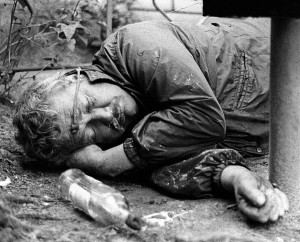
I recently did an interview for the Reef Tank blog about my research, ConservationBytes.com and various opinions about marine conservation in general. I’ve been on about ‘awareness’ raising in biodiversity conservation over the last few weeks (e.g., see last post), saying that it’s really only the first step. To use an analogy, alcoholics must first recognise and accept that they are indeed drunks with a problem before than can take the (infamous AA) steps to resolve it. It’s not unlike biodiversity conservation – I think much of the world is aware that our forests are disappearing, species are going extinct, our oceans are becoming polluted and devoid of fish, our air and soils are degraded to the point where they threaten our very lives, and climate change has and will continue to exacerbate all of these problems for the next few centuries at least (and probably for much longer).

We’ve admitted we have a disease, now let’s do something about it.

Read the full interview here.

CJA Bradshaw

Add to FacebookAdd to NewsvineAdd to DiggAdd to Del.icio.usAdd to StumbleuponAdd to RedditAdd to BlinklistAdd to Ma.gnoliaAdd to TechnoratiAdd to Furl


Celebrities actually doing something positive for conservation?

7 05 2009

When I first saw this on the BBC I thought to myself, “Well, just another toothless celebrity ego-stroke to make rich people feel better about the environmental mess we’re in” (well, I am a cynic by nature). I have blogged before on the general irrelevancy of celebrity conservation. But then I looked closer and saw that this was more than just an ‘awareness’ campaign (which alone is unlikely to change anything of substance). The good Prince of Wales and his mates/offspring have put forward The Prince’s Rainforest Project, which (thankfully) not only endeavours to raise awareness about the true value of rain forests, it actually proposes a mechanism to do so. It took a bit to find, but the 52-page report on the PRP website outlines from very sensible approaches. In essence, it all comes down to money (doesn’t everything?).

Their proposed plan to the United Nations Framework Convention on Climate Change (UNFCCC) details some of the following required changes:

  1. Payments to rain forest nations for not deforesting (establish transaction costs and setting short-term ‘conservation aid’ programmes)

  2. Multi-year service agreements (countries sign up for multi-year targets based on easily monitored performance indicators)

  3. Fund alternative, low-carbon economic development plans (fundamental shifts in development targets that explicitly avoid deforestation)

  4. Multi-stakeholder disbursement mechanisms (using funds equitably and minimising corruption)

  5. Tropical Forests Facility (a World Bank equivalent with the express purpose of organising, disbursing and monitoring anti-deforestation money flow)

  6. Country financing from public and private sources (funding initially derived from developed nations in form of ‘aid’)

  7. Rain forest bonds in private capital markets (value country-level ‘income’ as interest payments and incentives within a trade framework)

  8. Nations participate when ready (giving countries the option to advance at the pace dictated by internal politics and existing development rates)

  9. Accelerating long-term UNFCCC agreement on forests (transition to independence post-package)

  10. Global action to address drivers of deforestation (e.g., taxing/banning products grown on deforested land; ‘sustainability’ certification; consumer pressure; national procurement policies)

Now, I’m no economist, nor do I understand all the market nuances of the proposal, but it seems they are certainly on the right track. The value of tropical (well, ALL) forests to humanity are undeniable, and we’re currently in a state of crisis. Let’s hope the Prince and his mob can get the ball rolling.

For what it’s worth, here’s the video promoting the PRP. I could really care less what Harrison Ford and Pele have to say about this issue because I just don’t believe celebrities have any net effect on public behaviour (perceptions, yes, but not behaviour). But look beyond the superficiality and the cute computer-generated frog to the seriousness underneath. Despite my characteristically cynical tone, I give the PRP full support.

Vodpod videos no longer available.

more about “Rainforest film brings out stars“, posted with vodpod


CJA Bradshaw

Add to FacebookAdd to NewsvineAdd to DiggAdd to Del.icio.usAdd to StumbleuponAdd to RedditAdd to BlinklistAdd to Ma.gnoliaAdd to TechnoratiAdd to Furl


Band-aid approach to fix ecological and economic ruin

10 04 2009

An excellent article by Andrew Simms (policy director of the New Economics Foundation) posted by the BBC:

It is like having a Commission on Household Renovation agonise over which expensive designer wallpaper to use for papering over plaster cracks whilst ignoring the fact that the walls themselves are collapsing on subsiding foundations.

While most governments’ eyes are on the banking crisis, a much bigger issue – the environmental crisis – is passing them by, says Andrew Simms. In the Green Room this week, he argues that failure to organise a bailout for ecological debt will have dire consequences for humanity.

“Nature Doesn’t Do Bailouts!” said the banner strung across Bishopsgate in the City of London.

Civilisation’s biggest problem was outlined in five words over the entrance to the small, parallel reality of the peaceful climate camp. Their tents bloomed on the morning of 1 April faster than daisies in spring, and faster than the police could stop them.

Across the city, where the world’s most powerful people met simultaneously at the G20 summit, the same problem was almost completely ignored, meriting only a single, afterthought mention in a long communiqué.

World leaders dropped everything to tackle the financial debt crisis that spilled from collapsing banks.

Gripped by a panic so complete, there was no policy dogma too deeply engrained to be dug out and instantly discarded. We went from triumphant, finance-driven free market capitalism, to bank nationalisation and moving the decimal point on industry bailouts quicker than you can say sub-prime mortgage.

But the ecological debt crisis, which threatens much more than pension funds and car manufacturers, is left to languish.

It is like having a Commission on Household Renovation agonise over which expensive designer wallpaper to use for papering over plaster cracks whilst ignoring the fact that the walls themselves are collapsing on subsiding foundations.

Read the rest of this entry »


Too many mouths to feed

19 03 2009

The venerable Professor John Beddington has some stern warnings about over-population in the next few decades. In essence, we cannot ignore the human over-population problem any longer. There are simply too many people for the finite resources available and the consumption rates that do not appear to be declining (not surprising given our voracious appetite for economic growth – more like long-term economic suicide, really). Australia is certainly no exception – with most of our country essentially uninhabitable, we’ve already exceeded our carrying capacity (but try telling this to the pollies).

In my opinion, human over-population is THE principal driver of biodiversity loss in the modern context. Without some serious global efforts for population planning, expect a lot more conflict in your lifetime, and a lot worse effects of climate change. See also Global Population Speak Out.

This one from the BBC:

Growing world population will cause a “perfect storm” of food, energy and water shortages by 2030, the UK government chief scientist has warned. By 2030 the demand for resources will create a crisis with dire consequences, Prof John Beddington said. Demand for food and energy will jump 50% by 2030 and for fresh water by 30%, as the population tops 8.3 billion, he told a conference in London.

Climate change will exacerbate matters in unpredictable ways, he added. “It’s a perfect storm,” Prof Beddington told the Sustainable Development UK 09 conference.’Perfect storm’ poses global threat, says Professor Beddington. “There’s not going to be a complete collapse, but things will start getting really worrying if we don’t tackle these problems.”

Prof Beddington said the looming crisis would match the current one in the banking sector. “My main concern is what will happen internationally, there will be food and water shortages,” he said.

“We’re relatively fortunate in the UK; there may not be shortages here, but we can expect prices of food and energy to rise.” The United Nations Environment Programme predicts widespread water shortages across Africa, Europe and Asia by 2025. The amount of fresh water available per head of the population is expected to decline sharply in that time. The issue of food and energy security rose high on the political agenda last year during a spike in oil and commodity prices.

Prof Beddington said the concern now – when prices have dropped once again – was that the issues would slip back down the domestic and international agenda. “We can’t afford to be complacent. Just because the high prices have dropped doesn’t mean we can relax,” he said. Improving agricultural productivity globally was one way to tackle the problem, he added. At present, 30-40% of all crops are lost due to pest and disease before they are harvested. Professor Beddington said: “We have to address that. We need more disease-resistant and pest-resistant plants and better practices, better harvesting procedures. “Genetically-modified food could also be part of the solution. We need plants that are resistant to drought and salinity – a mixture of genetic modification and conventional plant breeding. Better water storage and cleaner energy supplies are also essential, he added.

Prof Beddington is chairing a subgroup of a new Cabinet Office task force set up to tackle food security. But he said the problem could not be tackled in isolation. He wants policy-makers in the European Commission to receive the same high level of scientific advice as the new US president, Barack Obama. One solution would be to create a new post of chief science adviser to the European Commission, he suggested.

CJA Bradshaw


Perceptions on poverty: the rising Middle Class

16 03 2009

I’m being somewhat ‘lazy’ this week in that I have unfortunately less time to spend on pertinent blog posts than I’d like (lecturing, looming deadlines, that sort of thing). So, I start out this week’s posts with one of my favourite TED talks – Hans Rosling debunks myths about the developing world.

What’s the relevance to biodiversity conservation? I’ll admit, it may appear somewhat tangential, but there are a few important messages (both potentially good and bad):

1. POSSIBLE BENEFIT #1: The rising wealth in the developing world and associated reduction in family size may inevitably curb our human population growth rates;

2. POSSIBLE DISADVANTAGE #1: Rising wealth will necessarily mean more and more consumption, and as we know at least for tropical developing nations, resource consumption is killing biodiversity faster than anywhere else on the planet;

3. POSSIBLE DISADVANTAGE #2: As family wealth rises, so too do opportunities do opportunities for the Anthropogenic Allee effect (consuming rare species just because you can afford to do so);

4. POSSIBLE BENEFIT #2: Better health care associated with rising wealth and lower infant mortality might make education a higher priority, teaching more people about the necessity of safeguarding ecosystem services.

I’m not convinced the advantages will necessarily outweigh the disadvantages; regardless, Prof. Rosling’s amazing 20-minute presentation will both entertain and enlighten. I recommend it for a lunchtime sitting or that late-afternoon attention wain.

CJA Bradshaw

Vodpod videos no longer available.

more about “Hans Rosling shows the best stats you…“, posted with vodpod


Tropical Turmoil II

8 03 2009

In August last year I covered a paper my colleagues (Navjot Sodhi and Barry Brook) and I had in press in Frontiers in Ecology and the Environment entitled Tropical turmoil – a biodiversity tragedy in progress. The paper is now available in the March 2009 issue of the journal (click here to access). We were also fortunate enough to grab the front cover (shown here) and have a dedicated podcast that you can listen to by clicking here about the paper and its findings. I encourage ConservationBytes.com readers to have a listen if they’re interested in learning more about the woeful state of tropical biotas worldwide, and maybe some ways to rectify the problems. The intro to the podcast can be viewed by clicking here.

CJA Bradshaw


One year later: Conservation Letters

17 02 2009

Conservation Letters

I have been very proud to be a part of Conservation Letters‘ success since its inaugural issue in April 2008. I thought I’d share our Chief Editors’ retrospective editorial after the first year. Thanks to all who have made CL such a success!

In the editorial that launched Conservation Letters, we promised a journal that would publish novel and innovative papers drawing on a diversity of disciplines, and including perspectives and case studies from across the globe. We anticipated first class research that would help deliver effective policy and management solutions. Furthermore, we pledged rapid publication: a review time of six weeks and submission-to-publication time of 20 weeks. So let’s see how we have done in the first volume.

The five issues of the first volume comprise 37 papers drawn from 146 submissions. Of these submissions, 40% were rejected without review. We did better than our target for processing manuscripts: average review time was five weeks and submission-to-publication time was 17.5 weeks.

Coverage of topics has been diverse. Several papers dealt with mainstream conservation science: habitat and population decline, climate change impacts and assessments for conservation planning. Many dealt with “hot” topics, namely natural capital and ecosystem services, conservation economics, and monitoring and evaluation. Few papers had a strictly biological focus – most also considered social dynamics and focused on production land and waterscapes. Most straddled disciplines. Although all papers articulated implications for policy and practice, two documented research that was engaged with the stakeholders responsible for developing policy or implementing practice.

We are disappointed that the geographic spread of the submissions was strongly biased in favor of developed, English-speaking nations: 36% of first authors hailed from the USA, 19% from UK, 16% from Australia and 6% from Canada. Only 11% of submissions originated from mainland Europe, 5% from Asia, 3% from Africa, 2% from Latin America. More encouraging was that almost half the papers published dealt with topics that transcended biome boundaries; the remainder was equally shared between land and water ecosystems.

At this early stage, it is difficult to assess whether any of the papers have had an impact on conservation policy and practice. However, the editorial team is pursuing ways of monitoring the extent to which papers are influential in catalyzing actions that safeguard nature and its services in a secure, just, and sustainable way. What we can report is that research published in Conservation Letters aroused considerable interest from major television networks (BBC, ABC, National Geographic), magazines (Economist, American Scientist), newspapers (New York Times, Christian Science Monitor, Sydney Morning Herald) and conservation organizations (BirdLife International, The Nature Conservancy). Two papers attracted most of the media interest: Wilson and Edwards’ paper on low emission kangaroo meat (issue 3, 119-128) and Reed and Merenlender’s contribution that assessed the impact on carnivore populations of non-consumptive recreation in protected areas (issue 3, 146-154). Along with Kapos et al’s paper on measuring conservation success (issue 4, 155-164) and Koh and Wilcove’s article on the impacts of oil palm agriculture on tropical biodiversity (issue 2, 60-64), as of November these contributions also had the highest impact as measured by downloads. Conservation Letters will apply for ISI listing in early 2009 so it will soon be possible to track impact via citation analysis.

Overall, we are very pleased with the first volume of the journal. The papers are scientifically rigorous, innovative and – importantly – likely to have a real impact on policy and practice. Moreover, we believe that the quality and speed of the review process has been good. However, the journal does face certain challenges in maintaining this high quality of content and process. We need to attract more contributions with social science perspectives, that involve scientists from developing countries, and that are socially engaged in processes leading to implementation of conservation actions. As Conservation Letters grows and becomes even more diverse, we will also need to recruit to our editorial board more rare individuals like the ones we already have: leading scientists who are willing to allocate time to editorial chores that advance conservation science and policy.

Our success is attributed to the conservation science community who has so enthusiastically supported the journal by submitting their top-notch papers to a fledgling journal. Of key importance has been our outstanding editorial board. Its members have ensured a rigorous, fair and speedy review process. We wish to thank in particular those who dealt with four or more submissions for the first volume, namely Bill Adams, James Blignaut, Justin Brashares, Nicholas Dulvy, Richard Krannich, David Lindenmayer, Atte Moilanen, Mathieu Rouget, Javier Simonetti and Kerrie Wilson. At the helm is Corey Bradshaw, our Senior Editor whose dedication and commitment have underpinned our achievement thus far. Corey shouldered the lion’s share of editorial responsibilities for the early issues, personally handling 18 submissions. Thanks too for the sterling work by the team at Wiley-Blackwell: Managing Editor Jen Mahar and Associate Publisher Marjorie Spencer. Finally the entire team is hugely appreciative of the guidance of our Editorial Advisor, Michael Hochberg, whose experience as editor of our sister journal Ecology Letters, provided important direction for the editorial team.

By any measure conservation research is booming – both in terms of its scientific and real world impact. The remarkable early enthusiasm for Conservation Letters is testimony to the excitement that surrounds our discipline. We, the Chief Editors, are very grateful for your support.

Richard M. Cowling
Michael B. Mascia
Hugh Possingham
William J. Sutherland


Toilet Torrens II: The Plot Sickens

14 02 2009
© CJA Bradshaw

© CJA Bradshaw

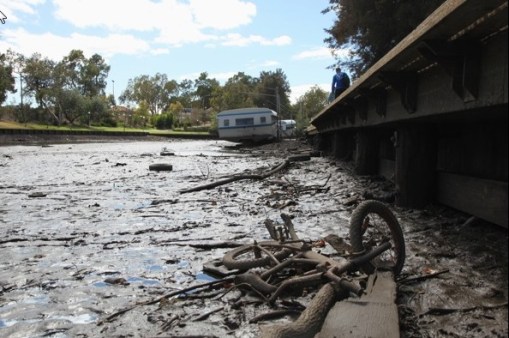
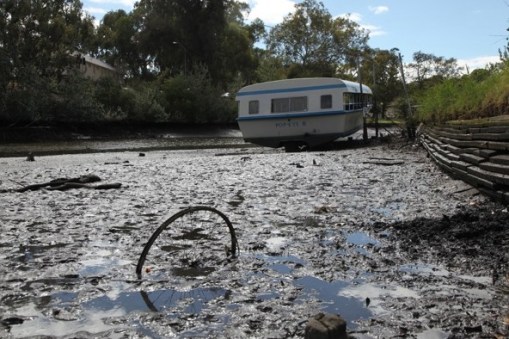
A few days into the Torrens ‘River’ disaster, and we see very little in the way of a truly dedicated, organised clean-up. With some token efforts to clean up the more obvious rubbish in the lake section itself (i.e., cars, fridges, etc.), there is nothing suggesting the true problems are going to be addressed. Indeed, the authorities are desperately trying to ‘find’ water to cover the problem up rather than deal with it.

Instead of a catchment-wide mass clean-up, the removal of the water-sucking invasive plants that line the river’s edge (see photos below), the implementation of a water neutrality scheme, and the removal of hundreds of untreated drainage pipes, they are willing to spend over $1 million to pipe in water from elsewhere.

I can’t believe it.

This is the best opportunity Adelaide has ever had to rectify the problem and clean the mess up once and for all; instead, the investment is going toward a cosmetic cover-up that will effectively fix nothing. Toothless. Some images I took today while cycling along the Torrens path follow:

© CJA Bradshaw

© CJA Bradshaw

© CJA Bradshaw

© CJA Bradshaw

© CJA Bradshaw

© CJA Bradshaw

CJA Bradshaw

Add to FacebookAdd to NewsvineAdd to DiggAdd to Del.icio.usAdd to StumbleuponAdd to RedditAdd to BlinklistAdd to Ma.gnoliaAdd to TechnoratiAdd to Furl


Adelaide’s shame – the ‘River’ (toilet) Torrens

12 02 2009

I’ve put this post off for too long as it is, but after today’s ridiculous dereliction of dutymalfunction‘, I can no longer hold my tongue (as it were).

I’ve been living in Adelaide for about a year now, and it’s been slowly dawning on me just how badly managed, for decades, the Torrens River has been. I cycle or run to work along the Torrens cycle path and see and smell the amazing neglect that has accumulated over the years.

The river literally stinks of rot and filth. What am I saying? The Torrens is about as much a river as a trickle in public urinal. Actually, most urinals are a hell of a lot cleaner.

It’s not just the rubbish, the unregulated and ubiquitous pipes of untreated run-off entering every 100 m or so, the almost complete lack of flows during the summer, the terribly regulated flows during the infrequent winter rains, the toxic build-up of blue-green algae, or the choking invasive alien plants lining its entire course, it’s the unbelievable neglect, cover-up and blind ignorance that has lead to one of the most polluted, unnatural and degraded streams in Australia.

And it’s in the middle of Adelaide.

This is how some would rather you think of the Torrens:

But scratch just a little under the surface and you find this:

and this:

Yes, today’s mishap exposed decades of bad management to the press and the public in general; the authorities can’t wait for a little rain to cover up the ’embarrassment’, but they’ll have to wait a long time. This isn’t “embarrasing“, it’s shameful, disgusting, neglectful, irresponsible and naïve.

Of course, a few people have some partially right approaches to address the problem – indeed, Tourism Minister Jane Lomax-Smith suggests we take advantage of the low water levels and clean up the mess. I couldn’t agree more. However, apart from a few derelict cars pulled out, I’ve not seen a single attempt to get out there and do the job properly. We need to remove every last scrap of rubbish from the Adelaide Hills to Henley beach – this means the trolleys, oil drums, bicycles, wheelie bins and other assorted crap (I think I even saw a fridge today). I’m willing to help.

We need a major overhaul, clean-up and rethink about this so-called ‘river’.

The ‘drought’ that Australia seems convinced will some day end will not go away – climate change will ensure that, along with the persistence of some very bad urban water policies. We need to get used to the idea that we’ll have less and less water, not suddenly more when the ‘drought’ ends. Sorry, the drought won’t end.

So, what can we do? There are some very obvious improvements that can be made:

1. Undeniably, a massive, catchment-wide, get-your-hands-dirty clean-up is required to remove the astounding array of rubbish.

2. Yes, we have reduced flows and will continue to have in this state for a long time to come. So, we need to minimise waste. A paper I recently covered in ConservationBytes.com detailed how a water neutrality programme would benefit water supply AND biodiversity. The idea is relatively simple – the water allocated to industry, residents, etc. is taxed according to total use. The monies received are then invested in removing all those invasive reeds, rushes, palms, bamboo, etc. that line the water course (all of these are water-hungry pests that have no business being there in the first place). In one fell swoop you have an employment program, an incentive to use less water, a ‘water-neutrality’ scheme that makes water-intensive products (e.g., fruits and vegetables) more attractive to environmentally conscious consumers, removal of alien species that consume too much water and prevent native species from proliferating, and importantly, a functioning ecosystem that provides water more regularly.

3. Get rid or divert all those untreated storm pipes from all and sundry lining the Torrens along its path. I’ve seen campground drainages with all sorts of filth flow into the river, car park drainages and inappropriate garden waste ooze into the river right along its course.

4. Let’s get rid of the horses grazing on the denuded banks of the river near Henley Beach. What the hell is livestock doing grazing in the middle of a city?

5. Remove golf courses lining the river.

6. Debunk the myth that bore water used to keep artificially lush gardens in the wealthier neighbourhoods lining the Torrens is somehow not subject to the same problems as rainfall-sourced water. 72 % of the Torrens’ water use is residential. We waste far too much of the underground water on these ridiculous gardens in our desert city – I’m sorry, the prominent display of ‘Bore Water in Use’ in so many gardens around Adelaide is contemptuous and ignorant.

Can we mend the Torrens? Yes, yes we can. A lot of rivers is much worse shape have been brought back to life over the years (see examples here, here and here), so we can do it too. It just takes a little political will, some intelligent policy, a bit of money and public commitment.

CJA Bradshaw

P.S. I recommend you avoid swimming anywhere near Henley Beach for the next few weeks.

Add to FacebookAdd to NewsvineAdd to DiggAdd to Del.icio.usAdd to StumbleuponAdd to RedditAdd to BlinklistAdd to Ma.gnoliaAdd to TechnoratiAdd to Furl


Rare just tastes better

11 02 2009

I had written this a while ago for publication, but my timing was out and no one had room to publish it. So, I’m reproducing it here as an extension to a previous post (That looks rare – I’ll kill that one).

As the international market for luxury goods expands in value, extent and diversity of items (Nueno & Quelch 1998), the world’s burgeoning pool of already threatened species stands to worsen. Economic theory predicts that harvested species should eventually find refuge from over-exploitation because it simply becomes too costly to find the last remaining wild individuals (Koford & Tschoegl 1998). However, the self-reinforcing cycle of human greed (Brook & Sodhi 2006) can make rare species increasingly valuable to a few select consumers such that mounting financial incentives drive species to extinction (Courchamp et al. 2006). The economic and ecological arguments are compelling, but to date there has been little emphasis on how the phenomenon arises in the human thought process, nor how apparently irrational behaviour can persist. Gault and colleagues (2008) have addressed this gap in a paper published recently in Conservation Letters by examining consumer preferences for arguably one of the most stereotypical luxury food items, caviar from the 200-million-year-old sturgeon (Acipenser spp.).

Sturgeon (6 genera) populations worldwide are in trouble, with all but two of the 27 known species threatened with extinction (either Near Threatened, Vulnerable, Endangered or Critically Endangered) according to the International Union for Conservation of Nature and Natural Resources’ (IUCN) Red List of Threatened Species. Despite all 27 species also having strict international trade restrictions imposed by the Convention on International Trade in Endangered Species (CITES) (Gault et al. 2008), intense commercial pressure persists for 15 of these at an estimated global value exceeding US$200 million annually (Pikitch et al. 2005). The very existence of the industry itself and the luxury good it produces are therefore, at least for some regions, unlikely to endure over the next decade (Pala 2007). What drives such irrational behaviour and why can we not seem to prevent such coveted species from spiralling down the extinction vortex?

Gault and colleagues addressed this question specifically in an elegantly simple set of preference experiments targeting the very end-consumers of the caviar production line – French connoisseurs. Some particularly remarkable results were derived from presentations of identical caviar; 86 % of attendees of luxury receptions not only preferred falsely labelled ‘rarer’ Siberian caviar (A. baeri) after blind tasting experiments, they also scored what they believed was caviar from the rarer species as having a higher ‘gustative quality’. These high-brow results were compared to more modest consumers in French supermarkets, with similar conclusions. Not only were unsuspecting gourmands fooled into believing the experimental propaganda, subjects in both cases stated a preference for seemingly rarer caviar even prior to tasting.

The psycho-sociological implications of perceived rarity are disturbing themselves; but Gault and colleagues extended their results with a mathematical game theory model demonstrating how irrational choices drive just such a harvested species to extinction. The economic implications of attempting to curb exploitation as species become rarer when the irrationality of perceived rarity was taken into consideration were telling – there is no payoff in delaying exploitation as more and more consumers are capable of entering the market. In other words, the assumption that consumers apply a positive temporal discount rate to their payoff (Olson & Bailey 1981) is wrong, with the demographic corollary that total depletion of the resource ensues. The authors contend that such artificial value may drive the entire luxury goods market based mainly on the self-consciousness and social status of consumers able to afford these symbols of affluence.

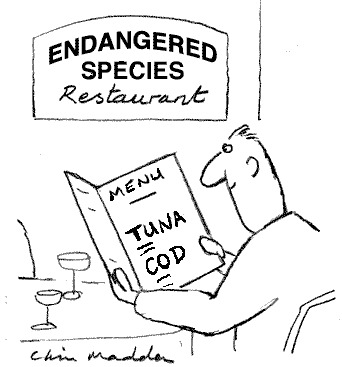
The poor record of species over-exploitation by humans arising from the Tragedy of the Commons (Hardin 1968) is compounded by this new information. This anthropogenic Allee effect (Courchamp et al. 2006) provides a novel example mechanism for how small populations are driven ever-downward because low densities ensure declining fitness. Many species may follow the same general rules, from bluefin tuna, Napoleon wrasse lips and shark fins, to reptile skins and Tibetan antelope woollen shawls. Gault and colleagues warn that as the human population continues to expand and more people enter the luxury-goods market, more wildlife species will succumb to this Allee effect-driven extinction vortex.

The authors suggest that a combination of consumer education and the encouragement of farmed substitute caviar will be more effective than potentially counter-productive trading bans that ultimately encourage illegal trade. However, the preference results suggest that education might not promote positive action given that reluctance of affluent consumers to self-limit. I believe that the way forward instead requires a combination of international trade bans, certification schemes for ‘sustainable’ goods that flood markets to increase supply and reduce price, better controls on point-of-origin labelling, and even state-controlled ‘warning’ systems to alert prospective consumers that they are enhancing the extinction risk of the very products they enjoy. A better architecture for trading schemes and market systems that embrace long-term persistence can surely counteract the irrationality of the human-induced destruction of global ecosystem services. We just need to put our minds and pocketbooks to the task.

CJA Bradshaw

Add to FacebookAdd to NewsvineAdd to DiggAdd to Del.icio.usAdd to StumbleuponAdd to RedditAdd to BlinklistAdd to Ma.gnoliaAdd to TechnoratiAdd to Furl


Marine conservation in South Australia

26 01 2009

© U.R. Zimmer

© U.R. Zimmer

Just before the holidays last year I participated in the Conservation Council of South Australia‘s (CCSA) Coast & Marine in a Changing Climate Summit 2008. It was an interesting, mature and intelligent summit with some good recommendation surfacing. Although I certainly didn’t agree with all the recommendations (view the entire report here), I must say up front that I have been very impressed with the CCSA’s approach in their ‘Blueprint’ summit series to address South Australia’s environmental problems.

Many environmental groups, especially regional ones, are seen by many as raving environists1 with little notion for balance or intelligent debate. CCSA is definitely not one of those. They are very careful to engage with scientists, public servants, industry leaders and politicians to hone their recommendations into something realistic and useful. Indeed, I am now certain the only way to convince people of the necessity of dealing with the world’s environmental mess is to make intelligent, scientifically defensible arguments about how environmental degradation worsens our quality of life (yes, this is the principal aim of ConservationBytes.com). So, good on the CCSA for a rationale approach.

Enough about the CCSA for now – let’s move onto some of their marine-related recommendations. I won’t reprint the entire summary document here, but a few things are worthy of repetition:

Significantly increase the amount of resources available for marine species research and taxonomy, especially for non-commercial species.

Despite my obvious conflict of interest, I couldn’t agree more. One of the principal problems with our ability to plan for inevitable environmental change to lessen the negative outcomes for biodiversity, industry and people in general is that we have for too long neglected marine research in Australia. Given that most Australians live near the coast and almost all of us rely on the oceans in some way, it is insane that marine research in this country is funded almost as an afterthought. How can we possibly know what we’re doing to our life-support system if we don’t even know how it works?

Take climate change for example. The majority of climate change predictions are merely single-species predictions based on physiological tolerances. Most almost completely ignore species interactions. Any given species must compete with, eat and be eaten by others, so it’s insane not to combine community relationships into predictive models.

A strict monitoring regime should be implemented in all ports and harbours to continuously monitor [sic] for introduced marine pests in order to inform better management, in conjunction with the species outlined in the Monitoring section of the National System for the Prevention and Management of Marine Pest Incursions.

Many people, and scientists in particular, have traditionally turned their noses up at so-called ‘monitoring’. However, as a few Australian colleagues of mine recently observed, the marine realm has a huge, gaping hole in monitoring data necessary to determine the future of Australia’s marine environment. Take it from me, a scientist who regularly uses time-series data to infer long-term patterns (see Publications), it’s essential that we have more long-term data on species distributions, reproductive output, survival, etc. to make inference about the future.

Recreational fishing should be licensed, with the license fees being directed towards increased research of non-commercial species and education of recreational fishers.

I really like this one. It seems South Australia is the only state in the country that doesn’t have mandatory recreational fishing licences. Absolute madness. Given the capacity of recreational fishing to outstrip commercial harvests for some species (e.g., King George whiting Sillaginodes punctatus), we need vastly better monitoring via licences to determine local impacts. Not to mention the necessary generation of money to support monitoring and research, which to the average recreational fisher, would not be such a hefty price to pay. The political drive to keep the status quo is woefully outdated and counter-productive. See one of my previous posts on the potential impacts of recreational fishing.

There is a need for a co-ordinated, state/Adelaide-wide stormwater strategy. Currently the Stormwater Management Authority examines individual projects but does not manage a bigger picture with a co-ordinated approach.

A colleague of mine recently published an article showing how South Australian waters, being more oligotrophic on average than other areas of the country, are particularly susceptible to nutrient overloading. The main losers are seagrasses and macroalgae (kelp) forests – the Adelaide metropolitan coast has lost up to 70 % of its kelp forests since major urbanisation began last century.

There are many more recommendations that you can peruse at your leisure, and many of them will be updated this year once the CCSA incorporates all the received comments. I thank them for the opportunity to take part in their worthy aims.

CJA Bradshaw

1My colleague, Barry Brook, invented this excellent term to describe those people who blindly support anything ‘green’ without really thinking of the consequences. It’s also a great way to differentiate serious ‘environmentalists’ and conservation biologists from raving ‘greenies’.

Add to FacebookAdd to NewsvineAdd to DiggAdd to Del.icio.usAdd to StumbleuponAdd to RedditAdd to BlinklistAdd to Ma.gnoliaAdd to TechnoratiAdd to Furl


Our new Environment Institute: tackling environmental crises

9 12 2008

© T. Hampel

© T. Hampel

It’s official, the University of Adelaide has put in some major investment to get its environmental research specialists together to turns things into high gear. I’m privileged to be a part of the Institute, and I hopefully will be blogging about many of the exciting, topical and revolutionary research coming out this new ‘think tank’ (also, a ‘do tank’) over the coming years.

This report from AdelaideNow:

THE University of Adelaide will bring together experts in water management, climate change, economics, marine research, energy technology and ancient DNA to tackle Australia’s most pressing environmental challenges.

The new Environment Institute will be headed by water policy expert Mike Young who said Australia faced diabolical policy problems in relation to climate change and water resources.

“While climate change is the issue of greatest national importance, it is arguable that water is the issue of most interest to South Australia,” Professor Young said.

“The River Murray, our greatest ecological icon, is under terminal stress and we need to find alternative water sources.

“We should expect the adverse effects of climate change to first be expressed in water.”

Professor Young said research was needed to help reduce Australia’s carbon footprint, to restore and improve native habitats and restructure agricultural systems.

“Many of these issues have been dealt with in isolation in the past but this is no longer an option,” he said.

“All are linked and must be dealt with in a holistic and co-ordinated way.”

Also involved in the institute will be the university’s climate change expert Barry Brook and conservationist David Paton.

University vice-chancellor James McWha said all of the institute’s researchers had an outstanding track record and were internationally recognised in their fields.

“Collectively, they have been growing their research at a phenomenal rate over the past five years and they will play a critical role in building the state’s reputation as a global leader in environmental research,” Professor McWha said.


Addressing biodiversity decline at home

30 11 2008

© CJA Bradshaw

© CJA Bradshaw

I was recently invited to sit on a panel organised by the Conservation Council of South Australia (CCSA) to discuss issues of marine and coastal conservation under a rapidly changing climate. The results of that will be released soon (I’ll blog about that later), but in the interim, I want to highlight to readers of ConservationBytes.com how the CCSA is setting up the challenge to local governments to implement positive steps forward for the conservation of biodiversity in South Australia. I’m reproducing the executive summary of their Summit Report on Biodiversity in a Changing Climate (download full report here). It’s a good example of how we can all (industry, government, academia) work together to promote our own well-being.

…South Australia’s biodiversity is declining at an alarming rate. It has been suggested by scientists that it will take many millions of years for biodiversity to recover from the impacts of humans over the last 200 years. In South Australia the key threat to biodiversity is land clearance; clearance of remnant native vegetation and subsequent fragmentation of habitat for native fauna species. Other key threats to biodiversity in South Australia include:

  • Habitat fragmentation from development
  • Competition from introduced flora
  • Predation by introduced animals
  • Direct competition for food, shelter and resources from introduced fauna
  • Introduced diseases
  • Collection of firewood from remnant vegetation
  • Altered fire regimes
  • Inappropriate grazing/overgrazing
  • Inappropriate management activities
  • Water extraction/pollution
  • Climate change – including increasing oceanic temperatures and acidification

Much of South Australia’s economy is based on the use of biological resources and the need to maintain ecosystem services. This includes activities such as tourism and recreation, nature conservation, pastoralism, agriculture, horticulture, and forestry which all benefit from healthy ecosystems.

Our primary production systems require biodiversity for pest control/management, soil conservation, enhanced productivity and stabilisation, pollination, salinity amelioration, and water purification.

To address and reverse current biodiversity trends our society must recognise, understand and value biodiversity. Land managers, indigenous communities, local industries, government and the broader community may value biodiversity in different ways, however conservation and effective management of biodiversity is essential to ensure the continuation of these values for future generations. Biodiversity values may include:

  • Production value for the provision of food, medicines, clothing and building materials consumed by society
  • Ecosystem services for the maintenance of ecosystem services (natural storing and cycling of nutrients, stabilising soil formation, protection of water resources and breakdown of pollution), and maintenance of biodiversity
  • Socio-economic value for recreation, research, education and monitoring, and cultural values
  • Future value to maintain the capacity to identify future direct or indirect utilitarian value

The South Australian government has recognised the significance of biodiversity through integrated approaches such as the National Strategy for the Conservation of Australia’s Biological Diversity, a joint initiative of the Commonwealth and State and Territory governments. This strategy supports other intergovernmental agreements, such as the National Strategy for Ecologically Sustainable Development, the National Greenhouse Strategy, the National Forest Policy Statement, the Decade of Landcare Plan, the Wetlands Policy of the Commonwealth Government of Australia, the Inter-Governmental Agreement on the Environment, the Natural Heritage Trust Partnership Agreements and the National Framework for the Management and Monitoring of Australia’s Native Vegetation.

The South Australian government has also implemented its own biodiversity focused strategies including No Species Loss, NatureLinks, Tackling Climate Change, and the State Strategic Plan. Regional biodiversity plans are being facilitated to assist in the management and rehabilitation of natural habitats throughout regions of the state.

However, despite the government’s recognition of biodiversity as a serious issue, South Australia’s biodiversity continues to decline at an alarming rate. Actions for conservation, management and awareness raising must be backed by political will and be targeted and supported financially.

Investing in biodiversity is essential to maintaining ecosystems services and in turn to provide dividends to human health and wellbeing. Policies and regulations must ensure all stakeholders are accountable for their environmental footprint and role in implementing change for the future protection of our state’s biodiversity. The aim of this report is to provide policy recommendations to increase the effectiveness of biodiversity conservation in South Australia’s changing climate…

to view the Report’s recommendations, read on… Read the rest of this entry »


Failing on ocean protection

24 11 2008

A new paper from Conservation Letters by Mark Spalding and colleagues entitled Toward representative protection of the world’s coasts and oceans-progress, gaps, and opportunities reminds us just how crap we are at protecting ocean habitats. I sincerely hope this one is a Potential given that the only direction one can move from absolute bottom is up. Richard Black at the BBC reports on the paper’s main findings:

toilet-ocean_squareLess than 1% of the world’s oceans have been given protected status, according to a major survey.

Governments have committed to a target of protecting 10% by 2012, which the authors of the new report say there is no chance of meeting.

Protecting ecologically important areas can help fish stocks to regenerate, and benefit the tourism industry.

The survey was led by The Nature Conservancy (TNC) and is published in the journal Conservation Letters.

“For those of us working in the issue full-time it’s not a surprise, we’ve known all along that marine protection is lagging behind what’s happening on land, but it’s nice to have it pinned down,” said TNC’s Mark Spalding.

“It’s depressing that we’ve still got so far to go, but there are points of hope,” he told BBC News.

Coastal concentration

Four years ago, signatories to the UN’s biodiversity convention – which includes almost every country – pledged to protect at least 10% of the oceans in a way that makes sense ecologically.

Protecting them does not mean banning activities such as fishing or shipping completely, but making sure they are carried out sustainably.

All of the areas currently protected fall into countries’ Exclusive Economic Zones, and the majority are along coasts, the study finds.

Even so, only about 4% of coastal waters are protected.

Countries diverge widely in how much protection they have mandated.

Whereas New Zealand has almost 70% of its coastline under some form of protection, countries around the Mediterranean have set aside less than 2%.

In the developing world, Dr Spalding cites Guinea-Bissau as a country that has had invested in protection, particularly in the Bijagos Archipelago, which is home to a community of hippos dwelling along its mangrove coast, as well as more conventional marine species.

Palau, Indonesia, Micronesia and several Caribbean states are also making significant progress, he said.

About 12% of the Earth’s land surface has been put under protection.

Download the Spalding paper free of charge here.


Unexpected benefits of falling palm oil prices

10 11 2008

© Google Earth

© Google Earth

This one from Mongabay.com and the Jakarta Post. It would almost be humorous, if it weren’t so pathetic. After years of so-called ‘greenwashing’ tactics to downplay the environmental degradation caused by expanding oil palm plantations (see also related post here), falling world palm oil prices may just be the thing needed to curb the greed. As a side note, I recently visited China and now realise where a good proportion of the oil palm is going – while the food was fantastic, the amount of oil used in almost everything is a bit over the top. For a ‘developing’ nation, there sure were quite a few fatties on the street. Convincing China to eat less oil will also reduce demand for oil palm and save SE Asia’s dwindling biodiversity.

The agricultural ministers for both countries [Indonesia and Malaysia] agreed to initiate a 300,000-hectare replanting program that will replace aging trees with seedlings of higher-yielding varieties. The seedlings will begin to bear oil palm fruit “fresh fruit bunches” for harvest in three to four years’ time.

“Demand is projected to slow down in every sector next year as a result of global recession. We’re preventing a possible oversupply of palm oil that may occur next year by replanting trees,” Achmad Mangga Barani, the director general for plantations for Indonesia’s Agriculture Ministry, was quoted as saying. “This hopefully will help boost the palm oil price to a normal level — at around US$700 to $800 per metric ton.”

Palm oil prices in Malaysia have fallen from more than $1200 per ton earlier this year to a three-year low of around $376 per ton on Oct. 28. Palm oil prices have lately moved in step with the price crude oil, which has also rapidly retreated from recent record high nominal prices.

The decline in palm oil prices is expected to slow expansion of oil palm plantations in Indonesia and Malaysia, a development that will please environmentalists who blame the palm oil industry for large-scale destruction of rainforests across Southeast Asia.

The new plan calls for replanting of 50,000 hectares in Indonesia and 250,000 in Malaysia. Indonesia, which has significantly lower palm oil yields than Malaysia due to marginal oil palm varieties and fewer industrial producers, will aim to replant 125,000 ha by 2011.


Water neutrality and its biodiversity benefits

5 11 2008

blog-water-balance-200x200The world’s freshwater ecosystems are in trouble. We’ve extracted, poisoned, polluted, damned and diverted a large proportion of the finite (and rather small!) amount of freshwater on the planet. Now, most people might immediately see the problem here from a selfish perspective – no clean, abundant water source = human disease, suffering and death. Definitely something to avoid, and a problem that all Australians are facing (i.e., it’s not just restricted to developing nations). Just look at the Murray-Darling problem.

In addition to affecting our own personal well-being, freshwater ecosystems are thought to support over 10000 fish species worldwide, and the majority of amphibians and aquatic reptiles. Current estimates suggest that about 1/3 of all vertebrate biodiversity (in this case, number of species) is confined to freshwater. As an example, the Mekong River system alone is thought to support up to 1700 different species of fish.

So, what are some of the ways forward? The concept of ‘water neutrality’ is essentially the wet version of carbon neutrality. It basically means that water usage can be offset by interventions to improve freshwater habitats and supply.

A great new paper by Nel and colleagues published online in Conservation Letters entitled Water neutrality: a first quantitative framework for investing in water in South Africa (definitely one for the Potential list) gives us a good model for how water neutrality should work. Using a South African example, they describe a scheme where investors are required to (1) review their water use, (2) implement a reduction strategy and (3) replenish water to hydrological systems through the investment in catchment services equivalent to their water use. It’s in this last act that the ‘neutrality’ can be achieved for the betterment of biodiversity – in the South African example, participants replenish their water use through investment in clearing of water-intensive invasive alien plants that choke freshwater systems and otherwise use much of the available water. And we all know how destructive invasive species can be (see previous post on this subject).

Not only does the scheme produce more water, it restores fragile freshwater ecosystems and does so within the economic framework that allows schemes like carbon trading to operate. We desperately need something like this in Australia. Imagine, more water for everyone AND healthy river systems (again, think Murray-Darling) – all paid for by previously water-intensive, but now ‘water-neutral’ firms. Imagine seeing labels on Australian produce that say ‘This is a Water Neutral product that supports freshwater ecosystem health’.

CJA Bradshaw

Add to FacebookAdd to NewsvineAdd to DiggAdd to Del.icio.usAdd to StumbleuponAdd to RedditAdd to BlinklistAdd to Ma.gnoliaAdd to TechnoratiAdd to Furl


Remove, Flog and Dump: The Story of Stuff

18 10 2008
© Tides Foundation & Funders Workgroup for Sustainable Production and Consumption

© Tides Foundation & Funders Workgroup for Sustainable Production and Consumption

Related to a recent post on the idiocy of anthropogenically induced climate change, the lunacy of our current economic system and the complete lack of valuing undervaluing of ecosystem services on which our lives depend, I invite you to watch the highly entertaining Story of Stuff. Although terribly American (well, I guess that’s excusable given it is made by an American and targets other Americans, the greatest per capita resource consumers in the world), it applies to everyone, everywhere.

From its extraction through sale, use and disposal, all the stuff in our lives affects communities at home and abroad, yet most of this is hidden from view. The Story of Stuff is a 20-minute, fast-paced, fact-filled look at the underside of our production and consumption patterns. The Story of Stuff exposes the connections between a huge number of environmental and social issues, and calls us together to create a more sustainable and just world. It’ll teach you something, it’ll make you laugh, and it just may change the way you look at all the stuff in your life forever.


Loss of nature’s value makes bank crisis look ridiculous

13 10 2008

Thanks for pointing this one out, Tim (see ConsBlog.org). In the theme of demonstrating (how many different ways do we need to show this before it bloody well sinks in?) the value of ecosystem services currently being degraded by habitat loss, invasive species, over-exploitation and climate change, some people in power are starting to take notice.

All you investors, bankers, share brokers and buyers – beware! Without a large upheaval of the current economic system that promotes absolute consumption and growth in a finite and dwindling resource base, you will lose a lot more that the value of a few shares.

The global economy is losing more money from the disappearance of forests than through the current banking crisis, according to an EU-commissioned study.

It puts the annual cost of forest loss at between $2 trillion and $5 trillion… (read on)