Tropical forests worth more standing

4 06 2009
© R. Butler

© R. Butler

Keeping with the oil palm theme…

A paper just published online in Conservation Letters by Venter and colleagues entitled Carbon payments as a safeguard for threatened tropical mammals gets my vote for the Potential list.

We’ve been saying it again and again and again… tropical forests, the biodiversity they harbour and the ecosystem services they provide are worth more to humanity than the potential timber they represent. Now we find they’re even worth more than cash crops (e.g., oil palm) planned to replace them.

A few years ago some very clever economists and environmental policy makers came up with the concept of ‘REDD’ (reducing carbon emissions from deforestation and forest degradation), which is basically as system “… to provide financial incentives for developing countries that voluntarily reduce national deforestation rates and associated carbon emissions below a reference level”. Compensation can occur either via grant funding or through a carbon-trading scheme in international markets.

Now, many cash-greedy corporations argue that REDD could in no way compete with the classic rip-it-down-and-plant-the-shit-out-of-it-with-a-cash-crop approach, but Venter and colleagues now show this argument to be a bit of a furphy.

The authors asses the financial feasibility of REDD in all planned oil palm plantations in Kalimantan – Indonesia’s part of the island of Borneo in South East Asia. Borneo is also the heart of the environmental devastation typical of the tropics. They conclude that REDD is in fact a rather financially competitive scheme if we can manage to obtain carbon prices of around US$10-33/tonne. In fact, even when carbon prices are as low as US$2/tonne (as they are roughly now on the voluntary market), REDD is still competitive for areas of high forest carbon content and lower agricultural potential.

But the main advantage isn’t just the positive cash argument – many endangered mammals (and there are 46 of them in Kalimantan) such as the South East Asian equivalent of the panda (the orang-utan – ‘equivalent’ in the media-hype and political sensitivity sense, not taxonomic, of course) and the Bornean elephant (yes, they have them) are currently found in areas planned for plantation. So saving the forest obviously saves these and countless other taxa that only exist on this highly endemic island. Finally, Venter and colleagues found that where emission reductions were cheapest, these are also areas with higher-than-average densities of endangered mammals, suggesting that REDD is a fantastic option to keep developing countries in the black without compromising their extensive species richness and endemism.

Brilliant. Now if we can just get the economists and pollies to agree on a REDD model that actually works.

CJA Bradshaw

Add to FacebookAdd to NewsvineAdd to DiggAdd to Del.icio.usAdd to StumbleuponAdd to RedditAdd to BlinklistAdd to Ma.gnoliaAdd to TechnoratiAdd to Furl


Climate change’s ugly cousin – biodiversity loss

17 05 2009

uglybaby…nobody puts a value on pollination; national accounts do not reflect the value of ecosystem services that stop soil erosion or provide watershed protection.

Barry Gardiner, Labour MP for Brent North (UK), Co-chairman, Global Legislators Organisation‘s International Commission on Land Use Change and Ecosystems

Last week I read with great interest the BBC’s Green Room opinion article by Barry Gardiner, Labour MP in the UK, about how the biodiversity crisis takes very much the back seat to climate change in world media, politics and international agreements.

He couldn’t be more spot-on.

I must stipulate right up front that this post is neither a whinge, rant nor lament; my goal is to highlight what I’ve noticed about the world’s general perception of climate change and biodiversity crisis issues over the last few years, and over the last year in particular since ConservationBytes.com was born.

Case in point: my good friend and colleague, Professor Barry Brook, started his blog BraveNewClimate.com a little over a month (August 2008) after I managed to get ConservationBytes.com up and running (July 2008). His blog tackles issues regarding the science of climate change, and Barry has been very successful at empirically, methodically and patiently tearing down the paper walls of the climate change denialists. A quick glance at the number views of BraveNewClimate.com since inception reveals about an order of magnitude more than for ConservationBytes.com (i.e., ~195000 versus 20000, respectively), and Barry has accumulated a total of around 4500 comments compared to just 231 for ConservationBytes.com. The difference is striking.

Now, I don’t begrudge for one moment this disparity – quite the contrary – I am thrilled that Barry has managed to influence so many people and topple so effectively the faecal spires erected by the myriad self-proclaimed ‘experts’ on climate change (an infamous line to whom I have no idea to attribute states that “opinions are like arseholes – everyone’s got one”). Barry is, via BraveNewClimate.com, doing the world an immense service. What I do find intriguing is that in many ways, the biodiversity crisis is a much, much worse problem that is and will continue to degrade human life for millennia to come. Yet as Barry Gardiner observed, the UK papers mentioned biodiversity only 115 times over the last 3 months compared to 1382 times for climate change – again, that order-of-magnitude disparity.

There is no biodiversity equivalent of the Intergovernmental Panel on Climate Change (although there are a few international organisations tackling the extinction crisis such as the United Nation’s Environment Program, the Millennium Ecosystem Assessment and the International Union for Conservation of Nature), we still have little capacity or idea how to incorporate the trillions of dollars worth of ecosystem services supplied every year to us free of charge, and we have nothing at all equivalent to the Kyoto Protocol for biodiversity preservation. Yet, conservation biologists have for decades demonstrated how human disease prevalence, reduction in pollination, increasing floods, reduced freshwater availability, carbon emissions, loss of fish supplies, weed establishment and spread, etc. are all exacerbated by biodiversity loss. Climate change, as serious and potentially apocalyptic as it is, can be viewed as just another stressor in a system stressed to its limits.

Of course, the lack of ‘interest’ may not be as bleak as indicated by web traffic; I believe the science underpinning our assessment of biodiversity loss is fairly well-accepted by people who care to look into these things, and the evidence spans the gambit of biological diversity and ecosystems. In short, it’s much less controversial a topic than climate change, so it attracts a lot less vitriol and spawns fewer polemics. That said, it is a self-destructive ambivalence that will eventually come to bite humanity on the bum in the most serious of ways, and I truly believe that we’re not far off from major world conflicts over the dwindling pool of resources (food, water, raw materials) we are so effectively destroying. We would be wise to take heed of the warnings.

CJA Bradshaw

Add to FacebookAdd to NewsvineAdd to DiggAdd to Del.icio.usAdd to StumbleuponAdd to RedditAdd to BlinklistAdd to Ma.gnoliaAdd to TechnoratiAdd to Furl


Realising you’re a drunk is only the first step

11 05 2009

© A. Savchenko

© A. Savchenko

I recently did an interview for the Reef Tank blog about my research, ConservationBytes.com and various opinions about marine conservation in general. I’ve been on about ‘awareness’ raising in biodiversity conservation over the last few weeks (e.g., see last post), saying that it’s really only the first step. To use an analogy, alcoholics must first recognise and accept that they are indeed drunks with a problem before than can take the (infamous AA) steps to resolve it. It’s not unlike biodiversity conservation – I think much of the world is aware that our forests are disappearing, species are going extinct, our oceans are becoming polluted and devoid of fish, our air and soils are degraded to the point where they threaten our very lives, and climate change has and will continue to exacerbate all of these problems for the next few centuries at least (and probably for much longer).

We’ve admitted we have a disease, now let’s do something about it.

Read the full interview here.

CJA Bradshaw

Add to FacebookAdd to NewsvineAdd to DiggAdd to Del.icio.usAdd to StumbleuponAdd to RedditAdd to BlinklistAdd to Ma.gnoliaAdd to TechnoratiAdd to Furl


Celebrities actually doing something positive for conservation?

7 05 2009

When I first saw this on the BBC I thought to myself, “Well, just another toothless celebrity ego-stroke to make rich people feel better about the environmental mess we’re in” (well, I am a cynic by nature). I have blogged before on the general irrelevancy of celebrity conservation. But then I looked closer and saw that this was more than just an ‘awareness’ campaign (which alone is unlikely to change anything of substance). The good Prince of Wales and his mates/offspring have put forward The Prince’s Rainforest Project, which (thankfully) not only endeavours to raise awareness about the true value of rain forests, it actually proposes a mechanism to do so. It took a bit to find, but the 52-page report on the PRP website outlines from very sensible approaches. In essence, it all comes down to money (doesn’t everything?).

Their proposed plan to the United Nations Framework Convention on Climate Change (UNFCCC) details some of the following required changes:

  1. Payments to rain forest nations for not deforesting (establish transaction costs and setting short-term ‘conservation aid’ programmes)

  2. Multi-year service agreements (countries sign up for multi-year targets based on easily monitored performance indicators)

  3. Fund alternative, low-carbon economic development plans (fundamental shifts in development targets that explicitly avoid deforestation)

  4. Multi-stakeholder disbursement mechanisms (using funds equitably and minimising corruption)

  5. Tropical Forests Facility (a World Bank equivalent with the express purpose of organising, disbursing and monitoring anti-deforestation money flow)

  6. Country financing from public and private sources (funding initially derived from developed nations in form of ‘aid’)

  7. Rain forest bonds in private capital markets (value country-level ‘income’ as interest payments and incentives within a trade framework)

  8. Nations participate when ready (giving countries the option to advance at the pace dictated by internal politics and existing development rates)

  9. Accelerating long-term UNFCCC agreement on forests (transition to independence post-package)

  10. Global action to address drivers of deforestation (e.g., taxing/banning products grown on deforested land; ‘sustainability’ certification; consumer pressure; national procurement policies)

Now, I’m no economist, nor do I understand all the market nuances of the proposal, but it seems they are certainly on the right track. The value of tropical (well, ALL) forests to humanity are undeniable, and we’re currently in a state of crisis. Let’s hope the Prince and his mob can get the ball rolling.

For what it’s worth, here’s the video promoting the PRP. I could really care less what Harrison Ford and Pele have to say about this issue because I just don’t believe celebrities have any net effect on public behaviour (perceptions, yes, but not behaviour). But look beyond the superficiality and the cute computer-generated frog to the seriousness underneath. Despite my characteristically cynical tone, I give the PRP full support.

Vodpod videos no longer available.

more about “Rainforest film brings out stars“, posted with vodpod


CJA Bradshaw

Add to FacebookAdd to NewsvineAdd to DiggAdd to Del.icio.usAdd to StumbleuponAdd to RedditAdd to BlinklistAdd to Ma.gnoliaAdd to TechnoratiAdd to Furl


No end in sight for tropical deforestation

20 04 2009

Just a quick one while I wade through the swamp of overdue deadlines.

Despite years of conservation biologists telling the world about the woeful state of the world’s forests, the loss of essential ecosystem services and the biodiversity extinction crisis, it seems the message doesn’t really get out. I’m in a state of semi-shock about the following Reuters release on the potential deal to deforest 10 million hectares for agricultural expansion in the Republic of Congo. There isn’t a single mention of the deforestation aspects or what it will mean for the Congolese. Sure, turn your country (the last remaining large tracts of rainforest in Africa) into a paddock, and see how long your ‘food security’ lasts under climate change. From poor to destitute in a matter of decades.

South African farmers have been offered 10 million hectares of farm land to grow maize, soya beans as well as poultry and dairy farming in the Republic of Congo, South Africa’s main farmers union said on Wednesday.

The deal, which covers an area more than twice the size of Switzerland, could be one of the biggest such land agreements on the continent agreed by Congo’s government in an effort to improve food security, Theo de Jager, deputy president of Agriculture South Africa (AgriSA), told Reuters.

South Africa has one of the most developed agriculture sectors on the continent, and is Africa’s top maize producer and No.3 wheat grower.

“They’ve given us 10 million hectares, and that’s quite big when you consider that in South Africa we have about 6 million hectares of land that is arable,” De Jager told Reuters on the sidelines of an agriculture conference in Durban.

De Jager said the agreement — to be finalised in South Africa next month — would operate as a 99-year lease at no cost, with additional tax benefits.

“The offer which we got and we’ve agreed on paper, is a 99-year lease, of which the value would be zero and it’s not allowed to escalate over the 99 years. So it is free use for 99 years,” he said.

The Republic of the Congo’s population of around 4 million people is concentrated in the southwest, leaving the vast areas of tropical jungle in the north virtually uninhabited.

De Jager said some 1,300 South African farmers were keen to farm in the Congo Republic.

“We have two groups of farmers who are interested, one of farmers who want to leave South Africa and relocate entirely to farm over there and another of farmers who want to diversify their farming operations to the Congo,” he said.

“We’ve got guys wanting to get into poultry and dairy farming, as well as maize and soya bean production.”

TAX HOLIDAYS

“It is a tax holiday for the first five years and you’re also exempted from import tax on all your agricultural inputs and equipment,” he said.

“So you can import directly from the source and take all your profits out for the duration of this lease,” he said.

He said there was a government-to-government bilateral agreement on the promotion and protection of investments.

“There are also rules for disengagement, for example if they find oil or minerals on your farm they can move you off, but compensate you for the loss of income and they must give you land to the same value or more in a different area,” he said.

De Jager said food in Congo was expensive because the country lacks an established agriculture sector and most of its foodstuff is imported.

“On their side, (the Congo government) is promising the Congolese that they will be self-sufficient in food production in five years, and the way they want to do it is by importing, according to them, high technology farmers,” De Jager said.

South African farmers had also been invited to farm in Mozambique, Angola, Nigeria, Libya, Kenya, Democratic Republic of Congo, Malawi and Zambia, he said.


Band-aid approach to fix ecological and economic ruin

10 04 2009

An excellent article by Andrew Simms (policy director of the New Economics Foundation) posted by the BBC:

It is like having a Commission on Household Renovation agonise over which expensive designer wallpaper to use for papering over plaster cracks whilst ignoring the fact that the walls themselves are collapsing on subsiding foundations.

While most governments’ eyes are on the banking crisis, a much bigger issue – the environmental crisis – is passing them by, says Andrew Simms. In the Green Room this week, he argues that failure to organise a bailout for ecological debt will have dire consequences for humanity.

“Nature Doesn’t Do Bailouts!” said the banner strung across Bishopsgate in the City of London.

Civilisation’s biggest problem was outlined in five words over the entrance to the small, parallel reality of the peaceful climate camp. Their tents bloomed on the morning of 1 April faster than daisies in spring, and faster than the police could stop them.

Across the city, where the world’s most powerful people met simultaneously at the G20 summit, the same problem was almost completely ignored, meriting only a single, afterthought mention in a long communiqué.

World leaders dropped everything to tackle the financial debt crisis that spilled from collapsing banks.

Gripped by a panic so complete, there was no policy dogma too deeply engrained to be dug out and instantly discarded. We went from triumphant, finance-driven free market capitalism, to bank nationalisation and moving the decimal point on industry bailouts quicker than you can say sub-prime mortgage.

But the ecological debt crisis, which threatens much more than pension funds and car manufacturers, is left to languish.

It is like having a Commission on Household Renovation agonise over which expensive designer wallpaper to use for papering over plaster cracks whilst ignoring the fact that the walls themselves are collapsing on subsiding foundations.

Read the rest of this entry »


Tropical Turmoil II

8 03 2009

In August last year I covered a paper my colleagues (Navjot Sodhi and Barry Brook) and I had in press in Frontiers in Ecology and the Environment entitled Tropical turmoil – a biodiversity tragedy in progress. The paper is now available in the March 2009 issue of the journal (click here to access). We were also fortunate enough to grab the front cover (shown here) and have a dedicated podcast that you can listen to by clicking here about the paper and its findings. I encourage ConservationBytes.com readers to have a listen if they’re interested in learning more about the woeful state of tropical biotas worldwide, and maybe some ways to rectify the problems. The intro to the podcast can be viewed by clicking here.

CJA Bradshaw


One more (excellent) reason to conserve tropical forests

26 02 2009

© K. Sloan Brown

© K. Sloan Brown

Another nail in the deforesters’ justification coffin – tropical forests are worth more intact than cut down. This one from Mongabay.com and one for the Potential section:

Undisturbed tropical forests are absorbing nearly a fifth of carbon dioxide released annually by the burning of fossil fuels, according to an analysis of 40 years of data from rainforests in the Central African country of Gabon.

Writing in the journal Nature, Simon Lewis and colleagues report that natural forests are an immense carbon sink, helping slow the rise in atmospheric CO2 levels.

“We are receiving a free subsidy from nature,” said Simon Lewis, a Royal Society research fellow at the University of Leeds. “Tropical forest trees are absorbing about 18% of the CO2 added to the atmosphere each year from burning fossil fuels, substantially buffering the rate of climate change.”

But the good news may not last for long. Other research suggests that as tropical forests fall to loggers, dry out due to rising temperatures, and burn, their capacity to absorb carbon is reduced.

The research, which combined the new data from African rainforests with previously published data from the Americas and Asia, lends support to the idea that old-growth forests are critical to addressing climate change. Recent climate negotiations have included debates on compensating tropical countries for reducing emissions from deforestation and forest degradation (“REDD” or “avoided deforestation”).

“To get an idea of the value of the sink, the removal of nearly 5 billion tonnes of carbon dioxide from the atmosphere by intact tropical forests, based on realistic prices for a tonne of carbon, should be valued at around £13 billion per year,” said study co-author Lee White, Gabon’s Chief Climate Change Scientist. “This is a compelling argument for conserving tropical forests.”

“Predominantly rich polluting countries should be transferring substantial resources to countries with tropical forests to reduce deforestation rates and promote alternative development pathways,” added Lewis.

The new findings show that tropical forests account for roughly half of the 8.5 billion tons of carbon that is sequestered in terrestrial sources each year, the balance is absorbed by soils and other types of vegetation. Another 8.5 billion tons dissolved in oceans, leaving 15 billion of the 32 billion tons emitted by humans each year in the atmosphere. Deforestation accounts for roughly 6 billion tons of greenhouse gas emissions – greater than the emissions from all the world’s planes, ships, trucks, and cars.

Note – the contention by Muller-Landau that the Lewis and colleagues’ findings are not realistic due to ‘regeneration’ demonstrates her ignorance of recent work demonstrating the sequestration aspect of mature forests. But more importantly, this cherry-picked gripe, even if it were plausible, is almost of no consequence. With much of the world’s tropical forests already badly degraded or destroyed, there will inevitably be large areas of regenerating forests for centuries to come (i.e., time periods relevant to climate change projections). We haven’t even managed to reduce the RATE of tropical deforestation, so the opportunities for regeneration will persist, making the Lewis result all the more important. Muller-Landau is known for her unrealistic and anti-conservationist views, so her comments are hardly surprising. My advice – take her opinions with a very large shaker of salt (or better yet, ignore entirely).

CJA Bradshaw


Cartoon guide to biodiversity loss III

24 02 2009

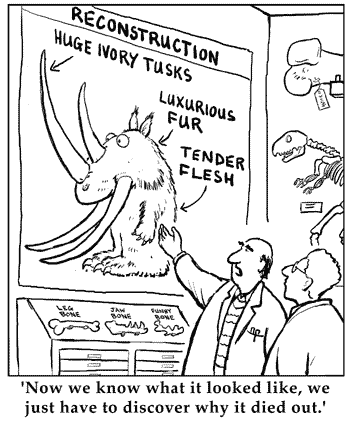
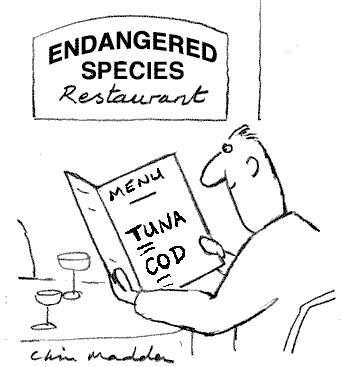
Some more (see previous ‘Cartoon Guide’ instalments I and II) comedic reminders of humanity’s environmental short-sightedness.

The Call of The Wild

CJA Bradshaw

Add to FacebookAdd to NewsvineAdd to DiggAdd to Del.icio.usAdd to StumbleuponAdd to RedditAdd to BlinklistAdd to Ma.gnoliaAdd to TechnoratiAdd to Furl


One year later: Conservation Letters

17 02 2009

Conservation Letters

I have been very proud to be a part of Conservation Letters‘ success since its inaugural issue in April 2008. I thought I’d share our Chief Editors’ retrospective editorial after the first year. Thanks to all who have made CL such a success!

In the editorial that launched Conservation Letters, we promised a journal that would publish novel and innovative papers drawing on a diversity of disciplines, and including perspectives and case studies from across the globe. We anticipated first class research that would help deliver effective policy and management solutions. Furthermore, we pledged rapid publication: a review time of six weeks and submission-to-publication time of 20 weeks. So let’s see how we have done in the first volume.

The five issues of the first volume comprise 37 papers drawn from 146 submissions. Of these submissions, 40% were rejected without review. We did better than our target for processing manuscripts: average review time was five weeks and submission-to-publication time was 17.5 weeks.

Coverage of topics has been diverse. Several papers dealt with mainstream conservation science: habitat and population decline, climate change impacts and assessments for conservation planning. Many dealt with “hot” topics, namely natural capital and ecosystem services, conservation economics, and monitoring and evaluation. Few papers had a strictly biological focus – most also considered social dynamics and focused on production land and waterscapes. Most straddled disciplines. Although all papers articulated implications for policy and practice, two documented research that was engaged with the stakeholders responsible for developing policy or implementing practice.

We are disappointed that the geographic spread of the submissions was strongly biased in favor of developed, English-speaking nations: 36% of first authors hailed from the USA, 19% from UK, 16% from Australia and 6% from Canada. Only 11% of submissions originated from mainland Europe, 5% from Asia, 3% from Africa, 2% from Latin America. More encouraging was that almost half the papers published dealt with topics that transcended biome boundaries; the remainder was equally shared between land and water ecosystems.

At this early stage, it is difficult to assess whether any of the papers have had an impact on conservation policy and practice. However, the editorial team is pursuing ways of monitoring the extent to which papers are influential in catalyzing actions that safeguard nature and its services in a secure, just, and sustainable way. What we can report is that research published in Conservation Letters aroused considerable interest from major television networks (BBC, ABC, National Geographic), magazines (Economist, American Scientist), newspapers (New York Times, Christian Science Monitor, Sydney Morning Herald) and conservation organizations (BirdLife International, The Nature Conservancy). Two papers attracted most of the media interest: Wilson and Edwards’ paper on low emission kangaroo meat (issue 3, 119-128) and Reed and Merenlender’s contribution that assessed the impact on carnivore populations of non-consumptive recreation in protected areas (issue 3, 146-154). Along with Kapos et al’s paper on measuring conservation success (issue 4, 155-164) and Koh and Wilcove’s article on the impacts of oil palm agriculture on tropical biodiversity (issue 2, 60-64), as of November these contributions also had the highest impact as measured by downloads. Conservation Letters will apply for ISI listing in early 2009 so it will soon be possible to track impact via citation analysis.

Overall, we are very pleased with the first volume of the journal. The papers are scientifically rigorous, innovative and – importantly – likely to have a real impact on policy and practice. Moreover, we believe that the quality and speed of the review process has been good. However, the journal does face certain challenges in maintaining this high quality of content and process. We need to attract more contributions with social science perspectives, that involve scientists from developing countries, and that are socially engaged in processes leading to implementation of conservation actions. As Conservation Letters grows and becomes even more diverse, we will also need to recruit to our editorial board more rare individuals like the ones we already have: leading scientists who are willing to allocate time to editorial chores that advance conservation science and policy.

Our success is attributed to the conservation science community who has so enthusiastically supported the journal by submitting their top-notch papers to a fledgling journal. Of key importance has been our outstanding editorial board. Its members have ensured a rigorous, fair and speedy review process. We wish to thank in particular those who dealt with four or more submissions for the first volume, namely Bill Adams, James Blignaut, Justin Brashares, Nicholas Dulvy, Richard Krannich, David Lindenmayer, Atte Moilanen, Mathieu Rouget, Javier Simonetti and Kerrie Wilson. At the helm is Corey Bradshaw, our Senior Editor whose dedication and commitment have underpinned our achievement thus far. Corey shouldered the lion’s share of editorial responsibilities for the early issues, personally handling 18 submissions. Thanks too for the sterling work by the team at Wiley-Blackwell: Managing Editor Jen Mahar and Associate Publisher Marjorie Spencer. Finally the entire team is hugely appreciative of the guidance of our Editorial Advisor, Michael Hochberg, whose experience as editor of our sister journal Ecology Letters, provided important direction for the editorial team.

By any measure conservation research is booming – both in terms of its scientific and real world impact. The remarkable early enthusiasm for Conservation Letters is testimony to the excitement that surrounds our discipline. We, the Chief Editors, are very grateful for your support.

Richard M. Cowling
Michael B. Mascia
Hugh Possingham
William J. Sutherland


Rare just tastes better

11 02 2009

I had written this a while ago for publication, but my timing was out and no one had room to publish it. So, I’m reproducing it here as an extension to a previous post (That looks rare – I’ll kill that one).

As the international market for luxury goods expands in value, extent and diversity of items (Nueno & Quelch 1998), the world’s burgeoning pool of already threatened species stands to worsen. Economic theory predicts that harvested species should eventually find refuge from over-exploitation because it simply becomes too costly to find the last remaining wild individuals (Koford & Tschoegl 1998). However, the self-reinforcing cycle of human greed (Brook & Sodhi 2006) can make rare species increasingly valuable to a few select consumers such that mounting financial incentives drive species to extinction (Courchamp et al. 2006). The economic and ecological arguments are compelling, but to date there has been little emphasis on how the phenomenon arises in the human thought process, nor how apparently irrational behaviour can persist. Gault and colleagues (2008) have addressed this gap in a paper published recently in Conservation Letters by examining consumer preferences for arguably one of the most stereotypical luxury food items, caviar from the 200-million-year-old sturgeon (Acipenser spp.).

Sturgeon (6 genera) populations worldwide are in trouble, with all but two of the 27 known species threatened with extinction (either Near Threatened, Vulnerable, Endangered or Critically Endangered) according to the International Union for Conservation of Nature and Natural Resources’ (IUCN) Red List of Threatened Species. Despite all 27 species also having strict international trade restrictions imposed by the Convention on International Trade in Endangered Species (CITES) (Gault et al. 2008), intense commercial pressure persists for 15 of these at an estimated global value exceeding US$200 million annually (Pikitch et al. 2005). The very existence of the industry itself and the luxury good it produces are therefore, at least for some regions, unlikely to endure over the next decade (Pala 2007). What drives such irrational behaviour and why can we not seem to prevent such coveted species from spiralling down the extinction vortex?

Gault and colleagues addressed this question specifically in an elegantly simple set of preference experiments targeting the very end-consumers of the caviar production line – French connoisseurs. Some particularly remarkable results were derived from presentations of identical caviar; 86 % of attendees of luxury receptions not only preferred falsely labelled ‘rarer’ Siberian caviar (A. baeri) after blind tasting experiments, they also scored what they believed was caviar from the rarer species as having a higher ‘gustative quality’. These high-brow results were compared to more modest consumers in French supermarkets, with similar conclusions. Not only were unsuspecting gourmands fooled into believing the experimental propaganda, subjects in both cases stated a preference for seemingly rarer caviar even prior to tasting.

The psycho-sociological implications of perceived rarity are disturbing themselves; but Gault and colleagues extended their results with a mathematical game theory model demonstrating how irrational choices drive just such a harvested species to extinction. The economic implications of attempting to curb exploitation as species become rarer when the irrationality of perceived rarity was taken into consideration were telling – there is no payoff in delaying exploitation as more and more consumers are capable of entering the market. In other words, the assumption that consumers apply a positive temporal discount rate to their payoff (Olson & Bailey 1981) is wrong, with the demographic corollary that total depletion of the resource ensues. The authors contend that such artificial value may drive the entire luxury goods market based mainly on the self-consciousness and social status of consumers able to afford these symbols of affluence.

The poor record of species over-exploitation by humans arising from the Tragedy of the Commons (Hardin 1968) is compounded by this new information. This anthropogenic Allee effect (Courchamp et al. 2006) provides a novel example mechanism for how small populations are driven ever-downward because low densities ensure declining fitness. Many species may follow the same general rules, from bluefin tuna, Napoleon wrasse lips and shark fins, to reptile skins and Tibetan antelope woollen shawls. Gault and colleagues warn that as the human population continues to expand and more people enter the luxury-goods market, more wildlife species will succumb to this Allee effect-driven extinction vortex.

The authors suggest that a combination of consumer education and the encouragement of farmed substitute caviar will be more effective than potentially counter-productive trading bans that ultimately encourage illegal trade. However, the preference results suggest that education might not promote positive action given that reluctance of affluent consumers to self-limit. I believe that the way forward instead requires a combination of international trade bans, certification schemes for ‘sustainable’ goods that flood markets to increase supply and reduce price, better controls on point-of-origin labelling, and even state-controlled ‘warning’ systems to alert prospective consumers that they are enhancing the extinction risk of the very products they enjoy. A better architecture for trading schemes and market systems that embrace long-term persistence can surely counteract the irrationality of the human-induced destruction of global ecosystem services. We just need to put our minds and pocketbooks to the task.

CJA Bradshaw

Add to FacebookAdd to NewsvineAdd to DiggAdd to Del.icio.usAdd to StumbleuponAdd to RedditAdd to BlinklistAdd to Ma.gnoliaAdd to TechnoratiAdd to Furl


Marine conservation in South Australia

26 01 2009

© U.R. Zimmer

© U.R. Zimmer

Just before the holidays last year I participated in the Conservation Council of South Australia‘s (CCSA) Coast & Marine in a Changing Climate Summit 2008. It was an interesting, mature and intelligent summit with some good recommendation surfacing. Although I certainly didn’t agree with all the recommendations (view the entire report here), I must say up front that I have been very impressed with the CCSA’s approach in their ‘Blueprint’ summit series to address South Australia’s environmental problems.

Many environmental groups, especially regional ones, are seen by many as raving environists1 with little notion for balance or intelligent debate. CCSA is definitely not one of those. They are very careful to engage with scientists, public servants, industry leaders and politicians to hone their recommendations into something realistic and useful. Indeed, I am now certain the only way to convince people of the necessity of dealing with the world’s environmental mess is to make intelligent, scientifically defensible arguments about how environmental degradation worsens our quality of life (yes, this is the principal aim of ConservationBytes.com). So, good on the CCSA for a rationale approach.

Enough about the CCSA for now – let’s move onto some of their marine-related recommendations. I won’t reprint the entire summary document here, but a few things are worthy of repetition:

Significantly increase the amount of resources available for marine species research and taxonomy, especially for non-commercial species.

Despite my obvious conflict of interest, I couldn’t agree more. One of the principal problems with our ability to plan for inevitable environmental change to lessen the negative outcomes for biodiversity, industry and people in general is that we have for too long neglected marine research in Australia. Given that most Australians live near the coast and almost all of us rely on the oceans in some way, it is insane that marine research in this country is funded almost as an afterthought. How can we possibly know what we’re doing to our life-support system if we don’t even know how it works?

Take climate change for example. The majority of climate change predictions are merely single-species predictions based on physiological tolerances. Most almost completely ignore species interactions. Any given species must compete with, eat and be eaten by others, so it’s insane not to combine community relationships into predictive models.

A strict monitoring regime should be implemented in all ports and harbours to continuously monitor [sic] for introduced marine pests in order to inform better management, in conjunction with the species outlined in the Monitoring section of the National System for the Prevention and Management of Marine Pest Incursions.

Many people, and scientists in particular, have traditionally turned their noses up at so-called ‘monitoring’. However, as a few Australian colleagues of mine recently observed, the marine realm has a huge, gaping hole in monitoring data necessary to determine the future of Australia’s marine environment. Take it from me, a scientist who regularly uses time-series data to infer long-term patterns (see Publications), it’s essential that we have more long-term data on species distributions, reproductive output, survival, etc. to make inference about the future.

Recreational fishing should be licensed, with the license fees being directed towards increased research of non-commercial species and education of recreational fishers.

I really like this one. It seems South Australia is the only state in the country that doesn’t have mandatory recreational fishing licences. Absolute madness. Given the capacity of recreational fishing to outstrip commercial harvests for some species (e.g., King George whiting Sillaginodes punctatus), we need vastly better monitoring via licences to determine local impacts. Not to mention the necessary generation of money to support monitoring and research, which to the average recreational fisher, would not be such a hefty price to pay. The political drive to keep the status quo is woefully outdated and counter-productive. See one of my previous posts on the potential impacts of recreational fishing.

There is a need for a co-ordinated, state/Adelaide-wide stormwater strategy. Currently the Stormwater Management Authority examines individual projects but does not manage a bigger picture with a co-ordinated approach.

A colleague of mine recently published an article showing how South Australian waters, being more oligotrophic on average than other areas of the country, are particularly susceptible to nutrient overloading. The main losers are seagrasses and macroalgae (kelp) forests – the Adelaide metropolitan coast has lost up to 70 % of its kelp forests since major urbanisation began last century.

There are many more recommendations that you can peruse at your leisure, and many of them will be updated this year once the CCSA incorporates all the received comments. I thank them for the opportunity to take part in their worthy aims.

CJA Bradshaw

1My colleague, Barry Brook, invented this excellent term to describe those people who blindly support anything ‘green’ without really thinking of the consequences. It’s also a great way to differentiate serious ‘environmentalists’ and conservation biologists from raving ‘greenies’.

Add to FacebookAdd to NewsvineAdd to DiggAdd to Del.icio.usAdd to StumbleuponAdd to RedditAdd to BlinklistAdd to Ma.gnoliaAdd to TechnoratiAdd to Furl


Man bites shark

7 01 2009

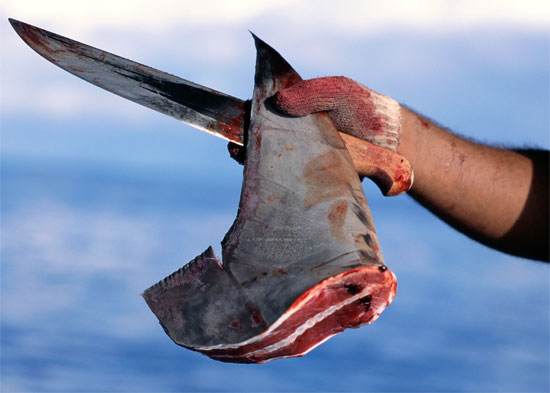
cut-shark-finYesterday I had a comment piece of the same title posted on the ABC‘s Unleashed site. I have permission to reproduce it here on ConservationBytes.com.

The silly season is upon us again, and I don’t mean the commercial frenzy, the bizarre fascination with a white-bearded man or a Middle-Eastern baby, the over-indulgence at the barbie or hangovers persisting several days into the New Year. I mean it’s the time of year when beach-goers, surfers, and municipal and state policy makers go a bit ga-ga over sharks.

There are few more polite pleasures than heading down to the beach during the holidays for a surf, quick dip or just a laze under the brolly. Some would argue it’s an inalienable Australian right and that anything getting in our way should be condemned to no less than severe retribution. Well, in the case of sharks, that’s exactly what’s happened.

Apart from a good number of adrenalin-addicted surfers and mad marine scientists, most people are scared shitless by the prospect of even seeing a shark near the beach, let alone being bitten or eaten by one. I won’t bore you with some ill-advised, pseudo-psycho-analytical rant about how it’s all the fault of some dodgy 1970s film featuring a hypertrophied American shark; the simple fact is that putative prey don’t relish the thought of becoming a predator’s dinner.

So, Australia is famous for its nearly 100-year-old pioneering attempt to protect marine bathers from shark attack by setting an elaborate array of shark nets around the country’s more frequented beaches. Great, you say? Well, it’s actually not that nice.

Between December 1990 and April 2005, nearly 3500 sharks and rays were caught in NSW beach nets alone, of which 72 per cent were found dead. Shark spearing was a favourite past-time in the 1960s and 1970s, with at least one high-profile species, the grey nurse shark, gaining the dubious classification of Critically Endangered as a result. Over-fishing of reef sharks has absolutely hammered two formerly common species in the Great Barrier Reef, the whitetip and grey reef sharks (See the Ongoing Collapse of Coral-Reef Shark Populations report). And illegal Indonesian fishing in northern Australia is slowly depleting many shark species in a wave of protein mining that has now penetrated the Australian Exclusive Economic Zone.

Despite the gloomy outlook for sharks, I’m happy to say today that we are a little more aware of their plight and are making baby steps toward addressing the problems. Australia has generally fared better in shark conservation than most other parts of the world, even though we still have a lot of educating to do at home. Over 50 per cent of all chondrichthyans (i.e., sharks, rays and chimaeras) are threatened worldwide, with some of the largest and most wide-ranging species being hardest hit, including white sharks. The most common threat is over-fishing, but this is largely seen by the lay person as of little import simply because of the persistent attitude that “the only good shark is a dead shark”.

The attitude is, however, based on a complete furphy. I’m sure many readers would have seen some statistics like the following before, but let’s go through the motions just to be clear. Dying from or even being injured by a shark is utterly negligible. Based on the International Shark Attack File data for Australia, there were 110 confirmed (unprovoked) shark attacks in Australian waters between 1990 and 2007, of which 19 were fatal. Using Australian Bureau of Statistics human population data over the same period, this equates to an average of 0.032 attacks and 0.006 fatalities per 100,000 people, with no apparent trend over the last two decades.

Now let’s contrast. I won’t patronise you with strange comparative statistics like the probability of being killed by a (provoked) vending machine or by being hit by a bus, they are both substantially greater, but I will relate these figures to water-based activities. Drowning statistics for Australia (1992-1997) show that there were around 1.44 deaths per 100,000 people per year, or approximately 0.95 if just marine-related drownings are considered. These values are 240 (158 for marine-only) times higher than those arising from shark attack.

It’s just plainly, and mathematically, ridiculous to be worried about being eaten by a shark when swimming in Australia, whether or not there’s a beach net in place. The effort made, money spent and anxiety arising from the illogical fear that a shark will consider your sunburnt flesh a tasty alternative to its fishier sustenance is not only regrettable, it’s an outright crime against marine biodiversity. Of course, if you see a big shark lurking around your favourite beach, I wouldn’t recommend swimming over and giving it a friendly pat on the dorsal fin, but I wouldn’t recommend screaming that the marine equivalent of the apocalypse has just arrived either.

You may not be fussed either way, but consider this – the massive reduction in sharks worldwide is having a cascading effect on many of the ocean’s complex marine ecosystems. Being largely carnivorous, sharks are the ecological equivalent of community planners. Without them, herbivorous or coral-eating fish can quickly get out of control and literally destroy the food web. A great example comes from the Gulf of Mexico where the serial depletion of 14 species of large sharks has caused an explosion of the smaller cownose ray that formerly was kept in check by its bigger and hungrier cousins. The result: commercially harvested scallops in the region have now collapsed because of the hordes of shellfish-eating rays.

The day you fail to find sharks cruising your favourite beach is the day you should really start to worry.

CJA Bradshaw

Add to FacebookAdd to NewsvineAdd to DiggAdd to Del.icio.usAdd to StumbleuponAdd to RedditAdd to BlinklistAdd to Ma.gnoliaAdd to TechnoratiAdd to Furl


Our new Environment Institute: tackling environmental crises

9 12 2008

© T. Hampel

© T. Hampel

It’s official, the University of Adelaide has put in some major investment to get its environmental research specialists together to turns things into high gear. I’m privileged to be a part of the Institute, and I hopefully will be blogging about many of the exciting, topical and revolutionary research coming out this new ‘think tank’ (also, a ‘do tank’) over the coming years.

This report from AdelaideNow:

THE University of Adelaide will bring together experts in water management, climate change, economics, marine research, energy technology and ancient DNA to tackle Australia’s most pressing environmental challenges.

The new Environment Institute will be headed by water policy expert Mike Young who said Australia faced diabolical policy problems in relation to climate change and water resources.

“While climate change is the issue of greatest national importance, it is arguable that water is the issue of most interest to South Australia,” Professor Young said.

“The River Murray, our greatest ecological icon, is under terminal stress and we need to find alternative water sources.

“We should expect the adverse effects of climate change to first be expressed in water.”

Professor Young said research was needed to help reduce Australia’s carbon footprint, to restore and improve native habitats and restructure agricultural systems.

“Many of these issues have been dealt with in isolation in the past but this is no longer an option,” he said.

“All are linked and must be dealt with in a holistic and co-ordinated way.”

Also involved in the institute will be the university’s climate change expert Barry Brook and conservationist David Paton.

University vice-chancellor James McWha said all of the institute’s researchers had an outstanding track record and were internationally recognised in their fields.

“Collectively, they have been growing their research at a phenomenal rate over the past five years and they will play a critical role in building the state’s reputation as a global leader in environmental research,” Professor McWha said.


Some biodiversity with your coffee, Sir?

7 12 2008

Bird on coffee cherriesI really like my coffee. I’m sure there are a few billion humans who claim likewise, but I think I could safely categorise myself as a coffee snob. I cannot even contemplate placing powdery crystals into a cup of hot water and calling it ‘coffee’, let alone imbibing the toxic concoction. I spend way too much money on very slow-roasted, dark, oily beans that have to be ground to the exact espresso consistency to use in my Bialetti cafettiera, and I’ll search high and low for the best coffee produced in any city in which I live or to where I travel (N.B. Still haven’t found what I call a ‘great’ coffee in the CBD of Adelaide – suggestions welcome). I really, really like good coffee.

What the hell does all this meandering preamble have to do with biodiversity conservation? I’m happy you asked. With environmentally conscious consumers now demanding some sort of ‘green’ certification for many products (e.g., no palm oil, carbon-neutral, fair trade, etc.), coffee has also been targeted as a good product to certify for harvest and production of lower environmental impact than has been done traditionally. Well, how do you measure ‘green-ness’ in a product? For coffee, there are some good ways.

A recent paper (and candidate for the Potential list) by Aaron Gove and colleagues published in Conservation Letters entitled Ethiopian coffee cultivation – implications for bird conservation and environmental certification demonstrates how the cultivation of this NATIVE Ethiopian plant (Coffea arabica) can enhance or restore the biological value of lowland agricultural areas. This species of ‘highland coffee’ is harvested from forests (where it evolved and now grows naturally) and from more intensive farmland. Interestingly, this species needs some shade to grow, so trees must generally be planted in the agricultural areas to allow this. Result? Gove and colleagues found that birds who otherwise wouldn’t be seen dead in the agricultural areas were attracted there by the maintenance and proliferation of the shade trees, thus reducing regional extinction risk for fragmented populations dependent on forest remnants. The flip side was that coffee cultivation in forest remnants reduced bird diversity because of the obvious trade-off between some native trees and intensive agricultural crops.

So, the next time you’re thinking of buying certified coffee, think of this – the cultivation of INDIGENOUS (did I say that loudly enough?) coffee species requiring shade promotes the proliferation of native forest trees to reduce the extinction risk of threatened birds. The number of boxes to tick on my coffee-snobbery list has just grown by two.

CJA Bradshaw

Add to FacebookAdd to NewsvineAdd to DiggAdd to Del.icio.usAdd to StumbleuponAdd to RedditAdd to BlinklistAdd to Ma.gnoliaAdd to TechnoratiAdd to Furl


Addressing biodiversity decline at home

30 11 2008

© CJA Bradshaw

© CJA Bradshaw

I was recently invited to sit on a panel organised by the Conservation Council of South Australia (CCSA) to discuss issues of marine and coastal conservation under a rapidly changing climate. The results of that will be released soon (I’ll blog about that later), but in the interim, I want to highlight to readers of ConservationBytes.com how the CCSA is setting up the challenge to local governments to implement positive steps forward for the conservation of biodiversity in South Australia. I’m reproducing the executive summary of their Summit Report on Biodiversity in a Changing Climate (download full report here). It’s a good example of how we can all (industry, government, academia) work together to promote our own well-being.

…South Australia’s biodiversity is declining at an alarming rate. It has been suggested by scientists that it will take many millions of years for biodiversity to recover from the impacts of humans over the last 200 years. In South Australia the key threat to biodiversity is land clearance; clearance of remnant native vegetation and subsequent fragmentation of habitat for native fauna species. Other key threats to biodiversity in South Australia include:

  • Habitat fragmentation from development
  • Competition from introduced flora
  • Predation by introduced animals
  • Direct competition for food, shelter and resources from introduced fauna
  • Introduced diseases
  • Collection of firewood from remnant vegetation
  • Altered fire regimes
  • Inappropriate grazing/overgrazing
  • Inappropriate management activities
  • Water extraction/pollution
  • Climate change – including increasing oceanic temperatures and acidification

Much of South Australia’s economy is based on the use of biological resources and the need to maintain ecosystem services. This includes activities such as tourism and recreation, nature conservation, pastoralism, agriculture, horticulture, and forestry which all benefit from healthy ecosystems.

Our primary production systems require biodiversity for pest control/management, soil conservation, enhanced productivity and stabilisation, pollination, salinity amelioration, and water purification.

To address and reverse current biodiversity trends our society must recognise, understand and value biodiversity. Land managers, indigenous communities, local industries, government and the broader community may value biodiversity in different ways, however conservation and effective management of biodiversity is essential to ensure the continuation of these values for future generations. Biodiversity values may include:

  • Production value for the provision of food, medicines, clothing and building materials consumed by society
  • Ecosystem services for the maintenance of ecosystem services (natural storing and cycling of nutrients, stabilising soil formation, protection of water resources and breakdown of pollution), and maintenance of biodiversity
  • Socio-economic value for recreation, research, education and monitoring, and cultural values
  • Future value to maintain the capacity to identify future direct or indirect utilitarian value

The South Australian government has recognised the significance of biodiversity through integrated approaches such as the National Strategy for the Conservation of Australia’s Biological Diversity, a joint initiative of the Commonwealth and State and Territory governments. This strategy supports other intergovernmental agreements, such as the National Strategy for Ecologically Sustainable Development, the National Greenhouse Strategy, the National Forest Policy Statement, the Decade of Landcare Plan, the Wetlands Policy of the Commonwealth Government of Australia, the Inter-Governmental Agreement on the Environment, the Natural Heritage Trust Partnership Agreements and the National Framework for the Management and Monitoring of Australia’s Native Vegetation.

The South Australian government has also implemented its own biodiversity focused strategies including No Species Loss, NatureLinks, Tackling Climate Change, and the State Strategic Plan. Regional biodiversity plans are being facilitated to assist in the management and rehabilitation of natural habitats throughout regions of the state.

However, despite the government’s recognition of biodiversity as a serious issue, South Australia’s biodiversity continues to decline at an alarming rate. Actions for conservation, management and awareness raising must be backed by political will and be targeted and supported financially.

Investing in biodiversity is essential to maintaining ecosystems services and in turn to provide dividends to human health and wellbeing. Policies and regulations must ensure all stakeholders are accountable for their environmental footprint and role in implementing change for the future protection of our state’s biodiversity. The aim of this report is to provide policy recommendations to increase the effectiveness of biodiversity conservation in South Australia’s changing climate…

to view the Report’s recommendations, read on… Read the rest of this entry »


Failing on ocean protection

24 11 2008

A new paper from Conservation Letters by Mark Spalding and colleagues entitled Toward representative protection of the world’s coasts and oceans-progress, gaps, and opportunities reminds us just how crap we are at protecting ocean habitats. I sincerely hope this one is a Potential given that the only direction one can move from absolute bottom is up. Richard Black at the BBC reports on the paper’s main findings:

toilet-ocean_squareLess than 1% of the world’s oceans have been given protected status, according to a major survey.

Governments have committed to a target of protecting 10% by 2012, which the authors of the new report say there is no chance of meeting.

Protecting ecologically important areas can help fish stocks to regenerate, and benefit the tourism industry.

The survey was led by The Nature Conservancy (TNC) and is published in the journal Conservation Letters.

“For those of us working in the issue full-time it’s not a surprise, we’ve known all along that marine protection is lagging behind what’s happening on land, but it’s nice to have it pinned down,” said TNC’s Mark Spalding.

“It’s depressing that we’ve still got so far to go, but there are points of hope,” he told BBC News.

Coastal concentration

Four years ago, signatories to the UN’s biodiversity convention – which includes almost every country – pledged to protect at least 10% of the oceans in a way that makes sense ecologically.

Protecting them does not mean banning activities such as fishing or shipping completely, but making sure they are carried out sustainably.

All of the areas currently protected fall into countries’ Exclusive Economic Zones, and the majority are along coasts, the study finds.

Even so, only about 4% of coastal waters are protected.

Countries diverge widely in how much protection they have mandated.

Whereas New Zealand has almost 70% of its coastline under some form of protection, countries around the Mediterranean have set aside less than 2%.

In the developing world, Dr Spalding cites Guinea-Bissau as a country that has had invested in protection, particularly in the Bijagos Archipelago, which is home to a community of hippos dwelling along its mangrove coast, as well as more conventional marine species.

Palau, Indonesia, Micronesia and several Caribbean states are also making significant progress, he said.

About 12% of the Earth’s land surface has been put under protection.

Download the Spalding paper free of charge here.


More greenwashing from the Malaysian oil palm industry

17 11 2008

© ?

© ?

A recent article from Mongabay.com. What the good doctor Basiron appears to gloss over rather well is that his own country’s very economic future, well-being of its citizenry and long-term sustainability absolutely depends on maintaining large tracts of intact primary forest. The value of its forests far outweighs the short-term ‘development’ gains from palm oil. The backflips, greenwashing and overt profiteering will only be a blip in Malaysia’s economic development, so keep on with the propaganda while you can, Basiron. Why don’t you call a spade a spade – it’s greed, not so-called ‘development’ that’s raping your own country.

Dr. Yusof Basiron, the controversial CEO of the Malaysian Palm Oil Council (MPOC), blogs about the sustainability of palm oil.

Scientists should compare the biodiversity oil palm plantations to other industrial monocultures, not the rainforests they replace, said Dr. Yusof Basiron, CEO of the Malaysian Palm Oil Council (MPOC), in a post on his blog.

“I would also like to encourage environmental scientists not to compare the biodiversity of an agricultural crop such as the oil palm with that of rain forests,” he wrote. “The findings would not win you a Nobel price [sic].”

“If a comparison is to be made, the biodiversity of the oil palm, an agricultural crop, should be compared with that for soyabean or rapeseed, corn or sugarcane or other agricultural crops,” he continued. “Biodiversity that exists in the oil palm plantations is a bonus for all to benefit, while we enjoy the supply of oil for our food need, in addition to palm oil – an agricultural commodity – helping to promote economic growth not only in the developing countries but also in all other countries involved in using the product.”

Oil palm plantations and logged over forest in Malaysian Borneo. While much of the forest land converted for oil palm plantations in Malaysia has been logged or otherwise been zoned for logging, expansion at the expense of natural and protected forest does occur in the country. Reserve borders are sometimes redrawn to facilitate logging and conversion to plantations.
Basiron’s comments are noteworthy because until now he has maintained that oil palm plantations are “planted forests” rather than an industrial crop. Oil palm plantations are indeed biologically impoverished relative to even heavily logged forests – a study published earlier this year showed that oil palm plantations retain less than one-sixth the biodiversity of old growth forests and less than a quarter of that in secondary forests. However when compared with soy or rapeseed farms, which support almost no wildlife, oil palm plantations look a little less like biological deserts. Small measures – like maintaining and restoring forest cover along waterways, conserving peatlands and high value conservation areas, and reducing the use of fertilizers and pesticides – can help augment the biodiversity of existing plantations.

Basiron also noted that oil palm is the highest yielding conventional oilseed on the market – far outstripping the production per unit of area for rapeseed and soy. While its high yield makes oil palm exceedingly profitable – especially during the recent boom in palm oil prices, which recently ended, coinciding with falling oil prices – it also theoretically means that less land needs to be converted to produce the same amount of oil had the land been cultivated with other crops. The problem, say environmentalists, stems from the practice of clearing natural forest for oil palm plantations, which reduces biodiversity, hurts ecosystem functioning, and results in greenhouse gas emissions. While Basiron and the MPOC have flatly denied that natural forest has been cleared for the establishment of oil palm plantations, ground and satellite evidence proves the claims quite false. Nevertheless there are opportunities to covert degraded and abandoned agricultural lands for oil palm, mostly in Indonesia, rather than Malaysia where most land is already under cultivation or forested. While returns would be lower without the “logging subsidy” generated by selling the timber harvested from forest land prior to planting with oil palm, such plantations would face less criticism from the environmental community.

A third point made by Basiron is that Malaysia is a sovereign nation that has same rights to develop its economy as industrialized nations have had. The same concept has been put forth by Brazil over deforestation of the Amazon and China with regards to its rising greenhouse gas emissions.

Basiron writes,

“It is also unethical, immoral and somewhat patronizing for NGOs of the developed countries in Europe to ask developing countries such as Malaysia to stop developing its land. Asking Malaysia to stop developing its land will lead to conflicts and misunderstanding because some states in Malaysia have not yet had the opportunity to develop their agricultural land as they were until a few decades ago under oppressive colonial rule.”

“Sarawak [a state on the island of Borneo] which achieved independence from the British later than Peninsular Malaysia had only developed 8% of its land for agriculture compared to the UK which has over 70% of its land under agriculture. But there are still opportunities in Sarawak and other parts of Malaysia to develop degraded logged over land for planting rubber and oil palm to increase the country’s sources of foreign exchange while not involving the deforestation of the pristine permanent forests.”

While Basiron’s comments will likely be dismissed or ignored by many environmental groups, his points are not the sort that typically provoke outcry from the green lobby. MPOC lands in the most trouble with the environmental community when it attempts to deliberately mislead the marketplace on the environmental performance of palm oil, an approach the group has used repeatedly in recent years with advertising campaigns, “greenwashing” and “astroturfing” techniques, and other propaganda. Of course MPOC is not alone in using these tactics – it follows the model employed widely by industries ranging from U.S. ethanol producers to big oil. The problem for MPOC – and other industries – is that misleading campaigns are only providing more fodder for its enemies. But MPOC is hedging itself. The palm oil marketing group is also employing a second strategy that may pay better dividends in the long run – an effort to improve the environmental performance of palm oil. While the initiative – known as the Roundtable on Sustainable Palm Oil (RSPO) – has stumbled a bit coming out of the blocks, it appears there may be a market for certified palm oil, which would offer producers a premium for mitigating the environmental and social impacts of producing the vegetable oil. The first RSPO-certified palm oil is expected the reach Europe today. Unilever, one of the world’s largest consumers of palm oil, has already pledged to buy only certified palm oil by 2015.

See also previous posts on oil palm at ConservationBytes.com:

Unexpected benefits of falling palm oil prices

Oil palm plantatations destroying tropical biodiversity

Another nail in Borneo’s biodiversity coffin


Water neutrality and its biodiversity benefits

5 11 2008

blog-water-balance-200x200The world’s freshwater ecosystems are in trouble. We’ve extracted, poisoned, polluted, damned and diverted a large proportion of the finite (and rather small!) amount of freshwater on the planet. Now, most people might immediately see the problem here from a selfish perspective – no clean, abundant water source = human disease, suffering and death. Definitely something to avoid, and a problem that all Australians are facing (i.e., it’s not just restricted to developing nations). Just look at the Murray-Darling problem.

In addition to affecting our own personal well-being, freshwater ecosystems are thought to support over 10000 fish species worldwide, and the majority of amphibians and aquatic reptiles. Current estimates suggest that about 1/3 of all vertebrate biodiversity (in this case, number of species) is confined to freshwater. As an example, the Mekong River system alone is thought to support up to 1700 different species of fish.

So, what are some of the ways forward? The concept of ‘water neutrality’ is essentially the wet version of carbon neutrality. It basically means that water usage can be offset by interventions to improve freshwater habitats and supply.

A great new paper by Nel and colleagues published online in Conservation Letters entitled Water neutrality: a first quantitative framework for investing in water in South Africa (definitely one for the Potential list) gives us a good model for how water neutrality should work. Using a South African example, they describe a scheme where investors are required to (1) review their water use, (2) implement a reduction strategy and (3) replenish water to hydrological systems through the investment in catchment services equivalent to their water use. It’s in this last act that the ‘neutrality’ can be achieved for the betterment of biodiversity – in the South African example, participants replenish their water use through investment in clearing of water-intensive invasive alien plants that choke freshwater systems and otherwise use much of the available water. And we all know how destructive invasive species can be (see previous post on this subject).

Not only does the scheme produce more water, it restores fragile freshwater ecosystems and does so within the economic framework that allows schemes like carbon trading to operate. We desperately need something like this in Australia. Imagine, more water for everyone AND healthy river systems (again, think Murray-Darling) – all paid for by previously water-intensive, but now ‘water-neutral’ firms. Imagine seeing labels on Australian produce that say ‘This is a Water Neutral product that supports freshwater ecosystem health’.

CJA Bradshaw

Add to FacebookAdd to NewsvineAdd to DiggAdd to Del.icio.usAdd to StumbleuponAdd to RedditAdd to BlinklistAdd to Ma.gnoliaAdd to TechnoratiAdd to Furl


Remove, Flog and Dump: The Story of Stuff

18 10 2008
© Tides Foundation & Funders Workgroup for Sustainable Production and Consumption

© Tides Foundation & Funders Workgroup for Sustainable Production and Consumption

Related to a recent post on the idiocy of anthropogenically induced climate change, the lunacy of our current economic system and the complete lack of valuing undervaluing of ecosystem services on which our lives depend, I invite you to watch the highly entertaining Story of Stuff. Although terribly American (well, I guess that’s excusable given it is made by an American and targets other Americans, the greatest per capita resource consumers in the world), it applies to everyone, everywhere.

From its extraction through sale, use and disposal, all the stuff in our lives affects communities at home and abroad, yet most of this is hidden from view. The Story of Stuff is a 20-minute, fast-paced, fact-filled look at the underside of our production and consumption patterns. The Story of Stuff exposes the connections between a huge number of environmental and social issues, and calls us together to create a more sustainable and just world. It’ll teach you something, it’ll make you laugh, and it just may change the way you look at all the stuff in your life forever.