Wolves masquerading as sheep: the fallout

29 10 2010


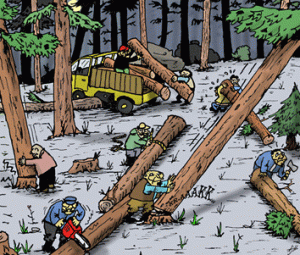
© New Zealand Films


Well, we’ve managed to stimulate quite a lively conversation after dropping the Open Letter about Scientific Credibility and the Conservation of Tropical Forests regarding the questionable tactics employed by Alan Oxley and his industrial lobbyist organisations.

Mr. Oxley has responded with vitriol, hand-waving, red herrings and straw men, and failed to address even a single one of our accusations. I am particularly amused by his insinuation that we, the proven scientists, don’t know what science is – but that he does.

Below I reproduce Mr. Oxley’s reaction to our original letter, followed by our response.

I’ll let you, the reader, decide who is most reasonable.

REACTION FROM ALAN OXLEY

There is too much pseudo-scientific hype today about environmentalism and forestry and not enough fact.

I put this double-barrelled question to the Group of 12 scientists who have rather laboriously wandered over the work of World Growth: What biodiversity is expressly protected by a global cessation of conversion of forest land to other purposes and how is that biodiversity scientifically measured? And let’s have some technical response, not political blather. Read the rest of this entry »


Humans 1, Environment 0

27 09 2010

© flickr.com/photos/singapore2010

While travelling to our Supercharge Your Science workshop in Cairns and Townsville last week (which, by the way, went off really well and the punters gave us the thumbs up – stay tuned for more Supercharge activities at a university near you…), I stumbled across an article in the Sydney Morning Herald about the state of Australia.

That Commonwealth purveyor of numbers, the Australian Bureau of Statistics (ABS), put together a nice little summary of various measures of wealth, health, politics and environment and their trends over the last decade. The resulting Measures of Australia’s Progress is an interesting read indeed. I felt the simple newspaper article didn’t do the environmental components justice, so I summarise the salient points below and give you my tuppence as well. Read the rest of this entry »


Global erosion of ecosystem services

14 09 2010

A few months ago I was asked to give a lecture about erosion of ecosystem services to students in the University of Adelaide‘s Issues in Sustainable Environments unit. I gave that lecture last week and just uploaded a slidecast of the presentation (with audio) today.

I’ve reproduced the lecture here for your viewing pleasure. I hope you find the 45-minute presentation useful. Note that the first few minutes cover me referring to the Biodiversity film short that I posted not too long ago.

CJA Bradshaw


Tropical biology and conservation overview

28 07 2010

Last week I attended the 2010 International Meeting of the Association for Tropical Biology and Conservation (ATBC) in Sanur, Bali (Indonesia). I only managed one post on the real-world relevance of conservation research (that attracted quite a lot of comment) while there, but I did promise to give a conference overview as I did for the International Congress for Conservation Biology earlier this month. So here goes.

This was my first ATBC meeting despite having co-written ‘the book’ on tropical conservation biology (well, one of very, very many). I no longer live in the tropics but am still managing to keep my hand in many different aspects of tropical research. After all, tropical regions represent ground zero for conservation biology – they have the highest biodiversity (no matter which way you measure it), some of the greatest threats (e.g., most people, most rapid development, most corruption) and some of the most pressing human problems (disease, hunger, socio-political instability). Ironically, most of the world’s conservation ecologists work in temperate realms – it should really be the other way around. Read the rest of this entry »


Global rates of forest loss – everyone’s a bastard

29 04 2010

© A. Hesse

I’ve written rather a lot about rates of forest loss around the world, including accumulated estimates of tropical forest loss and increasing fragmentation/loss in the boreal forest (see Bradshaw et al. 2009 Front Ecol Evol & Bradshaw et al. 2009 Trends Ecol Evol). For the tropics in particular, we used the index that an area of rain forest about the size of Bangladesh (> 15 million hectares) was disappearing each year, and in Russia alone, annual decline in forest area averaged 1.1 million hectares between 1988 and 1993. Mind boggling, really.

But some of these estimates were a bit old, relied on some imprecise satellite data, and didn’t differentiate forest types well. In addition, many have questioned whether the rates are continuing and which countries are being naughty or nice with respect to forest conservation.

It was great therefore when I came across a new paper in PNAS by Hansen & colleagues entitled Quantification of global gross forest cover loss because it answered many of the latter questions.

Part of the problem in assessing worldwide forest cover loss in the past was the expense of satellite imagery, access problems, data storage and processing issues. Happily, new satellite streams and easing of access has rectified many of these limitations. Hansen & colleagues took advantage of data from the MODIS sensor to create a stratification for forest cover loss. They then used the Landsat ETM+ sensor as the primary data for quantifying gross forest cover loss for the entire planet from 2000 to 2005. They defined ‘forest cover’ as “… 25% or greater canopy closure at the Landsat pixel scale (30-m × 30-m spatial resolution) for trees > 5 m in height”.

For your reading pleasure (and conservation horror), the salient features were: Read the rest of this entry »


China’s insatiable lust for tropical timber

4 04 2010

If you’ve been following ConservationBytes.com for the past few weeks, you’ll know that William Laurance was in town and gave a fantastic set of talks (download podcasts here). As a parting gift, he put together a brief post on one huge aspect of the tropical deforestation crisis we know face. Thanks, Bill.

© AAAS

I greatly enjoyed my recent visit to the University of Adelaide, and especially want to thank my host, Corey Bradshaw, for showing me a wonderful time there.

Corey asked me to contribute a brief blog for ConservationBytes.com and so I thought I’d highlight a paper in Science last week by my old friend Jianguo “Jack” Liu at Michigan State University. In his paper China’s road to sustainability, Jack describes the battle to improve environmental sustainability in China–a battle that is not progressing very well, all factors considered.

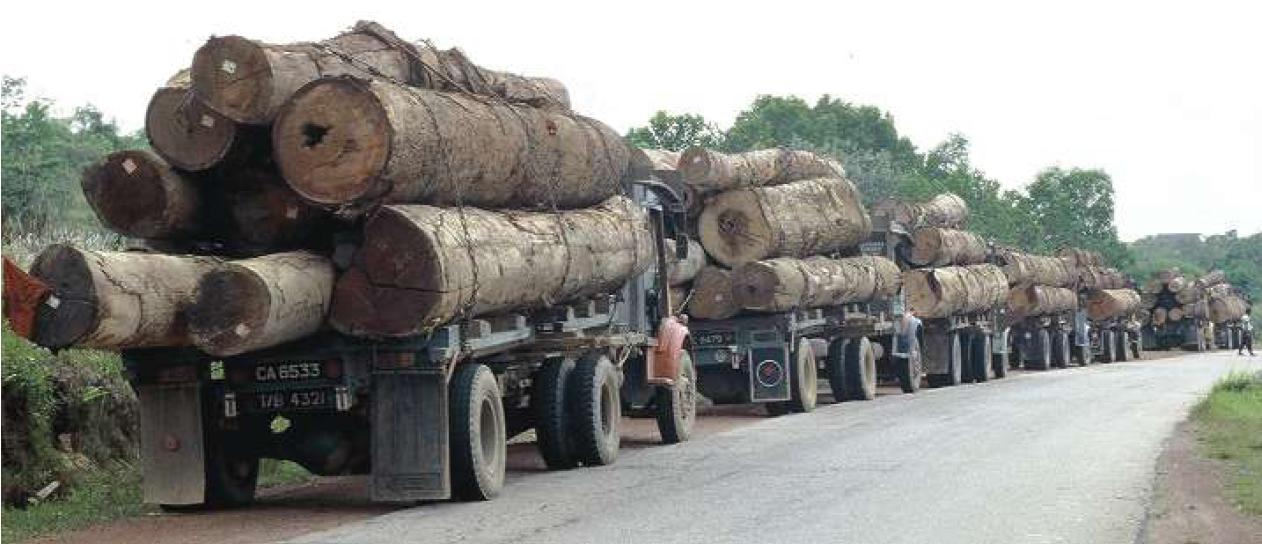
China’s explosive economic growth and environmental deterioration is also affecting other countries, especially those with timber, minerals or other resources that China wants. Today, more than half of the timber shipped anywhere in the world is destined for China–some 45 million m3 per year, an incredible total. Read the rest of this entry »


Bill Laurance coming to Adelaide

13 03 2010

We’ve got a real treat for biodiversity buffs scheduled for the end of March. Eminent (Distinguished, Famous, Respected… the list goes on) Professor William (Bill) Laurance is briefly leaving his tropical world and coming south to the temperate climes of Adelaide to regale us with his fascinating biodiversity research career.

Bill is a leading conservation biologist who has worked internationally on many high-profile threats to tropical forests—in the Amazon, Central America, Africa, and Australasia. A highly prolific scientist, to date he has published five books and over 300 scientific articles. Bill has recently commenced a position as Distinguished Research Professor at James Cook University and is involved with the Smithsonian Tropical Research Institute in Panama. He also happens to be the bloke that blew the lid open on the devastating effects of tropical fragmentation in the Amazon with some of the best long-term experiments ever done in conservation biology.

I’m personally very pleased for several reasons: (1) Although I have never met Bill in person yet, I’ve recently co-authored two papers with him (Wash and spin cycle threats to tropical biodiversity and Improving the performance of the Roundtable on Sustainable Palm Oil for nature conservation) and I’m keen to meet the man behind the pen; (2) we have had many email discussions (some of them rather heated!), so I’m keen to flesh some of these out over a nice glass of South Australian Shiraz; (3) he’s been a keen supporter of my work for years, and has given me many opportunities to get my research noticed; and (4) it’s high time to met one of ConservationBytes.com Conservation Scholars.

Bill has recently shifted shop from Panama (Smithsonian Tropical Research Institute) to Australia’s own James Cook University, and so we at the Environment Institute thought we should take advantage of his geographical disorientation and bring him down south for a while. But he’s going to have to sing for his supper, so he’s kindly agreed to give three talks in 3 days from 29-31 March 2010.

His first talk (on Monday 29 March) will be an in-house Environment Institute seminar, but the second two will be public events that I urge anyone remotely interested in biodiversity conservation research to attend. In fact, his Tuesday 30 March presentation (18.00-20.00 Napier G03, University of Adelaide) is even more generic than that, and word on the street is it is highly entertaining and extremely well attended wherever Bill’s is gracious enough to give it:

Amplify Your Voice: Keys to Having a Prolific Scientific Career (and Bill would know).

This will include (1) How to be more prolific: strategies for writing and publishing scientific papers and (2) Further ways to maximise your scientific impact – interacting with the popular media and how to promote yourself. Each topic will run for 50 minutes and will include 10 minutes for audience questions. A tea and coffee break will be held between sessions. Book here.

His second public talk on Wednesday 31 March (18.00-19.30 Napier 102, University of Adelaide) will be:

Diagnosis Critical | The lungs of our Planet

Here he will be discussing how the forests of our world are in crisis. Our drive for continued economic growth has had devastating consequences for the world’s ecosystems that provide critical human services. Our forests are a haven for countless plant and animal species that form the basis of ecological services, these services are the biological mechanisms that make the world our home. Book here.

So, if you have a couple of free nights at the end of the month and are in Adelaide, I strongly recommend you come out and see Bill do his thing.

CJA Bradshaw

Add to FacebookAdd to DiggAdd to Del.icio.usAdd to StumbleuponAdd to RedditAdd to BlinklistAdd to TwitterAdd to TechnoratiAdd to Yahoo BuzzAdd to Newsvine


Covet thy neighbour’s paddock

2 03 2010

Apologies to Matt Lucas

An interesting, frightening and and at the same time, potentially hopeful, paper has just appeared in the latest issue of Proceedings of the Royal Society B.

Co-authored by a previously highlighted Conservation Scholar Georgina Mace, the paper by Boakes and colleagues entitled Extreme contagion in global habitat clearance is probably one of the strongest bits of evidence to save intact habitat complexes.

Yes, yes – save things so you don’t destroy biodiversity. What’s new about that? Well, Boakes and colleagues’ paper shows at a global scale that over the last 300+ years, the chance of a patch of forest or grassland being converted to agriculture depends strongly on whether its neighbouring patch has already been cleared. In other words, once you start to hack away at natural habitats, people have a tendency to assume that it’s perfectly acceptable to do the same on their own patch.

The authors reprojected the History Database of the Global Environment to ~ a 50 x 50 grid and examined habitat conversion from 1700 to the present (in 50-year increments). Using some rather simple contagion statistics, they came up with the startling result that conversion probability is strongly dependent on whether an adjacent cell has already been converted.

What I found particularly frightening was the result that:

“A quarter of the world’s forest and half its grassland has been converted to agriculture since 1700.”

and from a personal perspective, the highest grassland conversion rates have happened in Australasia (the highest forest conversion rates have been in the Indo-Malay and Nearctic realms).

What are the implications for conservation? In my opinion, this relatively simple analysis and result confirms even more strongly that saving intact, large tracts of forest and grassland is essential for long-term biodiversity conservation. Cutting up the forest into smaller bits not only compromises biodiversity via fragmentation, it ends up speeding the entire process of full-scale ecosystem degradation.

‘Get ’em protected while they’re still unaffected’.

CJA Bradshaw

ResearchBlogging.orgBoakes, E., Mace, G., McGowan, P., & Fuller, R. (2009). Extreme contagion in global habitat clearance Proceedings of the Royal Society B: Biological Sciences, 277 (1684), 1081-1085 DOI: 10.1098/rspb.2009.1771

Add to FacebookAdd to DiggAdd to Del.icio.usAdd to StumbleuponAdd to RedditAdd to BlinklistAdd to TwitterAdd to TechnoratiAdd to Yahoo BuzzAdd to Newsvine


February Issue of Conservation Letters

13 02 2010

Diver at Great Barrier Reef, Australia

Hard to believe we’re already at Volume 3 – introducing the latest issue of Conservation Letters (Volume 3, Issue 1, February 2010). For full access, click here.

Note too we’ve jumped from 5 to 6 papers per issue. Congratulations to all our authors. Keep those submissions coming!

CJA Bradshaw

Add to FacebookAdd to DiggAdd to Del.icio.usAdd to StumbleuponAdd to RedditAdd to BlinklistAdd to TwitterAdd to TechnoratiAdd to Yahoo BuzzAdd to Newsvine


Avoiding the REDD monster

22 01 2010

© Floog

A short post about a small letter that recently appeared in the latest issue of Conservation Biology – the dangers of REDD.

REDD. What is it? The acronym for ‘Reduced Emissions from Deforestation and Degradation’, it is the idea of providing financial incentives to developing countries to reduce forest clearance by paying them to keep them standing. It should work because of the avoided carbon emissions that can be gained from keeping forests intact. Hell, we certainly need it given the biodiversity crisis arising mainly from deforestation occurring in much of the (largely tropical) developing world. The idea is that someone pollutes, buys carbon credits that are then paid to some developing nation to prevent more forest clearance, and then biodiversity gets a helping hand in the process. It’s essentially carbon trading with an added bonus. Nice idea, but difficult to implement for a host of reasons that I won’t go into here (but see Miles & Kapos Science 2008 & Busch et al. 2009 Environ Res Lett).

Venter and colleagues in their letter entitled Avoiding Unintended Outcomes from REDD now warn us about another potential hazard of REDD that needs some pretty quick thinking and clever political manoeuvring to avoid.

While REDD is a good idea and I support it fully with carefully designed implementation, Venter and colleagues say that without good monitoring data and some well-planned immediate policy implementation, there could be a rush to clear even more forest area in the short term.

Essentially they argue that when the Kyoto Protocol expires in 2012, there could be a 2-year gap when forest loss would not be counted against carbon payments, and its in this window that countries might fell forests and expand agriculture before REDD takes effect (i.e., clear now and avoid later penalties).

How do we avoid this? The authors suggest that the implementation of policies to reward early efforts to reduce forest clearance and to penalise those who rush to do early clearing need to be put in place NOW. Rewards could take the form of credits, and penalties could be something like the annulment of future REDD discounts. Of course, to achieve any of this you have to know who’s doing well and who’s playing silly buggers, which means good forest monitoring. Satellite imagery analysis is probably key here.

CJA Bradshaw
ResearchBlogging.orgOscar Venter, James E.M. Watson, Erik Meijaard, William F. Laurance, & Hugh P. Possingham (2010). Avoiding Unintended Outcomes from REDD Conservation Biology, 24 (1), 5-6 DOI: 10.1111/j.1523-1739.2009.01391.x

Add to FacebookAdd to DiggAdd to Del.icio.usAdd to StumbleuponAdd to RedditAdd to BlinklistAdd to TwitterAdd to TechnoratiAdd to Yahoo BuzzAdd to Newsvine


December Issue of Conservation Letters

11 12 2009

Gemsbok (Oryx gazella) in Namibia

Another great line-up in Conservation Letters‘ last issue for 2009. For full access, click here.


Burning away ecological ignorance

24 08 2009

This is the last post from the 10th International Congress of Ecology (INTECOL) in Brisbane. I’ve just returned after a long, but good week.

fire

© ABC Landline

Following my last two posts (here and here) from INTECOL, I end with a post about the very final talk of the Congress by a very well-known conservation ecologist, Professor David Lindenmayer of the Australian National University. David is a prolific and highly respected ecologist specialising in long-term ecological studies measuring forest biodiversity change. What made this final talk so compelling (and compelling it had to be after 5 straight days of talks) was not that it was essentially his acceptance ‘speech’ for winning the Ecological Society of Australia‘s Australian Ecology Research Award (AERA), it was the personal side of his science that kept the audience rapt.

As many CB readers will know, Australia (the state of Victoria in particular) suffered earlier this year some of the worst forest fires on record. Many died and many millions in property were damaged. Since then, everyone from Germaine Greer to MP Wilson Tuckey has become a laughably unqualified fire expert, but few have sufficient knowledge or experience to prescribe the most parsimonious fire regime for Victoria’s wet temperate forests.

Now, I think David was unfortunate to lose either friends or family in those fires, and he’s been collecting biodiversity data there and studying the ecology of south Australian fires for over two decades. Suffice it to say, he probably knows what he’s talking about.

So when the baying hounds of public misunderstanding demand that the remaining bush fragments of Victorian forests be cleared to protect people and property (so-called ‘hazard-reduction burning’), I think we should listen instead to David Lindenmayers of this world.

David’s talk was about just this – how the fires are portrayed as the Apocalypse itself by the media, when in reality ecosystems generally bounce back very quickly. Indeed, even in some of the most heavily burnt sites, most of the standing carbon in the vegetation remains (despite appearances). He also explained that our knowledge of temperate fire regimes is rudimentary at best, and that available evidence from the Northern Hemisphere suggests that clearing forests actually can lead to a HIGHER fire proneness, intensity and frequency. He explained how the homogenisation of fire patterns destroy are weakening essential ecosystem functions, and that spatial and temporal fire patchiness is essential to maintain ecosystems and the people living in them.

In summary, we have failed to learn lessons from northern Australia about buggering up the natural fire regime (see previous post). We as a society fall victim to sensationalist and uninformed media reports and develop ill-advised, knee-jerk policies as a result. Ecological considerations for our own welfare have been overlooked too long. It’s time politicians stop fuelling the fires of public ignorance and listen to the ecologists out there who know a thing or two about complex ecosystem structure and the disturbance regimes that create them.

Thanks, David, for a sobering reminder of the importance of our work.

CJA Bradshaw

Add to FacebookAdd to NewsvineAdd to DiggAdd to Del.icio.usAdd to StumbleuponAdd to RedditAdd to BlinklistAdd to Ma.gnoliaAdd to TechnoratiAdd to Furl


Fragmen borealis: degradation of the world’s last great forest

12 08 2009
© energyportal.eu

© energyportal.eu

I have the dubious pleasure today of introducing a recently published paper of ours that was at the same time both intellectually stimulating and demoralising to write. I will make no apologies for becoming emotionally involved in the scientific issues about which my colleagues and I write (as long as I can maintain with absolute sincerity that the data used and conclusions drawn are as objectively presented as I am capable), and this paper probably epitomises that stance more than most I’ve written during my career.

The topic is especially important to me because of its subtle, yet potentially disastrous consequences for biodiversity and climate change. It’s also a personal issue because it’s happening in a place I used to (many, many years ago) call home.

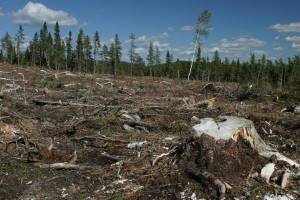
Despite comprising about a third of the world’s entire forested area and harbouring some of the lowest human densities anywhere, the great boreal forest that stretches across Alaska, Canada, Scandinavia and a huge chunk of Russia is under severe threat.

Surprised that we’re not talking about tropical deforestation for once? Surprised that so-called ‘developed’ nations are pilfering the last great carbon sink and biodiversity haven left on the planet? If you have read any of the posts on this blog, you probably shouldn’t be.

The paper today appeared online in Trends in Ecology and Evolution and is entitled Urgent preservation of boreal carbon stocks and biodiversity (by CJA Bradshaw, IG Warkentin & NS Sodhi). It’s essentially a review of the status of the boreal forest from a biodiversity perspective, and includes a detailed assessment of the degree of its fragmentation, species threat, climate- and human-influenced disturbance regime, and its carbon sequestration/emission status. I’ll summarise some of the main findings below:

borealfire

© NASA

  • Russia contains ~53 % of the boreal forest, followed by Canada (25 %), USA (18 %, mostly in Alaska), Sweden (2 %) and Finland and Norway (~1 % each); there are small areas of boreal forest in northern China and Mongolia.
  • Fire is the main driver of change in the boreal forest. Although clearing for logging and mining abounds, it pales in comparison to the massive driver that is fire.
  • There is evidence that climate change is increasing the frequency and possibly extent of fires in the boreal zone. That said, most fires are started by humans, and this is particularly the case in the largest expanse in Russia (in Russia alone, 7.5 and 14.5 million hectares burnt in 2002 and 2003, respectively).
  • While few countries report an overall change in boreal forest extent, the degree of fragmentation and ‘quality’ is declining – only about 40 % of the total forested area is considered ‘intact’ (defined here as areas ≥ 500 km2, internally undivided by things such as roads, and with linear dimensions ≥ 10 km).
  • Russian boreal forest is the most degraded and least ‘intact’, and has suffered the greatest decline in the last few decades compared to other boreal countries.
  • Boreal countries have only < 10 % of their forests protected from wood exploitation, except Sweden where it’s about 20 %.
  • There are over 20000 species described in the boreal forest – a number much less than that estimated for tropical forests even of much smaller size.
  • 94 % of the 348 IUCN Red Listed boreal species are considered to be threatened with extinction, but other estimates from local assessments compiled together in 2000 (the United Nations’ Temperate and Boreal Forest Resources Assessment) place the percentages of threatened species up to 46 % for some taxa in some countries (e.g., mosses in Sweden). The latter assessment placed the Fennoscandian countries as having the highest proportions of at-risk taxa (ferns, mosses, lichens, vascular plants, butterflies, birds, mammals and ‘other vertebrates’), with Sweden having the highest proportion in almost all categories.
  • Boreal forest ecosystems contain about 30 % of the terrestrial carbon stored on Earth (~ 550 Gigatonnes).
  • © BC Ministry For Range/L. Maclaughlan

    Warmer temperatures have predisposed coniferous forest in western Canada to a severe outbreak of mountain pine beetle (Dendroctonus ponderosae) extending over > 13 M ha. © BC Ministry For Range/L. Maclaughlan

  • Mass insect outbreaks killing millions of trees across the entire boreal region are on the rise.
  • Although considered in the past as a global carbon sink, recent disturbances (e.g., increasing fire and insect outbreak) and refinements of measurement mean that much of the area is probably a carbon source (at least, temporarily).
  • A single insect outbreak in western Canada earlier this decade thought to be the direct result of a warming planet contributed more carbon to the atmosphere than all of that country’s transport industry and fire-caused release combined.
  • Current timber harvest management is inadequately prepared to emulate natural fire regimes and account for shifting fire patterns with climate change.
  • No amount of timber management can offset the damage done by increasing fire – we must manage fire better to have any chance of saving the boreal forest as a carbon sink and biodiversity haven.

Those include the main take-home messages. I invite you to read the paper in full and contact us (the authors) if you have any questions.

CJA Bradshaw

Full reference: Bradshaw, CJA, IG Warkentin, NS Sodhi. 2009. Urgent preservation of boreal carbon stocks and biodiversity. Trends in Ecology and Evolution DOI: 10.1016/j.tree.2009.03.019

Add to FacebookAdd to NewsvineAdd to DiggAdd to Del.icio.usAdd to StumbleuponAdd to RedditAdd to BlinklistAdd to Ma.gnoliaAdd to TechnoratiAdd to Furl