The spillover effect

18 04 2010

© everlessaday

The so-called ‘spillover effect’ is a long-standing debate in conservation ecology. The idea is relatively simple – put in a marine reserve (or, no-take zone, park, whatever you wish to call it as long as it restricts blanket over-fishing) and the area around the reserve eventually profits from the nearby over-production of fish (and other taxa). The idea is very attractive because even if you’re thick enough not to understand the absolute necessity of marine reserves in our age of mass, global over-exploitation, at least you might have enough grey matter to appreciate the value of more fish ‘spilling over’ into your favourite fishing area. More proposed marine reserves have been sold to the more Luddite ‘stakeholder’ this way than I care to count.

However, as attractive an idea it was, early on in the marine reserve literature (i.e., the early Devonian 1990s), there was limited (Rowley 1994; Willis et al. 2003) or only circumstantial evidence (Russ & Alcala 1996; Roberts et al. 2005) for the effect. Indeed, many have suggested that the spillover benefit, if present, depends entirely on the size of the reserve and whether adjacent areas are managed at all (Allison et al. 1996; McClanahan & Mangi 2000). Others have even suggested that marine reserves can displace fishing effort into smaller areas and change local community structure enough to facilitate invasion by exotic species (Kellner & Hastings 2009).

It is happier time now that we have more than ample evidence that marine reserves do in fact result in species spillover (e.g.,Roberts et al. 2001; Russ et al. 2004; Abesamis & Russ 2005). So it is not with any great claims of novelty that I highlight Garry Russ & Angel Alcala’s latest paper, Enhanced biodiversity beyond marine reserve boundaries: the cup spilleth-over; rather, it’s how they quantify the long-term evidence, the mechanisms for how spillover occurs and how the community changes that they deserve a mention. Read the rest of this entry »


No chance Europe will recover fish stocks

19 01 2010

Alternate title: When pigs fly and fish say ‘hi’.

I’m covering a quick little review of a paper just published online in Fish and Fisheries about the two chances Europe has of meeting its legal obligations of rebuilding its North East Atlantic fish stocks by 2015 (i.e., Buckley’s and none).

The paper entitled Rebuilding fish stocks no later than 2015: will Europe meet the deadline? by Froese & Proelß describes briefly the likelihood Europe will meet the obligations set out under the United Nations’ Law of the Sea (UNCLOS) of “maintaining or restoring fish stocks at levels that are capable of producing maximum sustainable yield” by 2015 as set out in the Johannesburg Plan of Implementation of 2002.

Using fish stock assessment data and several criteria (3 methods for estimating maximum sustainable yield [MSY], 3 methods for estimating fishing mortality [Fmsy] & 2 methods for estimating spawning biomass [Bmsy]), they conclude that 49 (91 %) of the examined European stocks will fail to meet the goal under a ‘business as usual’ scenario.

The upshot is that European fisheries authorities have been and continue to set their total allowable catches (TACs) too high. We’ve seen this before with Atlantic bluefin tuna and the International Conspiracy to Catch All Tunas. Seems like most populations of exploited fishes are in fact in the same boat (quite literally!).

It’s amazing, really, the lack of ‘political will’ in fisheries – driving your source of income into oblivion doesn’t seem to register in the short-sighted vision of those earning their associated living or those supposedly looking out for their long-term interests.

CJA Bradshaw

ResearchBlogging.orgFroese, R., & Proelß, A. (2010). Rebuilding fish stocks no later than 2015: will Europe meet the deadline? Fish and Fisheries DOI: 10.1111/j.1467-2979.2009.00349.x

Pitcher, T., Kalikoski, D., Pramod, G., & Short, K. (2009). Not honouring the code Nature, 457 (7230), 658-659 DOI: 10.1038/457658a

Add to FacebookAdd to DiggAdd to Del.icio.usAdd to StumbleuponAdd to RedditAdd to BlinklistAdd to TwitterAdd to TechnoratiAdd to Yahoo BuzzAdd to Newsvine


December Issue of Conservation Letters

11 12 2009

Gemsbok (Oryx gazella) in Namibia

Another great line-up in Conservation Letters‘ last issue for 2009. For full access, click here.


Breaking the waves – conservation conundrum of bioshields

9 12 2009

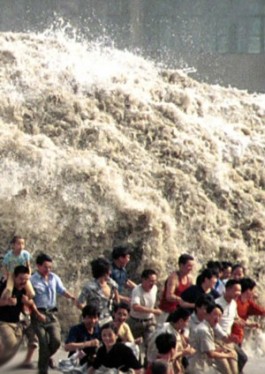
Today’s post covers a neat little review just published online in Conservation Letters by Feagin and colleagues entitled Shelter from the storm? Use and misuse of coastal vegetation bioshields for managing natural disasters. I’m covering this for three reasons: (1) it’s a great summary and wake-up call for those contemplating changing coastal ecosystems in the name of disaster management, (2) I have a professional interest in the ecosystem integrity-disaster interface and (3) I had the pleasure of editing this article.

I’ve blogged about quite a few papers on ecosystem services (including some of my own) because I think making the link between ecosystem integrity and human health, wealth and well-being are some of the best ways to convince Joe Bloggs that saving species he’ll never probably see are in his and his family’s best (and selfish) interests. Convincing the poverty-stricken, the greedy and the downright stupid of biodiversity’s inherent value will never, ever work (at least, it hasn’t worked yet).

Today’s feature paper discusses an increasingly relevant policy conundrum in conservation – altering coastal ecosystems such that planted/restored/conserved vegetation minimises the negative impacts of extreme weather events (e.g., tsunamis, cyclones, typhoons and hurricanes): the so-called ‘bioshield’ effect. The idea is attractive – coastal vegetation acts to buffer human development and other land features from intense wave action, so maintain/restore it at all costs.

The problem is, as Feagin and colleagues point out in their poignant review, ‘bioshields’ don’t really seem to have much effect in attenuating the big waves resulting from the extreme events, the very reason they were planted in the first place. Don’t misunderstand them – keeping ecosystems like mangroves and other coastal communities intact has enormous benefits in terms of biodiversity conservation, minimised coastal erosion and human livelihoods. However, with massive coastal development in many parts of the world, the knee-jerk reaction has been to plant up coasts with any sort of tree/shrub going without heeding these species’ real effects. Indeed, many countries have active policies now to plant invasive species along coastal margins, which not only displace native species, they can displace humans and likely play little part in any wave attenuation.

This sleeping giant of a conservation issue needs some serious re-thinking, argue the authors, especially in light of predicted increases in extreme storm events resulting from climate change. I hope policy makers listen to that plea. I highly recommend the read.

CJA Bradshaw

Add to FacebookAdd to NewsvineAdd to DiggAdd to Del.icio.usAdd to StumbleuponAdd to RedditAdd to BlinklistAdd to Ma.gnoliaAdd to TechnoratiAdd to Furl

ResearchBlogging.orgFeagin, R., Mukherjee, N., Shanker, K., Baird, A., Cinner, J., Kerr, A., Koedam, N., Sridhar, A., Arthur, R., Jayatissa, L., Lo Seen, D., Menon, M., Rodriguez, S., Shamsuddoha, M., & Dahdouh-Guebas, F. (2009). Shelter from the storm? Use and misuse of coastal vegetation bioshields for managing natural disasters Conservation Letters DOI: 10.1111/j.1755-263X.2009.00087.x


Scoping the future threats and solutions to biodiversity conservation

4 12 2009

Way back in 1989, Jared Diamond defined the ‘evil quartet’ of habitat destruction, over-exploitation, introduced species and extinction cascades as the principal drivers of modern extinctions. I think we could easily update this to the ‘evil quintet’ that includes climate change, and I would even go so far as to add extinction synergies as a the sixth member of the ‘evil sextet’.

But the future could hold quite a few more latent threats to biodiversity, and a corresponding number of potential solutions to its degradation. That’s why Bill Sutherland of Cambridge University recently got together with some other well-known scientists and technology leaders to do a ‘horizon scanning’ exercise to define what these threats and solutions might be in the immediate future. It’s an interesting, eclectic and somewhat enigmatic list, so I thought I’d summarise it here. The paper is entitled A horizon scan of global conservation issues for 2010 and was recently published online in Trends in Ecology and Evolution.

In no particular order or relative rank, Sutherland and colleagues list the following 15 ‘issues’ that I’ve broadly divided into ‘Emerging Threats’ and ‘Potential Solutions’:

Emerging Threats

  1. Microplastic pollution – The massive increase in plastics found in the world’s waterways and oceans really doesn’t have much focus right now in conservation research, but it should. We really don’t know how much we’re potentially threatening species with this source of pollution.
  2. Nanosilver in wastewater – The ubiquity of antimicrobial silver oxide or ions in products these days needs careful consideration for what the waste might be doing to our microbial communities that keep ecosystems alive and functioning.
  3. Stratospheric aerosols – A simultaneous solution and threat. Creating what would in effect be an artificial global cooling by injecting particles like sulphate aerosols into the stratosphere might work to cool the planet down somewhat. However, it would not reduce carbon dioxide, ocean acidification or other greenhouse gas-related changes. This strikes me as a potential for serious mucking up of the global climate and only a band-aid solution to the real problem.
  4. Deoxygenation of the oceans – Very scary. Ironically today I was listening to a talk by Martin Kennedy on the deep-time past of ocean hypoxia and he suggests we’re well on our way to a situation where our shelf waters could essentially become too anoxic for marine life to persist. It’s happened before, and rapid climate change makes the prospect plausible within less than a century. And you thought acidification was scary.
  5. Changes in denitrifying bacteria – Just like we’re changing the carbon cycle, we’re buggering up the nitrogen cycle as well. Changing our water bodies to nitrogen sources rather than sinks could fundamentally change marine ecosystems for the worse.
  6. High-latitude volcanism – One of these horrible positive feedback ideas. Reducing high-latitude ice cover exposes all these slumbering volcanoes that once ‘released’, start increasing atmospheric gas concentrations and contributing to faster ice melt and sea level rise.
  7. Trans-Arctic dispersal and colonisation – Warming polar seas and less ice mean fewer barriers to species movements. Expect Arctic ecosystems to be a hotbed of invasion, regime shifts and community reshuffling as a result.
  8. Invasive Indo-Pacific lionfish – Not one I would have focussed on, but interesting. These spiny, venomous fish like to eat a lot of other species, and so represent a potentially important invasive species in the marine realm.
  9. REDD and non-forested ecosystems – Heralded as a great potential coup for forest preservation and climate change mitigation, focussing on maintaining forests for their carbon sequestration value might divert pressure toward non-forested habitats and ironically, threaten a whole new sphere of species.
  10. International land acquisition – Global financial crises and dwindling food supplies mean that governments are acquiring more and more huge tracts of land for agricultural development. While this might solve some immediate issues, it could potentially threaten a lot more undeveloped land in the long run, putting even more pressure on habitats.

Potential Solutions

  1. Synthetic meat – Ever thought about eating a sausage grown in a vat rather than cut from a dead pig? It could become the norm and a way of reducing the huge pressure on terrestrial and aquatic systems for the production of livestock and fish for human protein provision.
  2. Artificial life – Both a risk and a potential solution. While I’ve commented before on the pointlessness of cloning technology for conservation, the ability to create genomes and reinvigorate species on the brink is an exciting prospect. It’s also frightening as hell because we don’t know how all these custom-made genomes might react and transform naturally evolved ones.
  3. Biochar – Burn organic material (e.g., plant matter) in the absence of oxygen, you get biochar. This essentially sequesters a lot of carbon that can then be put underground. The upshot is that agricultural yields can also increase. Would there be a trade-off though between land available for biochar sequestration and natural habitats?
  4. Mobile-sensing technology – Not so much a solution per se, but the rapid acceleration of remote technology will make our ability to measure and predict the subtleties of ecosystem and climate change much more precise. A lot more work and application required here.
  5. Assisted colonisationI’ve blogged about this before. With such rapid shifts in climate, we might be obliged to move species around so that they can keep up with rapidly changing conditions. Many pros and cons here, not least of which is exacerbating the invasive species problems around the globe.

Certainly some interesting ideas here and worth a thought or two. I wonder if the discipline of ‘conservation biology’ might even exist in 50-100 years – we might all end up being climate or agricultural engineers with a focus on biodiversity-friendly technology. Who knows?

CJA Bradshaw

Add to FacebookAdd to NewsvineAdd to DiggAdd to Del.icio.usAdd to StumbleuponAdd to RedditAdd to BlinklistAdd to Ma.gnoliaAdd to TechnoratiAdd to Furl

ResearchBlogging.orgSutherland, W., Clout, M., Côté, I., Daszak, P., Depledge, M., Fellman, L., Fleishman, E., Garthwaite, R., Gibbons, D., & De Lurio, J. (2009). A horizon scan of global conservation issues for 2010 Trends in Ecology & Evolution DOI: 10.1016/j.tree.2009.10.003


Sleuthing the Chinese green slime monster

21 10 2009

greenslimemonsterI just returned from a week-long scientific mission in China sponsored by the Australian Academy of Science, the Australian Academy of Technological Sciences and Engineering and the Chinese Academy of Sciences. I was invited to attend a special symposium on Marine and Deltaic Systems where research synergies between Australian and Chinese scientists were to be explored. The respective academies really rolled out the red carpet for the 30 or so Australian scientists on board, so I feel very honoured to have been invited.

During our marine workshop, one of my Chinese counterparts, Dongyan Liu from the Yantai Institute for Coastal Zone Research, presented a brilliant piece of ecological sleuthing that I must share with readers of ConservationBytes.com.

The first time you go to China the thing that strikes you is that everything is big – big population, big cities, big buildings, big projects, big budgets and big, big, big environmental problems. After many years of overt environmental destruction in the name of development, the Chinese government (aided by some very capable scientists) is now starting to address the sins of the past.

Liu and colleagues published their work earlier this year in Marine Pollution Bulletin in a paper entitled World’s largest macroalgal bloom caused by expansion of seaweed aquaculture in China, which describes a bloody massive outbreak of a particularly nasty ‘green tide’.

What’s a ‘green tide’? In late June 2008 in the coastal city of Qingdao not far from Beijing (and just before the 2008 Olympics), a whopping 1 million tonnes of green muck washed up along approximately 400 km2 of coastline. It took 10,000 volunteers 2 weeks to clean up the mess. At the time, many blamed the rising eutrophication of coastal China as the root cause, and a lot of people got their arse kicked over it. However, the reality was that it wasn’t so simple.

The Yellow Sea abutting this part of the Chinese coast is so named because of its relatively high productivity. Warm waters combined with good mixing mean that there are plenty of essential nutrients for green things to grow. So, adding thousands of tonnes of fertilisers from Chinese agricultural run-off seems like a logical explanation for the bloom.

Qingdoa green tide 2008 © Elsevier

Qingdao green tide 2008 © Elsevier

However, it turns out that the bulk of the green slime was comprised of a species called Enteromorpha prolifera, and it just so happens that this particularly unsavoury seaweed loves to grow on the infrastructure used for the aquaculture of nori (a.k.a. amanori or zicai) seaweed (mainly, Porphyra yezoensis). Problem is, P. yezoensis is grown mainly on the coast hundreds of kilometres to the south.

Liu and colleagues examined both satellite imagery and detailed oceanographic data from the period prior to the green tide and not only spotted green splotches many kilometres long, they also determined that the current flow and wind direction placed the trajectory of any green slime mats straight for Qingdao.

So, how does it happen? Biofouling by E. prolifera on P. yezoensis aquaculture frames is dealt with mainly by manual cleaning and then dumping the unwanted muck on the tidal flats. When the tide comes back in, it washes many thousands of kilos of this stuff back out to sea, which then accumulates in rafts and continues to grow in the warm, rich seas. Subsequent genetic work also confirmed that the muck at sea was the same stock as the stuff growing on the aquaculture frames.

Apart from some lovely sleuthing work, the implications are pretty important from a biodiversity perspective. Massive eutrophication coupled with aquaculture that inadvertently spawns a particularly nasty biofouling species is a good recipe for oxygen depletion in areas where the eventual slime monster starts to decay. This can lead to so-called ‘dead’ zones that can kill off huge numbers of marine species. So, the proper management of aquaculture in the hungry Goliath that is China becomes essential to reduce the incidence of dead zones.

Fortunately, it looks like Liu and colleagues’ work is being taken seriously by the Chinese government who is now contemplating financial support for aquaculturists to clean their infrastructure properly without dumping the sludge to sea. A simple policy shift could save a lot of species, a lot of money, and a lot of embarrassment (not to mention prevent a lot of bad smells).

CJA Bradshaw

Add to FacebookAdd to NewsvineAdd to DiggAdd to Del.icio.usAdd to StumbleuponAdd to RedditAdd to BlinklistAdd to Ma.gnoliaAdd to TechnoratiAdd to Furl

This post was chosen as an Editor's Selection for ResearchBlogging.org

ResearchBlogging.orgLiu, D., Keesing, J., Xing, Q., & Shi, P. (2009). World’s largest macroalgal bloom caused by expansion of seaweed aquaculture in China Marine Pollution Bulletin, 58 (6), 888-895 DOI: 10.1016/j.marpolbul.2009.01.013



October Issue of Conservation Letters

18 10 2009

The second-to-last issue in 2009 (October) of Conservation Letters is now out. Click here for full access.

cl2-5

Household goods made of non-timber forest products. © N. Sasaki

Papers in this issue:


June Issue of Conservation Letters

6 06 2009

Quick off the mark this month is the new issue of Conservation Letters. There are some exciting new papers (listed below). I encourage readers to have a look:

Policy Perspectives

Letters

CJA Bradshaw


Underwater deforestation

26 05 2009
© C. Connell

© S. Connell

I’ve been meaning to blog on this for a while, but am only now getting around to it.

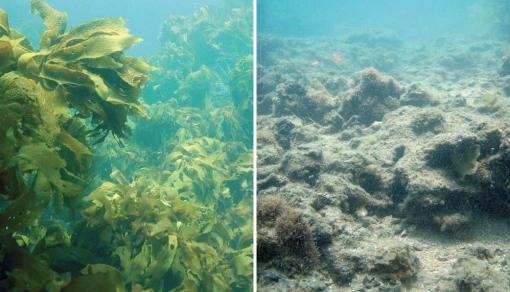
Now, it’s not bulldozers razing our underwater forests – it’s our own filth. Yes, we do indeed have underwater forests, and they are possibly the most important set of species from a biodiversity perspective in temperate coastal waters around the world. I’m talking about kelp. I’ve posted previously about the importance of kelp and how climate change poses a threat to these habitat-forming species that support a wealth of invertebrates and fish. In fact, kelp forests are analogous to coral reefs in the tropics for their role in supporting other biodiversity.

The paper I’m highlighting for the ConservationBytes.com Potential list is by a colleague of mine at the University of Adelaide, Associate Professor Sean Connell, and his collaborators entitled “Recovering a lost baseline: missing kelp forests from a metropolitan coast“. This paper is interesting, novel and applied for several reasons.

First, it sets out some convincing evidence that the Adelaide coastline has experienced a fairly hefty loss of canopy-forming kelp (mainly species like Ecklonia radiata and Cystophora spp.) since urbanisation (up to 70 % !). Now, this might not seem too surprising – we humans have a horrible track record for damaging, exploiting or maltreating biodiversity – but it’s actually a little unexpected given that Adelaide is one of Australia’s smaller major cities, and certainly a tiny city from a global perspective. There hasn’t been any real kelp harvesting around Adelaide, or coastal overfishing that could lead to trophic cascades causing loss through herbivory. Connell and colleagues pretty much are able to isolate the main culprits: sedimentation and nutrient loading (eutrophication) from urban run-off.

Second, one might expect this to be strange because other places around the world don’t have the same kind of response. The paper points out that in the coastal waters of South Australia, the normal situation is characterised by low nutrient concentrations in the water (what we term ‘oligotrophic’) compared to other places like New South Wales. Thus, when you add even a little bit extra to a system not used to it, these losses of canopy-forming kelp ensue. So understanding the underlying context of an ecosystem will tell you how much it can be stressed before all hell breaks loose.

Finally, the paper makes some very strong arguments for why good marine data are required to make long-term plans for conservation – there simply isn’t enough investment in basic marine research to ensure that we can plan responsibly for the future (see also previous post on this topic).

A great paper that uses a combination of biogeography, time series and chemistry to inform about a major marine conservation problem.

CJA Bradshaw

Add to FacebookAdd to NewsvineAdd to DiggAdd to Del.icio.usAdd to StumbleuponAdd to RedditAdd to BlinklistAdd to Ma.gnoliaAdd to TechnoratiAdd to Furl


Shark tags

19 05 2009

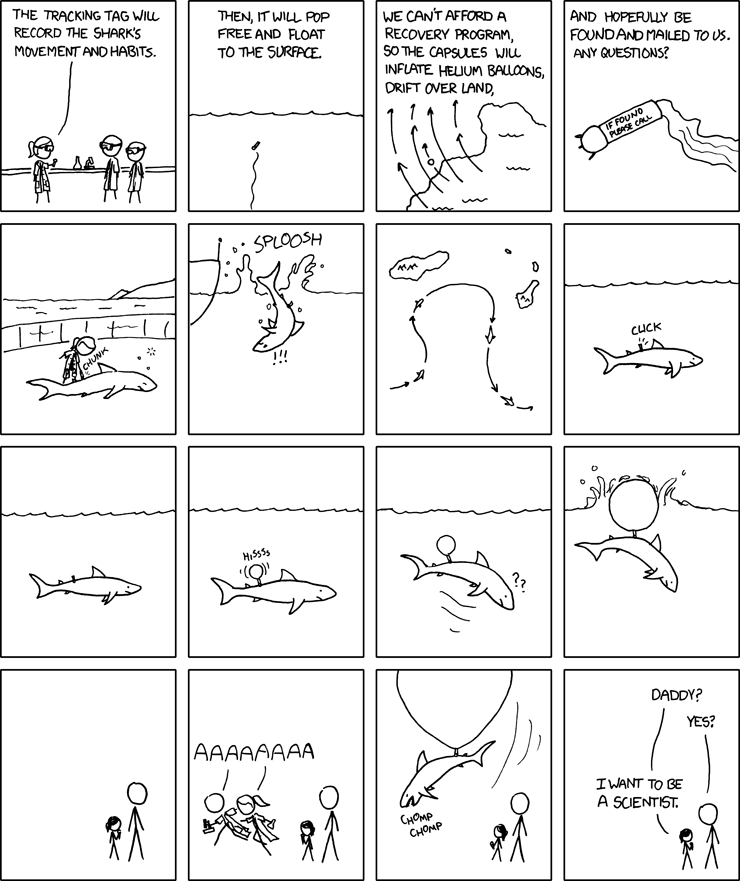
I have no real reason for posting this, other than I found it amusing. I do not know to whom I should attribute the cartoon, so apologies to the author. Click for a larger version if you find this too small to read.


Realising you’re a drunk is only the first step

11 05 2009

© A. Savchenko

© A. Savchenko

I recently did an interview for the Reef Tank blog about my research, ConservationBytes.com and various opinions about marine conservation in general. I’ve been on about ‘awareness’ raising in biodiversity conservation over the last few weeks (e.g., see last post), saying that it’s really only the first step. To use an analogy, alcoholics must first recognise and accept that they are indeed drunks with a problem before than can take the (infamous AA) steps to resolve it. It’s not unlike biodiversity conservation – I think much of the world is aware that our forests are disappearing, species are going extinct, our oceans are becoming polluted and devoid of fish, our air and soils are degraded to the point where they threaten our very lives, and climate change has and will continue to exacerbate all of these problems for the next few centuries at least (and probably for much longer).

We’ve admitted we have a disease, now let’s do something about it.

Read the full interview here.

CJA Bradshaw

Add to FacebookAdd to NewsvineAdd to DiggAdd to Del.icio.usAdd to StumbleuponAdd to RedditAdd to BlinklistAdd to Ma.gnoliaAdd to TechnoratiAdd to Furl


To market, to market, to buy a fat… fish

4 05 2009

An interesting new paper just appeared online (uncorrected proof stage) in Biological Conservation. Brewer and colleagues’ paper entitled Thresholds and multiple scale interaction of environment, resource use, and market proximity on reef fishery resources in the Solomon Islands describes how the proximity of fish markets explains some of the variation in fisheries takes on South Pacific coral reefs. Well, that may seem intuitive, you say – if you can’t access even a local market, chances are your fish will only feed you and your immediate family. Make an economic link to a larger pool of demanding consumers, and you have all the incentive you need to over-exploit your little patch of finned money.

Of course, the advent of better, more efficient transport (including refrigerated transport) and the development of local markets (i.e., tapping into larger ones in more populated areas) has inevitably caused fish depletions across the globe. Brewer and colleagues’ work provides a quantitative link between human demand and biodiversity decline (including ‘fishing down the web‘), and suggests that our best way to manage fisheries is to target the source of this demand – the markets and patterns of consumption. Ultimately, it’s the consumer that will dictate what does and what does not go extinct (see also previous post on consumer preferences for rare species). After all, if there’s a demand, someone will step in to provide the resource (provided it’s still there). Better education, smarter consumption and regulation along the entire chain will be far more effective in the long run than just attempting to control the fishers’ behaviour.

CJA Bradshaw

Add to FacebookAdd to NewsvineAdd to DiggAdd to Del.icio.usAdd to StumbleuponAdd to RedditAdd to BlinklistAdd to Ma.gnoliaAdd to TechnoratiAdd to Furl


More than just baby sharks

23 04 2009

Sharks worldwide are in trouble (well, so are many taxa, for that matter), with ignorance, fear, and direct and indirect exploitation (both legal and illegal) accounting for most of the observed population declines.

Despite this worrisome state (sharks have extremely important ‘regulatory’ roles in marine ecosystems), many people have been slowly taking notice of the problem, largely due to the efforts of shark biologists. An almost religious-like pillar of shark conservation that has emerged in the last decade or so is that if we save nursery habitats, all shark conservation concerns will be addressed.

Why? Many shark species appear to have fairly discrete coastal areas where they either give birth or lay eggs, and in which the young sharks develop presumably in relative safety from predators (including their parents). Meanwhile, breeding parents will often skip off as soon as possible and spend a good proportion of their non-breeding lives well away from coasts. Sexual segregation appears to be another common feature of many sharks species (the boys and girls don’t really play together that well).

The upshot is that if you conserve these more vulnerable ‘nursery’ areas in coastal regions, then you’ve protected the next generation of sharks and all will be fine. The underlying reason for this assumption is that it’s next-to-impossible to conserve entire ocean basins where the larger adults may be frolicking, but you can focus your efforts on restricted coastal zones that may be undergoing a lot of human-generated modification (e.g., pollutant run-off, development, etc.).

However, a new paper published recently in Conservation Letters entitled Reassessing the value of nursery areas to shark conservation and management disputes this assumption. Michael Kinney and Colin Simpfendorfer explain that even if coastal nurseries can be properly identified and adequately conserved, there is mounting evidence that failing to safeguard the adult stages could ultimately sustain declines or arrest recovery efforts. The authors support continuing efforts to identify and conserve nurseries, but they say this isn’t enough by itself to solve any real problems. If we want sharks around (and believe me, even though the odd swimmer may get a nip or two, it’s better than the alternative of no sharks), then we’re going to have to restrict fishing effort on the high seas as well.

I think this one qualifies for the ‘Potential‘ list.

CJA Bradshaw

Add to FacebookAdd to NewsvineAdd to DiggAdd to Del.icio.usAdd to StumbleuponAdd to RedditAdd to BlinklistAdd to Ma.gnoliaAdd to TechnoratiAdd to Furl


Cartoon guide to biodiversity loss IV

15 04 2009

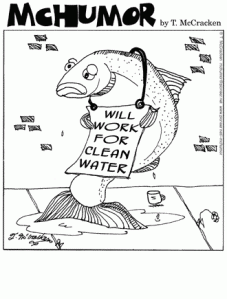
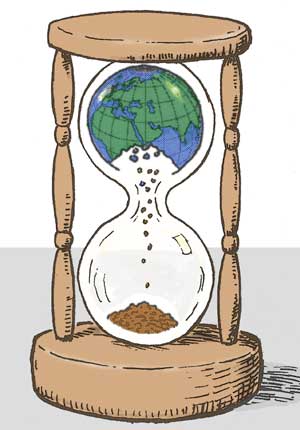
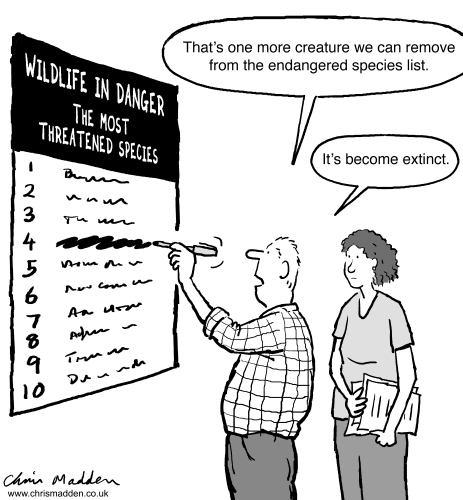
And the most degraded and self-flagellating humour on Earth continues (see also previous instalments here, here and here) …

cartoonenvironment_cartoon_7030

hourglass-earth

5765_shark_cartoon

CJA Bradshaw

Add to FacebookAdd to NewsvineAdd to DiggAdd to Del.icio.usAdd to StumbleuponAdd to RedditAdd to BlinklistAdd to Ma.gnoliaAdd to TechnoratiAdd to Furl


South Australian marine park boundaries released

29 01 2009

As an addendum to my last post (Marine Conservation in South Australia), I thought it worth mentioning that the South Australian government has released its plans for coastal marine parks. I have yet to look through these in detail, but public comment is welcomed until 27/03/2009. We’ll see what the fallout is.

Release approved by Allan Holmes, Chief Executive of the Department of Environment and Heritage (SA):

The outer boundaries of South Australia’s network of 19 new marine parks were proclaimed today. This exciting development will help protect our unique and diverse marine environment for future generations to use and enjoy, and will also position South Australia as a national leader in marine conservation.

The boundaries will be available for public comment until 27 March 2009. To support the public consultation, 57 public information sessions will be held across South Australia. To find out more about South Australia’s new marine parks network, visit here or ring 1800 006 120.

CJA Bradshaw


Man bites shark

7 01 2009

cut-shark-finYesterday I had a comment piece of the same title posted on the ABC‘s Unleashed site. I have permission to reproduce it here on ConservationBytes.com.

The silly season is upon us again, and I don’t mean the commercial frenzy, the bizarre fascination with a white-bearded man or a Middle-Eastern baby, the over-indulgence at the barbie or hangovers persisting several days into the New Year. I mean it’s the time of year when beach-goers, surfers, and municipal and state policy makers go a bit ga-ga over sharks.

There are few more polite pleasures than heading down to the beach during the holidays for a surf, quick dip or just a laze under the brolly. Some would argue it’s an inalienable Australian right and that anything getting in our way should be condemned to no less than severe retribution. Well, in the case of sharks, that’s exactly what’s happened.

Apart from a good number of adrenalin-addicted surfers and mad marine scientists, most people are scared shitless by the prospect of even seeing a shark near the beach, let alone being bitten or eaten by one. I won’t bore you with some ill-advised, pseudo-psycho-analytical rant about how it’s all the fault of some dodgy 1970s film featuring a hypertrophied American shark; the simple fact is that putative prey don’t relish the thought of becoming a predator’s dinner.

So, Australia is famous for its nearly 100-year-old pioneering attempt to protect marine bathers from shark attack by setting an elaborate array of shark nets around the country’s more frequented beaches. Great, you say? Well, it’s actually not that nice.

Between December 1990 and April 2005, nearly 3500 sharks and rays were caught in NSW beach nets alone, of which 72 per cent were found dead. Shark spearing was a favourite past-time in the 1960s and 1970s, with at least one high-profile species, the grey nurse shark, gaining the dubious classification of Critically Endangered as a result. Over-fishing of reef sharks has absolutely hammered two formerly common species in the Great Barrier Reef, the whitetip and grey reef sharks (See the Ongoing Collapse of Coral-Reef Shark Populations report). And illegal Indonesian fishing in northern Australia is slowly depleting many shark species in a wave of protein mining that has now penetrated the Australian Exclusive Economic Zone.
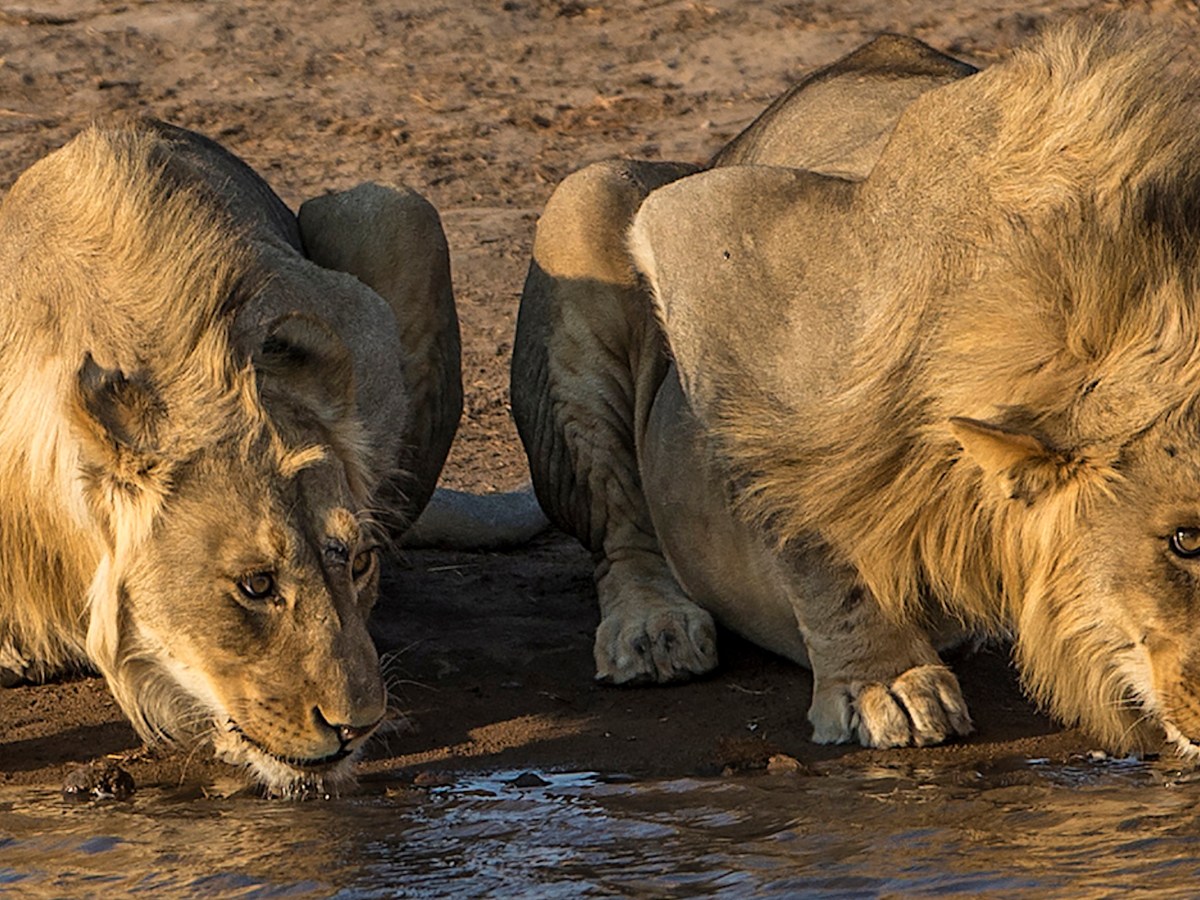
Despite the gloomy outlook for sharks, I’m happy to say today that we are a little more aware of their plight and are making baby steps toward addressing the problems. Australia has generally fared better in shark conservation than most other parts of the world, even though we still have a lot of educating to do at home. Over 50 per cent of all chondrichthyans (i.e., sharks, rays and chimaeras) are threatened worldwide, with some of the largest and most wide-ranging species being hardest hit, including white sharks. The most common threat is over-fishing, but this is largely seen by the lay person as of little import simply because of the persistent attitude that “the only good shark is a dead shark”.
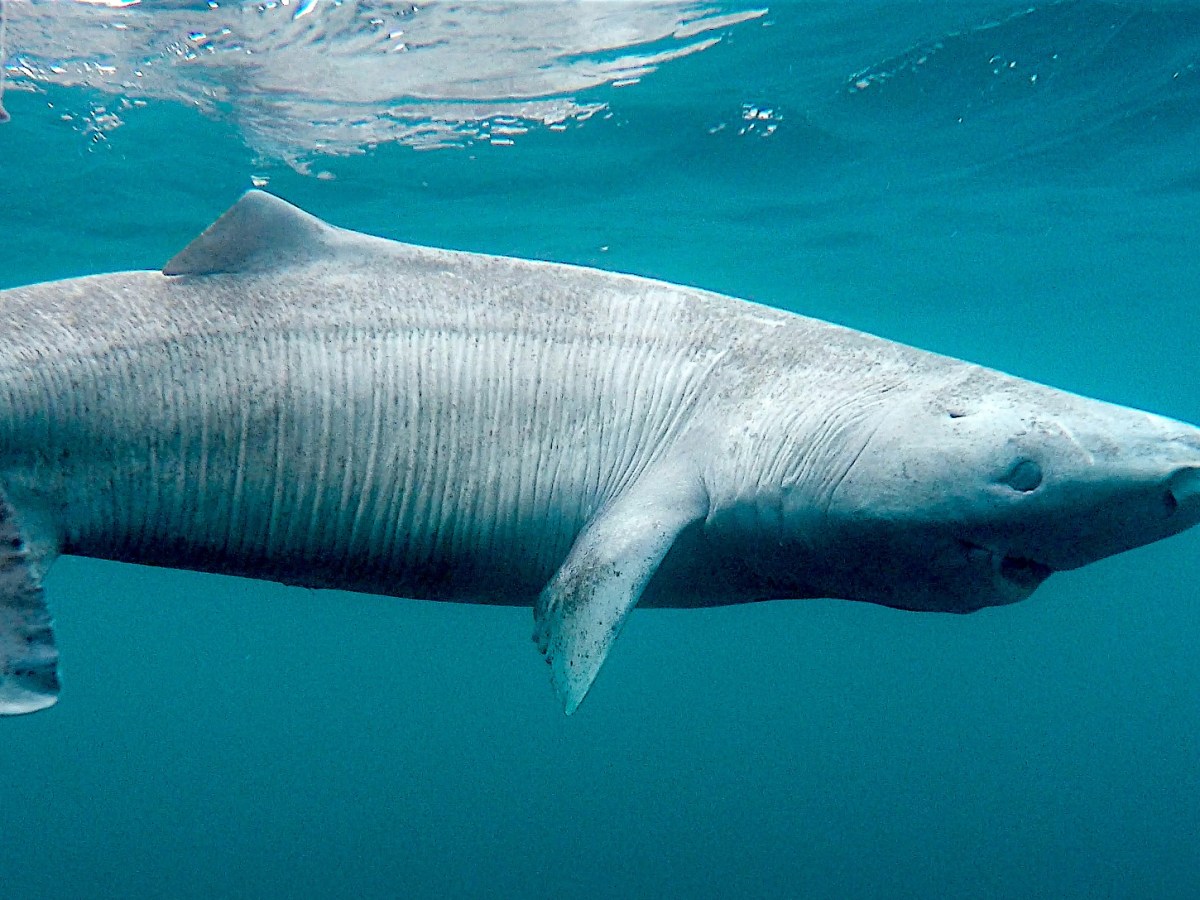
The attitude is, however, based on a complete furphy. I’m sure many readers would have seen some statistics like the following before, but let’s go through the motions just to be clear. Dying from or even being injured by a shark is utterly negligible. Based on the International Shark Attack File data for Australia, there were 110 confirmed (unprovoked) shark attacks in Australian waters between 1990 and 2007, of which 19 were fatal. Using Australian Bureau of Statistics human population data over the same period, this equates to an average of 0.032 attacks and 0.006 fatalities per 100,000 people, with no apparent trend over the last two decades.

Now let’s contrast. I won’t patronise you with strange comparative statistics like the probability of being killed by a (provoked) vending machine or by being hit by a bus, they are both substantially greater, but I will relate these figures to water-based activities. Drowning statistics for Australia (1992-1997) show that there were around 1.44 deaths per 100,000 people per year, or approximately 0.95 if just marine-related drownings are considered. These values are 240 (158 for marine-only) times higher than those arising from shark attack.

It’s just plainly, and mathematically, ridiculous to be worried about being eaten by a shark when swimming in Australia, whether or not there’s a beach net in place. The effort made, money spent and anxiety arising from the illogical fear that a shark will consider your sunburnt flesh a tasty alternative to its fishier sustenance is not only regrettable, it’s an outright crime against marine biodiversity. Of course, if you see a big shark lurking around your favourite beach, I wouldn’t recommend swimming over and giving it a friendly pat on the dorsal fin, but I wouldn’t recommend screaming that the marine equivalent of the apocalypse has just arrived either.

You may not be fussed either way, but consider this – the massive reduction in sharks worldwide is having a cascading effect on many of the ocean’s complex marine ecosystems. Being largely carnivorous, sharks are the ecological equivalent of community planners. Without them, herbivorous or coral-eating fish can quickly get out of control and literally destroy the food web. A great example comes from the Gulf of Mexico where the serial depletion of 14 species of large sharks has caused an explosion of the smaller cownose ray that formerly was kept in check by its bigger and hungrier cousins. The result: commercially harvested scallops in the region have now collapsed because of the hordes of shellfish-eating rays.

The day you fail to find sharks cruising your favourite beach is the day you should really start to worry.

CJA Bradshaw

Add to FacebookAdd to NewsvineAdd to DiggAdd to Del.icio.usAdd to StumbleuponAdd to RedditAdd to BlinklistAdd to Ma.gnoliaAdd to TechnoratiAdd to Furl


Our new Environment Institute: tackling environmental crises

9 12 2008

© T. Hampel

© T. Hampel

It’s official, the University of Adelaide has put in some major investment to get its environmental research specialists together to turns things into high gear. I’m privileged to be a part of the Institute, and I hopefully will be blogging about many of the exciting, topical and revolutionary research coming out this new ‘think tank’ (also, a ‘do tank’) over the coming years.

This report from AdelaideNow:

THE University of Adelaide will bring together experts in water management, climate change, economics, marine research, energy technology and ancient DNA to tackle Australia’s most pressing environmental challenges.

The new Environment Institute will be headed by water policy expert Mike Young who said Australia faced diabolical policy problems in relation to climate change and water resources.

“While climate change is the issue of greatest national importance, it is arguable that water is the issue of most interest to South Australia,” Professor Young said.

“The River Murray, our greatest ecological icon, is under terminal stress and we need to find alternative water sources.

“We should expect the adverse effects of climate change to first be expressed in water.”

Professor Young said research was needed to help reduce Australia’s carbon footprint, to restore and improve native habitats and restructure agricultural systems.

“Many of these issues have been dealt with in isolation in the past but this is no longer an option,” he said.

“All are linked and must be dealt with in a holistic and co-ordinated way.”

Also involved in the institute will be the university’s climate change expert Barry Brook and conservationist David Paton.

University vice-chancellor James McWha said all of the institute’s researchers had an outstanding track record and were internationally recognised in their fields.

“Collectively, they have been growing their research at a phenomenal rate over the past five years and they will play a critical role in building the state’s reputation as a global leader in environmental research,” Professor McWha said.


Failing on ocean protection

24 11 2008

A new paper from Conservation Letters by Mark Spalding and colleagues entitled Toward representative protection of the world’s coasts and oceans-progress, gaps, and opportunities reminds us just how crap we are at protecting ocean habitats. I sincerely hope this one is a Potential given that the only direction one can move from absolute bottom is up. Richard Black at the BBC reports on the paper’s main findings:

toilet-ocean_squareLess than 1% of the world’s oceans have been given protected status, according to a major survey.

Governments have committed to a target of protecting 10% by 2012, which the authors of the new report say there is no chance of meeting.

Protecting ecologically important areas can help fish stocks to regenerate, and benefit the tourism industry.

The survey was led by The Nature Conservancy (TNC) and is published in the journal Conservation Letters.

“For those of us working in the issue full-time it’s not a surprise, we’ve known all along that marine protection is lagging behind what’s happening on land, but it’s nice to have it pinned down,” said TNC’s Mark Spalding.

“It’s depressing that we’ve still got so far to go, but there are points of hope,” he told BBC News.

Coastal concentration

Four years ago, signatories to the UN’s biodiversity convention – which includes almost every country – pledged to protect at least 10% of the oceans in a way that makes sense ecologically.

Protecting them does not mean banning activities such as fishing or shipping completely, but making sure they are carried out sustainably.

All of the areas currently protected fall into countries’ Exclusive Economic Zones, and the majority are along coasts, the study finds.

Even so, only about 4% of coastal waters are protected.

Countries diverge widely in how much protection they have mandated.

Whereas New Zealand has almost 70% of its coastline under some form of protection, countries around the Mediterranean have set aside less than 2%.

In the developing world, Dr Spalding cites Guinea-Bissau as a country that has had invested in protection, particularly in the Bijagos Archipelago, which is home to a community of hippos dwelling along its mangrove coast, as well as more conventional marine species.

Palau, Indonesia, Micronesia and several Caribbean states are also making significant progress, he said.

About 12% of the Earth’s land surface has been put under protection.

Download the Spalding paper free of charge here.