Just give them a lift

16 01 2009

TvyamNb-BivtNwcoxtkc5xGBuGkIMh_nj4UJHQKupCdpgnnqXqJ70oP0iCjWicCL0ROBPry44AuNOne of the main problems in a rapidly changing world, whether that change arises from habitat loss, invasive species or climate change, is that often the pace of change is simply too fast for many species to keep up. History (both ‘deep-time’ and contemporary evidence) tells us this fact very clearly in the record of extinctions – species that have ‘slow’ life histories (i.e., those that mature late in their lives, produce few young and breed infrequently) are the most susceptible to extinction. More often than not, these tend to be the big organisms because the pace of life scales to body size nonlinearly (the so-called allometry of vital rates). The problem extends to evolution – when the pace of change happens faster than mutation and subsequent natural selection, you are unable to ‘evolve’ to the new environmental state fast enough. The end result – extinction.

So, can we help? Well, it’s fairly difficult to alter reproductive rates unless you do some assisted breeding programme (which generally don’t do much for the conservation status of a species) and you can’t really alter age at maturity or growth rates. You can stop or reverse habitat destruction, and you can translocate species in some circumstances.

So, in the case of climate change, if local conditions become too unbearable for a species (temperature, salinity, precipitation, etc.), just give them a lift to another spot where the new conditions suit! Sounds simple, but it could be rather difficult.

A relatively new Policy Forum piece in Science outlines how ‘assisted colonisation‘ could work for some species. The issues are many – most translocations fail for one reason or another (too few individuals moved, unforeseen predators or competitors, lack of appropriate habitat, etc.), but as we’ve seen the world over in the case of successful alien species, invasions can be remarkably successful (at least from the perspective of the invading species).

The key then is to think very carefully about which species to move and which to leave alone. Of course, generalist, highly adaptable and dispersed species probably don’t need the help, but restricted-range species or habitat specialists could really benefit from such action. You also run the risk of creating more problems than you solve (e.g., new invasive pests, disease introduction). However, a select group of species might just need this very assistance to persist given how much we’ve already change the biosphere, and how much more it will change due to shifting climate in the near future.

It’s controversial, but it could work in many circumstances. That’s why I’m adding this paper (Hoegh-Guldberg et al. – Assisted colonization and rapid climate change) to the Potential list.

CJA Bradshaw

Add to FacebookAdd to NewsvineAdd to DiggAdd to Del.icio.usAdd to StumbleuponAdd to RedditAdd to BlinklistAdd to Ma.gnoliaAdd to TechnoratiAdd to Furl


Measuring the amphibian meltdown

9 01 2009

melting_frog_by_zarinstar.pngA paper my colleagues and I published earlier last year in the open-access journal PLoS One describes one of the largest databases of amphibian threat risk ever compiled. Our main aims were to determine which factors drive amphibians toward extinction – this being especially topical considering that amphibians epitomise the modern biodiversity crisis: major population declines, disease outbreaks, deformities and recent confirmed extinctions dominate the biodiversity news. 32 % of all amphibians worldwide are threatened with extinction, 43 % of described species are declining, and about 160 species have already gone extinct in the last few decades.

In our paper (Sodhi and colleagues) entitled Measuring the meltdown: drivers of global amphibian extinction and decline, we found that the range size occupied by a species was overwhelmingly the principal driver of threat risk. This means that although other factors are involved, the number one (by far and away) thing threatening amphibians is habitat loss – everything else is minor by comparison.

Of course, we shouldn’t ignore other issues – increasing climate seasonality (temperature and precipitation) also contributed to higher threat risk. This is exactly the sort of thing that is predicted to increase with climate change (more variable weather patterns). In many cases, it’s the variability that’s worse than the mean trend when it comes to biodiversity.

So what should we do? Our results suggest that areas containing high numbers of restricted-range amphibians should have conservation priority. Although captive breeding might help to buffer some declining populations in the short term, such interventions cannot substitute for habitat protection and restoration. The synergies between ecological/life history traits and environmental conditions demonstrate how management must address each of the major drivers of decline together for any success – there is no magic bullet to prevent extinctions. We also recommend that substantial increases in international research on the long-term monitoring of amphibian populations is required to mitigate effectively the current meltdown of amphibian biodiversity.

CJA Bradshaw

Add to FacebookAdd to NewsvineAdd to DiggAdd to Del.icio.usAdd to StumbleuponAdd to RedditAdd to BlinklistAdd to Ma.gnoliaAdd to TechnoratiAdd to Furl


Our new Environment Institute: tackling environmental crises

9 12 2008

© T. Hampel

© T. Hampel

It’s official, the University of Adelaide has put in some major investment to get its environmental research specialists together to turns things into high gear. I’m privileged to be a part of the Institute, and I hopefully will be blogging about many of the exciting, topical and revolutionary research coming out this new ‘think tank’ (also, a ‘do tank’) over the coming years.

This report from AdelaideNow:

THE University of Adelaide will bring together experts in water management, climate change, economics, marine research, energy technology and ancient DNA to tackle Australia’s most pressing environmental challenges.

The new Environment Institute will be headed by water policy expert Mike Young who said Australia faced diabolical policy problems in relation to climate change and water resources.

“While climate change is the issue of greatest national importance, it is arguable that water is the issue of most interest to South Australia,” Professor Young said.

“The River Murray, our greatest ecological icon, is under terminal stress and we need to find alternative water sources.

“We should expect the adverse effects of climate change to first be expressed in water.”

Professor Young said research was needed to help reduce Australia’s carbon footprint, to restore and improve native habitats and restructure agricultural systems.

“Many of these issues have been dealt with in isolation in the past but this is no longer an option,” he said.

“All are linked and must be dealt with in a holistic and co-ordinated way.”

Also involved in the institute will be the university’s climate change expert Barry Brook and conservationist David Paton.

University vice-chancellor James McWha said all of the institute’s researchers had an outstanding track record and were internationally recognised in their fields.

“Collectively, they have been growing their research at a phenomenal rate over the past five years and they will play a critical role in building the state’s reputation as a global leader in environmental research,” Professor McWha said.


Addressing biodiversity decline at home

30 11 2008

© CJA Bradshaw

© CJA Bradshaw

I was recently invited to sit on a panel organised by the Conservation Council of South Australia (CCSA) to discuss issues of marine and coastal conservation under a rapidly changing climate. The results of that will be released soon (I’ll blog about that later), but in the interim, I want to highlight to readers of ConservationBytes.com how the CCSA is setting up the challenge to local governments to implement positive steps forward for the conservation of biodiversity in South Australia. I’m reproducing the executive summary of their Summit Report on Biodiversity in a Changing Climate (download full report here). It’s a good example of how we can all (industry, government, academia) work together to promote our own well-being.

…South Australia’s biodiversity is declining at an alarming rate. It has been suggested by scientists that it will take many millions of years for biodiversity to recover from the impacts of humans over the last 200 years. In South Australia the key threat to biodiversity is land clearance; clearance of remnant native vegetation and subsequent fragmentation of habitat for native fauna species. Other key threats to biodiversity in South Australia include:

  • Habitat fragmentation from development
  • Competition from introduced flora
  • Predation by introduced animals
  • Direct competition for food, shelter and resources from introduced fauna
  • Introduced diseases
  • Collection of firewood from remnant vegetation
  • Altered fire regimes
  • Inappropriate grazing/overgrazing
  • Inappropriate management activities
  • Water extraction/pollution
  • Climate change – including increasing oceanic temperatures and acidification

Much of South Australia’s economy is based on the use of biological resources and the need to maintain ecosystem services. This includes activities such as tourism and recreation, nature conservation, pastoralism, agriculture, horticulture, and forestry which all benefit from healthy ecosystems.

Our primary production systems require biodiversity for pest control/management, soil conservation, enhanced productivity and stabilisation, pollination, salinity amelioration, and water purification.

To address and reverse current biodiversity trends our society must recognise, understand and value biodiversity. Land managers, indigenous communities, local industries, government and the broader community may value biodiversity in different ways, however conservation and effective management of biodiversity is essential to ensure the continuation of these values for future generations. Biodiversity values may include:

  • Production value for the provision of food, medicines, clothing and building materials consumed by society
  • Ecosystem services for the maintenance of ecosystem services (natural storing and cycling of nutrients, stabilising soil formation, protection of water resources and breakdown of pollution), and maintenance of biodiversity
  • Socio-economic value for recreation, research, education and monitoring, and cultural values
  • Future value to maintain the capacity to identify future direct or indirect utilitarian value

The South Australian government has recognised the significance of biodiversity through integrated approaches such as the National Strategy for the Conservation of Australia’s Biological Diversity, a joint initiative of the Commonwealth and State and Territory governments. This strategy supports other intergovernmental agreements, such as the National Strategy for Ecologically Sustainable Development, the National Greenhouse Strategy, the National Forest Policy Statement, the Decade of Landcare Plan, the Wetlands Policy of the Commonwealth Government of Australia, the Inter-Governmental Agreement on the Environment, the Natural Heritage Trust Partnership Agreements and the National Framework for the Management and Monitoring of Australia’s Native Vegetation.

The South Australian government has also implemented its own biodiversity focused strategies including No Species Loss, NatureLinks, Tackling Climate Change, and the State Strategic Plan. Regional biodiversity plans are being facilitated to assist in the management and rehabilitation of natural habitats throughout regions of the state.

However, despite the government’s recognition of biodiversity as a serious issue, South Australia’s biodiversity continues to decline at an alarming rate. Actions for conservation, management and awareness raising must be backed by political will and be targeted and supported financially.

Investing in biodiversity is essential to maintaining ecosystems services and in turn to provide dividends to human health and wellbeing. Policies and regulations must ensure all stakeholders are accountable for their environmental footprint and role in implementing change for the future protection of our state’s biodiversity. The aim of this report is to provide policy recommendations to increase the effectiveness of biodiversity conservation in South Australia’s changing climate…

to view the Report’s recommendations, read on… Read the rest of this entry »


Throw another roo on the barbie

21 11 2008

Following a previous post on ConservationBytes.com extolling the environmental virtues of eating more kangaroo and less beef (Beef is Bad; Skippy is Better), here’s an article from the Melbourne Age by David Sutherland (reproduced below):

LAST week only one of my five local butchers could sell me kangaroo. And that was frozen, not fresh. One said he occasionally got it in if people requested it. Another directed me to a butcher several suburbs away. Another said he didn’t sell roo because they moved too fast and he couldn’t catch them.

The only roo meat I could buy fresh within five kilometres of home was at a Coles supermarket. Supplied by South Australian game meat wholesaler Macro Meats, it was packed like any other supermarket meat. The difference was the spiel written on the back of the container.

It detailed the health and environmental advantages of eating kangaroo meat, including the fact that kangaroos produce lower levels of greenhouse gases than cattle and sheep.

In Professor Ross Garnaut’s final report on tackling climate change, he said that the carbon benefits of eating kangaroo meat could be one of Australia’s great contributions to the global problem.

But it would seem that producers believe consumers are reluctant to eat kangaroo and need to be convinced otherwise. Could it be the “skippy syndrome” – a dread of munching on a national emblem? Or a lasting stigma from the days when roo was considered dirty and only fit for pet food? Regardless, there’s no doubt kangaroo as a food continues to battle an image problem in some quarters.

Interesting then that, according to recent government figures, roo meat is experiencing steady growth. A national report, Consumer Attitudes to Kangaroo Meat Products by the Rural Industries Research and Development Corporation, released in February, found that 58.5% of respondents had tried kangaroo meat and that men were more likely to consume it than women. Sales of roo meat through Coles have increased by 9% over the past financial year.

It’s largely home cooks who are driving the boom.

Paula Mauriks runs Auscroc, a game meat wholesaler based in Melbourne. When she started the business 10 years ago, kangaroo made up a tiny proportion of her business. But five years later it started to take off, and in the past 18 months Mauriks says sales have tripled, mainly due to roo’s popularity in home kitchens.

“We used to sell more to restaurants, but now wholesale has taken over as the biggest market,” she says. “New butchers, chicken shops and other specialist meat retailers are coming to us all the time looking to source kangaroo meat.”

Mauriks believes people’s increased willingness to try new foods has contributed to improved sales for kangaroo meat products.

“Most people know by now that kangaroo is low in fat and high in iron, and quite a few of those are willing to see if they like the taste,” she says. “Then it becomes a matter of educating people how best to cook it so they enjoy it and come back for more.”

Kangaroo Cookin’ (Wakefield Press), a cookbook comprised solely of recipes using kangaroo meat, was the first kangaroo cookbook. From soups and pastas to char grills, stir-fries and one-pot dishes, the 88 recipes in this deliberately down-to-earth book illustrate the versatility of this often-underrated meat.

Gary Hunt and his wife Janine have been selling kangaroo meat from the Chicken Pantry at Queen Victoria Market for almost 12 years. Their pepper-marinated kangaroo has always been the strongest seller in their roo range, but in the past couple of years other products and cuts have started to take off.

“We’ve noticed lots of people buying kangaroo who are advised by their doctors to lower their fat intake or increase their levels of iron,” says Hunt. “Many more women are buying it these days.”

Mornington Peninsula butcher Greg Goss, from Greg’s Family Gourmet Butchers, has been selling meat for more than 40 years and has noticed the recent interest in kangaroo meat.

“Two years ago we did well to sell 5 kilos in a month,” he says. “Now we’re probably selling 100 kilos in that same time.”

Goss sees sales of roo meat increase in spring, summer and autumn, and spike as fine weekends loom, which he puts down to the lure of outdoor cooking.

“Kangaroo comes up beautifully on the barbie,” he says, “seared on the outside and pink on the inside.”

Here’s hoping some of my local butchers read the market too, and order in some fresh for this weekend.


Classics: Invasion Meltdown

26 10 2008

One for the Classics page…

melting_rat_by_xenatalhaoui-d71xr1yDaniel Simberloff is probably best known for his work on the implications of invasive (non-indigenous) species for biodiversity, although he has contributed to a wide range of conservation disciplines.

A seminal paper that he co-wrote with Betsy Von Holle is one I consider to be a conservation Classic: their 1999 paper in the inaugural issue of Biological Invasions entitled Positive interactions of nonindigenous species: Invasional meltdown?

The establishment of non-indigenous species can have severe negative impacts on ecosystems. Introduced species that become invasive (widespread and locally dominant) transform habitats, degrade ecosystem services, reduce biodiversity and are some of the greatest threats to ecosystems today (perhaps nearly as important as habitat loss and over-exploitation).

The so-called ‘invasion meltdown‘ describes the process by which the negative impacts induced on native ecosystems by one invading non-indigenous species are exacerbated by interactions with another exotic species.

Although there isn’t a lot of information on invasion meltdowns, one good example comes from Christmas Island in tropical Australia. The introduced yellow crazy ant (Anoplolepis gracilipes) exploded in numbers when another exotic species, a scale insect, was introduced about the same time that a native scale insect species also had a local outbreak.  Because ants protect scale insects from predators and parasites in return for scale honeydew, the crazy ant suddenly had a much more abundant food source, leading to the huge increase in the ant population. This large ant population devastated the population of native red crab (Gecarcoidea natalis) and resulted in massive increase in forest undergrowth due to reduced herbivory by crabs (see O’Dowd et al. 2003). The great decline in red crabs may also make the island more vulnerable to other plant invasions.

What did Simberloff & Van Holle’s idea and subsequent examples of invasion meltdowns teach us? I believe their paper really hit home the idea that invasive species were not only a threat to biodiversity, but the self-reinforcing mutualisms of invasive species could rival other forms of human-induced biodiversity decline. Indeed, many of the effects of invasive species will be reinforced by global climate change through increasing temperatures, rising sea levels and changing rainfall patterns that increase the potential range and spread of invading species, so the problem is only going to get worse. This is why the U.N. began the Global Invasive Species Programme (GISP), and world-wide, countries are attempting to restrict the flow of invasive species so that their negative effects are lessened. Identifying the extent of the problem has stimulated a lot of people to act accordingly.

CJA Bradshaw

Add to FacebookAdd to NewsvineAdd to DiggAdd to Del.icio.usAdd to StumbleuponAdd to RedditAdd to BlinklistAdd to Ma.gnoliaAdd to TechnoratiAdd to Furl


Moving forward with extinction risk predictions from climate change

15 10 2008

A little belated, but I thought this was worth mentioning for the Potential list…

182kydeee9pyxjpgOne from Keith and colleagues in Biology Letters entitled Predicting extinction risks under climate change: coupling stochastic population models with dynamic bioclimatic habitat models is a nice example of a way forward to predict the extremely complex array of ecological processes and patterns that may arise from rapid climate change.

One of the major problems with predicting how biodiversity might respond to climate change is the typical simplicity of single-species ‘envelope’ models – these models basically use tolerance limits (generally, physiological) or optimum conditions to predict how a species’ distribution might change. Unfortunately, this usually negates the complex dynamics of populations, the dispersal capacity of individuals, and interactions with other species that may all dominate possible responses. In other words, climatic envelope models may be way, way off (and probably vastly optimistic).

Keith and colleagues have brought us a step closer to better predictions of (and hopefully, better responses to) climate change effects on species. They linked a time series of habitat suitability models with spatially explicit stochastic population models to explore factors that influence the viability of plant species populations in South African fynbos, a global biodiversity hotspot. They discovered that complex interactions between life history, disturbance regimes and distribution patterns mediate species extinction risks under climate change.

Well done! Our next challenge is to incorporate multiple species’ interactions into such models (just to make them as mind-bogglingly complex as possible) to give us better approaches for managing our depauperate future.

CJA Bradshaw

Add to FacebookAdd to NewsvineAdd to DiggAdd to Del.icio.usAdd to StumbleuponAdd to RedditAdd to BlinklistAdd to Ma.gnoliaAdd to TechnoratiAdd to Furl


Poor media coverage promotes environmental apathy and untruths

11 10 2008

I just came across this excellent opinion piece by James Fahn on how climate change is covered by the media.

Poor countries’ media must tackle climate change

Paraphrasing briefly, the article laments the ill-equipped, uninformed and lowly stature of reporters covering climate change issues. The corollary is that simple junk, badly researched stances and plain untruths are rife throughout the media. For many, many examples of such plainly misinformed ‘journalism’ on climate change issues, just visit BraveNewClimate.com for a taste of the worst.
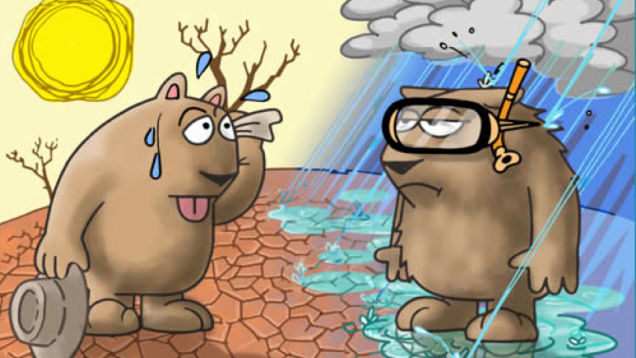
My comments on Fahn’s piece touch on several issues. First, it’s not just the ‘poor’ country that has problems with respect to ill-equipped reporters – the developed world (and Australia could easily be one of the leaders here) has some particulary terrible coverage of climate change impacts. Second, this problem extends to all environmental issues, not just climate change. Indeed, for some of the most important issues facing humanity today (loss of biodiversity and the ecosystem services they provide), should not the best people be put onto the job? Finally, whatever happened to journalism? Isn’t this supposed to be well-researched, cross-examining, hard-hitting and plain investigation into the affairs affecting everyday life? Instead, too many so-called ‘journalists’ are nothing more than blindly parrotting reporters who wouldn’t know what research was if it came up and bit them on the arse.

Addendum 16 October: I’ve added a little poll below directed toward Australian blog readers:

CJA Bradshaw

Add to FacebookAdd to NewsvineAdd to DiggAdd to Del.icio.usAdd to StumbleuponAdd to RedditAdd to BlinklistAdd to Ma.gnoliaAdd to TechnoratiAdd to Furl


Wake Up, Freak Out

9 10 2008
© Leo Murray

© Leo Murray

An excellent, short animated film about the perils of climate change and its implications for biodiversity (including humans). Highly recommended.

This really isn’t about polar bears any more. At this very moment, the fate of civilization itself hangs in the balance.

It turns out that the way we have been calculating the future impacts of climate change up to now has been missing a really important piece of the picture. It seems we are now dangerously close to the tipping point in the world’s climate system; this is the point of no return, after which truly catastrophic changes become inevitable.

Wake Up, Freak Out – then Get a Grip is a short, animated film about climate change by Leo Murray.


Primary forests as global carbon sinks

13 09 2008

Certainly one for the Potential list…

p00zbhgzA new paper by Sebastien Luyssaert  and colleagues in Nature entitled Old-growth forests as global carbon sinks deserves a mention here.

Many have argued under the climate change mitigation banner that so-called ‘old-growth’ (let’s call them primary forests henceforth to distinguish them from [usually] younger secondary forests) do not provide net carbon uptake because most of their growth has occurred in the past. In other words, they provide a carbon store, but do not take much more out of the atmosphere once they’ve attained a certain ecological equilibrium. This was a major impediment for the argument that protecting such forests could be achieved economically by valuing them in national or global carbon-trading schemes. It was a shame considering that it seems the economic incentives to protect such forests were falling on deaf ears because (a) governments and industry tend to regard the quick turn-around option of timber extraction as more economically sensible and (b) of the difficulty of valuing ecosystem services provided by primary forests.

But not so, say Luyssaert and colleagues! After scouring an array of studies and databases they conclude that forests between 15 and 800 years of age do in fact continue to uptake carbon and so are not carbon ‘neutral’. Brilliant! With this latest evidence in hand, I hope the economic incentives to preserve the little remaining primary forests around the world and the ecosystem services they provide will encourage governments and industry to invest more in their preservation than their destruction. It’s worth noting here too that once such forests are destroyed (e.g., timber extraction), the majority of their stored carbon (both actual and potential via future carbon uptake) are released back to the atmosphere, thus exacerbating climate change. As such, valuing the preservation of pristine forests on the carbon-trading market should receive a far higher weighting that secondary plantations or other sequestration schemes.

CJA Bradshaw

Add to FacebookAdd to NewsvineAdd to DiggAdd to Del.icio.usAdd to StumbleuponAdd to RedditAdd to BlinklistAdd to Ma.gnoliaAdd to TechnoratiAdd to Furl


Tropical Conservation Biology

8 09 2008

An obvious personal plug – but I’m allowed to do that on my own blog ;-)

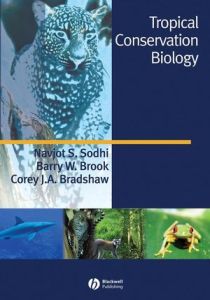
1405150734I’d like to introduce a (relatively) new textbook that my colleagues, Navjot Sodhi and Barry Brook, and I wrote and published last year with Blackwell (now Wiley-Blackwell) Scientific Publishing – Tropical Conservation Biology.

We’re rather proud of this book because it was a timely summary and assessment of the scientific evidence for the degree of devastation facing tropical biodiversity today and in the future. I’ve summarised some of the main issues in a previous post covering a paper we have ‘in press’ that was born of the text book, but obviously the book is a far more detailed account of the problems facing the tropics.

This introductory textbook examines diminishing terrestrial and aquatic habitats in the tropics, covering a broad range of topics including the fate of the coral reefs; the impact of agriculture, urbanisation, and logging on habitat depletion; and the effects of fire on plants and animal survival.

One of the highlights of the book is that each chapter (see below) Includes case studies and interviews with prominent conservation scientists to help situate key concepts in a real world context: Norman Myers (Chapter 1), Gretchen Daily (Chapter 2), William Laurance (Chapter 3), Mark Cochrane (Chapter 4), Daniel Simberloff (Chapter 5), Bruce Campbell (Chapter 6), Daniel Pauly (Chapter 7), Stephen Schneider (Chapter 8), Stuart Pimm (Chapter 9) and Peter Raven (Chapter 10). These biographies are followed by a brief set of questions and answers that focus on some of the most pertinent and pressing issues in tropical conservation biology today. It is our intention that readers of Tropical Conservation Biology will benefit from the knowledge and be inspired by the passion of these renowned conservation experts.

TABLE OF CONTENTS

  1. Chapter 1: Diminishing habitats in regions of high biodiversity. We report on the loss of tropical habitats across the tropics (e.g., deforestation rates). We also highlight the drivers of habitat loss such as human population expansion. Finally, we identify the areas in immediate need of conservation action by elucidating the concept of biodiversity hotspots. Read the rest of this entry »


Australian Wet Tropics Biosequestration Project

28 08 2008

Guest post from Penny van Oosterzee, Degree Celsius:

© P. van Oosterzee
© P. van Oosterzee

The Wet Tropics Regional Biosequestration Project Development Document was launched last week on the global stage, for public scrutiny, via the Climate Community and Biodiversity (CCB) website. There are only a dozen other cases in the world that have managed to reach this level of scrutiny.

The CCB standards are used in both the voluntary global markets and also for CDM (clean development mechanism) projects (only afforestation and reforestation) that have significant biodiversity outcomes. It is well known that land use, land use change, and forestry provides the most cost-effective means of reducing greenhouse gas emissions globally, and we believe the Wet Tropics project is at the leading edge of showing how.

The Wet Tropics Project is the world’s first regional biocarbon verification case based on community NRM (Natural Resource Management) activities, aggregating different bio-sequestration activities (reforestation, assisted natural regeneration, avoided deforestation, grazing land management, reduced use of fertiliser in agriculture) of myriad landholders in one verification case.

The initiative of using NRM Regional Plan’s as a basis for biosequestration project design is an innovation that can be rolled out across the state and nationally. Using Regional Plans ensures scientifically robust monitoring outcomes because of the adoption of systems already in place for monitoring. Economically the approach allows trading to occur at the regional and landholder level, and sets the stage for new livelihoods in regional Australia in a climate constrained world.

The Wet Tropics Project is itself a pilot for the NRM regions comprising the catchments of the Great Barrier Reef which are pivotal for its the survival. The Wet Tropics Project also helps to inform national policy debates since both Garnaut and the Federal Government’s Green Paper point out the importance of forestry and agriculture but fail to provide any way forward, and are on a watching brief for solutions.

The Wet Tropics initiative with its link to regional plans immediately enables entry into other global developments such as water quality credits and biodiversity credits.

See also the Degree Celsius website for more information.

Add to FacebookAdd to NewsvineAdd to DiggAdd to Del.icio.usAdd to StumbleuponAdd to RedditAdd to BlinklistAdd to Ma.gnoliaAdd to TechnoratiAdd to Furl


Synergies among extinction drivers

24 08 2008

Hopefully one for the Potential list:

© J. Hance

Brook, BW, NS Sodhi, CJA Bradshaw. (2008) Synergies among extinction drivers under global change. Trends in Ecology and Evolution 23, 453-460

A review my colleagues, Barry Brook and Navjot Sodhi, and I have just published in Trends in Ecology and Evolution demonstrates how separate drivers of extinction (e.g., habitat loss, over-exploitation [hunting, fishing, etc.], climate change, invasive species, etc.) tend to work together to heighten the extinction probability of the species they affect more than the simple sum of the individual effects alone.

In what we termed ‘synergies’, the review compiles evidence from observational, experimental and meta-analytic research demonstrating the positive and self-reinforcing actions of multiple drivers of population decline and eventual extinction. Examples include experimental evidence that wild radishes experiencing inbreeding depression have lower fitness than expected from simple population reduction (Elam et al. 2007), inter-tidal polychaetes succumb to pollution effects much more so at low densities than when populations are abundant (Hollows et al. 2007), and habitat fragmentation, harvest and simulated climate warming increase rotifer extinction risk up to 50 times more than expected from the additive effects of the threatening processes (Mora et al. 2007).

We argued that conservation actions only targeting single drivers will more than likely be inadequate because of the cascading effects caused by unmanaged synergies. Climate change will also interact with and accelerate ongoing threats to biodiversity, so the importance of accounting for these interactions cannot be understated.

CJA Bradshaw

Add to FacebookAdd to NewsvineAdd to DiggAdd to Del.icio.usAdd to StumbleuponAdd to RedditAdd to BlinklistAdd to Ma.gnoliaAdd to TechnoratiAdd to Furl


Global warming and biodiversity extinction

14 08 2008

My colleague Barry Brook recently posted a discussion on the impacts of climate change on biodiversity extinction rates and patterns. A very good introduction to the subject.

CJA Bradshaw


The Great Disruption

6 08 2008

If ever there was a plea for conservation actions that really do something to reverse the catastrophic ecosystem and ensuing economic crashes that are happening worldwide, its embodied in this essay by Paul Gilding. I won’t write much more on the subject because Paul says it so much more eloquently and thoroughly than I can. Please read his Scream Crash Boom 2: The Great Disruption.

CJA Bradshaw


IUCN Chief Scientist & Asia

15 07 2008

I’m currently attending the Society for Conservation Biology‘s Annual Meeting in Chattanooga, Tennessee, USA and blogging on presentations I think are worth mentioning.

The first plenary talk was given by the IUCN’s Chief Scientist, Jeffrey McNeely, about the issues surrounding biodiversity conservation in Asia. Dr. McNeely gave an interesting background to the human cultural history and diversity of the region, followed by a brief exposé of the conservation issues there (habitat loss, over-exploitation, invasive species, etc). Overall, however, I was disappointed by his lack of emphasis on the magnitude of the conservation crisis Asia is undergoing. There was no mention of the perverse subsidies buffering unsustainable forestry and fishing, the corruption driving habitat loss and habitat degradation, or the massive problems driven by human over-population.

We recently published (currently online) a paper regarding the conservation crisis facing this (and similar regions) in the tropics Tropical turmoil – a biodiversity crisis in progress (see related post), and several of my colleagues have recently outlined just how badly biodiversity is faring in Asia (e.g., see Brook et al. 2003; Sodhi et al. 2004). While I was happy to see Dr. McNeely mention the need for more research on these issues, his statement that he had “depressed [us] with the problems” was a major understatement. He did not nearly go far enough to ‘depress’ his audience of conservation scientists. We are squarely within a crisis in the region, and if the Chief Scientist of the IUCN who has intimate knowledge of Asia is not singing that song loudly and clearly, I fear it will get far worse before we see any real positive change.

CJA Bradshaw


Conservation Letters – a scientific journal with a difference?

5 07 2008

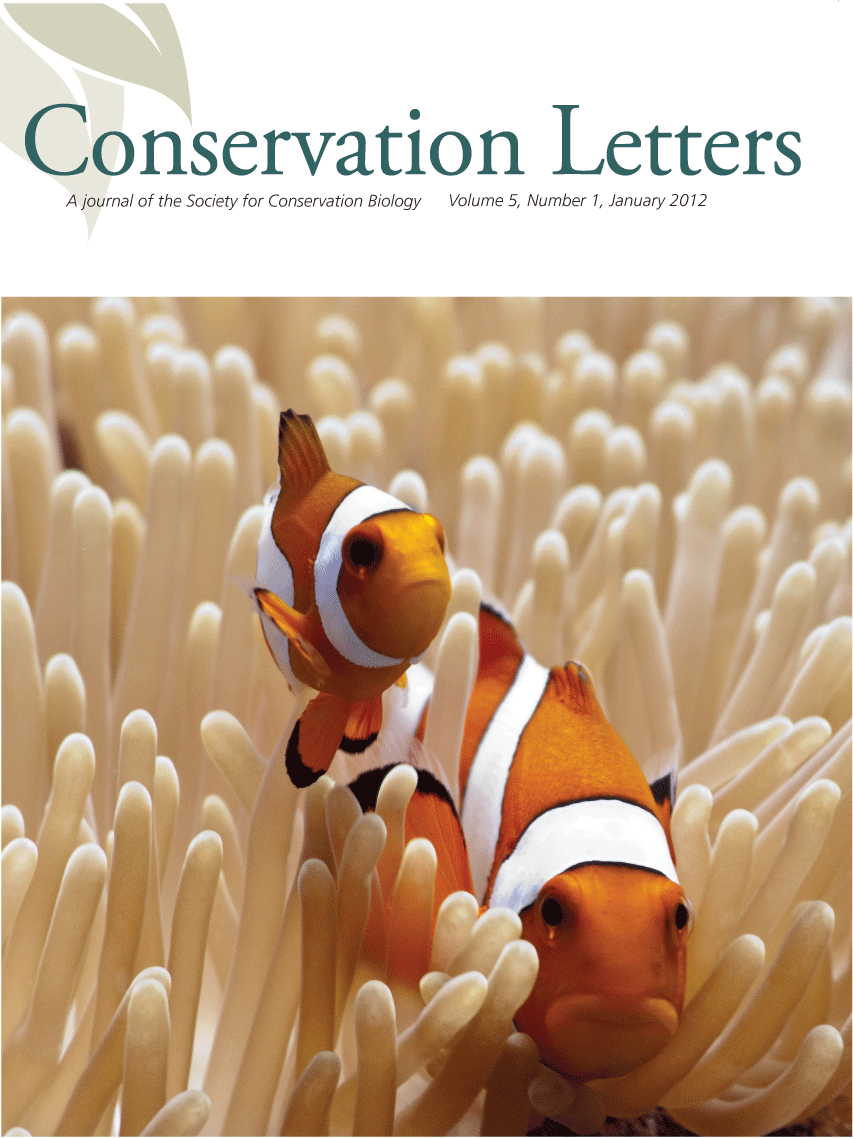
ConLetters-Jan12I’d like to introduce the latest scientific conservation journal – Conservation Letters (Wiley-Blackwell). If you are a publishing conservation scientist then you will have undoubtedly heard about this already. I must admit my biased opinion up front – I have the role of Senior Editor for the journal under the auspices of the venerable Editors-in-Chief, Professor Richard Cowling, Professor Hugh Possingham, Professor Bill Sutherland and Dr. Michael Mascia.

We’ve been doing conservation science now for well over 50 years, and there has been some fantastic, hard-hitting, brilliant research done. However, extinction rates continue to soar, habitat loss and fragmentation abound, bushmeat hunting and other forms of direct over-exploitation show no signs of slowing and invasive species are penetrating into the most ‘pristine’ habitats. To top it all off, climate change is exacerbating each and every one of these extinction drivers.

So what have we been doing wrong?

Clearly the best research is going unheeded – this is not to say that some progress has not been made, and I hope to highlight the best examples of the hardest-hitting research on this site – it simply means that we are losing the battle. Enter Conservation Letters – a journal designed to make conservation research more available to policy makers and managers to make true strides forward in biodiversity conservation. I’m not suggesting for a moment that other well-known, respected and established conservation journals have not done their job; without the research those journals publish we’d certainly be much worse off. However, we have recognised that our research isn’t affecting as many people as it should.

With Conservation Letters now well into its first year, I hope that we start to see some changes here, and I hope that the discipline will have a much greater net effect on slowing (and perhaps) reversing the extinction trends we observe today. Climate change is making this much more challenging, as well as the ever-increasing human population. Can we make better progress? – I certainly hope so.

CJA Bradshaw

Add to FacebookAdd to NewsvineAdd to DiggAdd to Del.icio.usAdd to StumbleuponAdd to RedditAdd to BlinklistAdd to Ma.gnoliaAdd to TechnoratiAdd to Furl


Conservation that bites

2 07 2008

This new website will post examples of conservation science with real-world impacts to policy that improves biodiversity outcomes. Stay tuned.

CJA Bradshaw