Global conservation priorities based on human need

13 07 2009
nf2

© Wiley-Blackwell

A paper recently posted online in Conservation Letters caught my eye as a Potential on ConservationBytes.com.

Gary Luck and colleagues’ paper Protecting ecosystem services and biodiversity in the world’s watersheds is a novel approach to an admittedly problematic aspect of conservation biology – global prioritisation schemes. While certainly coming in as a Conservation Classic, the first real global conservation prioritisation scheme (Myers and colleagues’ global biodiversity hotspots) was rather subjective in its approach, and many subsequent schemes have failed to reproduce the same kinds of priorities (the congruency problem). I’m certainly not knocking biodiversity hotspots because I believe it was one of the true paradigm shifts in conservation biology, but I am cognisant of its limitations.

Another big problem with conservation prioritisation schemes is that they are a hard sell to governments – how do you convince nations (especially poor ones) to forgo the immediate gains of resource exploitation to protect what many (incorrectly and short-sightedly) deem as irrelevant centres of biotic endemism?

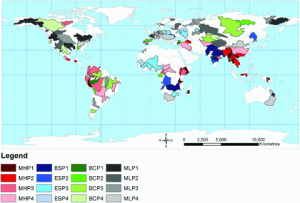
Well, Luck and colleagues have taken us one step closer to global acceptance of conservation prioritisation schemes by basing this latest addition on ecosystem services. In their paper they divided the world by catchments (watersheds) and then estimated the services of water provision, flood prevention and carbon storage that each provides to humanity. Water provision was a estimated as a complex combination of variables that together can be interpreted as the capacity of ecosystems to regulate water flows and quality that benefit humans (e.g., influencing seasonal water availability or nutrient levels). Flood mitigation was estimated as the system’s capacity to reduce the impact of floods on communities, and carbon storage was estimated as the system’s capacity to uptake carbon in soils and vegetation.

In general, the catchments in need of the highest priority protection were found in the poorest areas (namely, South East Asia and Africa) because their protection would be the least costly and benefit the most people. Luck and colleagues are therefore the first to incorporate cost–benefit trade-offs explicitly in developing global priorities for protecting ecosystem services and biodiversity. I take my hat off to them for a modern and highly relevant twist on an old idea. Great paper and I hope people take notice.

CJA Bradshaw

Add to FacebookAdd to NewsvineAdd to DiggAdd to Del.icio.usAdd to StumbleuponAdd to RedditAdd to BlinklistAdd to Ma.gnoliaAdd to TechnoratiAdd to Furl


Out of touch, impractical and irrelevant

8 07 2009

argumentThe opening quote to this interesting little article says it all:

“We have all heard policy-makers in environment organisations accuse researchers as out of touch, impractical and irrelevant. We have all seen environment management agencies criticised by researchers in the media, in this journal, at conferences or in the tea room for ignoring, under-utilising or misrepresenting research findings when formulating or implementing policy.”

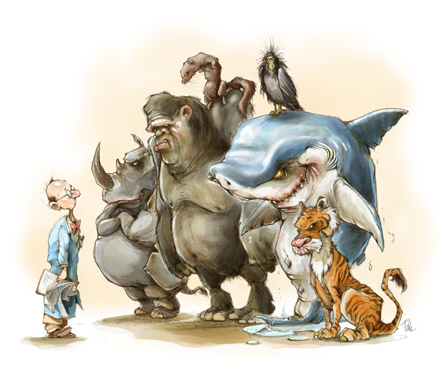
From the ‘researcher’ side, I can attest that I have on more than one occasion cursed the inability of policy makers (from high-level politicians down to municipal councillors) to implement sound, evidence-based advice on how to prevent (or at least minimise) environmental disasters (for a local example, see this post). I’m sure many policy makers think that (at least some) researchers are pie-in-the-sky, political naïfs that consistently fail to make their research relevant. I know that both extremes are unfortunate realities.

So when I saw Gibbons and colleagues’ paper Some practical suggestions for improving engagement between researchers and policy-makers in natural resource management, I was quite impressed with their excellent suggestions for bridging the gap.

It’s a short paper, but it recommends the following basic steps for improvement:

  1. Understand what motivates people on each side of the policy fence. For researchers, we are locked into a system that rewards success based on a some typically non-economic metrics, such as the quality and quantity of peer-reviewed articles we write, our academic reputation amongst our peers, the amount of external funding we can attract (generally linked to the publication criterion) and the number of students we supervise to research independence. Policy makers working within a more top-down environment are compelled to advance policies that reflect their government’s philosophy (which is dictated by their constituents), and often the deadlines are fierce.

  2. Build relationships. This goes without saying, but often doesn’t happen. Lack of trust can usually only be broken down if you respect and know your counterpart. Gibbons and company suggest that relationships can be built better through the regular dissemination of information back and forth, effective communication (clarity and brevity), and maintaining relationships after information exchange (keep in touch).

  3. Organise regular forums. These meetings are essential to build new and productive relationships. Ways to increase contact include: maintaining ‘who’s who’ lists, encouraging secondments (people exchanges), and organising annual science-policy colloquia.

  4. Explore alternate communication media. Face-to-face meetings are often difficult, so Gibbons et al. recommend that researchers attempt to disseminate their work regularly in other media, such as newsletters, broad-scope journals, journalistic magazines and blogs (this last suggestion is my own!). Governments can also make calls for research proposals in particular, policy-relevant areas, thus forcing alignment prior to research even getting off the ground.

Thanks for the advice.

CJA Bradshaw

Add to FacebookAdd to NewsvineAdd to DiggAdd to Del.icio.usAdd to StumbleuponAdd to RedditAdd to BlinklistAdd to Ma.gnoliaAdd to TechnoratiAdd to Furl


Classics: Ecological Triage

27 03 2009

It is a truism that when times are tough, only the strongest pull through. This isn’t a happy concept, but in our age of burgeoning biodiversity loss (and economic belt-tightening), we have to make some difficult decisions.In this regard, I suggest Brian Walker’s1992 paper Biodiveristy and ecological redundancy makes the Classics list.

Ecological triage is, of course, taken from the medical term triage used in emergency or wartime situations. Ecological triage refers to the the conservation prioritisation of species that provide unique or necessary functions to ecosystems, and the abandonment of those that do not have unique ecosystem roles or that face almost certain extinction given they fall well below their minimum viable population size (Walker 1992). Financial resources such as investment in recovery programmes, purchase of remaining habitats for preservation, habitat restoration, etc. are allocated accordingly; the species that contribute the most to ecosystem function and have the highest probability of persisting are earmarked for conservation and others are left to their own devices (Hobbs & Kristjanson 2003).

This emotionally empty and accounting-type conservation can be controversial because public favourites like pandas, kakapo and some dolphin species just don’t make the list in many circumstances. As I’ve stated before, it makes no long-term conservation or economic sense to waste money on the doomed and ecologically redundant. Many in the conservation business apply ecological triage without being fully aware of it. Finite pools of money (generally the paltry left-overs from some green-guilty corporation or under-funded government initiative) for conservation mean that we have to set priorities – this is an entire discipline in its own right in conservation biology. Reserve design is just one example of this sacrifice-the-doomed-for-the good-of-the-ecosystem approach.

Walker (1992) advocated that we should endeavour to maintain ecosystem function first, and recommended that we abandon programmes to restore functionally ‘redundant’ species (i.e., some species are more ecologically important than others, e.g., pollinators, prey). But how do you make the choice? The wrong selection might mean an extinction cascade (Noss 1990; Walker 1992) whereby tightly linked species (e.g., parasites-hosts, pollinators-plants, predators-prey) will necessarily go extinct if one partner in the mutualism disappears (see Koh et al. 2004 on co-extinctions). Ecological redundancy is a terribly difficult thing to determine, especially given that we still understand relatively little about how complex ecological systems really work (Marris 2007).

The more common (and easier, if not theoretically weaker) approach is to prioritise areas and not species (e.g., biodiversity hotspots), but even the criteria used for area prioritisation can be somewhat arbitrary and may not necessarily guarantee the most important functional groups are maintained (Orme et al. 2005; Brooks et al. 2006). There are many different ways of establishing ‘priority’, and it depends partially on your predilections.

More recent mathematical approaches such as cost-benefit analyses (Possingham et al. 2002; Murdoch et al. 2007) advocate conservation like a CEO would run a profitable business. In this case the ‘currency’ is biodiversity, and so a fixed financial investment must maximise long-term biodiversity gains (Possingham et al. 2002). This essentially estimates the potential biodiversity saved per dollar invested, and allocates funds accordingly (Wilson et al. 2007). Where the costs outweigh the benefits, conservationists move on to more beneficial goals. Perhaps the biggest drawback with this approach is that it’s particularly data-hungry. When ecosystems are poorly measured, then the investment curve is unlikely to be very realistic.

CJA Bradshaw

Add to FacebookAdd to NewsvineAdd to DiggAdd to Del.icio.usAdd to StumbleuponAdd to RedditAdd to BlinklistAdd to Ma.gnoliaAdd to TechnoratiAdd to Furl

(Many thanks to Lochran Traill and Barry Brook for co-developing these ideas with me)


Too many mouths to feed

19 03 2009

The venerable Professor John Beddington has some stern warnings about over-population in the next few decades. In essence, we cannot ignore the human over-population problem any longer. There are simply too many people for the finite resources available and the consumption rates that do not appear to be declining (not surprising given our voracious appetite for economic growth – more like long-term economic suicide, really). Australia is certainly no exception – with most of our country essentially uninhabitable, we’ve already exceeded our carrying capacity (but try telling this to the pollies).

In my opinion, human over-population is THE principal driver of biodiversity loss in the modern context. Without some serious global efforts for population planning, expect a lot more conflict in your lifetime, and a lot worse effects of climate change. See also Global Population Speak Out.

This one from the BBC:

Growing world population will cause a “perfect storm” of food, energy and water shortages by 2030, the UK government chief scientist has warned. By 2030 the demand for resources will create a crisis with dire consequences, Prof John Beddington said. Demand for food and energy will jump 50% by 2030 and for fresh water by 30%, as the population tops 8.3 billion, he told a conference in London.

Climate change will exacerbate matters in unpredictable ways, he added. “It’s a perfect storm,” Prof Beddington told the Sustainable Development UK 09 conference.’Perfect storm’ poses global threat, says Professor Beddington. “There’s not going to be a complete collapse, but things will start getting really worrying if we don’t tackle these problems.”

Prof Beddington said the looming crisis would match the current one in the banking sector. “My main concern is what will happen internationally, there will be food and water shortages,” he said.

“We’re relatively fortunate in the UK; there may not be shortages here, but we can expect prices of food and energy to rise.” The United Nations Environment Programme predicts widespread water shortages across Africa, Europe and Asia by 2025. The amount of fresh water available per head of the population is expected to decline sharply in that time. The issue of food and energy security rose high on the political agenda last year during a spike in oil and commodity prices.

Prof Beddington said the concern now – when prices have dropped once again – was that the issues would slip back down the domestic and international agenda. “We can’t afford to be complacent. Just because the high prices have dropped doesn’t mean we can relax,” he said. Improving agricultural productivity globally was one way to tackle the problem, he added. At present, 30-40% of all crops are lost due to pest and disease before they are harvested. Professor Beddington said: “We have to address that. We need more disease-resistant and pest-resistant plants and better practices, better harvesting procedures. “Genetically-modified food could also be part of the solution. We need plants that are resistant to drought and salinity – a mixture of genetic modification and conventional plant breeding. Better water storage and cleaner energy supplies are also essential, he added.

Prof Beddington is chairing a subgroup of a new Cabinet Office task force set up to tackle food security. But he said the problem could not be tackled in isolation. He wants policy-makers in the European Commission to receive the same high level of scientific advice as the new US president, Barack Obama. One solution would be to create a new post of chief science adviser to the European Commission, he suggested.

CJA Bradshaw


South Australian marine park boundaries released

29 01 2009

As an addendum to my last post (Marine Conservation in South Australia), I thought it worth mentioning that the South Australian government has released its plans for coastal marine parks. I have yet to look through these in detail, but public comment is welcomed until 27/03/2009. We’ll see what the fallout is.

Release approved by Allan Holmes, Chief Executive of the Department of Environment and Heritage (SA):

The outer boundaries of South Australia’s network of 19 new marine parks were proclaimed today. This exciting development will help protect our unique and diverse marine environment for future generations to use and enjoy, and will also position South Australia as a national leader in marine conservation.

The boundaries will be available for public comment until 27 March 2009. To support the public consultation, 57 public information sessions will be held across South Australia. To find out more about South Australia’s new marine parks network, visit here or ring 1800 006 120.

CJA Bradshaw


Marine conservation in South Australia

26 01 2009

© U.R. Zimmer

© U.R. Zimmer

Just before the holidays last year I participated in the Conservation Council of South Australia‘s (CCSA) Coast & Marine in a Changing Climate Summit 2008. It was an interesting, mature and intelligent summit with some good recommendation surfacing. Although I certainly didn’t agree with all the recommendations (view the entire report here), I must say up front that I have been very impressed with the CCSA’s approach in their ‘Blueprint’ summit series to address South Australia’s environmental problems.

Many environmental groups, especially regional ones, are seen by many as raving environists1 with little notion for balance or intelligent debate. CCSA is definitely not one of those. They are very careful to engage with scientists, public servants, industry leaders and politicians to hone their recommendations into something realistic and useful. Indeed, I am now certain the only way to convince people of the necessity of dealing with the world’s environmental mess is to make intelligent, scientifically defensible arguments about how environmental degradation worsens our quality of life (yes, this is the principal aim of ConservationBytes.com). So, good on the CCSA for a rationale approach.

Enough about the CCSA for now – let’s move onto some of their marine-related recommendations. I won’t reprint the entire summary document here, but a few things are worthy of repetition:

Significantly increase the amount of resources available for marine species research and taxonomy, especially for non-commercial species.

Despite my obvious conflict of interest, I couldn’t agree more. One of the principal problems with our ability to plan for inevitable environmental change to lessen the negative outcomes for biodiversity, industry and people in general is that we have for too long neglected marine research in Australia. Given that most Australians live near the coast and almost all of us rely on the oceans in some way, it is insane that marine research in this country is funded almost as an afterthought. How can we possibly know what we’re doing to our life-support system if we don’t even know how it works?

Take climate change for example. The majority of climate change predictions are merely single-species predictions based on physiological tolerances. Most almost completely ignore species interactions. Any given species must compete with, eat and be eaten by others, so it’s insane not to combine community relationships into predictive models.

A strict monitoring regime should be implemented in all ports and harbours to continuously monitor [sic] for introduced marine pests in order to inform better management, in conjunction with the species outlined in the Monitoring section of the National System for the Prevention and Management of Marine Pest Incursions.

Many people, and scientists in particular, have traditionally turned their noses up at so-called ‘monitoring’. However, as a few Australian colleagues of mine recently observed, the marine realm has a huge, gaping hole in monitoring data necessary to determine the future of Australia’s marine environment. Take it from me, a scientist who regularly uses time-series data to infer long-term patterns (see Publications), it’s essential that we have more long-term data on species distributions, reproductive output, survival, etc. to make inference about the future.

Recreational fishing should be licensed, with the license fees being directed towards increased research of non-commercial species and education of recreational fishers.

I really like this one. It seems South Australia is the only state in the country that doesn’t have mandatory recreational fishing licences. Absolute madness. Given the capacity of recreational fishing to outstrip commercial harvests for some species (e.g., King George whiting Sillaginodes punctatus), we need vastly better monitoring via licences to determine local impacts. Not to mention the necessary generation of money to support monitoring and research, which to the average recreational fisher, would not be such a hefty price to pay. The political drive to keep the status quo is woefully outdated and counter-productive. See one of my previous posts on the potential impacts of recreational fishing.

There is a need for a co-ordinated, state/Adelaide-wide stormwater strategy. Currently the Stormwater Management Authority examines individual projects but does not manage a bigger picture with a co-ordinated approach.

A colleague of mine recently published an article showing how South Australian waters, being more oligotrophic on average than other areas of the country, are particularly susceptible to nutrient overloading. The main losers are seagrasses and macroalgae (kelp) forests – the Adelaide metropolitan coast has lost up to 70 % of its kelp forests since major urbanisation began last century.

There are many more recommendations that you can peruse at your leisure, and many of them will be updated this year once the CCSA incorporates all the received comments. I thank them for the opportunity to take part in their worthy aims.

CJA Bradshaw

1My colleague, Barry Brook, invented this excellent term to describe those people who blindly support anything ‘green’ without really thinking of the consequences. It’s also a great way to differentiate serious ‘environmentalists’ and conservation biologists from raving ‘greenies’.

Add to FacebookAdd to NewsvineAdd to DiggAdd to Del.icio.usAdd to StumbleuponAdd to RedditAdd to BlinklistAdd to Ma.gnoliaAdd to TechnoratiAdd to Furl


Our new Environment Institute: tackling environmental crises

9 12 2008

© T. Hampel

© T. Hampel

It’s official, the University of Adelaide has put in some major investment to get its environmental research specialists together to turns things into high gear. I’m privileged to be a part of the Institute, and I hopefully will be blogging about many of the exciting, topical and revolutionary research coming out this new ‘think tank’ (also, a ‘do tank’) over the coming years.

This report from AdelaideNow:

THE University of Adelaide will bring together experts in water management, climate change, economics, marine research, energy technology and ancient DNA to tackle Australia’s most pressing environmental challenges.

The new Environment Institute will be headed by water policy expert Mike Young who said Australia faced diabolical policy problems in relation to climate change and water resources.

“While climate change is the issue of greatest national importance, it is arguable that water is the issue of most interest to South Australia,” Professor Young said.
“The River Murray, our greatest ecological icon, is under terminal stress and we need to find alternative water sources.

“We should expect the adverse effects of climate change to first be expressed in water.”

Professor Young said research was needed to help reduce Australia’s carbon footprint, to restore and improve native habitats and restructure agricultural systems.

“Many of these issues have been dealt with in isolation in the past but this is no longer an option,” he said.

“All are linked and must be dealt with in a holistic and co-ordinated way.”

Also involved in the institute will be the university’s climate change expert Barry Brook and conservationist David Paton.

University vice-chancellor James McWha said all of the institute’s researchers had an outstanding track record and were internationally recognised in their fields.

“Collectively, they have been growing their research at a phenomenal rate over the past five years and they will play a critical role in building the state’s reputation as a global leader in environmental research,” Professor McWha said.


Failing on ocean protection

24 11 2008

A new paper from Conservation Letters by Mark Spalding and colleagues entitled Toward representative protection of the world’s coasts and oceans-progress, gaps, and opportunities reminds us just how crap we are at protecting ocean habitats. I sincerely hope this one is a Potential given that the only direction one can move from absolute bottom is up. Richard Black at the BBC reports on the paper’s main findings:

toilet-ocean_squareLess than 1% of the world’s oceans have been given protected status, according to a major survey.

Governments have committed to a target of protecting 10% by 2012, which the authors of the new report say there is no chance of meeting.

Protecting ecologically important areas can help fish stocks to regenerate, and benefit the tourism industry.

The survey was led by The Nature Conservancy (TNC) and is published in the journal Conservation Letters.

“For those of us working in the issue full-time it’s not a surprise, we’ve known all along that marine protection is lagging behind what’s happening on land, but it’s nice to have it pinned down,” said TNC’s Mark Spalding.

“It’s depressing that we’ve still got so far to go, but there are points of hope,” he told BBC News.

Coastal concentration

Four years ago, signatories to the UN’s biodiversity convention – which includes almost every country – pledged to protect at least 10% of the oceans in a way that makes sense ecologically.

Protecting them does not mean banning activities such as fishing or shipping completely, but making sure they are carried out sustainably.

All of the areas currently protected fall into countries’ Exclusive Economic Zones, and the majority are along coasts, the study finds.

Even so, only about 4% of coastal waters are protected.

Countries diverge widely in how much protection they have mandated.

Whereas New Zealand has almost 70% of its coastline under some form of protection, countries around the Mediterranean have set aside less than 2%.

In the developing world, Dr Spalding cites Guinea-Bissau as a country that has had invested in protection, particularly in the Bijagos Archipelago, which is home to a community of hippos dwelling along its mangrove coast, as well as more conventional marine species.

Palau, Indonesia, Micronesia and several Caribbean states are also making significant progress, he said.

About 12% of the Earth’s land surface has been put under protection.

Download the Spalding paper free of charge here.


Threatened species depend on protected areas

4 09 2008

One for the Potential list:

3932397_origA great new paper has just come out in Global Change Biology by Sarah Jackson and Kevin Gaston: Land use change and the dependence of national priority species on protected areas. In what is simultaneously frightening and ecouraging is the observation that of nearly 400 Biodiversity Action Plan (BAP) species considered either to be globally threatened or rapidly declining in the UK (i.e., > 50 % decline over 25 years), 55 % were largely restricted to statuatory protected areas in the UK. These areas cover about 11.5 % of Britain’s land surface.

What’s amazing about this is that without these reserves, these (hundreds) of species would already be extinct (or very close to it) – if this isn’t one of the strongest arguments for reserves, I don’t know what is. Not only are reserves essential for maintaining populations of threatened species, their spatial connectivity is also highly influential on persistence probability (future posts on fragmentation coming).

Much of the planet has now been modified to the point where any sort of species preservation will necessarily require large, expansive, contiguous networks of protected areas. Jackson & Gaston conclude:

Britain has undergone particularly extensive land transformation, reducing many originally much more widespread vegetation/habitat types to scattered fragments, few of which can be considered strictly natural (Rackham, 1986). A proportion of these fragments receive statutory protection and intensive management, increasing the likelihood that species of conservation concern are restricted to such areas. This circumstance is not unique to Britain, being found in many heavily developed regions including much of northwestern Europe, although it is not so extreme in many others. Britain may, thus, represent a possible future scenario for such regions. Under such circumstances, it is not unlikely that many species if they are not already restricted to protected areas will become so (e.g. species confined to tropical forest habitats following deforestation).

 Keeping things off limits from the burgeoning human population is therefore one of the major ways we can stem the tide of extinctions.

CJA Bradshaw

Add to FacebookAdd to NewsvineAdd to DiggAdd to Del.icio.usAdd to StumbleuponAdd to RedditAdd to BlinklistAdd to Ma.gnoliaAdd to TechnoratiAdd to Furl


Assessing Conservation Actions

3 09 2008

A good post from Tim Bean (Berkeley) over at ConsBlog.org – one for the Potential list:

12353889-stock-market-growth-and-success-with-a-growing-green-tree-in-the-shape-of-a-stock-investment-graph-s

This paper in press at Conservation Letters by Haines et al. presents a novel method for assessing conservation actions. There’s been quite a bit of work done in the past decade, particularly by NGOs, to develop methods to assess whether their actions have actually succeeded; this work was spear-headed in particular by Nick Salafsky and his Foundations of Success. This paper suggests that many of conservation biggest problems can be monitored with spatial datasets and proposes using the Human Footprint as a basis for such monitoring. The Human Footprint is, in essence, a collection of spatial datasets that holistically represent the collective anthropogenic impact on the land. In their paper, Haines et al. suggest that by tracking these spatial datasets through time in a paired way – conservation action site randomly paired with a control – we can get a better handle on whether the particular action was successful. The nice thing about the paper is how clear-eyed it is about what is and is not possible using this approach:

The human footprint is a spatially explicit approach to conservation planning that may serve as an effective visual medium to public audiences and stakeholders worldwide by simplifying the presentation of complex information.

(This is always the last, best resort for spatial analysts: even if the model isn’t perfect, it’s a great communication tool. ) But they also warn:

Spatial data rarely produce a complete picture of what negative impacts are occurring because human footprint data are not well-suited to track anthropogenic impacts that lack a spatial signature…[e.g.] the spread of some chemical pollutants, invasive species, diseases, and impacts of poaching…

Although I have to disagree partially with these particulars – presence of roads is often a very good correlative of poaching – their main point is an important one to consider. How well does a spatial model of human influence catch these hidden factors? A few years ago I did an informal (and sadly never completed) analysis of invasive plants and the Human Footprint and found that they were actually fairly well correlated. You could also argue that disease may be higher amongst individuals that are negatively impacted by the presence of humans. There’s plenty of opportunity here for further exploration.

Thanks, Tim.

Add to FacebookAdd to NewsvineAdd to DiggAdd to Del.icio.usAdd to StumbleuponAdd to RedditAdd to BlinklistAdd to Ma.gnoliaAdd to TechnoratiAdd to Furl


Cost, not biodiversity, dictates decision to conserve

26 08 2008

One for the Potential list:

originalEuroGreen_LogoI’ve just read a great new paper by Bode et al. (2008) entitled Cost-effective global conservation spending is robust to taxonomic group.

After the hugely influential biodiversity ‘hotspot concept hit the global stage, there was a series of subsequent research papers examining just how we should measure the ‘biodiversity’ component of areas needing to be conserved (and invested in). The problem was that depending on which taxa you looked at, and what measure of ‘biodiversity’ you used (e.g., species richness, endemism, latent threat, evolutionary potential, functional redundancy), the priority list of where, how much and when to invest in conservation differed quite a lot. In other words, the congruency among listed areas was rather low (summarised nicely in Thomas Brooks‘ paper in Science Global biodiversity conservation priorities and examined also by Orme et al. 2005). This causes all sorts of problems for conservation investment planners – what to invest in and where?

Bode and colleagues’ newest paper demonstrates at least for endemism, the taxon on which you base your assessment is much less important for maximising species conservation than factors such as land cost and the degree of threat (e.g., as measured by the IUCN Red List).

Of course, their findings could be considered too simplistic because they don’t (couldn’t) evaluate other potentially more important components of ‘biodiversity’ such as genetic history (evolutionary potential) or ecological functional redundancy (the idea that a species becomes more important to conserve if no other species provide the same ecosystem functions); however, I think this paper is something of a landmark in that it shows that ‘socio-economic’ uncertainty generally outweighs uncertainty due to biodiversity measures. The long and short of this is that planners should start investing if there is evidence of heightened threat and land is cheap.

A few other missing bits means that the paper is more heuristic than prescriptive (something the authors state right up front). There is no attempt to take biodiversity, threat or land cost changes arising from climate change into account (see relevant post here), so some of the priorities are questionable. Related to this is the idea of latent risk (see relevant paper by Cardillo et al. 2006) – what’s not necessarily threatened now but likely will be in the very near future. Also, only a small percentage of species are listed in the IUCN Red List (see relevant post here), so perhaps we’re missing some important trends. Finally, I had to note that almost all the priority areas outlined in the paper happened to be in the tropics, which stands to reason given the current and ongoing extinction crisis occurring in this realm. See a more detailed post on ‘tropical turmoil‘.

Despite the caveats, I think this could provide a way forward to the conservation planning stalemate.

CJA Bradshaw

Add to FacebookAdd to NewsvineAdd to DiggAdd to Del.icio.usAdd to StumbleuponAdd to RedditAdd to BlinklistAdd to Ma.gnoliaAdd to TechnoratiAdd to Furl


Investor creates first tropical biodiversity credits

23 08 2008

Post reproduced from TakeCover08:

An Australian investment company has launched what it describes as the first tropical biodiversity credit scheme, Mongabay.com reports (more detail here).

New Forests, a Sydney-based firm, has established the Malua Wildlife Habitat Conservation Bank in Malaysia as an attempt to raise funds for rainforest conservation.

The “Malua BioBank” will use an investment from a private equity fund to restore and protect 34,000 hectares of formerly logged forest.

The area will serve as a buffer between biological-rich forest reserve and oil palm plantations.

The credit scheme will generate “Biodiversity Conservation Certificates”, which will be sold to bankroll a perpetual conservation trust and produce a return on investment for the Sabah Government and the private equity fund.

Add to FacebookAdd to NewsvineAdd to DiggAdd to Del.icio.usAdd to StumbleuponAdd to RedditAdd to BlinklistAdd to Ma.gnoliaAdd to TechnoratiAdd to Furl


Native forests reduce the risk of catastrophic floods

20 08 2008

A-Pakistan-Army-helicopte-004Each year extreme floods kill or displace hundreds of thousands of people and cause billions of dollars in damage to property. The consequences of floods are particularly catastrophic in developing countries generally lacking the infrastructure to deal adequately with above-average water levels.

For centuries it has been believed that native forest cover reduced the risk and severity of catastrophic flooding, but there has been strong scientific debate over the role of forests in flood mitigation.

Forest loss is currently estimated at 13 million hectares each year, with 6 million hectares of that being primary forest previously untouched by human activities. These primary forests are considered the most biologically diverse ecosystems on the planet, but this realisation has not halted their immense rate of loss.

Last year my colleagues and I published a paper entitled Global evidence that deforestation amplifies flood risk and severity in the developing world in Global Change Biology (highlighted in Nature and Faculty of 1000) that has finally provided tangible evidence that there is a strong link between deforestation and flood risk. Read the rest of this entry »


Saving species does not harm poor

17 08 2008

Poor-Amongst-YouHere’s a great one for the Potential list:

A paper just published online in the journal Oryx by Kent Redford and colleagues entitled What is the role for conservation organizations in poverty alleviation in the world’s wild places? challenges one argument used by anti-conservation humanists to avoid preserving intact habitats.

When rainforests and other high conservation-value habitats are set aside for protection, humanists will often complain that it destroys the livelihoods of the people living there because the listing prevents them from farming, hunting or otherwise providing themselves with income. Not so say Redford and colleagues – they found that most of the world’s poor (measured by proxy using infant mortality rates) were predominately associated with high-density urban areas and not with more intact wild areas.

Critics of the finding argue that this should not take the onus away from richer nations or governments to bolster the economic prosperity of these people, and I agree. However, this is a major finding that in some ways validates what we are beginning to understand about habitat intactness and ecosystem services. Destroy the ecosystems around you and you generally have lower water quality, higher incidence of catastrophic events, poor agricultural returns, greater disease prevalence, etc. that will drive people into poverty, rather than drop them further down the economic scale.

If this conclusion stands up to analytical scrutiny and supporting evidence from other analyses, I dearly hope that it is noticed and embraced by governments worldwide struggling to find the balance between economic development, poverty alleviation and conservation of biodiversity to maintain ecosystem services.

CJA Bradshaw

Add to FacebookAdd to NewsvineAdd to DiggAdd to Del.icio.usAdd to StumbleuponAdd to RedditAdd to BlinklistAdd to Ma.gnoliaAdd to TechnoratiAdd to Furl


Wasting precious money on the conservation-irrelevant

30 07 2008
© Michael H.

© Michael H.

I’ve just attended the Joint Meeting of Ichthyologists and Herpetologists held in Montréal, Canada (by the way, if you are ever thinking of staying at Le Centre Sheraton in Montréal, my advice is to make a wide berth – one of the least-satisfying, over-priced, deliberately scrooging hotels I have ever had the displeasure of occupying).

The conference itself was interesting, if not somewhat tangential to most of the major conservation issues facing fish, amphibians and reptiles in the modern context (it is only fair though to state that it wasn’t a ‘conservation’ conference per se). One thing that did astound me though was an open-microphone presentation by someone from the Oceanário de Lisboa in Portugal who described the €100000 operation to release a very large (> 3.5 m wingspan) manta ray (Manta birostris) from its restrictive enclosure. Yes, you read correctly – €100000 to save one individual manta ray. Not even a threatened species (currently classified as ‘Near Threatened’ on the IUCN Red List), these good people at what I am sure is an excellent aquarium spent more money on one animal than most projects spend on the conservation of entire species.

Have these people not heard of ecological (or ‘conservation’) triage? Similar to medical triage in emergency or wartime situations, ecological triage directs finite resources to those species that require the most attention and have the highest chance of long-term persistence. I’m not sure who coined the term (perhaps Holt & Viney 2001), but the concept has been developed by a number of excellent conservation planning researchers over the last few years to become the cornerstone of modern conservation investment strategies (see Possingham et al. 2002; Hobbs & Kristjanson 2003; Wilson et al. 2007). Ecological triage essentially means that immediate conservation action and resources are directed toward populations that are highly threatened but where the probability of persistence is high. The flip side is that we shouldn’t waste our precious resources either on irrelevant and useless actions like the one described above.

Saving one manta ray would not change the species’ long-term persistence probability – full stop. In an age where conservation action and research are suffering from human apathy and stupidity, surely we can spend our money more wisely. For example, that €100000 could have purchased some primary rain forest somewhere and saved literally thousands of species from extinction. What a waste.

Add to FacebookAdd to NewsvineAdd to DiggAdd to Del.icio.usAdd to StumbleuponAdd to RedditAdd to BlinklistAdd to Ma.gnoliaAdd to TechnoratiAdd to Furl


InVEST for ecosystem services

18 07 2008

I’m currently attending the Society for Conservation Biology‘s Annual Meeting in Chattanooga, Tennessee, USA and blogging on presentations I think are worth mentioning.

A great talk that I had the pleasure of moderating was given by Taylor Ricketts of the World Wildlife Fund. He and an impressive team of conservation scientists have recently put together some spatially explicit software – InVEST – that quantifies the values of ecosystem services and compares those to biodiversity values (richness, endemism, etc.). A clever way to find the right balance between ecosystem functions that benefit humans and species preservation, this software and approach appears to be a great way to optimise land use in our changing environment. Definitely one to watch. The first paper describing this is by Erik Nelson and colleagues (including Ricketts) and will be appearing shortly in Frontiers in Ecology and the Environment.

CJA Bradshaw


Realistic conservation investment

18 07 2008

I’m currently attending the Society for Conservation Biology‘s Annual Meeting in Chattanooga, Tennessee, USA and blogging on presentations I think are worth mentioning.

In a surprise shift from the previously planned final plenary talk, Prof. Helene Marsh of James Cook University gave a nice example of how good research can be melded with non-technical opinion to weight threatened species for recovery investment. Using a north Queensland example, she described how technical assessments of relative threat risk combined with weightings from non-technical policy makers can provide the most realistic and relevant conservation investment when used simultaneously. Based on their paper in 2007 (‘Optimizing allocation of management resources for wildlife‘), Prof. Marsh outlined a quantitative approach to meld these decision-making components with real-world outcomes. I’d like to see some of the real outcomes in terms of recovery of north Queensland threatened species, but at least the State appears to be on the right track by using this tool.

CJA Bradshaw