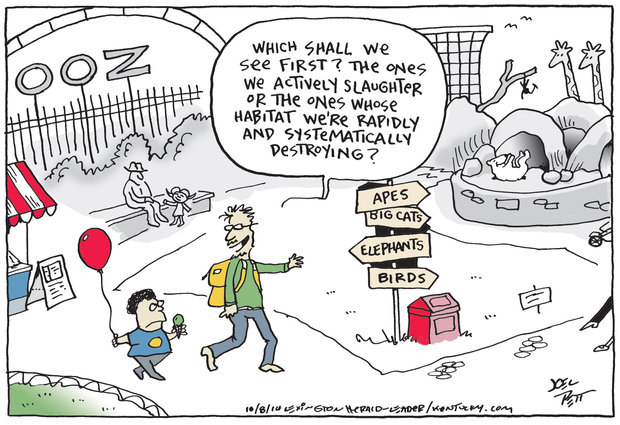
My travel is finishing for now, but while in transit I’m obliged to do another instalment of biodiversity cartoons (and the second for 2017). See full stock of previous ‘Cartoon guide to biodiversity loss’ compendia here.
—
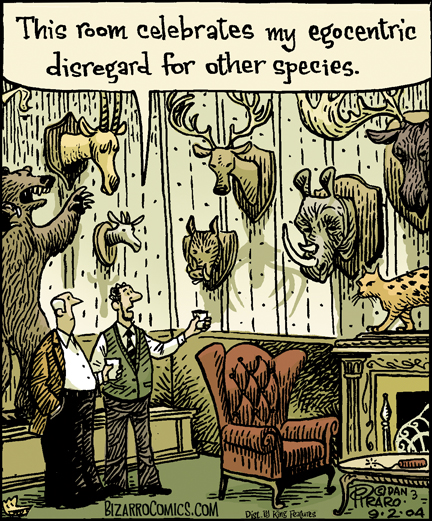
My travel is finishing for now, but while in transit I’m obliged to do another instalment of biodiversity cartoons (and the second for 2017). See full stock of previous ‘Cartoon guide to biodiversity loss’ compendia here.
—
Number 41 of my semi-regular instalment of biodiversity cartoons, and the first for 2017. See full stock of previous ‘Cartoon guide to biodiversity loss’ compendia here.
—
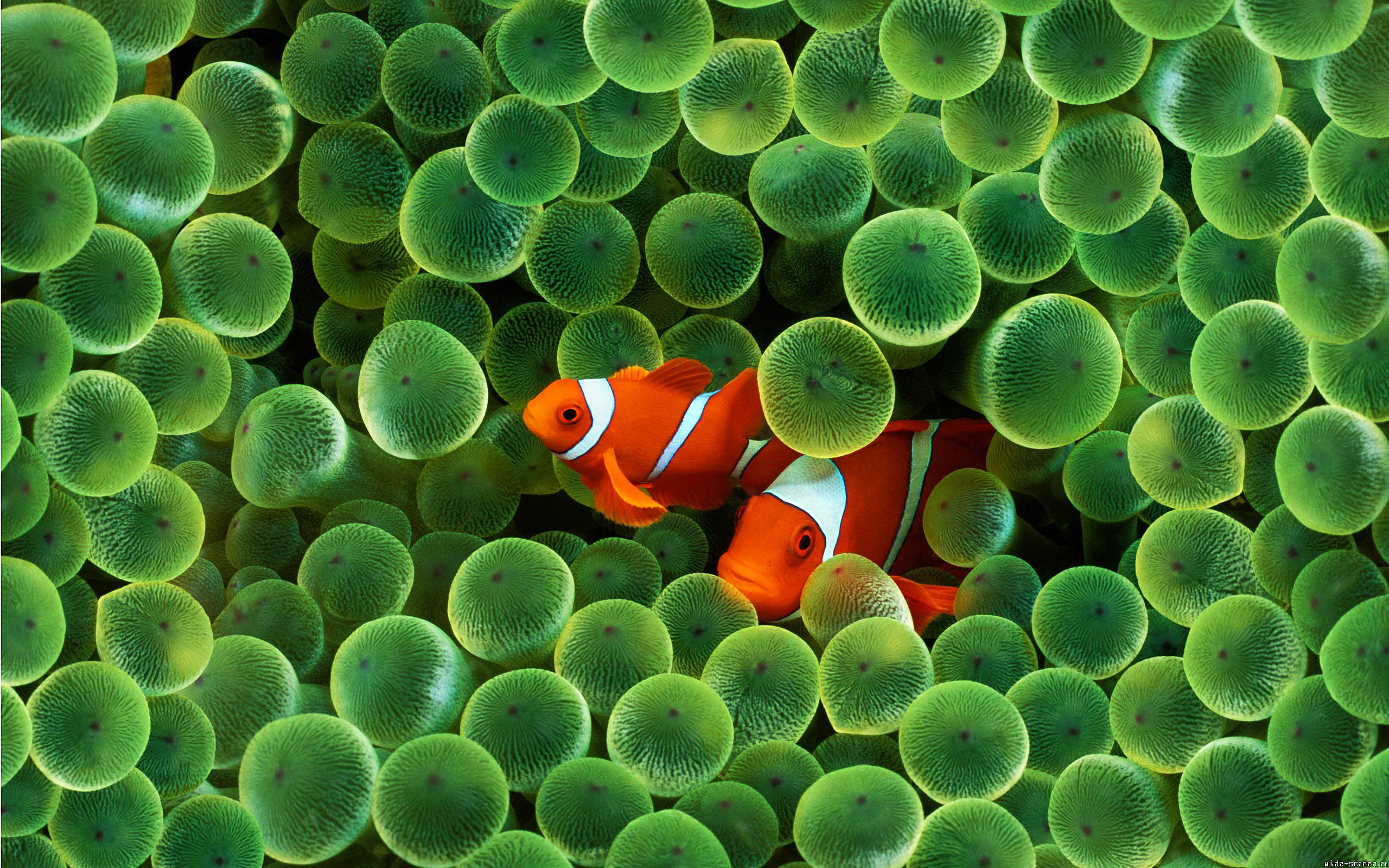
Clown fish couple (Amphiprion percula) among the tentacles of anemone Heteractis magnifica in Kimbe Bay (Papua New Guinea) – courtesy of Mark McCormick. Clownfish protect anemones from predators and parasites in exchange of shelter and food. The fish tolerates the host’s venom because its skin is protected by a mucus layer some 2-3× thicker than phylogenetically related species (12); clownfish fabricate the mucus themselves and seem to obtain anemone antigens through a period of acclimation (13), but whether protection is acquired or innate is still debated. Clownfish are highly social bony fish, forming groups with one reproductive pair (up to 11 cm in length each) and several smaller, non-reproductive males. Reproduction is protandrous (also known as sequential hermaphroditism), so larvae are born male and, as soon as the reproductive female dies, her widower becomes female and the largest of the subsidiary males becomes the alpha male. The IUCN lists clownfish, generically named ‘anemone fish’, as threatened by the pet-trade industry and habitat degradation, although surprisingly, only 1 species has been assessed (A. sandaracinos). The clown anemone fish A. ocellaris is the species that inspired Nemo in the 2003 Academy-Award fiction movie – contrary to the logical expectation that the Oscars Red Carpet would generate support for conservation on behalf of Hollywood, of the 1568 species represented in the movie, only 16 % of those evaluated are threatened (14).
Smell is like noise, the more scents we breathe in one sniff, the more difficult it is to distinguish them to the point of olfactory saturation. Experimental work with clownfish reveals that the increase in dissolved carbon dioxide in seawater, mimicking ocean acidification, alters olfactory physiology, with potential cascading effects on the demography of species.
Places such as a restaurant, a hospital or a library have a characteristic bouquet, and we can guess the emotional state of other people by their scents. Smell is critical between predators and prey of many species because both have evolved to detect each other without the aid of vision. At sea, the smell of predators dissolves in water during detection, attack, capture, and ingestion of prey, and many fishes use this information to assess the risk of ending up crunched by enemy teeth (1, 2). But predator-prey interactions can be modified by changes in the chemical composition of seawater and are therefore highly sensitive to ongoing ocean acidification (see global measuring network here). Experts regard ocean acidification as the ‘other CO2 problem’ of climate change (3) — just to emphasize that anthropogenic climate-change impacts terrestrial and aquatic ecosystems alike. Acidification occurs because the ocean absorbs CO2 at a rate proportional with the concentration of this gas in the atmosphere and, once dissolved, CO2 becomes carbonic acid (H2CO3), which in turn releases protons (H+) — in simple terms, pH is the concentration of protons (see video about ocean acidification): Read the rest of this entry »
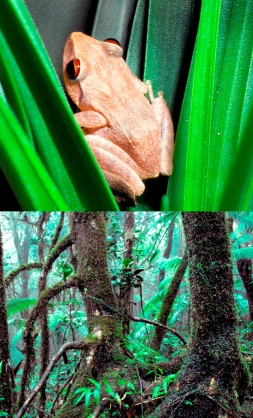
Common coqui frog male (Eleutherodactylus coqui, snout-to vent length average ~ 3 cm) camouflaged in the fronds of an epiphyte in the El Yunque National Forest (Puerto Rico), along with an image of the enchanted forest of the Sierra de Luquillo where Narins & Meenderink did their study (4) – photos courtesy of Thomas Fletcher. This species can be found from sea level to the top of the highest peak in Puerto Rico (Cerro Punta = 1338 m). Native to mesic ecosystems, common coquis are well adapted to a terrestrial life, e.g., they lack interdigital webbing that support swimming propulsion in many amphibians, and youngsters hatch directly from the egg without transiting a tadpole stage. The IUCN catalogues the species as ‘Least Concern’ though alerts recent declines in high-altitude populations caused by chytrid fungus – lethal to amphibians at a planetary scale (9). Remarkably, the species has been introduced to Florida, Hawaii, the Dominican Republic and the Virgin Islands where it can become a pest due to high fertility rates (several >20 egg clutches/female/year).
Frog songs are species-specific and highly useful for the study of tropical communities, which host the highest amphibian diversities globally. The auditory system of females and the vocal system of males have co-evolved to facilitate reproductive encounters, but global warming might be disrupting the frequency of sound-based encounters in some species..
It is a rainy night, and Don (Gene Kelly) has just left his love, Kathy (Debbie Reynolds), at home, starting one of the most famous musical movie scenes ever: Singin’ in the rain …
Amphibians (see Amphibians for kids by National Geographic) also love to sing in rainy nights when males call for a partner, but now they have to do it in hotter conditions as local climates become warmer. Vocal behaviour is a critical trait in the life history of many frog species because it mediates recognition between individuals, including sexual selection by females (1).
With few exceptions, every species has a different and unique call, so scientists can use call features to identify species, and this trait is particularly useful in the inventory of diverse tropical communities (2). Differences in call frequency, duration and pitch, and in note, number, and repetition pattern, occur from one species to another. And even within species, songs can vary from individual to individual (as much as there are not two people with the same voice), and be tuned according to body size and environmental temperature (3). Read the rest of this entry »
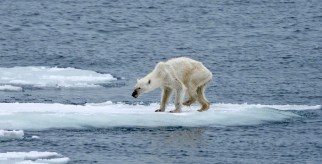
Emaciated female polar bear on drift ice in Hinlopen Strait (Svalbard, Norway), in July 2015 – courtesy of Kerstin Langenberger (www.arctic-dreams.com)
Evolution has designed polar bears to move, hunt and reproduce on a frozen and dynamic habitat that wanes and grows in thickness seasonally. But the modification of the annual cycle of Arctic ice due to global warming is triggering a trophic cascade, which already links polar bears to marine birds.
Popular and epicurean gastronomy claims that the best recipes should use seasonal veggies and fruits. Once upon a time, when there were no greenhouses, international trade routes, or as much frozen and canned food, our grandparents enjoyed what was available at the time. So in some years we had plenty of cherries, while during others we might have feasted on plums. Read the rest of this entry »
 As you recall, I asked both for your nominations and your votes for the inaugural Environmental Arsehat of the Year. Nominees could be a person or an entity who stood out in 2016 for his/her/their egregious attacks on environmental integrity. There were many fine nominations, and so now I’m elated to announce the results of the voting. Drumroll …
In 4th place with 13.7% of the votes, Matt Ridley. He is Conservative hereditary peer in the British House of Lords, and a flack for the coal industry who has championed global-warming denialism.
In 3rd place with 14.9% of the votes, Gautam Adani. The multibillionaire is a major coal baron in India and elswhere who has made a lot of splash recently in Australia for trying to build the biggest coal mine in the world that will likely finish off the Great Barrier Reef once and for all. Nice one, Gautam.
In 2nd place with 17.7% of the votes, The Liberal-National Party of Queensland. The (former) State Government ushered Queensland into 2016 by making the state one of the world’s deforestation hotspots, yet again!
And now, for the winner with a whopping 30.3% of the popular vote; please put your virtual hands together for the 2016 Environmental Arsehat of the Year … Read the rest of this entry »

Talk to the hand
Climate change caused by industrialisation is modifying the structure and function of the Biosphere. As we uncork 2017, our team launches a monthly section on plant and animal responses to modern climate change in the Spanish magazine Quercus – with an English version in Conservation Bytes. The initiative is the outreach component of a research project on the expression and evolution of heat-shock proteins at the thermal limits of Iberian lizards (papers in progress), supported by the British Ecological Society and the Spanish Ministry of Economy, Industry and Competitiveness. The series will feature key papers (linking climate change and biodiversity) that have been published in the primary literature throughout the last decade. To set the scene, we start off putting the emphasis on how people perceive climate change.
Salvador Herrando-Pérez, David R. Vieites & Miguel B. Araújo
—
“I would like to mention a cousin of mine, who is a Professor in Physics at the University of Seville – and asked about this matter [climate change], he stated: listen, I have gathered ten of the top scientists worldwide, and none has guaranteed what the weather will be like tomorrow in Seville, so how could anyone predict what is going to occur in the world 300 years ahead?”
Mariano Rajoy (Spanish President from 2011 to date) in a public speech on 22 October 2007
—
Weather (studied by meteorology) behaves like a chaotic system, so a little variation in the atmosphere can trigger large meteorological changes in the short term that are hard to predict. On the contrary, climate (studied by climatology) is a measure of average conditions in the long term and thus far more predictable than weather. There is less uncertainty in a climate prediction for the next century than in a weather prediction for the next month. The incorrect statement made by the Spanish President reflects harsh misinformation and/or lack of environment-related knowledge among our politicians.
Climate has changed consistently from the onset of the Industrial Revolution. The IPCC’s latest report stablishes with 95 to 100% certainty (solid evidence and high consensus given published research) that greenhouse gases from human activities are the main drivers of global warming since the second half of the 20th Century (1,2). The IPCC also flags that current concentrations of those gases have no parallel in the last 800,000 years, and that climate predictions for the 21st Century vary mostly according to how we manage our greenhouse emissions (1,3). Read the rest of this entry »
 As I have done for the last three years (2015, 2014, 2013), here’s another retrospective list of the top 20 influential conservation papers of 2016 as assessed by experts in F1000 Prime.
That’s ’40’, of course. Six more biodiversity cartoons, and the last for 2016. See full stock of previous ‘Cartoon guide to biodiversity loss’ compendia here.
—

 In August I had the pleasure of visiting the National Centre for Biological Sciences in Bengaluru, India, and while there I was interviewed by Hari Sridhar of Current Conservation. I admit that I haven’t always fully appreciated the excellent conservation reporting done by Current Conservation, and now after having been interviewed by them, I’m becoming more aware of their value (and not just because I appear in their latest issue). I really encourage CB.com readers to check it out.
—
In a paper published in the Proceedings of the National Academy of Sciences USA in 2014, Corey Bradshaw and Barry Brook argued that, given the current momentum of human population growth, no demographic “quick fixes” will be enough to change its trajectory in the near future. Therefore, environmental policy will be served better by prioritising measures such as technological and social innovation and reductions in consumption, while treating population reduction as a long-term goal. On his recent visit to Bengaluru, I spoke to Corey Bradshaw about the genesis of this study and its implications.
Hari Sridhar: You say “our models clearly demonstrate that the current momentum of the global human population precludes any demographic “quick fixes.” If that is the case, what do you suggest should be done instead?
Corey Bradshaw: I’ll back up a little bit and give you some of the context for writing the paper, which will sort of explain the title and that particular conclusion. Often when I gave public seminars, where I would talk about some environmental problem and future predictions of its worsening, some member of the audience would stand up at the end and say: “Well, the problem is humans. There are just too many of us. So all we need to do is focus on reducing the human population and we will fix all of these other problems.” That came up so often that I began to think: “Well, how quickly could we fix the overpopulation problem?”
Being, among other things, a population dynamics modeller, I decided I could model the human population just as well to look at that question. What would it take and how long for human population to start to decline, either from interventions or catastrophes? Human demographers don’t typically consider catastrophe scenarios when they project human populations. It’s instead done under very strict policy criteria, typically under the expected status quo, with some slight variation in things like family planning and structural change, you know, things like age structure. But we decided to try out more extreme scenarios as well to address that question. So first we said “let’s just see what happens when we only adjust fertility”. We did that and the population trajectory was more or less insensitive.
Then we said “let’s see what happens if we impose mass mortality events of various types — a third world war, pandemics, nuclear warfare” — and still the population was fairly resistant, even to these big changes. What we took away from these results was this: yes, population size must be addressed and we should have started looking into this seriously, probably post World War 2 when we were just under two billion people. We need to address overpopulation, but it’s not going to be something that can be fixed suddenly or be reduced anytime in the next few decades. It’s a century-scale issue. Should we be aiming to reduce the total human population? Yes. Should we be encouraging fertility reduction and family planning? Yes. It’s just that these will have positive outcomes at the century scale. Now most of our environmental problems are not things that we can ignore for a century. They have to be dealt with now. So our argument basically was that if we can’t address the human population problem, in the sense of reducing its size quickly, then we need to turn our attention to more immediate fixes, such as addressing consumption and various environmental mitigation policies. That was our main message. But in so doing we managed to anger both sides of the ideological position on the human population debate. In saying that something must be done but it can’t be done quickly, we upset the low-growth proponents. And by saying that we should nevertheless aim for long-term population reduction, we upset the people who are utterly opposed to any sort of fertility reduction or any action on human population growth.
HS: That’s something I want to ask you about — tell us about the attention this paper got within academia and in the media.
CB: Yeah, in the academic setting it was interesting. There were only a few critiques written about the paper and they were fairly weak. As the saying goes “All models are wrong but some are useful”, but what our model said was defensible. I suppose some of the terminology and the interpretation were points of contention with some people, but by and large the scientific community was satisfied with the result. But in the media it was completely different. Almost every single journalist I talked to put a particular slant on the results. Because of those two diametrically opposite opinions, people appeared to read anything they wanted to into it. Most people in the media didn’t of course read the paper. They read the title and maybe the abstract and the odd sentence here and there, and took from that whatever their ideological position dictated. There was right-wing media, there was left-wing media, and each had its own bias. I think only a handful of interviewers seemed to grasp the concept, which I didn’t think was that difficult. It also got a lot of responses on these comment streams. I don’t read those most of the time, but there are a lot of crazy people on the internet now. I got all sorts of hate mail, and even indirect death threats. Not serious ones. Just some random person telling me I should be removed from the face of the planet, and things like that. That happens from time to time when you deal with controversial topics.
HS: In the paper, you come up with some figures for what the population will be in 2100, under different scenarios. Could you tell us how much uncertainty there was around these figures?
CB: There was probably much less uncertainty than for most other species that are modelled. Humans tend to census themselves fairly well and we have a reasonable understanding of how many of us there are right now. While demographic data like age-specific survival rates are missing from some parts of the world, generally speaking at the scale of regions it’s well-known. So in terms of measurement error, the current and even the trends in those demographic rates are robust. Some of the assumptions, such as how much longer we’ll live given future medical innovations, are somewhat uncertain. But as it turns out, we are living so long now that even slight adjustments to longevity don’t make much difference in the long-term to total population size. And even large assumptions about, say, juvenile mortality, don’t make a huge difference because for a long-lived mammal the most important parameter that modifies population growth generally is the survival of breeding females. And breeding-age woman around the world tend to have the highest survival rates, so all the other parameters have smaller effects on population size. So while environmental variability has a large effect on small populations, it has a comparatively small effect on large populations. And we are a very large population. Incorporating a lot of uncertainty didn’t really make much of a difference. But the future scenarios were uncertain – will there be a war, will there be climate change reductions in food availability that will lead to higher juvenile mortality, etc.? We know little about the probability these things will occur and how important they’ll be. Read the rest of this entry »
Six more biodiversity cartoons coming to you all the way from Sweden (where I’ve been all week). See full stock of previous ‘Cartoon guide to biodiversity loss’ compendia here.
—
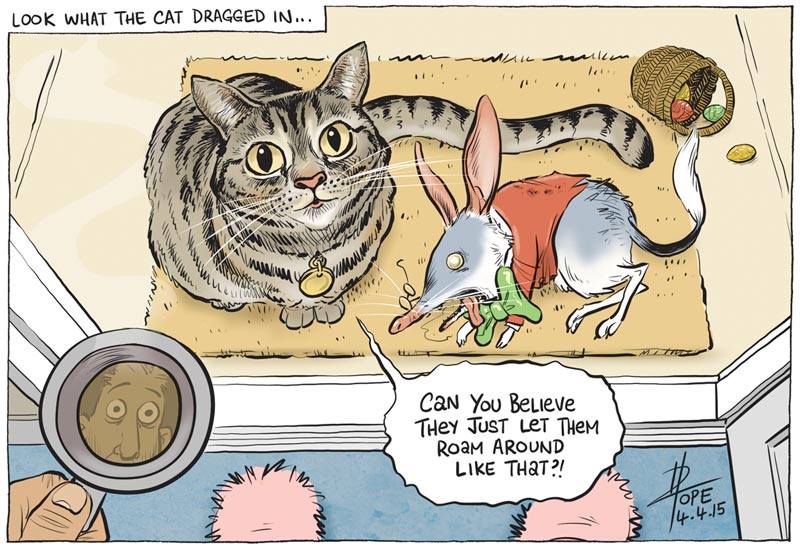
Another six biodiversity cartoons for your midday chuckle & groan. There’s even one in there that takes the mickey out of some of my own research (see if you can figure out which one). See full stock of previous ‘Cartoon guide to biodiversity loss’ compendia here.
—
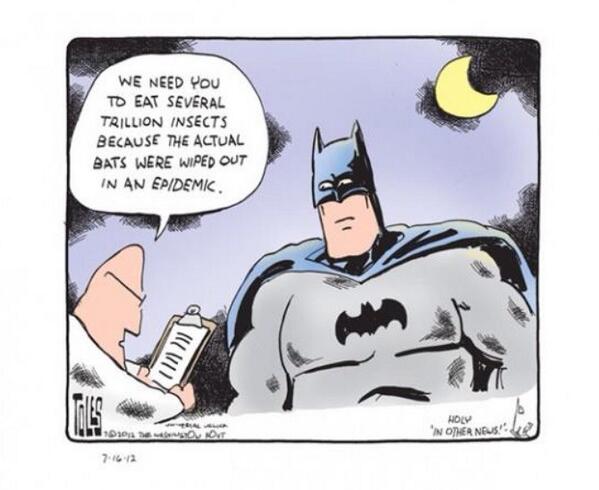
 Within six months of Abbott and the Coalition seizing power in the 2013 Australian election, decades—if not centuries—of environmental damage and retrograde policies unfolded. But this was no run-of-the-mill incompetence and neglect by government—this was an all-out attack on anything with the merest whiff of environmental protection. The travesty is well-documented, from infamously axing both the carbon-pricing scheme and climate commission, eradicating Labor’s 80% emissions-reduction target by 2050, diluting the Renewable Energy Target, refusing to commit to enforcing the Illegal Logging Prohibition Act (fortunately, this is now law), defunding the only independent legal entity available to limit environmentally destructive development (Environmental Defenders Office), to even attempting to remove the rights of environmental groups to challenge development proposals (thankfully, that failed).
The Coalition’s backward and ineffectual climate change-mitigation policies alone are evidence enough for long-term damage, but their war on the environment in general means that even the future election of a more environmentally responsible government will not undo the damage quickly, if at all. As a result of these and other nearsighted policies, Australia remains one of the highest per-capita greenhouse-gas emitters on the planet, has one of the highest per-capita water uses of any nation, leads the world in mammal extinctions, continues to deforest its already forest-poor landscape, and is a society utterly unprepared to deal with the future challenges of a degraded planet.
Read the rest of this entry »
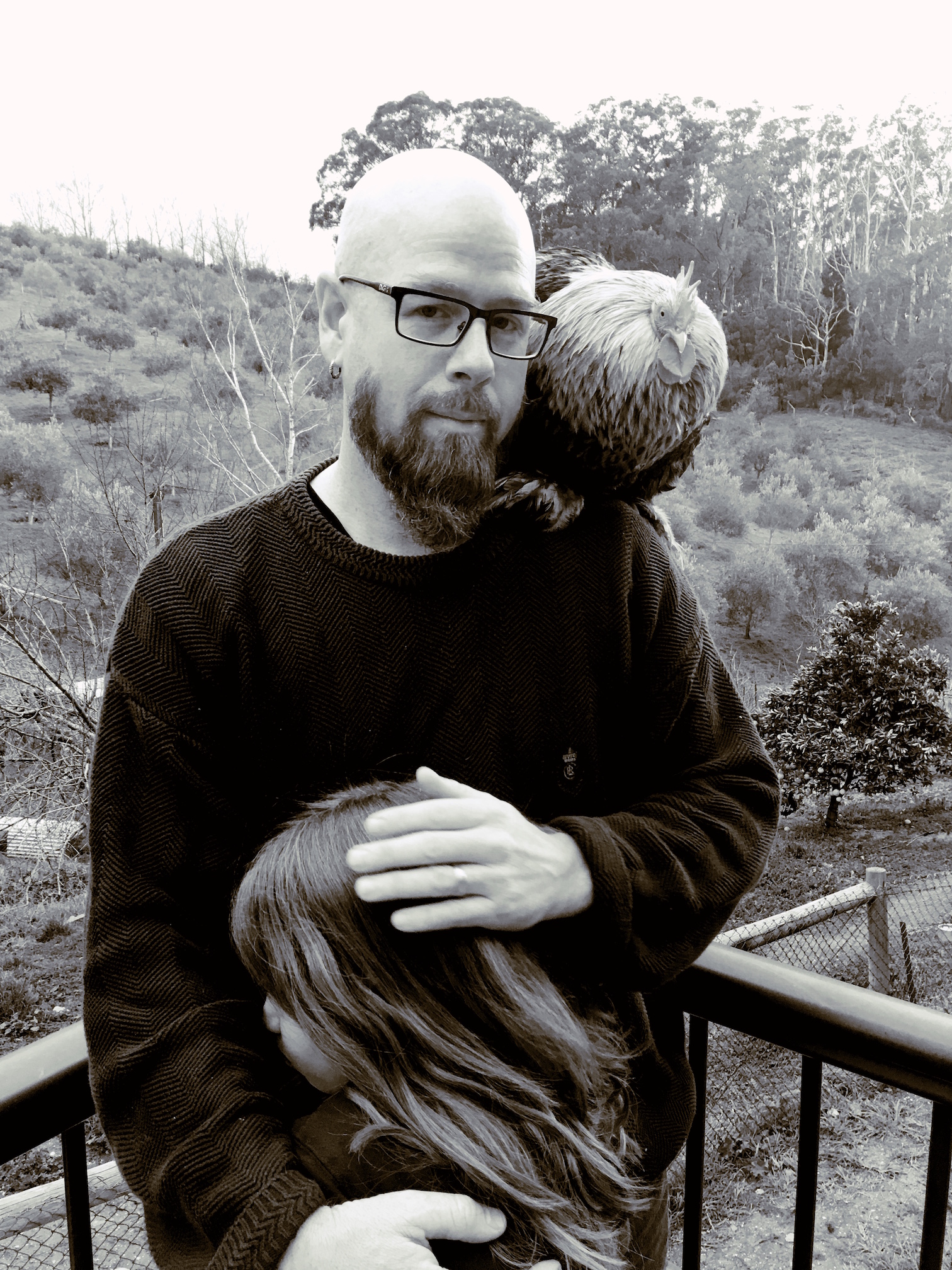 Originally published in the Otago Daily Times by Tom McKinlay
—
If we don’t act soon, the world we leave our children will be in a sorry state indeed, leading Australian scientist Prof Corey Bradshaw tells Tom McKinlay.
Prof Corey Bradshaw’s 9-year-old daughter lives what sounds an idyllic existence. On their small farm outside Adelaide in South Australia, she has her chickens and her dogs and her cats, her goats and her sheep.
She’s an only child, but is not short of attention from adults and reads voraciously.
She has big plans; there are at least 25 careers she likes the look of, that she’ll undertake simultaneously: farmer, wildlife rescuer, self-sufficient bush dweller – feeding herself by shooting arrows at fish – scientist and more.
She is optimistic about the future. As she should be. A 9-year-old girl living in Australia in 2016 should regard the sky as no limit at all.
All this I learn from her father, ecologist Prof Bradshaw, who talks of his daughter with an enthusiasm unbounded.
It is fair to assume she has picked up some of her interest in the natural world from him.
He holds the Sir Hubert Wilkins Chair of Climate Change in the School of Biological Sciences at the University of Adelaide.
And the ecologist, conservation biologist and systems modeller – with a University of Otago degree – has shared a great deal of his work with his daughter.
“She’s very much a farm kid, but because of who I am she gets to hear a lot about animal and plant systems around the world, and she’s travelled a lot with me and she’s a complete fanatic of David Attenborough,” the professor says.
So far, still so idyllic. But Prof Bradshaw’s work means he is at the forefront of alerting the world to what is not right with it.
Pollution, climate change, habitat loss, extinction.
His daughter has travelled with him to see species that might not be with us by the time she grows up.
“She’s hyper-aware of extinctions, in particular, and how climate change is contributing to that,” Prof Bradshaw says.
“I don’t pull any punches with her.”
In fact, he made her cry when she was 5 explaining climate change. She hasn’t needed to travel to know the pot is on the boil. Fires have forced the family to flee its South Australian property several times, not just at the height of summer.
One of the worst fires in the region struck in May a couple of years back.
“We were on the doorstep of winter and we had one of our worst fires in 20 years.”
So even without a scientist in the family, there are certain unavoidable truths for a child growing up in 21st-century Australia.
Prof Bradshaw is coming to Dunedin next month as part of the New Zealand International Science Festival to talk on climate change, looking at it from his daughter’s perspective. Read the rest of this entry »
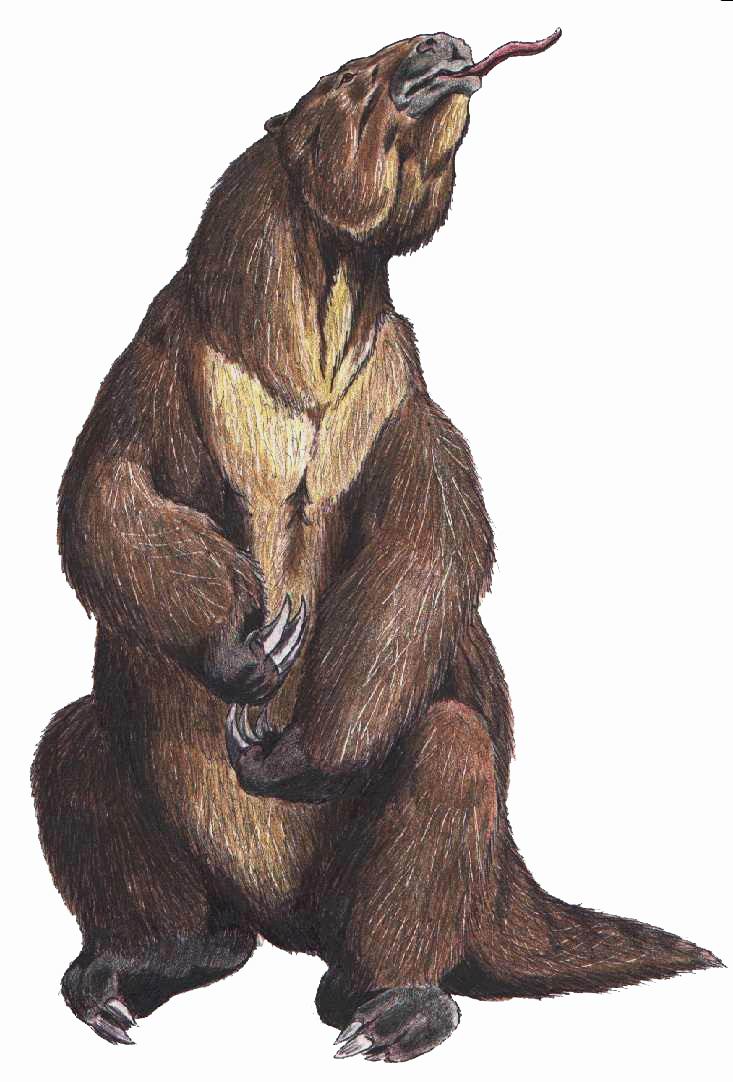 Here’s a paper we’ve just had published in Science Advances (Synergistic roles of climate warming and human occupation in Patagonian megafaunal extinctions during the Last Deglaciation). It’s an excellent demonstration of our concept of extinction synergies that we published back in 2008.
—
Giant Ice Age species including elephant-sized sloths and powerful sabre-toothed cats that once roamed the windswept plains of Patagonia, southern South America, were finally felled by a perfect storm of a rapidly warming climate and humans, a new study has shown.
Research published on Saturday in Science Advances, has revealed that it was only when the climate warmed, long after humans first arrived in Patagonia, did the megafauna suddenly die off around 12,300 years ago.
The timing and cause of rapid extinctions of the megafauna has remained a mystery for centuries.
“Patagonia turns out to be the Rosetta Stone – it shows that human colonisation didn’t immediately result in extinctions, but only as long as it stayed cold”. “Instead, more than 1000 years of human occupation passed before a rapid warming event occurred, and then the megafauna were extinct within a hundred years.”
The researchers, including from the University of Colorado Boulder, University of New South Wales and University of Magallanes in Patagonia, studied ancient DNA extracted from radiocarbon-dated bones and teeth found in caves across Patagonia, and Tierra del Fuego, to trace the genetic history of the populations. Species such as the South American horse, giant jaguar and sabre-toothed cat, and the enormous one-tonne short-faced bear (the largest land-based mammalian carnivore) were found widely across Patagonia, but seemed to disappear shortly after humans arrived. Read the rest of this entry »

After dipping my foot into the murky waters of human population demography a few years ago, I’m a little surprised that I find myself here again. But this time I’m not examining what the future of the global human population might be and what it could mean for our environment; instead, I’m focussing on Australia’s population future and its implications for our greenhouse-gas emissions trajectories.
Just published in Asia and the Pacific Policy Forum1, my paper with long-time co-author Barry Brook is entitled Implications of Australia’s population policy for future greenhouse gas emissions targets. It deals with the sticky question of just how many people Australia can ‘afford’ to house. By ‘afford’ I mean several things, but most specifically in the context of this paper is by how much we need to reduce our per capita emissions to achieve future reduction targets under various immigration-rate scenarios.
In many ways Australia’s population is typical of other developed nations in that its intrinsic fertility (1.78 children/woman) is below replacement (which is itself ~ 2.1 children/female). Yet Australia’s population grew nearly twice (1.88×) as large from 1971 to 2014. It doesn’t take a genius to figure out that most of our population growth is due to net immigration.
In fact, between 2006 and 2014, Australia welcomed a net of 215,000 new people per year (this means that of all the permanent immigrants and emigrants, a ‘net’ of approximately 215,000 stayed each year), which represents about 1% of our total population size (that latter most likely just ticked over 24 million). Read the rest of this entry »
Another six biodiversity cartoons because I have a full-on month of lecturing. I’ll call this one the ‘over-population’ issue. See full stock of previous ‘Cartoon guide to biodiversity loss’ compendia here.
—

 I’ve just read a well-planned and lateral-thinking paper in Nature Communications that I think readers of CB.com ought to appreciate. The study is a simulation of a complex ecosystem service that would be nigh impossible to examine experimentally. Being a self-diagnosed fanatic of simulation studies for just such purposes, I took particular delight in the results.
In many ways, the results of the paper by Osuri and colleagues are intuitive, but that should never be a reason to avoid empirical demonstration of a suspected phenomenon because intuition rarely equals fact. The idea itself is straightforward, but takes more than a few logical steps to describe: Read the rest of this entry »
Another six biodiversity cartoons because it’s shaping up to be a crazy week. See full stock of previous ‘Cartoon guide to biodiversity loss’ compendia here.
—

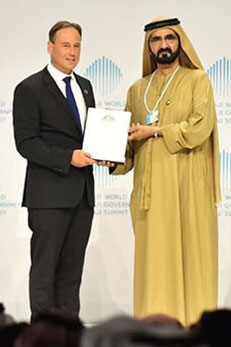
Our Most-Bestest Minister Ever (i.e., the bloke on the left; interestingly, the bloke on the right leads one of the few countries in the world with a higher per capita emissions rate than Australia)
Australia has an appalling environmental record — hell, I have even written an entire book on our sorry state of environmental affairs. Of course, environmental damage is a slow accumulation of bad political decisions, neglect, corruption, greed and society’s general I-couldn’t-give-a-shit attitude, but the record of our recent government demonstrates not just classic political buffoonery and neglect, but an outright attack on the environment.
So it was impossible to restrain a disgusted guffaw when, in February this year, our ‘Environment’ Minister won the coveted ‘Best Minister’ in the World award at the World Government Summit in Dubai by Sheikh Mohammed Bin Rashid Al Maktoum, Vice President and Prime Minister of the United Arab Emirates and Ruler of Dubai.
Deserved ridicule aside, I was asked recently by The Conversation to contribute to a special report examining the profile performance of cabinet and shadow cabinet ministers, which is not only a responsibility I take seriously, but an honour to be able to provide a serious and objective appraisal of our Most-Bestest Minister Ever. My contribution dealt specifically with the environmental portfolio, so I appraised both the sitting Minister and the Shadow Minister. Judge for yourself based on their performances. Read the rest of this entry »


Those of us living with cats share our homes with an ancestral predator, one adapted for hunting and the frequent, exclusive consumption of meat. These instincts become fully activated outside the domestic environment, where cats pose a global threat to wildlife. Pets are family. We celebrate their arrival with the same joy as a grand…

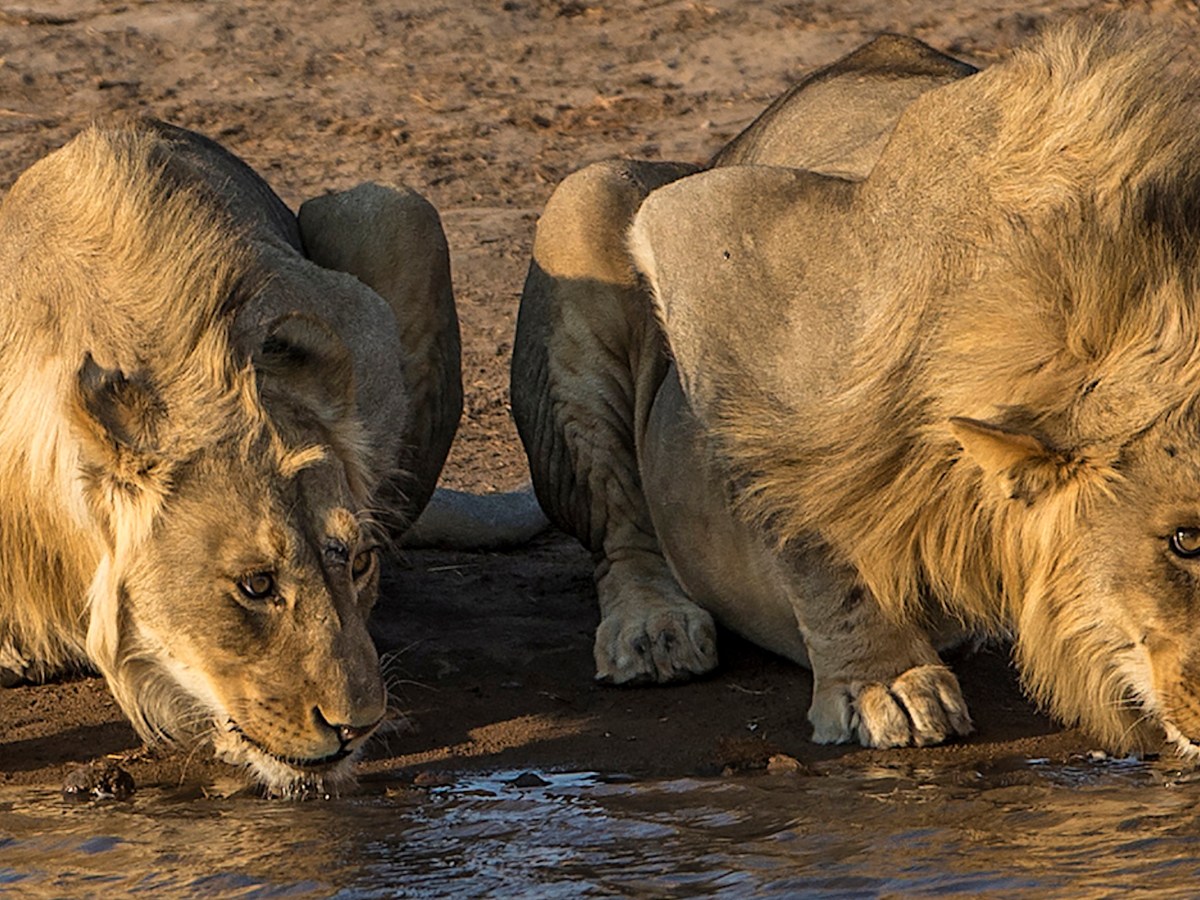
Many animals avoid contact with people. In protected areas of the African savanna, mammals flee more intensely upon hearing human conversations than when they hear lions or sounds associated with hunting. This fear of humans affects how species use and move in their habitat. Throughout our lives, we interact with hundreds of wildlife species without…
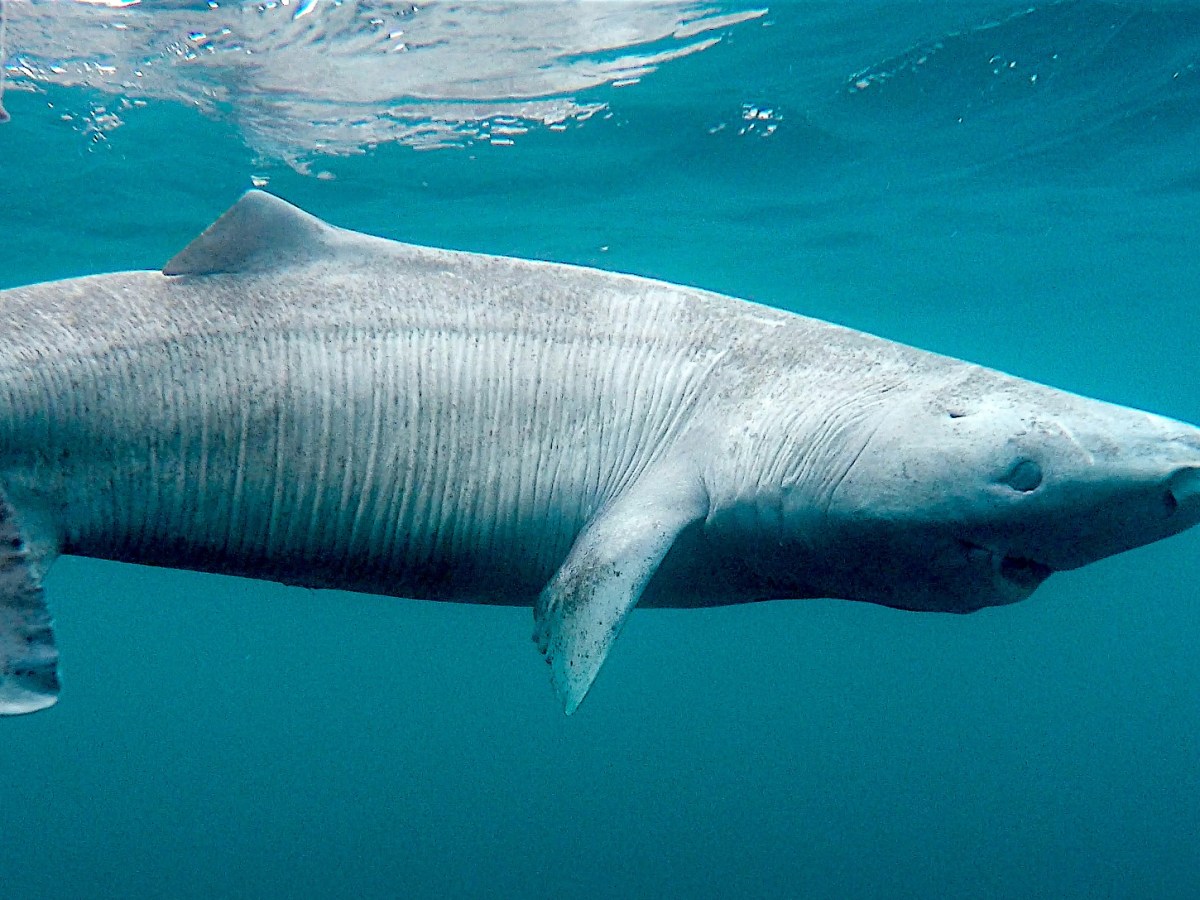
Deep-sea sharks include some of the longest-lived vertebrates known. The record holder is the Greenland shark, with a recently estimated maximum age of nearly 400 years. Their slow life cycle makes them vulnerable to fisheries. Humans rarely live longer than 100 years. But many other animals and plants can live for several centuries or even millennia, particularly…


 ConservationBytes.com