Open Letter: Public policy in South Australia regarding dingoes

28 08 2023

08 August 2023

The Honourable Dr Susan Close MP, Deputy Premier and Minister for Climate, Environment and Water, South Australia

The Honourable Claire Scriven MLC, Minister for Primary Industries and Regional Development, South Australia

Dear Ministers,

In light of new genetic research on the identity of ‘wild dogs’ and dingoes across Australia, the undersigned wish to express concern with current South Australia Government policy regarding the management and conservation of dingoes. Advanced DNA research on dingoes has demonstrated that dingo-dog hybridisation is much less common than thought, that most DNA tested dingoes had little domestic dog ancestry and that previous DNA testing incorrectly identified many dingoes as hybrids (Cairns et al. 2023). We have serious concerns about the threat current South Australian public policy poses to the survival of the ‘Big Desert’ dingo population found in Ngarkat Conservation Park and surrounding areas.

We urge the South Australian Government to:

  • Revoke the requirement that all landholders follow minimum baiting standards, including organic producers or those not experiencing stock predation. Specifically
    1. Dingoes in Ngarkat Conservation park (Region 4) should not be destroyed or subjected to ground baiting and trapping every 3 months. The Ngarkat dingo population is a unique and isolated lineage of dingo that is threatened by inbreeding and low genetic diversity. Dingoes are a native species and all native species should be protected inside national parks and conservation areas.
    2. Landholders should not be required to carry out ground baiting on land if there is no livestock predation occurring. Furthermore, landholders should be supported to adopt non-lethal tools and strategies to mitigate the risk of livestock predation including the use of livestock guardian animals, which are generally incompatible with ground and aerial 1080 baiting.
  • Revoke permission for aerial baiting of dingoes (incorrectly called “wild dogs”) in all Natural Resource Management regions – including within national parks. Native animals should be protected in national parks and conservation areas.
  • Cease the use of inappropriate and misleading language to label dingoes as “wild dogs”. Continued use of the term “wild dogs” is not culturally respectful to First Nations peoples and is not evidence-based.
  • Proactively engage with First Nations peoples regarding the management of culturally significant species like dingoes. For example, the Wotjobaluk nation should be included in consultation regarding the management of dingoes in Ngarkat Conservation Park.

Changes in South Australia public policy are justified based on genetic research by Cairns et al. (2023) that overturns previous misconceptions about the genetic status of dingoes. It demonstrates:

  1. Most “wild dogs” DNA tested in arid and remote parts of Australia were dingoes with no evidence of dog ancestry. There is strong evidence that dingo-dog hybridisation is uncommon, with firstcross dingo-dog hybrids and feral dogs rarely being observed in the wild. In Ngarkat Conservation park none of DNA tested animals had evidence of domestic dog ancestry, all were ‘pure’ dingoes.
  2. Previous DNA testing methods misidentified pure dingoes as being mixed. All previous genetic surveys of wild dingo populations used a limited 23-marker DNA test. This is the method currently used by NSW Department of Primary Industries, which DNA tests samples from NSW Local Land Services, National Parks and Wildlife Service, and other state government agencies. Comparisons of DNA testing methods find that the 23-marker DNA test frequently misidentified animals as dingo-dog hybrids. Existing knowledge of dingo ancestry across South Australia, particularly from Ngarkat Conservation park is incorrect; policy needs to be based on updated genetic surveys.
  3. There are multiple dingo populations in Australia. High-density genomic data identified more than four wild dingo populations in Australia. In South Australia there are at least two dingo populations present: West and Big Desert. The West dingo population was observed in northern South Australia, but also extends south of the dingo fence. The Big Desert population extends from Ngarkat Conservation park in South Australia into the Big Desert and Wyperfield region of Victoria.
  4. The Ngarkat Dingo population is threatened by low genetic variability. Preliminary evidence from high density genomic testing of dingoes in Ngarkat Conservation park and extending into western Victoria found evidence of limited genetic variability which is a serious conservation concern. Dingoes in Ngarkat and western Victoria had extremely low genetic variability and no evidence of gene flow with other dingo populations, demonstrating their effective isolation. This evidence suggests that the Ngarkat (and western Victorian) dingo population is threatened by inbreeding and genetic isolation. Continued culling of the Ngarkat dingo population will exacerbate the low genetic variability and threatens the persistence of this population.
Read the rest of this entry »


South Australia is still killing dingoes

14 04 2020

As we did for Victoria, here’s our submission to South Australia’s proposed changes to its ‘wild dog’ and dingo policy (organised again by the relentless and venerable Dr Kylie Cairns):

JE201608161745

© Jason Edwards Photography

14 April 2020

The Honourable Tim Whetstone MP, Minister for Primary Industries and Regional Development, South Australia

RE: PROPOSED CHANGES TO THE SA WILD DOG AND DINGO POLICY

Dear Minister,

The undersigned welcome the opportunity to comment on the proposed changes to the South Australian (SA) Government’s ‘Wild dog and Dingo’ declared animal policy under section 10 (1)(b) of the Natural Resources Management Act 2004. The proposed changes raise serious concerns for dingoes in SA because it:

1. Requires all landholders to follow minimum baiting standards, including organic producers or those not experiencing stock predation.

  • Requires dingoes within Ngarkat Conservation Park (Region 4) to be destroyed, with ground baiting to occur every 3 months.
  • Requires ground baiting on land irrespective of whether stock predation is occurring or not, or evidence of dingo (wild dog) presence.

2. Allows aerial baiting of dingoes (aka wild dogs) in all NRM regions – including within National Parks.

3. Uses inappropriate and misleading language to label dingoes as “wild dogs”

We strongly urge the PIRSA to reject the proposed amendments to the SA wild dog and dingo policy. Instead the PIRSA should seek consultation with scientific experts in ecology, biodiversity and wildlife-conflict to develop a policy which considers the important ecological and cultural identity of the dingo whilst seeking to minimise their impact on livestock using best-practice and evidence-based guidelines. Key to this aim, livestock producers should be assisted with the help of PIRSA to seek alternative stock protection methodology and avoid lethal control wherever possible. On the balance of scientific evidence, protection of dingoes should be enhanced rather than diminished. Widespread aerial baiting programs are not compatible with the continued persistence of genetically intact and distinct dingoes in SA.

In this context, we strongly emphasise the following points: Read the rest of this entry »


Minister, why is the dingo no longer ‘fauna’?

7 09 2018

dead dingoSo, a few of us have just submitted a letter contesting the Western Australia Government’s recent decision to delist dingoes as ‘fauna’ (I know — what the hell else could they be?). The letter was organised brilliantly by Dr Kylie Cairns (University of New South Wales), and she and the rest of the signatories have agreed to reproduce the letter in full here on ConservationBytes.com. If you feel so compelled, please voice your distaste of this decision officially by contacting the Minister (details below).
CJA Bradshaw

Honourable Stephen Dawson MLC
Minister for Environment; Disability Services
Address: 12th Floor, Dumas House
2 Havelock Street, WEST PERTH WA 6005
(minister.dawson@dpc.wa.gov.au)

cc: Department of Biodiversity, Conservation and Attractions (biodiversity@dbca.wa.gov.au)
cc: Brendan Dooley (brendan.dooley@dpc.wa.gov.au)

Dear Minister,

The undersigned welcome the opportunity to comment on and recommend alteration of the proposed section (9)(2) order of the Biodiversity Conservation Act 2016 (BC Act) that changes the listing of the dingo from “fauna” to “non-fauna” in Western Australia. Removing the “fauna” status from dingoes has serious consequences for the management and conservation of this species and other native biota it benefits. Currently, dingoes are classed as A7, or fauna that requires a management policy. The proposed section (9)(2) order will move dingoes (as “non-fauna”) to the A5 class, meaning that dingoes must be (lethally) controlled and there will be no obligation for the Department of Biodiversity, Conservation and Attractions to have an appropriate management policy (or approval).

Currently, under the Wildlife Conservation Act 1950 (WC Act) the dingo is considered “unprotected” fauna allowing management under a Department of Biodiversity, Conservation and Attractions management policy. A section (9)(2) order demoting dingoes to “non-fauna” will remove the need for Department of Biodiversity, Conservation and Attractions management policy and instead mandate the lethal control of dingoes throughout Western Australia.

As prominent researchers in top predator ecology, biology, cultural value and genetics, we emphasise the importance of dingoes within Australian, and particularly Western Australia’s ecosystems. Dingoes are indisputably native based on the legislative definition of “any animal present in Australia prior to 1400 AD” from the BC Act. Dingoes have been present in Australia for at least 5000 years. On the Australian mainland they are now the sole non-human land-based top predator. Their importance to the ecological health and resilience of Australian ecosystems cannot be overstated. Read the rest of this entry »


Keeping lions from livestock — building fences can save lives

23 06 2017

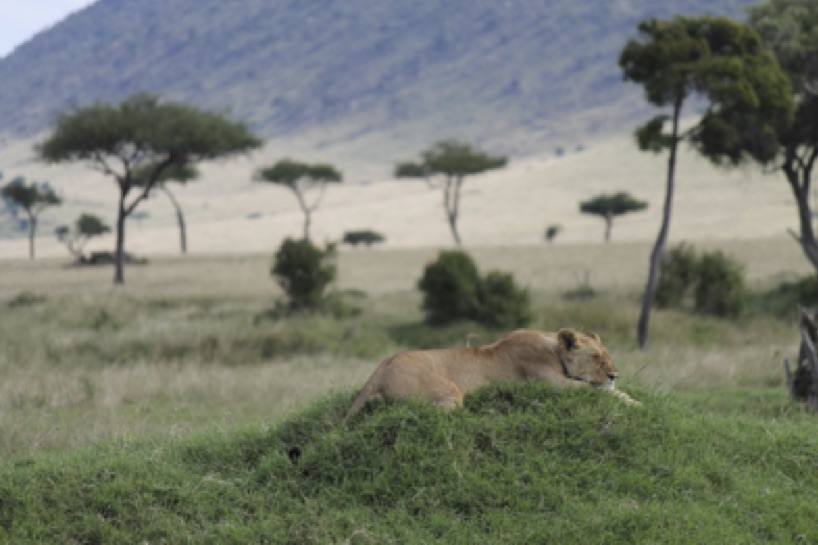
Seeing majestic lions strolling along the Maasai Mara at sunset — a dream vision for many conservationists, but a nightmare for pastoralists trying to keep their cattle safe at night. Fortunately a conservation success story from Kenya, published today in the journal Conservation Evidence, shows that predation of cattle can be reduced by almost 75% by constructing chain-link livestock fences.

The Anne K. Taylor Fund (AKTF) subsidises over 70% of the cost of building a fully fortified chain-link livestock enclosure (‘boma’) to keep cattle safe from predators at night, in the hope that this will lessen the retaliatory killings of lions by frustrated farmers. While lions, leopards and cheetahs draw in crowds of tourists who marvel at their strength and beauty, living alongside big predators can be tough. Traditionally, local people keep their animals overnight in bomas made of acacia thorns — but depredation by lions and other large carnivores cause losses of on average more than nine head of cattle per year, or US$1870 that farmers see disappear down the throat of big, hairy animals. Building a solid fortification of chain-link fence costs just $890, of which the AKTF paid $638, helping to make this an affordable option for hard-pressed locals. Read the rest of this entry »


What makes all that biodiversity possible?

23 09 2015

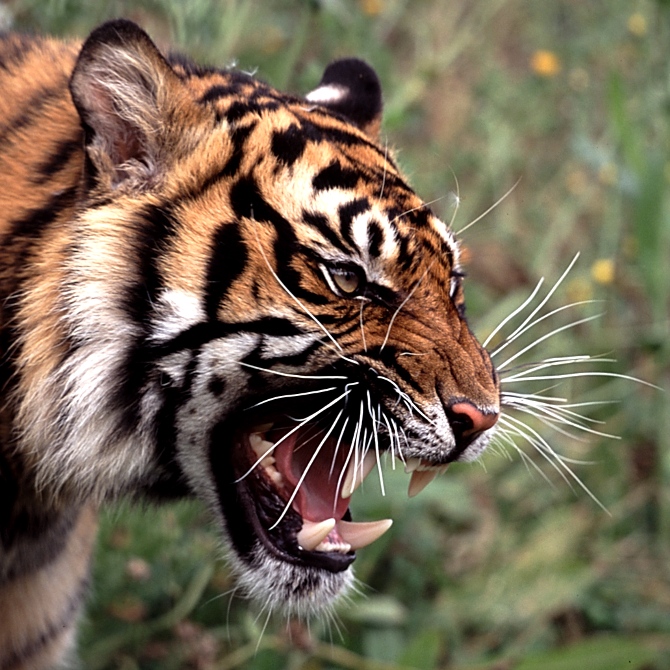
tigerPredators.

You can either stop reading now because that’s the answer to the question, or you can continue and find out a little more detail.

I’ve just had an extremely pleasant experience reading John Terborgh‘s latest Perspective in PNAS. You know the kind of paper you read that (a) makes you feel smart, (b) confirms what you already think, yet informs you nonetheless, and (c) doesn’t take three days to digest? That’s one of those.

Toward a trophic theory of species diversity is not only all of those things, it’s also bloody well-written and comes at the question of ‘Why are there so many species on the planet when ecological theory can’t seem to explain how?’ with elegance, style and a lifetime of experience. I just might have to update my essential-ecology-papers list. If I had to introduce someone to 60 years of ecological theory on biodiversity, there’s no better place to start.

Read the rest of this entry »


Using ecological theory to make more money

1 12 2014

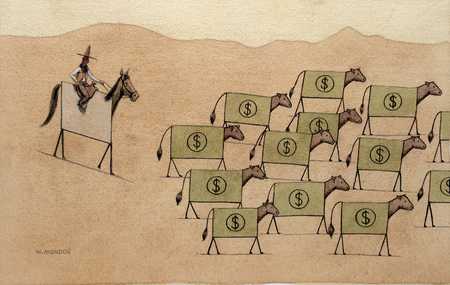
huge.9.46974Let’s face it: Australia doesn’t have the best international reputation for good ecological management. We’ve been particularly loathsome in our protection of forests, we have an appalling record of mammal extinctions, we’re degenerate water wasters and carbon emitters, our country is overrun with feral animals and weeds, and we have a long-term love affair with archaic, deadly, cruel, counter-productive and xenophobic predator management. To top it all off, we have a government hell-bent on screwing our already screwed environment even more.

Still, we soldier on and try to fix the damages already done or convince people that archaic policies should be scrapped and redrawn. One such policy that I’ve written about extensively is the idiocy and cruelty of the dingo fence.

The ecological evidence that dingoes are good for Australian wildlife and that they pose less threat to livestock than purported by some evidence-less graziers is becoming too big to ignore any longer. Poisoning and fencing are not only counter-productive, they are cruel, ineffective and costly.

So just when ecologists thought that dingoes couldn’t get any cooler, out comes our latest paper demonstrating that letting dingoes do their thing results in a net profit for cattle graziers.

Come again? Read the rest of this entry »


No need for disease

7 01 2013

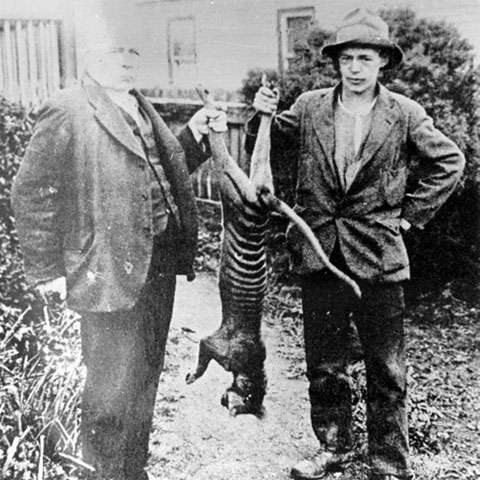
dead or alive thylacineIt’s human nature to abhor admitting an error, and I’d wager that it’s even harder for the average person (psycho- and sociopaths perhaps excepted) to admit being a bastard responsible for the demise of someone, or something else. Examples abound. Think of much of society’s unwillingness to accept responsibility for global climate disruption (how could my trips to work and occasional holiday flight be killing people on the other side of the planet?). Or, how about fishers refusing to believe that they could be responsible for reductions in fish stocks? After all, killing fish couldn’t possibly …er, kill fish? Another one is that bastion of reverse racism maintaining that ancient or traditionally living peoples (‘noble savages’) could never have wiped out other species.

If you’re a rational person driven by evidence rather than hearsay, vested interest or faith, then the above examples probably sound ridiculous. But rest assured, millions of people adhere to these points of view because of the phenomenon mentioned in the first sentence above. With this background then, I introduce a paper that’s almost available online (i.e., we have the DOI, but the online version is yet to appear). Produced by our extremely clever post-doc, Tom Prowse, the paper is entitled: No need for disease: testing extinction hypotheses for the thylacine using multispecies metamodels, and will soon appear in Journal of Animal Ecology.

Of course, I am biased being a co-author, but I think this paper really demonstrates the amazing power of retrospective multi-species systems modelling to provide insight into phenomena that are impossible to test empirically – i.e., questions of prehistoric (and in some cases, even data-poor historic) ecological change. The megafauna die-off controversy is one we’ve covered before here on ConservationBytes.com, and this is a related issue with respect to a charismatic extinction in Australia’s recent history – the loss of the Tasmanian thylacine (‘tiger’, ‘wolf’ or whatever inappropriate eutherian epithet one unfortunately chooses to apply). Read the rest of this entry »


Individuals a population to conserve make

28 11 2012
Unique in its genus, the saiga antelope inhabits the steppes and semi-desert environments in two sub-species split between Kazakhstan (Saiga tatarica tatarica, ~ 80% of the individuals) and Mongolia (Saiga tatarica mongolica). Locals hunt them for their meat and the (attributed) medicinal properties of male horns. Like many ungulates, the population is sensitive to winter severity and summer drought (which signal seasonal migrations of herds up to 1000 individuals). But illegal poaching has reduced the species from > 1 million in the 1970s to ~ 50000 currently (see RT video). The species has gone extinct in China and Ukraine, and has been IUCN “Critically Endangered” from 2002. The photo shows a male in The Centre for Wild Animals, Kalmykia, Russia (courtesy of Pavel Sorokin).

In a planet approaching 7 billion people, individual identity for most of us goes largely unnoticed by the rest. However, individuals are important because each can promote changes at different scales of social organisation, from families through to associations, suburbs and countries. This is not only true for the human species, but for any species (1).

It is less than two decades since many ecologists started pondering the ways of applying the understanding of how individuals behave to the conservation of species (2-9), which some now refer to as ‘conservation behaviour’ (10, 11). The nexus seems straightforward. The decisions a bear or a shrimp make daily to feed, mate, move or shelter (i.e., their behaviour) affect their fitness (survival + fertility). Therefore, the sum of those decisions across all individuals in a population or species matters to the core themes handled by conservation biology for ensuring long-term population viability (12), i.e., counteracting anthropogenic impacts, and (with the distinction introduced by Cawley, 13) reversing population decline and avoiding population extinction.

To use behaviour in conservation implies that we can modify the behaviour of individuals to their own benefit (and mostly, to the species’ benefit) or define behavioural metrics that can be used as indicators of population threats. A main research area dealing with behavioural modification is that of anti-predator training of captive individuals prior to re-introduction. Laden with nuances, those training programs have yielded contrasting results across species, and have only tested a few instances of ‘success’ after release into the wild (14). For example, captive black-tailed prairie dogs (Cynomys ludovicianus) exposed to stuffed hawks, caged ferrets and rattlesnakes had higher post-release survival than untrained individuals in the grasslands of the North American Great Plains (15). A clear example of a threat metric is aberrant behaviour triggered by hunting. Eleanor Milner-Gulland et al. (16) have reported a 46 % reduction in fertility rates in the saiga antelope (Saiga tatarica) in Russia from 1993-2002. This species forms harems consisting of one alpha male and 12 to 30 females. Local communities have long hunted this species, but illegal poaching for horned males from the early 1990s (17) ultimately led to harems with a female surplus (with an average sex ratio up to 100 females per male!). In them, only a few dominant females seem to reproduce because they engage in aggressive displays that dissuade other females from accessing the males. Read the rest of this entry »


Essential predators

21 11 2012

© C. Hilton

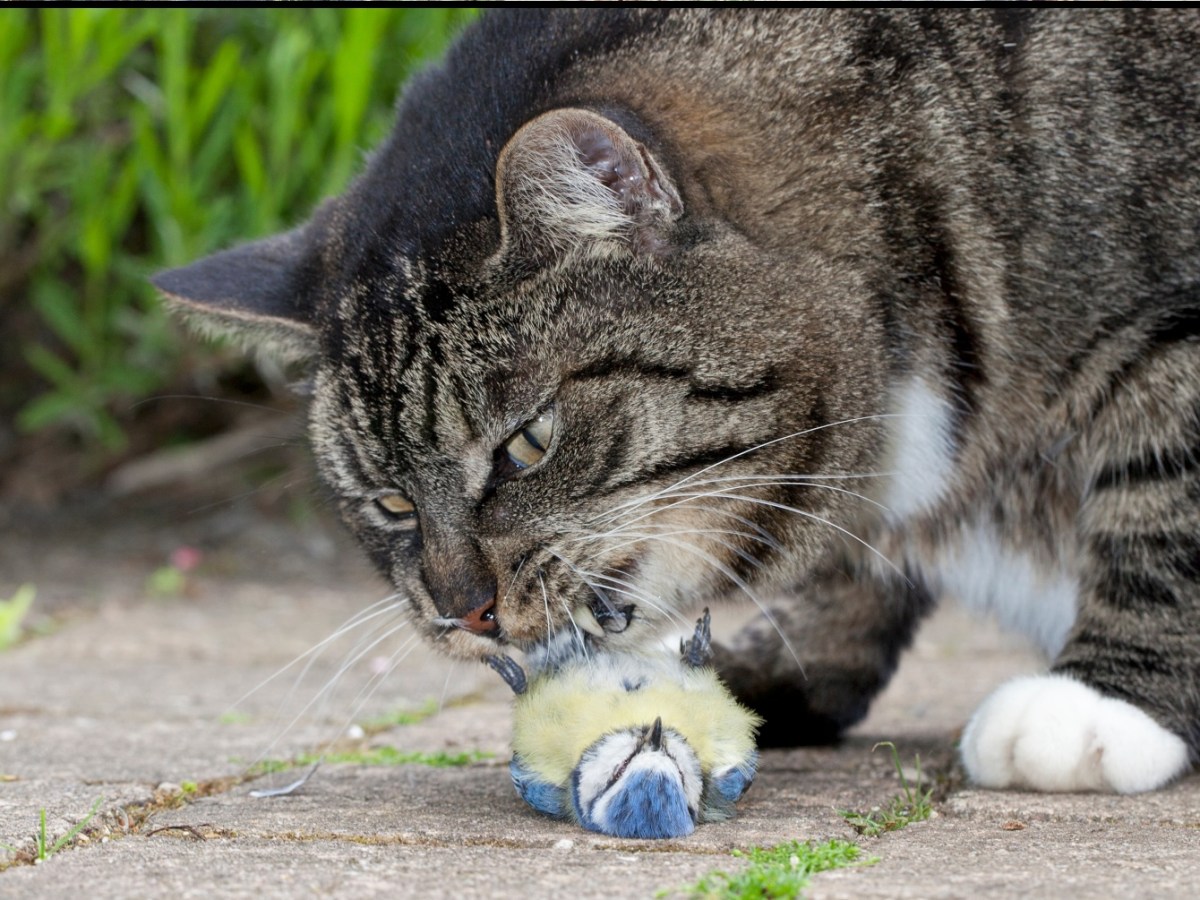
Here at ConservationBytes.com, My contributors and I have highlighted the important regulating role of predators in myriad systems. We have written extensively on the mesopredator release concept applied to dingos, sharks and coyotes, but we haven’t really expanded on the broader role of predators in more complex systems.

This week comes an elegant experimental study (and how I love good experimental evidence of complex ecological processes and how they affect population persistence and ecosystem stability, resilience and productivity) demonstrating, once again, just how important predators are for healthy ecosystems. Long story short – if your predators are not doing well, chances are the rest of the ecosystem is performing poorly.

Today’s latest evidence comes from on an inshore marine system in Ireland involving crabs (Carcinus maenas), whelks (Nucella lapillus), gastropd grazers (Patella vulgata, Littorina littorea and Gibbula umbilicalis), mussels (Mytilus edulis) and macroalgae. Published in Journal of Animal Ecology, O’Connor and colleagues’ paper (Distinguishing between direct and indirect effects of predators in complex ecosystems) explains how their controlled experimental removals of different combinations of predators (crabs & whelks) and their herbivore prey (mussels & gastropods) affected primary producer (macroalgae) diversity and cover (see Figure below and caption from O’Connor et al.). Read the rest of this entry »