Influential conservation papers of 2015

25 12 2015

most popularAs I did last year and the year before, here’s another arbitrary, retrospective list of the top 20 influential conservation papers of 2015 as assessed via F1000 Prime.

Read the rest of this entry »


Death of the question

17 12 2015
Zombie apocalypse

Zombie apocalypse

It’s something I’ve noticed over the years going to scientific conferences and seminars — the number of questions, and more importantly their quality, have declined.

Sure, it’s anecdotal and it might just be that my perspective has changed, but I’d bet my left testicle that it’s true.

But why? There are possibly many contributing factors, such as increasingly jam-packed conferences with multiple concurrent sessions, a massive and increasing number of participants and less time for each of us to present our work. However, I think the main reason is that we’re now all glued to our electronic devices.

Yes, I’m talking about the Twitteratti, but also the tablet-tossers, laptop-layabouts and the iPhone-idiots. We have a saying in our family when we spot a smartphone zombie oblivious to oncoming traffic that she/he looks like a “… spastic fingering a sandwich” (not my quote, but I am particularly fond of using it).

Read the rest of this entry »


Science is beautiful

10 12 2015

Maybe I’ve had a couple of glasses of champagne; maybe I’ve enjoyed tonight’s meal just a little too much and I am now feeling sated and content; maybe my fleeting, blissful state of mind has precipitated a temporary penchant for the poetic. Just maybe.

It is a rare thing indeed to be content, and so I implore you to indulge me a little tonight because I am in particularly high spirits about my chosen profession. Despite the bullshit of the daily grind (bad reviewsprofiteering of academic publishers, shitty university administration, the constant pressure to beg for money, poor pay, feelings of futility, et cetera ad nauseam), there’s nothing quite as comforting as being aware that science is the only human endeavour that regularly attempts to reduce subjectivity. Being human means that even scientists have all of our weaknesses and limitations of perception, but science allows us to get as close to objectivity as is possible; science is not the pursuit of objectivity per se, but it is the pursuit of subjectivity reduction.

In the face of all posturing, manipulation, deceit, ulterior motives and fanatical beliefs that go on every day, science remains the bedrock of society, and so despite most human beings being ignorant of its1 importance, or actively pursuing its demise, all human beings have benefitted from science. Read the rest of this entry »


Bee informed: Quick pollination facts about our most important pollinators

27 11 2015

if we die

If bees were to disappear, humans will disappear within a few years.

Albert Einstein

I find it interesting that so much is said about bees (including here on this blog), yet many of the ‘facts’ that one hears mentioned in any variety of news sources, public presentations and even scientific articles aren’t very well sourced and at times highly suspect.

For your fact-finding benefit then, I present to you some of the established facts about bees: Read the rest of this entry »


Cartoon guide to biodiversity loss XXXIII

18 11 2015

Six more biodiversity cartoons to hold you over until I get back from Germany next week (see full stock of previous ‘Cartoon guide to biodiversity loss’ compendia here).

Read the rest of this entry »


When science is ignored: Mauritius starts culling 18,000 threatened fruit bats

8 11 2015

JS7D2844aRrHere’s a depressing emergency post by Fabiola Monty.

I started working on this article to discuss how useful science is being ignored in Mauritius.

The Mauritian government has decided to implement a fruit bat cull as an ‘urgent response’ to the claims of huge economic losses by fruit farmers, a decision not supported by scientific evidence. We have now received confirmation in Mauritius through a local press communiqué that on 7 November 2015, The Mauritian Ministry of Agro Industry and Food Security in collaboration with the local Police Department and Special Mobile Force will start the culling of 18,000 bats in their natural habitats “with a view to reducing the extent of damages caused to fruits by bats”.

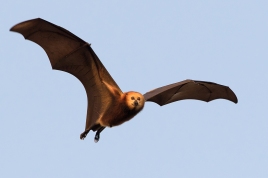
Tackling human-wildlife conflicts can indeed be challenging, but can the culling of 18,000 endemic Mauritian flying fox (Pteropus niger) resolve ‘human-wildlife conflict’ in the land of the dodo? In the case of Mauritius, scientific evidence not only demonstrates that the situation has been exaggerated, but that there are alternatives to bat culling that have been completely brushed aside by policy makers.

JS7D3726aRrAre the Mauritius fruit bats agricultural pests?

While fruit bats are being labelled as serious pests, scientific evidence shows instead that their impacts have been exaggerated. A recent (2014) study indicates that bats damage only 3-11% of fruit production, with birds also contributing to 1-8% of fruit loss. Rats are also probable contributors to fruit damage, but the extent remains unquantified. Interestingly, more fruits are lost (13-20%) because they are not collected in time and are left to over-ripen.

While the results of the study were communicated to legislators a few months before they made the decision to cull, it is clear that these were ignored in favour of preconceived assumptions.

Are there too many fruit bats? Read the rest of this entry »


Game bird madness

4 11 2015

Gamecart_largeI just returned to Paris after a brief visit to the University of Aberdeen over the weekend. My hosts, Xavier Lambin and Beth Scott, were not only marvellously welcoming, I also learned a lot about the travesty that is game bird management in the United Kingdom, and especially in Scotland.

As you might already know, the Great Britons are a little cuckoo for birds — I’d even wager that the country produces more twitchers than any other country on Earth. The plus side is that there are few national taxa better censused and studied that British birds, because so many non-scientists get into the spirit of data collection. Hell, I’ve even had a play with some of their datasets.

The other side of this bird madness is not so good — I’m talking about the massive biomass of game birds reared, released and shot every year in the United Kingdom. It’s not the hunting per se with which I take issue, it’s the insane manipulation of an entire ecosystem for the benefit of a few species. Read the rest of this entry »


Could we colonise another planet to save this one?

27 10 2015

© Auston Habershaw

Let’s do a little thought experiment, shall we? The late, great Douglas Adams wrote about a planet (Golgafrincham) that decided to ship all its undesirables (it was not made clear to them that they were in fact considered ‘undesirable’) to another planet to cut their population by a third. As it turns out, it wasn’t such a great idea.

This idea — shipping people to another planet — is a common theme in the sci-fi genre when there is an impending disaster, such as the planet becoming unsustainable, too many humans over-consuming, or because some great natural calamity is about to occur. Many think Mars is the most likely possible place to get the first sustainable human colony going, but it’s going to be a logistical nightmare to put together even a small colony.

Could moving to a planet like Mars stem the inexorable increase in the human population and save planet Earth? Not likely, and here’s why.

Let’s throw caution to the wind and make some outlandish assumptions just to make this point even stronger.

Read the rest of this entry »


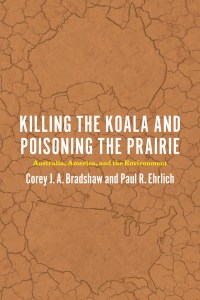
Killing the Koala and Poisoning the Prairie

19 10 2015

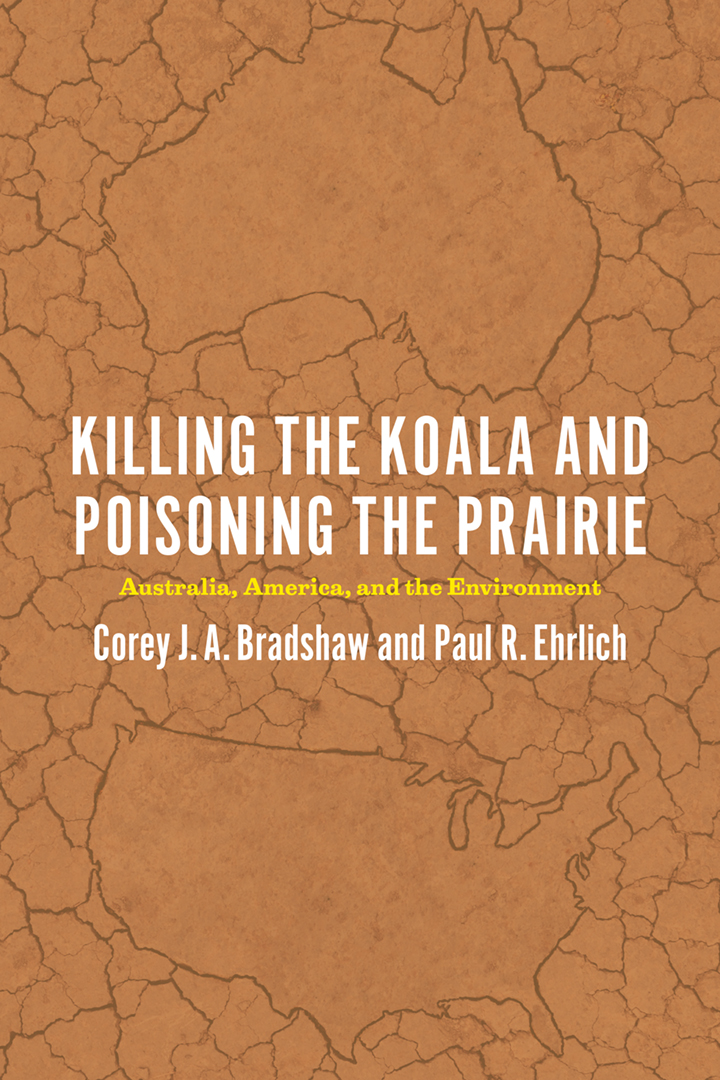
Cover-Bradshaw&Ehrlich-final

Man and the environment are meant for each other” — Tony Abbott, former Prime Minister of Australia (2014)

I know the human being and the fish can co-exist peacefully” — George W. Bush, former President of the USA (2000)

It. Has. Finally. Been. Published.

Yes, my new book with Paul Ehrlich, published by University of Chicago Press, is now available to purchase in book shops and online distributors around the world. The blog post today is a little explanatory synopsis of why we wrote the book and what it contains, but of course the real ‘meat’ is in the book. I hope you enjoy it.

In Australia, you can purchase the hard copy through Footprint Books, and the Kindle version at Amazon Australia. I also suggest that Australians might find the best deals through Booko. Electronic versions are also available through Kobo and Google Play. In the US you can order directly from University of Chicago Press, Amazon, Barnes & Noble, and many other book sellers. In the UK and Europe, the book is available from your country’s Amazon distributor. I imagine many chain and independent book sellers will be carrying the book by now, or will be soon.

My deepest thanks to all those who made it possible.

Our chance meeting in 2009 at Stanford University turned out to be auspicious, not least of which because of the publication this week of our co-authored book, Killing the Koala and Poisoning the Prairie. Australia, America and the Environment by University of Chicago Press. As a mid-career ecologist (Bradshaw) based at the University of Adelaide, it was indeed an honour to meet one of the most famous scientists (Ehrlich) in my field. With a list of books and hundreds of scientific papers under his belt, Ehrlich has been tackling major environmental issues since the 1960s. Ehrlich also has a long-time interest in Australia, having visited nearly every year during the last four decades and experienced more of the country than most Australians. Together we have observed firsthand the similarities and differences of Australia and the US, and the eyes we see through are trained as those of environmental scientists and evolutionary biologists.

So why write a book about the environmental tragedies currently unfolding in two completely different countries at opposite ends of the Earth? As it turns out, Australia and the US have much more in common environmentally than one might think, and not necessarily in a good way. Despite our vastly different floras and faunas, population densities, histories of human colonisation and soil productivities, there is an almost spooky similarity in the environmental and political problems both our countries are now experiencing. As such, we have a lot to learn about avoiding each other’s mistakes.

Ausmerica

Australia and the contiguous US are roughly equivalent in land area, both cultures are derived originally and principally from what is now the United Kingdom, and both are examples of super-consuming, super-wasting, wealthy, literate countries. Both countries also have environmental footprints that exceed most other countries on Earth, with some of the world’s highest per capita rates of greenhouse-gas emissions, water consumption, species extinctions and deforestation.  Read the rest of this entry »


Only thing worse than being labelled ‘deadly’, is not being called anything at all

13 10 2015

11034-Snake-BiteI had an interesting exchange on Twitter today that deserves some discussion, not because the brief internet argument that ensued offers some insightful wisdom (internet debates rarely do anything more than identify all those involved as fuckwits), but because it raises an interesting issue in conservation.

The abbreviated (and slightly expurgated) main message of the exchange was whether drawing attention to the potential for a species to cause harm to humans is good or bad (for the species in question).

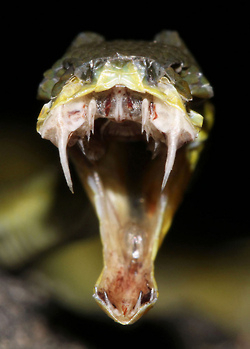
The elasmobranchologists in particular usually become apoplectic whenever anyone calls a shark ‘deadly’, or some such similar adjective. As it turns out, the ophidiologists appear to be equally sensitive. I admit that they do have a point — it’s probably fair to assume that films like Jaws and Anaconda (or, Darwin-forbid, Sharknado) haven’t done much to make most people appreciate the amazing diversity, evolutionary adaptations and wonderful life histories of these subclasses & clades (respectively).

In fact, most marine biologists assume that Jaws in particular was responsible for decades of overt prosecution of sharks that has led to the massive population declines. However, I sincerely wonder whether the bad media was in the real culprit and over-fishing was instead the principal cause of today’s observed shark declines (the questionable nature of the numbers often cited notwithstanding).  Read the rest of this entry »


To spare or to share, that is a muddled question

9 10 2015
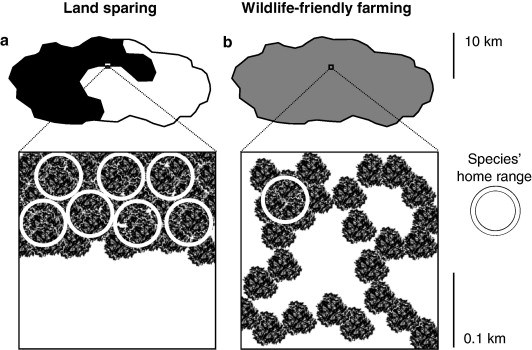
Unfortunately, it ain't this simple (from doi:10.1016/j.foodpol.2010.11.008)

Unfortunately, it ain’t this simple (from doi:10.1016/j.foodpol.2010.11.008)

Certain research trends in any field are inevitable, because once a seductive can of research-question worms is opened, it’s difficult to resist the temptation to start hooking in. Of course, I’m not against popular trends in research per se if they lead to a productive, empirical evaluation of the complexities involved, but it can sometimes result in a lot of wasted time. For example, in conservation ecology we’ve had to suffer 15 years of wasted effort on disproving neutral theory, we’ve bashed heads unnecessarily regarding the infamous SLOSS (‘Single Large Or Several Small’ reserves) debates of the 1970s and 1980s, and we’ve pilfered precious years arguing about whether density feedback actually exists (answer: it does).

The latest populist research trend in conservation seems to be the ‘land sparing versus land sharing’ debate, which, I (and others) argue, is largely an overly simplistic waste of time, money and intellectual advancement to the detriment of both biodiversity and human well-being.

Land sparing is generally used in reference to agricultural practices (although in theory, it could apply to any human endeavour where native vegetation cover is required to be removed or degraded, such as for electricity production) that are purposely made to be high-yielding so that they require the smallest amount of land. At the other extreme (and the ‘two extremes’ of a continuum concept is half the bloody problem here), land sharing requires a larger land footprint because it relies on lower-yielding, biodiversity-friendly (agricultural) practices. Proponents of land sparing argue that only by amalgamating patches of remnant native vegetation can we avoid massive fragmentation and the pursuant loss of biodiversity, whereas those pushing for land sparing argue that the matrix between the big undeveloped bits must be exploited in a more biodiversity-friendly way to allow species to persist.

As it turns out, they’re both right (but their single-minded, extremist positions are not). Read the rest of this entry »


The sticky subject of article authorship

2 10 2015

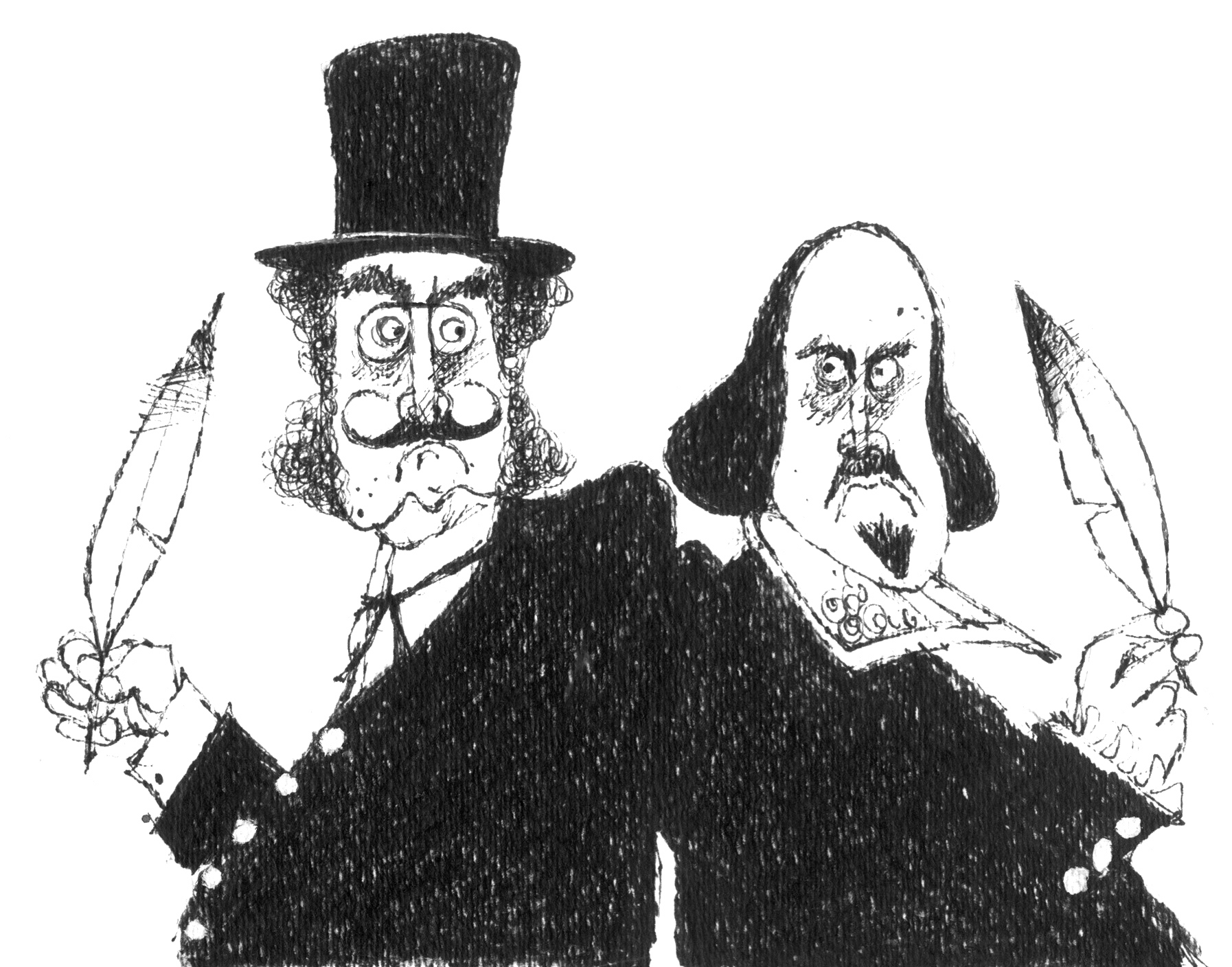
CriticVs.Shakespeare-copyI have a few ‘rules’ (a.k.a. ‘guidelines’) in my lab about the authorship of articles, but I’ve come to realise that each article requires its own finessing each time authorship is in question. After a lengthy discussion yesterday with the members of Franck Courchamp‘s lab, I decided I should probably write down my thoughts on this, one of the stickiest of subjects in the business of science.

The following discussion can be divided into to two main categories: (1) who to include as a co-author, and once the list of co-authors has been determined, (2) in what order should they be listed?

Before launching into discussing the issues related to Category 1, it is prudent to declare that there are as probably as many conventions as there are publishing scientists, and each discipline’s most general conventions differ across the scientific spectrum. I’m sure if you asked 10 people about what they considered appropriate, you could conceivably receive 10 different answers.

That said, I do still think there are some good-behaviour guidelines on authorship that one should strive to follow, all of which are based on my own experiences (both good and awful).

So who to include? It seems like a simple question superficially because clearly if someone contributed to writing a peer-reviewed article, he/she should be listed as a co-author. The problem really doesn’t concern the main author (the person who did most of the actual composition) because it’s clear here who that will be in almost every case. In most circumstances, this also happens to be the lead author (but more on that below). The question should really apply then to those individuals whose effort was more modest in the production of the final paper.

Strictly speaking, an ‘author’ should write words; but how many words do they need to write before being included? Would 10 suffice, or at least 10%? You can see why this is in itself a sticky subject because there are no established or accepted thresholds. Of course, science generally requires much more than just writing words: there are for most papers experiments to design, grants to obtain to fund them, data to collect, analysis and modelling to be done, figures and tables to prepare and finally, words to write. I’ll admit that I’ve co-authored many papers where I’ve done mainly one of those things (analysis, data collection, etc.), but I can also hold my hand over my heart and state that I’ve contributed more than a good deal to the actual writing of the paper in all circumstances where I’ve been listed as a co-author (the amount of which depends entirely on the lead author’s writing capacity). Read the rest of this entry »


What makes all that biodiversity possible?

23 09 2015

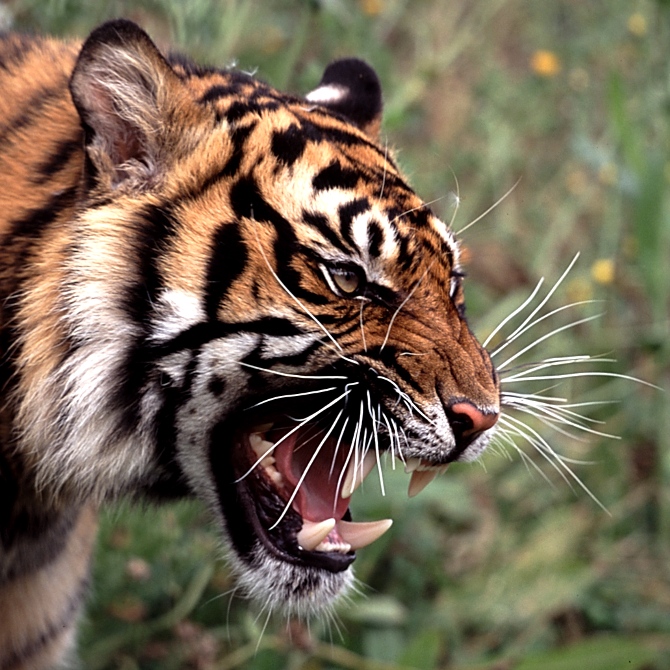
tigerPredators.

You can either stop reading now because that’s the answer to the question, or you can continue and find out a little more detail.

I’ve just had an extremely pleasant experience reading John Terborgh‘s latest Perspective in PNAS. You know the kind of paper you read that (a) makes you feel smart, (b) confirms what you already think, yet informs you nonetheless, and (c) doesn’t take three days to digest? That’s one of those.

Toward a trophic theory of species diversity is not only all of those things, it’s also bloody well-written and comes at the question of ‘Why are there so many species on the planet when ecological theory can’t seem to explain how?’ with elegance, style and a lifetime of experience. I just might have to update my essential-ecology-papers list. If I had to introduce someone to 60 years of ecological theory on biodiversity, there’s no better place to start.

Read the rest of this entry »


Essential papers you’ve probably never read

14 09 2015
library

Hmmm. What to read next?

“What would you consider to be the most important papers to read in your discipline?”.

That was the question a colleague with whom I’m working closely at the moment (you can probably figure out who that is) asked me last year. “Jesus H. Bloody Christ”, I thought, “What a question!”. How long is a piece of string?

In some ways, there is no way to answer that question well. Every research project requires reading a specific set of papers, and very few traverse the divide between projects. I seem to have to read a new set of papers every time I write one myself, although I admit I tend to stray from a single ‘discipline’ far too often than is probably considered healthy. Let’s also not forget those essential methods papers; you know, the ones that actually show you how to do the thing you’re trying to do? You can’t get much more essential than those.

But if I really sit down and think about it (and I have), it sort of comes down to what I’d expect my postgraduate students to know by the time they finish their degrees. In other words, they should read and retain the information in the papers that transcend research projects and all sub-disciplines of conservation ecology.

So I’ve picked a dozen of my ‘favourite’ papers that I think have something really important to tell us. They tend to be a little generic in terms of the broadness of their implications, but they are also, in my view, brilliant demonstrations of fundamental processes that all conservation ecologists should know.

While many of them are in the ‘big’ journals, not all of them are, nor are they necessarily the most cited papers in this field. I’ve also tended to avoid papers that document the things we know pretty well by now (e.g., effects of fragmentation, extinction patterns, etc.), and I haven’t really included any ‘methods’ papers for the simple reason I explained above that there are so many and they are very project-specific. I’ve even been a little cheeky and included one of my own, so take that for what it’s worth.

I present the list below in broad categories, and I include a little blurb about why I chose each one. There are, of course, 100s if not 1000s of others out there that others would choose, and I suppose that an inventory of such papers across many ecologists would be a good idea to put together. If you know this blog at all, you’ll know that I’ve also published my list of conservation ‘classics’, so I’m not going to repeat those here. Neither am I presenting those older papers that we should all have read, yet despite citing them for decades, few of us have (which has all sorts of implications for bullshit perpetuating over time, but that’s a topic for another blog post). For now, this is my tuppence. Read the rest of this entry »


Cartoon guide to biodiversity loss XXXII

8 09 2015

Six more biodiversity cartoons — this time, from France. They’re in French to pay hommage to my hosts (and acknowledge their fanaticism for les bandes dessinées), but don’t worry, I’ve provided full translation (see full stock of previous ‘Cartoon guide to biodiversity loss’ compendia here).

“Biodiversity: More and more species threatened. The good news for you is that you’re not endangered. The bad news is that neither are we.” © Roulies

Read the rest of this entry »


Australia’s motto: “Screw the environment!”

2 09 2015
Mmmmm! I love coal!

Mmmmm! I love coal!

An article originally posted on ALERT by April Reside (with permission to reproduce).

The Conservative Tony Abbott government in Australia is proposing alarming changes to Australia’s Environmental Protection and Biodiversity Conservation (EPBC) Act 1999 — a remarkable move that would prevent environment groups from challenging many damaging development projects.

This has all come to a head over the Carmichael Coal Mine — a plan to build a massive mine in central Queensland in order to export 60 million of tonnes of coal to India each year.

Coal, of course, is the dirtiest of all fossil fuels, and India’s plan to burn it by the shipload for electricity is bad news for the planet.

The Abbott government is in a tizzy after after a community organization, the Mackay Conservation Group, challenged the approval of the Carmichael Mine in Australia’s Federal Court.

The community group says Environment Minister Greg Hunt didn’t properly consider the impact the mine would have on two threatened species, the yakka skink and ornamental snake.

The mine site also sustains the largest population of the southern subspecies of the black-throated Finch, which is endangered.

The implications of the mega-mine go well beyond a few imperilled species. If the mine goes ahead, it will be one of the biggest in the world — and the emissions from burning its mountains of coal would cancel out all gains made from Australia’s current emissions-reduction strategy.

On top of the frightening precedent it would set, the Abbott government appears to be double-dealing. Read the rest of this entry »


Challenging the traditional conference model

28 08 2015

keeping-the-audience-awakeAn interesting take on conference culture by Diogo Veríssimo (mastermind behind I Fucking Love Biodiversity).

Just a few weeks back, more than 2000 conservationists got together in Montpellier, France, for the 27th International Congress on Conservation Biology (ICCB). I have been attending these conferences since 2008, and once again had a blast. Yet as I went through the usual talks, posters, work meetings, and this and that social, I could not help but feel that the traditional conference model was hindering, not helping me, maximise my benefits.

In my experience of conservation conferences, the content is largely delivered via a one-way channel, and attendees listen passively until the chance for a question or two comes up at the end. If time allows, that is, and it rarely does. Given the huge costs (and the footprint) of these events, how can we maximise the outcomes of these meetings?

Let’s look first at what is currently the backbone of most conferences anywhere: the oral presentation. Currently, the gold standard for the vast majority of ICCB presenters is the 15-min presentation, and those who are denied that chance often say they have been “downgraded”. I find this unfortunate.

My biggest criticisms of our current approach to content management during a conference is that it leaves the discussion to happen informally and without the benefit of the collective knowledge that comes together at these meetings. Many conservationists are keen to avoid long-winded lectures in their classrooms, but when we come together, those concerns seem to go out the window. The Q&A after a talk should be the most important part of a session for either the presenter (expert feedback can save a lot of time and resources) and the audience (who otherwise cannot focus on what they think is important).

Giving sessions enough Q&A time, which I argue would have to be as long as the time given to presentations, would imply having fewer presentations — unless we have shorter presentations. The ICCB already has the speed presentation, a format that lasts just 5 minutes. Why not make that the default? Yes, presenting your content effectively in 5 minutes is an acquired skill, but not much different in kind from writing an abstract to a paper. Having presented in both traditional and speed format, I am convinced presentations strongly suffer from the law of diminishing returns, meaning the difference from the audience point of view ends up being small. This is particularly true if fewer talks means more time for the audience to interact and ask about the things in which they are interested, rather than what the presenter thinks they should learn. Read the rest of this entry »


What conservationists should recommend to philanthropists

24 08 2015

business-people-forest-sqIt probably won’t come as too much of a surprise that most of the people I know reasonably well (mates included) are also scientists of some description. I therefore think that I fall into the extremely normal and mundane category of associating the most with people at work. Sure, I’ve also got very good mates who are et alia plumbers, chefs, winemakers (I do live in South Australia, after all), mechanics, coffee roasters and farmers (I also live on a small farm), so at least a get out of the office a bit. In summary, I tend to befriend and hang around people who are for the most part making ends meet, but who are by no means in a position to spend oodles of cash on anything remotely related to the conservation of biodiversity.

From time to time, however, I do meet extremely wealthy people, but we generally do not operate in the same social circles (I know, another big surprise). Nonetheless, I keep finding myself in conversations with such people that start along the lines of the following question:

“What’s the most effective way to invest money to save species from going extinct?”

As the Australian saying goes: “How long is a piece of string” – in other words, it’s a difficult, multi-dimensional answer at best, or a confused non sequitur one at worst.

Those reading this might be thinking right now, “Oh, I know exactly what I’d spend it on if I had that kind of money”, but after a few moments of contemplation, you might not be so sure. This is the dilemma in which I’ve found myself now on more than a few occasions.

So, with the benefit of a little contemplation, here are a few of my thoughts on the subject. Read the rest of this entry »


How to give a scientific presentation

15 08 2015

fearHaving just attended the joint 27th International Congress for Conservation Biology / 4th European Congress for Conservation Biology in Montpellier, France, I have a renewed vigour for proffering advice on the DOs and DO NOTs of giving a scientific presentation.

There are of course many different styles, formats, media and audiences for scientific presentations, so I’m going to outline only general issues of which you should be aware when preparing and delivering that often stress-inducing presentation. There are also many different durations of a scientific talk — including, but not limited to everything from a 5-minute speed talk to a full-on, dazzling, TEDx-like performance that can last for over an hour. Many of these principles apply to the full gamut of talk types, although various elements will have to be adjusted according to format. Only experience and plenty of advice can assist you in the tweaking.

Without further ado, here are the top 15 most important things to consider when preparing and giving a scientific presentation: Read the rest of this entry »


Scariest part of climate change isn’t what we know, but what we don’t

7 08 2015
image-20150731-18728-1ntffbr

© Nick Kim

My good friend and tropical conservation rockstar, Bill Laurancejust emailed me and asked if I could repost his recent The Conversation article here on ConservationBytes.com.

He said:

It’s going completely viral (26,000 reads so far) in just three days. It’s been republished in The Ecologist, I Fucking Love Science, and several other big media outlets.

Several non-scientists have said it really helped them to understand what’s known versus unknown in climate-change research—which was helpful because they feel pummelled by all the research and draconian stuff that gets reported and have problems parsing out what’s likely versus speculative.

With an introduction like that, you’ll just have to read it!

“It’s tough to make predictions, especially about the future”: so goes a Danish proverb attributed variously to baseball coach Yogi Berra and physicist Niels Bohr. Yet some things are so important — such as projecting the future impacts of climate change on the environment — that we obviously must try.

An Australian study published last week predicts that some rainforest plants could see their ranges reduced 95% by 2080. How can we make sense of that given the plethora of climate predictions?

In a 2002 press briefing, Donald Rumsfeld, President George W. Bush’s Secretary of Defence, distinguished among different kinds of uncertainty: things we know, things we know we don’t know, and things we don’t know we don’t know. Though derided at the time for playing word games, Rumsfeld was actually making a good point: it’s vital to be clear about what we’re unclear about.

So here’s my attempt to summarise what we think we know, don’t know, and things that could surprise us about climate change and the environment.

Things we think we know

We know that carbon dioxide levels in the atmosphere have risen markedly in the last two centuries, especially in recent decades, and the Earth is getting warmer. Furthermore, 2014 was the hottest year ever recorded. That’s consistent with what we’d expect from the greenhouse effect. Read the rest of this entry »