Improving the Roundtable on Sustainable Palm Oil

23 11 2012

RSPO – don’t be guilty of this

Laurance & Pimm organise another excellent tropical conservation open-letter initiative. This follows our 2010 paper (Improving the performance of the Roundtable on Sustainable Oil Palm for nature conservation) in Conservation Biology.

Scientists Statement on the Roundtable on Sustainable Palm Oil’s Draft Revised Principles and Criteria for Public Consultation – November 2012

As leading scientists with prominent academic and research institutions around the world, we write to encourage the Roundtable on Sustainable Palm Oil (RSPO) to use this review of the RSPO Principles and Criteria as an opportunity to ensure that RSPO-certified sustainable palm oil is grown in a manner that protects tropical forests and the health of our planet. We applaud the RSPO for having strong social and environmental standards, but palm oil cannot be considered sustainable without also having greenhouse gas standards. Nor can it be considered sustainable if it drives species to extinction.

Tropical forests are critical ecosystems that must be conserved. They are home to millions of plant and animal species, are essential for local water-cycling, and store vast amounts of carbon. When they are cleared, biodiversity is lost and the carbon is released into the atmosphere as carbon dioxide, a greenhouse gas that drives climate change.

Moreover, tropical areas with peat soils store even larger amounts of carbon and when water is drained and the soils exposed, carbon is released into the atmosphere for several decades, driving climate changei. In addition, peat exposed to water in drainage canals may decay anaerobically, producing methane – a greenhouse more potent than carbon dioxide.

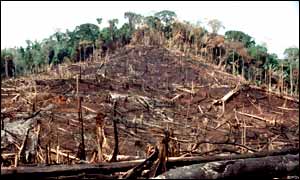
Palm oil production continues to increase in the tropics, and in some cases that production is directly driving tropical deforestation and the destruction of peatlandsii. Given the large carbon footprint and irreparable biodiversity loss such palm oil production cannot be considered sustainable. Read the rest of this entry »


Toothed conflict

1 11 2012

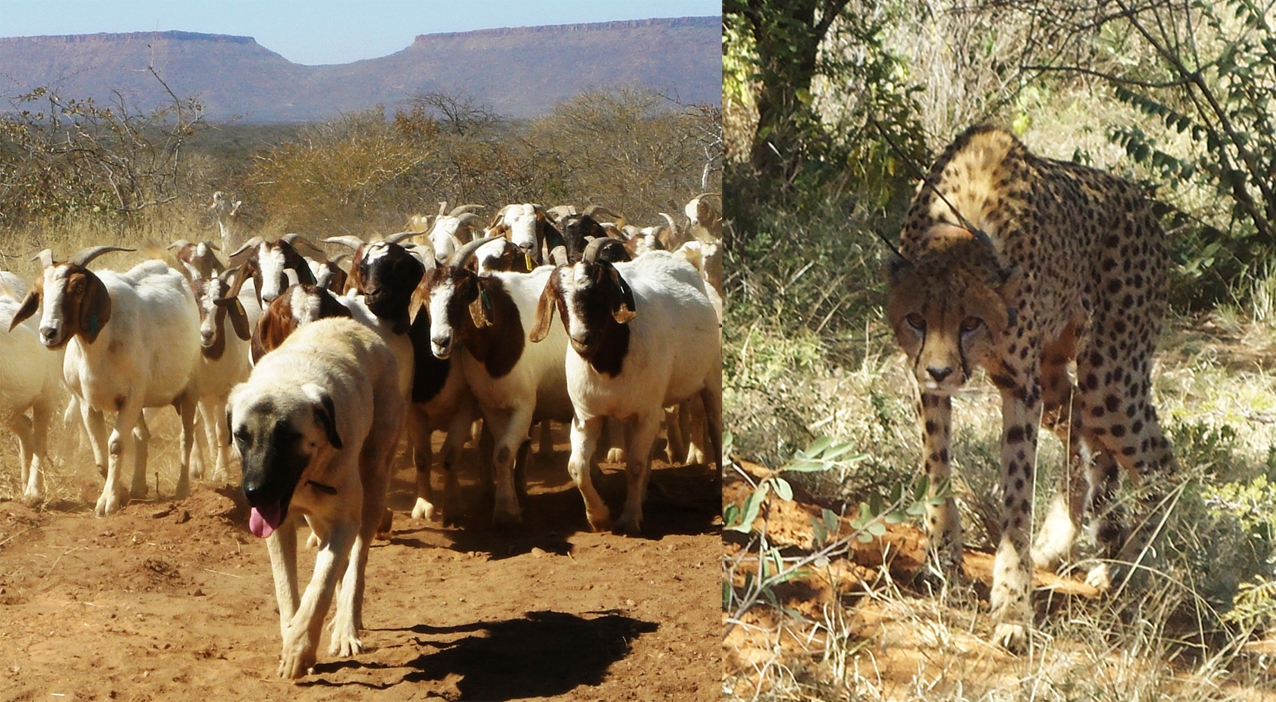
Left: An Anatolian shepherd (a Turkish breed improved in the USA) guiding a herd of boer goats whose flesh is much appreciated by people in Namibia and South Africa. Right: A cheetah carrying a radio-transmitter, within a project assessing range movements of this feline for the Cheetah Conservation Fund. Cheetahs refrain from moving close to the herds when the latter are looked after by the guardian dogs. Photos courtesy of Laurie Marker.

Another corker from Salva. He’s chosen a topic this week that’s near and dear to my brain – the conservation of higher-order predators. As ConBytes readers will know, we’ve talked a lot about human-predator conflict and the inevitable losers in that battle – the (non-human) predators. From dingos to sharks, predator xenophobia is just another way we weaken ecosystems and ultimately harm ourselves.

Rural areas devoted to livestock are part of the natural landscape, so it is inevitable (as well as natural) that predators, livestock and humans interact in such a mosaic of bordering habitats. However, their coexistence remains an unresolved conservation problem. 

When two species, people, political parties, enterprises… want the same thing, they either share it (if possible) or one side eliminates the competitor. The fact that proteins are part of the diet of humans and other carnivore species has resulted in a trophic drama that goes back millennia. Nowadays, predators like eagles, coyotes, lions, wolves and raccoons are credited for attacks on cattle and poultry (and people!) in all continents. This global problem is not only economic, but interlaces culture, emotion, policy and sanitation (1-4). For instance, some carnivores are reservoirs of cattle diseases and contribute to pathogen dispersal (5, 6).

Management options

Managers of natural resources have implemented three strategies to handle these sorts of issues for livestock breeders in general (7). Those strategies can be complementary or exclusive on a case-by-case basis, and are chosen following cost-benefit assessments and depending on the conservation status of the predator species involved. (i) ‘Eradication’ aims to eliminate the predator, which is regarded as noxious and worthless. (ii) ‘Regulation’ allows controlled takes under quota schemes, normally for pre-defined locations, dates and killing methods. ‘Preservation’ is applied in protected areas and/or for rare or endangered species, and often requires monitoring and measures set to prevent illegal harvest or trade. Additionally, many livestock breeders receive money to compensate losses to predators (8).

Many experts now advocate non-lethal (preventive) measures that modify the behaviour of people, livestock or predators (2, 7). The use of livestock-guarding dogs is one of those preventive measures (9). As an example, Laurie Marker (director of the Cheetah Conservation Fund) et al. (10) studied the use of 117 Anatolian shepherds adopted by Namibian rangers between 1995 and 2002 (Fig. 1). In this African country, cheetahs (Acinonyx jubatus) selectively forage on small-sized cattle and juveniles. Despite this feline being protected nationally, Namibian laws authorise rangers to shoot cheetahs in situations of risk to people and their properties, with more than 6,000 cheetahs having been killed in the 1980s alone (11). Through face-to-face interviews, Marker found that since the arrival of the Anatolian shepherds, > 70 % of the rangers perceived a pronounced reduction in cattle mortality (10). Although, the use of livestock-guarding dogs has worked out fine in many places worldwide, it is no panacea. In many other instances, the dogs dissuade some predator species and not others from harassing the livestock, or are only effective in combination with other measures (7, 9). Read the rest of this entry »


The invisible hand of ecosystem services

4 08 2012

I’ve just spent nearly an entire week trying to get my head around ecosystem services (ES).

You’d think that would have been a given based on my experience, my research, my writings and the fact that I’ve just spent the last week with 400 ES specialists from around the world at the 5th international Ecosystem Services Partnership (ESP) Conference in Portland, Oregon, USA.

Well, prior to this week I thought I knew what ES were, but now I think I’m just a little more confused.

Of course, I’m not talking about the concept of ES or what they are (hell, I’ve written enough about them on this blog and in my papers); my problem is understanding how we as society end up valuing them in a practical, sensible and feasible way.

So I’m going to describe the ESP Conference as I saw it, and not necessarily in chronological order.

First up is the term ‘ecosystem services’ itself – horrible name, and something rammed home again after attending the conference. Most people on the planet that are not scientists (that would be nearly everyone) just might have the most tenuous and ethereal of grasps of ‘ecosystem’ in the first place, and I’d bet that 99 % of most undergraduate students couldn’t provide a comprehensive description. This is because ecosystems are mind-bogglingly, chaotically and awesomely complex. Just ask any ecosystem ecologist.

The second part of the term – services – is particularly offensive in its presumption and arrogance. It’s not like you ring up an ecosystem and get it to clean your carpets, or fill your water tank or gas cylinder. No, the natural world did not evolve to pamper humanity; we are merely part of it (and bloody efficient at modifying it, I might add).

So try to sell this ‘incredibly complex thingy’ that is ‘there to do some (intangible) shit for us’ to the public, policy makers and politicians, and you mostly get a dog’s regurgitated breakfast and some blank, slack-jawed stares. Read the rest of this entry »


Mucking around the edges

8 11 2011

Barry Brook over at BraveNewClimate.com beat me to the punch regarding our latest paper, so I better get off my arse and write my take on things.

This post is about a paper we’ve just had accepted and has come out online in Biological Conservation called Strange bedfellows? Techno-fixes to solve the big conservation issues in southern Asia – and it’s likely to piss off a few people, and hopefully motivate others.

We wrote the paper for a special issue of essays dedicated to the memory of our mate and colleague, Navjot Sodhi, who died earlier this year. The issue hasn’t been released yet, but we have managed to get our paper out well before.

Like Navjot, the paper is controversial. Also like Navjot, we hope it challenges a few minds and pushes a few boundaries. We, as conservation biologists, must accept the fact that we have largely failed – biodiversity is still being lost at an alarming rate despite decades and decades of good science, sound evidence-based policy recommendations and even some rescues of species on the ‘brink’. Huge consumption rates, a population of 7 billion humans and counting, carbon emissions exceeding all worst-case scenarios, and greater disparity of wealth distribution have all contributed to this poor performance.

So what else can we do? Read the rest of this entry »


No substitute for primary forest

15 09 2011

© Romulo Fotos http://goo.gl/CrAsE

A little over five years ago, a controversial and spectacularly erroneous paper appeared in the tropical ecology journal Biotropica, the flagship journal of the Association for Tropical Biology and Conservation. Now, I’m normally a fan of Biotropica (I have both published there several times and acted as a Subject Editor for several years), but we couldn’t let that paper’s conclusions go unchallenged.

That paper was ‘The future of tropical forest species‘ by Joseph Wright and Helene Muller-Landau, which essentially concluded that the severe deforestation and degradation of tropical forests was not as big a deal as nearly all the rest of the conservation biology community had concluded (remind you of climate change at all?), and that regenerating, degraded and secondary forests would suffice to preserve the enormity and majority of dependent tropical biodiversity.

What rubbish.

Our response, and those of many others (including from Toby Gardner and colleagues and William Laurance), were fast and furious, essentially destroying the argument so utterly that I think most people merely moved on. We know for a fact that tropical biodiversity is waning rapidly, and in many parts of the world, it is absolutely [insert expletive here]. However, the argument has reared its ugly head again and again over the intervening years, so it’s high time we bury this particular nonsense once and for all.

In fact, a few anecdotes are worthy of mention here. Navjot once told me one story about the time when both he and Wright were invited to the same symposium around the time of the initial dust-up in Biotropica. Being Navjot, he tore off strips from Wright in public for his outrageous and unsubstantiated claims – something to which Wright didn’t take too kindly.  On the way home, the two shared the same flight, and apparently Wright refused to acknowledge Navjot’s existence and only glared looks that could kill (hang on – maybe that had something to do with Navjot’s recent and untimely death? Who knows?). Similar public stoushes have been chronicled between Wright and Bill Laurance.

Back to the story. I recall a particular coffee discussion at the National University of Singapore between Navjot Sodhi (may his legacy endure), Barry Brook and me some time later where we planned the idea of a large meta-analysis to compare degraded and ‘primary’ (not overly disturbed) forests. The ideas were fairly fuzzy back then, but Navjot didn’t drop the ball for a moment. He immediately went out and got Tien Ming Lee and his new PhD student, Luke Gibson, to start compiling the necessary studies. It was a thankless job that took several years.

However, the fruits of that labour have now just been published in Nature: ‘Primary forests are irreplaceable for sustaining tropical biodiversity‘, led by Luke and Tien Ming, along with Lian Pin Koh, Barry Brook, Toby Gardner, Jos Barlow, Carlos Peres, me, Bill Laurance, Tom Lovejoy and of course, Navjot Sodhi [side note: Navjot died during the review and didn’t survive to hear the good news that the paper was finally accepted].

Using data from 138 studies from Asia, South America and Africa comprising 2220 pair-wise comparisons of biodiversity ‘values’ between forests that had undergone some sort of disturbance (everything from selective logging through to regenerating pasture) and adjacent primary forests, we can now hammer the final nails into the coffin containing the putrid remains of Wright and Muller-Landau’s assertion – there is no substitute for primary forest. Read the rest of this entry »


When you have no idea, you should shut up

12 09 2011

© Taren McCallan-Moore

Last week, The Conversation published a particularly wonderful example of uninformed drivel that requires a little bit of a reality injection.

Like our good friend, the Destroyer of Forests (a.k.a. Alan Oxley), a new pro-deforestation, pro-development cheerleader on the scene, a certain Phillip Lawrence apparently undertaking a PhD entitled ‘Ecological Modernization of the Indonesian Economy: A Political, Cultural and Historical Economic Study‘ at Macquarie University in Sydney (The Conversation mistakenly attributes him to the University of Sydney, unless of course, he’s moved recently), has royally stuck his foot in it with respect to the dangers of oil palm in South-East Asia.

Mr. Lawrence runs an interestingly titled blog ‘Eco Logical Strategies‘, especially considering there is nothing whatsoever regarding ‘ecology’ on the site, and this ignorance comes forth in a wonderful array of verbal spew in his latest Conversation piece. He’s also a consultant for one of the most destructive forces in Indonesia – Asia Pulp and Paper – a company with a more depressive environmental track record than the likes of Monsanto, General Electric and BP combined. That preface of conflict of interest now explained, I will now expose Mr. Lawrence for the wolf in sheep’s clothing he really is.

Banging the development and anti-poverty drum like Oxley, albeit with much less panache and linguistic flourish, Mr. Lawrence boldly claims, without a shred of evidence, that “There is ample peer-reviewed research that is supportive of the palm oil industry in Indonesia.”

Excuse me? Supportive of just what component of the palm oil industry, Mr. Lawrence? Would that be that it makes a shit-load of cash for a preciously small component of Indonesian (and foreign) society? Let’s just look at the peer-reviewed literature, shall we? Read the rest of this entry »


Recognising differing viewpoints in a rapidly changing world

18 08 2011

Is oil palm bad? Is protecting tropical forests more important than converting them for economic development? Should we spike trees to make sure no one cuts them down?

Answers to these questions depend on which side of the argument you’re on. But often people on either side of debates hardly know what their opponents are thinking.

A recent paper by us in the journal Biotropica, of which parts were published on this blog, points out that the inability to recognise differing viewpoints undermines progress in environmental policy and practice.

The paper in Biotropica takes an unusual approach to get its message across, one rarely applied in science, but nevertheless dating back to 1729. In that year, Jonathan Swift, the first satirist, wrote an essay suggesting the English should eat Irish children, “whether stewed, roasted, baked, or boiled”, to reduce the growing population of Irish poor.

We similarly use satire to highlight the viewpoint problem. Our paper uses a spoof press release by the Coalition of Financially Challenged Countries with Lots of Trees, aka “CoFCCLoT”. CoFCCLoT proposes that in return for nor cutting down their tropical rainforests, wealthy countries should reforest at least half their land. This would provide the world with a level playing field, restore the ecological health of wealthy countries, provide job opportunities for their citizens, and even allow lions to thrive in Greece and gorillas in Spain. Read the rest of this entry »


Reforesting wealthy countries for the common good

29 06 2011

The Coalition of Financially Challenged Countries with Lots of Trees, known as ‘CoFCCLoT’, representing most of the world’s remaining tropical forests, is asking wealthy nations to share global responsibilities and reforest their land for the common good of stabilizing climate and protecting biodiversity.

“We are willing to play our part, but we require a level playing field in which we all commit to equal sacrifices,” a coalition spokeswoman says. “Returning forest cover in the G8 countries and the European Union back to historic coverage will benefit all of us in the long-term.”

Seventy-five per cent of Europe was once forested. Now it is 45 per cent. Some countries such as Ireland saw forest cover reduced to near zero. Most forest cover in the developed world is now often planted with stands of alien trees, turning them into deserts for biodiversity. Remaining natural forests are often highly fragmented and have few native species. Read the rest of this entry »


Silence of the birds

2 05 2011

Yet another contribution from my PhD student, Salvador Herrando-Pérez (see his previous ConservationBytes.com posts on micro-evolution and pollination).

In the 1960s, Rachel Carson preoccupied (to put it mildly) the political and economic powers of the United States with the publication of her book, Silent Spring, an overwhelming essay highlighting the environmental impacts caused by the pesticide industry. Half a century later, the metaphor of that book – a spring devoid of bird song – stands in force as farmland birds keep declining worldwide at the mercy of agricultural practices insensitive to the ecosystem services biodiversity procures. The problem has been best studied in Europe where non-government organisations, such as the British Trust for Ornithology or the Sociedad Española de Ornitología, have been monitoring bird populations for decades, and the European Union has sumptuously financed research and management actions.

Sparrows are the commonest among common birds. Worldwide we see them wherever humans live, travel and take leisure, from mountains and beaches to stadiums and underground trains. These feathery dwarfs snick even through security checks and sliding doors at airports and shopping malls, and it is no one’s surprise to be overflown by one of them carrying a chip from the leftovers of a nearby food court. However, the deterioration of their populations has sown alarm among European politicians, society, and the scientific community. Read the rest of this entry »


Buzzing to the plate

4 04 2011

Here’s another contribution from my PhD student, Salvador Herrando-Pérez (see his previous ConservationBytes.com post on micro-evolution here).

Once upon a time at the produce section of a supermarket, a little girl confided to me that she had no idea that little plants could grow on carrots. This sympathetic scene portrays the split between the food we consume and the environments that produce it.

© Cordell

Mediterraneans love their cuisine. In fact, we are fairly proud of all our food. Yet how many of us associate a juicy tomato in our multicoloured salads, the smoothness of a escalibada (grilled veggies) bathed in virgin olive oil, the afternoon’s delicious expresso among friends and colleagues, or the last Christmas’ crunchy nougat shared with our beloved, with an insect that one given day pollinates a flower whose fertilized ovary will reach our dining room in the form of a sweet, infusion, fruit, sauce, soup or veggie.

Biodiversity fuels this relationship between insects and food. A study led by Alexandra Klein on highland coffee (Coffea arabica) from Sulawesi (Indonesia) demonstrates this concept well1. The German team showed that the amount of coffee beans produced in 24 agro-forestry sites increased with the number of bee species visiting the flowers (Fig. 1). Read the rest of this entry »


A very pissed-off New Guinean versus the Destroyer of Forests

31 03 2011

I really don’t know where this came from (weird e-mail trail), but it was too good not to share.

For those of you who follow ConservationBytes.com, you might remember a fairly recent post where a group of leading conservation biologists exposed one of the most dangerous men in the world – Alan Oxley, the (very embarrassing to admit) Australian destroyer of tropical biodiversity and future welfare of hundreds of millions of people.

It seems he and his commercial interests (and my, do those fellas lay it on thick) have turned their attention to destroying the last tracts of intact South-East Asian forests (and associated biodiversity) in Papua New Guinea. Kiss some of the most endemic, biodiverse and biowealthy areas on the planet good-bye.

So it was interesting to receive this email that had been sent to Oxley’s front-company, International Trade Strategies (ITS) Global, by one very pissed off Papua New Guinean. I have no idea who ‘Bush Kanaka Mangi’ is, but he sounds the real deal and I wouldn’t want to be Oxley if he ever came across him. I cite verbatim1:

Mr Alan Oxley,

HONESTLY : I am sick of getting this bloody rubbish, bullshit from you and your company ITS Global about palm oil is good for PNG, logging is good for PNG. Who the hell do you think you are ????, you seem in all your articles and consultancy reports as the expert about our country and more knowledgeable about the Melanesian society very well. My assessment of all your electronic newsletter which you circulate widely, your reflections and recommendations all are in no way closer or nearer to the way we Papua New Guineans think and want to do things and develop our nation, all of what you say are totally and purely and absolutely RUBBISH and yet you claim to know everything and know the problems of PNG and our people and on ways to solve our problems and continue your bullshit campaign in support of R&H and all its doing here destroying our forests, our society, manipulating our systems and creating confusion and hell is loose here. Read the rest of this entry »


The other, other global crisis

22 11 2010

Another quick and informative introduction to the problems of over-population and agricultural intensification. Like the nice little video introduction to the importance of biodiversity, if you want to teach someone quickly about why we need to think about over-population, show them this quick video about the other, other global crisis – agriculture.

Highlights:

  • 40 % of the world’s land surface has been cleared for agriculture
  • globally, croplands cover 16 million km2 (area the size of South America
  • humans use 2800 km3 of water to irrigate crops each year
  • fertilizers have more than doubled the P and N in the environment
  • agriculture contributes 30 % of greenhouse gases


Wolves in sheep’s clothing: industrial lobbyists and the destruction of tropical forests

25 10 2010


As of this morning, a group of distinguished scientists (which I have had the honour of being invited to join) has released an Open Letter to be published in various media outlets worldwide. The letter addresses some of our major concerns over the misinterpretation of facts, and openly misleading statements, by proponents of deforestation in the Asian tropical region. Professor Bill Laurance, an old favourite on ConservationBytes.com, has led the charge and organised a most impressive and shocking list of assertions. I produce the letter below – I encourage all my readers to distribute it as far and wide as possible in the social media-verse.

An Open Letter about Scientific Credibility and the Conservation of Tropical Forests

To whom it may concern:

As professional scientists employed by leading academic and research institutions, we are writing to alert the general public about some of the claims and practices being used by the World Growth Institute (WGI) and International Trade Strategies Global (ITS), and their affiliated leadership.

WGI and ITS operate in close association. ITS is owned by Alan Oxley, an Australian industrial lobbyist, former trade representative, and former Ambassador who also heads WGI. According to its website1, ITS also has “close associations” with several politically conservative US think tanks, including the American Enterprise Institute, the Competitive Enterprise Institute, and the Heritage Foundation.

In our personal view, WGI and ITS — which are frequently involved in promoting industrial logging and oil palm and wood pulp plantations internationally — have at times treaded a thin line between reality and a significant distortion of facts. Specifically, we assert that: Read the rest of this entry »


Global pollinator declines

11 03 2010

Mention anything about ecosystem services – those ecological functions arising from the interactions between species that provide some benefit (source of food/clean water, health, etc.) to humanity1 – and one of the most cited examples is pollination.

It’s really a no-brainer, hence its popularity as an example. Pollinators (mainly insects, but birds, bats and other assorted species too) don’t exist to pollinate plants; rather, their principal source of food acquisition happens to spread around the gametes of the plants they regularly visit. Evolution has favoured the dependence of species in such ways because the mutualism benefits all involved, and in some cases, this dependence has become obligate. So when the habitats that pollinators need to survive are reduced or destroyed, inevitably their population sizes decline and the plants on which they feed lose their main sources of gene-spreading.

So what? Well, about 80 % of all wild plant species require insect pollinators for fruit and seed set, and about 75 % of all human crops require pollination by insects (mostly bees). So it’s pretty frightening to consider that although our global population is at 6.8 billion and growing rapidly, our main food pollinators (bees) are declining globally (see also previous post on bee declines). Indeed, domestic honey bee stocks have declined in the USA by 59 % since 1947 and in Europe by 25 % since 1985. Scared yet?

Another thing people don’t tend to get is that a bee cannot live on rapeseed alone. Most pollinators require intact forests to complete many of their other life history requirements (breeding, shelter, etc.) and merely forage occasionally in crop lands. Cut down all the adjacent bush, and your crops will suffer accordingly.

These, and other titbits to keep you awake at night and worry about what your grandchildren might eat are highlighted in a recent review in Trends in Ecology and Evolution by Potts and colleagues entitled Global pollinator declines: trends, impacts and drivers.

What’s driving all this loss? Several things, but it’s mainly due to ‘land-use change’ (a bullshit word people use generally to mean habitat loss, fragmentation and degradation). However, invasive species competition, pathogens and parasites, and climate change (and the synergies amongst all of these) are all contributing.

It always amazes me when people ask me why biodiversity is important. Despite the overwhelming knowledge we’ve accumulated about how functioning ecosystems make the planet liveable, despite it just being plainly stupid to think that humans are somehow removed from normal biological processes, and even with such in-your-face examples of global pollinator declines and the real, extremely worrying implication for food supplies, many people just don’t seem to get it. Every tree you cut down, every molecule of carbon dioxide you release, every drop of water you waste will punish you and your family directly for generations to come. How much more self-evident can you get?

Humanity seems to have a very poorly developed sense of self-preservation.

CJA Bradshaw

1It’s amazingly arrogant and anthropocentric to think of anything in ecosystems as ‘providing benefits to humanity’. After all, we’re just another species in a complex array of species within ecosystems – we just happen to be one of the numerically dominant ones, excel at ecosystem ‘engineering’ and as far as we know, are the only (semi-) sentient of the biologicals. Although the concept of ecosystem services is, I think, an essential abstraction to place emphasis on the importance of biodiversity conservation to the biodiversity ignorant, it does rub me a little the wrong way. It’s almost ascribing some sort of illogical religious perspective that the Earth was placed in its current form for our eventual benefit. We might be a fairly new species in geological time scales, but don’t think of ecosystems as mere provisions for our well-being.

ResearchBlogging.orgPotts, S., Biesmeijer, J., Kremen, C., Neumann, P., Schweiger, O., & Kunin, W. (2010). Global pollinator declines: trends, impacts and drivers Trends in Ecology & Evolution DOI: 10.1016/j.tree.2010.01.007

Add to FacebookAdd to DiggAdd to Del.icio.usAdd to StumbleuponAdd to RedditAdd to BlinklistAdd to TwitterAdd to TechnoratiAdd to Yahoo BuzzAdd to Newsvine


Covet thy neighbour’s paddock

2 03 2010

Apologies to Matt Lucas

An interesting, frightening and and at the same time, potentially hopeful, paper has just appeared in the latest issue of Proceedings of the Royal Society B.

Co-authored by a previously highlighted Conservation Scholar Georgina Mace, the paper by Boakes and colleagues entitled Extreme contagion in global habitat clearance is probably one of the strongest bits of evidence to save intact habitat complexes.

Yes, yes – save things so you don’t destroy biodiversity. What’s new about that? Well, Boakes and colleagues’ paper shows at a global scale that over the last 300+ years, the chance of a patch of forest or grassland being converted to agriculture depends strongly on whether its neighbouring patch has already been cleared. In other words, once you start to hack away at natural habitats, people have a tendency to assume that it’s perfectly acceptable to do the same on their own patch.

The authors reprojected the History Database of the Global Environment to ~ a 50 x 50 grid and examined habitat conversion from 1700 to the present (in 50-year increments). Using some rather simple contagion statistics, they came up with the startling result that conversion probability is strongly dependent on whether an adjacent cell has already been converted.

What I found particularly frightening was the result that:

“A quarter of the world’s forest and half its grassland has been converted to agriculture since 1700.”

and from a personal perspective, the highest grassland conversion rates have happened in Australasia (the highest forest conversion rates have been in the Indo-Malay and Nearctic realms).

What are the implications for conservation? In my opinion, this relatively simple analysis and result confirms even more strongly that saving intact, large tracts of forest and grassland is essential for long-term biodiversity conservation. Cutting up the forest into smaller bits not only compromises biodiversity via fragmentation, it ends up speeding the entire process of full-scale ecosystem degradation.

‘Get ’em protected while they’re still unaffected’.

CJA Bradshaw

ResearchBlogging.orgBoakes, E., Mace, G., McGowan, P., & Fuller, R. (2009). Extreme contagion in global habitat clearance Proceedings of the Royal Society B: Biological Sciences, 277 (1684), 1081-1085 DOI: 10.1098/rspb.2009.1771

Add to FacebookAdd to DiggAdd to Del.icio.usAdd to StumbleuponAdd to RedditAdd to BlinklistAdd to TwitterAdd to TechnoratiAdd to Yahoo BuzzAdd to Newsvine


Avoiding the REDD monster

22 01 2010

© Floog

A short post about a small letter that recently appeared in the latest issue of Conservation Biology – the dangers of REDD.

REDD. What is it? The acronym for ‘Reduced Emissions from Deforestation and Degradation’, it is the idea of providing financial incentives to developing countries to reduce forest clearance by paying them to keep them standing. It should work because of the avoided carbon emissions that can be gained from keeping forests intact. Hell, we certainly need it given the biodiversity crisis arising mainly from deforestation occurring in much of the (largely tropical) developing world. The idea is that someone pollutes, buys carbon credits that are then paid to some developing nation to prevent more forest clearance, and then biodiversity gets a helping hand in the process. It’s essentially carbon trading with an added bonus. Nice idea, but difficult to implement for a host of reasons that I won’t go into here (but see Miles & Kapos Science 2008 & Busch et al. 2009 Environ Res Lett).

Venter and colleagues in their letter entitled Avoiding Unintended Outcomes from REDD now warn us about another potential hazard of REDD that needs some pretty quick thinking and clever political manoeuvring to avoid.

While REDD is a good idea and I support it fully with carefully designed implementation, Venter and colleagues say that without good monitoring data and some well-planned immediate policy implementation, there could be a rush to clear even more forest area in the short term.

Essentially they argue that when the Kyoto Protocol expires in 2012, there could be a 2-year gap when forest loss would not be counted against carbon payments, and its in this window that countries might fell forests and expand agriculture before REDD takes effect (i.e., clear now and avoid later penalties).

How do we avoid this? The authors suggest that the implementation of policies to reward early efforts to reduce forest clearance and to penalise those who rush to do early clearing need to be put in place NOW. Rewards could take the form of credits, and penalties could be something like the annulment of future REDD discounts. Of course, to achieve any of this you have to know who’s doing well and who’s playing silly buggers, which means good forest monitoring. Satellite imagery analysis is probably key here.

CJA Bradshaw
ResearchBlogging.orgOscar Venter, James E.M. Watson, Erik Meijaard, William F. Laurance, & Hugh P. Possingham (2010). Avoiding Unintended Outcomes from REDD Conservation Biology, 24 (1), 5-6 DOI: 10.1111/j.1523-1739.2009.01391.x

Add to FacebookAdd to DiggAdd to Del.icio.usAdd to StumbleuponAdd to RedditAdd to BlinklistAdd to TwitterAdd to TechnoratiAdd to Yahoo BuzzAdd to Newsvine


Scoping the future threats and solutions to biodiversity conservation

4 12 2009

Way back in 1989, Jared Diamond defined the ‘evil quartet’ of habitat destruction, over-exploitation, introduced species and extinction cascades as the principal drivers of modern extinctions. I think we could easily update this to the ‘evil quintet’ that includes climate change, and I would even go so far as to add extinction synergies as a the sixth member of the ‘evil sextet’.

But the future could hold quite a few more latent threats to biodiversity, and a corresponding number of potential solutions to its degradation. That’s why Bill Sutherland of Cambridge University recently got together with some other well-known scientists and technology leaders to do a ‘horizon scanning’ exercise to define what these threats and solutions might be in the immediate future. It’s an interesting, eclectic and somewhat enigmatic list, so I thought I’d summarise it here. The paper is entitled A horizon scan of global conservation issues for 2010 and was recently published online in Trends in Ecology and Evolution.

In no particular order or relative rank, Sutherland and colleagues list the following 15 ‘issues’ that I’ve broadly divided into ‘Emerging Threats’ and ‘Potential Solutions’:

Emerging Threats

  1. Microplastic pollution – The massive increase in plastics found in the world’s waterways and oceans really doesn’t have much focus right now in conservation research, but it should. We really don’t know how much we’re potentially threatening species with this source of pollution.
  2. Nanosilver in wastewater – The ubiquity of antimicrobial silver oxide or ions in products these days needs careful consideration for what the waste might be doing to our microbial communities that keep ecosystems alive and functioning.
  3. Stratospheric aerosols – A simultaneous solution and threat. Creating what would in effect be an artificial global cooling by injecting particles like sulphate aerosols into the stratosphere might work to cool the planet down somewhat. However, it would not reduce carbon dioxide, ocean acidification or other greenhouse gas-related changes. This strikes me as a potential for serious mucking up of the global climate and only a band-aid solution to the real problem.
  4. Deoxygenation of the oceans – Very scary. Ironically today I was listening to a talk by Martin Kennedy on the deep-time past of ocean hypoxia and he suggests we’re well on our way to a situation where our shelf waters could essentially become too anoxic for marine life to persist. It’s happened before, and rapid climate change makes the prospect plausible within less than a century. And you thought acidification was scary.
  5. Changes in denitrifying bacteria – Just like we’re changing the carbon cycle, we’re buggering up the nitrogen cycle as well. Changing our water bodies to nitrogen sources rather than sinks could fundamentally change marine ecosystems for the worse.
  6. High-latitude volcanism – One of these horrible positive feedback ideas. Reducing high-latitude ice cover exposes all these slumbering volcanoes that once ‘released’, start increasing atmospheric gas concentrations and contributing to faster ice melt and sea level rise.
  7. Trans-Arctic dispersal and colonisation – Warming polar seas and less ice mean fewer barriers to species movements. Expect Arctic ecosystems to be a hotbed of invasion, regime shifts and community reshuffling as a result.
  8. Invasive Indo-Pacific lionfish – Not one I would have focussed on, but interesting. These spiny, venomous fish like to eat a lot of other species, and so represent a potentially important invasive species in the marine realm.
  9. REDD and non-forested ecosystems – Heralded as a great potential coup for forest preservation and climate change mitigation, focussing on maintaining forests for their carbon sequestration value might divert pressure toward non-forested habitats and ironically, threaten a whole new sphere of species.
  10. International land acquisition – Global financial crises and dwindling food supplies mean that governments are acquiring more and more huge tracts of land for agricultural development. While this might solve some immediate issues, it could potentially threaten a lot more undeveloped land in the long run, putting even more pressure on habitats.

Potential Solutions

  1. Synthetic meat – Ever thought about eating a sausage grown in a vat rather than cut from a dead pig? It could become the norm and a way of reducing the huge pressure on terrestrial and aquatic systems for the production of livestock and fish for human protein provision.
  2. Artificial life – Both a risk and a potential solution. While I’ve commented before on the pointlessness of cloning technology for conservation, the ability to create genomes and reinvigorate species on the brink is an exciting prospect. It’s also frightening as hell because we don’t know how all these custom-made genomes might react and transform naturally evolved ones.
  3. Biochar – Burn organic material (e.g., plant matter) in the absence of oxygen, you get biochar. This essentially sequesters a lot of carbon that can then be put underground. The upshot is that agricultural yields can also increase. Would there be a trade-off though between land available for biochar sequestration and natural habitats?
  4. Mobile-sensing technology – Not so much a solution per se, but the rapid acceleration of remote technology will make our ability to measure and predict the subtleties of ecosystem and climate change much more precise. A lot more work and application required here.
  5. Assisted colonisationI’ve blogged about this before. With such rapid shifts in climate, we might be obliged to move species around so that they can keep up with rapidly changing conditions. Many pros and cons here, not least of which is exacerbating the invasive species problems around the globe.

Certainly some interesting ideas here and worth a thought or two. I wonder if the discipline of ‘conservation biology’ might even exist in 50-100 years – we might all end up being climate or agricultural engineers with a focus on biodiversity-friendly technology. Who knows?

CJA Bradshaw

Add to FacebookAdd to NewsvineAdd to DiggAdd to Del.icio.usAdd to StumbleuponAdd to RedditAdd to BlinklistAdd to Ma.gnoliaAdd to TechnoratiAdd to Furl

ResearchBlogging.orgSutherland, W., Clout, M., Côté, I., Daszak, P., Depledge, M., Fellman, L., Fleishman, E., Garthwaite, R., Gibbons, D., & De Lurio, J. (2009). A horizon scan of global conservation issues for 2010 Trends in Ecology & Evolution DOI: 10.1016/j.tree.2009.10.003


Ray of conservation light for Borneo

25 07 2009

This was the most interesting 20 minutes I’ve spent in the last wee while.

Up until just now, I had never heard of Willie Smits or what he’s been doing in Indonesia. I’ve been fairly hard on Indonesia in some of my papers and blog posts because of the ecological tragedy taking place there. I’ve focussed on the immense rate and extent of deforestation, the oil palm explosion, peatland destruction and air pollution arising from runaway fires there – I have thus far ignored any real positives because I didn’t really believe there were any.

Then I saw Smits’ TED talk. Two words – very impressed. I usually enjoy and even barrack for TED talks, and this is no exception.

This man and his organisation have really been applying a great deal of the research mentioned on ConservationBytes.com, as well as collecting data proving beyond a shadow of a doubt that if you integrate people’s needs with those of biodiversity, you can restore not only entire ecosystems, you can make humans benefit immensely in the process. A chronic pessimist, I can scarcely believe it.

He talks about a whole-system approach where agriculture, full rain forest restoration, climate control, carbon sequestration, monitoring and local governance all work together to turn once bare, fire-prone, species-poor deforested grasslands into teaming jungles that support happy, healthy, wealthy and well-governed human communities. Please watch this.

Vodpod videos no longer available.

CJA Bradshaw

Add to FacebookAdd to NewsvineAdd to DiggAdd to Del.icio.usAdd to StumbleuponAdd to RedditAdd to BlinklistAdd to Ma.gnoliaAdd to TechnoratiAdd to Furl


Tropical forests worth more standing

4 06 2009
© R. Butler

© R. Butler

Keeping with the oil palm theme…

A paper just published online in Conservation Letters by Venter and colleagues entitled Carbon payments as a safeguard for threatened tropical mammals gets my vote for the Potential list.

We’ve been saying it again and again and again… tropical forests, the biodiversity they harbour and the ecosystem services they provide are worth more to humanity than the potential timber they represent. Now we find they’re even worth more than cash crops (e.g., oil palm) planned to replace them.

A few years ago some very clever economists and environmental policy makers came up with the concept of ‘REDD’ (reducing carbon emissions from deforestation and forest degradation), which is basically as system “… to provide financial incentives for developing countries that voluntarily reduce national deforestation rates and associated carbon emissions below a reference level”. Compensation can occur either via grant funding or through a carbon-trading scheme in international markets.

Now, many cash-greedy corporations argue that REDD could in no way compete with the classic rip-it-down-and-plant-the-shit-out-of-it-with-a-cash-crop approach, but Venter and colleagues now show this argument to be a bit of a furphy.

The authors asses the financial feasibility of REDD in all planned oil palm plantations in Kalimantan – Indonesia’s part of the island of Borneo in South East Asia. Borneo is also the heart of the environmental devastation typical of the tropics. They conclude that REDD is in fact a rather financially competitive scheme if we can manage to obtain carbon prices of around US$10-33/tonne. In fact, even when carbon prices are as low as US$2/tonne (as they are roughly now on the voluntary market), REDD is still competitive for areas of high forest carbon content and lower agricultural potential.

But the main advantage isn’t just the positive cash argument – many endangered mammals (and there are 46 of them in Kalimantan) such as the South East Asian equivalent of the panda (the orang-utan – ‘equivalent’ in the media-hype and political sensitivity sense, not taxonomic, of course) and the Bornean elephant (yes, they have them) are currently found in areas planned for plantation. So saving the forest obviously saves these and countless other taxa that only exist on this highly endemic island. Finally, Venter and colleagues found that where emission reductions were cheapest, these are also areas with higher-than-average densities of endangered mammals, suggesting that REDD is a fantastic option to keep developing countries in the black without compromising their extensive species richness and endemism.

Brilliant. Now if we can just get the economists and pollies to agree on a REDD model that actually works.

CJA Bradshaw

Add to FacebookAdd to NewsvineAdd to DiggAdd to Del.icio.usAdd to StumbleuponAdd to RedditAdd to BlinklistAdd to Ma.gnoliaAdd to TechnoratiAdd to Furl


No end in sight for tropical deforestation

20 04 2009

Just a quick one while I wade through the swamp of overdue deadlines.

Despite years of conservation biologists telling the world about the woeful state of the world’s forests, the loss of essential ecosystem services and the biodiversity extinction crisis, it seems the message doesn’t really get out. I’m in a state of semi-shock about the following Reuters release on the potential deal to deforest 10 million hectares for agricultural expansion in the Republic of Congo. There isn’t a single mention of the deforestation aspects or what it will mean for the Congolese. Sure, turn your country (the last remaining large tracts of rainforest in Africa) into a paddock, and see how long your ‘food security’ lasts under climate change. From poor to destitute in a matter of decades.

South African farmers have been offered 10 million hectares of farm land to grow maize, soya beans as well as poultry and dairy farming in the Republic of Congo, South Africa’s main farmers union said on Wednesday.

The deal, which covers an area more than twice the size of Switzerland, could be one of the biggest such land agreements on the continent agreed by Congo’s government in an effort to improve food security, Theo de Jager, deputy president of Agriculture South Africa (AgriSA), told Reuters.

South Africa has one of the most developed agriculture sectors on the continent, and is Africa’s top maize producer and No.3 wheat grower.

“They’ve given us 10 million hectares, and that’s quite big when you consider that in South Africa we have about 6 million hectares of land that is arable,” De Jager told Reuters on the sidelines of an agriculture conference in Durban.

De Jager said the agreement — to be finalised in South Africa next month — would operate as a 99-year lease at no cost, with additional tax benefits.

“The offer which we got and we’ve agreed on paper, is a 99-year lease, of which the value would be zero and it’s not allowed to escalate over the 99 years. So it is free use for 99 years,” he said.

The Republic of the Congo’s population of around 4 million people is concentrated in the southwest, leaving the vast areas of tropical jungle in the north virtually uninhabited.

De Jager said some 1,300 South African farmers were keen to farm in the Congo Republic.

“We have two groups of farmers who are interested, one of farmers who want to leave South Africa and relocate entirely to farm over there and another of farmers who want to diversify their farming operations to the Congo,” he said.

“We’ve got guys wanting to get into poultry and dairy farming, as well as maize and soya bean production.”

TAX HOLIDAYS

“It is a tax holiday for the first five years and you’re also exempted from import tax on all your agricultural inputs and equipment,” he said.

“So you can import directly from the source and take all your profits out for the duration of this lease,” he said.

He said there was a government-to-government bilateral agreement on the promotion and protection of investments.

“There are also rules for disengagement, for example if they find oil or minerals on your farm they can move you off, but compensate you for the loss of income and they must give you land to the same value or more in a different area,” he said.

De Jager said food in Congo was expensive because the country lacks an established agriculture sector and most of its foodstuff is imported.

“On their side, (the Congo government) is promising the Congolese that they will be self-sufficient in food production in five years, and the way they want to do it is by importing, according to them, high technology farmers,” De Jager said.

South African farmers had also been invited to farm in Mozambique, Angola, Nigeria, Libya, Kenya, Democratic Republic of Congo, Malawi and Zambia, he said.