Crying ‘wolf’ overlooks the foxes: challenging ‘planetary tipping points’

28 02 2013

tipping pointToday, a paper by my colleague, Barry Brook, appeared online in Trends in Ecology and Evolution. It’s bound to turn a few heads.
Let’s not get distracted by the title of the post, or the potential for a false controversy. It’s important to be clear that the planet is indeed ill, and it’s largely due to us. Species are going extinct faster than the would have otherwise. The planet’s climate system is being severely disrupted, so is the carbon cycle. Ecosystem services are on the decline.

But – and it’s a big ‘but’ – we have to be wary of claiming the end of the world as we know it or people will shut down and continue blindly with their growth and consumption obsession. We as scientists also have to be extremely careful not to pull concepts and numbers out of our bums without empirical support.

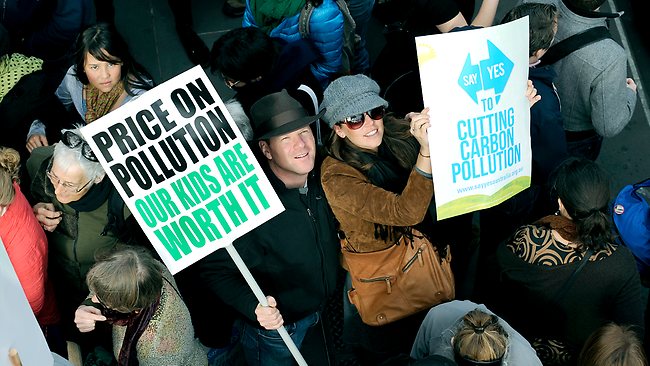
Specifically, I’m referring to the latest ‘craze’ in environmental science writing – the idea of ‘planetary tipping points‘ and the related ‘planetary boundaries‘. It’s really the stuff of Hollywood disaster blockbusters – the world suddenly shifts into a new ‘state’ where some major aspect of how the world functions does an immediate about-face. Read the rest of this entry »


Having more tree species makes us wealthier

28 01 2013

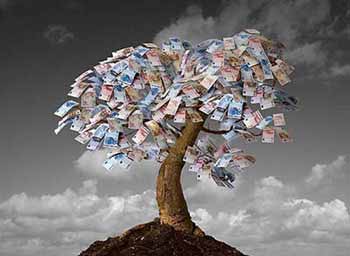
money treeAs more and more empirical evidence pours in from all corners of the globe, we can only draw one conclusion about the crude measure of species richness (i.e., number of species) – having more species around makes us richer.

And I’m not talking about the esoteric or ‘spiritual’ richness that the hippies dribble about around the campfire after a few dozen cones pulled off the bong (I’ll let the confused among you try to work the meaning of that one out by yourselves), I’m talking about real money (incorporated into my concept of ‘biowealth‘).

The idea that ‘more is better’ in terms of the number of species has traditionally found some (at times, conflicting) empirical support in the plant ecology literature, the latest evidence about which I wrote last year. This, the so-called ‘diversity-productivity’ relationship (DPR), demonstrates that as a forest or grass ecosystem gains more species, its average or total biomass production increases.

Read the rest of this entry »


The climate of climate change

4 09 2012

The primary scientific literature on climate change spawns hundreds of debates on an array of topics. When the technical debate among experts, and the obvious uncertainties, are taken up by the media, they are typically treated as any other topic, which ends up in some people not trusting science and others exploiting the ‘debate’ for their own interests.

Many media debates consist of one moderator and several speakers with two confronting views. When the topic under discussion affects our daily life (e.g., unemployment), the average spectator will often agree with one of the views. When the topic affects people (apparently) in a general fashion (e.g., climate change), the spectator might distrust or simply ignore both views. Thus, the media shapes public opinion such that people’s perception of the news becomes black, white, “I don’t believe it” or “it doesn’t exist”. Public debates on climate change are like a ‘contact sport’ (1), a team has to win in a contest where both parties alternate attack and defence. The participation of speakers without specialised expertise on climate change, especially if they represent short-term political and economic interests, instigates public mistrust and inhibition (2). This situation erodes the informative role that science and scientists must play in the creation of novel environmental policies aiming to improve the present and future wellbeing of our society (3, a Science paper unsurprisingly challenged by US administration’ bastion Fred Singer: 4). Read the rest of this entry »


The invisible hand of ecosystem services

4 08 2012

I’ve just spent nearly an entire week trying to get my head around ecosystem services (ES).

You’d think that would have been a given based on my experience, my research, my writings and the fact that I’ve just spent the last week with 400 ES specialists from around the world at the 5th international Ecosystem Services Partnership (ESP) Conference in Portland, Oregon, USA.

Well, prior to this week I thought I knew what ES were, but now I think I’m just a little more confused.

Of course, I’m not talking about the concept of ES or what they are (hell, I’ve written enough about them on this blog and in my papers); my problem is understanding how we as society end up valuing them in a practical, sensible and feasible way.

So I’m going to describe the ESP Conference as I saw it, and not necessarily in chronological order.

First up is the term ‘ecosystem services’ itself – horrible name, and something rammed home again after attending the conference. Most people on the planet that are not scientists (that would be nearly everyone) just might have the most tenuous and ethereal of grasps of ‘ecosystem’ in the first place, and I’d bet that 99 % of most undergraduate students couldn’t provide a comprehensive description. This is because ecosystems are mind-bogglingly, chaotically and awesomely complex. Just ask any ecosystem ecologist.

The second part of the term – services – is particularly offensive in its presumption and arrogance. It’s not like you ring up an ecosystem and get it to clean your carpets, or fill your water tank or gas cylinder. No, the natural world did not evolve to pamper humanity; we are merely part of it (and bloody efficient at modifying it, I might add).

So try to sell this ‘incredibly complex thingy’ that is ‘there to do some (intangible) shit for us’ to the public, policy makers and politicians, and you mostly get a dog’s regurgitated breakfast and some blank, slack-jawed stares. Read the rest of this entry »


Experiments in carbon-biodiversity trade-offs

19 07 2012

Last month I covered a topic that is not only becoming the latest fashion-trend in conservation, it is also where much of the research funding is going. Whether or not this is the best use of limited research resources is largely irrelevant – as I always preach to fledgling grant writers: “Write about what the funding agency wants to fund, not what you want to do”. Cynical, I know, but it is oh-so-true.

The topic in question is how we as conservation biologists ensure that the new carbon economy drives positive change for biodiversity, rather than the converse. Hell knows we really can’t afford for land-use change to get any worse for biodiversity; worldwide we are on trajectory for a mass extinction within our lifetime, so anything that potentially makes it worse should be squashed completely.

But it seems that land- and seascape changes that might arise from trading carbon (including carbon pricing) are on a knife-edge as far as biodiversity is concerned. I described this dilemma in my previous post, and I am happy to say that the manuscript arising is almost complete. Briefly, if we as a society decide to try to reduce greenhouse gas emissions and capture as much carbon as possible by altering land-use practices, then it is likely that our forests will become vast monocultures incapable of sustaining much biodiversity at all. In other words, there’s a balance to be struck between what is good for carbon sequestration and what is good for biodiversity. While not always mutually exclusive, neither are they mutually attainable goals. Read the rest of this entry »


Who’s responsible for climate change? Not ecologists, right?

19 06 2012

It’s sometimes difficult to take a long, hard look in the mirror and admit one’s failings. Today’s post is a thought-provoking challenge to all ecologists (indeed, all scientists) who gaily flit all over the known universe in the name of science. I’m certainly in one of the upper guilt echelons on this issue – and while I tell myself each January that “this year I’ll fly much less frequently”, I usually end up breaking my resolution by month’s end.

In some defence of my sins, I have to state that while I should always endeavour to fly less, I am convinced that strategic, well-planned (and usually small) meetings are some of the best ways to advance scientific ideas. As CB readers might know, I am particularly impressed with the results of dedicated workshops in this regard.

I also think that even if all aeroplanes suddenly fell from the sky and one could no longer enjoy that transcontinental G & T, we’d still be in a terribly climate-change mess – we need BIG solutions beyond simple consumption reduction.

Now I’m just making excuses. Thanks again to Alejandro Frid for providing this challenge to me and our colleagues.

Recently I asked a math savvy graduate student at Simon Fraser University, in Western Canada, to proofread an equation. ‘No problem’, she replied, ‘but could you wait a few days? I am about to fly to Korea for a conference but I will return shortly.’

Hmmmm? So this is what the system promotes: gallivanting halfway around the world and back within a week, burning extraordinary amounts of fossil fuels, all in the name of scientific career advancement. Who are the climate change culprits? Not us ecologists, right?

Of course I am being unfair to Ms. Maths Savvy. Most of us are equally guilty of boarding that big ol’ jet airliner in the name of scientific meetings or the pursuit of ecological knowledge in far off study sites. Yet the inconvenient truth, according to a recent editorial in Nature Climate Change1, is that “international air travel accounts for about 5% of global warming”. Flying all over the world in the name of ecology and conservation therefore implies that we believe that (i) there are no alternative means to accomplish the same goal with far less emissions, and (ii) that the benefits of our work outweigh the atmospheric impacts of flying. Think again.

For insight into these issues, I interviewed Kevin Anderson, deputy director of the Tyndall Centre for Climate Change Research at the University of Manchester and arguably the climate conscience of scientists. I was attracted to Anderson’s perspective because of its blunt honesty. He calls air travel “…the most emission profligate activity per hour”2 and has little patience for the irony that “international climate jamborees”, otherwise known as climate science meetings, have contributed far more to increasing carbon emissions than to any meaningful action on climate change. His recent commentary in Nature3 makes it amply clear that buying carbon offsets when flying may ease our perceived guilt but not emission rates. Read the rest of this entry »


Costs and benefits of a carbon economy for conservation

12 06 2012

I’ve had the good fortune of being involved now in a several endeavours funded by the Australian Centre for Ecological Analysis and Synthesis (ACEAS); two of those were workshops targeting specific questions regarding estimating modern extinction rates and examining the effects of genetic bottlenecks on Australian biota. The third was a bit different, to say the least – it was a little along the lines of ‘build it, and they will come‘. In other words, what happens when you bung 40 loosely associated researchers in a room for two days? Does anything of substance result, or does it degenerate into a mere talk-fest. I’m happy to say the former. The details of the ACEAS ‘Grand Workshop‘ are now being finalised in a paper that should be submitted by the end of the month. The ACEAS report is reproduced below.

The Grand ACEAS Workshop was something of an experiment: what will happen when we bring 30 of Australia’s top scientists working on land management issues into the same room?

The Grand Workshop participants came from academia, research institutions and the government, and had all received ACEAS funding for working groups. David Keith, Ted Lefroy, Jasmyn Lynch, Wayne Meyer and Dick Williams were amongst the attendees of the two-day workshop.

And when this group of people came together wanting to analyse and synthesise ecological data, great things happened.

“We decided to focus on how carbon pricing legislation will affect land use change and how will that spill over into biodiversity persistence”, said Professor Corey Bradshaw, Director of Ecological Modelling at The University of Adelaide, who led the synthesis activity at the Grand ACEAS Workshop.

“Will carbon pricing lead to good outcomes for biodiversity, or negative ones, or will it have no bearing whatsoever?”

The workshop participants broke into five groups to discuss how the carbon tax legislation will change land use when it is introduced in July 2012, and the potential impact on biodiversity.

Some of the questions asked included:

  • Is it enough simply to allow plants to re-grow to be eligible for carbon credits?
  • How will an increase in forestry plantations impact biodiversity, water catchments and fire regimes?
  • Will there be more kangaroo grazing to reduce methane emissions and erosion, replacing hard-hoofed livestock?
  • Can you receive carbon credits for shooting large feral animals like goats, camels, deer and boars?

The groups found many opportunities for positive biodiversity outcomes with the carbon sequestration activities encouraged by carbon pricing, but there are also many potential ‘bio-perversities’. Read the rest of this entry »


If a tree falls… preventing deforestation with insurance

3 05 2012

As CB readers will know, I’ve reported a few times on our iREDD idea, and it got a little pick-up overseas. Here’s a great article by Rachel Nuwer covering the concept, published in Ecoimagination.com.

Almost everything we own – our houses and cars and our very health – is insured. It works on a simple principal: the higher the risk, the higher the premium. It’s an age-old concept that ecological modelers have decided to apply to a new area: forest preservation.

A new proposal, published in the journal Conservation Letters, would create forest insurance to make the U.N. forest preservation program Reduced Emissions from Deforestation and forest Degradation, or REDD, more effective. REDD is generally supposed to function by paying developing countries to protect their forests in exchange for carbon pollution credits. Currently the program has 42 partner countries across the globe. The program is crucial to the fight against climate change since deforestation and forest degradation accounts for about 20 percent of global greenhouse gas emissions and threatens biodiversity.

“REDD is a fantastic idea,” said Corey Bradshaw, director of ecological modeling at the University of Adelaide and co-author of the study. “You get a carbon advantage and biodiversity doesn’t get wiped out at the same time, it seems perfect.”

But it has a few major flaws that the insurance scheme, called iREDD, seeks to remedy.

REDD only works if the parties are honest and stick to the agreement. Bradshaw doesn’t have much faith that will happen. “If there’s a way to cheat, people will cheat. That’s the nature of all life, not just humans, but we excel at it,” he said. If, for example, a country is paid to conserve one forest but moves its deforestation efforts to an adjacent forest in order to get both money and timber, in terms of carbon offsets, that transaction was a failure. This phenomenon is called “leakage.”

Carbon-capture also only works if it’s maintained indefinitely. If a country accepts money for ten years and then cuts its forest the day after the agreement expires, then all of that conservation was for naught. This issue is called “permanence,” usually translated into an arbitrarily defined period of time set by countries in terms of decades or centuries. Read the rest of this entry »


Take a leaf from insurance industry’s book

18 04 2012

Just a quick one rehashing today’s media release on the iREDD paper I blogged about a while back. The full, online version is available upon request. Stay tuned for media coverage.

A group of environmental scientists say a problem-ridden economic model designed to slow deforestation can be improved by applying key concepts from the insurance industry.

REDD (Reduced Emissions from Deforestation and forest Degradation) is a UN-promoted scheme that allows countries to trade in carbon credits to keep forests intact. It is mainly targeted at developing nations where deforestation and exploitation are a major threat.

In a paper published online in the journal Conservation Letters, ecology researchers from Australia and South Africa argue that REDD projects can suffer from three major problems. They have proposed strengthening the scheme by using insurance policies and premiums, creating a new scheme known as iREDD.

“The idea of paying a nation to protect its forests in exchange for carbon pollution offsets can potentially reduce overall emissions by keeping the trees alive, and ensure a lot of associated biodiversity gets caught up in the conservation process,” says Professor Corey Bradshaw,, Director of Ecological Modelling at the University of Adelaide’s Environment Institute and a senior author of the paper.

“However, there are three main problems with REDD: these are known as leakage, permanence and additionality.” Read the rest of this entry »


Humans suddenly become intelligent

1 04 2012

Some described it as the “eco-topia”; some believed they had died in the night and awoken in a different universe. Some just stood there gaping stupidly.

Yet the events of 01 April 2012 are real*. Humans suddenly became intelligent.

In an unprecedented emergency UN session this morning, all the world’s countries pledged to an immediate wind-down of the fossil-fuel economy and promised to invest in a rational combination of nuclear and renewable energy sources. Some experts believe the pledge would see a carbon-neutral planet by 2020.

Additionally, the session saw a world-wide pledge to halt all deforestation by 2013, with intensive reforestation programmes implemented immediately.

Family planning would be embraced worldwide, with a concerted effort to see the human population plateau by 2070, and begin declining to a stable 2 billion by 2300. Read the rest of this entry »


Unholy trinity of leakage, permanence and additionality

13 03 2012

I begin with the proverbial WTF? The title of this post sounds a little like the legalese accompanying a witchcraft trial, but it’s jargon that’s all the rage in the ‘trading-carbon-for-biodiversity’ circles.

I’m sure that most of my readers will have come across the term ‘REDD‘ (Reduced Emissions from Deforestation and forest Degradation), which is the clever idea of trading carbon credits to keep forests intact. As we know, living forests can suck up a lot of carbon from the atmosphere (remember your high school biology lesson on photosynthesis? Carbon dioxide in. Oxygen out), even though climate change is threatening this invaluable ecosystem service. So the idea of paying a nation (usual a developing country) to protect its forests in exchange for carbon pollution offsets can potentially save two birds with one feeder – reducing overall emissions by keeping the trees alive, and ensuring a lot of associated biodiversity gets caught up in the conservation process.

The problem with REDD though is that it’s a helluva thing to bank on given a few niggly problems essentially revolving around trust. Ah yes, the bugbear of any business transaction. As the carbon credit ‘buyer’ (the company/nation/individual who wishes to offset its carbon output by ‘buying’ the carbon uptake services provided by the intact forest), you’d want to make damn sure that all the money you spend to offset your carbon actually does just that, and that it doesn’t just end up in the hands of some corrupt official, or even worse, used to generate industry that results in even higher emissions! As the buyer, of course you want to entice investors to give you lots of money, and if you bugger up the transaction (by losing the resource you are providing), you’re not likely to have any more investors coming knocking on your door.

Enter the unholy trinity of leakage, permanence and additionality.

This horrible jargon essentially describes the REDD investment problem:

Read the rest of this entry »


Sink to source – the loss of biodiversity’s greatest ecosystem service

29 02 2012

I’ve mentioned this idea before, but it’s nice when some real data support a prediction (no matter how gloomy that prediction might have been). It’s what drives scientists toward discovery (or at least, it’s what I find particularly appealing about my job).

Several years ago, my colleagues (Navjot Sodhi† and Ian Warkentin) and I wrote a major review in TREE about the fate of the world’s ‘second’ lung of the planet, the great boreal forests of Russia, Canada & Scandinavia. We discussed how fragmentation was increasing at an alarming rate, and that although most species there are still relatively intact, we stand to lose a lot of its biodiversity if we don’t halt the fragmenting processes soon. We wrote more on the subject in a paper to appear imminently in Biological Conservation.

Another component though that we raised in the TREE paper was the boreal forests were very much in danger of turning into a net carbon producer. You see, the ‘lung’ analogy is very pertinent because on average, the growth of the massive expanse of the vegetation in the forest generally takes up much more atmospheric carbon that it exudes through decay and burning (for as we all know, plants take up carbon dioxide to produce sugars during photosynthesis, and produce oxygen as a ‘waste’ product). However, as we fragment, cut down and burn the forest, it can end up producing more than it takes up (i.e., turning from a ‘sink’ to a ‘source’). We highlighted several studies indicating how insect outbreaks and human-exacerbated fire intensities and frequencies could conceivably do this.

Now Zhihai Ma and colleagues have just compiled a paper in PNAS indicating that the danger is well on the way to becoming reality in Canada. The paper entitled Regional drought-induced reduction in the biomass carbon sink of Canada’s boreal forests reports the results from 96 long-term permanent sampling plots spread right across southern Canada – from British Columbia in the far west, to Newfoundland in the far east. Read the rest of this entry »


More is better

18 01 2012

In one of those rare moments of perusing the latest ecological literature, I stumbled across an absolute gem, and one that has huge conservation implications. Now, I’m really no expert in this particular area of ecology, but I dare say the paper I’m about to introduce should have been published in Nature or Science (I suspect it was submitted to at least one of these journals first). It was still published in an extremely high-impact journal in ecology though – the Journal of Ecology produced by the British Ecological Society (and one in which I too have had the honour of publishing an article).

Before I get into specifics, I have to say that one thing we conservation biologists tend to bang on about is that MORE SPECIES = BETTER, regardless of the ecosystem in question. We tend to value species richness as the gold standard of ecosystem ‘health’ and ‘resilience’, whether or not there is strong empirical evidence in support. It’s as if the more-is-better mantra strikes an intuitive chord and must, by all that’s ecologically right in the world, be true.

Of course, measuring what is ‘better’ is a difficult task, especially when we are talking about complex ecosystems comprising thousands, if not millions, of species. Does ‘better’ refer to the most temporally stable, the most genetically diverse, the most resilient to perturbation, or the provider of the greatest number of functions and hence, ecosystem services?

It’s up to you, but all these things tend to be difficult to measure for a large number of species and over time scales of sufficient duration to measure change. So the default for plants (i.e., the structural framework of almost all ecosystems) I guess has come down to a simpler measure of success – ‘productivity’. This essentially means how much biomass is produced per unit area/volume per time step. It’s not a great metric, but it’s probably one of the more readily quantifiable indices.

Enter the so-called ‘diversity-productivity relationship’, or ‘DPR’, which predicts that higher plant species diversity should engender higher net productivity (otherwise known as the ‘net biodiversity effect’). Read the rest of this entry »


Mucking around the edges

8 11 2011

Barry Brook over at BraveNewClimate.com beat me to the punch regarding our latest paper, so I better get off my arse and write my take on things.

This post is about a paper we’ve just had accepted and has come out online in Biological Conservation called Strange bedfellows? Techno-fixes to solve the big conservation issues in southern Asia – and it’s likely to piss off a few people, and hopefully motivate others.

We wrote the paper for a special issue of essays dedicated to the memory of our mate and colleague, Navjot Sodhi, who died earlier this year. The issue hasn’t been released yet, but we have managed to get our paper out well before.

Like Navjot, the paper is controversial. Also like Navjot, we hope it challenges a few minds and pushes a few boundaries. We, as conservation biologists, must accept the fact that we have largely failed – biodiversity is still being lost at an alarming rate despite decades and decades of good science, sound evidence-based policy recommendations and even some rescues of species on the ‘brink’. Huge consumption rates, a population of 7 billion humans and counting, carbon emissions exceeding all worst-case scenarios, and greater disparity of wealth distribution have all contributed to this poor performance.

So what else can we do? Read the rest of this entry »


1 million hectares annually – the forest destruction of Indonesia

30 09 2011

© A. Kenyon http://goo.gl/UpG3m

Bill Laurance wrote a compelling and very dour piece in The Conversation this week. He asked for some ‘link love’, so I decided to reproduce the article here for ConservationBytes.com readers. Full credit to Bill and The Conversation, of course.

What comes to mind when you think of Indonesia?

For biologists like myself, Australia’s northern neighbour provokes visions of ancient rainforests being razed by slash-and-burn farmers, and endangered tigers and orangutans fleeing from growling bulldozers.

This reality is true, but there is also hope on the horizon.

Indonesia is a vast, sprawling nation, spanning some 17,000 islands. Among these are Java, Sumatra, half of New Guinea and much of Borneo.

Some of the planet’s most biologically rich and most endangered real estate is found on this archipelago.

Today, Indonesia is losing around 1.1 million hectares of forest annually. That’s an area a third the size of Belgium, bigger than Australia’s Wet Tropics World Heritage Area.

With forest loss now slowing in Brazil, Indonesia has the dubious distinction of being the world’s deforestation “leader”. No nation is destroying its forests faster.

In Sumatra, where I visited recently, the world’s biggest paper-pulp corporations are chopping down hundreds of thousands of hectares of native rainforest to make paper and cardboard.

Some of these corporations also fund aggressive lobbyists, such as World Growth in Washington DC [CJA Bradshaw’s note: see our piece on one particular patron of WG – Alan Oxley], to combat their critics and dissuade major retail chains from dropping their products. Read the rest of this entry »


Rise of the phycologists

22 09 2011

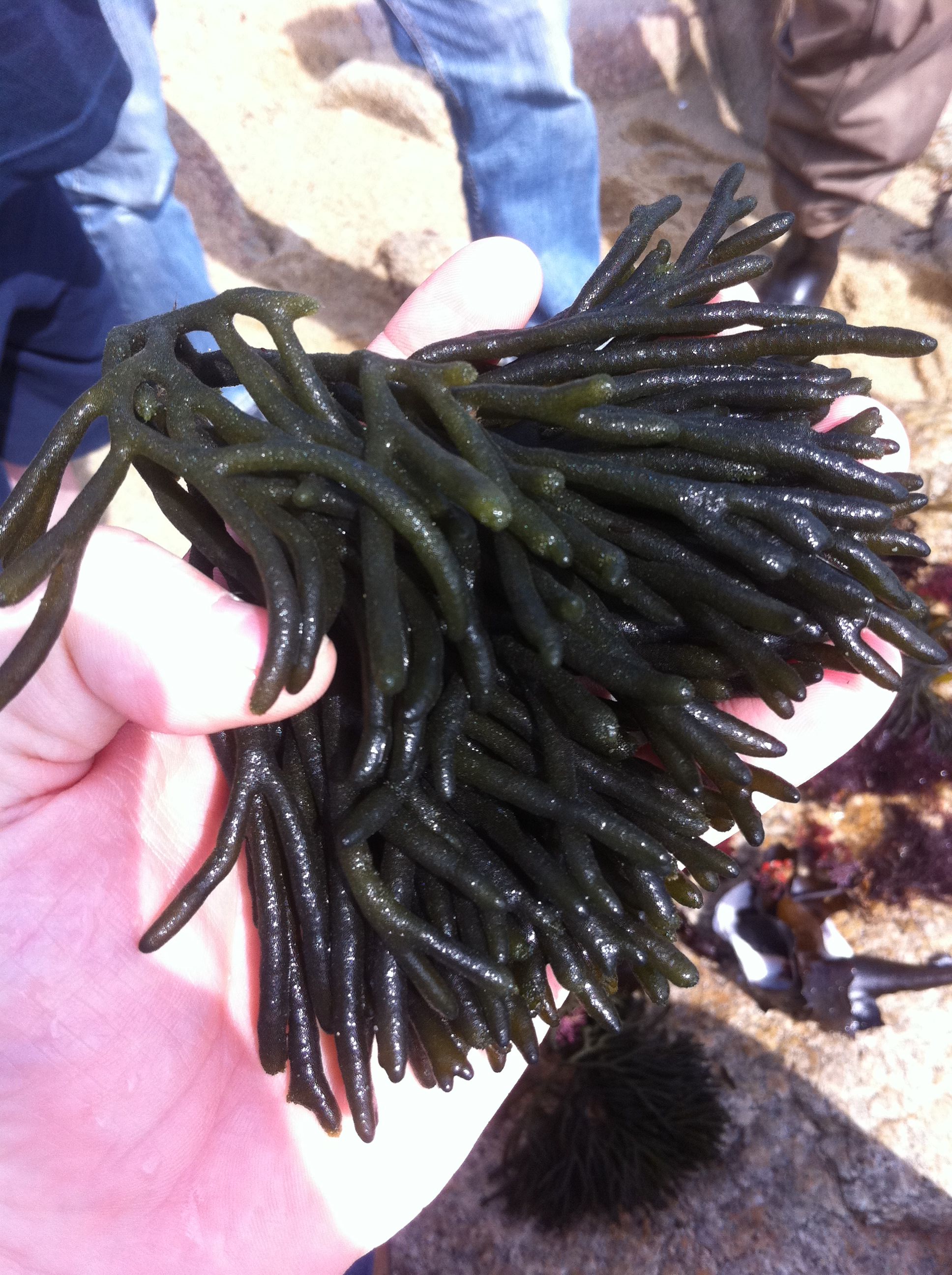
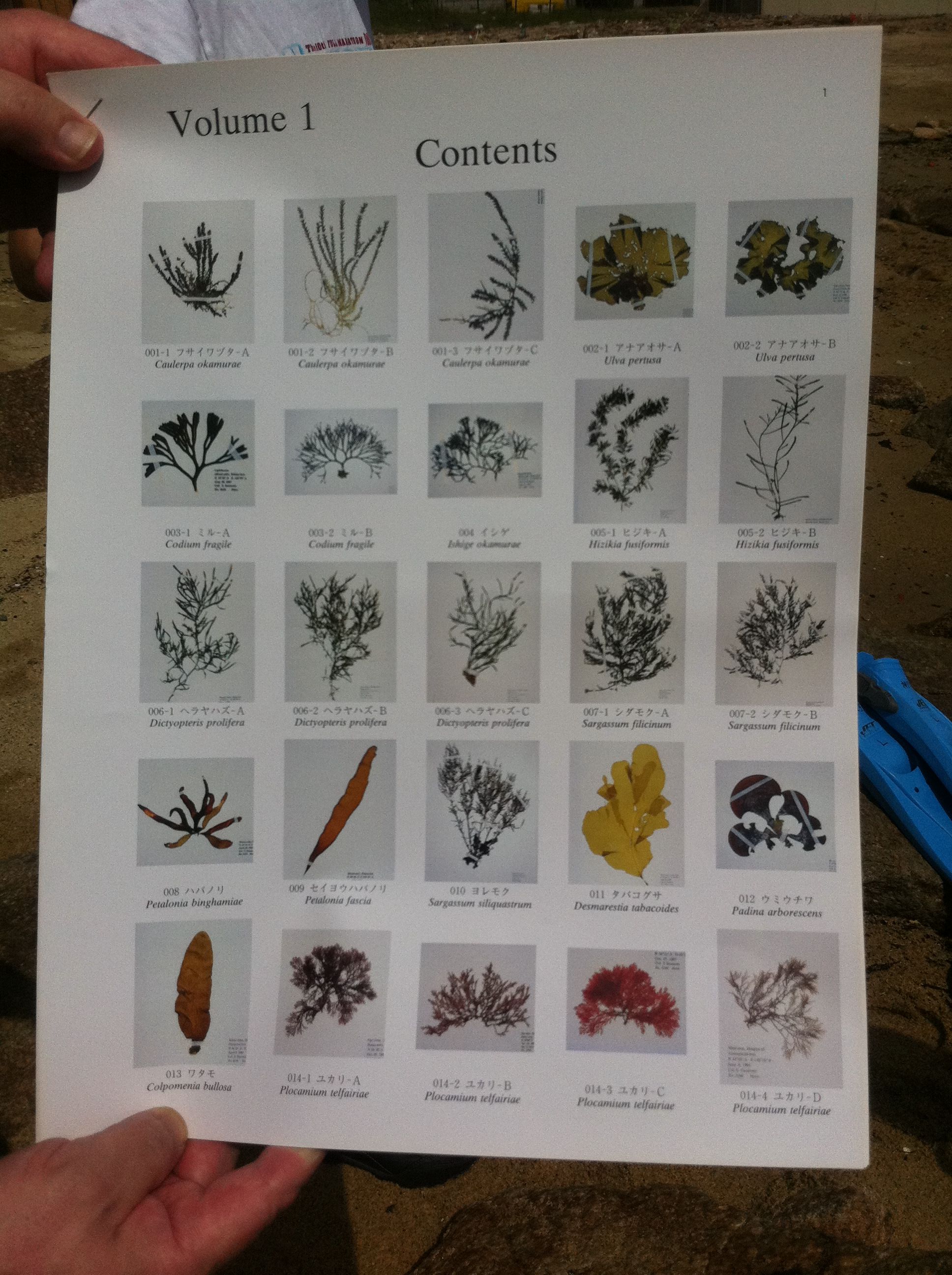
Dead man's fingers (Codium fragile) - © CJA Bradshaw

I’ve had an interesting week. First, it’s been about 6 years since I was last in Japan, and I love coming here; the food is exquisite, the people are fantastic (polite, happy, accommodating), everything works (trains, buses, etc.) and most importantly, it has an almost incredible proportion of its native forests intact.

But it wasn’t for forests that I travelled to Japan (nor the sumo currently showing on the guest-room telly where I’m staying – love the sumo): I was here for a calcareous macroalgae workshop.

What?

First, what are ‘macroalgae’, and why are some ‘calcareous’? And why should anyone in their right mind care?

Good questions. Answers: 1. Seaweeds; 2. Many incorporate calcium carbonate into their structures as added structural support; 3. Read on.

Now, I’m no phycologist (seaweed scientist), but I’m fascinated by this particular taxon. I’ve written a few posts about their vital ecological roles (see here and here), but let me regale you with some other important facts about these amazing species.

Some Japanese macroalgae - © CJA Bradshaw

There are about 12,000 known species of macroalgae described by phycologists, but as I’ve learnt this week, this is obviously a vast underestimate. For most taxa that people are investigating now using molecular techniques, the genetic diversity is so high and so geographically structured that there are obviously a huge number of ‘cryptic’ species within our current taxonomic divisions. This could mean that we’re out by up to a factor of 2 in the number of species in the world.

Another amazing fact – about 50 % of all known seaweed species are found in just two countries – Japan and Australia (hence the workshop between Japanese and Australian phycologists). Southern Australia in particular is an endemism hotspot.

Ok. Cool. So far so good. But so what? Read the rest of this entry »


Australian ecologists support carbon tax

18 07 2011

© Herald Sun

Last week I came across a report that 60 % of economists support the newly proposed Australian carbon tax initiative, and that most believed the Coalition’s plan was inferior and would likely be more costly.

I thought that it would be good to survey ecologists on this very same issue because we are the people dealing with the fall-out of climate change to natural systems, and we are the group communicating it and its consequences to the greater public. Climate change effects on the Australian biota are already being witnessed, and if we don’t take the lead in this over-populated world of myopic, self-interested growth addicts, it’s our children who will suffer most.

Usually, ecologists and economists tend to disagree on major policies because of the general view that development is incompatible with functioning ecosystems; however in this case, it’s telling that the two seem to agree. If economists and ecologists together support something, it’s probably a good idea to give it a go. Read the rest of this entry »


Reforesting wealthy countries for the common good

29 06 2011

The Coalition of Financially Challenged Countries with Lots of Trees, known as ‘CoFCCLoT’, representing most of the world’s remaining tropical forests, is asking wealthy nations to share global responsibilities and reforest their land for the common good of stabilizing climate and protecting biodiversity.

“We are willing to play our part, but we require a level playing field in which we all commit to equal sacrifices,” a coalition spokeswoman says. “Returning forest cover in the G8 countries and the European Union back to historic coverage will benefit all of us in the long-term.”

Seventy-five per cent of Europe was once forested. Now it is 45 per cent. Some countries such as Ireland saw forest cover reduced to near zero. Most forest cover in the developed world is now often planted with stands of alien trees, turning them into deserts for biodiversity. Remaining natural forests are often highly fragmented and have few native species. Read the rest of this entry »


A very pissed-off New Guinean versus the Destroyer of Forests

31 03 2011

I really don’t know where this came from (weird e-mail trail), but it was too good not to share.

For those of you who follow ConservationBytes.com, you might remember a fairly recent post where a group of leading conservation biologists exposed one of the most dangerous men in the world – Alan Oxley, the (very embarrassing to admit) Australian destroyer of tropical biodiversity and future welfare of hundreds of millions of people.

It seems he and his commercial interests (and my, do those fellas lay it on thick) have turned their attention to destroying the last tracts of intact South-East Asian forests (and associated biodiversity) in Papua New Guinea. Kiss some of the most endemic, biodiverse and biowealthy areas on the planet good-bye.

So it was interesting to receive this email that had been sent to Oxley’s front-company, International Trade Strategies (ITS) Global, by one very pissed off Papua New Guinean. I have no idea who ‘Bush Kanaka Mangi’ is, but he sounds the real deal and I wouldn’t want to be Oxley if he ever came across him. I cite verbatim1:

Mr Alan Oxley,

HONESTLY : I am sick of getting this bloody rubbish, bullshit from you and your company ITS Global about palm oil is good for PNG, logging is good for PNG. Who the hell do you think you are ????, you seem in all your articles and consultancy reports as the expert about our country and more knowledgeable about the Melanesian society very well. My assessment of all your electronic newsletter which you circulate widely, your reflections and recommendations all are in no way closer or nearer to the way we Papua New Guineans think and want to do things and develop our nation, all of what you say are totally and purely and absolutely RUBBISH and yet you claim to know everything and know the problems of PNG and our people and on ways to solve our problems and continue your bullshit campaign in support of R&H and all its doing here destroying our forests, our society, manipulating our systems and creating confusion and hell is loose here. Read the rest of this entry »


Wolves masquerading as sheep: the fallout

29 10 2010


© New Zealand Films


Well, we’ve managed to stimulate quite a lively conversation after dropping the Open Letter about Scientific Credibility and the Conservation of Tropical Forests regarding the questionable tactics employed by Alan Oxley and his industrial lobbyist organisations.

Mr. Oxley has responded with vitriol, hand-waving, red herrings and straw men, and failed to address even a single one of our accusations. I am particularly amused by his insinuation that we, the proven scientists, don’t know what science is – but that he does.

Below I reproduce Mr. Oxley’s reaction to our original letter, followed by our response.

I’ll let you, the reader, decide who is most reasonable.

REACTION FROM ALAN OXLEY

There is too much pseudo-scientific hype today about environmentalism and forestry and not enough fact.

I put this double-barrelled question to the Group of 12 scientists who have rather laboriously wandered over the work of World Growth: What biodiversity is expressly protected by a global cessation of conversion of forest land to other purposes and how is that biodiversity scientifically measured? And let’s have some technical response, not political blather. Read the rest of this entry »