Long, deep and broad

24 08 2010

© T. Holub Flickr

Thought that would get your attention ;-)

More scientists need to be trained in quantitative synthesis, visualization and other software tools.” D. Peters (2010)

In fact, that is part of the title of today’s focus paper in Trends in Ecology and Evolution by D. Peters – Accessible ecology: synthesis of the long, deep,and broad.

As a ‘quantitative’ ecologist (modeller, numerate, etc.) whose career has been based to a large degree on the analysis of large ecological datasets, I am certainly singing Peters’ tune. However, it’s much deeper and more important than my career – good (long, deep, broad – see definitions below) ecological data are ESSENTIAL to avoid some of the worst ravages of biodiversity loss over the coming decades and centuries. Unfortunately, investment in long-term ecological studies is poor in most countries (Australia is no exception), and it’s not improving.

But why are long-term ecological data essential? Let’s take a notable example. Climate change (mainly temperature increases) measured over the last century or so (depending on the area) has been determined mainly through the analysis of long-term records. This, one of the world’s most important (yet sadly, not yet even remotely acted upon) issues today, derives from relatively simple long-term datasets. Another good example is the waning of the world’s forests (see posts herehere and here for examples) and our increasing political attention on what this means for human society. These trends can only be determined from long-term datasets.

For a long time the dirty word ‘monitoring’ was considered the bastion of the uncreative and amateur – ‘real’ scientists performed complicated experiments, whereas ‘monitoring’ was viewed mainly as a form of low-intellect showcasing to please someone somewhere that at least something was being done. I’ll admit, there are many monitoring programmes producing data that aren’t worth the paper their printed on (see a good discussion of this issue in ‘Monitoring does not always count‘), but I think the value of good monitoring data has been mostly vindicated. You see, many ecological systems are far too complex to manipulate easily, or are too broad and interactive to determine much with only a few years of data; only by examining over the ‘long’ term do patterns (and the effect of extremes) sometimes become clear.

But as you’ll see, it’s not just the ‘long’ that is required to determine which land- and sea-use decisions will be the best to minimise biodiversity loss – we also need the ‘deep’ and the ‘broad’. But first, the ‘long’. Read the rest of this entry »




100 actions to slow biodiversity loss

19 08 2010

I received an email a few days ago from Guillaume Chapron of the Swedish University of Agricultural Sciences (Sveriges lantbruksuniversitet) asking me to promote his ‘Biodiversity 100‘ campaign on ConservationBytes.com. I think it’s an interesting initiative, and so I’ll gladly spread the word.

Teaming up with George Monbiot of The Guardian, the Biodiversity 100 campaign seeks to encourage scientists and others to compile a list of 100 tasks that G20 governments should undertake to prove their commitment to tackling the biodiversity crisis.

Dr. Chapron writes: Read the rest of this entry »


Unbounded economic growth destroying biodiversity

16 08 2010

…we can’t have more of everything instantaneously

…increasing takeover of the ecosystem is the necessary consequence of the physical growth of the macroeconomy

…consider telling the economist to go to hell

Herman Daly

© M. Leunig

Last month I had the privilege of listening to Rob Dietz of the Centre for Advancement of the Steady State Economy (CASSE) when attending the 2010 International Congress for Conservation Biology. He introduced the CASSE and their mandate – to promote stable or mildly fluctuating levels in population and consumption of energy and materials. This is the steady-state economy.

I’ve hinted before that our essentially linear economy (natural resource exploitation -> transport -> manufacturer -> redistribution -> sale -> consumption/use -> disposal (discussed in a very easy-to-understand way in the Story of Stuff) is not sustainable in the long term because of the finite resource base of the planet (think trees, coal, oil, arable land). My colleagues and I have even shown analyses based on hard data demonstrating that total wealth is the ultimate driver of environmental degradation at the country scale.

So, it is my opinion (and a growing number of others‘) that we need a new way of measuring economic prosperity, or the world will enter a state of permanent financial crisis. The mantra of constant economic growth is simply unrealistic as our human populations continue to expand. This is a very simplistic statement and on the surface an apparently impossible goal; however, people who put together the CASSE believe it is achievable.

It is for this reason that I have been communicating with Rob Dietz and others at CASSE about reposting some of their excellent essays on ConservationBytes.com. Please feel free to comment here on the subject matter because the CASSE people will be monitoring. I hope we can expand the readership and support base, and eventually start to convince politicians that growth will eventually kill us and a good slice of the planet’s biodiversity.

So with that, here’s the first repost by Professor Herman Daly entitled “Opportunity Cost of Growth“: Read the rest of this entry »


Marine protected areas: do they work?

13 08 2010

One measure that often meets great resistance from fishermen, but is beloved by conservationists, is the establishment of marine protected or ‘no take’ areas.” Stephen J. Hall (1998)

I’m going to qualify this particular post with a few disclaimers; first, I am not involved in the planning of any marine protected areas (henceforth referred to as ‘marine parks’) in Australia or elsewhere; and second, despite blogging on the issue, I have never published in the discipline of protected area design (i.e, ‘conservation planning’ is not my area of expertise).

That said, it seems to becoming more imperative that I enter the fray and assess not only how marine parks should be designed, but how effective they really are (or can be). I’ve been asked by several conservation NGOs to provide some insight into this, so I thought I should ‘think aloud’ and blog a little mini-review about marine park effectiveness.

Clearly there is a trend to establish more marine parks around the world, and this is mainly because marine conservation lags so far behind terrestrial conservation. Indeed, Spalding et al. (2008) showed that only 4.1 % of continental shelf areas are incorporated within marine parks, and ~ 50 % of all marine ecoregions have less than 1 % marine park coverage across the shelf. Furthermore, marine protection is greatest in the tropical realms, while temperate realms are still poorly represented.

The question of whether marine parks ‘work’ is, however, more complicated than it might first appear. When one asks this question, it is essential to define how the criteria for success are to be measured. Whether it’s biodiversity protection, fisheries production, recreational revenue, community acceptance/involvement or some combination of the above, your conclusion is likely to vary from place to place.

Other complications are, of course, that if you cannot ensure a marine park is adequately enforced (i.e., people don’t respect the rules) or if you don’t actually place the park anywhere near things that need protecting, there will be no real net benefit (for any of the above-mentioned interest groups). Furthermore, most marine parks these days have many different types of uses allowed in different zones (e.g., no fishing, some fishing, recreational diving only, no boat transport, some shipping, etc., etc., etc.), so it gets difficult to test for specific effects (it’s a bit like a cap-and-trade legislation for carbon – too many rules and often no real net reduction in carbon emissions – but that’s another story).

All these conditions aside, I think it’s a good idea to present what the real experts have been telling us about marine park effectiveness from a biodiversity and fishing perspective over the last decade or so. I’ll summarise some of the major papers here and give an overall assessment at the end. I do not contend that this list is even remotely comprehensive, but it does give a good cross-section of the available evidence. Read the rest of this entry »


General call for ConservationBytes.com contributions

10 08 2010

After just over two years running this blog, I’ve now built up a pretty good audience of conservation-interested people. The blog now has a monthly view rate of over 12,000 and >80 e-mail subscribers, so the material is being viewed far and wide. I want to thank all of you for your interest and comments.

It seems appropriate then to put out a general call for ConservationBytes.com contributions. I’ve had several guest posts now from students (Fishing for conservationMake your conservation PhD relevant), postdocs (Coming to grips with the buffalo problem) and colleagues (Interview with a social [conservation] scientist, Put the bite back into biodiversity conservation), but these have come to me fairly haphazardly. I’d therefore like to invite short articles from the CB readership to expand the topics covered and provide a more interactive conservation discussion. Read the rest of this entry »


Conservation research rarely equals conservation

21 07 2010

This post was chosen as an Editor's Selection for ResearchBlogging.org

I am currently attending the 2010 International Meeting of the Association for Tropical Biology and Conservation (ATBC) in Sanur, Bali (Indonesia). As I did a few weeks ago at the ICCB in Canada, I’m tweeting and blogging my way through.

Yesterday I attended a talk by my good friend Trish Shanley (formerly of CIFOR) where she highlighted the disconnect between conservation research and actual conservation. I’ve posted about this before (see Out of touch, impractical and irrelevantMake your conservation PhD relevant), but this was a sobering reminder of how conservation research can be a self-perpetuating phenomenon and often not touch the people who need it most.

Presenting the highlights of her paper published earlier this year in Biotropica entitled Out of the loop: why research rarely reaches policy makers and the public and what can be done, one comment she made during the talk that really caught my attention was the following (I’m paraphrasing, of course).

Most of the world’s poor living off the land are unconcerned about biodiversity per se. As conservationists we should not therefore adopt the typical preamble that biodiversity (e.g., forests) represent the “lungs of our planet” – what people (and especially women) need to know is how biodiversity loss affects “food for my children”.

The paper itself was an interview 268 researchers from 29 countries (of which I was one) about their views on the relevance of their work. Not surprisingly (but amazingly that we were so honest), most respondents stated that their principal target was other scientists, with policy makers and other marginalised groups/local people holding a distant second place. Corporate targets were also pretty rare – I guess we feel as a group that that’s generallly a lost cause.
Neither a surprise was that we generally view peer-reviewed scientific publications as the main vehicle for the dissemination of our results. What was a bit of a surprise though is that we fully admit papers aren’t the best way to trickle down the information (again, more of that brutal honesty); apparently we mainly believe ‘stakeholder meetings’
are more effective (I have my doubts).


Killing us slowly

6 07 2010

I’m currently attending the 2010 International Congress for Conservation Biology in Edmonton, Canada. I thought it would be good to tweet and blog my way through on topics that catch my attention. This is my second post from the conference.

I silently scoffed inside when the plenary speaker was being introduced. It was boldly claimed that we were about to hear one of the best presentations any of us had ever seen at a scientific conference before.

I cannot say for certain whether it was indeed ‘the best’, but bloody hell, it was excellent.

Our speaker is certainly well-known in the endocrinology world (very well published), is a bane to certain chemical industries and is revered as a scientist who puts his money where is mouth is.

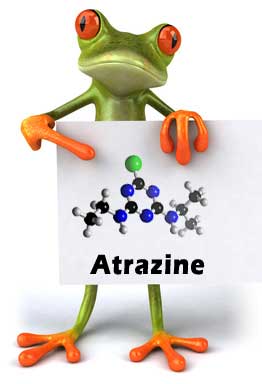
Professor Tyrone Hayes of the University of California Berkeley is an ‘eco-endocrinologist’ who blew the lid on the devastating health effects of the most available and ubiquitous agricultural herbicide in use today – evil atrazine. As my readers know, I am certainly pushing the empirical basis for the link between environmental degradation and deterioration of human health (my talk here at the ICCB on Wednesday will be on this very topic), so this topic interests me greatly.

It’s no secret that atrazine has devastating feminising effects on amphibians (and many other taxa), and has been linked convincingly to increasing the risk of cancer in humans. It’s banned in Europe, but still widely used pretty much everywhere else. Read the rest of this entry »


Failure of the CBD 2010 targets

5 07 2010

I’m currently attending the 2010 International Congress for Conservation Biology in Edmonton, Canada. I thought it would be good to tweet and blog my way through on topics that catch my attention.

Yesterday I attended one memorable presentation by Bastian Bomhard of the United Nations Environment Programme‘s (UNEP) World Conservation Monitoring Centre (WCMC). He provided some sobering statistics.

The opening statement in the background section of the Convention on Biological Diversity‘s (CBD) 2010 Biodiversity Target reads:

“In April 2002, the Parties to the Convention committed themselves to achieve by 2010 a significant [my emphasis] reduction of the current rate of biodiversity loss at the global, regional and national level as a contribution to poverty alleviation and to the benefit of all life on Earth.”

Suffice it to say that we have failed to meet the target.

I won’t dwell too long on the fact that ‘…a significant reduction…’ is utterly meaningless, subjective and a useless policy tool (in my opinion) because it cannot be quantified as stated, Bastian did tell us that we failed even to obtain a ‘reduction’.

More specifically, parties to the CBD 2010 target agreed in 2010 to protect at least 10 % of the world’s ecological regions (ecoregions) by 2010 — almost half of the world’s terrestrial ecoregions do not meet even this modest proportional protection.

Read the rest of this entry »



Interview with a social (conservation) scientist

22 06 2010

I was contacted recently by Josh Cinner, a self-titled ‘social’ scientist (now working at the Centre of Excellence for Coral Reef Studies) who has published rather a lot in the conservation literature. He was recently highlighted in the journal Science for his work, and he thought CB readers would enjoy the coverage. He stated to me:

“…as a social scientist, I have spent the past decade or so working with ecologists and managers trying to integrate social science better in conservation. There are often calls for the importance of integrating social science in conservation and I thought your blog readers might appreciate some high-level recognition of the importance of this. Additionally, as far as I can tell, this is the first of these profiles that has focused on someone working in conservation.”

So, while fully crediting the source of this article and its author, Helen Fields, here is the entire text reproduced for your reading pleasure.

In the late 1980s, things were not going well for the coral reefs at Jamaica’s Montego Bay Marine Park. Overfishing had taken out a lot of the fish that eat algae, and algae were taking over the reef. “It was a classic case of ecosystem decline,” human geographer Joshua Cinner says. He arrived in Jamaica in 1996 as a Peace Corps volunteer after graduating from the University of Colorado, Boulder, with a double major in environmental conservation and geography. He was particularly interested in parks and preserves.

He’d landed in the middle of a war. Lobbying by tour operators and others got spearfishing, one of the main culprits in overfishing, banned in the park. The ban did not go over well with local people. “All the park equipment got vandalized. We had park rangers get threatened; their families got threatened at spear point,” Cinner says. Spearfishing equipment is cheap and you don’t need a boat; men who do it are generally poor and are fishing as a last resort. “The cultural lens through which the fishermen viewed this issue was of struggle in a post-slavery society, of the rich, predominantly white expatriates making a law that oppressed the poorest of the poor locals to benefit the wealthy.”

The conflict got Cinner thinking about how conservation really works. “It wasn’t really about the ecology,” he says. “Making conservation work in Jamaica had a lot to do with understanding the local culture and people.” It also opened his eyes to the role oceans play. “The ocean is often viewed as an open-access resource. That extra layer of complexity interested me,” he says. “Land can often be private property,” but “the ocean is typically viewed as free for anyone to fish in, for anyone to swim in and use.” Read the rest of this entry »


Biodiversity SNAFU in Australia’s Jewel

16 06 2010

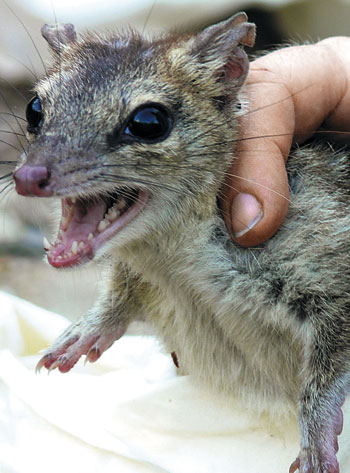
I’ve covered this sad state of affairs and one of Australia’s more notable biodiversity embarrassments over the last year (see Shocking continued loss of Australian mammals and Can we solve Australia’s mammal extinction crisis?), and now the most empirical demonstration of this is now published.

The biodiversity guru of Australia’s tropical north, John Woinarksi, has just published the definitive demonstration of the magnitude of mammal declines in Kakadu National Park (Australia’s largest national park, World Heritage Area, emblem of ‘co-management’ and supposed biodiversity and cultural jewel in Australia’s conservation crown). According to Woinarski and colleagues, most of those qualifiers are rubbish.

The paper published in Wildlife Research is entitled Monitoring indicates rapid and severe decline of native small mammals in Kakadu National Park, northern Australia and it concludes:

The native mammal fauna of Kakadu National Park is in rapid and severe decline. The cause(s) of this decline are not entirely clear, and may vary among species. The most plausible causes are too frequent fire, predation by feral cats and invasion by cane toads (affecting particularly one native mammal species).

I’ve done quite a bit of work in Kakadu myself, and the one thing that hits you every time you travel through it is the lack of visible wildlife. Sure, you’ll see horses, pigs and buffalo, as well as cane toads and cats, but getting a glimpse of anything native, from Conilurus to Varanus, and you’d consider yourself extremely lucky.

We’ve written a lot about the feral animal problem in Kakadu and even developed software tools to assist in density-reduction programmes. It doesn’t appear that anyone is listening.

Another gob-smacking vista you’ll get when travelling through Kakadu any time from April to December is that it’s either been burnt, actively burning or targeted for burning. They burn the shit out of the place every year. No wonder the native mammals are having such a hard time.

Combine all this with the dysfunctional management arrangement, and you cease to have a National Park. Kakadu is now a lifeless shell that does precious little for conservation of biodiversity (and 3 of the 5 criteria it had to satisfy to become a World Heritage Area are specifically related to natural resource ‘values’). I say, delist Kakadu now and let’s stop fooling ourselves.

Ok, back from the rant. Woinarski and others superimposed a mammal monitoring programme over top a fire-regime experiment for vegetation. Although they couldn’t sample every plot every season, they staggered the sampling to cover the area as best they could over the 13 years of monitoring (1996-2009). What they observed was staggering. Read the rest of this entry »


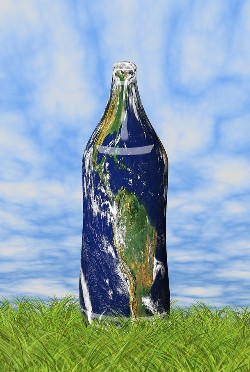
The planet is our bottle

22 05 2010

Professor Chris Thomas, conservation ecologist extraordinaire, tells it like it is. This might be a little basic for many ConservationBytes.com readers, but it’s the kind of pitch that might convince even the stupidest of yobs. I reproduce the Guardian article here in full.

Why do we care about nature, and can we actually quantify what the benefits are? This is what the UN’s The Economics of Ecosystems and Biodiversity (Teeb) project is all about, and the answer is remarkable. The natural world – biodiversity – provides us with food, materials and energy. We eat animals and plants; insects pollinate many of the foods we consume; microbes in the soil provide the nutrients the plants to grow; vegetation and soil biodiversity reduce flooding and release clean drinking water; vegetation soaks up a substantial proportion of the climate warming carbon dioxide gasses that we emit. The list goes on and on. Urban and rural citizens alike rely on these natural products and benefits.

The real cost of damaging nature, it turns out, is at least 10 times greater than the cost of maintaining the ecosystem as it is so that we can reap the associated benefits. To take an example close to the University of York where I work, the costs of flood defence construction and flood-related insurance claims in the Vale of York hugely outweigh the agricultural benefits of drainage ditches and overgrazing in the River Ouse catchment. Rather than treating nature as a pleasant luxury, Teeb argues that we should integrate the real costs and benefits within our decision-making. It should not be the preserve solely of environment and conservation ministries, but it should be at the core of the activities of finance departments. Teeb argues that we should get rid of subsidies that are environmentally damaging and reward beneficial activities that maintain natural ecosystems. This might be by including the costs of damage within the purchase price of products to encourage us to buy the least damaging items, and potentially by paying land owners and countries directly to maintain natural ecosystems. Farmers in the Ouse catchment have recently received payments for blocking their drainage ditches; and the perverse subsidies that rewarded farmers by the animal – resulting in over-grazing, trampling and erosion – have been removed. It can be done. Achieving this at a global scale is far more difficult. Read the rest of this entry »


Who are the world’s biggest environmental reprobates?

5 05 2010

Everyone is a at least a little competitive, and when it comes to international relations, there could be no higher incentive for trying to do better than your neighbours than a bit of nationalism (just think of the Olympics).

We rank the world’s countries for pretty much everything, relative wealth, health, governance quality and even happiness. There are also many, many different types of ‘environmental’ indices ranking countries. Some attempt to get at that nebulous concept of ‘sustainability’, some incorporate human health indices, and other are just plain black box (see Böhringer et al. 2007 for a review).

With that in mind, we have just published a robust (i.e., to missing data, choices for thresholds, etc.), readily quantifiable (data available for most countries) and objective (no arbitrary weighting systems) index of a country’s relative environmental impact that focuses ONLY on environment (i.e., not human health or economic indicators) – something no other metric does. We also looked at indices relative to opportunity – that is, looking at how much each country has degraded relative to what it had to start with.

We used the following metrics to create a combined environmental impact rank: natural forest loss, habitat conversion, fisheries and other marine captures, fertiliser use, water pollution, carbon emissions from land-use change and threatened species.

The paper, entitled Evaluating the relative environmental impact of countries was just published in the open-access journal PLoS One with my colleagues Navjot Sodhi of the National University of Singapore (NUS) and Xingli Giam, formerly of NUS but now at Princeton University in the USA.

So who were the worst? Relative to resource availability (i.e,. how much forest area, coastline, water, arable land, species, etc. each country has), the proportional environmental impact ranked (from worst) the following ten countries:

  1. Singapore
  2. Korea
  3. Qatar
  4. Kuwait
  5. Japan
  6. Thailand
  7. Bahrain
  8. Malaysia
  9. Philippines
  10. Netherlands

When considering just the absolute impact (i.e., not controlling for resource availability), the worst ten were:

  1. Brazil
  2. USA
  3. China
  4. Indonesia
  5. Japan
  6. Mexico
  7. India
  8. Russia
  9. Australia
  10. Peru

Interestingly (and quite unexpectedly), the authors’ home countries (Singapore, Australia, USA) were in either the worst ten proportional or absolute ranks. Embarrassing, really (for a full list of all countries, see supporting information). Read the rest of this entry »


Make your conservation PhD relevant

23 04 2010

The other day I was approached by two PhD candidates from James Cook University in the ARC Centre of Excellence for Coral Reef Studies who requested I publish a short article they put together on making conservation PhDs relevant while achieving academic excellence. I’m delighted to say that I found the article very well written and topical, so I am pleased to present it in full here.

© J. Cham

Make your conservation PhD relevant – bridging the research-implementation gap

Duan Biggs & Tom Brewer

ARC Centre of Excellence for Coral Reef Studies, James Cook University, Townsville, Queensland, Australia

A recent paper, in Biotropica’s special issue on bridging the research-implementation gap (Duchelle et al. 2009) included examples of postgraduate students in the University of Florida’s Tropical Conservation and Development Program contributing to knowledge exchange with local stakeholders. The authors argue that this experience, during training, enables postgraduate students to develop their skills to confront the elaborate set of management and policy issues that will be present through their careers. We agree with Duchelle and her co-authors’ arguments, but believe that further discussion is required on finding the balance between the requirements of academic training and knowledge sharing with conservation stakeholders at the PhD level specifically.

Earning a PhD requires a novel theoretical contribution to a specific field of knowledge, and the practical value or contribution of that knowledge is of secondary importance, or irrelevant. Therefore, finding synergies between the requirements of academia and knowledge sharing can be particularly challenging at the PhD level. Yet, we believe that in an applied science like conservation, the quality of research and training will be enhanced through being more explicit about how to synergise a scientific contribution worthy of a PhD degree with related practical skills like knowledge sharing. In support of our argument, we propose the following six questions that PhD candidates, together with their academic supervisors, can consider during research design to enhance their contribution to knowledge exchange whilst meeting the requirements of academic training: Read the rest of this entry »



The maggot of the plant world – mangroves

12 04 2010

I don’t know how many of my readers have waded through a mangrove swamp before – if you have, you’ll know it’s no ‘walk in the park’. They are generally mosquito-infested with waist-deep mud, have more creepy-crawlies than you can poke a stick at, and in some places (such as my former stomping ground, the Northern Territory of Australia) are down-right dangerous due to lovelies such as saltwater crocodiles.

But, most people probably don’t know just how important mangroves are. Just like the maggot who can sicken the hardiest of individual, under-appreciated mangroves provide major ecosystem services.

For example, did you know that mangroves:

  1. Protect inland human communities from damage caused by coastal erosion and storms?
  2. Provide critical habitat for a variety of terrestrial, estuarine and marine species? Indeed, it has been estimated that ~80 % of fish catches globally depend directly or indirectly  on mangroves.
  3. Are a source and sink for nutrients and sediments for other inshore marine habitats including seagrass beds and coral reefs?
  4. Protect coasts from floods?
  5. Process nutrient and organic matter?
  6. Control sediment?
  7. Provide at least US$1.6 billion per year in ecosystem services worldwide?
  8. Sequester up to 25.5 million tonnes of carbon per year?
  9. Provide more than 10% of essential organic carbon to the global oceans?
  10. Occupy only 0.12% of the world’s total land area?

Pretty staggering, no?

So, even if you don’t like them, it’s difficult to deny that they’re important.

But, like almost every other habitats worldwide, mangroves are on the big downward slide. In a new paper in PLoS One by Polidoro & colleagues entitled The loss of species: mangrove extinction risk and geographic areas of global concern, the authors not only highlight the above benefits, they quantify just how badly the 70 mangrove species around the world are faring. Read the rest of this entry »


China’s insatiable lust for tropical timber

4 04 2010

If you’ve been following ConservationBytes.com for the past few weeks, you’ll know that William Laurance was in town and gave a fantastic set of talks (download podcasts here). As a parting gift, he put together a brief post on one huge aspect of the tropical deforestation crisis we know face. Thanks, Bill.

© AAAS

I greatly enjoyed my recent visit to the University of Adelaide, and especially want to thank my host, Corey Bradshaw, for showing me a wonderful time there.

Corey asked me to contribute a brief blog for ConservationBytes.com and so I thought I’d highlight a paper in Science last week by my old friend Jianguo “Jack” Liu at Michigan State University. In his paper China’s road to sustainability, Jack describes the battle to improve environmental sustainability in China–a battle that is not progressing very well, all factors considered.

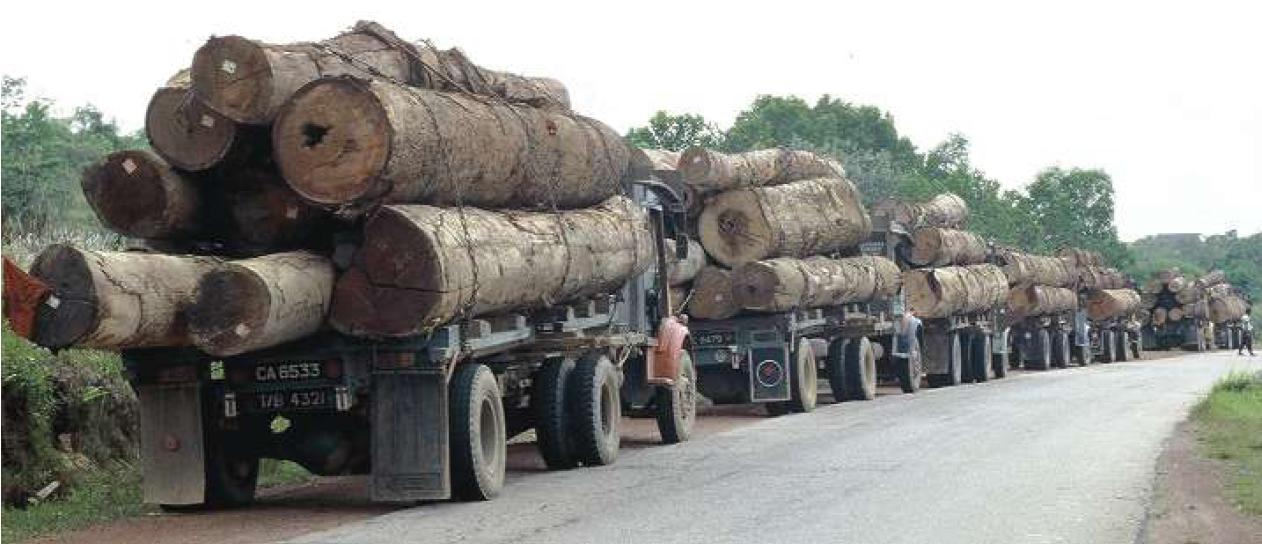
China’s explosive economic growth and environmental deterioration is also affecting other countries, especially those with timber, minerals or other resources that China wants. Today, more than half of the timber shipped anywhere in the world is destined for China–some 45 million m3 per year, an incredible total. Read the rest of this entry »


Don’t miss Bill

25 03 2010

Yes, yes, I know I’ve posted only a little under two weeks ago that the venerable William (Bill) Laurance is coming to Adelaide, and anyone even remotely interested in biodiversity conservation would be a fool to miss his talks, and ra, ra, ra…

Well, you would be.

However, I don’t want anyone to miss this opportunity simply because of non-recognition. So I thought it prudent to remind people just how special this visit is, and what a researcher extraordinaire Bill really is. For those not necessarily following the trends in tropical conservation biology (probably not many in Adelaide, at least), you might not necessarily recognise his name.

So, I thought I’d give a little broadsheet of his achievements, Read the rest of this entry »


Bill Laurance coming to Adelaide

13 03 2010

We’ve got a real treat for biodiversity buffs scheduled for the end of March. Eminent (Distinguished, Famous, Respected… the list goes on) Professor William (Bill) Laurance is briefly leaving his tropical world and coming south to the temperate climes of Adelaide to regale us with his fascinating biodiversity research career.

Bill is a leading conservation biologist who has worked internationally on many high-profile threats to tropical forests—in the Amazon, Central America, Africa, and Australasia. A highly prolific scientist, to date he has published five books and over 300 scientific articles. Bill has recently commenced a position as Distinguished Research Professor at James Cook University and is involved with the Smithsonian Tropical Research Institute in Panama. He also happens to be the bloke that blew the lid open on the devastating effects of tropical fragmentation in the Amazon with some of the best long-term experiments ever done in conservation biology.

I’m personally very pleased for several reasons: (1) Although I have never met Bill in person yet, I’ve recently co-authored two papers with him (Wash and spin cycle threats to tropical biodiversity and Improving the performance of the Roundtable on Sustainable Palm Oil for nature conservation) and I’m keen to meet the man behind the pen; (2) we have had many email discussions (some of them rather heated!), so I’m keen to flesh some of these out over a nice glass of South Australian Shiraz; (3) he’s been a keen supporter of my work for years, and has given me many opportunities to get my research noticed; and (4) it’s high time to met one of ConservationBytes.com Conservation Scholars.

Bill has recently shifted shop from Panama (Smithsonian Tropical Research Institute) to Australia’s own James Cook University, and so we at the Environment Institute thought we should take advantage of his geographical disorientation and bring him down south for a while. But he’s going to have to sing for his supper, so he’s kindly agreed to give three talks in 3 days from 29-31 March 2010.

His first talk (on Monday 29 March) will be an in-house Environment Institute seminar, but the second two will be public events that I urge anyone remotely interested in biodiversity conservation research to attend. In fact, his Tuesday 30 March presentation (18.00-20.00 Napier G03, University of Adelaide) is even more generic than that, and word on the street is it is highly entertaining and extremely well attended wherever Bill’s is gracious enough to give it:

Amplify Your Voice: Keys to Having a Prolific Scientific Career (and Bill would know).

This will include (1) How to be more prolific: strategies for writing and publishing scientific papers and (2) Further ways to maximise your scientific impact – interacting with the popular media and how to promote yourself. Each topic will run for 50 minutes and will include 10 minutes for audience questions. A tea and coffee break will be held between sessions. Book here.

His second public talk on Wednesday 31 March (18.00-19.30 Napier 102, University of Adelaide) will be:

Diagnosis Critical | The lungs of our Planet

Here he will be discussing how the forests of our world are in crisis. Our drive for continued economic growth has had devastating consequences for the world’s ecosystems that provide critical human services. Our forests are a haven for countless plant and animal species that form the basis of ecological services, these services are the biological mechanisms that make the world our home. Book here.

So, if you have a couple of free nights at the end of the month and are in Adelaide, I strongly recommend you come out and see Bill do his thing.

CJA Bradshaw

Add to FacebookAdd to DiggAdd to Del.icio.usAdd to StumbleuponAdd to RedditAdd to BlinklistAdd to TwitterAdd to TechnoratiAdd to Yahoo BuzzAdd to Newsvine


February Issue of Conservation Letters

13 02 2010

Diver at Great Barrier Reef, Australia

Hard to believe we’re already at Volume 3 – introducing the latest issue of Conservation Letters (Volume 3, Issue 1, February 2010). For full access, click here.

Note too we’ve jumped from 5 to 6 papers per issue. Congratulations to all our authors. Keep those submissions coming!

CJA Bradshaw

Add to FacebookAdd to DiggAdd to Del.icio.usAdd to StumbleuponAdd to RedditAdd to BlinklistAdd to TwitterAdd to TechnoratiAdd to Yahoo BuzzAdd to Newsvine


Parochial conservation

30 01 2010
© cagiecartoons.com

A little bit of conservation wisdom for you this weekend.

In last week’s issue of Nature, well-known conservation planner and all-round smart bloke, Reed Noss (who just happens to be an editor for Conservation Letters and Conservation Biology), provided some words of extreme wisdom. Not pulling any punches in his Correspondence piece entitled Local priorities can be too parochial for biodiversity, Noss essentially says ‘don’t leave the important biodiversity decisions to the locals’.

He argues rather strongly in his response to Smith and colleagues’ opinion piece (Let the locals lead) that local administrators just can’t be trusted to make good conservation decisions given their focus on local economic development and other political imperatives. He basically says that the big planning decisions should be made at grander scales that over-ride local concerns because, well, the big fish in their little ponds can’t be trusted (nor do they have the training) to do what’s best for regional biodiversity conservation.

I couldn’t agree more – he states:

“Academic researchers, conservation non-governmental organizations and other ‘foreign’ interests tend to be better informed, less subject to local political influence and more experienced in conservation planning than local agencies.”

Of course, being part of the first group, I’m probably a little biased, but I dare say that we’ve got a lot better handle on the science beyond saving biodiversity, as well as a better understanding of why that’s important, than your average regional representative, village council, chief, Lord Mayor or state member. Sure, ‘engage your stakeholders’ (I have images of shooting missiles at people holding star pickets with this gem of business jargon wankery, but there you go), but please base the decision on science first. I think Smith and colleagues have some good points, but I am more in favour of a broad-scale benevolent dictatorship in conservation planning than fine-scale democracy. Granted, the best formula is likely to be very context-specific, and of course, you need some people with local implementation power to make it happen.

Dear Honourable Minister, you may sign on the dotted line to make policy real, but please, please listen to us before you do. Your very life and those of your children depend on it.

CJA Bradshaw

ResearchBlogging.orgNoss, R. (2010). Local priorities can be too parochial for biodiversity Nature, 463 (7280), 424-424 DOI: 10.1038/463424a

Smith, R., Veríssimo, D., Leader-Williams, N., Cowling, R., & Knight, A. (2009). Let the locals lead Nature, 462 (7271), 280-281 DOI: 10.1038/462280a

Add to FacebookAdd to DiggAdd to Del.icio.usAdd to StumbleuponAdd to RedditAdd to BlinklistAdd to TwitterAdd to TechnoratiAdd to Yahoo BuzzAdd to Newsvine


Avoiding the REDD monster

22 01 2010

© Floog

A short post about a small letter that recently appeared in the latest issue of Conservation Biology – the dangers of REDD.

REDD. What is it? The acronym for ‘Reduced Emissions from Deforestation and Degradation’, it is the idea of providing financial incentives to developing countries to reduce forest clearance by paying them to keep them standing. It should work because of the avoided carbon emissions that can be gained from keeping forests intact. Hell, we certainly need it given the biodiversity crisis arising mainly from deforestation occurring in much of the (largely tropical) developing world. The idea is that someone pollutes, buys carbon credits that are then paid to some developing nation to prevent more forest clearance, and then biodiversity gets a helping hand in the process. It’s essentially carbon trading with an added bonus. Nice idea, but difficult to implement for a host of reasons that I won’t go into here (but see Miles & Kapos Science 2008 & Busch et al. 2009 Environ Res Lett).

Venter and colleagues in their letter entitled Avoiding Unintended Outcomes from REDD now warn us about another potential hazard of REDD that needs some pretty quick thinking and clever political manoeuvring to avoid.

While REDD is a good idea and I support it fully with carefully designed implementation, Venter and colleagues say that without good monitoring data and some well-planned immediate policy implementation, there could be a rush to clear even more forest area in the short term.

Essentially they argue that when the Kyoto Protocol expires in 2012, there could be a 2-year gap when forest loss would not be counted against carbon payments, and its in this window that countries might fell forests and expand agriculture before REDD takes effect (i.e., clear now and avoid later penalties).

How do we avoid this? The authors suggest that the implementation of policies to reward early efforts to reduce forest clearance and to penalise those who rush to do early clearing need to be put in place NOW. Rewards could take the form of credits, and penalties could be something like the annulment of future REDD discounts. Of course, to achieve any of this you have to know who’s doing well and who’s playing silly buggers, which means good forest monitoring. Satellite imagery analysis is probably key here.

CJA Bradshaw
ResearchBlogging.orgOscar Venter, James E.M. Watson, Erik Meijaard, William F. Laurance, & Hugh P. Possingham (2010). Avoiding Unintended Outcomes from REDD Conservation Biology, 24 (1), 5-6 DOI: 10.1111/j.1523-1739.2009.01391.x

Add to FacebookAdd to DiggAdd to Del.icio.usAdd to StumbleuponAdd to RedditAdd to BlinklistAdd to TwitterAdd to TechnoratiAdd to Yahoo BuzzAdd to Newsvine