Few people, many threats – Australia’s biodiversity shame

31 07 2009

bridled_nailtail_400I bang on a bit about human over-population and how it drives biodiversity extinctions. Yet, it isn’t always hordes of hungry humans descending on the hapless species of this planet  – Australia is a big place, but has few people (just over 20 million), yet it has one of the higher extinction rates in the world. Yes, most of the country is covered in some fairly hard-core desert and most people live in or near the areas containing the most species, but we have an appalling extinction record all the same.

A paper that came out recently in Conservation Biology and was covered a little in the media last week gives some telling figures for the Oceania region, and more importantly, explains that we have more than enough information now to implement sound, evidence-based policy to right the wrongs of the past and the present. Using IUCN Red List data, Michael Kingsford and colleagues (paper entitled Major conservation policy issues for biodiversity in Oceania), showed that of the 370 assessed species in Australia, 80 % of the threatened ones are listed because of habitat loss, 40 % from invasive species and 30 % from pollution. As we know well, it’s mainly habitat loss we have to control if we want to change things around for the better (see previous relevant posts here, here & here).

Kingsford and colleagues proceed to give a good set of policy recommendations for each of the drivers identified:

Habitat loss and degradation

  • Implement legislation, education, and community outreach to stop or reduce land clearing, mining, and unsustainable logging through education, incentives, and compensation for landowners that will encourage private conservation
  • Establish new protected areas for habitats that are absent or poorly represented
  • In threatened ecosystems (e.g., wetlands), establish large-scale restoration projects with local communities that incorporate conservation and connectivity
  • Establish transparent and evidence-based state of environment reporting on biodiversity and manage threats within and outside protected areas.
  • Protect free-flowing river systems (largely unregulated by dams, levees, and diversions) within the framework of the entire river basin and increase environmental flows on regulated rivers

Invasive species

  • Avoid deliberate introduction of exotic species, unless suitable analyses of benefits outweigh risk-weighted costs
  • Implement control of invasive species by assessing effectiveness of control programs and determining invasion potential
  • Establish regulations and enforcement for exchange or treatment of ocean ballast and regularly implement antifouling procedures

Climate change

  • Reduce global greenhouse gas emissions
  • Identify, assess, and protect important climate refugia
  • Ameliorate the impacts of climate change through strategic management of other threatening processes
  • Develop strategic plans for priority translocations and implement when needed

Overexploitation

  • Implement restrictions on harvest of overexploited species to maintain sustainability
  • Implement an ecosystem-based approach for fisheries, based on scientific data, that includes zoning the ocean; banning destructive fishing; adopting precautionary fishing principles that include size limits, quotas, and regulation with sufficient resources based on scientific assessments of stocks and; reducing bycatch through regulation and education
  • Implement international mechanisms to increase sustainability of fisheries by supporting international treaties for fisheries protection in the high seas; avoiding perverse subsidies and improve labelling of sustainable fisheries; and licensing exports of aquarium fish
  • Control unsustainable illegal logging and wildlife harvesting through local incentives and cessation of international trade

Pollution

  • Decrease pollution through incentives and education; reduce and improve treatment of domestic, industrial, and agriculture waste; and rehabilitate polluted areas
  • Strengthen government regulations to stop generation of toxic material from mining efforts that affects freshwater and marine environments
  • Establish legislation and regulations and financial bonds (international) to reinforce polluter-pays principles
  • Establish regulations, education programs, clean ups, labelling, and use of biodegradable packaging to reduce discarded fishing gear and plastics

Disease

  • Establish early-detection programs for pathological diseases and biosecurity controls to reduce translocation
  • Identify causes, risk-assessment methods, and preventative methods for diseases
  • Establish remote communities of organisms (captive) not exposed to disease in severe outbreaks

Implementation

  • Establish regional population policies based on ecologically sustainable human population levels and consumption
  • Ensure that all developments affecting the environment are adequately analysed for impacts over the long term
  • Promote economic and societal benefits from conservation through education
  • Determine biodiversity status and trends with indicators that diagnose and manage declines
  • Invest in taxonomic understanding and provision of resources (scientific and conservation) to increase capacity for conservation
  • Increase the capacity of government conservation agencies
  • Focus efforts of nongovernmental organisations on small island states on building indigenous capacity for conservation
  • Base conservation on risk assessment and decision support
  • Establish the effectiveness of conservation instruments (national and international) and their implementation

A very good set of recommendations that I hope we can continue to develop within our governments.

CJA Bradshaw

Add to FacebookAdd to NewsvineAdd to DiggAdd to Del.icio.usAdd to StumbleuponAdd to RedditAdd to BlinklistAdd to Ma.gnoliaAdd to TechnoratiAdd to Furl


Interview with… ConservationBytes

16 07 2009

CBlogoA few months ago I was asked to do an online interview about ConservationBytes at The Reef Tank. I previously made mention of the interview (see post), but I think it’s time I reproduce it here.

The effects of pollution, carbon build up in the ocean, extinction, loss of coral reefs, over-fishing, and global warming is increasingly becoming more detrimental to our marine life and marine world.

Fortunately our marine ecosystems have Corey Bradshaw on their side. As a conservation ecologist, Corey studies these ecosystems with a passion, trying to understands the interactions between plants and animals that make up these ecosystems as well as what human activity is doing to them.

He has realised long ago that conservation and awareness is crucial to the survival of these living things and carries on the long tradition of studying and trying to understand these ecosystems at the School of Earth & Environmental Sciences at the University of Adelaide in South Australia.

He also avidly blogs about these pertinent issues at ConservationBytes.com, because he felt a need that these marine conservation issues needed to be heard. And he was more then right.

We were lucky enough to grab some time with Corey Bradshaw and he was kind enough to answer some important marine conservation questions, which are important in our desire: to make the marine world a better place.

What is your background in science and conservation?

I have a rather eclectic background in this area. I originally started my university education in general ecology, with a focus on plant ecology in particular (this was the strength of my undergraduate institution). There was no real emphasis on conservation per se until I started my postgraduate studies, although even then I was more interested in the empirical side of theoretical ecology than on conservation itself. It was more or less a gradual process that as I realised just how much we as a species have changed the planet in our (relatively) short time here, I became more and more dedicated to quantifying the links between species loss and how it affects human well-being.

After completing my MSc, PhD and first postdoctoral fellowship in New Zealand and Australia, I had the good fortune to work alongside a few excellent conservation ecologists specialising in extinction dynamics. This is where my mathematical bent and conservation interests really took off and eventually set the stage for most of my research today.

Your blog is ConservationBytes.com. Why the urge to start a blog on conservation only?

It may seem odd that I resisted blogging for many years because I thought it was a colossal time-waster that would take me away from my main scientific research. However, several things convinced me of its need and utility. First, it’s a wonderful vehicle to engage non-scientists about the research one does – let’s face it, most people don’t read scientific journals. Second, it’s interactive; people can ask questions or comment directly online. Third, it overcomes the strict language and technical rigour of most scientific publications and gets to the heart of the issue (it also allows me to express some opinions and speculations that are otherwise forbidden in scientific writing). Fourth, I realised there was a real lack of understanding about basic conservation science among the populace, so providing a vehicle for conservation science dissemination online appeared to be a good idea – there simply wasn’t anything like it when I started only a year ago. Finally, an effective, policy-changing scientist must advertise his/her research through the popular media to be recognised, so it obviously has career benefits.

Tell me about the conservation topics you cover?

ConservationBytes.com covers pretty much any topic that conforms to at least one of the following criteria:

  • It concerns research (previous, ongoing, planned) that is designed to improve the fate of biodiversity, whether locally, regionally or internationally

  • It concerns policy studies, actions or ideas that will have positive bearing on biodiversity conservation

  • It concerns demonstrations of the role biodiversity plays in providing humans with essential ecosystem services

I even have a section I call ‘Toothless’ that highlights ineffective conservation research or policy. Other areas include: exposés of well-known conservation scientists, a collection of links to conservation science journals, and my personal information (publications, CV, media attention).

What is your take on marine conservation? What does marine conservation include?

Given that I have worked in both marine and terrestrial realms from the tropics to the Antarctic, I really see little distinction in terms of conservation. True, the marine realm probably presents more challenges to conservation in some respects because it’s generally much more difficult and expensive to collect meaningful data, and it’s more difficult to control or mitigate people’s behaviour (especially in international waters), but the ecological patterns are the same (although I admit they may operate over different spatial and temporal scales).

Current ‘hot’ topics in marine conservation include the global degradation and loss of coral reef ecosystems (and what to do about it), terrestrial run-off of pollutants and nutrients affecting marine communities, over-fishing and better fishing management strategies, the design of effective marine protected areas, the socio-economic implications of moving people away from direct exploitation to behaviours and economic activities that promote longer-term biological community stability and resilience, and of course, how climate change (via acidification, hypercapnia, temperature change, storm intensification, seal level rise and modified current structure) might exacerbate the systems that are already stressed by the aforementioned problems.

Have you done any work, research in the area of marine conservation?

Yes, quite a bit. Some salient areas include

  • The grey nurse shark Carcharias taurus was the world’s first shark species to receive legislative protection when the east Australian population was listed under the 1984 New South Wales Fisheries Management Act. It has since been listed as globally Vulnerable by the IUCN in 1996 and the east Australian population was declared Critically Endangered in 2003. Previously, we constructed deterministic, density-independent PVA models for the east Australian population that suggested dire prospects for its long-term persistence without direct and immediate intervention. However, deterministic models might be overly optimistic because they do not incorporate stochastic fluctuations that can drive small populations extinct, whereas failing to account for density feedback can predict overly pessimistic. We recently completed a study demonstrating that the most effective measure to reduce extinction risk was to legislate the mandatory use of offset circle hooks in both recreational and commercial fisheries. The increase in dedicated marine reserves and shift from bather protection nets to drumlines had much lower effectiveness.

  • The global extent of illegal, unreported and unregulated (IUU) fishing is valued from US$10-23.5 billion per year, representing between 11 and 26 million tonnes of fish killed annually beyond legal commercial catches. In northern Australia, IUU fishing has advanced as a ‘protein-mining’ wave starting in the South China Sea in the 1970s and now penetrates consistently into the nation’s Exclusive Economic Zone. We have documented the extent of this wave and the implications for higher-order predators such as sharks, demonstrating that IUU fishing has already depleted large predators in Australian territorial waters. Given the negative relationship between IUU fishing takes and governance quality, we propose that deterring invading fishers will need substantially greater investment in border protection, and international accords to improve governance in neighbouring nations, if the tide of extinction is to be effectively mitigated.

  • Determining the extinction risk of the world’s shark and ray species – some work I’ve done recently with colleagues is to examine the patterns of shark biodiversity globally and determine which groups are most at risk of extinction. Not a surprise, but it turns out that the largest species of shark that reproduce the slowest are the most endangered (including all those bitey ones that frighten people).

  • Finally, I’m doing a lot of work now examining how the structure of coral reefs affects fish biodiversity patterns and long-term resilience. It turns out that basic biogeographic predictors (e.g., reef size and relative isolation from other reefs) really do dictate how temporally stable fish populations remain. And as we know, the more variable a population in time and space, the more likely it will go extinct (on average). The practical implication is that we can identify those coral reefs most likely to maintain their fish communities simply by measuring their size and position.

You’re from Australia, correct? What kind of marine conservation is going on there?

I’m originally from Canada, but I’ve spent most of my adult life in Australia (mostly in Tasmania, the Northern Territory, and now, Adelaide in South Australia). I did my PhD in the deep south of New Zealand (Otago University, Dunedin). In Australia, all the aforementioned ‘hot’ areas of marine conservation are in full swing, with greater and greater emphasis on climate change research. I think this aspect is pre-occupying most serious marine ecologists in Australia these days. For example, the southeast of Australia has already experienced some of the fastest warming in the Southern Hemisphere, with massive regional shifts in many species of fish, invertebrates, macroalgae and plankton.

What’s your take on ocean acidification? Do you think people need to be aware of this issue?

I used to believe ocean acidification was THE principal marine conservation issue facing us today, but now I think it’s just another stressor in a cornucopia of stressors. The main issue here is that we still understand so little of its implications for marine biodiversity. Sure, you lower the pH and up the partial CO2 (pCO2) of seawater, and many organisms don’t do so well (in terms of survival, reproduction and growth). However, it’s considerably more complex than this. pH and pCO2 vary substantially in space and time, and we have yet to quantify these patterns or how they are changing for most of the marine realm. Therefore, it’s difficult to simulate ‘real’ and future conditions in the lab.

Another issue is that temperature is changing must faster and so far exposure experiments indicate that it generally has a much more pronounced effect on marine organisms than acidification per se. However, like many climate change issues, a so-called ‘tipping point’ could be just around the corner that makes many marine communities collapse. It’s a frightening prospect, but one that needs a lot more dedicated research.

Can a person own an aquarium and still be considered a marine conservationist in your opinion?

Of course, provided one is cognisant of several important issues. First, most aquarists rely on the importation of non-native species. Lack of vigilance and carelessness has resulted in a suite of alien species being released into naïve ecosystems, resulting in the extinction or reduction of many native fish and invertebrates. Another issue is the transport cost – think how much carbon you are emitting by flying that tropical clownfish to your local pet shop in Norway. Third, do you know from which populations your displayed fish come? Were they harvested sustainably, or were they the last individuals plucked from a dying reef? A good knowledge of an animal’s origin is essential for the responsible aquarist. In my view one should play it safe. I think having aquaria filled with local species that are easily acquired, don’t cost the Earth to transport and pose no risk to native ecosystems is the most responsible way to go. You can also be a lot more certain of sustainable harvest if you live close by the source.

What is your take on climate change and its effect on marine life? Is being aware and educated on this particular topic and how it affects the marine world make someone a marine conservationist?

Awareness is only the first and most basic step. I’d say most of the world is ‘aware’ to some extent. It’s really the change in human behaviour that’s required before we make any true leaps forward. Some of the issues described above get to the heart of behavioural change. To use an analogy, it’s not enough to recognise that you’re an alcoholic, you have to stop drinking too to prevent the damage.

What can we do to raise awareness of the importance of marine conservation and conservation in general?

My personal take on this, and it applies to ALL biodiversity conservation (i.e., not just marine) is that people won’t take it seriously until they see how its loss affects their lives negatively. For example, let’s say we lose all commercially exploitable fish – not having access to delicious and healthy fish protein will mean people change the way fishing is done; that is, they’ll try to force fishers to fish sustainably and consumers to demand responsibly. The same can be said for more esoteric ecosystem services like carbon sequestration, oxygen production, water purification, pollination, waste detoxification, etc. if, and only if, we understand the economic and health benefits of keeping ecosystems intact. We need more research that makes the biodiversity-human benefit link so that people ultimately get the message. Destroying biodiversity means destroying yourself.

As I said before, awareness is only the first step.


June Issue of Conservation Letters

6 06 2009

Quick off the mark this month is the new issue of Conservation Letters. There are some exciting new papers (listed below). I encourage readers to have a look:

Policy Perspectives

Letters

CJA Bradshaw


Climate change’s ugly cousin – biodiversity loss

17 05 2009

uglybaby…nobody puts a value on pollination; national accounts do not reflect the value of ecosystem services that stop soil erosion or provide watershed protection.

Barry Gardiner, Labour MP for Brent North (UK), Co-chairman, Global Legislators Organisation‘s International Commission on Land Use Change and Ecosystems

Last week I read with great interest the BBC’s Green Room opinion article by Barry Gardiner, Labour MP in the UK, about how the biodiversity crisis takes very much the back seat to climate change in world media, politics and international agreements.

He couldn’t be more spot-on.

I must stipulate right up front that this post is neither a whinge, rant nor lament; my goal is to highlight what I’ve noticed about the world’s general perception of climate change and biodiversity crisis issues over the last few years, and over the last year in particular since ConservationBytes.com was born.

Case in point: my good friend and colleague, Professor Barry Brook, started his blog BraveNewClimate.com a little over a month (August 2008) after I managed to get ConservationBytes.com up and running (July 2008). His blog tackles issues regarding the science of climate change, and Barry has been very successful at empirically, methodically and patiently tearing down the paper walls of the climate change denialists. A quick glance at the number views of BraveNewClimate.com since inception reveals about an order of magnitude more than for ConservationBytes.com (i.e., ~195000 versus 20000, respectively), and Barry has accumulated a total of around 4500 comments compared to just 231 for ConservationBytes.com. The difference is striking.

Now, I don’t begrudge for one moment this disparity – quite the contrary – I am thrilled that Barry has managed to influence so many people and topple so effectively the faecal spires erected by the myriad self-proclaimed ‘experts’ on climate change (an infamous line to whom I have no idea to attribute states that “opinions are like arseholes – everyone’s got one”). Barry is, via BraveNewClimate.com, doing the world an immense service. What I do find intriguing is that in many ways, the biodiversity crisis is a much, much worse problem that is and will continue to degrade human life for millennia to come. Yet as Barry Gardiner observed, the UK papers mentioned biodiversity only 115 times over the last 3 months compared to 1382 times for climate change – again, that order-of-magnitude disparity.

There is no biodiversity equivalent of the Intergovernmental Panel on Climate Change (although there are a few international organisations tackling the extinction crisis such as the United Nation’s Environment Program, the Millennium Ecosystem Assessment and the International Union for Conservation of Nature), we still have little capacity or idea how to incorporate the trillions of dollars worth of ecosystem services supplied every year to us free of charge, and we have nothing at all equivalent to the Kyoto Protocol for biodiversity preservation. Yet, conservation biologists have for decades demonstrated how human disease prevalence, reduction in pollination, increasing floods, reduced freshwater availability, carbon emissions, loss of fish supplies, weed establishment and spread, etc. are all exacerbated by biodiversity loss. Climate change, as serious and potentially apocalyptic as it is, can be viewed as just another stressor in a system stressed to its limits.

Of course, the lack of ‘interest’ may not be as bleak as indicated by web traffic; I believe the science underpinning our assessment of biodiversity loss is fairly well-accepted by people who care to look into these things, and the evidence spans the gambit of biological diversity and ecosystems. In short, it’s much less controversial a topic than climate change, so it attracts a lot less vitriol and spawns fewer polemics. That said, it is a self-destructive ambivalence that will eventually come to bite humanity on the bum in the most serious of ways, and I truly believe that we’re not far off from major world conflicts over the dwindling pool of resources (food, water, raw materials) we are so effectively destroying. We would be wise to take heed of the warnings.

CJA Bradshaw

Add to FacebookAdd to NewsvineAdd to DiggAdd to Del.icio.usAdd to StumbleuponAdd to RedditAdd to BlinklistAdd to Ma.gnoliaAdd to TechnoratiAdd to Furl


Realising you’re a drunk is only the first step

11 05 2009

© A. Savchenko

© A. Savchenko

I recently did an interview for the Reef Tank blog about my research, ConservationBytes.com and various opinions about marine conservation in general. I’ve been on about ‘awareness’ raising in biodiversity conservation over the last few weeks (e.g., see last post), saying that it’s really only the first step. To use an analogy, alcoholics must first recognise and accept that they are indeed drunks with a problem before than can take the (infamous AA) steps to resolve it. It’s not unlike biodiversity conservation – I think much of the world is aware that our forests are disappearing, species are going extinct, our oceans are becoming polluted and devoid of fish, our air and soils are degraded to the point where they threaten our very lives, and climate change has and will continue to exacerbate all of these problems for the next few centuries at least (and probably for much longer).

We’ve admitted we have a disease, now let’s do something about it.

Read the full interview here.

CJA Bradshaw

Add to FacebookAdd to NewsvineAdd to DiggAdd to Del.icio.usAdd to StumbleuponAdd to RedditAdd to BlinklistAdd to Ma.gnoliaAdd to TechnoratiAdd to Furl


To market, to market, to buy a fat… fish

4 05 2009

An interesting new paper just appeared online (uncorrected proof stage) in Biological Conservation. Brewer and colleagues’ paper entitled Thresholds and multiple scale interaction of environment, resource use, and market proximity on reef fishery resources in the Solomon Islands describes how the proximity of fish markets explains some of the variation in fisheries takes on South Pacific coral reefs. Well, that may seem intuitive, you say – if you can’t access even a local market, chances are your fish will only feed you and your immediate family. Make an economic link to a larger pool of demanding consumers, and you have all the incentive you need to over-exploit your little patch of finned money.

Of course, the advent of better, more efficient transport (including refrigerated transport) and the development of local markets (i.e., tapping into larger ones in more populated areas) has inevitably caused fish depletions across the globe. Brewer and colleagues’ work provides a quantitative link between human demand and biodiversity decline (including ‘fishing down the web‘), and suggests that our best way to manage fisheries is to target the source of this demand – the markets and patterns of consumption. Ultimately, it’s the consumer that will dictate what does and what does not go extinct (see also previous post on consumer preferences for rare species). After all, if there’s a demand, someone will step in to provide the resource (provided it’s still there). Better education, smarter consumption and regulation along the entire chain will be far more effective in the long run than just attempting to control the fishers’ behaviour.

CJA Bradshaw

Add to FacebookAdd to NewsvineAdd to DiggAdd to Del.icio.usAdd to StumbleuponAdd to RedditAdd to BlinklistAdd to Ma.gnoliaAdd to TechnoratiAdd to Furl


Eastern Seaboard Climate Change Initiative

30 04 2009
© A. Perkins
© A. Perkins

I’ve just spent the last few days in Sydney attending a workshop on the Eastern Seaboard Climate Change Initiative which is trying to come to grips with assessing the rising impact of climate change in the marine environment (both from biodiversity and coastal geomorphology perspectives).

Often these sorts of get-togethers end up doing little more than identifying what we don’t know, but in this case, the ESCCI (love that acronym) participants identified some very good and necessary ways forward in terms of marine research. Being a biologist, and given this is a conservation blog, I’ll focus here on the biological aspects I found interesting.

The first part of the workshop was devoted to kelp. Kelp? Why is this important?

As it turns out, kelp forests (e.g., species such as Ecklonia, Macrocystis, Durvillaea and Phyllospora) are possibly THE most important habitat-forming group of species in temperate Australia (corals and calcareous macroalgae being more important in the tropics). Without kelp, there are a whole host of species (invertebrates and fish) that cannot persist. The Australian marine environment is worth something in the vicinity of $26.8 billion to our economy each year, so it’s pretty important we maintain our major habitats. Unfortunately, kelp is starting to disappear around the country, with southern contractions of Durvillaea, Ecklonia and Hormosira on the east coast linked to the increasing southward penetration of the East Australia Current (i.e., the big current that brings warm tropical water south from Queensland to NSW, Victoria and now, Tasmania). Pollution around the country at major urban centres is also causing the loss or degradation of Phyllospora and Ecklonia (e.g., see recent paper by Connell et al. in Marine Ecology Progress Series). There is even some evidence that disease causing bleaching in some species is exacerbated by rising temperatures.

Some of the key kelp research recommendations coming out of the workshop were:

  1. Estimating the value of kelp to Australians (direct harvesting; fishing; diving)
  2. Physical drivers of change: understanding how variation in the East Australian Current (temperature, nutrients) affects kelp distribution; understanding how urban and agricultural run-off (nutrients, pollutants, sedimentation) affects distribution and health; understanding how major storm events (e.g., East Coast Lows and El Niño-Southern Oscillation) affects long-term persistence
  3. Monitoring: what is the distribution and physical limits of kelp species?; how do we detect declines in ‘health’?; what is the associated biodiversity in kelp forests?
  4. Experimental: manipulations of temperature/nutrients/pathogens in the lab and in situ to determine sensitivities; sensitivity of different life stages; latitudinal transplants to determine localised adaption
  5. Adaptation (management): reseeding; managing run-off; managing fisheries to maintain a good balance of grazers and predators; inform marine protected area zoning; understanding trophic cascades

The second part of the discussion centred on ocean acidification and increasing CO2 content in the marine environment. As you might know, increasing atmospheric CO2 is taken up partially by ocean water, which lowers the availability of carbonate and increases the concentration of hydrogen ions (thus lowering pH or ‘acidifying’). It’s a pretty worrying trend – we’ve seen a drop in pH already, with conservative predictions of another 0.3 pH drop by the end of this century (equating to a doubling of hydrogen ions in the water). What does all this mean for marine biodiversity? Well, many species will simply not be able to maintain carbonate shells (e.g., coccolithophore phytoplankton, corals, echinoderms, etc.), many will suffer reproductive failure through physiological stress and embryological malfunction, and still many more will be physiologically stressed via hypercapnia (overdose of CO2, the waste product of animal respiration).

Many good studies have come out in the last few years demonstrating the sensitivity of certain species to reductions in pH (some simultaneous with increases in temperature), but some big gaps remain in our understanding of what higher CO2 content in the marine environment will mean for biota. Some of the key research questions in this area identified were therefore:

  1. What is the adaptation (evolutionary) potential of sensitive species? Will many (any) be able to evolve higher resistance quickly enough?
  2. In situ experiments outside the lab that mimic pH and pCO2 variation in space and time are needed to expose species to more realistic conditions.
  3. What are the population consequences (e.g., change in extinction risk) of higher individual susceptibility?
  4. Which species are most at risk, and what does this mean for ecosystem function (e.g., trophic cascades)?

As you can imagine, the conversation was complex, varied and stimulating. I thank the people at the Sydney Institute of Marine Science for hosting the fascinating discussion and I sincerely hope that even a fraction of the research identified gets realised. We need to know how our marine systems will respond – the possibilities are indeed frightening. Ignorance will leave us ill-prepared.

CJA Bradshaw

Add to FacebookAdd to NewsvineAdd to DiggAdd to Del.icio.usAdd to StumbleuponAdd to RedditAdd to BlinklistAdd to Ma.gnoliaAdd to TechnoratiAdd to Furl


More than just baby sharks

23 04 2009

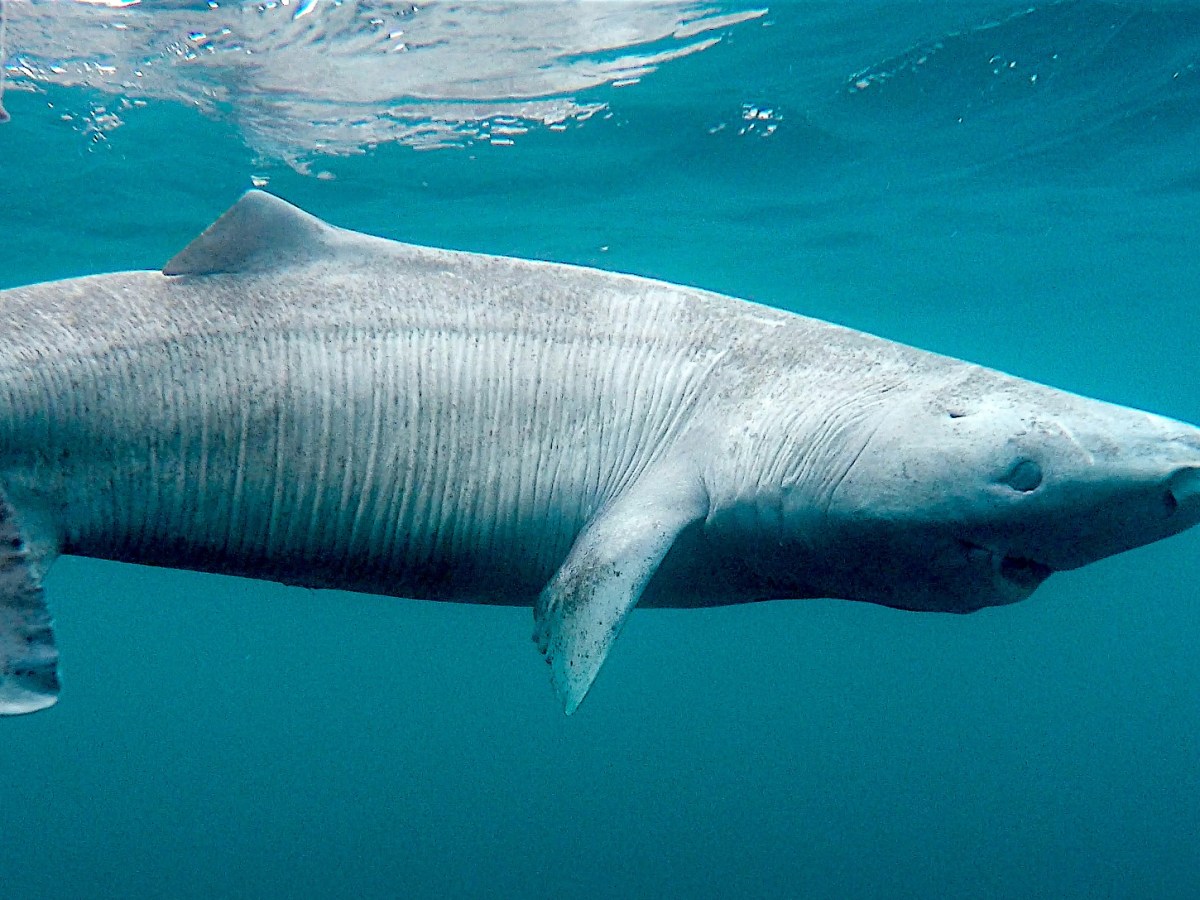
Sharks worldwide are in trouble (well, so are many taxa, for that matter), with ignorance, fear, and direct and indirect exploitation (both legal and illegal) accounting for most of the observed population declines.
Despite this worrisome state (sharks have extremely important ‘regulatory’ roles in marine ecosystems), many people have been slowly taking notice of the problem, largely due to the efforts of shark biologists. An almost religious-like pillar of shark conservation that has emerged in the last decade or so is that if we save nursery habitats, all shark conservation concerns will be addressed.

Why? Many shark species appear to have fairly discrete coastal areas where they either give birth or lay eggs, and in which the young sharks develop presumably in relative safety from predators (including their parents). Meanwhile, breeding parents will often skip off as soon as possible and spend a good proportion of their non-breeding lives well away from coasts. Sexual segregation appears to be another common feature of many sharks species (the boys and girls don’t really play together that well).

The upshot is that if you conserve these more vulnerable ‘nursery’ areas in coastal regions, then you’ve protected the next generation of sharks and all will be fine. The underlying reason for this assumption is that it’s next-to-impossible to conserve entire ocean basins where the larger adults may be frolicking, but you can focus your efforts on restricted coastal zones that may be undergoing a lot of human-generated modification (e.g., pollutant run-off, development, etc.).

However, a new paper published recently in Conservation Letters entitled Reassessing the value of nursery areas to shark conservation and management disputes this assumption. Michael Kinney and Colin Simpfendorfer explain that even if coastal nurseries can be properly identified and adequately conserved, there is mounting evidence that failing to safeguard the adult stages could ultimately sustain declines or arrest recovery efforts. The authors support continuing efforts to identify and conserve nurseries, but they say this isn’t enough by itself to solve any real problems. If we want sharks around (and believe me, even though the odd swimmer may get a nip or two, it’s better than the alternative of no sharks), then we’re going to have to restrict fishing effort on the high seas as well.

I think this one qualifies for the ‘Potential‘ list.

CJA Bradshaw

Add to FacebookAdd to NewsvineAdd to DiggAdd to Del.icio.usAdd to StumbleuponAdd to RedditAdd to BlinklistAdd to Ma.gnoliaAdd to TechnoratiAdd to Furl


Fishing for conservation

3 04 2009

Here’s a guest post from one of my newest PhD students, Jarod Lyon of the Arthur Rylah Institute in Victoria. He’s introducing some of his ongoing work and how he incorporates anglers into conservation research.

As most conservationists know, snags (fallen trees and branches in rivers) are the riverine equivalent of marine reefs, providing critical habitat for many plants and animals, from microscopic bacteria, fungi and algae through to large native fish. They are the places where the greatest numbers and diversity of organisms occur in lowland sections of rivers. Their presence has an important influence on the overall health of these rivers.

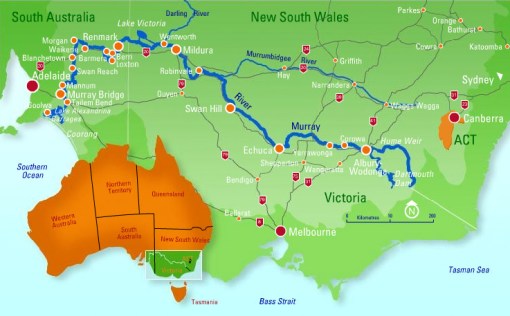
Murray River, Australia
Figure 1

Ins southern Australia, Murray cod, trout cod and golden perch are three iconic fish species that occur in the Murray River (Figure 1). Recent investigations into the ecology of these species have demonstrated a strong dependence on the presence of snags – a relationship well-known to recreational anglers who target both Murray cod and golden perch. Unfortunately, the abundance of these species has declined over the past 100 years and they are now considered threatened. Excessive removal of snags has been identified as a primary cause for this decline. For example, in the Lake Hume to Lake Mulwala reach of the Murray River, over 25000 snags were removed in the 1970s and 1980s to improve the passage of water between Lake Hume and the large irrigation channels at Yarrawonga.

Figure 2
Figure 2

The largest resnagging project ever undertaken in Australia is now in full swing. It aims to reverse the legacy of clearing snags that has occurred along the Murray reaches since European settlement. The resnagging is occurring in the Hume-Mulwala reach of the Murray using trees that were cleared for the Hume Highway extension between Albury and Tarcutta, and will create substantially more physical habitat for native fish in this reach of the river. By creating this habitat, the size of the native fish population in this reach is expected to increase thereby improving the conservation status of the native species present, and improving the quality of the recreational fishery for native species (particularly Murray cod and golden perch). It is the largest project of its kind ever undertaken in Australia, and is a great step towards recovering fish populations. The project is funded under the Murray Darling Basin Commission‘s Living Murray Program, and is being undertaken by a variety of state and national organisations, in particular NSW Department of Primary Industries and Victorian Department of Sustainability and Environment (DSE).

To ensure that the resnagging is having a beneficial effect on the numbers of native fish in the reach, a comprehensive monitoring and evaluation program is being implemented by scientists from the DSE’s Arthur Rylah Institute. This program is determining whether an increase in the size of the native fish populations is the result of:

  • Increased recruitment in the reach
  • Increased survival of adults in the reach
  • Increased immigration of adults and juveniles form Lake Mulwala and the Ovens River
  • Decreased emigration form the reach

To measure these changes, the fish populations between Hume Dam and Lake Mulwala are being surveyed once a year to determine the population size and level of recruitment. For the purpose of comparison, surveying between Yarrawonga and Tocumwal, in the lower Ovens River, and in Lake Mulwala, is also being undertaken.

Figure 2
Figure 3

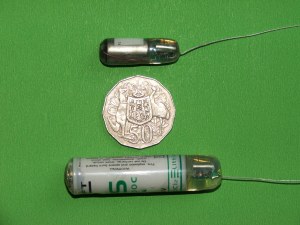
Some of the fish caught (Figure 2) will be tagged with an external tag, internal tag or radio transmitter (Figures 3 & 4). All tags have a unique number that identifies the individual. The recapture of these individuals, both by researchers and by anglers, allows survival and movement patterns to be measured.

The external tags are plastic polymer tags and are easily visible, protruding from the dorsal fin area. These tags are used to allow information from anglers to be directly used in the monitoring. A phone number is printed on each tag and when anglers call this number to report that they have caught a tagged fish, this provides valuable information on the not only fish survival and growth, but also the performance of the recreational fishery. These tags have a lifespan of 2-5 years. Anglers who call in tag information are also eligible for a reward (usually a stubby holder or lure) and get sent a certificate which gives details of the history of the fish which they have captured and reported.

The internal tags are implanted into the area to the front of the pectoral fin, are not visible, and unlike the external tags, are permanent. The tags are passive integrated transponder (PIT) tags (Figure 4), similar to those used in the pet and livestock industry. The tags are important as they allow a long-term record of fish survival, growth and movement to be measured. Fishways across the Murray Darling Basin are increasingly being installed with readers that can detect these tags. This can give researchers valuable information on long-range movements. For example, one fish (a 20-kg Murray cod) that was tagged in the Murray river near Corowa, was picked up on a PIT tag reader at the bottom of the Torrumbarry Weir fishway – a fair feat when you consider that this fish has had to get through both Mulwala and Torrumbarry Weirs, as well as travel a distance of over 200 river km downstream!

Figure 3
Figure 4

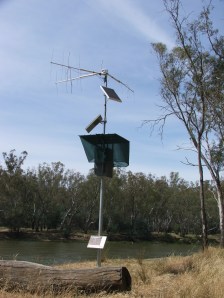
Radio transmitters are surgically inserted into the body cavity of the fish (Figure 3). These tags emit a radio signal that can be tracked continuously (Figure 5), and allow a rapid assessment of the movements (i.e., emigration and immigration rates) of a population to be determined. The tags are also detected by an array of 18 logging stations located along the river between Lake Hume and Barmah (Figure 1). Approximately 1000 radio tags will be implanted over the life of the project – making it possibly the largest radio-tagging program in the country.

If you catch a tagged fish, please record the type of fish, its number, its length (and its weight if possible) and the location of its capture and report this information on the phone number printed on the tag. These angler records improve the quality of the data collected and reporting of angler captures is encouraged through the rewards program.

As well as the general tag return program, a more targeted “Research Angler Program” is being undertaken. The angler program commenced operations in July 2007. The project was developed to assist with the scientific monitoring and communication requirements of the native fish habitat restoration project.

This section of the monitoring recognises that local anglers can contribute information about the state of native fish in the River Murray by recording their fishing effort and the amount of fish captured. Such information, in addition to greatly increasing the community awareness of the monitoring program, also adds another ‘string to the monitoring bow’ in that it will form a long-term dataset of fish captures, which can eventually be linked to the resnagging effort. The information gathered will be entered into a database and analysed to help assess changes in fish population size in relation to the habitat rehabilitation project.

Figure 5

Figure 5

Instream woody habitat is a vital component to the lifecycle of Murray Cod and the endangered trout cod. The resnagging of the River Murray – Hume Dam to Yarrawonga, will conserve and enhance native fish communities. Continual monitoring and interactions with the local angling fraternity is a crucial part of the success of this project.

The anglers have logbooks and have been trained in removing the otoliths, which are the earbones, from fish that they are taking for the table. We can then use the otoliths to determine the age and growth of the fish in response to the resnagging work.

Since December 2007 the fishers with the resnagging Angler Monitoring Program have captured over 65 Murray Cod, with over 95% of these fish released. Anglers have caught and released other native species such as golden perch and the endangered trout cod.

Add to FacebookAdd to NewsvineAdd to DiggAdd to Del.icio.usAdd to StumbleuponAdd to RedditAdd to BlinklistAdd to Ma.gnoliaAdd to TechnoratiAdd to Furl


Protein mining the world’s oceans

31 03 2009

Last month David Agnew and colleagues published a paper in PLoS One examining the global extent of illegal, unreported and unregulated (IUU) fishing (Estimating the worldwide extent of illegal fishing), estimating its value from US$10-23.5 billion and representing between 11 and 26 million tonnes of fish annually. The value is roughly the same as that lost from illegal logging each year. Wow.
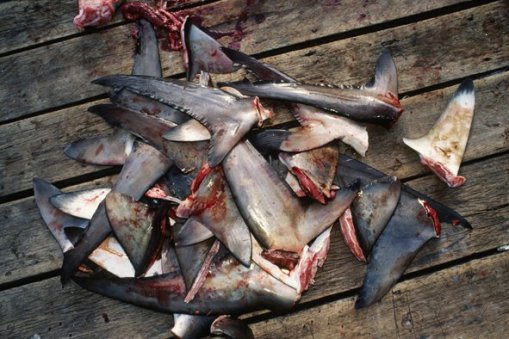
Of perhaps most interest is that Agnew and colleagues found evidence for a negative relationship between IUU fishing as a proportion of total catch and an international (World Bank) governance quality index. This suggests that improving governance and eradicating corruption may be the best way to curtail the extent of the illegal harvest.

We have just published a paper online in Fish and Fisheries about the extent and impact of IUU fishing in northern Australia. Entitled Protein mining the world’s oceans: Australasia as an example of illegal expansion-and-displacement fishing, the paper by Iain Field and colleagues advocates a multi-lateral response to a problem that has grown out of control in recent decades.

IUU fishing is devastating delicate ecosystems and fish breeding grounds in waters to Australia’s north, and can no longer be managed effectively by individual nations. The problem now requires an urgent regional solution if food security into the future is to be maintained.

The paper is the first big-picture account of the problem from Australia’s perspective. Although there had been a decline in IUU fishing in Australian waters over the past two years, possibly linked to large Australian government expenditure on enforcement and rising fuel prices, the forces driving illegal fishing have not gone away and are likely to resurface in our waters.

We expect that the small-scale illegal fishers will be back to prey on other species such as snapper, trochus and trepang as soon as it is economically viable for them to do so. To date, these IUU fishers have focused mostly on high-value sharks mainly for the fin trade, to the extent that the abundance of some shark species has dropped precipitously. IUU fishing, which has devastated fish resources and their associated ecosystems throughout Southeast Asian waters, is driven by deep economic and societal forces. For example, the Asian economic crisis in the late 1990s drove a large number of people out of cities and into illegal fishing.

It is not enough to maintain just a national response as the problem crosses national maritime zones, and it poses one of the biggest threats known to marine ecosystems throughout the region. These IUU fishers are mining protein, and there is no suggestion of sustainability or factoring in fish breeding or ecosystem protection into the equation. They just come into a fishing area and strip-mine it, leaving it bare.

Illegal fishing in Australian waters started increasing steeply about 10 years ago, largely because of over-exploitation of waters farther north, peaking in 2005-06 then falling away just as steeply. There are three factors behind the recent downturn: Australian government enforcement measures estimated to have cost at least AU$240 million since 2006; the high price of fuel for the fishing boats; and, most importantly, the fact that the high-value species may have been fished out and are now economically and ecologically extinct.

The $240 million has funded surveillance, apprehension, transportation, processing and accommodation of the several thousand illegal foreign fishermen detained each year since 2006. These activities have been successful, but it is doubtful whether they can hold back the IUU tide indefinitely – the benefits to the illegal fishers of their activities far outweigh the penalties if caught.

With increasing human populations in the region, the pressure to fish illegally is likely to increase. Regional responses are required to deter and monitor the illegal over-exploitation of fisheries resources, which is critical to secure ecosystem stability as climate change and other destructive human activities threaten food security.

CJA Bradshaw (with IC Field, MG Meekan and RC Buckworth)

Add to FacebookAdd to NewsvineAdd to DiggAdd to Del.icio.usAdd to StumbleuponAdd to RedditAdd to BlinklistAdd to Ma.gnoliaAdd to TechnoratiAdd to Furl


Too many mouths to feed

19 03 2009

The venerable Professor John Beddington has some stern warnings about over-population in the next few decades. In essence, we cannot ignore the human over-population problem any longer. There are simply too many people for the finite resources available and the consumption rates that do not appear to be declining (not surprising given our voracious appetite for economic growth – more like long-term economic suicide, really). Australia is certainly no exception – with most of our country essentially uninhabitable, we’ve already exceeded our carrying capacity (but try telling this to the pollies).

In my opinion, human over-population is THE principal driver of biodiversity loss in the modern context. Without some serious global efforts for population planning, expect a lot more conflict in your lifetime, and a lot worse effects of climate change. See also Global Population Speak Out.

This one from the BBC:

Growing world population will cause a “perfect storm” of food, energy and water shortages by 2030, the UK government chief scientist has warned. By 2030 the demand for resources will create a crisis with dire consequences, Prof John Beddington said. Demand for food and energy will jump 50% by 2030 and for fresh water by 30%, as the population tops 8.3 billion, he told a conference in London.

Climate change will exacerbate matters in unpredictable ways, he added. “It’s a perfect storm,” Prof Beddington told the Sustainable Development UK 09 conference.’Perfect storm’ poses global threat, says Professor Beddington. “There’s not going to be a complete collapse, but things will start getting really worrying if we don’t tackle these problems.”

Prof Beddington said the looming crisis would match the current one in the banking sector. “My main concern is what will happen internationally, there will be food and water shortages,” he said.

“We’re relatively fortunate in the UK; there may not be shortages here, but we can expect prices of food and energy to rise.” The United Nations Environment Programme predicts widespread water shortages across Africa, Europe and Asia by 2025. The amount of fresh water available per head of the population is expected to decline sharply in that time. The issue of food and energy security rose high on the political agenda last year during a spike in oil and commodity prices.

Prof Beddington said the concern now – when prices have dropped once again – was that the issues would slip back down the domestic and international agenda. “We can’t afford to be complacent. Just because the high prices have dropped doesn’t mean we can relax,” he said. Improving agricultural productivity globally was one way to tackle the problem, he added. At present, 30-40% of all crops are lost due to pest and disease before they are harvested. Professor Beddington said: “We have to address that. We need more disease-resistant and pest-resistant plants and better practices, better harvesting procedures. “Genetically-modified food could also be part of the solution. We need plants that are resistant to drought and salinity – a mixture of genetic modification and conventional plant breeding. Better water storage and cleaner energy supplies are also essential, he added.

Prof Beddington is chairing a subgroup of a new Cabinet Office task force set up to tackle food security. But he said the problem could not be tackled in isolation. He wants policy-makers in the European Commission to receive the same high level of scientific advice as the new US president, Barack Obama. One solution would be to create a new post of chief science adviser to the European Commission, he suggested.

CJA Bradshaw


Tropical Turmoil II

8 03 2009

In August last year I covered a paper my colleagues (Navjot Sodhi and Barry Brook) and I had in press in Frontiers in Ecology and the Environment entitled Tropical turmoil – a biodiversity tragedy in progress. The paper is now available in the March 2009 issue of the journal (click here to access). We were also fortunate enough to grab the front cover (shown here) and have a dedicated podcast that you can listen to by clicking here about the paper and its findings. I encourage ConservationBytes.com readers to have a listen if they’re interested in learning more about the woeful state of tropical biotas worldwide, and maybe some ways to rectify the problems. The intro to the podcast can be viewed by clicking here.

CJA Bradshaw


Shifting baselines

19 02 2009

jellyburger

A term first coined by Daniel Pauly (who we’ve previously covered as a Conservation Scholar), and one I could easily classify as a conservation Classic, it essentially describes the way changes to a system are measured against previous baselines, which themselves may represent changes from the original state of the system (definition modified from Wikipedia). Pauly originally meant it in a fisheries context, where “… fisheries scientists sometimes fail to identify the correct “baseline” population size (e.g., how abundant a fish species population was before human exploitation) and thus work with a shifted baseline“.

It’s easily considered a mantra in fisheries (there’s even a dedicated Scienceblog on the topic, and several other fisheries-related websites [e.g., here & here]), but it has been extended to all sorts of other conservation issues.

As it turns out, however, quantifying ‘shifting baselines’ in conservation is rather difficult, and there’s little good evidence in most systems (despite the logic and general acceptance of its ubiquity by conservation scientists). Now Papworth and colleagues have addressed this empirical hole in their new paper entitled Evidence for shifting baseline syndrome in conservation published online recently in Conservation Letters.

Papworth et al. discuss two kinds of shifting baselines: (1) general amnesia (“… individuals setting their perceptions from their own experience, and failing to pass their experience on to future generations”) and (2) personal amnesia (“… individuals updating their own perception of normality; so that even those who experienced different previous conditions believe that current conditions are the same as past conditions”), and they provide three well-quantified examples: (a) perceptions of bushmeat hunters in Gabon, (b) perceptions of bushmeat hunters in Equatorial Guinea and (c) perceptions of bird population trends in the UK.

Although the data have issues, all three cases demonstrate convincing evidence of the shifting baselines syndrome (with the UK example providing an example of both general and personal amnesia). Now, this may all seem rather logical, but I don’t want the reader to underestimate the importance of the Papworth paper – this is really one of the first demonstrations that it is a real problem in vastly different systems (i.e., not just fisheries). I think it’s hard evidence that the issue is a big one and cannot be ignored when presenting historical data for conservation purposes.

Humans inevitably have short memories when it comes to environmental degradation – this essentially means that in most demonstrations of biodiversity decline, it’s probably a lot worse even than the data might suggest. Policy makers take note.

CJA Bradshaw

Add to FacebookAdd to NewsvineAdd to DiggAdd to Del.icio.usAdd to StumbleuponAdd to RedditAdd to BlinklistAdd to Ma.gnoliaAdd to TechnoratiAdd to Furl


Rare just tastes better

11 02 2009

I had written this a while ago for publication, but my timing was out and no one had room to publish it. So, I’m reproducing it here as an extension to a previous post (That looks rare – I’ll kill that one).

As the international market for luxury goods expands in value, extent and diversity of items (Nueno & Quelch 1998), the world’s burgeoning pool of already threatened species stands to worsen. Economic theory predicts that harvested species should eventually find refuge from over-exploitation because it simply becomes too costly to find the last remaining wild individuals (Koford & Tschoegl 1998). However, the self-reinforcing cycle of human greed (Brook & Sodhi 2006) can make rare species increasingly valuable to a few select consumers such that mounting financial incentives drive species to extinction (Courchamp et al. 2006). The economic and ecological arguments are compelling, but to date there has been little emphasis on how the phenomenon arises in the human thought process, nor how apparently irrational behaviour can persist. Gault and colleagues (2008) have addressed this gap in a paper published recently in Conservation Letters by examining consumer preferences for arguably one of the most stereotypical luxury food items, caviar from the 200-million-year-old sturgeon (Acipenser spp.).

Sturgeon (6 genera) populations worldwide are in trouble, with all but two of the 27 known species threatened with extinction (either Near Threatened, Vulnerable, Endangered or Critically Endangered) according to the International Union for Conservation of Nature and Natural Resources’ (IUCN) Red List of Threatened Species. Despite all 27 species also having strict international trade restrictions imposed by the Convention on International Trade in Endangered Species (CITES) (Gault et al. 2008), intense commercial pressure persists for 15 of these at an estimated global value exceeding US$200 million annually (Pikitch et al. 2005). The very existence of the industry itself and the luxury good it produces are therefore, at least for some regions, unlikely to endure over the next decade (Pala 2007). What drives such irrational behaviour and why can we not seem to prevent such coveted species from spiralling down the extinction vortex?

Gault and colleagues addressed this question specifically in an elegantly simple set of preference experiments targeting the very end-consumers of the caviar production line – French connoisseurs. Some particularly remarkable results were derived from presentations of identical caviar; 86 % of attendees of luxury receptions not only preferred falsely labelled ‘rarer’ Siberian caviar (A. baeri) after blind tasting experiments, they also scored what they believed was caviar from the rarer species as having a higher ‘gustative quality’. These high-brow results were compared to more modest consumers in French supermarkets, with similar conclusions. Not only were unsuspecting gourmands fooled into believing the experimental propaganda, subjects in both cases stated a preference for seemingly rarer caviar even prior to tasting.

The psycho-sociological implications of perceived rarity are disturbing themselves; but Gault and colleagues extended their results with a mathematical game theory model demonstrating how irrational choices drive just such a harvested species to extinction. The economic implications of attempting to curb exploitation as species become rarer when the irrationality of perceived rarity was taken into consideration were telling – there is no payoff in delaying exploitation as more and more consumers are capable of entering the market. In other words, the assumption that consumers apply a positive temporal discount rate to their payoff (Olson & Bailey 1981) is wrong, with the demographic corollary that total depletion of the resource ensues. The authors contend that such artificial value may drive the entire luxury goods market based mainly on the self-consciousness and social status of consumers able to afford these symbols of affluence.

The poor record of species over-exploitation by humans arising from the Tragedy of the Commons (Hardin 1968) is compounded by this new information. This anthropogenic Allee effect (Courchamp et al. 2006) provides a novel example mechanism for how small populations are driven ever-downward because low densities ensure declining fitness. Many species may follow the same general rules, from bluefin tuna, Napoleon wrasse lips and shark fins, to reptile skins and Tibetan antelope woollen shawls. Gault and colleagues warn that as the human population continues to expand and more people enter the luxury-goods market, more wildlife species will succumb to this Allee effect-driven extinction vortex.

The authors suggest that a combination of consumer education and the encouragement of farmed substitute caviar will be more effective than potentially counter-productive trading bans that ultimately encourage illegal trade. However, the preference results suggest that education might not promote positive action given that reluctance of affluent consumers to self-limit. I believe that the way forward instead requires a combination of international trade bans, certification schemes for ‘sustainable’ goods that flood markets to increase supply and reduce price, better controls on point-of-origin labelling, and even state-controlled ‘warning’ systems to alert prospective consumers that they are enhancing the extinction risk of the very products they enjoy. A better architecture for trading schemes and market systems that embrace long-term persistence can surely counteract the irrationality of the human-induced destruction of global ecosystem services. We just need to put our minds and pocketbooks to the task.

CJA Bradshaw

Add to FacebookAdd to NewsvineAdd to DiggAdd to Del.icio.usAdd to StumbleuponAdd to RedditAdd to BlinklistAdd to Ma.gnoliaAdd to TechnoratiAdd to Furl


South Australian marine park boundaries released

29 01 2009

As an addendum to my last post (Marine Conservation in South Australia), I thought it worth mentioning that the South Australian government has released its plans for coastal marine parks. I have yet to look through these in detail, but public comment is welcomed until 27/03/2009. We’ll see what the fallout is.

Release approved by Allan Holmes, Chief Executive of the Department of Environment and Heritage (SA):

The outer boundaries of South Australia’s network of 19 new marine parks were proclaimed today. This exciting development will help protect our unique and diverse marine environment for future generations to use and enjoy, and will also position South Australia as a national leader in marine conservation.

The boundaries will be available for public comment until 27 March 2009. To support the public consultation, 57 public information sessions will be held across South Australia. To find out more about South Australia’s new marine parks network, visit here or ring 1800 006 120.

CJA Bradshaw


Marine conservation in South Australia

26 01 2009

© U.R. Zimmer

© U.R. Zimmer

Just before the holidays last year I participated in the Conservation Council of South Australia‘s (CCSA) Coast & Marine in a Changing Climate Summit 2008. It was an interesting, mature and intelligent summit with some good recommendation surfacing. Although I certainly didn’t agree with all the recommendations (view the entire report here), I must say up front that I have been very impressed with the CCSA’s approach in their ‘Blueprint’ summit series to address South Australia’s environmental problems.

Many environmental groups, especially regional ones, are seen by many as raving environists1 with little notion for balance or intelligent debate. CCSA is definitely not one of those. They are very careful to engage with scientists, public servants, industry leaders and politicians to hone their recommendations into something realistic and useful. Indeed, I am now certain the only way to convince people of the necessity of dealing with the world’s environmental mess is to make intelligent, scientifically defensible arguments about how environmental degradation worsens our quality of life (yes, this is the principal aim of ConservationBytes.com). So, good on the CCSA for a rationale approach.

Enough about the CCSA for now – let’s move onto some of their marine-related recommendations. I won’t reprint the entire summary document here, but a few things are worthy of repetition:

Significantly increase the amount of resources available for marine species research and taxonomy, especially for non-commercial species.

Despite my obvious conflict of interest, I couldn’t agree more. One of the principal problems with our ability to plan for inevitable environmental change to lessen the negative outcomes for biodiversity, industry and people in general is that we have for too long neglected marine research in Australia. Given that most Australians live near the coast and almost all of us rely on the oceans in some way, it is insane that marine research in this country is funded almost as an afterthought. How can we possibly know what we’re doing to our life-support system if we don’t even know how it works?

Take climate change for example. The majority of climate change predictions are merely single-species predictions based on physiological tolerances. Most almost completely ignore species interactions. Any given species must compete with, eat and be eaten by others, so it’s insane not to combine community relationships into predictive models.

A strict monitoring regime should be implemented in all ports and harbours to continuously monitor [sic] for introduced marine pests in order to inform better management, in conjunction with the species outlined in the Monitoring section of the National System for the Prevention and Management of Marine Pest Incursions.

Many people, and scientists in particular, have traditionally turned their noses up at so-called ‘monitoring’. However, as a few Australian colleagues of mine recently observed, the marine realm has a huge, gaping hole in monitoring data necessary to determine the future of Australia’s marine environment. Take it from me, a scientist who regularly uses time-series data to infer long-term patterns (see Publications), it’s essential that we have more long-term data on species distributions, reproductive output, survival, etc. to make inference about the future.

Recreational fishing should be licensed, with the license fees being directed towards increased research of non-commercial species and education of recreational fishers.

I really like this one. It seems South Australia is the only state in the country that doesn’t have mandatory recreational fishing licences. Absolute madness. Given the capacity of recreational fishing to outstrip commercial harvests for some species (e.g., King George whiting Sillaginodes punctatus), we need vastly better monitoring via licences to determine local impacts. Not to mention the necessary generation of money to support monitoring and research, which to the average recreational fisher, would not be such a hefty price to pay. The political drive to keep the status quo is woefully outdated and counter-productive. See one of my previous posts on the potential impacts of recreational fishing.

There is a need for a co-ordinated, state/Adelaide-wide stormwater strategy. Currently the Stormwater Management Authority examines individual projects but does not manage a bigger picture with a co-ordinated approach.

A colleague of mine recently published an article showing how South Australian waters, being more oligotrophic on average than other areas of the country, are particularly susceptible to nutrient overloading. The main losers are seagrasses and macroalgae (kelp) forests – the Adelaide metropolitan coast has lost up to 70 % of its kelp forests since major urbanisation began last century.

There are many more recommendations that you can peruse at your leisure, and many of them will be updated this year once the CCSA incorporates all the received comments. I thank them for the opportunity to take part in their worthy aims.

CJA Bradshaw

1My colleague, Barry Brook, invented this excellent term to describe those people who blindly support anything ‘green’ without really thinking of the consequences. It’s also a great way to differentiate serious ‘environmentalists’ and conservation biologists from raving ‘greenies’.

Add to FacebookAdd to NewsvineAdd to DiggAdd to Del.icio.usAdd to StumbleuponAdd to RedditAdd to BlinklistAdd to Ma.gnoliaAdd to TechnoratiAdd to Furl


Man bites shark

7 01 2009

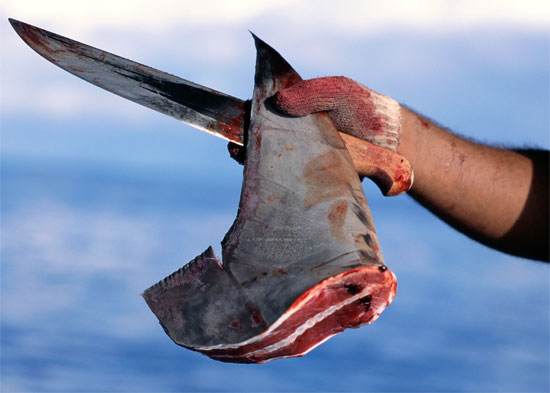
cut-shark-finYesterday I had a comment piece of the same title posted on the ABC‘s Unleashed site. I have permission to reproduce it here on ConservationBytes.com.

The silly season is upon us again, and I don’t mean the commercial frenzy, the bizarre fascination with a white-bearded man or a Middle-Eastern baby, the over-indulgence at the barbie or hangovers persisting several days into the New Year. I mean it’s the time of year when beach-goers, surfers, and municipal and state policy makers go a bit ga-ga over sharks.

There are few more polite pleasures than heading down to the beach during the holidays for a surf, quick dip or just a laze under the brolly. Some would argue it’s an inalienable Australian right and that anything getting in our way should be condemned to no less than severe retribution. Well, in the case of sharks, that’s exactly what’s happened.

Apart from a good number of adrenalin-addicted surfers and mad marine scientists, most people are scared shitless by the prospect of even seeing a shark near the beach, let alone being bitten or eaten by one. I won’t bore you with some ill-advised, pseudo-psycho-analytical rant about how it’s all the fault of some dodgy 1970s film featuring a hypertrophied American shark; the simple fact is that putative prey don’t relish the thought of becoming a predator’s dinner.

So, Australia is famous for its nearly 100-year-old pioneering attempt to protect marine bathers from shark attack by setting an elaborate array of shark nets around the country’s more frequented beaches. Great, you say? Well, it’s actually not that nice.

Between December 1990 and April 2005, nearly 3500 sharks and rays were caught in NSW beach nets alone, of which 72 per cent were found dead. Shark spearing was a favourite past-time in the 1960s and 1970s, with at least one high-profile species, the grey nurse shark, gaining the dubious classification of Critically Endangered as a result. Over-fishing of reef sharks has absolutely hammered two formerly common species in the Great Barrier Reef, the whitetip and grey reef sharks (See the Ongoing Collapse of Coral-Reef Shark Populations report). And illegal Indonesian fishing in northern Australia is slowly depleting many shark species in a wave of protein mining that has now penetrated the Australian Exclusive Economic Zone.

Despite the gloomy outlook for sharks, I’m happy to say today that we are a little more aware of their plight and are making baby steps toward addressing the problems. Australia has generally fared better in shark conservation than most other parts of the world, even though we still have a lot of educating to do at home. Over 50 per cent of all chondrichthyans (i.e., sharks, rays and chimaeras) are threatened worldwide, with some of the largest and most wide-ranging species being hardest hit, including white sharks. The most common threat is over-fishing, but this is largely seen by the lay person as of little import simply because of the persistent attitude that “the only good shark is a dead shark”.

The attitude is, however, based on a complete furphy. I’m sure many readers would have seen some statistics like the following before, but let’s go through the motions just to be clear. Dying from or even being injured by a shark is utterly negligible. Based on the International Shark Attack File data for Australia, there were 110 confirmed (unprovoked) shark attacks in Australian waters between 1990 and 2007, of which 19 were fatal. Using Australian Bureau of Statistics human population data over the same period, this equates to an average of 0.032 attacks and 0.006 fatalities per 100,000 people, with no apparent trend over the last two decades.

Now let’s contrast. I won’t patronise you with strange comparative statistics like the probability of being killed by a (provoked) vending machine or by being hit by a bus, they are both substantially greater, but I will relate these figures to water-based activities. Drowning statistics for Australia (1992-1997) show that there were around 1.44 deaths per 100,000 people per year, or approximately 0.95 if just marine-related drownings are considered. These values are 240 (158 for marine-only) times higher than those arising from shark attack.

It’s just plainly, and mathematically, ridiculous to be worried about being eaten by a shark when swimming in Australia, whether or not there’s a beach net in place. The effort made, money spent and anxiety arising from the illogical fear that a shark will consider your sunburnt flesh a tasty alternative to its fishier sustenance is not only regrettable, it’s an outright crime against marine biodiversity. Of course, if you see a big shark lurking around your favourite beach, I wouldn’t recommend swimming over and giving it a friendly pat on the dorsal fin, but I wouldn’t recommend screaming that the marine equivalent of the apocalypse has just arrived either.

You may not be fussed either way, but consider this – the massive reduction in sharks worldwide is having a cascading effect on many of the ocean’s complex marine ecosystems. Being largely carnivorous, sharks are the ecological equivalent of community planners. Without them, herbivorous or coral-eating fish can quickly get out of control and literally destroy the food web. A great example comes from the Gulf of Mexico where the serial depletion of 14 species of large sharks has caused an explosion of the smaller cownose ray that formerly was kept in check by its bigger and hungrier cousins. The result: commercially harvested scallops in the region have now collapsed because of the hordes of shellfish-eating rays.

The day you fail to find sharks cruising your favourite beach is the day you should really start to worry.

CJA Bradshaw

Add to FacebookAdd to NewsvineAdd to DiggAdd to Del.icio.usAdd to StumbleuponAdd to RedditAdd to BlinklistAdd to Ma.gnoliaAdd to TechnoratiAdd to Furl


That looks rare – I’ll kill that one

12 12 2008

Here’s an interesting (and disturbing) one from Conservation Letters by Gault and colleagues entitled Consumers’ taste for rarity drives sturgeons to extinction.

I like caviar, I have to admit. I enjoy the salty fishy-ness and the contrast it makes with the appropriate selection of wine (bubbly or otherwise). I guess a lot of other people like it too, to the extent that worldwide sturgeon population’s have been  hammered (all 27 species are listed in CITES Appendix I or II, and 15 species are still heavily exploited). Indeed, in the Caspian Sea from where 90 % of caviar comes, sturgeon populations have declined by 90 % since the late 1980s. Admittedly, I haven’t had sturgeon caviar very often, and I doubt I’ll ever eat it again.

Using a set of simple ‘preference’ experiments on epicurean (French) human subjects, Gault and colleagues found that when told that a particular type of caviar was rarer than the others (when in reality, they two choices were identical), these refined gourmets generally tended to claim that the rarer one tasted better.

This means that humans have a tendency to place exaggerated value on harvested species when they think they’re rare (in most instances, rarity is itself the result of over-exploitation by humans). This so-called ‘anthropogenic Allee effect‘ (see Courchamp et al. 2006) basically means that at least for the wildlife-based luxury market, there’s little chance that calls for reduced harvest will be heard because people continually adjust their willingness to pay more. This turns into a spiralling extinction vortex for the species concerned.

What to do? Ban all trade of caviar? This might do it, but with the reluctance to reduce highly profitable industries like this (see previous post on tuna over-exploitation here), there’s a strong incentive even for the harvesters to drive themselves out of a job. Consumer education (and a good dose of guilt) might help too, but I have my doubts.

CJA Bradshaw

© S. Crownover courtesy of Caviar Emptor

© S. Crownover courtesy of Caviar Emptor

Add to FacebookAdd to NewsvineAdd to DiggAdd to Del.icio.usAdd to StumbleuponAdd to RedditAdd to BlinklistAdd to Ma.gnoliaAdd to TechnoratiAdd to Furl


Failing on ocean protection

24 11 2008

A new paper from Conservation Letters by Mark Spalding and colleagues entitled Toward representative protection of the world’s coasts and oceans-progress, gaps, and opportunities reminds us just how crap we are at protecting ocean habitats. I sincerely hope this one is a Potential given that the only direction one can move from absolute bottom is up. Richard Black at the BBC reports on the paper’s main findings:

toilet-ocean_squareLess than 1% of the world’s oceans have been given protected status, according to a major survey.

Governments have committed to a target of protecting 10% by 2012, which the authors of the new report say there is no chance of meeting.

Protecting ecologically important areas can help fish stocks to regenerate, and benefit the tourism industry.

The survey was led by The Nature Conservancy (TNC) and is published in the journal Conservation Letters.

“For those of us working in the issue full-time it’s not a surprise, we’ve known all along that marine protection is lagging behind what’s happening on land, but it’s nice to have it pinned down,” said TNC’s Mark Spalding.

“It’s depressing that we’ve still got so far to go, but there are points of hope,” he told BBC News.

Coastal concentration

Four years ago, signatories to the UN’s biodiversity convention – which includes almost every country – pledged to protect at least 10% of the oceans in a way that makes sense ecologically.

Protecting them does not mean banning activities such as fishing or shipping completely, but making sure they are carried out sustainably.

All of the areas currently protected fall into countries’ Exclusive Economic Zones, and the majority are along coasts, the study finds.

Even so, only about 4% of coastal waters are protected.

Countries diverge widely in how much protection they have mandated.

Whereas New Zealand has almost 70% of its coastline under some form of protection, countries around the Mediterranean have set aside less than 2%.

In the developing world, Dr Spalding cites Guinea-Bissau as a country that has had invested in protection, particularly in the Bijagos Archipelago, which is home to a community of hippos dwelling along its mangrove coast, as well as more conventional marine species.

Palau, Indonesia, Micronesia and several Caribbean states are also making significant progress, he said.

About 12% of the Earth’s land surface has been put under protection.

Download the Spalding paper free of charge here.


Water neutrality and its biodiversity benefits

5 11 2008

blog-water-balance-200x200The world’s freshwater ecosystems are in trouble. We’ve extracted, poisoned, polluted, damned and diverted a large proportion of the finite (and rather small!) amount of freshwater on the planet. Now, most people might immediately see the problem here from a selfish perspective – no clean, abundant water source = human disease, suffering and death. Definitely something to avoid, and a problem that all Australians are facing (i.e., it’s not just restricted to developing nations). Just look at the Murray-Darling problem.

In addition to affecting our own personal well-being, freshwater ecosystems are thought to support over 10000 fish species worldwide, and the majority of amphibians and aquatic reptiles. Current estimates suggest that about 1/3 of all vertebrate biodiversity (in this case, number of species) is confined to freshwater. As an example, the Mekong River system alone is thought to support up to 1700 different species of fish.

So, what are some of the ways forward? The concept of ‘water neutrality’ is essentially the wet version of carbon neutrality. It basically means that water usage can be offset by interventions to improve freshwater habitats and supply.

A great new paper by Nel and colleagues published online in Conservation Letters entitled Water neutrality: a first quantitative framework for investing in water in South Africa (definitely one for the Potential list) gives us a good model for how water neutrality should work. Using a South African example, they describe a scheme where investors are required to (1) review their water use, (2) implement a reduction strategy and (3) replenish water to hydrological systems through the investment in catchment services equivalent to their water use. It’s in this last act that the ‘neutrality’ can be achieved for the betterment of biodiversity – in the South African example, participants replenish their water use through investment in clearing of water-intensive invasive alien plants that choke freshwater systems and otherwise use much of the available water. And we all know how destructive invasive species can be (see previous post on this subject).

Not only does the scheme produce more water, it restores fragile freshwater ecosystems and does so within the economic framework that allows schemes like carbon trading to operate. We desperately need something like this in Australia. Imagine, more water for everyone AND healthy river systems (again, think Murray-Darling) – all paid for by previously water-intensive, but now ‘water-neutral’ firms. Imagine seeing labels on Australian produce that say ‘This is a Water Neutral product that supports freshwater ecosystem health’.

CJA Bradshaw

Add to FacebookAdd to NewsvineAdd to DiggAdd to Del.icio.usAdd to StumbleuponAdd to RedditAdd to BlinklistAdd to Ma.gnoliaAdd to TechnoratiAdd to Furl