Who are the world’s biggest environmental reprobates?

5 05 2010

Everyone is a at least a little competitive, and when it comes to international relations, there could be no higher incentive for trying to do better than your neighbours than a bit of nationalism (just think of the Olympics).

We rank the world’s countries for pretty much everything, relative wealth, health, governance quality and even happiness. There are also many, many different types of ‘environmental’ indices ranking countries. Some attempt to get at that nebulous concept of ‘sustainability’, some incorporate human health indices, and other are just plain black box (see Böhringer et al. 2007 for a review).

With that in mind, we have just published a robust (i.e., to missing data, choices for thresholds, etc.), readily quantifiable (data available for most countries) and objective (no arbitrary weighting systems) index of a country’s relative environmental impact that focuses ONLY on environment (i.e., not human health or economic indicators) – something no other metric does. We also looked at indices relative to opportunity – that is, looking at how much each country has degraded relative to what it had to start with.

We used the following metrics to create a combined environmental impact rank: natural forest loss, habitat conversion, fisheries and other marine captures, fertiliser use, water pollution, carbon emissions from land-use change and threatened species.

The paper, entitled Evaluating the relative environmental impact of countries was just published in the open-access journal PLoS One with my colleagues Navjot Sodhi of the National University of Singapore (NUS) and Xingli Giam, formerly of NUS but now at Princeton University in the USA.

So who were the worst? Relative to resource availability (i.e,. how much forest area, coastline, water, arable land, species, etc. each country has), the proportional environmental impact ranked (from worst) the following ten countries:

  1. Singapore
  2. Korea
  3. Qatar
  4. Kuwait
  5. Japan
  6. Thailand
  7. Bahrain
  8. Malaysia
  9. Philippines
  10. Netherlands

When considering just the absolute impact (i.e., not controlling for resource availability), the worst ten were:

  1. Brazil
  2. USA
  3. China
  4. Indonesia
  5. Japan
  6. Mexico
  7. India
  8. Russia
  9. Australia
  10. Peru

Interestingly (and quite unexpectedly), the authors’ home countries (Singapore, Australia, USA) were in either the worst ten proportional or absolute ranks. Embarrassing, really (for a full list of all countries, see supporting information). Read the rest of this entry »


Fanciful mathematics and ecological fantasy

3 05 2010

© flickr/themadlolscientist

Bear with me here, dear reader – this one’s a bit of a stretch for conservation relevance at first glance, but it is important. Also, it’s one of my own papers so I have the prerogative :-)

As some of you probably know, I dabble quite a bit in population dynamics theory, which basically means examining the mathematics people use to decipher ecological patterns. Why is this important? Well, most models predicting extinction risk, estimating optimal harvest rates, determining minimum viable population size and metapopulation dynamics for species’ persistence rely on good mathematical abstraction to be realistic. Get the maths wrong, and you could end up overharvesting a species (e.g., 99.99 % of fisheries management), underestimating extinction risk from habitat degradation, and getting your predictions wrong about the effects of invasive species. Expressed as an equation itself, (conservation) ecology = mathematics.

A long-standing family of models known as ‘phenomenological’ models (i.e., because they deal with the phenomenon of population size which is an emergent property of the mechanisms of birth, death and immigration) has been used to estimate everything from maximum sustainable yield targets, temporal abundance patterns, wildlife management interventions, extinction risk to epidemiological patterns. The basic form of the model describes the growth response, or the relationship between the population’s rate of change (growth) and its size. The simplest form (known as the Ricker), assumes a linear decline in population growth rate (r) as the number of individuals increases, which basically means that populations can’t grow indefinitely (i.e., they fluctuate around some carrying capacity if unperturbed). Read the rest of this entry »


Global rates of forest loss – everyone’s a bastard

29 04 2010

© A. Hesse

I’ve written rather a lot about rates of forest loss around the world, including accumulated estimates of tropical forest loss and increasing fragmentation/loss in the boreal forest (see Bradshaw et al. 2009 Front Ecol Evol & Bradshaw et al. 2009 Trends Ecol Evol). For the tropics in particular, we used the index that an area of rain forest about the size of Bangladesh (> 15 million hectares) was disappearing each year, and in Russia alone, annual decline in forest area averaged 1.1 million hectares between 1988 and 1993. Mind boggling, really.

But some of these estimates were a bit old, relied on some imprecise satellite data, and didn’t differentiate forest types well. In addition, many have questioned whether the rates are continuing and which countries are being naughty or nice with respect to forest conservation.

It was great therefore when I came across a new paper in PNAS by Hansen & colleagues entitled Quantification of global gross forest cover loss because it answered many of the latter questions.

Part of the problem in assessing worldwide forest cover loss in the past was the expense of satellite imagery, access problems, data storage and processing issues. Happily, new satellite streams and easing of access has rectified many of these limitations. Hansen & colleagues took advantage of data from the MODIS sensor to create a stratification for forest cover loss. They then used the Landsat ETM+ sensor as the primary data for quantifying gross forest cover loss for the entire planet from 2000 to 2005. They defined ‘forest cover’ as “… 25% or greater canopy closure at the Landsat pixel scale (30-m × 30-m spatial resolution) for trees > 5 m in height”.

For your reading pleasure (and conservation horror), the salient features were: Read the rest of this entry »


Make your conservation PhD relevant

23 04 2010

The other day I was approached by two PhD candidates from James Cook University in the ARC Centre of Excellence for Coral Reef Studies who requested I publish a short article they put together on making conservation PhDs relevant while achieving academic excellence. I’m delighted to say that I found the article very well written and topical, so I am pleased to present it in full here.

© J. Cham

Make your conservation PhD relevant – bridging the research-implementation gap

Duan Biggs & Tom Brewer

ARC Centre of Excellence for Coral Reef Studies, James Cook University, Townsville, Queensland, Australia

A recent paper, in Biotropica’s special issue on bridging the research-implementation gap (Duchelle et al. 2009) included examples of postgraduate students in the University of Florida’s Tropical Conservation and Development Program contributing to knowledge exchange with local stakeholders. The authors argue that this experience, during training, enables postgraduate students to develop their skills to confront the elaborate set of management and policy issues that will be present through their careers. We agree with Duchelle and her co-authors’ arguments, but believe that further discussion is required on finding the balance between the requirements of academic training and knowledge sharing with conservation stakeholders at the PhD level specifically.

Earning a PhD requires a novel theoretical contribution to a specific field of knowledge, and the practical value or contribution of that knowledge is of secondary importance, or irrelevant. Therefore, finding synergies between the requirements of academia and knowledge sharing can be particularly challenging at the PhD level. Yet, we believe that in an applied science like conservation, the quality of research and training will be enhanced through being more explicit about how to synergise a scientific contribution worthy of a PhD degree with related practical skills like knowledge sharing. In support of our argument, we propose the following six questions that PhD candidates, together with their academic supervisors, can consider during research design to enhance their contribution to knowledge exchange whilst meeting the requirements of academic training: Read the rest of this entry »


New April Issue of Conservation Letters out now

22 04 2010

Low intensity fire in a longleaf pine-wiregrass system

Another great line up of papers has just come out in the April Issue of Conservation Letters:

CJA Bradshaw

Add to FacebookAdd to DiggAdd to Del.icio.usAdd to StumbleuponAdd to RedditAdd to BlinklistAdd to TwitterAdd to TechnoratiAdd to Yahoo BuzzAdd to Newsvine


A world of hurt

21 04 2010

Given it’s only a little under 3 weeks away, I thought I’d advertise an upcoming free public lecture I’m giving for the University of Adelaide‘s highly popular Research Tuesdays programme.

The Research Tuesdays team have done a fantastic job of putting together the associated promotional material, so I’m more or less going to reproduce it here.

The topic is about the global-scale evidence for declining human health from environmental degradation – it’s new research that I haven’t yet published, and so it’ll be exciting to start disseminating the amazing results my colleagues and I have found in a public forum.

So join us on 11 May at the University of Adelaide for what I promise will be an interesting (if not frightening) public lecture. Details below. Read the rest of this entry »


The spillover effect

18 04 2010

© everlessaday

The so-called ‘spillover effect’ is a long-standing debate in conservation ecology. The idea is relatively simple – put in a marine reserve (or, no-take zone, park, whatever you wish to call it as long as it restricts blanket over-fishing) and the area around the reserve eventually profits from the nearby over-production of fish (and other taxa). The idea is very attractive because even if you’re thick enough not to understand the absolute necessity of marine reserves in our age of mass, global over-exploitation, at least you might have enough grey matter to appreciate the value of more fish ‘spilling over’ into your favourite fishing area. More proposed marine reserves have been sold to the more Luddite ‘stakeholder’ this way than I care to count.

However, as attractive an idea it was, early on in the marine reserve literature (i.e., the early Devonian 1990s), there was limited (Rowley 1994; Willis et al. 2003) or only circumstantial evidence (Russ & Alcala 1996; Roberts et al. 2005) for the effect. Indeed, many have suggested that the spillover benefit, if present, depends entirely on the size of the reserve and whether adjacent areas are managed at all (Allison et al. 1996; McClanahan & Mangi 2000). Others have even suggested that marine reserves can displace fishing effort into smaller areas and change local community structure enough to facilitate invasion by exotic species (Kellner & Hastings 2009).

It is happier time now that we have more than ample evidence that marine reserves do in fact result in species spillover (e.g.,Roberts et al. 2001; Russ et al. 2004; Abesamis & Russ 2005). So it is not with any great claims of novelty that I highlight Garry Russ & Angel Alcala’s latest paper, Enhanced biodiversity beyond marine reserve boundaries: the cup spilleth-over; rather, it’s how they quantify the long-term evidence, the mechanisms for how spillover occurs and how the community changes that they deserve a mention. Read the rest of this entry »


The maggot of the plant world – mangroves

12 04 2010

I don’t know how many of my readers have waded through a mangrove swamp before – if you have, you’ll know it’s no ‘walk in the park’. They are generally mosquito-infested with waist-deep mud, have more creepy-crawlies than you can poke a stick at, and in some places (such as my former stomping ground, the Northern Territory of Australia) are down-right dangerous due to lovelies such as saltwater crocodiles.

But, most people probably don’t know just how important mangroves are. Just like the maggot who can sicken the hardiest of individual, under-appreciated mangroves provide major ecosystem services.

For example, did you know that mangroves:

  1. Protect inland human communities from damage caused by coastal erosion and storms?
  2. Provide critical habitat for a variety of terrestrial, estuarine and marine species? Indeed, it has been estimated that ~80 % of fish catches globally depend directly or indirectly  on mangroves.
  3. Are a source and sink for nutrients and sediments for other inshore marine habitats including seagrass beds and coral reefs?
  4. Protect coasts from floods?
  5. Process nutrient and organic matter?
  6. Control sediment?
  7. Provide at least US$1.6 billion per year in ecosystem services worldwide?
  8. Sequester up to 25.5 million tonnes of carbon per year?
  9. Provide more than 10% of essential organic carbon to the global oceans?
  10. Occupy only 0.12% of the world’s total land area?

Pretty staggering, no?

So, even if you don’t like them, it’s difficult to deny that they’re important.

But, like almost every other habitats worldwide, mangroves are on the big downward slide. In a new paper in PLoS One by Polidoro & colleagues entitled The loss of species: mangrove extinction risk and geographic areas of global concern, the authors not only highlight the above benefits, they quantify just how badly the 70 mangrove species around the world are faring. Read the rest of this entry »


China’s insatiable lust for tropical timber

4 04 2010

If you’ve been following ConservationBytes.com for the past few weeks, you’ll know that William Laurance was in town and gave a fantastic set of talks (download podcasts here). As a parting gift, he put together a brief post on one huge aspect of the tropical deforestation crisis we know face. Thanks, Bill.

© AAAS

I greatly enjoyed my recent visit to the University of Adelaide, and especially want to thank my host, Corey Bradshaw, for showing me a wonderful time there.

Corey asked me to contribute a brief blog for ConservationBytes.com and so I thought I’d highlight a paper in Science last week by my old friend Jianguo “Jack” Liu at Michigan State University. In his paper China’s road to sustainability, Jack describes the battle to improve environmental sustainability in China–a battle that is not progressing very well, all factors considered.

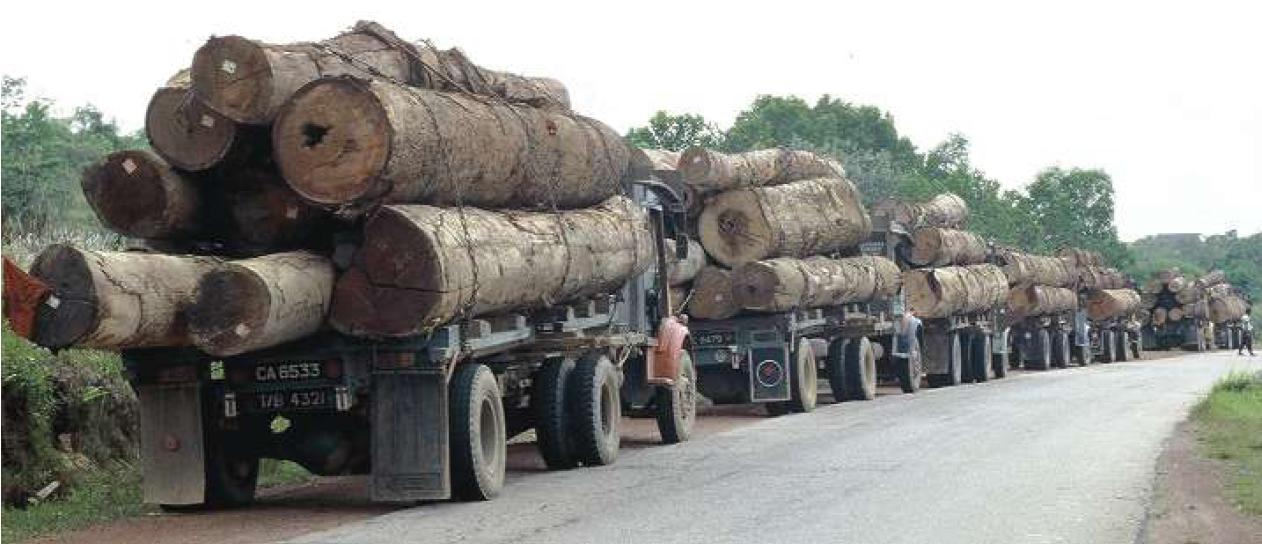
China’s explosive economic growth and environmental deterioration is also affecting other countries, especially those with timber, minerals or other resources that China wants. Today, more than half of the timber shipped anywhere in the world is destined for China–some 45 million m3 per year, an incredible total. Read the rest of this entry »


‘Amplify’ and ‘Lungs’ – William Laurance podcasts

1 04 2010

William Laurance has been here at the University of Adelaide for the past 4 days and has just left. He had a marathon talk-fest while here, and a very full social calendar. I bet he’s happy he’s back home so he can wind down a little.

Just a quick post to provide the links to the podcasts of his two public talks: “Amplify your Voice” and “Lungs of the Planet”, plus a radio interview he did yesterday on ABC.

The first public talk was split into two parts:

  1. How to be more prolific: strategies for writing and publishing scientific papers
  2. Further ways to maximise your scientific impact- interacting with the popular media and how to promote yourself

Part 1 MP3

Part 1 Slideshow

Part 2 MP3

Part 2 Slideshow

The other main talk ‘Lungs of our Planet’ was also in two bits (a more academically orientated one on Monday, and the public lecture on Wednesday):

  1. Emerging Challenges for Environmental Research in the Tropics
  2. Diagnosis critical – the lungs of the planet

Part 1 MP3

Part 1 Slideshow

Part 2 MP3

Part 2 Slideshow

And finally, the radio interview he did on ABC 891 Afternoons with Carole Whitelock (audio file courtesy of ABC 891, Afternoons with Carole Whitelock):

Enjoy!

CJA Bradshaw

Add to FacebookAdd to DiggAdd to Del.icio.usAdd to StumbleuponAdd to RedditAdd to BlinklistAdd to TwitterAdd to TechnoratiAdd to Yahoo BuzzAdd to Newsvine


Inbreeding does matter

29 03 2010

I’ve been busy with Bill Laurance visiting the University of Adelaide over the last few days, and will be so over the next few as well (and Bill has promised us a guest post shortly), but I wanted to get a post in before the week got away on me.

I’ve come across what is probably the most succinct description of why inbreeding depression is an important aspect of extinctions in free-ranging species (see also previous posts here and here) by Mr. Conservation Genetics himself, Professor Richard Frankham.

Way back in the 1980s (oh, so long ago), Russ Lande produced a landmark paper in Science arguing that population demography was a far more important driver of extinctions than reduced genetic diversity per se. He stated:

“…demography may usually be of more immediate importance than population genetics in determining the minimum viable size of wild populations”

We now know, however, that genetics in fact DO matter, and no one could put it better than Dick Frankham in his latest commentary in Heredity.

I paraphrase some of his main points below:

  • Controversy broke out in the 1970 s when it was suggested that inbreeding was deleterious for captive wildlife, but Ralls and Ballou (1983) reported that 41/44 mammal populations had higher juvenile mortality among inbred than outbred individuals.
  • Crnokrak and Roff (1999) established that inbreeding depression occurred in 90 % of the datasets they examined, and was similarly deleterious across major plant and animal taxa.
  • They estimated that inbreeding depression in the wild has approximately seven times greater impact than in captivity.
  • It is unrealistic to omit inbreeding depression from population viability analysis models.
  • Lande’s contention was rejected when Spielman et al. (2004) found that genetic diversity in 170 threatened taxa was lower than in related non-threatened taxa

Lande might have been incorrect, but his contention spawned the entire modern discipline of conservation genetics. Dick sums up all this so much more eloquently than I’ve done here, so I encourage you to read his article.

CJA Bradshaw

ResearchBlogging.orgFrankham, R. (2009). Inbreeding in the wild really does matter Heredity, 104 (2), 124-124 DOI: 10.1038/hdy.2009.155

Lande, R. (1988). Genetics and demography in biological conservation Science, 241 (4872), 1455-1460 DOI: 10.1126/science.3420403

Add to FacebookAdd to DiggAdd to Del.icio.usAdd to StumbleuponAdd to RedditAdd to BlinklistAdd to TwitterAdd to TechnoratiAdd to Yahoo BuzzAdd to Newsvine


Don’t miss Bill

25 03 2010

Yes, yes, I know I’ve posted only a little under two weeks ago that the venerable William (Bill) Laurance is coming to Adelaide, and anyone even remotely interested in biodiversity conservation would be a fool to miss his talks, and ra, ra, ra…

Well, you would be.

However, I don’t want anyone to miss this opportunity simply because of non-recognition. So I thought it prudent to remind people just how special this visit is, and what a researcher extraordinaire Bill really is. For those not necessarily following the trends in tropical conservation biology (probably not many in Adelaide, at least), you might not necessarily recognise his name.

So, I thought I’d give a little broadsheet of his achievements, Read the rest of this entry »


Classics: Extinction from Climate Change

22 03 2010

© A. Wong

Amidst the mildly annoying, yet functionally irrelevant sensationalism of climate change politics, conservation biologists are taking the problem seriously and attempting to predict (and prevent) extinctions arising from a rapidly heating planet (see BraveNewClimate.com‘s excellent summary here, as well as his general category of ‘ecological impacts of climate change‘).

This week’s Conservation Classic describes the first high-impact paper to signal just how bad it biodiversity could fare from climate change alone (ignoring, for the moment, synergies with other drivers of extinction).

From about the 1990s onward, conservation biologists had been accumulating a large number of case studies quantifying the extent to which species had shifted in their geographic ranges, phenology and behaviour in response to a rapidly warming planet (Parmesan & Yohe 2003). Read the rest of this entry »


Classics: Mesopredator Release

17 03 2010

© J. Short

Although popularised by Crooks & Soulé (1999), Soulé et al. (1988) first gave us the term that described how entire ecosystems can become unbalanced by a reduction of a higher trophic-level predator exerting so-called ‘top-down’ control on the abundance of species occupying lower trophic levels.

The idea had theoretical support in ecology (Wright et al. 1994; Litvaitis & Villafuerte 1996), but it was not until Soulé and colleagues described how the decline of dominant predators combines with habitat fragmentation to release top-down pressure on smaller predators, thereby increasing predation rates on prey lower down the trophic web.

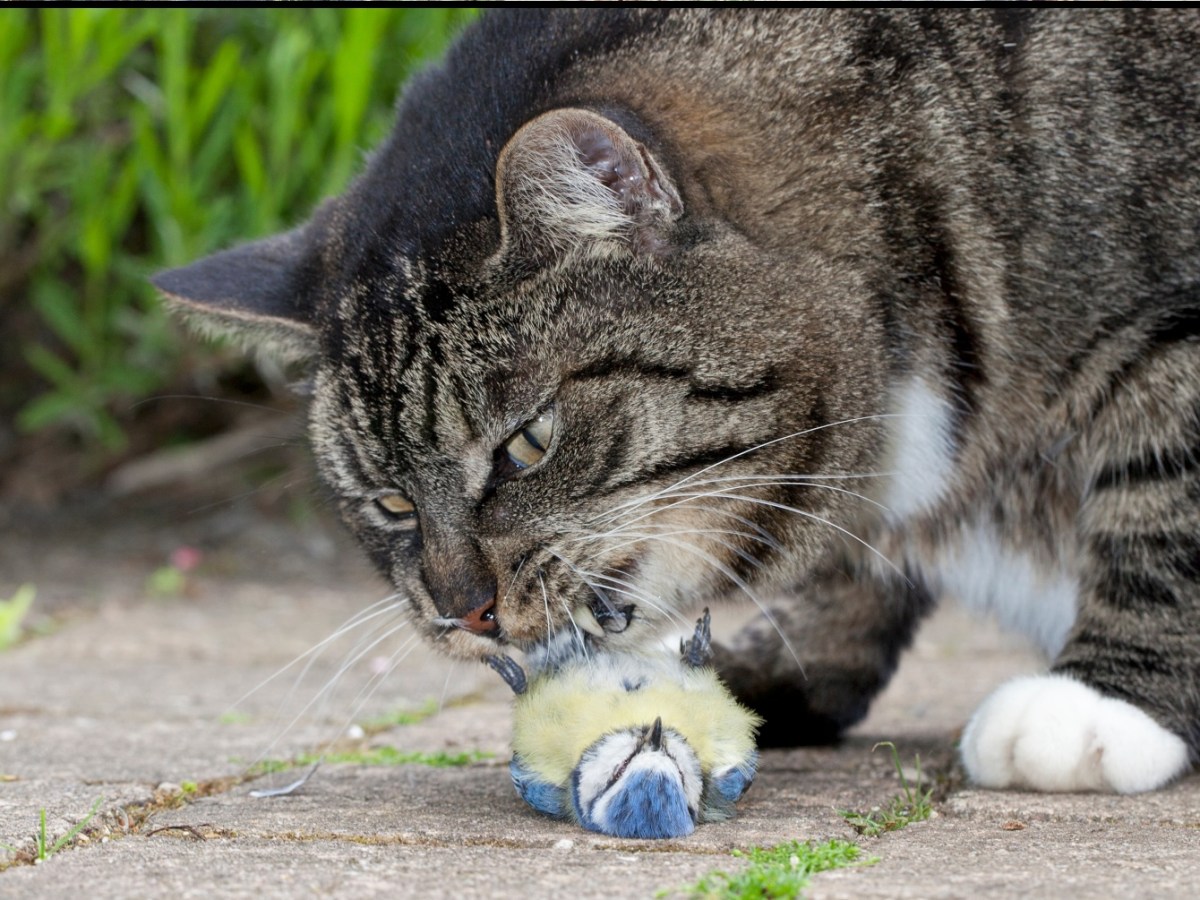
Crooks & Soulé (1999) described an example where the decline in coyotes (Canis latrans) in combination with urbanisation-driven habitat fragmentation led to an increase in cat (Felis catus) densities and the subsequent decline in scrub-breeding birds. More recent examples attest to the importance of the mesopredator release phenomenon: Myers et al. (2007) described how the decline in large coastal shark species has allowed mesopredator cownose rays (Rhinoptera bonasus) to increase, leading to a reduction in commercially important shellfish densities; and Johnson et al. (2007) showed how dingoes (Canis lupus dingo) in Australia suppress populations of exotic predators such as cats and foxes, leading to more locally abundant populations of native marsupials (see previous post).

Conservation biologists have benefited from this knowledge because we’ve realised that top-order predators affect far more than their immediate prey. These examples really hit home how a fully functional community is required for ecosystem stability, so we should strive to preserve complete complements of communities, not just our favourite species.

CJA Bradshaw

Add to FacebookAdd to DiggAdd to Del.icio.usAdd to StumbleuponAdd to RedditAdd to BlinklistAdd to TwitterAdd to TechnoratiAdd to Yahoo BuzzAdd to Newsvine


Bill Laurance coming to Adelaide

13 03 2010

We’ve got a real treat for biodiversity buffs scheduled for the end of March. Eminent (Distinguished, Famous, Respected… the list goes on) Professor William (Bill) Laurance is briefly leaving his tropical world and coming south to the temperate climes of Adelaide to regale us with his fascinating biodiversity research career.

Bill is a leading conservation biologist who has worked internationally on many high-profile threats to tropical forests—in the Amazon, Central America, Africa, and Australasia. A highly prolific scientist, to date he has published five books and over 300 scientific articles. Bill has recently commenced a position as Distinguished Research Professor at James Cook University and is involved with the Smithsonian Tropical Research Institute in Panama. He also happens to be the bloke that blew the lid open on the devastating effects of tropical fragmentation in the Amazon with some of the best long-term experiments ever done in conservation biology.

I’m personally very pleased for several reasons: (1) Although I have never met Bill in person yet, I’ve recently co-authored two papers with him (Wash and spin cycle threats to tropical biodiversity and Improving the performance of the Roundtable on Sustainable Palm Oil for nature conservation) and I’m keen to meet the man behind the pen; (2) we have had many email discussions (some of them rather heated!), so I’m keen to flesh some of these out over a nice glass of South Australian Shiraz; (3) he’s been a keen supporter of my work for years, and has given me many opportunities to get my research noticed; and (4) it’s high time to met one of ConservationBytes.com Conservation Scholars.

Bill has recently shifted shop from Panama (Smithsonian Tropical Research Institute) to Australia’s own James Cook University, and so we at the Environment Institute thought we should take advantage of his geographical disorientation and bring him down south for a while. But he’s going to have to sing for his supper, so he’s kindly agreed to give three talks in 3 days from 29-31 March 2010.

His first talk (on Monday 29 March) will be an in-house Environment Institute seminar, but the second two will be public events that I urge anyone remotely interested in biodiversity conservation research to attend. In fact, his Tuesday 30 March presentation (18.00-20.00 Napier G03, University of Adelaide) is even more generic than that, and word on the street is it is highly entertaining and extremely well attended wherever Bill’s is gracious enough to give it:

Amplify Your Voice: Keys to Having a Prolific Scientific Career (and Bill would know).

This will include (1) How to be more prolific: strategies for writing and publishing scientific papers and (2) Further ways to maximise your scientific impact – interacting with the popular media and how to promote yourself. Each topic will run for 50 minutes and will include 10 minutes for audience questions. A tea and coffee break will be held between sessions. Book here.

His second public talk on Wednesday 31 March (18.00-19.30 Napier 102, University of Adelaide) will be:

Diagnosis Critical | The lungs of our Planet

Here he will be discussing how the forests of our world are in crisis. Our drive for continued economic growth has had devastating consequences for the world’s ecosystems that provide critical human services. Our forests are a haven for countless plant and animal species that form the basis of ecological services, these services are the biological mechanisms that make the world our home. Book here.

So, if you have a couple of free nights at the end of the month and are in Adelaide, I strongly recommend you come out and see Bill do his thing.

CJA Bradshaw

Add to FacebookAdd to DiggAdd to Del.icio.usAdd to StumbleuponAdd to RedditAdd to BlinklistAdd to TwitterAdd to TechnoratiAdd to Yahoo BuzzAdd to Newsvine


Global pollinator declines

11 03 2010

Mention anything about ecosystem services – those ecological functions arising from the interactions between species that provide some benefit (source of food/clean water, health, etc.) to humanity1 – and one of the most cited examples is pollination.

It’s really a no-brainer, hence its popularity as an example. Pollinators (mainly insects, but birds, bats and other assorted species too) don’t exist to pollinate plants; rather, their principal source of food acquisition happens to spread around the gametes of the plants they regularly visit. Evolution has favoured the dependence of species in such ways because the mutualism benefits all involved, and in some cases, this dependence has become obligate. So when the habitats that pollinators need to survive are reduced or destroyed, inevitably their population sizes decline and the plants on which they feed lose their main sources of gene-spreading.

So what? Well, about 80 % of all wild plant species require insect pollinators for fruit and seed set, and about 75 % of all human crops require pollination by insects (mostly bees). So it’s pretty frightening to consider that although our global population is at 6.8 billion and growing rapidly, our main food pollinators (bees) are declining globally (see also previous post on bee declines). Indeed, domestic honey bee stocks have declined in the USA by 59 % since 1947 and in Europe by 25 % since 1985. Scared yet?

Another thing people don’t tend to get is that a bee cannot live on rapeseed alone. Most pollinators require intact forests to complete many of their other life history requirements (breeding, shelter, etc.) and merely forage occasionally in crop lands. Cut down all the adjacent bush, and your crops will suffer accordingly.

These, and other titbits to keep you awake at night and worry about what your grandchildren might eat are highlighted in a recent review in Trends in Ecology and Evolution by Potts and colleagues entitled Global pollinator declines: trends, impacts and drivers.

What’s driving all this loss? Several things, but it’s mainly due to ‘land-use change’ (a bullshit word people use generally to mean habitat loss, fragmentation and degradation). However, invasive species competition, pathogens and parasites, and climate change (and the synergies amongst all of these) are all contributing.

It always amazes me when people ask me why biodiversity is important. Despite the overwhelming knowledge we’ve accumulated about how functioning ecosystems make the planet liveable, despite it just being plainly stupid to think that humans are somehow removed from normal biological processes, and even with such in-your-face examples of global pollinator declines and the real, extremely worrying implication for food supplies, many people just don’t seem to get it. Every tree you cut down, every molecule of carbon dioxide you release, every drop of water you waste will punish you and your family directly for generations to come. How much more self-evident can you get?

Humanity seems to have a very poorly developed sense of self-preservation.

CJA Bradshaw

1It’s amazingly arrogant and anthropocentric to think of anything in ecosystems as ‘providing benefits to humanity’. After all, we’re just another species in a complex array of species within ecosystems – we just happen to be one of the numerically dominant ones, excel at ecosystem ‘engineering’ and as far as we know, are the only (semi-) sentient of the biologicals. Although the concept of ecosystem services is, I think, an essential abstraction to place emphasis on the importance of biodiversity conservation to the biodiversity ignorant, it does rub me a little the wrong way. It’s almost ascribing some sort of illogical religious perspective that the Earth was placed in its current form for our eventual benefit. We might be a fairly new species in geological time scales, but don’t think of ecosystems as mere provisions for our well-being.

ResearchBlogging.orgPotts, S., Biesmeijer, J., Kremen, C., Neumann, P., Schweiger, O., & Kunin, W. (2010). Global pollinator declines: trends, impacts and drivers Trends in Ecology & Evolution DOI: 10.1016/j.tree.2010.01.007

Add to FacebookAdd to DiggAdd to Del.icio.usAdd to StumbleuponAdd to RedditAdd to BlinklistAdd to TwitterAdd to TechnoratiAdd to Yahoo BuzzAdd to Newsvine


Scopus Young Researcher of the Year Awards

7 03 2010

Peter Love & Corey Bradshaw. © A. Harvey

Last week I tweeted a few times about an award I was lucky enough to win – the inaugural Scopus Young Researcher of the Year Award (in the Life Sciences and Biological Sciences category). The awards are supported by Elsevier, Scopus and Universities Australia. I just managed to get a hold of some photos from the award ceremony, so a little post is justified.

It was a fun night at Parliament House in Canberra in front of a very prestigious crowd – most of the Vice Chancellors of Australian universities were present, along with many other distinguished guests. A little daunting, but the reception was very warm indeed.

After meeting the welcoming and congratulatory Elsevier/Scopus team during a pre-dinner reception, the other category winners (Ben Eggleton, Peter Love, Dan Li and Prash Sanders) and I were then escorted to the main event at Parliament House. Bernie Hobbs of ABC Science acted as master of ceremonies, and Senator Kim Carr presented the awards with Y. S. Chi of Elsevier. Prash and I were honoured to sit at the same table with the University of Adelaide’s Vice Chancellor, Professor James McWha.

MC Bernie Hobbs. © A. Harvey

Thanks again to all those who supported my bid at the University of Adelaide and SARDI. Special thanks to Mike Young who nominated me, Barry Brook and Navjot Sodhi who provided reference letters, and K. Wertz for putting the finishing touches on the application.

The Higher Education supplement of the Australian published a few articles about the winners, and I reproduce the one describing my award and research below (article by C. Jones):

SHOOTERS in low-flying helicopters take out feral buffalo, horses and pigs that are wreaking havoc on Kakadu National Park.

There are no bullets and blood, however, as these are not real shooters and animals but silicon ones. They are cyber-entities, represented by numbers, generated in a computer model by mathematical ecologist Corey Bradshaw and his colleagues.

Land managers will be able to use the model to test scenarios in a virtual Kakadu National Park to work out the cheapest and best culling programs to limit the damage from the pests.

The mastery early in his career of mathematical modelling such as the Kakadu computer code has put Bradshaw at the forefront of conservation biology.

In naming him the Scopus young researcher of the year in the life sciences and biological sciences category, the judging panel says his modelling work has added “significant new perspectives and rigour” to his field.

Bradshaw grew up in western Canada. His interest in conservation was piqued when he ranged the Rocky Mountains of British Columbia with his father, who was a game trapper.

He later turned a knowledge of ecology that underpinned “killing things” to saving endangered species.

He obtained a bachelor of ecology from the University of Montreal in 1992. Research as part of a masters degree at the University of Alberta took him to northern Canada to study caribou. Later, he undertook a PhD in zoology at the University of Otago, Dunedin, with his research focusing on the population dynamics of fur seals.

The subjects of his fieldwork have ranged from the lowliest snails in Borneo, through penguins in Antarctica and frogs in Singapore, to Top End buffalo.

Some of his research is aimed at controlling pest species through an understanding of population dynamics. The goal of other work is to prevent extinctions of native species.

The research comes as the life sciences — once derided as the soft sciences — continue to harden up.

Like the so-called hard disciplines of physics and chemistry, biology is increasingly being structured by mathematics, and Bradshaw has been riding the wave.

The mathematics representing complex changes in populations as they boom, bust or stabilise in response to environmental factors is formidable. A paper on the Kakadu model, published recently in Methods in Ecology and Evolution, would not look out of place in a mathematics journal. It is full of equations, matrices and graphs.

“I realised the best thing I could do for my career was to get adept at mathematics,” he tells the HES. “You can’t do much of high value in conservation without it.

“The days of the natural historian walking around, casually drawing things and describing the reproductive structures of plants and animals are gone.

“We need to do the systematics as well, but the mathematics is a fundamental component of all biology now, especially ecology, because it’s such complex systems we’re dealing with.

“It’s chaos theory all the time.

“Trying to predict what an entire ecosystem is going to do gets very complicated very quickly, and mathematics is the only way to do it.”

Bradshaw’s Kakadu model divides the landscape into a grid. Equations in the model relate population size to demography for each element of the grid. Input demographic parameters include data obtained empirically through field studies: the age of individuals, the number of breeding females, and birth and mortality rates.

The program is run repeatedly, stepping forward in time, with the population size result of each run forming the initial condition of the next one.

“We can also do population viability analysis,” Bradshaw says. “We can make predictions on the probability that a population will go extinct within a certain period. It gives a window into the future.”

The work can deliver surprising results. Bradshaw’s team last year did an analysis for the federal government on the critically endangered grey nurse shark to find out the main factors in the species demise. The work showed that fishing was the biggest threat, not beach nets or a lack of protected areas, as previously suspected.

The results have influenced conservation policy, he says.

Other research suggests the Tasmanian devil, listed as endangered because of the devastating devil facial tumour disease that is ripping through populations, has recovered from big disease outbreaks before.

“We didn’t know that until we started looking at the demographic model,” Bradshaw says. “It is a scavenger, so it was probably exposed to a lot more diseases than your average animal.”

But he warns against complacency about the outbreak.

The modelling work has allowed him to make generalisations about the risk of extinction and that enables biodiversity managers to target their efforts.

“Five thousand is almost a magic number in conservation,” he says. “If you’re playing with less than that, you’re fighting a losing battle.”

The research also reveals which exotic species are likeliest to become invasive, knowledge valuable to biosecurity.

A consummate science communicator with a blog (ConservationBytes.com) and heavy community outreach schedule, Bradshaw is focusing on assessing the vulnerability of species to climate change.

And how do his models define Homo sapiens?

“They’re telling us that about 15 per cent of all the humans that ever lived are alive today,” he says. “That means that we are in the exponential phase of an invasion, much like rats on a new island or cockroaches in a new apartment.

“If we’re not careful, the very ecosystems that support our success will ensure our demise.”

CJA Bradshaw

Add to FacebookAdd to DiggAdd to Del.icio.usAdd to StumbleuponAdd to RedditAdd to BlinklistAdd to TwitterAdd to TechnoratiAdd to Yahoo BuzzAdd to Newsvine


Begging for votes

5 03 2010

Research Blogging Awards 2010

Just a quick one to ask ConservationBytes.com readers to vote for the blog in ResearchBlogging.org‘s 2010 Research Blogging Awards.

ConservationBytes.com has been placed as a finalist in the ‘Best Blog – Conservation or Geosciences’ category.

Note – only registered bloggers themselves can vote.

CJA Bradshaw


Covet thy neighbour’s paddock

2 03 2010

Apologies to Matt Lucas

An interesting, frightening and and at the same time, potentially hopeful, paper has just appeared in the latest issue of Proceedings of the Royal Society B.

Co-authored by a previously highlighted Conservation Scholar Georgina Mace, the paper by Boakes and colleagues entitled Extreme contagion in global habitat clearance is probably one of the strongest bits of evidence to save intact habitat complexes.

Yes, yes – save things so you don’t destroy biodiversity. What’s new about that? Well, Boakes and colleagues’ paper shows at a global scale that over the last 300+ years, the chance of a patch of forest or grassland being converted to agriculture depends strongly on whether its neighbouring patch has already been cleared. In other words, once you start to hack away at natural habitats, people have a tendency to assume that it’s perfectly acceptable to do the same on their own patch.

The authors reprojected the History Database of the Global Environment to ~ a 50 x 50 grid and examined habitat conversion from 1700 to the present (in 50-year increments). Using some rather simple contagion statistics, they came up with the startling result that conversion probability is strongly dependent on whether an adjacent cell has already been converted.

What I found particularly frightening was the result that:

“A quarter of the world’s forest and half its grassland has been converted to agriculture since 1700.”

and from a personal perspective, the highest grassland conversion rates have happened in Australasia (the highest forest conversion rates have been in the Indo-Malay and Nearctic realms).

What are the implications for conservation? In my opinion, this relatively simple analysis and result confirms even more strongly that saving intact, large tracts of forest and grassland is essential for long-term biodiversity conservation. Cutting up the forest into smaller bits not only compromises biodiversity via fragmentation, it ends up speeding the entire process of full-scale ecosystem degradation.

‘Get ’em protected while they’re still unaffected’.

CJA Bradshaw

ResearchBlogging.orgBoakes, E., Mace, G., McGowan, P., & Fuller, R. (2009). Extreme contagion in global habitat clearance Proceedings of the Royal Society B: Biological Sciences, 277 (1684), 1081-1085 DOI: 10.1098/rspb.2009.1771

Add to FacebookAdd to DiggAdd to Del.icio.usAdd to StumbleuponAdd to RedditAdd to BlinklistAdd to TwitterAdd to TechnoratiAdd to Yahoo BuzzAdd to Newsvine


Vodcast on killing for conservation

24 02 2010

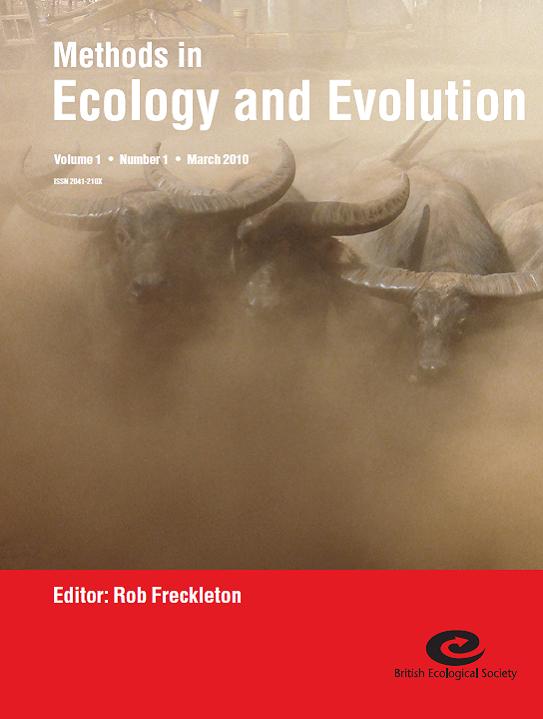
The inaugural issue of Methods in Ecology and Evolution came out today (see first issue editorial) and I am very pleased not only that our paper (Spatially explicit spreadsheet modelling for optimizing the efficiency of reducing invasive animal density) made it into the the paper line-up (see previous ConservationBytes.com post on the paper here), we also managed to score the journal’s cover image (buffalo image shown right: Asian swamp buffalo Bubalus bubalis introduced to Australia in the early 19th Century now populate much of the tropical north and cause severe environmental disturbances to savanna and wetland ecosystems. Despite a broad-scale cull of hundreds of thousands of free-ranging buffalo occurring in the 1980s and 1990s to eradicate brucellosis and tuberculosis, the population is recovering and continuing to threaten protected areas such as Kakadu National Park. A small wild harvest of several thousand buffalo occurs each year in Arnhem Land where mustering is aided by helicopters and on-ground vehicles. The buffalo pictured are housed in temporary holding pens and then shipped for live export. Photo credit: Jesse Northfield).

I also had the opportunity to chat with Journal Coordinator, Graziella Iossa, via Skype about the paper, and they have put up a YouTube vodcast of the interview itself. You can also check it out here.

Summary: Corey Bradshaw answers what is the main idea behind his work with co-authors, “Spatially explicit spreadsheet modelling for optimising the efficiency of reducing invasive animal density”. Further, he explains how their model advances methodology in ecology and evolution and finally shows how it could be applied by wildlife manager and practitioners with basic knowledge of computer models. Their Excel-spreadsheet ‘Spatio-Temporal Animal Reduction’ (S.T.A.R.) model is designed specifically to optimise the culling strategies for feral pigs, buffalo and horses in Kakadu National Park (northern Australia), but Corey explains how their aim was to make it easy enough for anyone to use and modify it so that it could be applied to any invasive species anywhere.

Congratulations to Editor-in-Chief Rob Freckleton, Graziella and the Associate Editors for a great first issue. Other titles include:

Keep them coming!

CJA Bradshaw

Add to FacebookAdd to DiggAdd to Del.icio.usAdd to StumbleuponAdd to RedditAdd to BlinklistAdd to TwitterAdd to TechnoratiAdd to Yahoo BuzzAdd to Newsvine