Cartoon guide to biodiversity loss II: frog legs

1 02 2009

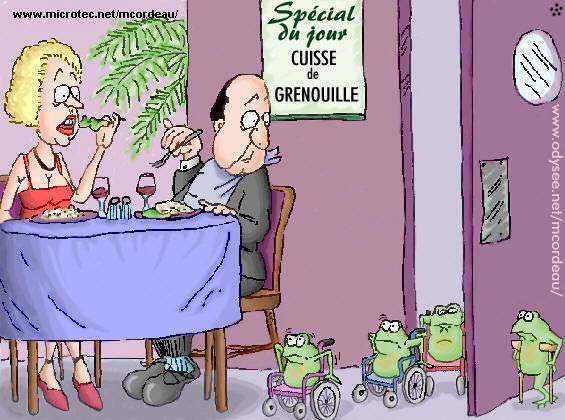
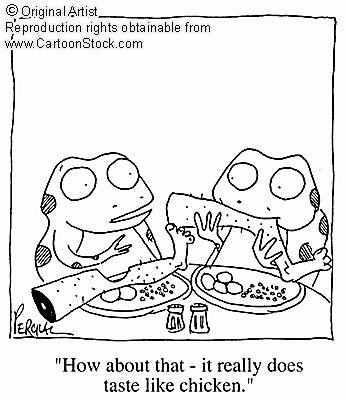
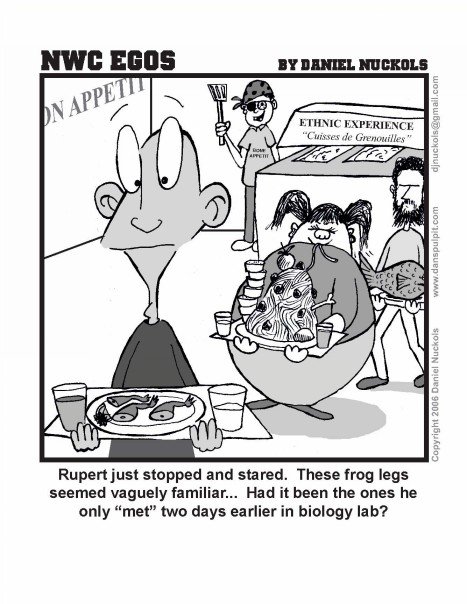
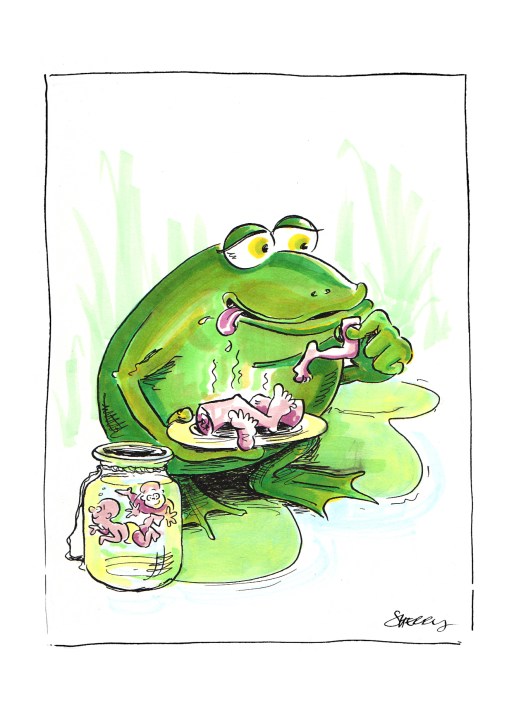
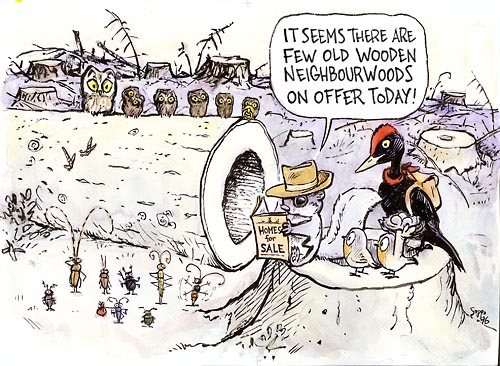
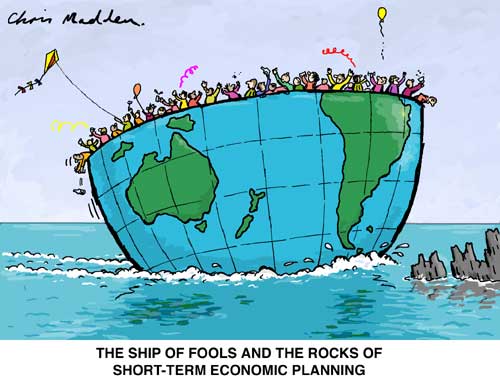
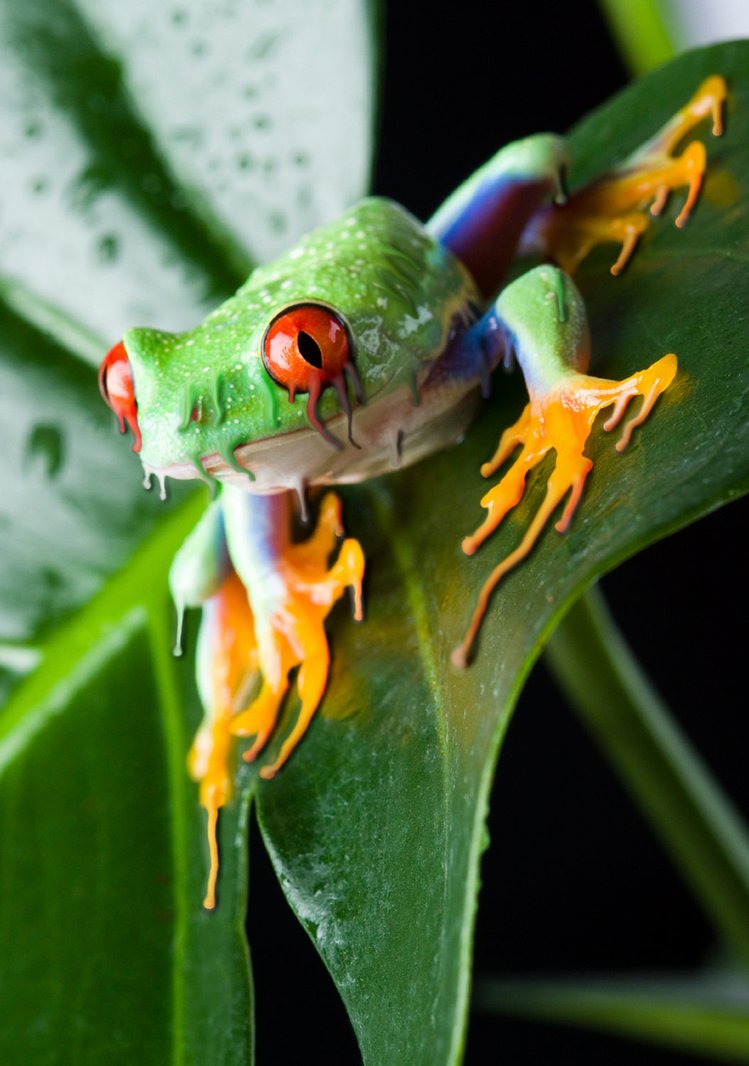
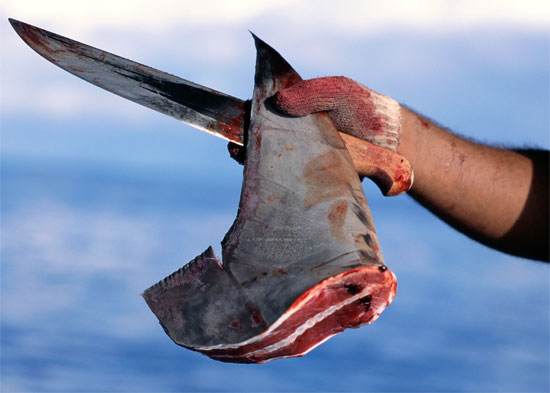
I couldn’t resist this. Given the enormous response to our soon-to-be-published paper in Conservation Biology entitled Eating frogs to extinction by Warkentin, Bickford, Sodhi & Bradshaw (view post How many frogs do we eat?), I just had to put these up. Enjoy this subclass of biodiversity loss cartoons for what they are worth.

CJA Bradshaw

Add to FacebookAdd to NewsvineAdd to DiggAdd to Del.icio.usAdd to StumbleuponAdd to RedditAdd to BlinklistAdd to Ma.gnoliaAdd to TechnoratiAdd to Furl


Cartoon guide to biodiversity loss

30 01 2009

I’m taking Barry Brook‘s great idea on the Cartoon Guide to Global Warming Denial and applying it to biodiversity and habitat loss.

There are a lot of these sorts of things out there (amazing how we laugh at tragedy), so I will probably do subsequent posts as I find good candidates (suggestions welcome).

ucs-cartoonearthbin

CJA Bradshaw

Add to FacebookAdd to NewsvineAdd to DiggAdd to Del.icio.usAdd to StumbleuponAdd to RedditAdd to BlinklistAdd to Ma.gnoliaAdd to TechnoratiAdd to Furl


How many frogs do we eat?

20 01 2009

IMG_20130209_141200A paper that my colleagues and I wrote soon to appear in Conservation Biology describes the massive worldwide trade in frog parts for human consumption. I bet you had no idea…

This report from New Scientst:

Are frogs being eaten to extinction? We’re used to hearing about how disease, climate change, and habitat degradation are endangering amphibians, but conservationists are warning that frogs could be going the same way as the cod. Gastronomic demand, they report, is depleting regional populations to the point of no return.

David Bickford of the National University of Singapore and colleagues have called for more regulation and monitoring in the global frog meat market in order to avoid species being “eaten to extinction”.

Statistics on imports and exports of frog legs are sparse as few countries keep track of the amount of meat harvested and consumed domestically.

According to UN figures, global trade has increased in the past 20 years. France – not surprisingly – and the US are the two largest importers; with France importing between 2500 and 4000 tonnes of frog meat each year since 1995.

But although frog legs are often thought of in the West as a quintessentially French dish, they are also very popular in Asia.

Bickford estimates that between 180 million to over a billion frogs are harvested each year. “That is based on both sound data and an estimate of local consumption for just Indonesia and China,” he says. “The actual number I suspect is quite a bit larger and my 180 million bare minimum is almost laughably conservative.”
Local depletion

Even top French chefs may be unaware of where their frogs are coming from. Bruno Stril, teaching chef at the Cordon Bleu school in Paris, France, is unsure where his suppliers source their frog legs. “I would like for them to come from France,” he says. But he expects that most of the meat comes from other countries.

Stril is on the right track. Indonesia is the world’s largest exporter of frog meat, exporting more than 5000 tonnes of frog meat each year, mostly to France, Belgium and Luxemburg.

Bickford and colleagues say European kitchens initially found their own supplies in the surrounding countryside, but the fact that they are now importing from Asia suggests local populations were over-harvested. This, they say, could be a sign that frog populations, like many fish populations, will be harvested to near extinction.

“Overexploitation in the seas has caused a chain reaction of fisheries collapses around the world,” the researchers write. “This experience should motivate better management of other exploited wild populations.”
Anonymous legs

James Collins, of the World Conservation Union, says the Californian red-legged frog offers some evidence for the theory. This species was first harvested for food in the 19th-century California gold rush and eventually the population began to crash.

However, Collins cautions that “at the moment we have no data indicating that commercial exploitation has led to the extinction of any amphibian species.” He says the Bickford team’s evidence is worrisome, but inconclusive.

Most harvested frogs are skinned, butchered and frozen before being shipped overseas. This makes it difficult to know exactly what species are being killed. Indonesia is thought to mostly export crab-eating frogs, giant Jana frogs, and American bullfrogs. How much meat is consumed within Indonesia’s borders is also something of a mystery. Some studies suggest it could be between two and seven times what is exported.

“There are a hell of a lot of frogs being eaten,” says Bickford. “Much more than most people have a clue about.”

Original article soon to appear: Warkentin, IG, D Bickford, NS Sodhi, CJA Bradshaw. 2009. Eating frogs into extinction. Conservation Biology DOI: 10.1111/j.1523-1739.2008.01165.x

Add to FacebookAdd to NewsvineAdd to DiggAdd to Del.icio.usAdd to StumbleuponAdd to RedditAdd to BlinklistAdd to Ma.gnoliaAdd to TechnoratiAdd to Furl


Measuring the amphibian meltdown

9 01 2009

melting_frog_by_zarinstar.pngA paper my colleagues and I published earlier last year in the open-access journal PLoS One describes one of the largest databases of amphibian threat risk ever compiled. Our main aims were to determine which factors drive amphibians toward extinction – this being especially topical considering that amphibians epitomise the modern biodiversity crisis: major population declines, disease outbreaks, deformities and recent confirmed extinctions dominate the biodiversity news. 32 % of all amphibians worldwide are threatened with extinction, 43 % of described species are declining, and about 160 species have already gone extinct in the last few decades.

In our paper (Sodhi and colleagues) entitled Measuring the meltdown: drivers of global amphibian extinction and decline, we found that the range size occupied by a species was overwhelmingly the principal driver of threat risk. This means that although other factors are involved, the number one (by far and away) thing threatening amphibians is habitat loss – everything else is minor by comparison.

Of course, we shouldn’t ignore other issues – increasing climate seasonality (temperature and precipitation) also contributed to higher threat risk. This is exactly the sort of thing that is predicted to increase with climate change (more variable weather patterns). In many cases, it’s the variability that’s worse than the mean trend when it comes to biodiversity.

So what should we do? Our results suggest that areas containing high numbers of restricted-range amphibians should have conservation priority. Although captive breeding might help to buffer some declining populations in the short term, such interventions cannot substitute for habitat protection and restoration. The synergies between ecological/life history traits and environmental conditions demonstrate how management must address each of the major drivers of decline together for any success – there is no magic bullet to prevent extinctions. We also recommend that substantial increases in international research on the long-term monitoring of amphibian populations is required to mitigate effectively the current meltdown of amphibian biodiversity.

CJA Bradshaw

Add to FacebookAdd to NewsvineAdd to DiggAdd to Del.icio.usAdd to StumbleuponAdd to RedditAdd to BlinklistAdd to Ma.gnoliaAdd to TechnoratiAdd to Furl


Man bites shark

7 01 2009

cut-shark-finYesterday I had a comment piece of the same title posted on the ABC‘s Unleashed site. I have permission to reproduce it here on ConservationBytes.com.

The silly season is upon us again, and I don’t mean the commercial frenzy, the bizarre fascination with a white-bearded man or a Middle-Eastern baby, the over-indulgence at the barbie or hangovers persisting several days into the New Year. I mean it’s the time of year when beach-goers, surfers, and municipal and state policy makers go a bit ga-ga over sharks.

There are few more polite pleasures than heading down to the beach during the holidays for a surf, quick dip or just a laze under the brolly. Some would argue it’s an inalienable Australian right and that anything getting in our way should be condemned to no less than severe retribution. Well, in the case of sharks, that’s exactly what’s happened.

Apart from a good number of adrenalin-addicted surfers and mad marine scientists, most people are scared shitless by the prospect of even seeing a shark near the beach, let alone being bitten or eaten by one. I won’t bore you with some ill-advised, pseudo-psycho-analytical rant about how it’s all the fault of some dodgy 1970s film featuring a hypertrophied American shark; the simple fact is that putative prey don’t relish the thought of becoming a predator’s dinner.

So, Australia is famous for its nearly 100-year-old pioneering attempt to protect marine bathers from shark attack by setting an elaborate array of shark nets around the country’s more frequented beaches. Great, you say? Well, it’s actually not that nice.

Between December 1990 and April 2005, nearly 3500 sharks and rays were caught in NSW beach nets alone, of which 72 per cent were found dead. Shark spearing was a favourite past-time in the 1960s and 1970s, with at least one high-profile species, the grey nurse shark, gaining the dubious classification of Critically Endangered as a result. Over-fishing of reef sharks has absolutely hammered two formerly common species in the Great Barrier Reef, the whitetip and grey reef sharks (See the Ongoing Collapse of Coral-Reef Shark Populations report). And illegal Indonesian fishing in northern Australia is slowly depleting many shark species in a wave of protein mining that has now penetrated the Australian Exclusive Economic Zone.

Despite the gloomy outlook for sharks, I’m happy to say today that we are a little more aware of their plight and are making baby steps toward addressing the problems. Australia has generally fared better in shark conservation than most other parts of the world, even though we still have a lot of educating to do at home. Over 50 per cent of all chondrichthyans (i.e., sharks, rays and chimaeras) are threatened worldwide, with some of the largest and most wide-ranging species being hardest hit, including white sharks. The most common threat is over-fishing, but this is largely seen by the lay person as of little import simply because of the persistent attitude that “the only good shark is a dead shark”.

The attitude is, however, based on a complete furphy. I’m sure many readers would have seen some statistics like the following before, but let’s go through the motions just to be clear. Dying from or even being injured by a shark is utterly negligible. Based on the International Shark Attack File data for Australia, there were 110 confirmed (unprovoked) shark attacks in Australian waters between 1990 and 2007, of which 19 were fatal. Using Australian Bureau of Statistics human population data over the same period, this equates to an average of 0.032 attacks and 0.006 fatalities per 100,000 people, with no apparent trend over the last two decades.

Now let’s contrast. I won’t patronise you with strange comparative statistics like the probability of being killed by a (provoked) vending machine or by being hit by a bus, they are both substantially greater, but I will relate these figures to water-based activities. Drowning statistics for Australia (1992-1997) show that there were around 1.44 deaths per 100,000 people per year, or approximately 0.95 if just marine-related drownings are considered. These values are 240 (158 for marine-only) times higher than those arising from shark attack.

It’s just plainly, and mathematically, ridiculous to be worried about being eaten by a shark when swimming in Australia, whether or not there’s a beach net in place. The effort made, money spent and anxiety arising from the illogical fear that a shark will consider your sunburnt flesh a tasty alternative to its fishier sustenance is not only regrettable, it’s an outright crime against marine biodiversity. Of course, if you see a big shark lurking around your favourite beach, I wouldn’t recommend swimming over and giving it a friendly pat on the dorsal fin, but I wouldn’t recommend screaming that the marine equivalent of the apocalypse has just arrived either.

You may not be fussed either way, but consider this – the massive reduction in sharks worldwide is having a cascading effect on many of the ocean’s complex marine ecosystems. Being largely carnivorous, sharks are the ecological equivalent of community planners. Without them, herbivorous or coral-eating fish can quickly get out of control and literally destroy the food web. A great example comes from the Gulf of Mexico where the serial depletion of 14 species of large sharks has caused an explosion of the smaller cownose ray that formerly was kept in check by its bigger and hungrier cousins. The result: commercially harvested scallops in the region have now collapsed because of the hordes of shellfish-eating rays.

The day you fail to find sharks cruising your favourite beach is the day you should really start to worry.

CJA Bradshaw

Add to FacebookAdd to NewsvineAdd to DiggAdd to Del.icio.usAdd to StumbleuponAdd to RedditAdd to BlinklistAdd to Ma.gnoliaAdd to TechnoratiAdd to Furl


Classics: the Allee effect

22 12 2008

220px-Vortex_in_draining_bottle_of_waterAs humanity plunders its only home and continues destroying the very life that sustains our ‘success’, certain concepts in ecology, evolution and conservation biology are being examined in greater detail in an attempt to apply them to restoring at least some elements of our ravaged biodiversity.

One of these concepts has been largely overlooked in the last 30 years, but is making a conceptual comeback as the processes of extinction become better quantified. The so-called Allee effect can be broadly defined as a “…positive relationship between any component of individual fitness and either numbers or density of conspecifics” (Stephens et al. 1999, Oikos 87:185-190) and is attributed to Warder Clyde Allee, an American ecologist from the early half of the 20th century, although he himself did not coin the term. Odum referred to it as “Allee’s principle”, and over time, the concept morphed into what we now generally call ‘Allee effects’.

Nonetheless, I’m using Allee’s original 1931 book Animal Aggregations: A Study in General Sociology (University of Chicago Press) as the Classics citation here. In his book, Allee discussed the evidence for the effects of crowding on demographic and life history traits of populations, which he subsequently redefined as “inverse density dependence” (Allee 1941, American Naturalist 75:473-487).

What does all this have to do with conservation biology? Well, broadly speaking, when populations become small, many different processes may operate to make an individual’s average ‘fitness’ (measured in many ways, such as survival probability, reproductive rate, growth rate, et cetera) decline. The many and varied types of Allee effects can work together to drive populations even faster toward extinction than expected by chance alone because of self-reinforcing feedbacks (see also previous post on the small population paradigm). Thus, ignorance of potential Allee effects can bias everything from minimum viable population size estimates, restoration attempts and predictions of extinction risk.

A recent paper in the journal Trends in Ecology and Evolution by Berec and colleagues entitled Multiple Allee effects and population management gives a more specific breakdown of Allee effects in a series of definitions I reproduce here for your convenience:

Allee threshold: critical population size or density below which the per capita population growth rate becomes negative.

Anthropogenic Allee effect: mechanism relying on human activity, by which exploitation rates increase with decreasing population size or density: values associated with rarity of the exploited species exceed the costs of exploitation at small population sizes or low densities (see related post).

Component Allee effect: positive relationship between any measurable component of individual fitness and population size or density.

Demographic Allee effect: positive relationship between total individual fitness, usually quantified by the per capita population growth rate, and population size or density.

Dormant Allee effect: component Allee effect that either does not result in a demographic Allee effect or results in a weak Allee effect and which, if interacting with a strong Allee effect, causes the overall Allee threshold to be higher than the Allee threshold of the strong Allee effect alone.

Double dormancy: two component Allee effects, neither of which singly result in a demographic Allee effect, or result only in a weak Allee effect, which jointly produce an Allee threshold (i.e. the double Allee effect becomes strong).

Genetic Allee effect: genetic-level mechanism resulting in a positive relationship between any measurable fitness component and population size or density.

Human-induced Allee effect: any component Allee effect induced by a human activity.

Multiple Allee effects: any situation in which two or more component Allee effects work simultaneously in the same population.

Nonadditive Allee effects: multiple Allee effects that give rise to a demographic Allee effect with an Allee threshold greater or smaller than the algebraic sum of Allee thresholds owing to single Allee effects.

Predation-driven Allee effect: a general term for any component Allee effect in survival caused by one or multiple predators whereby the per capita predation-driven mortality rate of prey increases as prey numbers or density decline.

Strong Allee effect: demographic Allee effect with an Allee threshold.

Subadditive Allee effects: multiple Allee effects that give rise to a demographic Allee effect with an Allee threshold smaller than the algebraic sum of Allee thresholds owing to single Allee effects.

Superadditive Allee effects: multiple Allee effects that give rise to a demographic Allee effect with an Allee threshold greater than the algebraic sum of Allee thresholds owing to single Allee effects.

Weak Allee effect: demographic Allee effect without an Allee threshold.

For even more detail, I suggest you obtain the 2008 book by Courchamp and colleagues entitled Allee Effects in Ecology and Conservation (Oxford University Press).

CJA Bradshaw

Add to FacebookAdd to NewsvineAdd to DiggAdd to Del.icio.usAdd to StumbleuponAdd to RedditAdd to BlinklistAdd to Ma.gnoliaAdd to TechnoratiAdd to Furl

(Many thanks to Salvador Herrando-Pérez for his insight on terminology)


Foiling the frog-killing fungus

15 12 2008

© F. Brem

© F. Brem

Something I picked up the other day that is an interesting application of ecology and engineering – extreme interventions like this may become more and more necessary, especially for particularly vulnerable taxa like amphibians. This one from New Scientist:

A fungal disease is decimating amphibian populations around the world, and so far the only way to save a species at risk is to remove individuals from the wild. Is it time to try taking out the disease as well?

So far the majority of amphibian conservation efforts have focused on identifying species at high risk of extinction, and establishing captive breeding programmes in biosecure units where they will be protected from Batrachochytrium dendrobatidis Bd, the chytrid fungus that is responsible for the devastating scourge.

“The immediate response has been the right one: to get species that are at risk into captivity,” says Trent Garner of the Institute of Zoology in London. However, he adds, “we’re potentially missing out on some very important species” because, inevitably, some are prioritised over others.

Now an alternative strategy is emerging, which many had previously thought impossible: to reduce the amount of Bd in the wild, and perhaps even to enable amphibians to survive alongside it.

In lab experiments, Garner and colleagues have shown that it is possible to cure tadpoles infected with Bd by bathing them in the antifungal drug itraconazole for 5 minutes a day for seven days. “Even using extremely low doses, we showed that you can eliminate Bd from tadpoles,” says Garner, who presented his results at a meeting on amphibian decline at the Zoological Society of London last week.


That looks rare – I’ll kill that one

12 12 2008

Here’s an interesting (and disturbing) one from Conservation Letters by Gault and colleagues entitled Consumers’ taste for rarity drives sturgeons to extinction.

I like caviar, I have to admit. I enjoy the salty fishy-ness and the contrast it makes with the appropriate selection of wine (bubbly or otherwise). I guess a lot of other people like it too, to the extent that worldwide sturgeon population’s have been  hammered (all 27 species are listed in CITES Appendix I or II, and 15 species are still heavily exploited). Indeed, in the Caspian Sea from where 90 % of caviar comes, sturgeon populations have declined by 90 % since the late 1980s. Admittedly, I haven’t had sturgeon caviar very often, and I doubt I’ll ever eat it again.

Using a set of simple ‘preference’ experiments on epicurean (French) human subjects, Gault and colleagues found that when told that a particular type of caviar was rarer than the others (when in reality, they two choices were identical), these refined gourmets generally tended to claim that the rarer one tasted better.

This means that humans have a tendency to place exaggerated value on harvested species when they think they’re rare (in most instances, rarity is itself the result of over-exploitation by humans). This so-called ‘anthropogenic Allee effect‘ (see Courchamp et al. 2006) basically means that at least for the wildlife-based luxury market, there’s little chance that calls for reduced harvest will be heard because people continually adjust their willingness to pay more. This turns into a spiralling extinction vortex for the species concerned.

What to do? Ban all trade of caviar? This might do it, but with the reluctance to reduce highly profitable industries like this (see previous post on tuna over-exploitation here), there’s a strong incentive even for the harvesters to drive themselves out of a job. Consumer education (and a good dose of guilt) might help too, but I have my doubts.

CJA Bradshaw

© S. Crownover courtesy of Caviar Emptor

© S. Crownover courtesy of Caviar Emptor

Add to FacebookAdd to NewsvineAdd to DiggAdd to Del.icio.usAdd to StumbleuponAdd to RedditAdd to BlinklistAdd to Ma.gnoliaAdd to TechnoratiAdd to Furl


International Conspiracy to Catch All Tunas

2 11 2008

tuna-660x433Otherwise known as the International Commission for the Conservation of Atlantic Tunas (ICCAT) based in Madrid, ICCAT is charged with “the conservation of tunas and tuna-like species in the Atlantic Ocean and its adjacent seas”. However, according to a paper entitled Impending collapse of bluefin tuna in the northeast Atlantic and Mediterranean to forthcoming in Conservation Letters (read post about the journal here) by Brian MacKenzie of the Technical University of Denmark, they don’t seem to be doing their job very well.

In perhaps the best example of the plundering of the seas for overt profit instead of food provision per se, the north-east Atlantic and Mediterranean population of bluefin tuna (Thunnus thynnus) has been overfished and will continue to decline to near extinction if the harvest isn’t stopped immediately and for several years to come.

Chronically obese probability.

The demand (and money) associated with tuna harvest appears to negate all scientific evidence that the population is in serious trouble – because of us. The Economist recently featured the paper’s results and therein quoted the opinion of independent ICCAT reviewers who described the situation as “an international disgrace” (read full article here).

I want to list MacKenzie et al.’s paper forthcoming in Conservation Letters as a ‘Potential‘ here at ConservationBytes.com, but I doubt it will change the tuna’s situation that much, and it may only ruffle a few European (and Japanese) feathers (scales?). Who knows? Perhaps the paper will result in a massive down-scaling of the harvest and some serious commitment to REAL tuna conservation.

CJA Bradshaw

Add to FacebookAdd to NewsvineAdd to DiggAdd to Del.icio.usAdd to StumbleuponAdd to RedditAdd to BlinklistAdd to Ma.gnoliaAdd to TechnoratiAdd to Furl


The yob factor in conservation

29 09 2008

I believe that I am like most people when I say that I am generally annoyed by, but can live with, the yob (a.k.a. bogan, booner, westie, bevan, chigger, chav) culture pervading our society. I can live with the hooning (Why do they believe that pressing the foot 1 cm closer to the floor increases their perceived virility? I extend my curled little finger in response), bad music, mullets (indeed, those are just plain entertainment), their appalling diet, smoking and fashion statements (even more entertaining), and I can even live with their conservative political perspectives. After all, we live in an open and democratic society where one can choose to live anywhere within the yob-wanker spectrum (apologies to T.I.S.M.).

What I find more problematic is the overt anti-environmentalism the yob culture embraces. Sure, every time the petrol price notches up, I smile inside just a little bit at every unheard curse emanating from yobs around the country as they painfully fill their petrol-sucking yob cars with the latest in potential GHG emissions (small justices are hard won). But the real problem lies in the over-exploitation of our already stressed environments from some of our less-than-conscientious fisher friends. Not all recreational fishers are the kind that sport the classic ‘I Fish and I Vote’ stickers (also very amusing1) on the back of their utes, nor are they all convinced that fishing is an inalienable right granted by Poseidon himself. But a lot are.

Case in point, I found this little nugget in a certain state government’s ‘Recreational Fishing Guide‘ by a prominent producer of those petrol-guzzling yob cars:

Excuse me? Yes, you read correctly, the STATE GOVERNMENT’S Recreational Fishing Guide.

Is this really the kind of mentality that the state government is trying to promote amongst its recreational fishing community? Do we really believe that recreational fishing is so innocuous that plainly ridiculous acts that flout even the state’s own regulations are to be encouraged? I’d like to think otherwise, but I am clearly aware that there is high probability that I’ve hit the nail on the head.

Don’t get me wrong, I’ve fished many times myself and grew up with a father who would avoid any lake where another person was fishing just to have another lake to himself. I like fish and enjoy eating freshly caught ones when I can (which is not very often because I do not own a boat or fishing gear).

So, what’s the problem? This brings me to the core of this post and the reason I started with the uncharacteristic rant. Most fisheries around the world are already in big trouble (see previous post on this subject here), so when the number of intense-use recreational fishers is high, we have recipe for disaster.

A paper by Cooke & Cowx that appeared in 2004 entitled The role of recreational fishing in global fish crises gets my vote for the Potential list here at ConservationBytes.com. This paper identified that recreational fishing could account for as much as 12 % of the global fish harvest and lead to severe declines in fish populations, especially where participation is high and commercial fisheries operate in tandem. Again, a classic example of the tragedy of the commons. Lewin and colleagues in 2006 reiterated the point and demonstrated that recreational fishing must be tightly managed and good practices encouraged to avoid localised depletions and population declines.

So when state agencies encourage yobs to behave in ways our little advert implies (I can hear the ‘YEAHS and ‘WOOHOOS’ too clearly), we are failing to manage our tragic common goods correctly and to promote good practice. Indeed, for the very reason that good behaviour ensures a longer and more fulfilling future of angling for everyone, shouldn’t we be promoting the ‘less-is-more’ mantra more aggressively?

CJA Bradshaw

1I’ve always wondered about how people who put ‘I XXXX and I Vote’ stickers on their cars work through the logic. I eat toast and I vote, and I like rugby and I vote, and I detest listening to country music and I vote. I just ‘vote’ for the least idiotic of the choices presented before me at each election.

Add to FacebookAdd to NewsvineAdd to DiggAdd to Del.icio.usAdd to StumbleuponAdd to RedditAdd to BlinklistAdd to Ma.gnoliaAdd to TechnoratiAdd to Furl


Classics: Fishing down the web

17 09 2008

A Classic

Fishing_down_the_food_webDaniel Pauly and colleagues’ classic paper in Science, Fishing down marine food webs, is one that merits citation in ConservationBytes.com Classics section. The trend identified by Pauly and colleagues is fairly simple – data from the Food and Agriculture Organisation (FAO) of the United Nations revealed that the average trophic level (i.e., the position in the food web relative to autotrophs – primary producers such as phytoplankton) has declined by an overall average of 0.2 units. In this case, a trophic unit varied from 1 (phytoplankton) to 4.6 (e.g., snappers, family Lutjanidae). The trends varied by region and whether or not one takes certain overrepresented species into account, but the average decline was more or less consistent across the dataset.

What does all this reveal? Put simply, it means that fishing on a massive and global commercial scale has essentially removed many of the larger species to the point where it has become no longer economically viable to sustain a targeted fishery. This does not necessarily mean that these species have disappeared, but it does indicate a large drop in relative abundance (and thus, ease of capture) necessary to support an industry, with the corollary that highly reduced populations are now much more extinction-prone if they fall below their minimum viable population size. The corollary is that marine species we wouldn’t consider palatable for a dog 50 years ago are now considered top-quality market delicacies.

The paper did not go without critique – Caddy and colleagues argued that Pauly and colleagues oversimplified the case for marine fishes and misinterpreted some data; however, a subsequent paper by Pauly’s team published in 2005, Fishing down marine food web: it is far more pervasive than we thought, argued that the original paper didn’t go far enough, and that fisheries over-exploitation worldwide is much worse than originally reported. Indeed, there are certainly some high-profile examples to support the case (e.g., the Atlantic cod and Peruvian anchoveta fisheries collapses, to name a few).

What did this do for biodiversity conservation? I think it can be argued that this is one of the first big papers to identify that the over-fishing problem was global in extent and massive in magnitude, and that high-seas over-exploitation was stripping our seas of its bigger (generally slower-growing and more extinction-prone) species. I believe things have changed for the better, but we’re still a long way off. Fishing in international waters still operates without an international body to enforce regulation and document catch precisely, and the classic tragedy of the commons applies so well to fisheries that it should be one of the principal examples used to illustrate the concept. People tend to jump up and down about elephants, pandas and whales, but the reduction in fish worldwide is a biodiversity crisis in progress that has not attracted nearly enough attention. We need more papers like Pauly’s on this issue, as well as demonstrations of the loss of marine ecosystem function and services with the loss of species brought about by excessive fishing harvests. Only then can we expect the careless greed driving quick-profit high-seas fisheries to ease up enough to prevent extinctions on a massive scale.

CJA Bradshaw

Add to FacebookAdd to NewsvineAdd to DiggAdd to Del.icio.usAdd to StumbleuponAdd to RedditAdd to BlinklistAdd to Ma.gnoliaAdd to TechnoratiAdd to Furl


Tropical Conservation Biology

8 09 2008

An obvious personal plug – but I’m allowed to do that on my own blog ;-)

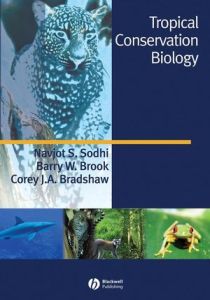
1405150734I’d like to introduce a (relatively) new textbook that my colleagues, Navjot Sodhi and Barry Brook, and I wrote and published last year with Blackwell (now Wiley-Blackwell) Scientific Publishing – Tropical Conservation Biology.

We’re rather proud of this book because it was a timely summary and assessment of the scientific evidence for the degree of devastation facing tropical biodiversity today and in the future. I’ve summarised some of the main issues in a previous post covering a paper we have ‘in press’ that was born of the text book, but obviously the book is a far more detailed account of the problems facing the tropics.

This introductory textbook examines diminishing terrestrial and aquatic habitats in the tropics, covering a broad range of topics including the fate of the coral reefs; the impact of agriculture, urbanisation, and logging on habitat depletion; and the effects of fire on plants and animal survival.

One of the highlights of the book is that each chapter (see below) Includes case studies and interviews with prominent conservation scientists to help situate key concepts in a real world context: Norman Myers (Chapter 1), Gretchen Daily (Chapter 2), William Laurance (Chapter 3), Mark Cochrane (Chapter 4), Daniel Simberloff (Chapter 5), Bruce Campbell (Chapter 6), Daniel Pauly (Chapter 7), Stephen Schneider (Chapter 8), Stuart Pimm (Chapter 9) and Peter Raven (Chapter 10). These biographies are followed by a brief set of questions and answers that focus on some of the most pertinent and pressing issues in tropical conservation biology today. It is our intention that readers of Tropical Conservation Biology will benefit from the knowledge and be inspired by the passion of these renowned conservation experts.

TABLE OF CONTENTS

  1. Chapter 1: Diminishing habitats in regions of high biodiversity. We report on the loss of tropical habitats across the tropics (e.g., deforestation rates). We also highlight the drivers of habitat loss such as human population expansion. Finally, we identify the areas in immediate need of conservation action by elucidating the concept of biodiversity hotspots. Read the rest of this entry »


Classics: The Living Dead

30 08 2008

‘Classics’ is a category of posts highlighting research that has made a real difference to biodiversity conservation. All posts in this category will be permanently displayed on the Classics page of ConservationBytes.com

Zombie_ElephantTilman, D., May, R.M., Lehman, C.L., Nowak, M.A. (1994) Habitat destruction and the extinction debt. Nature 371, 65-66

In my opinion, this is truly a conservation classic because it shatters optimistic notions that extinction is something only rarely the consequence of human activities (see relevant post here). The concept of ‘extinction debt‘ is pretty simple – as habitats become increasingly fragmented, long-lived species that are reproductively isolated from conspecifics may take generations to die off (e.g., large trees in forest fragments). This gives rise to a higher number of species than would be otherwise expected for the size of the fragment, and the false impression that many species can persist in habitat patches that are too small to sustain minimum viable populations.

These ‘living dead‘ or ‘zombie‘ species are therefore committed to extinction regardless of whether habitat loss is arrested or reversed. Only by assisted dispersal and/or reproduction can such species survive (an extremely rare event).

Why has this been important? Well, neglecting the extinction debt is one reason why some people have over-estimated the value of fragmented and secondary forests in guarding species against extinction (see relevant example here for the tropics and Brook et al. 2006). It basically means that biological communities are much less resilient to fragmentation than would otherwise be expected given data on species presence collected shortly after the main habitat degradation or destruction event. To appreciate fully the extent of expected extinctions may take generations (e.g., hundreds of years) to come to light, giving us yet another tool in the quest to minimise habitat loss and fragmentation.

CJA Bradshaw

Add to FacebookAdd to NewsvineAdd to DiggAdd to Del.icio.usAdd to StumbleuponAdd to RedditAdd to BlinklistAdd to Ma.gnoliaAdd to TechnoratiAdd to Furl


The extinction vortex

25 08 2008

One for the Potential list:

vortexFirst coined by Gilpin & Soulé in 1986, the extinction vortex is the term used to describe the process that declining populations undergo when”a mutual reinforcement occurs among biotic and abiotic processes that drives population size downward to extinction” (Brook, Sodhi & Bradshaw 2008).

Although several types of ‘vortices’ were labelled by Gilpin & Soulé, the concept was subsequently simplified by Caughley (1994) in his famous paper on the declining and small population paradigms, but only truly quantified for the first time by Fagan & Holmes (2006) in their Ecology Letters paper entitled Quantifying the extinction vortex.

Fagan and Holmes compiled a small time-series database of ten vertebrate species (two mammals, five birds, two reptiles and a fish) whose final extinction was witnessed via monitoring. They confirmed that the time to extinction scales to the logarithm of population size. In other words, as populations decline, the time elapsing before extinction occurs becomes rapidly (exponentially) smaller and smaller. They also found greater rates of population decline nearer to the time of extinction than earlier in the population’s history, confirming the expectation that genetic deterioration contributes to a general corrosion of individual performance (fitness). Finally, they found that the variability in abundance was also highest as populations approached extinction, irrespective of population size, thus demonstrating indirectly that random environmental fluctuations take over to cause the final extinction regardless of what caused the population to decline in the first place.

What does this mean for conservation efforts? It was fundamentally the first empirical demonstration that the theory of accelerating extinction proneness occurs as populations decline, meaning that all attempts must be made to ensure large population sizes if there is any chance of maintaining long-term persistence. This relates to the minimum viable population size concept that should underscore each and every recovery and target set or desired for any population in trouble or under conservation scrutiny.

CJA Bradshaw

Add to FacebookAdd to NewsvineAdd to DiggAdd to Del.icio.usAdd to StumbleuponAdd to RedditAdd to BlinklistAdd to Ma.gnoliaAdd to TechnoratiAdd to Furl


Classics: Declining and small population paradigms

23 08 2008

‘Classics’ is a category of posts highlighting research that has made a real difference to biodiversity conservation. All posts in this category will be permanently displayed on the Classics page of ConservationBytes.com

image0032Caughley, G. (1994). Directions in conservation biology. Journal of Animal Ecology, 63, 215-244.

Cited around 800 times according to Google Scholar, this classic paper demonstrated the essential difference between the two major paradigms dominating the discipline of conservation biology: (1) the ‘declining’ population paradigm, and the (2) ‘small’ population paradigm. The declining population paradigm is the identification and management of the processes that depress the demographic rate of a species and cause its populations to decline deterministically, whereas the small population paradigm is the study of the dynamics of small populations that have declined owing to some (deterministic) perturbation and which are more susceptible to extinction via chance (stochastic) events. Put simply, the forces that drive populations into decline aren’t necessarily those that drive the final nail into a species’ coffin – we must manage for both types of processes  simultaneously , and the synergies between them, if we want to reduce the likelihood of species going extinct.

CJA Bradshaw

Add to FacebookAdd to NewsvineAdd to DiggAdd to Del.icio.usAdd to StumbleuponAdd to RedditAdd to BlinklistAdd to Ma.gnoliaAdd to TechnoratiAdd to Furl


Realistic conservation investment

18 07 2008

I’m currently attending the Society for Conservation Biology‘s Annual Meeting in Chattanooga, Tennessee, USA and blogging on presentations I think are worth mentioning.

In a surprise shift from the previously planned final plenary talk, Prof. Helene Marsh of James Cook University gave a nice example of how good research can be melded with non-technical opinion to weight threatened species for recovery investment. Using a north Queensland example, she described how technical assessments of relative threat risk combined with weightings from non-technical policy makers can provide the most realistic and relevant conservation investment when used simultaneously. Based on their paper in 2007 (‘Optimizing allocation of management resources for wildlife‘), Prof. Marsh outlined a quantitative approach to meld these decision-making components with real-world outcomes. I’d like to see some of the real outcomes in terms of recovery of north Queensland threatened species, but at least the State appears to be on the right track by using this tool.

CJA Bradshaw


IUCN Chief Scientist & Asia

15 07 2008

I’m currently attending the Society for Conservation Biology‘s Annual Meeting in Chattanooga, Tennessee, USA and blogging on presentations I think are worth mentioning.

The first plenary talk was given by the IUCN’s Chief Scientist, Jeffrey McNeely, about the issues surrounding biodiversity conservation in Asia. Dr. McNeely gave an interesting background to the human cultural history and diversity of the region, followed by a brief exposé of the conservation issues there (habitat loss, over-exploitation, invasive species, etc). Overall, however, I was disappointed by his lack of emphasis on the magnitude of the conservation crisis Asia is undergoing. There was no mention of the perverse subsidies buffering unsustainable forestry and fishing, the corruption driving habitat loss and habitat degradation, or the massive problems driven by human over-population.

We recently published (currently online) a paper regarding the conservation crisis facing this (and similar regions) in the tropics Tropical turmoil – a biodiversity crisis in progress (see related post), and several of my colleagues have recently outlined just how badly biodiversity is faring in Asia (e.g., see Brook et al. 2003; Sodhi et al. 2004). While I was happy to see Dr. McNeely mention the need for more research on these issues, his statement that he had “depressed [us] with the problems” was a major understatement. He did not nearly go far enough to ‘depress’ his audience of conservation scientists. We are squarely within a crisis in the region, and if the Chief Scientist of the IUCN who has intimate knowledge of Asia is not singing that song loudly and clearly, I fear it will get far worse before we see any real positive change.

CJA Bradshaw


‘Conservation for the people’

11 07 2008

This, the title of Peter Kareiva and Michelle Marvier’s paper in Scientific American, embodies in some ways, what this website is all about. Certainly not the first researchers to conclude that people will only value biodiversity if it has direct implications for their own well-being (economic prosperity, health, longevity, etc.), Kareiva and Marvier’s paper nicely summarises, however, the extent to which conservation research MUST quantify these links. The corollary is that if we don’t, conservation research will pass into oblivion (along with the species we are attempting to protect from extinction). Nice paper, and certainly one to watch.

CJA Bradshaw

Add to FacebookAdd to NewsvineAdd to DiggAdd to Del.icio.usAdd to StumbleuponAdd to RedditAdd to BlinklistAdd to Ma.gnoliaAdd to TechnoratiAdd to Furl


Conservation Letters – a scientific journal with a difference?

5 07 2008

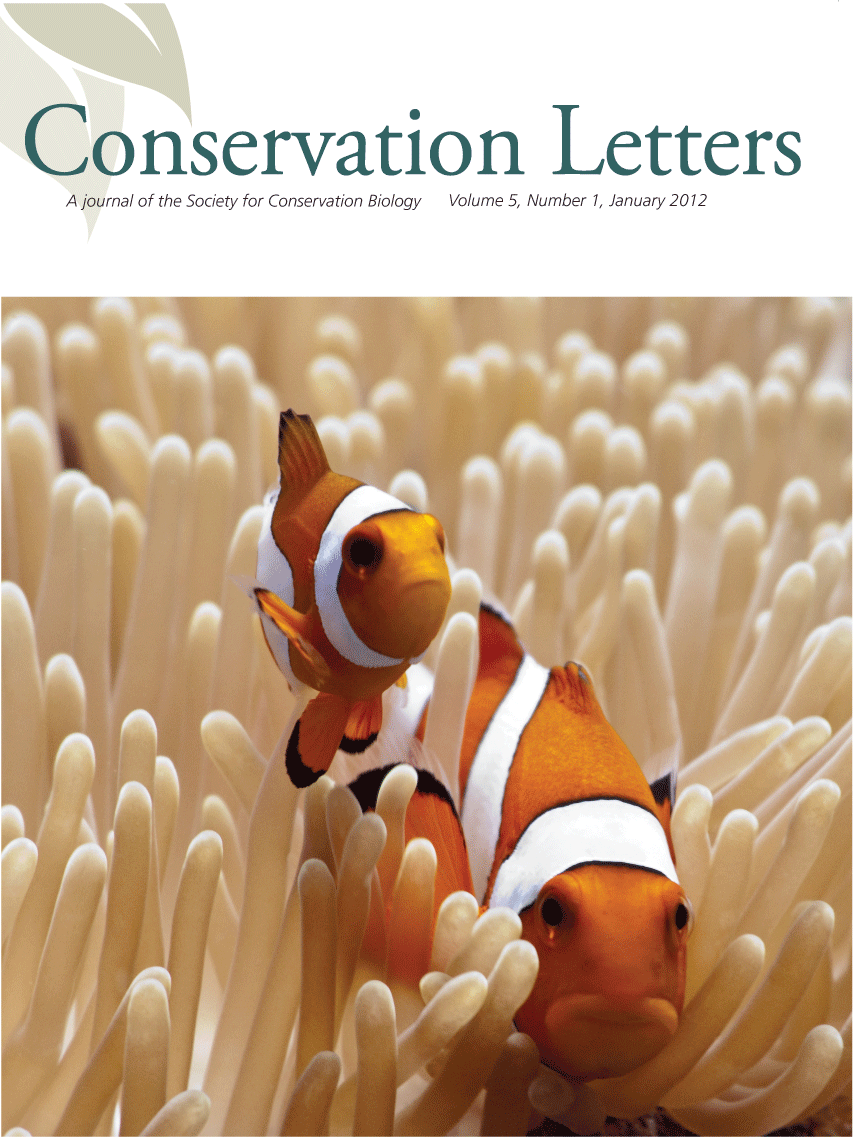
ConLetters-Jan12I’d like to introduce the latest scientific conservation journal – Conservation Letters (Wiley-Blackwell). If you are a publishing conservation scientist then you will have undoubtedly heard about this already. I must admit my biased opinion up front – I have the role of Senior Editor for the journal under the auspices of the venerable Editors-in-Chief, Professor Richard Cowling, Professor Hugh Possingham, Professor Bill Sutherland and Dr. Michael Mascia.

We’ve been doing conservation science now for well over 50 years, and there has been some fantastic, hard-hitting, brilliant research done. However, extinction rates continue to soar, habitat loss and fragmentation abound, bushmeat hunting and other forms of direct over-exploitation show no signs of slowing and invasive species are penetrating into the most ‘pristine’ habitats. To top it all off, climate change is exacerbating each and every one of these extinction drivers.

So what have we been doing wrong?

Clearly the best research is going unheeded – this is not to say that some progress has not been made, and I hope to highlight the best examples of the hardest-hitting research on this site – it simply means that we are losing the battle. Enter Conservation Letters – a journal designed to make conservation research more available to policy makers and managers to make true strides forward in biodiversity conservation. I’m not suggesting for a moment that other well-known, respected and established conservation journals have not done their job; without the research those journals publish we’d certainly be much worse off. However, we have recognised that our research isn’t affecting as many people as it should.

With Conservation Letters now well into its first year, I hope that we start to see some changes here, and I hope that the discipline will have a much greater net effect on slowing (and perhaps) reversing the extinction trends we observe today. Climate change is making this much more challenging, as well as the ever-increasing human population. Can we make better progress? – I certainly hope so.

CJA Bradshaw

Add to FacebookAdd to NewsvineAdd to DiggAdd to Del.icio.usAdd to StumbleuponAdd to RedditAdd to BlinklistAdd to Ma.gnoliaAdd to TechnoratiAdd to Furl