Fragmen borealis: degradation of the world’s last great forest

12 08 2009
© energyportal.eu

© energyportal.eu

I have the dubious pleasure today of introducing a recently published paper of ours that was at the same time both intellectually stimulating and demoralising to write. I will make no apologies for becoming emotionally involved in the scientific issues about which my colleagues and I write (as long as I can maintain with absolute sincerity that the data used and conclusions drawn are as objectively presented as I am capable), and this paper probably epitomises that stance more than most I’ve written during my career.

The topic is especially important to me because of its subtle, yet potentially disastrous consequences for biodiversity and climate change. It’s also a personal issue because it’s happening in a place I used to (many, many years ago) call home.

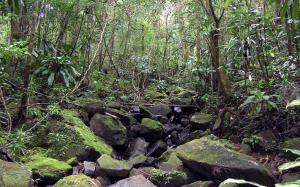
Despite comprising about a third of the world’s entire forested area and harbouring some of the lowest human densities anywhere, the great boreal forest that stretches across Alaska, Canada, Scandinavia and a huge chunk of Russia is under severe threat.

Surprised that we’re not talking about tropical deforestation for once? Surprised that so-called ‘developed’ nations are pilfering the last great carbon sink and biodiversity haven left on the planet? If you have read any of the posts on this blog, you probably shouldn’t be.

The paper today appeared online in Trends in Ecology and Evolution and is entitled Urgent preservation of boreal carbon stocks and biodiversity (by CJA Bradshaw, IG Warkentin & NS Sodhi). It’s essentially a review of the status of the boreal forest from a biodiversity perspective, and includes a detailed assessment of the degree of its fragmentation, species threat, climate- and human-influenced disturbance regime, and its carbon sequestration/emission status. I’ll summarise some of the main findings below:

borealfire

© NASA

  • Russia contains ~53 % of the boreal forest, followed by Canada (25 %), USA (18 %, mostly in Alaska), Sweden (2 %) and Finland and Norway (~1 % each); there are small areas of boreal forest in northern China and Mongolia.
  • Fire is the main driver of change in the boreal forest. Although clearing for logging and mining abounds, it pales in comparison to the massive driver that is fire.
  • There is evidence that climate change is increasing the frequency and possibly extent of fires in the boreal zone. That said, most fires are started by humans, and this is particularly the case in the largest expanse in Russia (in Russia alone, 7.5 and 14.5 million hectares burnt in 2002 and 2003, respectively).
  • While few countries report an overall change in boreal forest extent, the degree of fragmentation and ‘quality’ is declining – only about 40 % of the total forested area is considered ‘intact’ (defined here as areas ≥ 500 km2, internally undivided by things such as roads, and with linear dimensions ≥ 10 km).
  • Russian boreal forest is the most degraded and least ‘intact’, and has suffered the greatest decline in the last few decades compared to other boreal countries.
  • Boreal countries have only < 10 % of their forests protected from wood exploitation, except Sweden where it’s about 20 %.
  • There are over 20000 species described in the boreal forest – a number much less than that estimated for tropical forests even of much smaller size.
  • 94 % of the 348 IUCN Red Listed boreal species are considered to be threatened with extinction, but other estimates from local assessments compiled together in 2000 (the United Nations’ Temperate and Boreal Forest Resources Assessment) place the percentages of threatened species up to 46 % for some taxa in some countries (e.g., mosses in Sweden). The latter assessment placed the Fennoscandian countries as having the highest proportions of at-risk taxa (ferns, mosses, lichens, vascular plants, butterflies, birds, mammals and ‘other vertebrates’), with Sweden having the highest proportion in almost all categories.
  • Boreal forest ecosystems contain about 30 % of the terrestrial carbon stored on Earth (~ 550 Gigatonnes).
  • © BC Ministry For Range/L. Maclaughlan

    Warmer temperatures have predisposed coniferous forest in western Canada to a severe outbreak of mountain pine beetle (Dendroctonus ponderosae) extending over > 13 M ha. © BC Ministry For Range/L. Maclaughlan

  • Mass insect outbreaks killing millions of trees across the entire boreal region are on the rise.
  • Although considered in the past as a global carbon sink, recent disturbances (e.g., increasing fire and insect outbreak) and refinements of measurement mean that much of the area is probably a carbon source (at least, temporarily).
  • A single insect outbreak in western Canada earlier this decade thought to be the direct result of a warming planet contributed more carbon to the atmosphere than all of that country’s transport industry and fire-caused release combined.
  • Current timber harvest management is inadequately prepared to emulate natural fire regimes and account for shifting fire patterns with climate change.
  • No amount of timber management can offset the damage done by increasing fire – we must manage fire better to have any chance of saving the boreal forest as a carbon sink and biodiversity haven.

Those include the main take-home messages. I invite you to read the paper in full and contact us (the authors) if you have any questions.

CJA Bradshaw

Full reference: Bradshaw, CJA, IG Warkentin, NS Sodhi. 2009. Urgent preservation of boreal carbon stocks and biodiversity. Trends in Ecology and Evolution DOI: 10.1016/j.tree.2009.03.019

Add to FacebookAdd to NewsvineAdd to DiggAdd to Del.icio.usAdd to StumbleuponAdd to RedditAdd to BlinklistAdd to Ma.gnoliaAdd to TechnoratiAdd to Furl


Continuing saga of the frogs’ legs trade

10 08 2009
© D. Bickford

© M. Auliya

In January we had a flurry of media coverage (see here for examples) about one of our papers that had just come out online in Conservation BiologyEating frogs to extinction (Warkentin et al.). I blogged about the paper then (one of ConservationBytes’ most viewed posts) that described the magnitude of the global trade in amphibian parts for human food. Suffice it to say, it’s colossal.

A couple of months ago, John Henley of the Guardian (UK) rang me to discuss the issue some more for a piece he was doing in that newspaper. The article has just come out (along with a companion blog post), and I can honestly say that it’s the most insightful coverage of the issue by the media I’ve seen yet. Thanks, John, for covering it so well. The article is excellently written, poignant and really gets to the heart of the matter – people just don’t know how bad the frog trade really is for amphibian biodiversity.

Short story – don’t eat any more frogs’ legs (you probably won’t be missing much).

I’ve reproduced John’s article below, but please visit the original here.

Why we shouldn’t eat frogs’ legs

In the cavernous community hall of the Vosges spa town of Vittel, a large and lugubrious man, his small, surprisingly chirpy wife, and 450 other people are sitting down to their evening meal. It’s rather noisy. “Dunno why we do it, really,” shouts the man, whose name is Jacky. “Don’t taste of anything, do they? White. Insipid. If it wasn’t for the sauce it’d be like eating some soft sort of rubber. Just the kind of food an Englishman should like, in fact. Hah.”

Outside, the streets are filled with revellers. A funfair is going full swing. The restaurants along the high street are full, and queues have formed before the stands run by the local football, tennis, basketball, rugby and youth clubs.

All offer the same thing: cuisses de grenouilles à la provencale (with garlic and parsley), cuisses de grenouille à la poulette (egg and cream). Seven euros, or thereabouts, for a paper plateful, with fries. Nine with a beer or a glass of not-very-chilled riesling. The more daring are offering cuisses de grenouilles à la vosgienne, à l’andalouse, à l’ailloli. There’s pizza grenouille, quiche grenouille, tourte grenouille. Omelette de grenouilles aux fines herbes. Souffle, cassolette and gratin de grenouilles.

Everywhere you look, people are nibbling greasily on a grenouille, licking their fingers, spitting out little bones. “Isn’t it just great?” yells Jacky’s diminutive wife, Frederique. “Every year we do this. It’s our tradition. Our tribute to the noble frog.”

This is Vittel’s 37th annual Foire aux Grenouilles. According to Roland Boeuf, the 70-year-old president of the Confrererie de Taste-Cuisses de Grenouilles de Vittel, or (roughly) the Vittel Brotherhood of Frog Thigh Tasters, which has organised the event since its inception, the fair regularly draws upwards of 20,000 gourmet frog aficionados to the town for two days of amphibian-inspired jollities. Between them, they consume anything up to seven tonnes of frogs’ legs.

But there’s a problem. When the fair began, its founder René Clément, resistance hero, restaurateur and last of the great Lorraine frog ranchers, could supply all the necessary amphibians from his lakes 20 miles or so away. Nowadays, none of the frogs are even French.

According to Boeuf, Clément, whose real name was Hofstetter, moved to the area in the early 1950s looking to raise langoustines in the Saone river; the water proved too brackish and he turned to frogs instead. A true Frenchman, his catchphrase, oft-quoted around these parts, was that frogs “are like women. The legs are the best bits”.

Hofstetter/Clément would, says Gisèle Robinet, “provide 150 kg, 200 kg for every fair, all from his lakes and all caught by him”. With her husband Patrick, Robinet runs the Au Pêché Mignon patisserie (tourte aux grenouilles for six, €18; chocolate frogs €13 the dozen) on the Place de Gaulle, across the square from the restaurant Clément used to run, Le Grand Cerf. Now known as Le Galoubet, there’s a plaque commemorating the great frogman outside. “As a child I remember clearly him dismembering and preparing and cleaning his frogs in front of the restaurant,” says Robinet, who sells frog tartlets to gourmet Vitellois throughout the year, but makes a special effort with quiches and croustillants at fair-time. “It’s a big job, you know. Very fiddly. But we were all frog-catchers when I was a kid. Now, of course, that’s not possible any more.”

Boeuf recalls many a profitable frog-hunting expedition in the streams and ponds around Vittel. “One sort, la savatte, you could catch with your bare hands,” he says. “Best time was in spring, when they lay their eggs. They’d gather in their thousands, great wriggling green balls of them. I’ve seen whole streams completely blocked by a mountain of frogs.”

Others, rainettes, would be everywhere at harvest time. Or you could get a square of red fabric and lay it carefully on the water next to a lily pad that happened to have a frog on it, “and she’d just hop straight off and on to the cloth”, Boeuf says. “They love red.”

Pierette Gillet, the longest-standing member of the Brotherhood and, at 81, still a sprightly and committed frog-fancier, remembers heading out at night with a torch in search of so-called mute frogs, harder to catch because they have no larynx and hence emit no croak. “They’d be blinded by the light, and you could whack them over the head,” she says.

But those days are long gone. As elsewhere in the world, the amphibians’ habitat in France – where frogs’ legs have been a recognised and much remarked-upon part of the national diet for the best part of 1,000 years – is increasingly at risk, from pollution, pesticides and other man-made ills. Ponds have been drained and replaced with crops and cattle-troughs. Diseases have taken their toll, and the insects that frogs feed on are disappearing too. Alarmed by a rapid and dramatic fall in frog numbers, the French ministry of agriculture and fisheries began taking measures to protect the country’s species in 1976; by 1980, commercial frog harvesting was banned.

These days, a few regional authorities in France still allow the capture of limited numbers of frogs, strictly for personal consumption and provided they are broiled, fried or barbecued and consumed on the spot (a heresy not even Boeuf is prepared to contemplate). There are poachers who defy the ban; two years ago a court in Vesoul in the Haute-Saone convicted four men of harvesting vast numbers of frogs from the Mille-Etangs or Thousand Lakes area of the Vosges. The ringleader admitted to personally catching at least 10,000, which he sold to restaurants for 32 cents apiece.

By and large, though, France’s tough protection laws, enforceable by fines of up to €10,000 (£8,500) and instant confiscation of vehicles and equipment, seem to be working. As a result, all seven tonnes (officially, at least) of frogs’ legs consumed at this year’s Vittel fair have been imported, pre-prepared, deep-frozen and packed in cardboard boxes, from Indonesia.

Needless to say, this does not much please patriotic Gallic frog-fanciers. “We’d far prefer our frogs to be French, of course we would,” laments Gillet. “Especially here in the Vosges. This really is the heart of frog country.”

A Vittel restaurateur, who for obvious reasons demands anonymity, suggests there are still “ways and means” of securing at least a semi-reliable supply of French frogs for those who demand a true produit du terroir, “but it’s really not very easy, and no one here will tell you anything about it. We’d like to source locally, but the law is the law.”

But the fact that the Foire aux Grenouilles – not to mention the rest of France, and other big frog-consuming nations such as Belgium and the United States – now imports almost all its frogs’ legs has consequences that run deeper than a mere denting of national gastronomic pride. For scientists now believe that, just as with many fish species, we could be well on the way to eating the world’s frogs to extinction. Based on an analysis of UN trade data, researchers think we may now be consuming as many as 1bn wild frogs every year. For already weakened frog populations, that is very bad news indeed.

Scientists have long been aware that while human activity is causing a steady loss of the world’s biodiversity, amphibians seem to be suffering far more severely than any other animal group. It is thought their two-stage life cycle, aquatic and terrestrial, makes them twice as vulnerable to environmental and climate change, and their permeable skins may be more susceptible to toxins than other animals. In recent years, a devastating fungal condition, chytridiomycosis, has caused catastrophic population declines in Australia and the Americas.

“Amphibians are the most threatened animal group; about one third of all amphibian species are now listed as threatened, against 23% of mammals and 12% of birds,” says Corey Bradshaw, an associate professor at the Environment Institute of the University of Adelaide and a member of the team that carried out the research into human frog consumption that was published earlier this year in the journal Conservation Biology. “The principle drivers of extinction, we always assumed, were habitat loss and disease. Human harvesting, we thought, was minor. Then we started digging, and we realised there’s this massive global trade that no one really knows much about. It’s staggering. So as well as destroying where they live, we’re now eating them to death.”

France is the main culprit: according to government figures, while the French still consume 70 tonnes a year of domestically gathered legs each year, they have been shipping in as many as 4,000 tonnes annually since 1995. Besides popular, essentially local events such as the Foire aux Grenouilles, frogs’ legs are mostly a delicacy reserved for restaurants with gastronomic pretensions; one three-star chef, Georges Blanc, has at one time or another developed 19 different recipes for them at his celebrated restaurant in the Ain village of Vonnas, baking and skewering and skilleting them in everything from cream to apples.

Belgium and Luxembourg are also noted connoisseurs, but perhaps surprisingly, the country that runs France closest in the frog import stakes is the US. Frogs’ legs are particularly popular in the former French colony of Louisiana, where the city of Rayne likes to call itself Frog Capital of the World, but are also consumed with relish in Arkansas and Texas, where they are mostly served breaded and deep-fried. Bradshaw has a picture on his blog of President Barack Obama tucking with apparent gusto into a plate of frogs’ legs.

The world’s most avid frog eaters, though, are almost certainly in Asia, in countries such as Indonesia, China, Thailand and Vietnam. South America, too, is a big market. “People may think frogs’ legs are some kind of epicurean delicacy consumed by a handful of French gourmets, but in many developing countries they are a staple,” Bradshaw says.

Indonesia is today the world’s largest exporter of frogs by far, shipping more than 5,000 tonnes each year. Some of these may be farmed, but not many. Commercial frog-farming has been tried in both the US and Europe, but with little success: for a raft of reasons, including the ease with which frogs can fall prey to disease, feeding issues and basic frog biology, it is a notoriously risky and uneconomic business. Frogs are farmed in Asia, but rarely on an industrial scale; most are small, artisan affairs with which rural families try to supplement their income.

The vast majority of frogs that end up on a plate are harvested from the wild. Bradshaw and his colleagues estimate that Indonesia, to take just one exporting country, is probably consuming between two and seven times as many frogs as it sends abroad. “We have the legally recorded, international trade figures, but none of the local business is recorded,” Bradshaw says. “It’s back-of-an-envelope work. That’s what’s so alarming.”

The scientists’ biggest concern, he says, is that because of the almost complete lack of data, no one knows in what proportion different frog species are being taken. If, as they suspect, some 15 or 20 frog species are at any given moment supplying most of world demand, the consequences could be catastrophic. For while overharvesting for human consumption may not in itself be quite enough to drive a frog species to extinction, combined with all the other threats frogs face it certainly could be.

“The thing is, it isn’t a gradual process,” Bradshaw warns. “There’s a threshold, you cross it, and the whole thing crashes because you’ve just completely changed the composition of the whole community. There’s a tipping point. It’s exactly what happened with the overexploitation of cod in the North Atlantic. And with frogs, there’s no data, no tracking, no stock management. We really should have learned our lesson with fish, but it seems we haven’t. This is a wake-up call.”

Back in Vittel, Boeuf says he had no idea frogs were in such trouble. “They’re an endangered species here, I know,” he says. “That’s why we have to be careful, and we are. But if we can buy them in such quantities from Indonesia, surely it must be all right. They’re being careful there too, aren’t they?” Sadly, it would seem they are not. And all for a few greasy scraps of limp, bland flesh.

People say frogs taste like a cross between fish and chicken. In fact, they taste of frog: in other words, precious little bar the sauce they are served in.



Few people, many threats – Australia’s biodiversity shame

31 07 2009

bridled_nailtail_400I bang on a bit about human over-population and how it drives biodiversity extinctions. Yet, it isn’t always hordes of hungry humans descending on the hapless species of this planet  – Australia is a big place, but has few people (just over 20 million), yet it has one of the higher extinction rates in the world. Yes, most of the country is covered in some fairly hard-core desert and most people live in or near the areas containing the most species, but we have an appalling extinction record all the same.

A paper that came out recently in Conservation Biology and was covered a little in the media last week gives some telling figures for the Oceania region, and more importantly, explains that we have more than enough information now to implement sound, evidence-based policy to right the wrongs of the past and the present. Using IUCN Red List data, Michael Kingsford and colleagues (paper entitled Major conservation policy issues for biodiversity in Oceania), showed that of the 370 assessed species in Australia, 80 % of the threatened ones are listed because of habitat loss, 40 % from invasive species and 30 % from pollution. As we know well, it’s mainly habitat loss we have to control if we want to change things around for the better (see previous relevant posts here, here & here).

Kingsford and colleagues proceed to give a good set of policy recommendations for each of the drivers identified:

Habitat loss and degradation

  • Implement legislation, education, and community outreach to stop or reduce land clearing, mining, and unsustainable logging through education, incentives, and compensation for landowners that will encourage private conservation
  • Establish new protected areas for habitats that are absent or poorly represented
  • In threatened ecosystems (e.g., wetlands), establish large-scale restoration projects with local communities that incorporate conservation and connectivity
  • Establish transparent and evidence-based state of environment reporting on biodiversity and manage threats within and outside protected areas.
  • Protect free-flowing river systems (largely unregulated by dams, levees, and diversions) within the framework of the entire river basin and increase environmental flows on regulated rivers

Invasive species

  • Avoid deliberate introduction of exotic species, unless suitable analyses of benefits outweigh risk-weighted costs
  • Implement control of invasive species by assessing effectiveness of control programs and determining invasion potential
  • Establish regulations and enforcement for exchange or treatment of ocean ballast and regularly implement antifouling procedures

Climate change

  • Reduce global greenhouse gas emissions
  • Identify, assess, and protect important climate refugia
  • Ameliorate the impacts of climate change through strategic management of other threatening processes
  • Develop strategic plans for priority translocations and implement when needed

Overexploitation

  • Implement restrictions on harvest of overexploited species to maintain sustainability
  • Implement an ecosystem-based approach for fisheries, based on scientific data, that includes zoning the ocean; banning destructive fishing; adopting precautionary fishing principles that include size limits, quotas, and regulation with sufficient resources based on scientific assessments of stocks and; reducing bycatch through regulation and education
  • Implement international mechanisms to increase sustainability of fisheries by supporting international treaties for fisheries protection in the high seas; avoiding perverse subsidies and improve labelling of sustainable fisheries; and licensing exports of aquarium fish
  • Control unsustainable illegal logging and wildlife harvesting through local incentives and cessation of international trade

Pollution

  • Decrease pollution through incentives and education; reduce and improve treatment of domestic, industrial, and agriculture waste; and rehabilitate polluted areas
  • Strengthen government regulations to stop generation of toxic material from mining efforts that affects freshwater and marine environments
  • Establish legislation and regulations and financial bonds (international) to reinforce polluter-pays principles
  • Establish regulations, education programs, clean ups, labelling, and use of biodegradable packaging to reduce discarded fishing gear and plastics

Disease

  • Establish early-detection programs for pathological diseases and biosecurity controls to reduce translocation
  • Identify causes, risk-assessment methods, and preventative methods for diseases
  • Establish remote communities of organisms (captive) not exposed to disease in severe outbreaks

Implementation

  • Establish regional population policies based on ecologically sustainable human population levels and consumption
  • Ensure that all developments affecting the environment are adequately analysed for impacts over the long term
  • Promote economic and societal benefits from conservation through education
  • Determine biodiversity status and trends with indicators that diagnose and manage declines
  • Invest in taxonomic understanding and provision of resources (scientific and conservation) to increase capacity for conservation
  • Increase the capacity of government conservation agencies
  • Focus efforts of nongovernmental organisations on small island states on building indigenous capacity for conservation
  • Base conservation on risk assessment and decision support
  • Establish the effectiveness of conservation instruments (national and international) and their implementation

A very good set of recommendations that I hope we can continue to develop within our governments.

CJA Bradshaw

Add to FacebookAdd to NewsvineAdd to DiggAdd to Del.icio.usAdd to StumbleuponAdd to RedditAdd to BlinklistAdd to Ma.gnoliaAdd to TechnoratiAdd to Furl


June Issue of Conservation Letters

6 06 2009

Quick off the mark this month is the new issue of Conservation Letters. There are some exciting new papers (listed below). I encourage readers to have a look:

Policy Perspectives

Letters

CJA Bradshaw


Tropical forests worth more standing

4 06 2009
© R. Butler

© R. Butler

Keeping with the oil palm theme…

A paper just published online in Conservation Letters by Venter and colleagues entitled Carbon payments as a safeguard for threatened tropical mammals gets my vote for the Potential list.

We’ve been saying it again and again and again… tropical forests, the biodiversity they harbour and the ecosystem services they provide are worth more to humanity than the potential timber they represent. Now we find they’re even worth more than cash crops (e.g., oil palm) planned to replace them.

A few years ago some very clever economists and environmental policy makers came up with the concept of ‘REDD’ (reducing carbon emissions from deforestation and forest degradation), which is basically as system “… to provide financial incentives for developing countries that voluntarily reduce national deforestation rates and associated carbon emissions below a reference level”. Compensation can occur either via grant funding or through a carbon-trading scheme in international markets.

Now, many cash-greedy corporations argue that REDD could in no way compete with the classic rip-it-down-and-plant-the-shit-out-of-it-with-a-cash-crop approach, but Venter and colleagues now show this argument to be a bit of a furphy.

The authors asses the financial feasibility of REDD in all planned oil palm plantations in Kalimantan – Indonesia’s part of the island of Borneo in South East Asia. Borneo is also the heart of the environmental devastation typical of the tropics. They conclude that REDD is in fact a rather financially competitive scheme if we can manage to obtain carbon prices of around US$10-33/tonne. In fact, even when carbon prices are as low as US$2/tonne (as they are roughly now on the voluntary market), REDD is still competitive for areas of high forest carbon content and lower agricultural potential.

But the main advantage isn’t just the positive cash argument – many endangered mammals (and there are 46 of them in Kalimantan) such as the South East Asian equivalent of the panda (the orang-utan – ‘equivalent’ in the media-hype and political sensitivity sense, not taxonomic, of course) and the Bornean elephant (yes, they have them) are currently found in areas planned for plantation. So saving the forest obviously saves these and countless other taxa that only exist on this highly endemic island. Finally, Venter and colleagues found that where emission reductions were cheapest, these are also areas with higher-than-average densities of endangered mammals, suggesting that REDD is a fantastic option to keep developing countries in the black without compromising their extensive species richness and endemism.

Brilliant. Now if we can just get the economists and pollies to agree on a REDD model that actually works.

CJA Bradshaw

Add to FacebookAdd to NewsvineAdd to DiggAdd to Del.icio.usAdd to StumbleuponAdd to RedditAdd to BlinklistAdd to Ma.gnoliaAdd to TechnoratiAdd to Furl


Climate change’s ugly cousin – biodiversity loss

17 05 2009

uglybaby…nobody puts a value on pollination; national accounts do not reflect the value of ecosystem services that stop soil erosion or provide watershed protection.

Barry Gardiner, Labour MP for Brent North (UK), Co-chairman, Global Legislators Organisation‘s International Commission on Land Use Change and Ecosystems

Last week I read with great interest the BBC’s Green Room opinion article by Barry Gardiner, Labour MP in the UK, about how the biodiversity crisis takes very much the back seat to climate change in world media, politics and international agreements.

He couldn’t be more spot-on.

I must stipulate right up front that this post is neither a whinge, rant nor lament; my goal is to highlight what I’ve noticed about the world’s general perception of climate change and biodiversity crisis issues over the last few years, and over the last year in particular since ConservationBytes.com was born.

Case in point: my good friend and colleague, Professor Barry Brook, started his blog BraveNewClimate.com a little over a month (August 2008) after I managed to get ConservationBytes.com up and running (July 2008). His blog tackles issues regarding the science of climate change, and Barry has been very successful at empirically, methodically and patiently tearing down the paper walls of the climate change denialists. A quick glance at the number views of BraveNewClimate.com since inception reveals about an order of magnitude more than for ConservationBytes.com (i.e., ~195000 versus 20000, respectively), and Barry has accumulated a total of around 4500 comments compared to just 231 for ConservationBytes.com. The difference is striking.

Now, I don’t begrudge for one moment this disparity – quite the contrary – I am thrilled that Barry has managed to influence so many people and topple so effectively the faecal spires erected by the myriad self-proclaimed ‘experts’ on climate change (an infamous line to whom I have no idea to attribute states that “opinions are like arseholes – everyone’s got one”). Barry is, via BraveNewClimate.com, doing the world an immense service. What I do find intriguing is that in many ways, the biodiversity crisis is a much, much worse problem that is and will continue to degrade human life for millennia to come. Yet as Barry Gardiner observed, the UK papers mentioned biodiversity only 115 times over the last 3 months compared to 1382 times for climate change – again, that order-of-magnitude disparity.

There is no biodiversity equivalent of the Intergovernmental Panel on Climate Change (although there are a few international organisations tackling the extinction crisis such as the United Nation’s Environment Program, the Millennium Ecosystem Assessment and the International Union for Conservation of Nature), we still have little capacity or idea how to incorporate the trillions of dollars worth of ecosystem services supplied every year to us free of charge, and we have nothing at all equivalent to the Kyoto Protocol for biodiversity preservation. Yet, conservation biologists have for decades demonstrated how human disease prevalence, reduction in pollination, increasing floods, reduced freshwater availability, carbon emissions, loss of fish supplies, weed establishment and spread, etc. are all exacerbated by biodiversity loss. Climate change, as serious and potentially apocalyptic as it is, can be viewed as just another stressor in a system stressed to its limits.

Of course, the lack of ‘interest’ may not be as bleak as indicated by web traffic; I believe the science underpinning our assessment of biodiversity loss is fairly well-accepted by people who care to look into these things, and the evidence spans the gambit of biological diversity and ecosystems. In short, it’s much less controversial a topic than climate change, so it attracts a lot less vitriol and spawns fewer polemics. That said, it is a self-destructive ambivalence that will eventually come to bite humanity on the bum in the most serious of ways, and I truly believe that we’re not far off from major world conflicts over the dwindling pool of resources (food, water, raw materials) we are so effectively destroying. We would be wise to take heed of the warnings.

CJA Bradshaw

Add to FacebookAdd to NewsvineAdd to DiggAdd to Del.icio.usAdd to StumbleuponAdd to RedditAdd to BlinklistAdd to Ma.gnoliaAdd to TechnoratiAdd to Furl


Realising you’re a drunk is only the first step

11 05 2009

© A. Savchenko

© A. Savchenko

I recently did an interview for the Reef Tank blog about my research, ConservationBytes.com and various opinions about marine conservation in general. I’ve been on about ‘awareness’ raising in biodiversity conservation over the last few weeks (e.g., see last post), saying that it’s really only the first step. To use an analogy, alcoholics must first recognise and accept that they are indeed drunks with a problem before than can take the (infamous AA) steps to resolve it. It’s not unlike biodiversity conservation – I think much of the world is aware that our forests are disappearing, species are going extinct, our oceans are becoming polluted and devoid of fish, our air and soils are degraded to the point where they threaten our very lives, and climate change has and will continue to exacerbate all of these problems for the next few centuries at least (and probably for much longer).

We’ve admitted we have a disease, now let’s do something about it.

Read the full interview here.

CJA Bradshaw

Add to FacebookAdd to NewsvineAdd to DiggAdd to Del.icio.usAdd to StumbleuponAdd to RedditAdd to BlinklistAdd to Ma.gnoliaAdd to TechnoratiAdd to Furl


More than just baby sharks

23 04 2009

Sharks worldwide are in trouble (well, so are many taxa, for that matter), with ignorance, fear, and direct and indirect exploitation (both legal and illegal) accounting for most of the observed population declines.

Despite this worrisome state (sharks have extremely important ‘regulatory’ roles in marine ecosystems), many people have been slowly taking notice of the problem, largely due to the efforts of shark biologists. An almost religious-like pillar of shark conservation that has emerged in the last decade or so is that if we save nursery habitats, all shark conservation concerns will be addressed.

Why? Many shark species appear to have fairly discrete coastal areas where they either give birth or lay eggs, and in which the young sharks develop presumably in relative safety from predators (including their parents). Meanwhile, breeding parents will often skip off as soon as possible and spend a good proportion of their non-breeding lives well away from coasts. Sexual segregation appears to be another common feature of many sharks species (the boys and girls don’t really play together that well).

The upshot is that if you conserve these more vulnerable ‘nursery’ areas in coastal regions, then you’ve protected the next generation of sharks and all will be fine. The underlying reason for this assumption is that it’s next-to-impossible to conserve entire ocean basins where the larger adults may be frolicking, but you can focus your efforts on restricted coastal zones that may be undergoing a lot of human-generated modification (e.g., pollutant run-off, development, etc.).

However, a new paper published recently in Conservation Letters entitled Reassessing the value of nursery areas to shark conservation and management disputes this assumption. Michael Kinney and Colin Simpfendorfer explain that even if coastal nurseries can be properly identified and adequately conserved, there is mounting evidence that failing to safeguard the adult stages could ultimately sustain declines or arrest recovery efforts. The authors support continuing efforts to identify and conserve nurseries, but they say this isn’t enough by itself to solve any real problems. If we want sharks around (and believe me, even though the odd swimmer may get a nip or two, it’s better than the alternative of no sharks), then we’re going to have to restrict fishing effort on the high seas as well.

I think this one qualifies for the ‘Potential‘ list.

CJA Bradshaw

Add to FacebookAdd to NewsvineAdd to DiggAdd to Del.icio.usAdd to StumbleuponAdd to RedditAdd to BlinklistAdd to Ma.gnoliaAdd to TechnoratiAdd to Furl


Protein mining the world’s oceans

31 03 2009

Last month David Agnew and colleagues published a paper in PLoS One examining the global extent of illegal, unreported and unregulated (IUU) fishing (Estimating the worldwide extent of illegal fishing), estimating its value from US$10-23.5 billion and representing between 11 and 26 million tonnes of fish annually. The value is roughly the same as that lost from illegal logging each year. Wow.

Of perhaps most interest is that Agnew and colleagues found evidence for a negative relationship between IUU fishing as a proportion of total catch and an international (World Bank) governance quality index. This suggests that improving governance and eradicating corruption may be the best way to curtail the extent of the illegal harvest.

We have just published a paper online in Fish and Fisheries about the extent and impact of IUU fishing in northern Australia. Entitled Protein mining the world’s oceans: Australasia as an example of illegal expansion-and-displacement fishing, the paper by Iain Field and colleagues advocates a multi-lateral response to a problem that has grown out of control in recent decades.

IUU fishing is devastating delicate ecosystems and fish breeding grounds in waters to Australia’s north, and can no longer be managed effectively by individual nations. The problem now requires an urgent regional solution if food security into the future is to be maintained.

The paper is the first big-picture account of the problem from Australia’s perspective. Although there had been a decline in IUU fishing in Australian waters over the past two years, possibly linked to large Australian government expenditure on enforcement and rising fuel prices, the forces driving illegal fishing have not gone away and are likely to resurface in our waters.

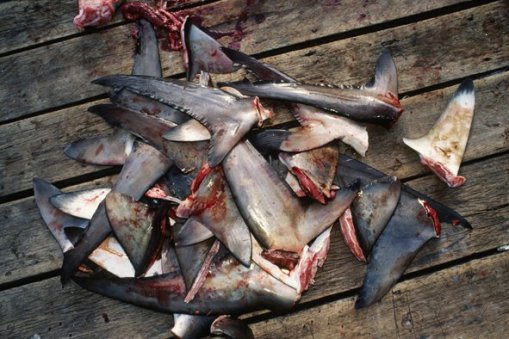
We expect that the small-scale illegal fishers will be back to prey on other species such as snapper, trochus and trepang as soon as it is economically viable for them to do so. To date, these IUU fishers have focused mostly on high-value sharks mainly for the fin trade, to the extent that the abundance of some shark species has dropped precipitously. IUU fishing, which has devastated fish resources and their associated ecosystems throughout Southeast Asian waters, is driven by deep economic and societal forces. For example, the Asian economic crisis in the late 1990s drove a large number of people out of cities and into illegal fishing.

It is not enough to maintain just a national response as the problem crosses national maritime zones, and it poses one of the biggest threats known to marine ecosystems throughout the region. These IUU fishers are mining protein, and there is no suggestion of sustainability or factoring in fish breeding or ecosystem protection into the equation. They just come into a fishing area and strip-mine it, leaving it bare.

Illegal fishing in Australian waters started increasing steeply about 10 years ago, largely because of over-exploitation of waters farther north, peaking in 2005-06 then falling away just as steeply. There are three factors behind the recent downturn: Australian government enforcement measures estimated to have cost at least AU$240 million since 2006; the high price of fuel for the fishing boats; and, most importantly, the fact that the high-value species may have been fished out and are now economically and ecologically extinct.

The $240 million has funded surveillance, apprehension, transportation, processing and accommodation of the several thousand illegal foreign fishermen detained each year since 2006. These activities have been successful, but it is doubtful whether they can hold back the IUU tide indefinitely – the benefits to the illegal fishers of their activities far outweigh the penalties if caught.

With increasing human populations in the region, the pressure to fish illegally is likely to increase. Regional responses are required to deter and monitor the illegal over-exploitation of fisheries resources, which is critical to secure ecosystem stability as climate change and other destructive human activities threaten food security.

CJA Bradshaw (with IC Field, MG Meekan and RC Buckworth)

Add to FacebookAdd to NewsvineAdd to DiggAdd to Del.icio.usAdd to StumbleuponAdd to RedditAdd to BlinklistAdd to Ma.gnoliaAdd to TechnoratiAdd to Furl


Perceptions on poverty: the rising Middle Class

16 03 2009

I’m being somewhat ‘lazy’ this week in that I have unfortunately less time to spend on pertinent blog posts than I’d like (lecturing, looming deadlines, that sort of thing). So, I start out this week’s posts with one of my favourite TED talks – Hans Rosling debunks myths about the developing world.

What’s the relevance to biodiversity conservation? I’ll admit, it may appear somewhat tangential, but there are a few important messages (both potentially good and bad):

1. POSSIBLE BENEFIT #1: The rising wealth in the developing world and associated reduction in family size may inevitably curb our human population growth rates;

2. POSSIBLE DISADVANTAGE #1: Rising wealth will necessarily mean more and more consumption, and as we know at least for tropical developing nations, resource consumption is killing biodiversity faster than anywhere else on the planet;

3. POSSIBLE DISADVANTAGE #2: As family wealth rises, so too do opportunities do opportunities for the Anthropogenic Allee effect (consuming rare species just because you can afford to do so);

4. POSSIBLE BENEFIT #2: Better health care associated with rising wealth and lower infant mortality might make education a higher priority, teaching more people about the necessity of safeguarding ecosystem services.

I’m not convinced the advantages will necessarily outweigh the disadvantages; regardless, Prof. Rosling’s amazing 20-minute presentation will both entertain and enlighten. I recommend it for a lunchtime sitting or that late-afternoon attention wain.

CJA Bradshaw

Vodpod videos no longer available.

more about “Hans Rosling shows the best stats you…“, posted with vodpod


Tropical Turmoil II

8 03 2009

In August last year I covered a paper my colleagues (Navjot Sodhi and Barry Brook) and I had in press in Frontiers in Ecology and the Environment entitled Tropical turmoil – a biodiversity tragedy in progress. The paper is now available in the March 2009 issue of the journal (click here to access). We were also fortunate enough to grab the front cover (shown here) and have a dedicated podcast that you can listen to by clicking here about the paper and its findings. I encourage ConservationBytes.com readers to have a listen if they’re interested in learning more about the woeful state of tropical biotas worldwide, and maybe some ways to rectify the problems. The intro to the podcast can be viewed by clicking here.

CJA Bradshaw


Shifting baselines

19 02 2009

jellyburger

A term first coined by Daniel Pauly (who we’ve previously covered as a Conservation Scholar), and one I could easily classify as a conservation Classic, it essentially describes the way changes to a system are measured against previous baselines, which themselves may represent changes from the original state of the system (definition modified from Wikipedia). Pauly originally meant it in a fisheries context, where “… fisheries scientists sometimes fail to identify the correct “baseline” population size (e.g., how abundant a fish species population was before human exploitation) and thus work with a shifted baseline“.

It’s easily considered a mantra in fisheries (there’s even a dedicated Scienceblog on the topic, and several other fisheries-related websites [e.g., here & here]), but it has been extended to all sorts of other conservation issues.

As it turns out, however, quantifying ‘shifting baselines’ in conservation is rather difficult, and there’s little good evidence in most systems (despite the logic and general acceptance of its ubiquity by conservation scientists). Now Papworth and colleagues have addressed this empirical hole in their new paper entitled Evidence for shifting baseline syndrome in conservation published online recently in Conservation Letters.

Papworth et al. discuss two kinds of shifting baselines: (1) general amnesia (“… individuals setting their perceptions from their own experience, and failing to pass their experience on to future generations”) and (2) personal amnesia (“… individuals updating their own perception of normality; so that even those who experienced different previous conditions believe that current conditions are the same as past conditions”), and they provide three well-quantified examples: (a) perceptions of bushmeat hunters in Gabon, (b) perceptions of bushmeat hunters in Equatorial Guinea and (c) perceptions of bird population trends in the UK.

Although the data have issues, all three cases demonstrate convincing evidence of the shifting baselines syndrome (with the UK example providing an example of both general and personal amnesia). Now, this may all seem rather logical, but I don’t want the reader to underestimate the importance of the Papworth paper – this is really one of the first demonstrations that it is a real problem in vastly different systems (i.e., not just fisheries). I think it’s hard evidence that the issue is a big one and cannot be ignored when presenting historical data for conservation purposes.

Humans inevitably have short memories when it comes to environmental degradation – this essentially means that in most demonstrations of biodiversity decline, it’s probably a lot worse even than the data might suggest. Policy makers take note.

CJA Bradshaw

Add to FacebookAdd to NewsvineAdd to DiggAdd to Del.icio.usAdd to StumbleuponAdd to RedditAdd to BlinklistAdd to Ma.gnoliaAdd to TechnoratiAdd to Furl


Rare just tastes better

11 02 2009

I had written this a while ago for publication, but my timing was out and no one had room to publish it. So, I’m reproducing it here as an extension to a previous post (That looks rare – I’ll kill that one).

As the international market for luxury goods expands in value, extent and diversity of items (Nueno & Quelch 1998), the world’s burgeoning pool of already threatened species stands to worsen. Economic theory predicts that harvested species should eventually find refuge from over-exploitation because it simply becomes too costly to find the last remaining wild individuals (Koford & Tschoegl 1998). However, the self-reinforcing cycle of human greed (Brook & Sodhi 2006) can make rare species increasingly valuable to a few select consumers such that mounting financial incentives drive species to extinction (Courchamp et al. 2006). The economic and ecological arguments are compelling, but to date there has been little emphasis on how the phenomenon arises in the human thought process, nor how apparently irrational behaviour can persist. Gault and colleagues (2008) have addressed this gap in a paper published recently in Conservation Letters by examining consumer preferences for arguably one of the most stereotypical luxury food items, caviar from the 200-million-year-old sturgeon (Acipenser spp.).

Sturgeon (6 genera) populations worldwide are in trouble, with all but two of the 27 known species threatened with extinction (either Near Threatened, Vulnerable, Endangered or Critically Endangered) according to the International Union for Conservation of Nature and Natural Resources’ (IUCN) Red List of Threatened Species. Despite all 27 species also having strict international trade restrictions imposed by the Convention on International Trade in Endangered Species (CITES) (Gault et al. 2008), intense commercial pressure persists for 15 of these at an estimated global value exceeding US$200 million annually (Pikitch et al. 2005). The very existence of the industry itself and the luxury good it produces are therefore, at least for some regions, unlikely to endure over the next decade (Pala 2007). What drives such irrational behaviour and why can we not seem to prevent such coveted species from spiralling down the extinction vortex?

Gault and colleagues addressed this question specifically in an elegantly simple set of preference experiments targeting the very end-consumers of the caviar production line – French connoisseurs. Some particularly remarkable results were derived from presentations of identical caviar; 86 % of attendees of luxury receptions not only preferred falsely labelled ‘rarer’ Siberian caviar (A. baeri) after blind tasting experiments, they also scored what they believed was caviar from the rarer species as having a higher ‘gustative quality’. These high-brow results were compared to more modest consumers in French supermarkets, with similar conclusions. Not only were unsuspecting gourmands fooled into believing the experimental propaganda, subjects in both cases stated a preference for seemingly rarer caviar even prior to tasting.

The psycho-sociological implications of perceived rarity are disturbing themselves; but Gault and colleagues extended their results with a mathematical game theory model demonstrating how irrational choices drive just such a harvested species to extinction. The economic implications of attempting to curb exploitation as species become rarer when the irrationality of perceived rarity was taken into consideration were telling – there is no payoff in delaying exploitation as more and more consumers are capable of entering the market. In other words, the assumption that consumers apply a positive temporal discount rate to their payoff (Olson & Bailey 1981) is wrong, with the demographic corollary that total depletion of the resource ensues. The authors contend that such artificial value may drive the entire luxury goods market based mainly on the self-consciousness and social status of consumers able to afford these symbols of affluence.

The poor record of species over-exploitation by humans arising from the Tragedy of the Commons (Hardin 1968) is compounded by this new information. This anthropogenic Allee effect (Courchamp et al. 2006) provides a novel example mechanism for how small populations are driven ever-downward because low densities ensure declining fitness. Many species may follow the same general rules, from bluefin tuna, Napoleon wrasse lips and shark fins, to reptile skins and Tibetan antelope woollen shawls. Gault and colleagues warn that as the human population continues to expand and more people enter the luxury-goods market, more wildlife species will succumb to this Allee effect-driven extinction vortex.

The authors suggest that a combination of consumer education and the encouragement of farmed substitute caviar will be more effective than potentially counter-productive trading bans that ultimately encourage illegal trade. However, the preference results suggest that education might not promote positive action given that reluctance of affluent consumers to self-limit. I believe that the way forward instead requires a combination of international trade bans, certification schemes for ‘sustainable’ goods that flood markets to increase supply and reduce price, better controls on point-of-origin labelling, and even state-controlled ‘warning’ systems to alert prospective consumers that they are enhancing the extinction risk of the very products they enjoy. A better architecture for trading schemes and market systems that embrace long-term persistence can surely counteract the irrationality of the human-induced destruction of global ecosystem services. We just need to put our minds and pocketbooks to the task.

CJA Bradshaw

Add to FacebookAdd to NewsvineAdd to DiggAdd to Del.icio.usAdd to StumbleuponAdd to RedditAdd to BlinklistAdd to Ma.gnoliaAdd to TechnoratiAdd to Furl


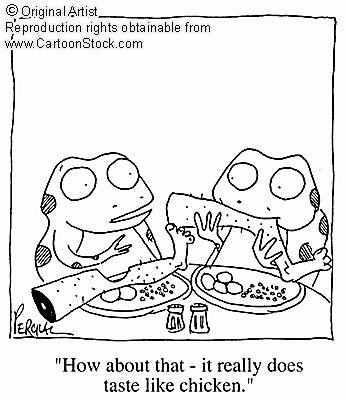
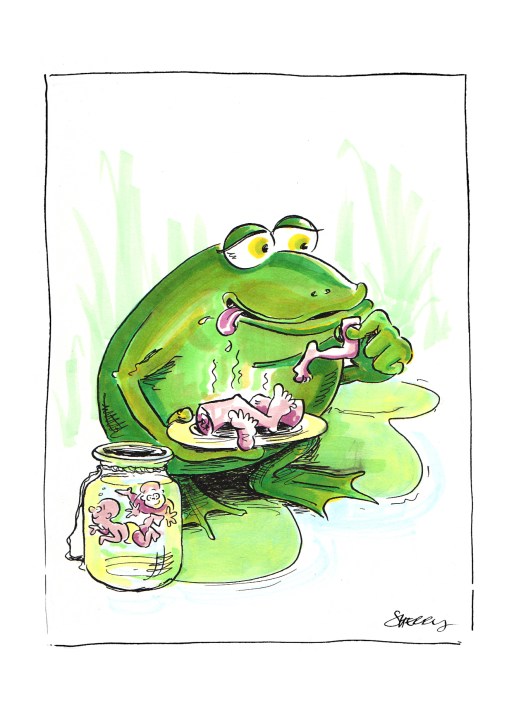
Cartoon guide to biodiversity loss II: frog legs

1 02 2009

I couldn’t resist this. Given the enormous response to our soon-to-be-published paper in Conservation Biology entitled Eating frogs to extinction by Warkentin, Bickford, Sodhi & Bradshaw (view post How many frogs do we eat?), I just had to put these up. Enjoy this subclass of biodiversity loss cartoons for what they are worth.

CJA Bradshaw

Add to FacebookAdd to NewsvineAdd to DiggAdd to Del.icio.usAdd to StumbleuponAdd to RedditAdd to BlinklistAdd to Ma.gnoliaAdd to TechnoratiAdd to Furl


Cartoon guide to biodiversity loss

30 01 2009

I’m taking Barry Brook‘s great idea on the Cartoon Guide to Global Warming Denial and applying it to biodiversity and habitat loss.

There are a lot of these sorts of things out there (amazing how we laugh at tragedy), so I will probably do subsequent posts as I find good candidates (suggestions welcome).

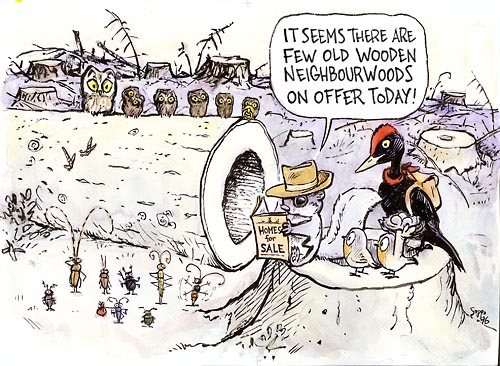
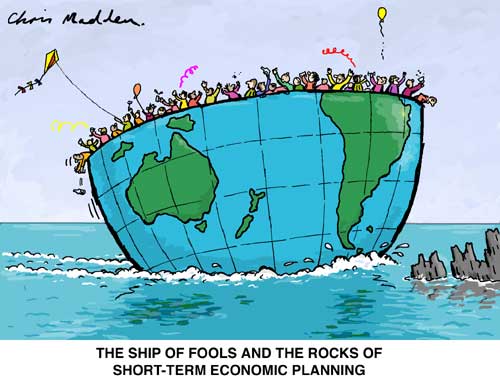
ucs-cartoonearthbin

CJA Bradshaw

Add to FacebookAdd to NewsvineAdd to DiggAdd to Del.icio.usAdd to StumbleuponAdd to RedditAdd to BlinklistAdd to Ma.gnoliaAdd to TechnoratiAdd to Furl


How many frogs do we eat?

20 01 2009

IMG_20130209_141200A paper that my colleagues and I wrote soon to appear in Conservation Biology describes the massive worldwide trade in frog parts for human consumption. I bet you had no idea…

This report from New Scientst:

Are frogs being eaten to extinction? We’re used to hearing about how disease, climate change, and habitat degradation are endangering amphibians, but conservationists are warning that frogs could be going the same way as the cod. Gastronomic demand, they report, is depleting regional populations to the point of no return.

David Bickford of the National University of Singapore and colleagues have called for more regulation and monitoring in the global frog meat market in order to avoid species being “eaten to extinction”.

Statistics on imports and exports of frog legs are sparse as few countries keep track of the amount of meat harvested and consumed domestically.

According to UN figures, global trade has increased in the past 20 years. France – not surprisingly – and the US are the two largest importers; with France importing between 2500 and 4000 tonnes of frog meat each year since 1995.

But although frog legs are often thought of in the West as a quintessentially French dish, they are also very popular in Asia.

Bickford estimates that between 180 million to over a billion frogs are harvested each year. “That is based on both sound data and an estimate of local consumption for just Indonesia and China,” he says. “The actual number I suspect is quite a bit larger and my 180 million bare minimum is almost laughably conservative.”
Local depletion

Even top French chefs may be unaware of where their frogs are coming from. Bruno Stril, teaching chef at the Cordon Bleu school in Paris, France, is unsure where his suppliers source their frog legs. “I would like for them to come from France,” he says. But he expects that most of the meat comes from other countries.

Stril is on the right track. Indonesia is the world’s largest exporter of frog meat, exporting more than 5000 tonnes of frog meat each year, mostly to France, Belgium and Luxemburg.

Bickford and colleagues say European kitchens initially found their own supplies in the surrounding countryside, but the fact that they are now importing from Asia suggests local populations were over-harvested. This, they say, could be a sign that frog populations, like many fish populations, will be harvested to near extinction.

“Overexploitation in the seas has caused a chain reaction of fisheries collapses around the world,” the researchers write. “This experience should motivate better management of other exploited wild populations.”
Anonymous legs

James Collins, of the World Conservation Union, says the Californian red-legged frog offers some evidence for the theory. This species was first harvested for food in the 19th-century California gold rush and eventually the population began to crash.

However, Collins cautions that “at the moment we have no data indicating that commercial exploitation has led to the extinction of any amphibian species.” He says the Bickford team’s evidence is worrisome, but inconclusive.

Most harvested frogs are skinned, butchered and frozen before being shipped overseas. This makes it difficult to know exactly what species are being killed. Indonesia is thought to mostly export crab-eating frogs, giant Jana frogs, and American bullfrogs. How much meat is consumed within Indonesia’s borders is also something of a mystery. Some studies suggest it could be between two and seven times what is exported.

“There are a hell of a lot of frogs being eaten,” says Bickford. “Much more than most people have a clue about.”

Original article soon to appear: Warkentin, IG, D Bickford, NS Sodhi, CJA Bradshaw. 2009. Eating frogs into extinction. Conservation Biology DOI: 10.1111/j.1523-1739.2008.01165.x

Add to FacebookAdd to NewsvineAdd to DiggAdd to Del.icio.usAdd to StumbleuponAdd to RedditAdd to BlinklistAdd to Ma.gnoliaAdd to TechnoratiAdd to Furl


Man bites shark

7 01 2009

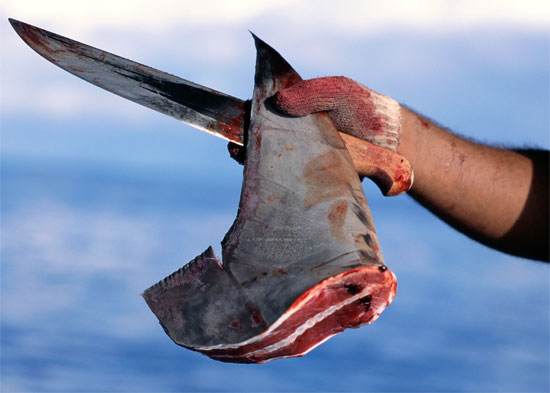
cut-shark-finYesterday I had a comment piece of the same title posted on the ABC‘s Unleashed site. I have permission to reproduce it here on ConservationBytes.com.

The silly season is upon us again, and I don’t mean the commercial frenzy, the bizarre fascination with a white-bearded man or a Middle-Eastern baby, the over-indulgence at the barbie or hangovers persisting several days into the New Year. I mean it’s the time of year when beach-goers, surfers, and municipal and state policy makers go a bit ga-ga over sharks.

There are few more polite pleasures than heading down to the beach during the holidays for a surf, quick dip or just a laze under the brolly. Some would argue it’s an inalienable Australian right and that anything getting in our way should be condemned to no less than severe retribution. Well, in the case of sharks, that’s exactly what’s happened.

Apart from a good number of adrenalin-addicted surfers and mad marine scientists, most people are scared shitless by the prospect of even seeing a shark near the beach, let alone being bitten or eaten by one. I won’t bore you with some ill-advised, pseudo-psycho-analytical rant about how it’s all the fault of some dodgy 1970s film featuring a hypertrophied American shark; the simple fact is that putative prey don’t relish the thought of becoming a predator’s dinner.

So, Australia is famous for its nearly 100-year-old pioneering attempt to protect marine bathers from shark attack by setting an elaborate array of shark nets around the country’s more frequented beaches. Great, you say? Well, it’s actually not that nice.

Between December 1990 and April 2005, nearly 3500 sharks and rays were caught in NSW beach nets alone, of which 72 per cent were found dead. Shark spearing was a favourite past-time in the 1960s and 1970s, with at least one high-profile species, the grey nurse shark, gaining the dubious classification of Critically Endangered as a result. Over-fishing of reef sharks has absolutely hammered two formerly common species in the Great Barrier Reef, the whitetip and grey reef sharks (See the Ongoing Collapse of Coral-Reef Shark Populations report). And illegal Indonesian fishing in northern Australia is slowly depleting many shark species in a wave of protein mining that has now penetrated the Australian Exclusive Economic Zone.

Despite the gloomy outlook for sharks, I’m happy to say today that we are a little more aware of their plight and are making baby steps toward addressing the problems. Australia has generally fared better in shark conservation than most other parts of the world, even though we still have a lot of educating to do at home. Over 50 per cent of all chondrichthyans (i.e., sharks, rays and chimaeras) are threatened worldwide, with some of the largest and most wide-ranging species being hardest hit, including white sharks. The most common threat is over-fishing, but this is largely seen by the lay person as of little import simply because of the persistent attitude that “the only good shark is a dead shark”.

The attitude is, however, based on a complete furphy. I’m sure many readers would have seen some statistics like the following before, but let’s go through the motions just to be clear. Dying from or even being injured by a shark is utterly negligible. Based on the International Shark Attack File data for Australia, there were 110 confirmed (unprovoked) shark attacks in Australian waters between 1990 and 2007, of which 19 were fatal. Using Australian Bureau of Statistics human population data over the same period, this equates to an average of 0.032 attacks and 0.006 fatalities per 100,000 people, with no apparent trend over the last two decades.

Now let’s contrast. I won’t patronise you with strange comparative statistics like the probability of being killed by a (provoked) vending machine or by being hit by a bus, they are both substantially greater, but I will relate these figures to water-based activities. Drowning statistics for Australia (1992-1997) show that there were around 1.44 deaths per 100,000 people per year, or approximately 0.95 if just marine-related drownings are considered. These values are 240 (158 for marine-only) times higher than those arising from shark attack.

It’s just plainly, and mathematically, ridiculous to be worried about being eaten by a shark when swimming in Australia, whether or not there’s a beach net in place. The effort made, money spent and anxiety arising from the illogical fear that a shark will consider your sunburnt flesh a tasty alternative to its fishier sustenance is not only regrettable, it’s an outright crime against marine biodiversity. Of course, if you see a big shark lurking around your favourite beach, I wouldn’t recommend swimming over and giving it a friendly pat on the dorsal fin, but I wouldn’t recommend screaming that the marine equivalent of the apocalypse has just arrived either.

You may not be fussed either way, but consider this – the massive reduction in sharks worldwide is having a cascading effect on many of the ocean’s complex marine ecosystems. Being largely carnivorous, sharks are the ecological equivalent of community planners. Without them, herbivorous or coral-eating fish can quickly get out of control and literally destroy the food web. A great example comes from the Gulf of Mexico where the serial depletion of 14 species of large sharks has caused an explosion of the smaller cownose ray that formerly was kept in check by its bigger and hungrier cousins. The result: commercially harvested scallops in the region have now collapsed because of the hordes of shellfish-eating rays.

The day you fail to find sharks cruising your favourite beach is the day you should really start to worry.

CJA Bradshaw

Add to FacebookAdd to NewsvineAdd to DiggAdd to Del.icio.usAdd to StumbleuponAdd to RedditAdd to BlinklistAdd to Ma.gnoliaAdd to TechnoratiAdd to Furl


Classics: the Allee effect

22 12 2008

220px-Vortex_in_draining_bottle_of_waterAs humanity plunders its only home and continues destroying the very life that sustains our ‘success’, certain concepts in ecology, evolution and conservation biology are being examined in greater detail in an attempt to apply them to restoring at least some elements of our ravaged biodiversity.

One of these concepts has been largely overlooked in the last 30 years, but is making a conceptual comeback as the processes of extinction become better quantified. The so-called Allee effect can be broadly defined as a “…positive relationship between any component of individual fitness and either numbers or density of conspecifics” (Stephens et al. 1999, Oikos 87:185-190) and is attributed to Warder Clyde Allee, an American ecologist from the early half of the 20th century, although he himself did not coin the term. Odum referred to it as “Allee’s principle”, and over time, the concept morphed into what we now generally call ‘Allee effects’.

Nonetheless, I’m using Allee’s original 1931 book Animal Aggregations: A Study in General Sociology (University of Chicago Press) as the Classics citation here. In his book, Allee discussed the evidence for the effects of crowding on demographic and life history traits of populations, which he subsequently redefined as “inverse density dependence” (Allee 1941, American Naturalist 75:473-487).

What does all this have to do with conservation biology? Well, broadly speaking, when populations become small, many different processes may operate to make an individual’s average ‘fitness’ (measured in many ways, such as survival probability, reproductive rate, growth rate, et cetera) decline. The many and varied types of Allee effects can work together to drive populations even faster toward extinction than expected by chance alone because of self-reinforcing feedbacks (see also previous post on the small population paradigm). Thus, ignorance of potential Allee effects can bias everything from minimum viable population size estimates, restoration attempts and predictions of extinction risk.

A recent paper in the journal Trends in Ecology and Evolution by Berec and colleagues entitled Multiple Allee effects and population management gives a more specific breakdown of Allee effects in a series of definitions I reproduce here for your convenience:

Allee threshold: critical population size or density below which the per capita population growth rate becomes negative.

Anthropogenic Allee effect: mechanism relying on human activity, by which exploitation rates increase with decreasing population size or density: values associated with rarity of the exploited species exceed the costs of exploitation at small population sizes or low densities (see related post).

Component Allee effect: positive relationship between any measurable component of individual fitness and population size or density.

Demographic Allee effect: positive relationship between total individual fitness, usually quantified by the per capita population growth rate, and population size or density.

Dormant Allee effect: component Allee effect that either does not result in a demographic Allee effect or results in a weak Allee effect and which, if interacting with a strong Allee effect, causes the overall Allee threshold to be higher than the Allee threshold of the strong Allee effect alone.

Double dormancy: two component Allee effects, neither of which singly result in a demographic Allee effect, or result only in a weak Allee effect, which jointly produce an Allee threshold (i.e. the double Allee effect becomes strong).

Genetic Allee effect: genetic-level mechanism resulting in a positive relationship between any measurable fitness component and population size or density.

Human-induced Allee effect: any component Allee effect induced by a human activity.

Multiple Allee effects: any situation in which two or more component Allee effects work simultaneously in the same population.

Nonadditive Allee effects: multiple Allee effects that give rise to a demographic Allee effect with an Allee threshold greater or smaller than the algebraic sum of Allee thresholds owing to single Allee effects.

Predation-driven Allee effect: a general term for any component Allee effect in survival caused by one or multiple predators whereby the per capita predation-driven mortality rate of prey increases as prey numbers or density decline.

Strong Allee effect: demographic Allee effect with an Allee threshold.

Subadditive Allee effects: multiple Allee effects that give rise to a demographic Allee effect with an Allee threshold smaller than the algebraic sum of Allee thresholds owing to single Allee effects.

Superadditive Allee effects: multiple Allee effects that give rise to a demographic Allee effect with an Allee threshold greater than the algebraic sum of Allee thresholds owing to single Allee effects.

Weak Allee effect: demographic Allee effect without an Allee threshold.

For even more detail, I suggest you obtain the 2008 book by Courchamp and colleagues entitled Allee Effects in Ecology and Conservation (Oxford University Press).

CJA Bradshaw

Add to FacebookAdd to NewsvineAdd to DiggAdd to Del.icio.usAdd to StumbleuponAdd to RedditAdd to BlinklistAdd to Ma.gnoliaAdd to TechnoratiAdd to Furl

(Many thanks to Salvador Herrando-Pérez for his insight on terminology)


Failing on ocean protection

24 11 2008

A new paper from Conservation Letters by Mark Spalding and colleagues entitled Toward representative protection of the world’s coasts and oceans-progress, gaps, and opportunities reminds us just how crap we are at protecting ocean habitats. I sincerely hope this one is a Potential given that the only direction one can move from absolute bottom is up. Richard Black at the BBC reports on the paper’s main findings:

toilet-ocean_squareLess than 1% of the world’s oceans have been given protected status, according to a major survey.

Governments have committed to a target of protecting 10% by 2012, which the authors of the new report say there is no chance of meeting.

Protecting ecologically important areas can help fish stocks to regenerate, and benefit the tourism industry.

The survey was led by The Nature Conservancy (TNC) and is published in the journal Conservation Letters.

“For those of us working in the issue full-time it’s not a surprise, we’ve known all along that marine protection is lagging behind what’s happening on land, but it’s nice to have it pinned down,” said TNC’s Mark Spalding.

“It’s depressing that we’ve still got so far to go, but there are points of hope,” he told BBC News.

Coastal concentration

Four years ago, signatories to the UN’s biodiversity convention – which includes almost every country – pledged to protect at least 10% of the oceans in a way that makes sense ecologically.

Protecting them does not mean banning activities such as fishing or shipping completely, but making sure they are carried out sustainably.

All of the areas currently protected fall into countries’ Exclusive Economic Zones, and the majority are along coasts, the study finds.

Even so, only about 4% of coastal waters are protected.

Countries diverge widely in how much protection they have mandated.

Whereas New Zealand has almost 70% of its coastline under some form of protection, countries around the Mediterranean have set aside less than 2%.

In the developing world, Dr Spalding cites Guinea-Bissau as a country that has had invested in protection, particularly in the Bijagos Archipelago, which is home to a community of hippos dwelling along its mangrove coast, as well as more conventional marine species.

Palau, Indonesia, Micronesia and several Caribbean states are also making significant progress, he said.

About 12% of the Earth’s land surface has been put under protection.

Download the Spalding paper free of charge here.


Throw another roo on the barbie

21 11 2008

Following a previous post on ConservationBytes.com extolling the environmental virtues of eating more kangaroo and less beef (Beef is Bad; Skippy is Better), here’s an article from the Melbourne Age by David Sutherland (reproduced below):

LAST week only one of my five local butchers could sell me kangaroo. And that was frozen, not fresh. One said he occasionally got it in if people requested it. Another directed me to a butcher several suburbs away. Another said he didn’t sell roo because they moved too fast and he couldn’t catch them.

The only roo meat I could buy fresh within five kilometres of home was at a Coles supermarket. Supplied by South Australian game meat wholesaler Macro Meats, it was packed like any other supermarket meat. The difference was the spiel written on the back of the container.

It detailed the health and environmental advantages of eating kangaroo meat, including the fact that kangaroos produce lower levels of greenhouse gases than cattle and sheep.

In Professor Ross Garnaut’s final report on tackling climate change, he said that the carbon benefits of eating kangaroo meat could be one of Australia’s great contributions to the global problem.

But it would seem that producers believe consumers are reluctant to eat kangaroo and need to be convinced otherwise. Could it be the “skippy syndrome” – a dread of munching on a national emblem? Or a lasting stigma from the days when roo was considered dirty and only fit for pet food? Regardless, there’s no doubt kangaroo as a food continues to battle an image problem in some quarters.

Interesting then that, according to recent government figures, roo meat is experiencing steady growth. A national report, Consumer Attitudes to Kangaroo Meat Products by the Rural Industries Research and Development Corporation, released in February, found that 58.5% of respondents had tried kangaroo meat and that men were more likely to consume it than women. Sales of roo meat through Coles have increased by 9% over the past financial year.

It’s largely home cooks who are driving the boom.

Paula Mauriks runs Auscroc, a game meat wholesaler based in Melbourne. When she started the business 10 years ago, kangaroo made up a tiny proportion of her business. But five years later it started to take off, and in the past 18 months Mauriks says sales have tripled, mainly due to roo’s popularity in home kitchens.

“We used to sell more to restaurants, but now wholesale has taken over as the biggest market,” she says. “New butchers, chicken shops and other specialist meat retailers are coming to us all the time looking to source kangaroo meat.”

Mauriks believes people’s increased willingness to try new foods has contributed to improved sales for kangaroo meat products.

“Most people know by now that kangaroo is low in fat and high in iron, and quite a few of those are willing to see if they like the taste,” she says. “Then it becomes a matter of educating people how best to cook it so they enjoy it and come back for more.”

Kangaroo Cookin’ (Wakefield Press), a cookbook comprised solely of recipes using kangaroo meat, was the first kangaroo cookbook. From soups and pastas to char grills, stir-fries and one-pot dishes, the 88 recipes in this deliberately down-to-earth book illustrate the versatility of this often-underrated meat.

Gary Hunt and his wife Janine have been selling kangaroo meat from the Chicken Pantry at Queen Victoria Market for almost 12 years. Their pepper-marinated kangaroo has always been the strongest seller in their roo range, but in the past couple of years other products and cuts have started to take off.

“We’ve noticed lots of people buying kangaroo who are advised by their doctors to lower their fat intake or increase their levels of iron,” says Hunt. “Many more women are buying it these days.”

Mornington Peninsula butcher Greg Goss, from Greg’s Family Gourmet Butchers, has been selling meat for more than 40 years and has noticed the recent interest in kangaroo meat.

“Two years ago we did well to sell 5 kilos in a month,” he says. “Now we’re probably selling 100 kilos in that same time.”

Goss sees sales of roo meat increase in spring, summer and autumn, and spike as fine weekends loom, which he puts down to the lure of outdoor cooking.

“Kangaroo comes up beautifully on the barbie,” he says, “seared on the outside and pink on the inside.”

Here’s hoping some of my local butchers read the market too, and order in some fresh for this weekend.