The colour of survival

6 05 2025

In boreal forests, many hares adopt white winter coats before the snow arrives. In a snowless landscape, these white hares lack camouflage against predators. However, their early moult from brown into white fur can increase their survival and offers an advantage as the snow season becomes progressively shorter with climate change.


Throughout the year, we wear different clothing to protect ourselves from the cold or heat and for aesthetic reasons depending on the occasion. Likewise, many animals change the colour, thickness and structure of their fur and feathers in tune with the seasons.

Snowshoe hare (Lepus americanus) in a snowy (Kluane Lake/Yukon, Canada) and snowless habitat (Seely Lake/Montana, USA). This mammal moults its coat as colder temperatures, shorter days, and snowfall arrive. In the genetic populations of the temperate forests of the Rocky Mountains and the boreal forests spanning the North American continent, hares that moult from brown to white are abundant (20). However, in coastal areas, and in the third genetic population in the North Pacific, snowfall is brief and less intense, resulting in fewer white individuals. This is due to hybridisation with the black-tailed jackrabbit (Lepus californicus) over 3,000 years ago (17). The hare’s coat has an outer layer, where the longer fur gives each individual its colour, and an inner layer of short fur (19). In winter, the outer layer becomes thicker and denser, while the inner layer maintains a consistent thickness but increases in density. By biomass, the snowshoe hare is the primary herbivore in the North American boreal forest and distinguishes the trophic relationships between continents (21). In Europe, much of the boreal understory remains under snow, providing food for rodents with four-year abundance cycles controlled by small generalist predators (mustelids). In North America, the boreal understory grows above the snow and provides food for hares. In this region, snowshoe hare populations follow 10-year abundance cycles regulated by specialist predators (those that feed almost exclusively on hares), primarily the Canada lynx (Lynx canadensis) (6). Photos courtesy of Alice Kenney and Charles Krebs (Yukon) [see their ecological monitoring program here] and Marketa Zimova (Montana).

However, as the climate changes, springs arrive earlier, winters are delayed, and the frequency and intensity of precipitation have become highly variable. All of this makes it harder for species to adjust their wardrobe to temperature changes (1).

In this context, body colour is a critical factor for birds and mammals that undergo an annual moult (2). In 21 species from the cold latitudes of the Northern Hemisphere, some individuals are brown in summer, but turn white in winter, while others remain brown year round (3). This phenomenon includes weasels, rodents, ptarmigans, foxes, rabbits and hares.

Read the rest of this entry »


Open Letter: Public policy in South Australia regarding dingoes

28 08 2023

08 August 2023

The Honourable Dr Susan Close MP, Deputy Premier and Minister for Climate, Environment and Water, South Australia

The Honourable Claire Scriven MLC, Minister for Primary Industries and Regional Development, South Australia

Dear Ministers,

In light of new genetic research on the identity of ‘wild dogs’ and dingoes across Australia, the undersigned wish to express concern with current South Australia Government policy regarding the management and conservation of dingoes. Advanced DNA research on dingoes has demonstrated that dingo-dog hybridisation is much less common than thought, that most DNA tested dingoes had little domestic dog ancestry and that previous DNA testing incorrectly identified many dingoes as hybrids (Cairns et al. 2023). We have serious concerns about the threat current South Australian public policy poses to the survival of the ‘Big Desert’ dingo population found in Ngarkat Conservation Park and surrounding areas.

We urge the South Australian Government to:

  • Revoke the requirement that all landholders follow minimum baiting standards, including organic producers or those not experiencing stock predation. Specifically
    1. Dingoes in Ngarkat Conservation park (Region 4) should not be destroyed or subjected to ground baiting and trapping every 3 months. The Ngarkat dingo population is a unique and isolated lineage of dingo that is threatened by inbreeding and low genetic diversity. Dingoes are a native species and all native species should be protected inside national parks and conservation areas.
    2. Landholders should not be required to carry out ground baiting on land if there is no livestock predation occurring. Furthermore, landholders should be supported to adopt non-lethal tools and strategies to mitigate the risk of livestock predation including the use of livestock guardian animals, which are generally incompatible with ground and aerial 1080 baiting.
  • Revoke permission for aerial baiting of dingoes (incorrectly called “wild dogs”) in all Natural Resource Management regions – including within national parks. Native animals should be protected in national parks and conservation areas.
  • Cease the use of inappropriate and misleading language to label dingoes as “wild dogs”. Continued use of the term “wild dogs” is not culturally respectful to First Nations peoples and is not evidence-based.
  • Proactively engage with First Nations peoples regarding the management of culturally significant species like dingoes. For example, the Wotjobaluk nation should be included in consultation regarding the management of dingoes in Ngarkat Conservation Park.

Changes in South Australia public policy are justified based on genetic research by Cairns et al. (2023) that overturns previous misconceptions about the genetic status of dingoes. It demonstrates:

  1. Most “wild dogs” DNA tested in arid and remote parts of Australia were dingoes with no evidence of dog ancestry. There is strong evidence that dingo-dog hybridisation is uncommon, with firstcross dingo-dog hybrids and feral dogs rarely being observed in the wild. In Ngarkat Conservation park none of DNA tested animals had evidence of domestic dog ancestry, all were ‘pure’ dingoes.
  2. Previous DNA testing methods misidentified pure dingoes as being mixed. All previous genetic surveys of wild dingo populations used a limited 23-marker DNA test. This is the method currently used by NSW Department of Primary Industries, which DNA tests samples from NSW Local Land Services, National Parks and Wildlife Service, and other state government agencies. Comparisons of DNA testing methods find that the 23-marker DNA test frequently misidentified animals as dingo-dog hybrids. Existing knowledge of dingo ancestry across South Australia, particularly from Ngarkat Conservation park is incorrect; policy needs to be based on updated genetic surveys.
  3. There are multiple dingo populations in Australia. High-density genomic data identified more than four wild dingo populations in Australia. In South Australia there are at least two dingo populations present: West and Big Desert. The West dingo population was observed in northern South Australia, but also extends south of the dingo fence. The Big Desert population extends from Ngarkat Conservation park in South Australia into the Big Desert and Wyperfield region of Victoria.
  4. The Ngarkat Dingo population is threatened by low genetic variability. Preliminary evidence from high density genomic testing of dingoes in Ngarkat Conservation park and extending into western Victoria found evidence of limited genetic variability which is a serious conservation concern. Dingoes in Ngarkat and western Victoria had extremely low genetic variability and no evidence of gene flow with other dingo populations, demonstrating their effective isolation. This evidence suggests that the Ngarkat (and western Victorian) dingo population is threatened by inbreeding and genetic isolation. Continued culling of the Ngarkat dingo population will exacerbate the low genetic variability and threatens the persistence of this population.

Read the rest of this entry »


Victoria, please don’t aerial-bait dingoes

10 10 2019

Here’s a submission to Victoria’s proposed renewal of special permission from the Commonwealth to poison dingoes:

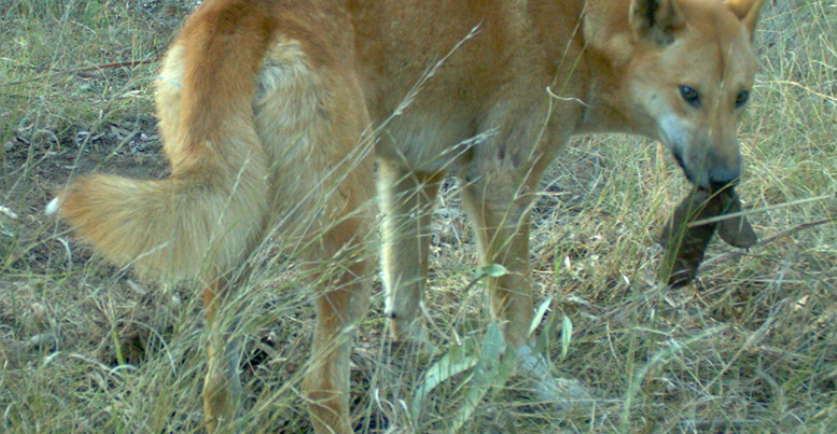
dingo with bait

08 October 2019

Honourable Lily D’Ambrosio MP
Minister for Energy, Environment and Climate Change
Level 16, 8 Nicholson Street, East Melbourne, VIC 3002

lily.dambrosio@parliament.vic.gov.au

cc:

The Hon Jaclyn Symes, Minister for Agriculture, Victoria

(jaclyn.symes@parliament.vic.gov.au)

Dr Sally Box, Threatened Species Commissioner

(ThreatenedSpeciesCommissioner@environment.gov.au)

The Hon Sussan Ley MP, Minister for Environment, Australia

(Farrer@aph.gov.au)

RE: RENEWAL OF AERIAL BAITING EXEMPTION IN VICTORIA FOR WILD DOG CONTROL USING 1080

Dear Minister,

The undersigned welcome the opportunity to comment on the proposed renewal of special permission from the Commonwealth under Sections 18 and 18A of the Environment Protection and Biodiversity Conservation Act 1999 (Commonwealth) to undertake aerial 1080 baiting in six Victorian locations for the management of ‘wild dogs’. This raises serious concerns for two species listed as threatened and protected in Victoria: (1) dingoes and (2) spot-tailed quolls (Dasyurus maculatus).

First, we must clarify that the terminology ‘wild dog’ is not appropriate when discussing wild canids in Australia. One of the main discussion points at the recent Royal Zoological Society of NSW symposium ‘Dingo Dilemma: Cull, Contain or Conserve’ was that the continued use of the terminology ‘wild dog’ is not justified because wild canids in Australia are predominantly dingoes and dingo hybrids, and not, in fact, feral domestic dogs. In Victoria, Stephens et al. (2015) observed that only 5 out of 623 wild canids (0.008%) sampled were feral domestic dogs with no evidence of dingo ancestry. This same study determined that 17.2% of wild canids in Victoria were pure or likely pure dingoes and 64.4% were hybrids with greater than 60% dingo ancestry. Additionally, comparative studies by Jones (1988, 1990 and 2009) observed that dingoes maintained a strong phenotypic identity in the Victorian highlands over time, and perceptively ‘wild dog’ like animals were more dingo than domestic dog.

As prominent researchers in predator ecology, biology, archaeology, cultural heritage, social science, humanities, animal behaviour and genetics, we emphasise the importance of dingoes in Australian, and particularly Victorian, ecosystems. Dingoes are the sole non-human, land-based, top predator on the Australian mainland. Their importance to the ecological health and resilience of Australian ecosystems cannot be overstated, from regulating wild herbivore abundance (e.g., various kangaroo species), to reducing the impacts of feral mesopredators (cats, foxes) on native marsupials (Johnson & VanDerWal 2009; Wallach et al. 2010; Letnic et al. 20122013; Newsome et al. 2015; Morris & Letnic 2017). Their iconic status is important to First Nations people and to the cultural heritage of all Australians. Read the rest of this entry »


Minister, why is the dingo no longer ‘fauna’?

7 09 2018

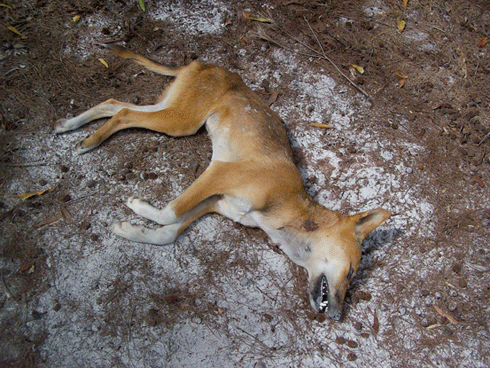
dead dingoSo, a few of us have just submitted a letter contesting the Western Australia Government’s recent decision to delist dingoes as ‘fauna’ (I know — what the hell else could they be?). The letter was organised brilliantly by Dr Kylie Cairns (University of New South Wales), and she and the rest of the signatories have agreed to reproduce the letter in full here on ConservationBytes.com. If you feel so compelled, please voice your distaste of this decision officially by contacting the Minister (details below).

CJA Bradshaw

Honourable Stephen Dawson MLC
Minister for Environment; Disability Services
Address: 12th Floor, Dumas House
2 Havelock Street, WEST PERTH WA 6005
(minister.dawson@dpc.wa.gov.au)

cc: Department of Biodiversity, Conservation and Attractions (biodiversity@dbca.wa.gov.au)
cc: Brendan Dooley (brendan.dooley@dpc.wa.gov.au)

Dear Minister,

The undersigned welcome the opportunity to comment on and recommend alteration of the proposed section (9)(2) order of the Biodiversity Conservation Act 2016 (BC Act) that changes the listing of the dingo from “fauna” to “non-fauna” in Western Australia. Removing the “fauna” status from dingoes has serious consequences for the management and conservation of this species and other native biota it benefits. Currently, dingoes are classed as A7, or fauna that requires a management policy. The proposed section (9)(2) order will move dingoes (as “non-fauna”) to the A5 class, meaning that dingoes must be (lethally) controlled and there will be no obligation for the Department of Biodiversity, Conservation and Attractions to have an appropriate management policy (or approval).

Currently, under the Wildlife Conservation Act 1950 (WC Act) the dingo is considered “unprotected” fauna allowing management under a Department of Biodiversity, Conservation and Attractions management policy. A section (9)(2) order demoting dingoes to “non-fauna” will remove the need for Department of Biodiversity, Conservation and Attractions management policy and instead mandate the lethal control of dingoes throughout Western Australia.

As prominent researchers in top predator ecology, biology, cultural value and genetics, we emphasise the importance of dingoes within Australian, and particularly Western Australia’s ecosystems. Dingoes are indisputably native based on the legislative definition of “any animal present in Australia prior to 1400 AD” from the BC Act. Dingoes have been present in Australia for at least 5000 years. On the Australian mainland they are now the sole non-human land-based top predator. Their importance to the ecological health and resilience of Australian ecosystems cannot be overstated. Read the rest of this entry »


Avoiding genetic rescue not justified on genetic grounds

12 03 2015

Genetics to the rescue!

Genetics to the rescue!

I had the pleasure today of reading a new paper by one of the greatest living conservation geneticists, Dick Frankham. As some of CB readers might remember, I’ve also published some papers with Dick over the last few years, with the most recent challenging the very basis for the IUCN Red List category thresholds (i.e., in general, they’re too small).

Dick’s latest paper in Molecular Ecology is a meta-analysis designed to test whether there are any genetic grounds for NOT attempting genetic rescue for inbreeding-depressed populations. I suppose a few definitions are in order here. Genetic rescue is the process, either natural or facilitated, where inbred populations (i.e., in a conservation sense, those comprising too many individuals bonking their close relatives because the population in question is small) receive genes from another population such that their overall genetic diversity increases. In the context of conservation genetics, ‘inbreeding depression‘ simply means reduced biological fitness (fertility, survival, longevity, etc.) resulting from parents being too closely related.

Seems like an important thing to avoid, so why not attempt to facilitate gene flow among populations such that those with inbreeding depression can be ‘rescued’? In applied conservation, there are many reasons given for not attempting genetic rescue: Read the rest of this entry »


Translocations: the genetic rescue paradox

14 01 2013

helphindranceHarvesting and habitat alteration reduce many populations to just a few individuals, and then often extinction. A widely recommended conservation action is to supplement those populations with new individuals translocated from other regions. However, crossing local and foreign genes can worsen the prospects of recovery.

We are all hybrids or combinations of other people, experiences and things. Let’s think of teams (e.g., engineers, athletes, mushroom collectors). In team work, isolation from other team members might limit the appearance of innovative ideas, but the arrival of new (conflictive) individuals might in fact destroy group dynamics altogether. Chromosomes work much like this – too little or too much genetic variability among parents can break down the fitness of their descendants. These pernicious effects are known as ‘inbreeding depression‘ when they result from reproduction among related individuals, and ‘outbreeding depression‘ when parents are too genetically distant.

CB_OutbreedingDepression Photo
Location of the two USA sites providing spawners of largemouth bass for the experiments by Goldberg et al. (3): the Kaskaskia River (Mississipi Basin, Illinois) and the Big Cedar Lake (Great Lakes Basin, Wisconsin). Next to the map is shown an array of three of the 72-litre aquaria in an indoor environment under constant ambient temperature (25 ◦C), humidity (60%), and photoperiod (alternate 12 hours of light and darkness). Photo courtesy of T. Goldberg.

Recent studies have revised outbreeding depression in a variety of plants, invertebrates and vertebrates (1, 2). An example is Tony Goldberg’s experiments on largemouth bass (Micropterus salmoides), a freshwater fish native to North America. Since the 1990s, the USA populations have been hit by disease from a Ranavirus. Goldberg et al. (3) sampled healthy individuals from two freshwater bodies: the Mississipi River and the Great Lakes, and created two genetic lineages by having both populations isolated and reproducing in experimental ponds. Then, they inoculated the Ranavirus in a group of parents from each freshwater basin (generation P), and in the first (G1) and second (G2) generations of hybrids crossed from both basins. After 3 weeks in experimental aquaria, the proportion of survivors declined to nearly 30% in G2, and exceeded 80% in G1 and P. Clearly, crossing of different genetic lineages increased the susceptibility of this species to a pathogen, and the impact was most deleterious in G2. This investigation indicates that translocation of foreign individuals into a self-reproducing population can not only import diseases, but also weaken its descendants’ resistance to future epidemics.

A mechanism causing outbreeding depression occurs when hybridisation alters a gene that is only functional in combination with other genes. Immune systems are often regulated by these complexes of co-adapted genes (‘supergenes’) and their disruption is a potential candidate for the outbreeding depression reported by Goldberg et al. (3). Along with accentuating susceptibility to disease, outbreeding depression in animals and plants can cause a variety of deleterious effects such as dwarfism, low fertility, or shortened life span. Dick Frankham (one of our collaborators) has quantified that the probability of outbreeding depression increases when mixing takes place between (i) different species, (ii) conspecifics adapted to different habitats, (iii) conspecifics with fixed chromosomal differences, and (iv) populations free of genetic flow with other populations for more than 500 years (2).

A striking example supporting (some of) those criteria is the pink salmon (Oncorhynchus gorbuscha) from Auke Creek near Juneau (Alaska). The adults migrate from the Pacific to their native river where they spawn two years after birth, with the particularity that there are two strict broodlines that spawn in either even or odd year – that is, the same species in the same river, but with a lack of genetic flow between populations. In vitro mixture of the two broodlines and later release of hybrids in the wild have shown that the second generation of hybrids had nearly 50% higher mortality rates (i.e., failure to return to spawn following release) when born from crossings of parents from different broodlines than when broodlines were not mixed (4).

Read the rest of this entry »


Blog Action Day 2010 – Water neutrality and its biodiversity benefits

16 10 2010

In my little bid to participate in Change.org’s Blog Action Day 2010 – Water, I’ve re-hashed a post from 2008 on ‘water neutrality’. This will also benefit my recently joined readers, and re-invigorate a concept I don’t think has received nearly enough attention globally (or even in parched Australia where I live). So here we go:

The world’s freshwater ecosystems are in trouble. We’ve extracted, poisoned, polluted, damned and diverted a large proportion of the finite (and rather small!) amount of freshwater on the planet. Now, most people might immediately see the problem here from a selfish perspective – no clean, abundant water source = human disease, suffering and death. Definitely something to avoid, and a problem that all Australians are facing (i.e., it’s not just restricted to developing nations). Just look at the Murray-Darling problem.

In addition to affecting our own personal well-being, freshwater ecosystems are thought to support over 10000 fish species worldwide (see also a recent post on Africa’s freshwater biodiversity’s susceptibility to climate change), and the majority of amphibians and aquatic reptiles. Current estimates suggest that about 1/3 of all vertebrate biodiversity (in this case, number of species) is confined to freshwater. As an example, the Mekong River system alone is thought to support up to 1700 different species of fish.

So, what are some of the ways forward? The concept of ‘water neutrality’ is essentially the wet version of carbon neutrality. It basically means that water usage can be offset by interventions to improve freshwater habitats and supply. Read the rest of this entry »


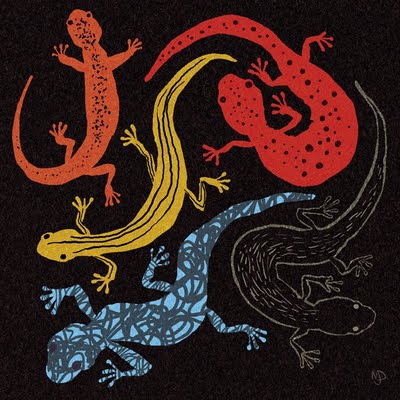
Salamander Longshanks – breed them out

3 02 2010

© M. Dawson

Patrick McGoohan in his role as the less-than-sentimental King Edward ‘Longshanks’ in the 1995 production of ‘Braveheart’ said it best in his references to the invocation of ius primæ noctis:

If we can’t get them out, we’ll breed them out

What a charmer.

Dabbling in molecular ecology myself over the past few years with some gel-jockey types (e.g., Dick Frankham [author of Introduction to Conservation Genetics], Melanie Lancaster, Paul Sunnucks, Yuji Isagi inter alios), I’m quite fascinated by the application of good molecular techniques in conservation biology. So when I came across the paper by Fitzpatrick and colleagues entitled Rapid spread of invasive genes into a threatened native species in PNAS, I was quite pleased.

When people usually think about invasive species, they tend to think ‘predator eating naïve native prey’ or ‘weed outcompeting native plant’. These are all big problems (e.g., think feral cats in Australia or knapweed in the USA), but what people probably don’t think about is the insidious concept of ‘genomic extinction’. This is essentially a congener invasive species breeding with a native one, thus ‘diluting’ the native’s genome until it no longer resembles its former self. A veritable case of ‘breeding them out’.

Who cares if at least some of the original genome remains? Some would argue that ‘biodiversity’ should be measured in terms of genetic diversity, not just species richness (I tend to agree), so any loss of genes is a loss of biodiversity. Perhaps more practically, hybridisation can lead to reduced fitness, like we observed in hybridised fur seals on Macquarie Island.

Fitzpatrick and colleagues measured the introgression of alleles from the deliberately introduced barred tiger salamander (Ambystoma tigrinum mavortium) into threatened California tiger salamanders (A. californiense) out from the initial introduction site. While most invasive alleles neatly stopped appearing in sampled salamanders not far from the introduction site, three invasive alleles persisted up to 100 km from the introduction site. Not only was the distance remarkable for such a small, non-dispersing beastie, the rate of introgression was much faster than would be expected by chance (60 years), suggesting selection rather than passive genetic drift. Almost none of the native alleles persisted in the face of the three super-aggressive invasive alleles.

The authors claim that the effects on native salamander fitness are complex and it would probably be premature to claim that the introgression is contributing to their threatened status, but they do raise an important management conundrum. If species identification rests on the characterisation of a specific genome, then none of the native salamanders would qualify for protection under the USA’s Endangered Species Act. They believe then that so-called ‘genetic purity’ is an impractical conservation goal, but it can be used to shield remaining ‘mostly native’ populations from further introgression.

Nice study.

CJA Bradshaw

ResearchBlogging.orgFitzpatrick, B., Johnson, J., Kump, D., Smith, J., Voss, S., & Shaffer, H. (2010). Rapid spread of invasive genes into a threatened native species Proceedings of the National Academy of Sciences DOI: 10.1073/pnas.0911802107

Lancaster, M., Bradshaw, C.J.A., Goldsworthy, S.D., & Sunnucks, P. (2007). Lower reproductive success in hybrid fur seal males indicates fitness costs to hybridization Molecular Ecology, 16 (15), 3187-3197 DOI: 10.1111/j.1365-294X.2007.03339.x

Add to FacebookAdd to DiggAdd to Del.icio.usAdd to StumbleuponAdd to RedditAdd to BlinklistAdd to TwitterAdd to TechnoratiAdd to Yahoo BuzzAdd to Newsvine