Ray of conservation light for Borneo

25 07 2009

This was the most interesting 20 minutes I’ve spent in the last wee while.

Up until just now, I had never heard of Willie Smits or what he’s been doing in Indonesia. I’ve been fairly hard on Indonesia in some of my papers and blog posts because of the ecological tragedy taking place there. I’ve focussed on the immense rate and extent of deforestation, the oil palm explosion, peatland destruction and air pollution arising from runaway fires there – I have thus far ignored any real positives because I didn’t really believe there were any.

Then I saw Smits’ TED talk. Two words – very impressed. I usually enjoy and even barrack for TED talks, and this is no exception.

This man and his organisation have really been applying a great deal of the research mentioned on ConservationBytes.com, as well as collecting data proving beyond a shadow of a doubt that if you integrate people’s needs with those of biodiversity, you can restore not only entire ecosystems, you can make humans benefit immensely in the process. A chronic pessimist, I can scarcely believe it.

He talks about a whole-system approach where agriculture, full rain forest restoration, climate control, carbon sequestration, monitoring and local governance all work together to turn once bare, fire-prone, species-poor deforested grasslands into teaming jungles that support happy, healthy, wealthy and well-governed human communities. Please watch this.

Vodpod videos no longer available.

CJA Bradshaw

Add to FacebookAdd to NewsvineAdd to DiggAdd to Del.icio.usAdd to StumbleuponAdd to RedditAdd to BlinklistAdd to Ma.gnoliaAdd to TechnoratiAdd to Furl


June Issue of Conservation Letters

6 06 2009

Quick off the mark this month is the new issue of Conservation Letters. There are some exciting new papers (listed below). I encourage readers to have a look:

Policy Perspectives

Letters

CJA Bradshaw


Realising you’re a drunk is only the first step

11 05 2009

© A. Savchenko

© A. Savchenko

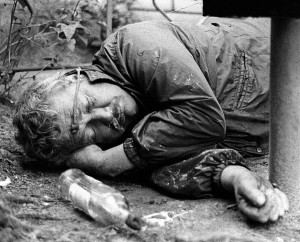
I recently did an interview for the Reef Tank blog about my research, ConservationBytes.com and various opinions about marine conservation in general. I’ve been on about ‘awareness’ raising in biodiversity conservation over the last few weeks (e.g., see last post), saying that it’s really only the first step. To use an analogy, alcoholics must first recognise and accept that they are indeed drunks with a problem before than can take the (infamous AA) steps to resolve it. It’s not unlike biodiversity conservation – I think much of the world is aware that our forests are disappearing, species are going extinct, our oceans are becoming polluted and devoid of fish, our air and soils are degraded to the point where they threaten our very lives, and climate change has and will continue to exacerbate all of these problems for the next few centuries at least (and probably for much longer).

We’ve admitted we have a disease, now let’s do something about it.

Read the full interview here.

CJA Bradshaw

Add to FacebookAdd to NewsvineAdd to DiggAdd to Del.icio.usAdd to StumbleuponAdd to RedditAdd to BlinklistAdd to Ma.gnoliaAdd to TechnoratiAdd to Furl


More than just baby sharks

23 04 2009

Sharks worldwide are in trouble (well, so are many taxa, for that matter), with ignorance, fear, and direct and indirect exploitation (both legal and illegal) accounting for most of the observed population declines.

Despite this worrisome state (sharks have extremely important ‘regulatory’ roles in marine ecosystems), many people have been slowly taking notice of the problem, largely due to the efforts of shark biologists. An almost religious-like pillar of shark conservation that has emerged in the last decade or so is that if we save nursery habitats, all shark conservation concerns will be addressed.

Why? Many shark species appear to have fairly discrete coastal areas where they either give birth or lay eggs, and in which the young sharks develop presumably in relative safety from predators (including their parents). Meanwhile, breeding parents will often skip off as soon as possible and spend a good proportion of their non-breeding lives well away from coasts. Sexual segregation appears to be another common feature of many sharks species (the boys and girls don’t really play together that well).

The upshot is that if you conserve these more vulnerable ‘nursery’ areas in coastal regions, then you’ve protected the next generation of sharks and all will be fine. The underlying reason for this assumption is that it’s next-to-impossible to conserve entire ocean basins where the larger adults may be frolicking, but you can focus your efforts on restricted coastal zones that may be undergoing a lot of human-generated modification (e.g., pollutant run-off, development, etc.).

However, a new paper published recently in Conservation Letters entitled Reassessing the value of nursery areas to shark conservation and management disputes this assumption. Michael Kinney and Colin Simpfendorfer explain that even if coastal nurseries can be properly identified and adequately conserved, there is mounting evidence that failing to safeguard the adult stages could ultimately sustain declines or arrest recovery efforts. The authors support continuing efforts to identify and conserve nurseries, but they say this isn’t enough by itself to solve any real problems. If we want sharks around (and believe me, even though the odd swimmer may get a nip or two, it’s better than the alternative of no sharks), then we’re going to have to restrict fishing effort on the high seas as well.

I think this one qualifies for the ‘Potential‘ list.

CJA Bradshaw

Add to FacebookAdd to NewsvineAdd to DiggAdd to Del.icio.usAdd to StumbleuponAdd to RedditAdd to BlinklistAdd to Ma.gnoliaAdd to TechnoratiAdd to Furl


Woodland Recovery Initiative

12 03 2009

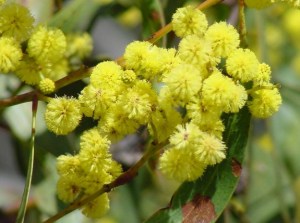
golden wattle (Acacia pycnantha)I’m recommending you view a video presentation (can be accessed by clicking the link below) by A/Prof. David Paton which demonstrates the urgency of reforesting the region around Adelaide. Glenthorne is a 208-ha property 17 km south of the Adelaide’s central business district owned and operated by the University of Adelaide. A major revegetation project called the Woodland Recovery Initative is being organised to achieve the following:

  • reclaim approximately 100 ha of farmland and reconstruct a suitable habitat that encourages the return of native species
  • establish a world-class research centre
  • employ scientists, technicians, teachers and managers to deliver research, educational, community engagement, monitoring and on-ground works
  • develop educational programs that involve local schools in the environmental works, so that young South Australians are engaged in the project and see it as important to the future of their community

In my view, this is a really exciting opportunity to test experimentally the best ways to restore woodlands to maximise biodiversity retention. Once revegetated, the Glenthorne property will link existing reserves to maximise forested area (and as we know, increasing habitat area is one of most effective ways to prevent extinction). The next step is to apply the knowledge gained from the long-term experimentation at Glenthorne to revegetate the regions surrounding Adelaide that have suffered 200 years of heavy deforestation.

I strongly encourage local support of this initiative – it’s not only biodiversity that will benefit – ecosystem services on which the human residents of the greater Adelaide region depend (including extremely important things such as water retention and carbon sequestration) will also be efficiently enhanced by evidence-based ecological restoration of the region. We could certainly use better natural water retention and more carbon sequestration in addition to the re-establishment of many extirpated native species!

VIEW VIDEO BY CLICKING HERE

CJA Bradshaw


Tropical Turmoil II

8 03 2009

In August last year I covered a paper my colleagues (Navjot Sodhi and Barry Brook) and I had in press in Frontiers in Ecology and the Environment entitled Tropical turmoil – a biodiversity tragedy in progress. The paper is now available in the March 2009 issue of the journal (click here to access). We were also fortunate enough to grab the front cover (shown here) and have a dedicated podcast that you can listen to by clicking here about the paper and its findings. I encourage ConservationBytes.com readers to have a listen if they’re interested in learning more about the woeful state of tropical biotas worldwide, and maybe some ways to rectify the problems. The intro to the podcast can be viewed by clicking here.

CJA Bradshaw


Toilet Torrens II: The Plot Sickens

14 02 2009
© CJA Bradshaw

© CJA Bradshaw

A few days into the Torrens ‘River’ disaster, and we see very little in the way of a truly dedicated, organised clean-up. With some token efforts to clean up the more obvious rubbish in the lake section itself (i.e., cars, fridges, etc.), there is nothing suggesting the true problems are going to be addressed. Indeed, the authorities are desperately trying to ‘find’ water to cover the problem up rather than deal with it.

Instead of a catchment-wide mass clean-up, the removal of the water-sucking invasive plants that line the river’s edge (see photos below), the implementation of a water neutrality scheme, and the removal of hundreds of untreated drainage pipes, they are willing to spend over $1 million to pipe in water from elsewhere.

I can’t believe it.

This is the best opportunity Adelaide has ever had to rectify the problem and clean the mess up once and for all; instead, the investment is going toward a cosmetic cover-up that will effectively fix nothing. Toothless. Some images I took today while cycling along the Torrens path follow:

© CJA Bradshaw

© CJA Bradshaw

© CJA Bradshaw

© CJA Bradshaw

© CJA Bradshaw

© CJA Bradshaw

CJA Bradshaw

Add to FacebookAdd to NewsvineAdd to DiggAdd to Del.icio.usAdd to StumbleuponAdd to RedditAdd to BlinklistAdd to Ma.gnoliaAdd to TechnoratiAdd to Furl


Cloning for conservation – stupid and wasteful

5 02 2009
© J. F. Jaramillo

© J. F. Jaramillo

I couldn’t have invented a better example of a Toothless conservation concept.

I just saw an article in the Independent (UK) about cloning for conservation that has rehashed the old idea yet again – while there was some interesting thoughts discussed, let’s just be clear just how stupidly inappropriate and wasteful the mere concept of cloning for biodiversity conservation really is.

1. Never mind the incredible inefficiency, the lack of success to date and the welfare issues of bringing something into existence only to suffer a short and likely painful life, the principal reason we should not even consider the technology from a conservation perspective (I have no problem considering it for other uses if developed responsibly) is that you are not addressing the real problem – mainly, the reason for extinction/endangerment in the first place. Even if you could address all the other problems (see below), if you’ve got no place to put these new individuals, the effort and money expended is an utter waste of time and money. Habitat loss is THE principal driver of extinction and endangerment. If we don’t stop and reverse this now, all other avenues are effectively closed. Cloning won’t create new forests or coral reefs, for example.

I may as well stop here, because all other arguments are minor in comparison to (1), but let’s continue just to show how many different layers of stupidity envelop this issue.

2. The loss of genetic diversity leading to inbreeding depression is a major issue that cloning cannot even begin to address. Without sufficient genetic variability, a population is almost certainly more susceptible to disease, reductions in fitness, weather extremes and over-exploitation. A paper published a few years ago by Spielman and colleagues (Most species are not driven to extinction before genetic factors impact them) showed convincingly that genetic diversity is lower in threatened than in comparable non-threatened species, and there is growing evidence on how serious Allee effects are in determining extinction risk. Populations need to number in the 1000s of genetically distinct individuals to have any chance of persisting. To postulate, even for a moment, that cloning can artificially recreate genetic diversity essential for population persistence is stupidly arrogant and irresponsible.

3. The cost. Cloning is an incredibly costly business – upwards of several millions of dollars for a single animal (see example here). Like the costs associated with most captive breeding programmes, this is a ridiculous waste of finite funds (all in the name of fabricated ‘conservation’). Think of what we could do with that money for real conservation and restoration efforts (buying conservation easements, securing rain forest property, habitat restoration, etc.). Even if we get the costs down over time, cloning will ALWAYS be more expensive than the equivalent investment in habitat restoration and protection. It’s wasteful and irresponsible to consider it otherwise.

So, if you ever read another painfully naïve article about the pros and cons of cloning endangered species, remember the above three points. I’m appalled that this continues to be taken seriously!

CJA Bradshaw

Add to FacebookAdd to NewsvineAdd to DiggAdd to Del.icio.usAdd to StumbleuponAdd to RedditAdd to BlinklistAdd to Ma.gnoliaAdd to TechnoratiAdd to Furl


Just give them a lift

16 01 2009

TvyamNb-BivtNwcoxtkc5xGBuGkIMh_nj4UJHQKupCdpgnnqXqJ70oP0iCjWicCL0ROBPry44AuNOne of the main problems in a rapidly changing world, whether that change arises from habitat loss, invasive species or climate change, is that often the pace of change is simply too fast for many species to keep up. History (both ‘deep-time’ and contemporary evidence) tells us this fact very clearly in the record of extinctions – species that have ‘slow’ life histories (i.e., those that mature late in their lives, produce few young and breed infrequently) are the most susceptible to extinction. More often than not, these tend to be the big organisms because the pace of life scales to body size nonlinearly (the so-called allometry of vital rates). The problem extends to evolution – when the pace of change happens faster than mutation and subsequent natural selection, you are unable to ‘evolve’ to the new environmental state fast enough. The end result – extinction.

So, can we help? Well, it’s fairly difficult to alter reproductive rates unless you do some assisted breeding programme (which generally don’t do much for the conservation status of a species) and you can’t really alter age at maturity or growth rates. You can stop or reverse habitat destruction, and you can translocate species in some circumstances.

So, in the case of climate change, if local conditions become too unbearable for a species (temperature, salinity, precipitation, etc.), just give them a lift to another spot where the new conditions suit! Sounds simple, but it could be rather difficult.

A relatively new Policy Forum piece in Science outlines how ‘assisted colonisation‘ could work for some species. The issues are many – most translocations fail for one reason or another (too few individuals moved, unforeseen predators or competitors, lack of appropriate habitat, etc.), but as we’ve seen the world over in the case of successful alien species, invasions can be remarkably successful (at least from the perspective of the invading species).

The key then is to think very carefully about which species to move and which to leave alone. Of course, generalist, highly adaptable and dispersed species probably don’t need the help, but restricted-range species or habitat specialists could really benefit from such action. You also run the risk of creating more problems than you solve (e.g., new invasive pests, disease introduction). However, a select group of species might just need this very assistance to persist given how much we’ve already change the biosphere, and how much more it will change due to shifting climate in the near future.

It’s controversial, but it could work in many circumstances. That’s why I’m adding this paper (Hoegh-Guldberg et al. – Assisted colonization and rapid climate change) to the Potential list.

CJA Bradshaw

Add to FacebookAdd to NewsvineAdd to DiggAdd to Del.icio.usAdd to StumbleuponAdd to RedditAdd to BlinklistAdd to Ma.gnoliaAdd to TechnoratiAdd to Furl


Classics: the Allee effect

22 12 2008

220px-Vortex_in_draining_bottle_of_waterAs humanity plunders its only home and continues destroying the very life that sustains our ‘success’, certain concepts in ecology, evolution and conservation biology are being examined in greater detail in an attempt to apply them to restoring at least some elements of our ravaged biodiversity.

One of these concepts has been largely overlooked in the last 30 years, but is making a conceptual comeback as the processes of extinction become better quantified. The so-called Allee effect can be broadly defined as a “…positive relationship between any component of individual fitness and either numbers or density of conspecifics” (Stephens et al. 1999, Oikos 87:185-190) and is attributed to Warder Clyde Allee, an American ecologist from the early half of the 20th century, although he himself did not coin the term. Odum referred to it as “Allee’s principle”, and over time, the concept morphed into what we now generally call ‘Allee effects’.

Nonetheless, I’m using Allee’s original 1931 book Animal Aggregations: A Study in General Sociology (University of Chicago Press) as the Classics citation here. In his book, Allee discussed the evidence for the effects of crowding on demographic and life history traits of populations, which he subsequently redefined as “inverse density dependence” (Allee 1941, American Naturalist 75:473-487).

What does all this have to do with conservation biology? Well, broadly speaking, when populations become small, many different processes may operate to make an individual’s average ‘fitness’ (measured in many ways, such as survival probability, reproductive rate, growth rate, et cetera) decline. The many and varied types of Allee effects can work together to drive populations even faster toward extinction than expected by chance alone because of self-reinforcing feedbacks (see also previous post on the small population paradigm). Thus, ignorance of potential Allee effects can bias everything from minimum viable population size estimates, restoration attempts and predictions of extinction risk.

A recent paper in the journal Trends in Ecology and Evolution by Berec and colleagues entitled Multiple Allee effects and population management gives a more specific breakdown of Allee effects in a series of definitions I reproduce here for your convenience:

Allee threshold: critical population size or density below which the per capita population growth rate becomes negative.

Anthropogenic Allee effect: mechanism relying on human activity, by which exploitation rates increase with decreasing population size or density: values associated with rarity of the exploited species exceed the costs of exploitation at small population sizes or low densities (see related post).

Component Allee effect: positive relationship between any measurable component of individual fitness and population size or density.

Demographic Allee effect: positive relationship between total individual fitness, usually quantified by the per capita population growth rate, and population size or density.

Dormant Allee effect: component Allee effect that either does not result in a demographic Allee effect or results in a weak Allee effect and which, if interacting with a strong Allee effect, causes the overall Allee threshold to be higher than the Allee threshold of the strong Allee effect alone.

Double dormancy: two component Allee effects, neither of which singly result in a demographic Allee effect, or result only in a weak Allee effect, which jointly produce an Allee threshold (i.e. the double Allee effect becomes strong).

Genetic Allee effect: genetic-level mechanism resulting in a positive relationship between any measurable fitness component and population size or density.

Human-induced Allee effect: any component Allee effect induced by a human activity.

Multiple Allee effects: any situation in which two or more component Allee effects work simultaneously in the same population.

Nonadditive Allee effects: multiple Allee effects that give rise to a demographic Allee effect with an Allee threshold greater or smaller than the algebraic sum of Allee thresholds owing to single Allee effects.

Predation-driven Allee effect: a general term for any component Allee effect in survival caused by one or multiple predators whereby the per capita predation-driven mortality rate of prey increases as prey numbers or density decline.

Strong Allee effect: demographic Allee effect with an Allee threshold.

Subadditive Allee effects: multiple Allee effects that give rise to a demographic Allee effect with an Allee threshold smaller than the algebraic sum of Allee thresholds owing to single Allee effects.

Superadditive Allee effects: multiple Allee effects that give rise to a demographic Allee effect with an Allee threshold greater than the algebraic sum of Allee thresholds owing to single Allee effects.

Weak Allee effect: demographic Allee effect without an Allee threshold.

For even more detail, I suggest you obtain the 2008 book by Courchamp and colleagues entitled Allee Effects in Ecology and Conservation (Oxford University Press).

CJA Bradshaw

Add to FacebookAdd to NewsvineAdd to DiggAdd to Del.icio.usAdd to StumbleuponAdd to RedditAdd to BlinklistAdd to Ma.gnoliaAdd to TechnoratiAdd to Furl

(Many thanks to Salvador Herrando-Pérez for his insight on terminology)


Foiling the frog-killing fungus

15 12 2008

© F. Brem

© F. Brem

Something I picked up the other day that is an interesting application of ecology and engineering – extreme interventions like this may become more and more necessary, especially for particularly vulnerable taxa like amphibians. This one from New Scientist:

A fungal disease is decimating amphibian populations around the world, and so far the only way to save a species at risk is to remove individuals from the wild. Is it time to try taking out the disease as well?

So far the majority of amphibian conservation efforts have focused on identifying species at high risk of extinction, and establishing captive breeding programmes in biosecure units where they will be protected from Batrachochytrium dendrobatidis Bd, the chytrid fungus that is responsible for the devastating scourge.

“The immediate response has been the right one: to get species that are at risk into captivity,” says Trent Garner of the Institute of Zoology in London. However, he adds, “we’re potentially missing out on some very important species” because, inevitably, some are prioritised over others.

Now an alternative strategy is emerging, which many had previously thought impossible: to reduce the amount of Bd in the wild, and perhaps even to enable amphibians to survive alongside it.

In lab experiments, Garner and colleagues have shown that it is possible to cure tadpoles infected with Bd by bathing them in the antifungal drug itraconazole for 5 minutes a day for seven days. “Even using extremely low doses, we showed that you can eliminate Bd from tadpoles,” says Garner, who presented his results at a meeting on amphibian decline at the Zoological Society of London last week.


Classics: Invasion Meltdown

26 10 2008

One for the Classics page…

melting_rat_by_xenatalhaoui-d71xr1yDaniel Simberloff is probably best known for his work on the implications of invasive (non-indigenous) species for biodiversity, although he has contributed to a wide range of conservation disciplines.

A seminal paper that he co-wrote with Betsy Von Holle is one I consider to be a conservation Classic: their 1999 paper in the inaugural issue of Biological Invasions entitled Positive interactions of nonindigenous species: Invasional meltdown?

The establishment of non-indigenous species can have severe negative impacts on ecosystems. Introduced species that become invasive (widespread and locally dominant) transform habitats, degrade ecosystem services, reduce biodiversity and are some of the greatest threats to ecosystems today (perhaps nearly as important as habitat loss and over-exploitation).

The so-called ‘invasion meltdown‘ describes the process by which the negative impacts induced on native ecosystems by one invading non-indigenous species are exacerbated by interactions with another exotic species.

Although there isn’t a lot of information on invasion meltdowns, one good example comes from Christmas Island in tropical Australia. The introduced yellow crazy ant (Anoplolepis gracilipes) exploded in numbers when another exotic species, a scale insect, was introduced about the same time that a native scale insect species also had a local outbreak.  Because ants protect scale insects from predators and parasites in return for scale honeydew, the crazy ant suddenly had a much more abundant food source, leading to the huge increase in the ant population. This large ant population devastated the population of native red crab (Gecarcoidea natalis) and resulted in massive increase in forest undergrowth due to reduced herbivory by crabs (see O’Dowd et al. 2003). The great decline in red crabs may also make the island more vulnerable to other plant invasions.

What did Simberloff & Van Holle’s idea and subsequent examples of invasion meltdowns teach us? I believe their paper really hit home the idea that invasive species were not only a threat to biodiversity, but the self-reinforcing mutualisms of invasive species could rival other forms of human-induced biodiversity decline. Indeed, many of the effects of invasive species will be reinforced by global climate change through increasing temperatures, rising sea levels and changing rainfall patterns that increase the potential range and spread of invading species, so the problem is only going to get worse. This is why the U.N. began the Global Invasive Species Programme (GISP), and world-wide, countries are attempting to restrict the flow of invasive species so that their negative effects are lessened. Identifying the extent of the problem has stimulated a lot of people to act accordingly.

CJA Bradshaw

Add to FacebookAdd to NewsvineAdd to DiggAdd to Del.icio.usAdd to StumbleuponAdd to RedditAdd to BlinklistAdd to Ma.gnoliaAdd to TechnoratiAdd to Furl


Threatened species depend on protected areas

4 09 2008

One for the Potential list:

3932397_origA great new paper has just come out in Global Change Biology by Sarah Jackson and Kevin Gaston: Land use change and the dependence of national priority species on protected areas. In what is simultaneously frightening and ecouraging is the observation that of nearly 400 Biodiversity Action Plan (BAP) species considered either to be globally threatened or rapidly declining in the UK (i.e., > 50 % decline over 25 years), 55 % were largely restricted to statuatory protected areas in the UK. These areas cover about 11.5 % of Britain’s land surface.

What’s amazing about this is that without these reserves, these (hundreds) of species would already be extinct (or very close to it) – if this isn’t one of the strongest arguments for reserves, I don’t know what is. Not only are reserves essential for maintaining populations of threatened species, their spatial connectivity is also highly influential on persistence probability (future posts on fragmentation coming).

Much of the planet has now been modified to the point where any sort of species preservation will necessarily require large, expansive, contiguous networks of protected areas. Jackson & Gaston conclude:

Britain has undergone particularly extensive land transformation, reducing many originally much more widespread vegetation/habitat types to scattered fragments, few of which can be considered strictly natural (Rackham, 1986). A proportion of these fragments receive statutory protection and intensive management, increasing the likelihood that species of conservation concern are restricted to such areas. This circumstance is not unique to Britain, being found in many heavily developed regions including much of northwestern Europe, although it is not so extreme in many others. Britain may, thus, represent a possible future scenario for such regions. Under such circumstances, it is not unlikely that many species if they are not already restricted to protected areas will become so (e.g. species confined to tropical forest habitats following deforestation).

 Keeping things off limits from the burgeoning human population is therefore one of the major ways we can stem the tide of extinctions.

CJA Bradshaw

Add to FacebookAdd to NewsvineAdd to DiggAdd to Del.icio.usAdd to StumbleuponAdd to RedditAdd to BlinklistAdd to Ma.gnoliaAdd to TechnoratiAdd to Furl


Assessing Conservation Actions

3 09 2008

A good post from Tim Bean (Berkeley) over at ConsBlog.org – one for the Potential list:

12353889-stock-market-growth-and-success-with-a-growing-green-tree-in-the-shape-of-a-stock-investment-graph-s

This paper in press at Conservation Letters by Haines et al. presents a novel method for assessing conservation actions. There’s been quite a bit of work done in the past decade, particularly by NGOs, to develop methods to assess whether their actions have actually succeeded; this work was spear-headed in particular by Nick Salafsky and his Foundations of Success. This paper suggests that many of conservation biggest problems can be monitored with spatial datasets and proposes using the Human Footprint as a basis for such monitoring. The Human Footprint is, in essence, a collection of spatial datasets that holistically represent the collective anthropogenic impact on the land. In their paper, Haines et al. suggest that by tracking these spatial datasets through time in a paired way – conservation action site randomly paired with a control – we can get a better handle on whether the particular action was successful. The nice thing about the paper is how clear-eyed it is about what is and is not possible using this approach:

The human footprint is a spatially explicit approach to conservation planning that may serve as an effective visual medium to public audiences and stakeholders worldwide by simplifying the presentation of complex information.

(This is always the last, best resort for spatial analysts: even if the model isn’t perfect, it’s a great communication tool. ) But they also warn:

Spatial data rarely produce a complete picture of what negative impacts are occurring because human footprint data are not well-suited to track anthropogenic impacts that lack a spatial signature…[e.g.] the spread of some chemical pollutants, invasive species, diseases, and impacts of poaching…

Although I have to disagree partially with these particulars – presence of roads is often a very good correlative of poaching – their main point is an important one to consider. How well does a spatial model of human influence catch these hidden factors? A few years ago I did an informal (and sadly never completed) analysis of invasive plants and the Human Footprint and found that they were actually fairly well correlated. You could also argue that disease may be higher amongst individuals that are negatively impacted by the presence of humans. There’s plenty of opportunity here for further exploration.

Thanks, Tim.

Add to FacebookAdd to NewsvineAdd to DiggAdd to Del.icio.usAdd to StumbleuponAdd to RedditAdd to BlinklistAdd to Ma.gnoliaAdd to TechnoratiAdd to Furl


Show me the (conservation) evidence

29 08 2008

Guest post from Professor William J. Sutherland, Miriam Rothschild Chair in Conservation Biology, Department of Zoology, University of Cambridge, Cambridge CB2 3EJ, United Kingdom:

We carry out research in conservation largely under the belief that this is making a difference to the planet. However, research (e.g., Sutherland et al. 2004) shows that little of this research is used in practice. There are many good reasons why practitioners only use a small fraction of the available science: most do not have access to the scientific search engines, they usually have very limited access to scientific journals and most importantly, they usually do not have the time or training to search the literature. Another important problem is that the most important source of information is the experience of practitioners, but this is rarely quantified or documented.

To help overcome these problems the website ConservationEvidence.com has been established. It has two main objectives: (1) providing a means for practitioners to document their experience through the online journal Conservation Evidence and (2) summarising the global literature including unpublished report and papers in languages other than English. Currently (August 2008), this has details of over 1200 interventions but the aim is to increase this to 10,000 interventions. The next stage, which is currently being worked on, is then to provide summaries of the consequences of different interventions.

The ambitious objective is to change the way in which global conservation practice is carried out so that practitioners have ready access to information on the effectiveness of interventions including the experience of other practitioners.

Add to FacebookAdd to NewsvineAdd to DiggAdd to Del.icio.usAdd to StumbleuponAdd to RedditAdd to BlinklistAdd to Ma.gnoliaAdd to TechnoratiAdd to Furl


Cost, not biodiversity, dictates decision to conserve

26 08 2008

One for the Potential list:

originalEuroGreen_LogoI’ve just read a great new paper by Bode et al. (2008) entitled Cost-effective global conservation spending is robust to taxonomic group.

After the hugely influential biodiversity ‘hotspot concept hit the global stage, there was a series of subsequent research papers examining just how we should measure the ‘biodiversity’ component of areas needing to be conserved (and invested in). The problem was that depending on which taxa you looked at, and what measure of ‘biodiversity’ you used (e.g., species richness, endemism, latent threat, evolutionary potential, functional redundancy), the priority list of where, how much and when to invest in conservation differed quite a lot. In other words, the congruency among listed areas was rather low (summarised nicely in Thomas Brooks‘ paper in Science Global biodiversity conservation priorities and examined also by Orme et al. 2005). This causes all sorts of problems for conservation investment planners – what to invest in and where?

Bode and colleagues’ newest paper demonstrates at least for endemism, the taxon on which you base your assessment is much less important for maximising species conservation than factors such as land cost and the degree of threat (e.g., as measured by the IUCN Red List).
Of course, their findings could be considered too simplistic because they don’t (couldn’t) evaluate other potentially more important components of ‘biodiversity’ such as genetic history (evolutionary potential) or ecological functional redundancy (the idea that a species becomes more important to conserve if no other species provide the same ecosystem functions); however, I think this paper is something of a landmark in that it shows that ‘socio-economic’ uncertainty generally outweighs uncertainty due to biodiversity measures. The long and short of this is that planners should start investing if there is evidence of heightened threat and land is cheap.

A few other missing bits means that the paper is more heuristic than prescriptive (something the authors state right up front). There is no attempt to take biodiversity, threat or land cost changes arising from climate change into account (see relevant post here), so some of the priorities are questionable. Related to this is the idea of latent risk (see relevant paper by Cardillo et al. 2006) – what’s not necessarily threatened now but likely will be in the very near future. Also, only a small percentage of species are listed in the IUCN Red List (see relevant post here), so perhaps we’re missing some important trends. Finally, I had to note that almost all the priority areas outlined in the paper happened to be in the tropics, which stands to reason given the current and ongoing extinction crisis occurring in this realm. See a more detailed post on ‘tropical turmoil‘.

Despite the caveats, I think this could provide a way forward to the conservation planning stalemate.

CJA Bradshaw

Add to FacebookAdd to NewsvineAdd to DiggAdd to Del.icio.usAdd to StumbleuponAdd to RedditAdd to BlinklistAdd to Ma.gnoliaAdd to TechnoratiAdd to Furl


Classics: Biodiversity Hotspots

25 08 2008

‘Classics’ is a category of posts highlighting research that has made a real difference to biodiversity conservation. All posts in this category will be permanently displayed on the Classics page of ConservationBytes.com

info-chap7-slide-pic03Myers, N., Mittermeier, R.A., Mittermeier, C.G., da Fonseca, G.A.B. & Kent, J. (2000). Biodiversity hotspots for conservation priorities. Nature, 403, 853-858

According to Google Scholar, this paper has over 2500 citations. Even though it was published less than a decade ago, already Myers and colleagues’ ‘hotspots’ concept has become the classic lexicon for, as they defined it, areas with high species endemism and degradation by humans. In other words, these are places on the planet (originally only terrestrial, but the concept has been extended to the marine realm) where at the current rates of habitat loss, exploitation, etc., we stand to lose far more irreplaceable species. The concept has been criticised for various incapacities to account for all types of threats – indeed, many other prioritisation criteria have been proposed (assessed nicely by Brooks et al. 2006 and Orme et al. 2005), but it’s the general idea proposed by Myers and colleagues that has set the conservation policy stage for most countries. One little gripe here – although the concept ostensibly means areas of high endemic species richness AND associated threat, people often take the term ‘hotspot’ to mean just a place with lots of species. Not so. Ah, the intangible concept of biodiversity!

CJA Bradshaw

Add to FacebookAdd to NewsvineAdd to DiggAdd to Del.icio.usAdd to StumbleuponAdd to RedditAdd to BlinklistAdd to Ma.gnoliaAdd to TechnoratiAdd to Furl


Captive breeding for conservation

7 08 2008

My first attempt at this potentially rather controversial section of ConservationBytes.com. Inspired by my latest post (30/07/2008), I must comment on what I believe is one of the biggest wasters of finite conservation (financial) resources – captive breeding for population recovery. The first laureate of the Toothless category goes to 7 authors (Snyder et al.) who I believe deserve at least a round of beers for their bold paper published way back in 1996 in Conservation BiologyLimitations of captive breeding in endangered species recovery.

The paper describes basically that in most situations, captive breeding for population recovery is ill-conceived, badly planned, overly expensive and done without any notion of the particular species’ minimum viable population size (the population size required to provide a high probability of persistence over a long period). Examples of ridiculous cloning experiments done in the name of ‘conservation’ (one example with which I am familiar is the case of the SE Asian banteng cloning experiment – these conservation-challenged scientists actually claimed “We hope that the birth of these animals will open the way for a new strategy to help maintain valuable biodiversity and to respond to the challenge of large-scale extinctions ahead.” after spending amounts that would make Bill Gates blush). Come on! Minimum viable population sizes number in the thousands to tens of thousands (e.g., Brook et al. 2006; Traill et al. 2007), not to mention the genetic diversity necessary for persistence captive populations generally lack (see Frankham et al. 2004).

In the spirit of ecological triage, we must focus on conservation efforts that have a high probability of changing the extinction risk of species. Wasting millions of dollars to save a handful of inbred individuals (insert your favourite example here) WILL NOT, in most cases, make any difference to population viability (with only a few exceptions). Good on Snyder et al. (1996) for their analysis and conclusions, but zoos, laboratories and other captive-rearing organisations around the world continue to throw away millions using the ‘conservation’ rationale to justify their actions. Rubbish. I’m afraid there is little evidence that the Snyder et al. paper changed anything. (post original published in Toothless 31/07/2008).

CJA Bradshaw

Add to FacebookAdd to NewsvineAdd to DiggAdd to Del.icio.usAdd to StumbleuponAdd to RedditAdd to BlinklistAdd to Ma.gnoliaAdd to TechnoratiAdd to Furl


Realistic conservation investment

18 07 2008

I’m currently attending the Society for Conservation Biology‘s Annual Meeting in Chattanooga, Tennessee, USA and blogging on presentations I think are worth mentioning.

In a surprise shift from the previously planned final plenary talk, Prof. Helene Marsh of James Cook University gave a nice example of how good research can be melded with non-technical opinion to weight threatened species for recovery investment. Using a north Queensland example, she described how technical assessments of relative threat risk combined with weightings from non-technical policy makers can provide the most realistic and relevant conservation investment when used simultaneously. Based on their paper in 2007 (‘Optimizing allocation of management resources for wildlife‘), Prof. Marsh outlined a quantitative approach to meld these decision-making components with real-world outcomes. I’d like to see some of the real outcomes in terms of recovery of north Queensland threatened species, but at least the State appears to be on the right track by using this tool.

CJA Bradshaw