Getting conservation stakeholders involved

14 04 2011

Here’s another guest post from another switched-on Queensland student, Duan Biggs. Duan, originally from Namibia and South Africa, is doing his PhD at the ARC Centre for Coral Reef Studies at James Cook University in Townsville, Queensland. His PhD is investigating the resilience of nature-based tourism to climate change. I’ve met Duan a few times, and I’m impressed by his piercing views on conservation science and its implementation. Duan has already posted here on ConservationBytes.com (‘Make your conservation PhD relevant‘) and now adds his latest post discussing a paper he’s just had published in Conservation Letters. Thanks, Duan.

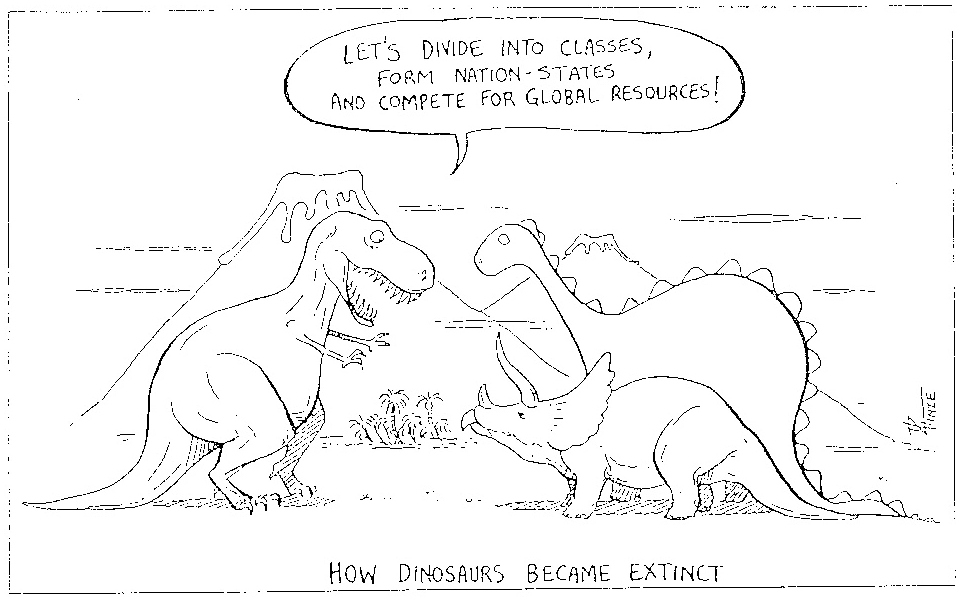
Achieving conservation outcomes almost always means working with stakeholders. ConservationBytes readers who have participated in multi-stakeholder conservation processes will know how difficult they are. Even more so when parties come from very different backgrounds and cultures. Farmers feel they just cannot comprehend what scientists are saying… ecologists silently curse [CJAB’s note: well, not always silently] because government officials ‘just don’t get it’ and so forth. So often, conservation projects are impeded, or even brought to a grinding halt because the very different perspectives that stakeholders bring to the table and the inability to see eye to eye.  This has left many a fervent conservationist and scientist feeling like the associated cartoon.

However, our new paper entitled The implementation crisis in conservation planning – could ‘mental models’ help? just out in Conservation Letters suggests ways of dealing with this almighty challenge.

Effective conservation requires conservation scientists to partner successfully with managers, extractive users and other stakeholder groups. Often, key stakeholders come from very different backgrounds and cultures, and hence have a diversity of values that result in a range of perspectives on issues. These differences are frequently a source of failure in conservation projects.

Read the rest of this entry »


Crocodiles, spiders and leeches

11 04 2011

I just wrote a fun little piece for a new section in the journal Frontiers in Ecology and the Environment that they’re calling Trails and Tribulations. The basic idea is that the author recounts a particularly interesting field-related experience through which an ecological concept is woven.

Editor-in-Chief Sue Silver said that I could reproduce my article here as long as I acknowledged Frontiers and the Ecological Society of America. It was fun to write, and I hope you enjoy it too [the PDF of the article is available free of charge here].

“So does each team get a hand gun?”

“No, you get an oar”

“What good is an oar?”

“Listen, mate. When a 3-metre croc jumps out of the swamp at you, there is nothing more natural in the world than to thump him with a big stick. It’s an autonomous response. With a gun, IF you manage to keep it dry, and IF you manage to get it out in time before the croc bites off your head, chances are you’ll just shoot the bloke in front of you anyway. So you get an oar.”

“Fair enough”.

That is an approximate, paraphrased reproduction of the initial conversation I had with renowned Australian crocodile biologist, Grahame Webb, just prior to my first (and as it turns out, only) trip to collect crocodile eggs for his Darwin wildlife park and crocodile farm. I volunteered to take part in the collection because I had recently begun working with Grahame and his team tracking the world’s largest crocodile species – the saltwater or estuarine crocodile Crocodylus porosus – and modelling aspects of its populations (Bradshaw et al. 2006). Having already been out on several occasions to harpoon and satellite-tag animals (some measuring > 4 m) on the Mary River, and cage-trap others in Kakadu National Park, I thought a little egg collection would be a proverbial walk in the park. Little did I know that it would end up being one of my more memorable experiences.

Let me walk you through the process. First, you wait until the height of the wet season and drive out as far as you can toward the breeding swamp of interest (in this case, Melacca Swamp in the Adelaide River flood plain, about one hour’s drive from Darwin). Then you and two other loonies pile into a small helicopter equipped with landing pontoons which ferries you to one of many previously identified crocodile nests. Because there is usually too much vegetation around the nest itself, the helicopter must land about 100-300 m away. Clothed only in long pants, a long-sleeved shirt and cotton gloves to protect your skin from the slicing blade grass, you jump off the helicopter’s pontoons into impenetrably murky, chest-deep water. One of the team drags an esky (chiller box into which eggs will be placed) and another carries an oar. As the noise of the departing helicopter becomes a faint buzz, you suddenly realise via the rapid expansion of your terminal sphincter that you are in the middle of a crocodile-filled swamp – and you are holding an oar. Read the rest of this entry »


Cartoon guide to biodiversity loss XI

22 03 2011

The latest six cartoons… (see full stock of previous ‘Cartoon guide to biodiversity loss’ compendia here).

Read the rest of this entry »


Build a bridge out of ‘er

12 03 2011

Apologies to Monty Python and my poor attempt to make the over-used expression ‘bridging the gap’ humorous.

Today’s guest post comes from across the Pacific Ocean. Dr. Sara Maxwell is a postdoctoral fellow with Marine Conservation Biology Institute and University of California Santa Cruz, Long Marine Laboratory. She was kind enough to contribute to ConservationBytes.com about an issue I’ve covered before in various forms – making conservation research relevant for conservation action.

© R. Arlettaz

In a catalyzing article titled “From publications to public actions: when conservation biologists bridge the gap between research and implementation” in the November 2010 issue of BioScience, Raphaël Arlettaz1 and his colleagues Michael Schaub2, Jérôme Fournier3, Thomas Reichlin2, Antoine Sierro4, James Watson5 and Veronika Braunisch2 explore reasons for our hard work as conservation biologists not reaching the implementation phase. This article strongly resonated with my colleague, Kiki Jenkins6 and I, Sara Maxwell. This resulted in a series of letters published in BioScience and now we join together, along with Jeffrey Camm7, Guillaume Chapron8, Liana Joseph9, and Rudi Suchant10 to synthesize our ideas and present them to the larger conservation community via ConservationBytes.

The article that sparked the discussion

In their article, Arlettaz and colleagues highlight some of the main roadblocks to implementing conservation research. The main reasons are that:

  1. The research made by conservation biologists’ does not lend itself well to implementation, i.e., as a community we often focus on the wrong questions or address them in ways that do not lead to practical applications for practitioners;
  2. The outcomes of conservation biologists’ research tends not to reach practitioners and so fails to be put into action;
  3. When we successfully align and collaborate with practitioners, there is a lack of economic or political support to make the changes that need to happen; or
  4. Conservation biologists do not commit to engaging themselves in the implementation of their recommendations due to a lack of reward structure for this behaviour and the conflicting roles of academia and conservation.

Arlettaz and colleagues illustrate how to overcome these roadblocks using a case study of their own work on the endangered hoopoe (Upupa epops) in Switzerland, showing how they followed through the recommendations of their work to implementation and had a direct impact on species recovery. They highlight means by which other conservation biologists can do the same.

Read the rest of this entry »


A wee ditty about the bee

29 01 2011

I liked this. Another quick and entertaining look at why bees are important, why they’re crashing, and what people can do about it (at least, on a very fine scale). And it’s all done in Scottish.


Condoms instead of nature reserves

24 01 2011

Rob Dietz over at the Centre for the Advancement of the Steady State Economy thought ConservationBytes.com readers would be interested in the following post by Tim Murray (the original post was entitled What if we stopped fighting for preservation and fought economic growth instead?). There are some interesting ideas here, and I concur that because we have failed to curtail extinctions, and there’s really no evidence that conservation biology alone will be enough to save what remains (despite 50 + years of development), big ideas like these are needed. I’d be interested to read your comments.

Each time environmentalists rally to defend an endangered habitat, and finally win the battle to designate it as a park “forever,” as Nature Conservancy puts it, the economic growth machine turns to surrounding lands and exploits them ever more intensively, causing more species loss than ever before, putting even more lands under threat. For each acre of land that comes under protection, two acres are developed, and 40% of all species lie outside of parks. Nature Conservancy Canada may indeed have “saved” – at least for now – two million acres [my addendum: that’s 809371 hectares], but many more millions have been ruined. And the ruin continues, until, once more, on a dozen other fronts, development comes knocking at the door of a forest, or a marsh or a valley that many hold sacred. Once again, environmentalists, fresh from an earlier conflict, drop everything to rally its defence, and once again, if they are lucky, yet another section of land is declared off-limits to logging, mining and exploration. They are like a fire brigade that never rests, running about, exhausted, trying to extinguish one brush fire after another, year after year, decade after decade, winning battles but losing the war.

Despite occasional setbacks, the growth machine continues more furiously, and finally, even lands which had been set aside “forever” come under pressure. As development gets closer, the protected land becomes more valuable, and more costly to protect. Then government, under the duress of energy and resource shortages and the dire need for royalties and revenue, caves in to allow industry a foothold, then a chunk, then another. Yosemite Park, Hamber Provincial Park, Steve Irwin Park [my addendum – even the mention of this man is an insult to biodiversity conservation]… the list goes on. There is no durable sanctuary from economic growth. Any park that is made by legislation can be unmade by legislation. Governments change and so do circumstances. But growth continues and natural capital [my addendum: see my post on this term and others] shrinks. And things are not even desperate yet. Read the rest of this entry »


Biodiversity begins at home

20 01 2011

A few months ago I was involved in a panel discussion entitled ‘Biodiversity begins at home’ held at the Royal Institution of Australia in Adelaide and sponsored by the Don Dunstan Foundation.

The main thrust of the evening was to have both academic (me & Andy Lowe) and on-the-ground, local conservationists (Sarah Lance, Craig Gillespie and Matt Turner) talk about what people can do to stem the tide of biodiversity loss. The video is now available, so I thought I’d reproduce it here. We talked about a lot of issues (from global to local scale), so if you have a spare hour, you might get something out of this. I did, but it certainly wasn’t long enough to discuss such big issues.

Warning – this was supposed to be more of a discussion and less of a talkfest; unfortunately, many of the panel members seemed to forget this and instead dominated the session. We really needed 4 hours to do this properly (but then, who would have watched the video?).

Read the rest of this entry »


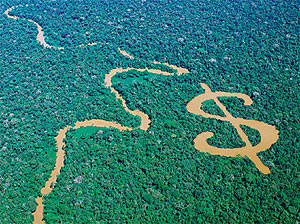
Biowealth – a lexical leap forward for biodiversity appreciation

17 12 2010

Here’s a little idea I’ve been kicking around in my head that I’d like to invite you to debate. Call it an ‘Open Thread’ in the spirit of BraveNewClimate.com’s successful series.

© The Economist

Let’s face it, ‘biodiversity’ is a slippery and abstract concept for most people. Hell, even most ecologists have a hard time describing what biodiversity means. To the uninitiated, it seems simple enough. It’s just the number of species, isn’t it?

Well, no. It isn’t.

Unfortunately, it’s far, far more complicated. First, the somewhat arbitrary pigeon-holing of organisms into Linnaean taxonomic boxes doesn’t really do justice to the genetic gradients within species, among populations and even between individuals. We use the pigeon-hole taxonomy because it’s convenient, that’s all. Sure, molecular genetics has revolutionised the concept, but to most people, a kangaroo is a kangaroo, a robin is a robin and an earthworm is an earthworm. Hierarchical Linnaean taxonomy prevails.

Then there’s the more prickly issue of α, β and γ diversity. α diversity essentially quantifies species richness within a particular area, whereas β diversity is the difference in α diversity between ecosystems. γ diversity is used to measure overall diversity for the different constituent ecosystems of a region. Scale is very, very important (see our recent book chapter for more on this). Read the rest of this entry »


History and future (of Australian ecology and society)

11 12 2010

I’ve just returned from a week-long conference in Canberra where the Ecological Society of Australia (of which I am a relatively new member) has just completed its impressive 50th anniversary conference. It was a long, but good week.

It’s almost a bit embarrassing that I’ve never attended an ESA1 conference before, but I think I waited for the right one. However, the main reason I attended was that I was fortunate to have received the ESA’s 3rd Australian Ecology Research Award (AERA), and the kick-back was a fully funded trip. My only reciprocation was to give a 40-minute plenary lecture – a small price to pay.

I entitled my talk ‘Heads in the desert sand: why Australians should wake up to the biodiversity crisis’, and I received a lot of good feedback. I talked about the global and Australian trends of biodiversity loss and associated ecosystem services, focussing the middle section on some of our work on feral animal ecology (see example). I then gave my views on the seriousness of our current situation and why some of the fastest losses of sensitive ecosystem services are happening right here, right now. I finished off with a section on how I think Australian ecologists could get more relevant and active in terms of research uptake by policy makers. I hope that the talk will be podcastable soon, so stay tuned.

But that was just ‘my’ bit. This post is more about a quick summary of the highlights and my overall impressions.

Read the rest of this entry »


Conservation is all about prioritisation

4 12 2010

Another great guest post from a previous contributor, Piero Visconti.

Biodiversity conservation is about prioritisation – making difficult choices.

With limited money and so many habitats and species in need of protection, deciding where not to expend resources is as important as deciding where to act. Saying ‘no’ will be crucial for ensuring the persistence of biodiversity and ecosystem services, simply because as individuals who value conservation, we will always be tempted to try and save everything.

In the words of Frederick the Great: “He who defends everything, defends nothing.”

As a result, much recent conservation planning research has focused on offering managers general and flexible tools for deciding which conservation features should be the highest priority. Intuitively, we should direct our resources towards areas that have high biodiversity values, and that are likely to be lost if the forces of conservation do not intervene (the most ‘vulnerable’ land parcels). This approach is known as the ‘minimize loss’ approach. Imagine we are worried about the loss of rare native vegetation in the face of ongoing urban expansion (e.g., Melbourne’s western grasslands). To minimize loss, managers would pre-emptively protect sites that are most likely to be developed. But is this decision to race the bulldozers always the best idea? How much does this choice depend on our assumptions about how land is protected, how land developers behave, and the accuracy of our future predictions? Read the rest of this entry »


The Amazing Paul (Mc)Ehrlich

15 11 2010

© CJA Bradshaw

A few years ago when I first wrote about Paul Ehrlich in our book, Tropical Conservation Biology, I quickly became impressed. His track record is, without any exaggeration, truly awe-inspiring. With over 1000 articles published and almost 50 books, the man has been a scientific writing machine for his entire career. He’s also highly influential in the socio-political sphere, and counts among his close friends some of the most politically and scientifically powerful people on the planet. In a word, he’s easily among the world’s greatest living scientists.

Remember, this was my opinion all before I actually met the man. Travelling through central California last year, I was lucky enough to be invited by Paul’s close colleague, Gretchen Daily, to give a talk at their Stanford University lab. It was fortunate that Paul was about at the time and not off promoting his new book or traipsing through the mountains of Colorado chasing butterflies.

We hit it off immediately and it seemed became mates within the space of a few hours. I learnt then that he and his equally famous wife, Anne, were regular visitors to Australia and that he had a particular love affair going with many Australian wines. I invited him to come to Adelaide the following year, he agreed (and importantly, so did the director of the Environment Institute, Mike Young), and it came to pass. Read the rest of this entry »


One billion people still hungry

12 11 2010


overpopulationA few days ago, that printed mouthpiece of Murdoch’s News Corporation in Australia – The Australiani, attacked Paul Ehrlich with a spectacular piece of uninformed gibberish (‘Population bomb still a fizzer 40 years on‘) that we both feel compelled to contest.

The Australian, well-known for its ‘War on Science’, refused to give us the opportunity to respond officially in an Opinion Editorial, so we are compelled to fight back using the blogosphere and our collective networks (which, we might add, probably exceed the distribution of said newspaper). Frankly, it was no surprise that The Australian chose to ignore us.

The article in question was written by Oliver Marc Hartwich of the so-called ‘Centre for Independent Studies’, the hyper-conservative Australian propaganda machine reminiscent of the ultra-right wing American Enterprise Institute, made up of some of Australia’s most powerful business magnates and with no academic affiliation whatsoever. Anything vaguely left-of-centre and even remotely promoting environmental responsibility is considered a viable target.

Recently, we blew the whistle on an equally dangerous man and the institutes he represents – climate-denier Alan Oxley; he and the business interests he represents are responsible for more deforestation, biodiversity loss and financial inequity in South East Asia over the last few decades than almost any single group.

Now we turn our attention to expose the true colours of the Centre for Independent Studies and Mr. Hartwich. Read the rest of this entry »


The bomb is still ticking…

11 11 2010

Apologies for the silence over the last week – it’s been a whirlwind here with Paul Ehrlich visiting The University of Adelaide (amazing for a 78-year old man). In the meantime, Sharon Ede over at Post Growth wrote a great response to the LOLstralian‘s high-school effort to attack Paul a few days ago. Our response is coming shortly, but Sharon’s article is a great precursor.

More than forty years after its publication, the predictions made in Paul Ehrlich’s landmark book ‘The Population Bomb’ are still the subject of debate. Australian think-tank the Centre for Independent Studies (‘Population bomb still a fizzer 40 years on’, The Australian, 8 November, 2010), says Ehrlich’s warnings of dire consequences, including of mass starvation as a result of overpopulation, have not materialised:

“More than 40 years ago, American biologist Paul Ehrlich sketched a doomsday scenario for planet Earth in his book The Population Bomb…Since the publication of the book, the global population has nearly doubled but most of its gloomy predictions have not come true…”

By all means, let’s have a robust debate on population, both at the national and global level. Both are long overdue.

But let’s make it a sophisticated debate, grounded in the science we have available and a thorough understanding of all the issues in play.

According to the United Nations’ Population Division, the global population has increased from one billion in 1804 to over six billion in 2010.

It has taken most of human history to reach one billion people. It took just over a century to add the second billion.

The rate of population growth since then is such that it has taken only twelve years to add the most recent billion people.

The moderate UN scenario is for a population of 9 billion by 2050 – that’s within the lifetime of many of us. Read the rest of this entry »


Wolves masquerading as sheep: the fallout

29 10 2010


© New Zealand Films


Well, we’ve managed to stimulate quite a lively conversation after dropping the Open Letter about Scientific Credibility and the Conservation of Tropical Forests regarding the questionable tactics employed by Alan Oxley and his industrial lobbyist organisations.

Mr. Oxley has responded with vitriol, hand-waving, red herrings and straw men, and failed to address even a single one of our accusations. I am particularly amused by his insinuation that we, the proven scientists, don’t know what science is – but that he does.

Below I reproduce Mr. Oxley’s reaction to our original letter, followed by our response.

I’ll let you, the reader, decide who is most reasonable.

REACTION FROM ALAN OXLEY

There is too much pseudo-scientific hype today about environmentalism and forestry and not enough fact.

I put this double-barrelled question to the Group of 12 scientists who have rather laboriously wandered over the work of World Growth: What biodiversity is expressly protected by a global cessation of conversion of forest land to other purposes and how is that biodiversity scientifically measured? And let’s have some technical response, not political blather. Read the rest of this entry »


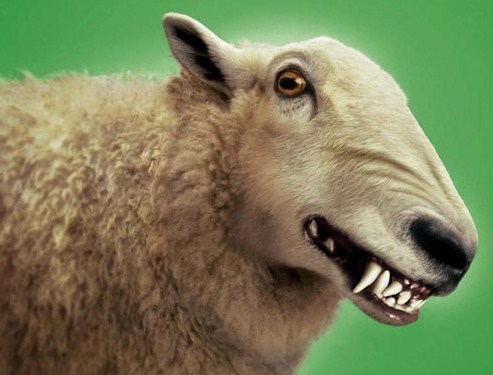
Wolves in sheep’s clothing: industrial lobbyists and the destruction of tropical forests

25 10 2010


As of this morning, a group of distinguished scientists (which I have had the honour of being invited to join) has released an Open Letter to be published in various media outlets worldwide. The letter addresses some of our major concerns over the misinterpretation of facts, and openly misleading statements, by proponents of deforestation in the Asian tropical region. Professor Bill Laurance, an old favourite on ConservationBytes.com, has led the charge and organised a most impressive and shocking list of assertions. I produce the letter below – I encourage all my readers to distribute it as far and wide as possible in the social media-verse.

An Open Letter about Scientific Credibility and the Conservation of Tropical Forests

To whom it may concern:

As professional scientists employed by leading academic and research institutions, we are writing to alert the general public about some of the claims and practices being used by the World Growth Institute (WGI) and International Trade Strategies Global (ITS), and their affiliated leadership.

WGI and ITS operate in close association. ITS is owned by Alan Oxley, an Australian industrial lobbyist, former trade representative, and former Ambassador who also heads WGI. According to its website1, ITS also has “close associations” with several politically conservative US think tanks, including the American Enterprise Institute, the Competitive Enterprise Institute, and the Heritage Foundation.

In our personal view, WGI and ITS — which are frequently involved in promoting industrial logging and oil palm and wood pulp plantations internationally — have at times treaded a thin line between reality and a significant distortion of facts. Specifically, we assert that: Read the rest of this entry »


Yangtze River, colossal dams and famous scientists

23 10 2010


© CJA Bradshaw


Apologies for the silence over the last week – I’ve been a little preoccupied with some business in China. I’ll devote an entire post to my recent trip there (actually, I’m still there – Beijing to be precise), but I thought I’d just explain my absence and provide a little post to sate you until next week.

It’s worth mentioning that I had the enlightening experience of travelling down the Yangtze River between Chongqing and Sandouping last week – this is the area that was flooded by the world’s largest hydro-electric project, the Three Gorges Dam. This is my fourth trip to China and I’ve usually come away with the adjective ‘big’ describing pretty much everything I see here (big agriculture, big population, big pollution, big hotels, big cities…); however, in this case, ‘big’ doesn’t even come close. It’s bloody massive, and the ecological devastation (not to mention the 1.3 million people it displaced) is hard to describe in words. Sure, there are beautiful bits left (see the accompanying photo), but most of the damage is under water and along the banks of the mighty (and now, a lot mightier) Yangtze River. Read the rest of this entry »


Humans 1, Environment 0

27 09 2010

© flickr.com/photos/singapore2010

While travelling to our Supercharge Your Science workshop in Cairns and Townsville last week (which, by the way, went off really well and the punters gave us the thumbs up – stay tuned for more Supercharge activities at a university near you…), I stumbled across an article in the Sydney Morning Herald about the state of Australia.

That Commonwealth purveyor of numbers, the Australian Bureau of Statistics (ABS), put together a nice little summary of various measures of wealth, health, politics and environment and their trends over the last decade. The resulting Measures of Australia’s Progress is an interesting read indeed. I felt the simple newspaper article didn’t do the environmental components justice, so I summarise the salient points below and give you my tuppence as well. Read the rest of this entry »


Global erosion of ecosystem services

14 09 2010

A few months ago I was asked to give a lecture about erosion of ecosystem services to students in the University of Adelaide‘s Issues in Sustainable Environments unit. I gave that lecture last week and just uploaded a slidecast of the presentation (with audio) today.

I’ve reproduced the lecture here for your viewing pleasure. I hope you find the 45-minute presentation useful. Note that the first few minutes cover me referring to the Biodiversity film short that I posted not too long ago.

CJA Bradshaw


Biodiversity: from conservation science to action

11 09 2010

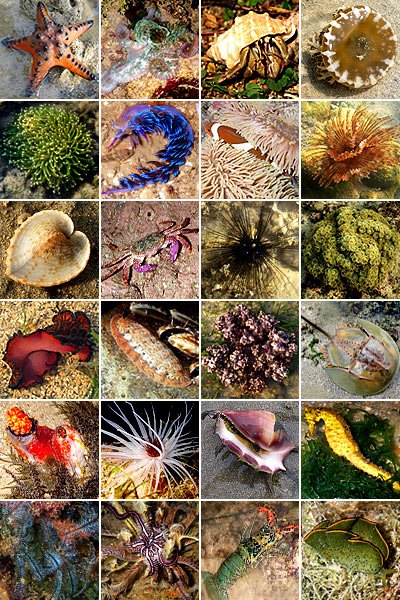
© tidechaser.blogspot.com

About 3 weeks ago I blogged about Guillaume Chapron‘s vision to notch up conservation implementation around the globe. After that little piece Guillaume invited me and a few others (including one of Australia’s own conservation gurus, Hugh Possingham) to co-author a piece on the new Nature Network‘s ‘Soapbox Science‘ blog. The Soapbox Science blog is:

“… a new group blog, covering the whole of science. Over the coming months, we’ll be inviting researchers from all over the world to write one-off posts. The subjects may be controversial, opinionated, speculative, or just plain interesting, and may be written by any scientist with something to say.”

We managed to grab the first post in this endeavour, so I reproduce it here for ConservationBytes.com readers. Enjoy!

Ecosystem degradation and species extinction rates are steadily accelerating, mainly as a result of unbounded human population growth, extravagant consumption patterns and associated land and sea degradation. Researchers are pushing science forward in an attempt to reverse the biodiversity ‘crisis’. In their papers they systematically stress how their results can serve to enhance conservation management or implement new corrective actions to reduce biodiversity loss. Still, they are becoming increasingly frustrated that their published research is having little, if any impact in halting the ongoing sixth mass extinction. Everything remains purely theoretical and is not leading to direct action. Read the rest of this entry »


Webinar: Modelling water and life

27 08 2010

Another quick one today just to show the webinar of my recent 10-minute ‘Four in 40’ talk sponsored by The Environment Institute and the Department for Water. This seminar series was entitled ‘Modelling as a Tool for Decision Support’ held at the Auditorium, Royal Institution Australia (RiAus).

“Four in 40″ is a collaboration between The University of Adelaide and the Department for Water, where 4 speakers each speak for 10 minutes on their research and its implications for policy. The purpose is to build understanding of how best to work with each other, build new business for both organisations and raise awareness of activity being undertaken in water/natural resource management policy and research.

CJA Bradshaw