Silence of the birds

2 05 2011

Yet another contribution from my PhD student, Salvador Herrando-Pérez (see his previous ConservationBytes.com posts on micro-evolution and pollination).

In the 1960s, Rachel Carson preoccupied (to put it mildly) the political and economic powers of the United States with the publication of her book, Silent Spring, an overwhelming essay highlighting the environmental impacts caused by the pesticide industry. Half a century later, the metaphor of that book – a spring devoid of bird song – stands in force as farmland birds keep declining worldwide at the mercy of agricultural practices insensitive to the ecosystem services biodiversity procures. The problem has been best studied in Europe where non-government organisations, such as the British Trust for Ornithology or the Sociedad Española de Ornitología, have been monitoring bird populations for decades, and the European Union has sumptuously financed research and management actions.

Sparrows are the commonest among common birds. Worldwide we see them wherever humans live, travel and take leisure, from mountains and beaches to stadiums and underground trains. These feathery dwarfs snick even through security checks and sliding doors at airports and shopping malls, and it is no one’s surprise to be overflown by one of them carrying a chip from the leftovers of a nearby food court. However, the deterioration of their populations has sown alarm among European politicians, society, and the scientific community. Read the rest of this entry »


Resolving the Environmentalist’s Paradox

7 04 2011

Here’s an extremely thought-provoking guest post by Megan Evans, Research Assistant at the University of Queensland in Kerrie Wilson‘s lab. Megan did her Honours degree with Hugh Possingham and Kerrie, and has already published heaps from that and other work. I met Megan first in 2009 and have been extremely impressed with her insights, broad range of interests and knowledge, and her finely honed grasp of social media in science. Smarter than your average PhD student, without a doubt (and she has even done one yet). Take it away, Megan.

© T. Toles

Resolving the ‘Environmentalist’s Paradox’, and the role of ecologists in advancing economic thinking

Aldo Leopold famously described the curse of an ecological education as “to be the doctor who sees the marks of death in a community that believes itself well and does not want to be told otherwise”. Ecologists do have a tendency for making dire warnings for the future, but for anyone concerned about the myriad of problems currently facing the Earth – climate change, an ongoing wave of species extinctions and impending peak oil, phosphate, water , (everything?) crises – the continued ignorance or ridicule of such warnings can be a frustrating experience. Environmental degradation and ecological overshoot isn’t just about losing cute plants and animals, given the widespread acceptance that long-term human well-being ultimately rests on the ability for the Earth to supply us with ecosystem services.

In light of this doom and gloom, things were shaken up a bit late last year when an article1 published in Bioscience pointed out that in spite of declines in the majority of ecosystem services considered essential to human well-being by The Millenium Ecosystem Assessment (MA), aggregate human well-being (as measured by the Human Development Index) has risen continuously over the last 50 years. Ciara Raudsepp-Hearne and the co-authors of the study suggested that these conflicting trends presented an ‘environmentalist’s paradox’ of sorts – do we really depend on nature to the extent that ecologists have led everyone to believe? Read the rest of this entry »


Classics: Tragedy of the Commons

28 02 2011

Although not a conservation biology paper per se, Hardin’s classic essay (Hardin, 1968) changed the way we think about managing natural resources that lack definitive ownership.

The thesis of the “tragedy of the commons” is that individuals are inherently selfish and usually place their own interests first in using commonly owned resources, thereby resulting in their depletion. Hardin used a hypothetical and simplified situation based on medieval land tenure in Europe (herders sharing a common parcel of land) on which each herder was entitled to graze his cattle. Each herder maximized his gains by putting additional cattle onto the land, even if the carrying capacity of the common was exceeded and overgrazing ensued. The herder, by making an “individually rational decision,” received all the benefits from his cattle, but could in the process deplete the common resource for the entire group. If all herders make such selfish decisions then the common will be depleted, jeopardizing the livelihoods of all.

Read the rest of this entry »


Condoms instead of nature reserves

24 01 2011

Rob Dietz over at the Centre for the Advancement of the Steady State Economy thought ConservationBytes.com readers would be interested in the following post by Tim Murray (the original post was entitled What if we stopped fighting for preservation and fought economic growth instead?). There are some interesting ideas here, and I concur that because we have failed to curtail extinctions, and there’s really no evidence that conservation biology alone will be enough to save what remains (despite 50 + years of development), big ideas like these are needed. I’d be interested to read your comments.

Each time environmentalists rally to defend an endangered habitat, and finally win the battle to designate it as a park “forever,” as Nature Conservancy puts it, the economic growth machine turns to surrounding lands and exploits them ever more intensively, causing more species loss than ever before, putting even more lands under threat. For each acre of land that comes under protection, two acres are developed, and 40% of all species lie outside of parks. Nature Conservancy Canada may indeed have “saved” – at least for now – two million acres [my addendum: that’s 809371 hectares], but many more millions have been ruined. And the ruin continues, until, once more, on a dozen other fronts, development comes knocking at the door of a forest, or a marsh or a valley that many hold sacred. Once again, environmentalists, fresh from an earlier conflict, drop everything to rally its defence, and once again, if they are lucky, yet another section of land is declared off-limits to logging, mining and exploration. They are like a fire brigade that never rests, running about, exhausted, trying to extinguish one brush fire after another, year after year, decade after decade, winning battles but losing the war.

Despite occasional setbacks, the growth machine continues more furiously, and finally, even lands which had been set aside “forever” come under pressure. As development gets closer, the protected land becomes more valuable, and more costly to protect. Then government, under the duress of energy and resource shortages and the dire need for royalties and revenue, caves in to allow industry a foothold, then a chunk, then another. Yosemite Park, Hamber Provincial Park, Steve Irwin Park [my addendum – even the mention of this man is an insult to biodiversity conservation]… the list goes on. There is no durable sanctuary from economic growth. Any park that is made by legislation can be unmade by legislation. Governments change and so do circumstances. But growth continues and natural capital [my addendum: see my post on this term and others] shrinks. And things are not even desperate yet. Read the rest of this entry »


Biodiversity begins at home

20 01 2011

A few months ago I was involved in a panel discussion entitled ‘Biodiversity begins at home’ held at the Royal Institution of Australia in Adelaide and sponsored by the Don Dunstan Foundation.

The main thrust of the evening was to have both academic (me & Andy Lowe) and on-the-ground, local conservationists (Sarah Lance, Craig Gillespie and Matt Turner) talk about what people can do to stem the tide of biodiversity loss. The video is now available, so I thought I’d reproduce it here. We talked about a lot of issues (from global to local scale), so if you have a spare hour, you might get something out of this. I did, but it certainly wasn’t long enough to discuss such big issues.

Warning – this was supposed to be more of a discussion and less of a talkfest; unfortunately, many of the panel members seemed to forget this and instead dominated the session. We really needed 4 hours to do this properly (but then, who would have watched the video?).

Read the rest of this entry »


History and future (of Australian ecology and society)

11 12 2010

I’ve just returned from a week-long conference in Canberra where the Ecological Society of Australia (of which I am a relatively new member) has just completed its impressive 50th anniversary conference. It was a long, but good week.

It’s almost a bit embarrassing that I’ve never attended an ESA1 conference before, but I think I waited for the right one. However, the main reason I attended was that I was fortunate to have received the ESA’s 3rd Australian Ecology Research Award (AERA), and the kick-back was a fully funded trip. My only reciprocation was to give a 40-minute plenary lecture – a small price to pay.

I entitled my talk ‘Heads in the desert sand: why Australians should wake up to the biodiversity crisis’, and I received a lot of good feedback. I talked about the global and Australian trends of biodiversity loss and associated ecosystem services, focussing the middle section on some of our work on feral animal ecology (see example). I then gave my views on the seriousness of our current situation and why some of the fastest losses of sensitive ecosystem services are happening right here, right now. I finished off with a section on how I think Australian ecologists could get more relevant and active in terms of research uptake by policy makers. I hope that the talk will be podcastable soon, so stay tuned.

But that was just ‘my’ bit. This post is more about a quick summary of the highlights and my overall impressions.

Read the rest of this entry »


The Joke’s On Us

30 11 2010


© decostudio.pl

Here’s an idea to garner some appreciation for the dire straits in which humanity finds itself mounting from the global biodiversity crisis. More importantly, I hope that ‘appreciation’ would translate into ‘action’ as a result.

The idea came, as good ideas often tend to, around a table with some mates1,2 and several bottles of wine. The idea got more outlandish as the bottles were emptied, and I have to say I can’t remember many of the finer details (probably a good thing).

But the nugget of that idea is, I think, a very good one. I’d like to hear your opinions about it, and some suggestions about how to make it happen.

(get to the point, Bradshaw)

Right.

The idea would be to create an international (televised) comedy festival called ‘The Joke’s On Us‘ where very high-profile comedians would be individually matched to high-profile scientists of various areas of expertise. Let’s say we had a climate change scientist like James Hansen sit down with, oh, maybe Eddie Izzard, the famous and highly regarded Gaia creator, James Lovelock, locked in a room for a few days with Michael McIntyre, tropical deforestation specialist, Bill Laurance, matched with Chris Rock, and that population bomb, Paul Ehrlich, with Robin Williams or Jerry Seinfeld. The possible combinations are endless. Read the rest of this entry »


They always whinge about the maths

18 11 2010

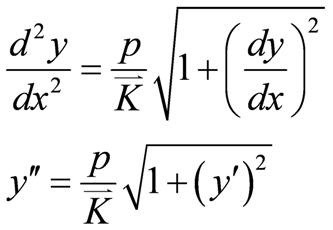
If you don’t know what a differential equation is, you are not a scientist” – Hugh Possingham 2009

At the end of 2009 I highlighted a new book edited by good mates Navjot Sodhi and Paul Ehrlich, Conservation Biology for All, in which Barry Brook and I had written a chapter. Now, despite my vested interest, I thought (and still think) that it was one of the best books on conservation biology yet published, and the subsequent reviews appear to be validating my subjective opinion.

I’ve given snippets of the book’s contents, from Paul Ehrlich‘s editorial on the human population’s rising negative influences on biodiversity, to a more detailed synopsis of our chapter, The Conservation Biologist’s Toolbox, and I’ve reproduced a review printed in Trends in Ecology and Evolution.

The latest review by Nicole Gross-Camp of the University of East Anglia published in Ecology is no less flattering – in fact, it is the most flattering to date. So this is by no means a whinge about a whinge; rather, consider it an academic lament followed by a query. First, the review:

Reaching higher in conservation

If a book could receive a standing ovation—this one is a candidate. Sodhi and Ehrlich have created a comprehensive introduction to conservation biology that is accessible intellectually, and financially, to a broad audience—indeed it is Conservation biology for all. The book is divided into 16 chapters that can stand alone and are complementary when read in sequence. The authors make excellent use of cross citations of chapters, a useful and often overlooked feature in texts of this nature. In the introductory chapter, Sodhi and Ehrlich eloquently summarize the gravity of the conservation crisis and still retain an optimistic outlook that encourages the reader to continue. I particularly found their recognition of population growth, consumption, and ethics in the conservation arena refreshing and a step toward what will likely become the next major issues of discussion and research in the conservation field. Read the rest of this entry »


The Amazing Paul (Mc)Ehrlich

15 11 2010

© CJA Bradshaw

A few years ago when I first wrote about Paul Ehrlich in our book, Tropical Conservation Biology, I quickly became impressed. His track record is, without any exaggeration, truly awe-inspiring. With over 1000 articles published and almost 50 books, the man has been a scientific writing machine for his entire career. He’s also highly influential in the socio-political sphere, and counts among his close friends some of the most politically and scientifically powerful people on the planet. In a word, he’s easily among the world’s greatest living scientists.

Remember, this was my opinion all before I actually met the man. Travelling through central California last year, I was lucky enough to be invited by Paul’s close colleague, Gretchen Daily, to give a talk at their Stanford University lab. It was fortunate that Paul was about at the time and not off promoting his new book or traipsing through the mountains of Colorado chasing butterflies.

We hit it off immediately and it seemed became mates within the space of a few hours. I learnt then that he and his equally famous wife, Anne, were regular visitors to Australia and that he had a particular love affair going with many Australian wines. I invited him to come to Adelaide the following year, he agreed (and importantly, so did the director of the Environment Institute, Mike Young), and it came to pass. Read the rest of this entry »


Humans 1, Environment 0

27 09 2010

© flickr.com/photos/singapore2010

While travelling to our Supercharge Your Science workshop in Cairns and Townsville last week (which, by the way, went off really well and the punters gave us the thumbs up – stay tuned for more Supercharge activities at a university near you…), I stumbled across an article in the Sydney Morning Herald about the state of Australia.

That Commonwealth purveyor of numbers, the Australian Bureau of Statistics (ABS), put together a nice little summary of various measures of wealth, health, politics and environment and their trends over the last decade. The resulting Measures of Australia’s Progress is an interesting read indeed. I felt the simple newspaper article didn’t do the environmental components justice, so I summarise the salient points below and give you my tuppence as well. Read the rest of this entry »


Global erosion of ecosystem services

14 09 2010

A few months ago I was asked to give a lecture about erosion of ecosystem services to students in the University of Adelaide‘s Issues in Sustainable Environments unit. I gave that lecture last week and just uploaded a slidecast of the presentation (with audio) today.

I’ve reproduced the lecture here for your viewing pleasure. I hope you find the 45-minute presentation useful. Note that the first few minutes cover me referring to the Biodiversity film short that I posted not too long ago.

CJA Bradshaw


100 actions to slow biodiversity loss

19 08 2010

I received an email a few days ago from Guillaume Chapron of the Swedish University of Agricultural Sciences (Sveriges lantbruksuniversitet) asking me to promote his ‘Biodiversity 100‘ campaign on ConservationBytes.com. I think it’s an interesting initiative, and so I’ll gladly spread the word.

Teaming up with George Monbiot of The Guardian, the Biodiversity 100 campaign seeks to encourage scientists and others to compile a list of 100 tasks that G20 governments should undertake to prove their commitment to tackling the biodiversity crisis.

Dr. Chapron writes: Read the rest of this entry »


Unbounded economic growth destroying biodiversity

16 08 2010

…we can’t have more of everything instantaneously

…increasing takeover of the ecosystem is the necessary consequence of the physical growth of the macroeconomy

…consider telling the economist to go to hell

Herman Daly

© M. Leunig

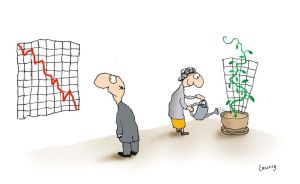
Last month I had the privilege of listening to Rob Dietz of the Centre for Advancement of the Steady State Economy (CASSE) when attending the 2010 International Congress for Conservation Biology. He introduced the CASSE and their mandate – to promote stable or mildly fluctuating levels in population and consumption of energy and materials. This is the steady-state economy.

I’ve hinted before that our essentially linear economy (natural resource exploitation -> transport -> manufacturer -> redistribution -> sale -> consumption/use -> disposal (discussed in a very easy-to-understand way in the Story of Stuff) is not sustainable in the long term because of the finite resource base of the planet (think trees, coal, oil, arable land). My colleagues and I have even shown analyses based on hard data demonstrating that total wealth is the ultimate driver of environmental degradation at the country scale.

So, it is my opinion (and a growing number of others‘) that we need a new way of measuring economic prosperity, or the world will enter a state of permanent financial crisis. The mantra of constant economic growth is simply unrealistic as our human populations continue to expand. This is a very simplistic statement and on the surface an apparently impossible goal; however, people who put together the CASSE believe it is achievable.

It is for this reason that I have been communicating with Rob Dietz and others at CASSE about reposting some of their excellent essays on ConservationBytes.com. Please feel free to comment here on the subject matter because the CASSE people will be monitoring. I hope we can expand the readership and support base, and eventually start to convince politicians that growth will eventually kill us and a good slice of the planet’s biodiversity.

So with that, here’s the first repost by Professor Herman Daly entitled “Opportunity Cost of Growth“: Read the rest of this entry »


Who are the world’s biggest environmental reprobates?

5 05 2010

Everyone is a at least a little competitive, and when it comes to international relations, there could be no higher incentive for trying to do better than your neighbours than a bit of nationalism (just think of the Olympics).

We rank the world’s countries for pretty much everything, relative wealth, health, governance quality and even happiness. There are also many, many different types of ‘environmental’ indices ranking countries. Some attempt to get at that nebulous concept of ‘sustainability’, some incorporate human health indices, and other are just plain black box (see Böhringer et al. 2007 for a review).

With that in mind, we have just published a robust (i.e., to missing data, choices for thresholds, etc.), readily quantifiable (data available for most countries) and objective (no arbitrary weighting systems) index of a country’s relative environmental impact that focuses ONLY on environment (i.e., not human health or economic indicators) – something no other metric does. We also looked at indices relative to opportunity – that is, looking at how much each country has degraded relative to what it had to start with.

We used the following metrics to create a combined environmental impact rank: natural forest loss, habitat conversion, fisheries and other marine captures, fertiliser use, water pollution, carbon emissions from land-use change and threatened species.

The paper, entitled Evaluating the relative environmental impact of countries was just published in the open-access journal PLoS One with my colleagues Navjot Sodhi of the National University of Singapore (NUS) and Xingli Giam, formerly of NUS but now at Princeton University in the USA.

So who were the worst? Relative to resource availability (i.e,. how much forest area, coastline, water, arable land, species, etc. each country has), the proportional environmental impact ranked (from worst) the following ten countries:

  1. Singapore
  2. Korea
  3. Qatar
  4. Kuwait
  5. Japan
  6. Thailand
  7. Bahrain
  8. Malaysia
  9. Philippines
  10. Netherlands

When considering just the absolute impact (i.e., not controlling for resource availability), the worst ten were:

  1. Brazil
  2. USA
  3. China
  4. Indonesia
  5. Japan
  6. Mexico
  7. India
  8. Russia
  9. Australia
  10. Peru

Interestingly (and quite unexpectedly), the authors’ home countries (Singapore, Australia, USA) were in either the worst ten proportional or absolute ranks. Embarrassing, really (for a full list of all countries, see supporting information). Read the rest of this entry »


Every extra human means fewer animals

8 02 2010

© The Sun

As promised some time ago when I blogged about the imminent release of the book Conservation Biology for All (edited by Navjot Sodhi and Paul Ehrlich), I am now posting a few titbits from the book.

Today’s post is a blurb from Paul Ehrlich on the human population problem for conservation of biodiversity.

The size of the human population is approaching 7 billion people, and its most fundamental connection with conservation is simple: people compete with other animals., which unlike green plants cannot make their own food. At present Homo sapiens uses, coopts, or destroys close to half of all the food available to the rest of the animal kingdom. That means that, in essence, every human being added to the population means fewer individuals can be supported in the remaining fauna.

But human population growth does much more than simply cause a proportional decline in animal biodiversity – since as you know, we degrade nature in many ways besides competing with animals for food. Each additional person will have a disproportionate negative impact on biodiversity in general. The first farmers started farming the richest soils they could find and utilised the richest and most accessible resources first (Ehrlich & Ehrlich 2005). Now much of the soil that people first farmed has been eroded away or paved over, and agriculturalists increasingly are forced to turn to marginal land to grow more food.

Equally, deeper and poorer ore deposits must be mined and smelted today, water and petroleum must come from lower quality resources, deeper wells, or (for oil) from deep beneath the ocean and must be transported over longer distances, all at ever-greater environmental cost [my addition – this is exactly why we need to embrace the cheap, safe and carbon-free energy provided by nuclear energy].

The tasks of conservation biologists are made more difficult by human population growth, as is readily seen in the I=PAT equation (Holdren & Ehrlich 1974; Ehrlich & Ehrlich 1981). Impact (I) on biodiversity is not only a result of population size (P), but of that size multiplied by affluence (A) measured as per capita consumption, and that product multiplied by another factor (T), which summarises the technologies  and socio-political-economic arrangements to service that consumption. More people surrounding a rainforest reserve in a poor nation often means more individuals invading the reserve to gather firewood or bush meat. More poeple in a rich country may mean more off-road vehicles (ORVs) assulting the biota – especially if the ORV manufacturers are politically powerful and can succesfully fight bans on their use. As poor countries’ populations grow and segments of them become more affluent, demand rises for meat and automobiles, with domesticated animals competing with or devouring native biota, cars causing all sorts of assults on biodiversity, and both adding to climate disruption. Globally, as a growing population demands greater quantities of plastics, industrial chemicals, pesticides, fertilisers, cosmetics, and medicines, the toxification of the planet escalates, bringing frightening problems for organisms ranging from polar bears to frogs (to say nothing of people!).

In sum, population growth (along with escalating consumption and the use of environmentally malign technologies) is a major driver of the ongoing destruction of populations, species, and communities that is a salient feature of the Anthropocene. Humanity , as the dominant animal (Ehrlich & Ehrlich 2008), simply out competes other animals for the planet’s productivity, and often both plants and animals for its freshwater. While dealing with more limited problems, it therefore behoves every conservation biologist to put part of her time into restraining those drivers, including working to humanely lower [sic] birth rates until population growth stops and begins a slow decline twoard a sustainable size (Daily et al. 1994).

Incidentally, Paul Ehrlich is travelling to Adelaide this year (November 2010) for some high-profile talks and meetings. Stay tuned for coverage of the events.

CJA Bradshaw

Add to FacebookAdd to DiggAdd to Del.icio.usAdd to StumbleuponAdd to RedditAdd to BlinklistAdd to TwitterAdd to TechnoratiAdd to Yahoo BuzzAdd to Newsvine


Sick environment, sick people

30 10 2009

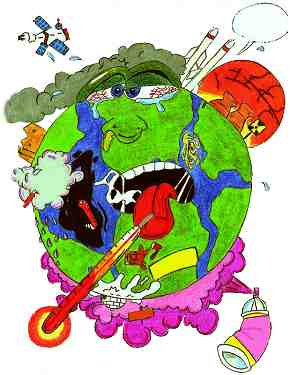
sickplanetA quick post to talk about a subject I’m more and more interested in – the direct link between environmental degradation (including biodiversity loss) and human health.

To many conservationists, people are the problem, and so they focus naturally on trying to maintain biodiversity in spite of human development and spread. Well, it’s 60+ years since we’ve been doing ‘conservation biology’ and biodiversity hasn’t been this badly off since the Cretaceous mass extinction event 146-64 million years ago. We now sit squarely within the geological era more and more commonly known as the ‘Anthropocene’, so if we don’t consider people as an integral part of any ecosystem, then we are guaranteed to fail biodiversity.

I haven’t posted in a week because I was in Shanghai attending the rather clumsily entitled “Thematic Reference Group (TRG) on Environment, Agriculture and Infectious Disease’, which is a part of the UNICEF/UNDP/World Bank/World Health Organization Special Programme for Research and Training in Tropical Diseases (TDR) (what a mouthful that is). What’s this all about and why is a conservation ecologist (i.e., me) taking part in the group?

It’s taken humanity a while to realise that what we do to the planet, we eventually end up doing to ourselves. The concept of ecosystem services1 demonstrates this rather well – our food, weather, wealth and well-being are all derived from healthy, functioning ecosystems. When we start to bugger up the inter-species relationships that define one element of an ecosystem, then we hurt ourselves. I’ve blogged about this topic a few times before with respect to flooding, pollination, disease emergence and carbon sequestration.

Our specific task though on the TRG is to define the links between environmental degradation, agriculture, poverty and infectious disease in humans. Turns out, there are quite a few examples of how we’re rapidly making ourselves more susceptible to killer infectious diseases simply by our modification of the landscape and seascape.

Some examples are required to illustrate the point. Schistosomiasis is a snail-borne fluke that infects millions worldwide, and it is on the rise again from expanding habitat of its host due to poor agricultural practices, bad hygiene, damming of large river systems and climate warming. Malaria too is on the rise, with greater and greater risk in the endemic areas of its mosquito hosts. Chagas (a triatomine bug-borne trypanosome) is also increasing in extent and risk. Some work I’m currently doing under the auspices of the TRG is also showing some rather frightening correlations between the degree of environmental degradation within a country and the incidence of infectious disease (e.g., HIV, malaria, TB), non-infectious disease (e.g., cancer, cardiovascular disease) and indices of life expectancy and child mortality.

I won’t bore you with more details of the group because we are still drafting a major World Health Organization report on the issues and research priorities. Suffice it to say that if we want to convince policy makers that resilient functioning ecosystems with healthy biodiversity are worth saving, we have to show them the link to infectious disease in humans, and how this perpetuates poverty, rights injustices, gender imbalances and ultimately, major conflicts. An absolute pragmatist would say that the value of keeping ecosystems intact for this reason alone makes good economic sense (treating disease is expensive, to say the least). A humanitarian would argue that saving human lives by keeping our ecosystems intact is a moral obligation. As a conservation biologist, I argue that biodiversity, human well-being and economies will all benefit if we get this right. But of course, we have a lot of work to do.

CJA Bradshaw

Add to FacebookAdd to NewsvineAdd to DiggAdd to Del.icio.usAdd to StumbleuponAdd to RedditAdd to BlinklistAdd to Ma.gnoliaAdd to TechnoratiAdd to Furl

1Although Bruce Wilcox (another of the TRG expert members), who I will be highlighting soon as a Conservation Scholar, challenges the notion of ecosystem services as a tradeable commodity and ‘service’ as defined. More on that topic soon.


Charles Darwin, evolution and climate change denial

5 08 2009

DarwinThis week a mate of mine was conferred her degree at the University of Adelaide and she invited me along to the graduation ceremony. Although academic graduation ceremonies can be a bit long and involve a little too much applause (in my opinion), I was fortunate enough to listen to the excellent and inspiring welcoming speech made by the University of Adelaide’s Dean of Science, Professor Bob Hill.

Professor Hill is a world-renown expert in plant evolution, systematics and ecophysiology, and he gave a wonderful outline of the importance of Darwin’s legacy for today’s burgeoning problem solvers. I am reproducing Prof. Hill’s speech here (with his permission) as a gift to readers of ConservationBytes.com. I hope you enjoy it as much as I did.

Chancellor, Vice Chancellor, distinguished guests, members of staff, friends and family of graduates, and, most importantly of all, the new graduates, I am very pleased to have been asked to speak to you today, because 2009 marks one of the great anniversaries that we will see in our lifetimes. 200 years ago, on February 12th 1809, Charles Robert Darwin was born. To add to the auspicious nature of this year, 150 years ago, John Murray published the first edition of Darwin’s most famous book, titled On the origin of species by means of natural selection, or the preservation of favoured races in the struggle for life, better known to us all today as The Origin of Species.

I believe that from a modern perspective, Darwin was the most influential person who has ever lived. Darwin’s impact on how we think and work is much more profound than most people realise. He changed the entire way in which we go about living. Today, I want to talk to you briefly about how Darwin had this impact.

Darwin was a great observer and a great writer, but above all he was a great critical thinker. He became a scientist by a round about route, planning to be a doctor and a minister of religion along the way, although his passion was always natural history. He was not a great undergraduate student, but he benefited enormously from contact he had with University staff outside the formal classroom. His potential must have been obvious, because he was strongly recommended at a relatively young age, to take the position of naturalist and gentleman companion to Captain Robert Fitzroy on his famous five year voyage of the Beagle. Following this voyage, Darwin never physically left Britain again, but intellectually he roamed far and wide. Darwin was one of the great letter writers. He wrote thousands of letters to contacts all over the world, requesting specimens, data and opinions, and he worked relentlessly at analysing what he received back.

Over many years as a practising scientist I have met a lot of people with a passion for natural history, some of them trained scientists like Darwin, some of them gifted amateurs. There is a very obvious distinction between those with and without formal scientific training at a Tertiary level, but it took me a long time to work out what that distinction is. Let me digress slightly before I explain it.

In today’s terminology we talk a lot about graduate attributes. For some graduates, it is reasonably simple to define the kinds of attributes you expect them to have. I prefer engineers whose bridges don’t fall down, lawyers who keep me out of jail unnecessarily, accountants who can add up and doctors who do their best to keep me alive and healthy. However, the key attributes we expect of Science graduates are not so simple to define. You will all have one or more specialities where you have more knowledge than those who did not do the relevant courses, but if you are anything like I was when I was sitting out there waiting to graduate, you probably think you did what you had to do in order to pass your exams and you now think you have forgotten most of what you were taught. I can assure you that you haven’t, but I can also assure you that specific knowledge of a scientific subject is not the most important thing you have been taught here.

So what is that special something that separates out a professional scientist? It is the capacity for critical scientific thinking. You are now ready to work as professionals in many fields, and employers will actively seek to hire you because they know you have been trained here to apply a particular approach to problem solving. That approach is not easily obtained and has been taught to you in the most subtle way over the full breadth of what you have been exposed to during your time here. I suspect most of you don’t even know that you now have this skill, but you do. Darwin had it in the most sublime fashion.

When Darwin published the Origin of Species it was the culmination of decades of data gathering, backed up by meticulous analysis. Darwin never swayed from that rigorous approach, which strongly reflected the training he received as a student.

When you are exposed to a new problem, you will approach the solution in a similar way to Darwin. Let me consider the example of climate change. There is a remarkable parallel between the public reaction to the publication of the Origin of Species and the current public reaction to climate change. Darwin suffered a public backlash from people who were not ready to accept such a radical proposition as evolution by means of natural selection and this was reinforced by a significant number of professional scientists who were willing to speak out against him and his theory. As time went by, professional scientists were gradually won over by the weight of evidence, to the point where mainstream science no longer considers evolution as a theory but as scientific fact.

The reality of climate change and its potential impacts has not had a single champion like Darwin, but it has involved a similar slow accumulation of data and very careful analysis and critical thinking over the implications of what the data tell us. Initially, there were many scientists who spoke against the human-caused impact on climate change, but their number is diminishing. Most significantly, the critical analysis undertaken by thousands of mainstream scientists has gained broad political acceptance, despite the best efforts of special interest lobbyists. I suspect Darwin would be fascinated by the way this debate has developed.

Lobbyists who write stern words about how scientists as a whole are engaged in some conspiracy theory to alarm the general population simply do not understand or choose to ignore how scientists work. The world needs the critical and analytical thinking that scientists bring more than ever before. We live on a wonderful, resilient planet, that will, in the very long run, survive and thrive no matter what we do to it. But we are an extremely vulnerable species, and our survival in a manner we would consider as acceptable, is nowhere near as certain. That is the legacy of my generation to yours. I have faith that your generation will be wiser than mine has been, and I know that good science will lead the charge towards providing that wisdom.

Charles Darwin was the greatest scientist of all, and that is partly because he was a great observer and a great writer. But most of all, Darwin was the consummate critical thinker – he collected masses of data himself and from colleagues all over the world and he fashioned those data into the most relevant and elegant theory of all. I will conclude with a brief and well known passage from the first edition of the Origin of Species, which clearly demonstrates the power of Darwin’s writing:

Thus, from the war of nature, from famine and death, the most exalted object which we are capable of conceiving, namely, the production of the higher animals, directly follows. There is grandeur in this view of life, with its several powers having been originally breathed into a few forms or into one; and that, whilst this planet has gone cycling on according to the fixed law of gravity, from so simple a beginning endless forms most beautiful and most wonderful have been, and are being, evolved.

I hope that the next Charles Darwin is sitting amongst you today. I know that at the very least I am standing in front of a group of people who have all the attributes necessary to be great contributors to the well-being of society and the planet. Be confident of your training and use your skills well. You have a grand tradition to uphold.

Add to FacebookAdd to NewsvineAdd to DiggAdd to Del.icio.usAdd to StumbleuponAdd to RedditAdd to BlinklistAdd to Ma.gnoliaAdd to TechnoratiAdd to Furl


Few people, many threats – Australia’s biodiversity shame

31 07 2009

bridled_nailtail_400I bang on a bit about human over-population and how it drives biodiversity extinctions. Yet, it isn’t always hordes of hungry humans descending on the hapless species of this planet  – Australia is a big place, but has few people (just over 20 million), yet it has one of the higher extinction rates in the world. Yes, most of the country is covered in some fairly hard-core desert and most people live in or near the areas containing the most species, but we have an appalling extinction record all the same.

A paper that came out recently in Conservation Biology and was covered a little in the media last week gives some telling figures for the Oceania region, and more importantly, explains that we have more than enough information now to implement sound, evidence-based policy to right the wrongs of the past and the present. Using IUCN Red List data, Michael Kingsford and colleagues (paper entitled Major conservation policy issues for biodiversity in Oceania), showed that of the 370 assessed species in Australia, 80 % of the threatened ones are listed because of habitat loss, 40 % from invasive species and 30 % from pollution. As we know well, it’s mainly habitat loss we have to control if we want to change things around for the better (see previous relevant posts here, here & here).

Kingsford and colleagues proceed to give a good set of policy recommendations for each of the drivers identified:

Habitat loss and degradation

  • Implement legislation, education, and community outreach to stop or reduce land clearing, mining, and unsustainable logging through education, incentives, and compensation for landowners that will encourage private conservation
  • Establish new protected areas for habitats that are absent or poorly represented
  • In threatened ecosystems (e.g., wetlands), establish large-scale restoration projects with local communities that incorporate conservation and connectivity
  • Establish transparent and evidence-based state of environment reporting on biodiversity and manage threats within and outside protected areas.
  • Protect free-flowing river systems (largely unregulated by dams, levees, and diversions) within the framework of the entire river basin and increase environmental flows on regulated rivers

Invasive species

  • Avoid deliberate introduction of exotic species, unless suitable analyses of benefits outweigh risk-weighted costs
  • Implement control of invasive species by assessing effectiveness of control programs and determining invasion potential
  • Establish regulations and enforcement for exchange or treatment of ocean ballast and regularly implement antifouling procedures

Climate change

  • Reduce global greenhouse gas emissions
  • Identify, assess, and protect important climate refugia
  • Ameliorate the impacts of climate change through strategic management of other threatening processes
  • Develop strategic plans for priority translocations and implement when needed

Overexploitation

  • Implement restrictions on harvest of overexploited species to maintain sustainability
  • Implement an ecosystem-based approach for fisheries, based on scientific data, that includes zoning the ocean; banning destructive fishing; adopting precautionary fishing principles that include size limits, quotas, and regulation with sufficient resources based on scientific assessments of stocks and; reducing bycatch through regulation and education
  • Implement international mechanisms to increase sustainability of fisheries by supporting international treaties for fisheries protection in the high seas; avoiding perverse subsidies and improve labelling of sustainable fisheries; and licensing exports of aquarium fish
  • Control unsustainable illegal logging and wildlife harvesting through local incentives and cessation of international trade

Pollution

  • Decrease pollution through incentives and education; reduce and improve treatment of domestic, industrial, and agriculture waste; and rehabilitate polluted areas
  • Strengthen government regulations to stop generation of toxic material from mining efforts that affects freshwater and marine environments
  • Establish legislation and regulations and financial bonds (international) to reinforce polluter-pays principles
  • Establish regulations, education programs, clean ups, labelling, and use of biodegradable packaging to reduce discarded fishing gear and plastics

Disease

  • Establish early-detection programs for pathological diseases and biosecurity controls to reduce translocation
  • Identify causes, risk-assessment methods, and preventative methods for diseases
  • Establish remote communities of organisms (captive) not exposed to disease in severe outbreaks

Implementation

  • Establish regional population policies based on ecologically sustainable human population levels and consumption
  • Ensure that all developments affecting the environment are adequately analysed for impacts over the long term
  • Promote economic and societal benefits from conservation through education
  • Determine biodiversity status and trends with indicators that diagnose and manage declines
  • Invest in taxonomic understanding and provision of resources (scientific and conservation) to increase capacity for conservation
  • Increase the capacity of government conservation agencies
  • Focus efforts of nongovernmental organisations on small island states on building indigenous capacity for conservation
  • Base conservation on risk assessment and decision support
  • Establish the effectiveness of conservation instruments (national and international) and their implementation

A very good set of recommendations that I hope we can continue to develop within our governments.

CJA Bradshaw

Add to FacebookAdd to NewsvineAdd to DiggAdd to Del.icio.usAdd to StumbleuponAdd to RedditAdd to BlinklistAdd to Ma.gnoliaAdd to TechnoratiAdd to Furl


Climate change’s ugly cousin – biodiversity loss

17 05 2009

uglybaby…nobody puts a value on pollination; national accounts do not reflect the value of ecosystem services that stop soil erosion or provide watershed protection.

Barry Gardiner, Labour MP for Brent North (UK), Co-chairman, Global Legislators Organisation‘s International Commission on Land Use Change and Ecosystems

Last week I read with great interest the BBC’s Green Room opinion article by Barry Gardiner, Labour MP in the UK, about how the biodiversity crisis takes very much the back seat to climate change in world media, politics and international agreements.

He couldn’t be more spot-on.

I must stipulate right up front that this post is neither a whinge, rant nor lament; my goal is to highlight what I’ve noticed about the world’s general perception of climate change and biodiversity crisis issues over the last few years, and over the last year in particular since ConservationBytes.com was born.

Case in point: my good friend and colleague, Professor Barry Brook, started his blog BraveNewClimate.com a little over a month (August 2008) after I managed to get ConservationBytes.com up and running (July 2008). His blog tackles issues regarding the science of climate change, and Barry has been very successful at empirically, methodically and patiently tearing down the paper walls of the climate change denialists. A quick glance at the number views of BraveNewClimate.com since inception reveals about an order of magnitude more than for ConservationBytes.com (i.e., ~195000 versus 20000, respectively), and Barry has accumulated a total of around 4500 comments compared to just 231 for ConservationBytes.com. The difference is striking.

Now, I don’t begrudge for one moment this disparity – quite the contrary – I am thrilled that Barry has managed to influence so many people and topple so effectively the faecal spires erected by the myriad self-proclaimed ‘experts’ on climate change (an infamous line to whom I have no idea to attribute states that “opinions are like arseholes – everyone’s got one”). Barry is, via BraveNewClimate.com, doing the world an immense service. What I do find intriguing is that in many ways, the biodiversity crisis is a much, much worse problem that is and will continue to degrade human life for millennia to come. Yet as Barry Gardiner observed, the UK papers mentioned biodiversity only 115 times over the last 3 months compared to 1382 times for climate change – again, that order-of-magnitude disparity.

There is no biodiversity equivalent of the Intergovernmental Panel on Climate Change (although there are a few international organisations tackling the extinction crisis such as the United Nation’s Environment Program, the Millennium Ecosystem Assessment and the International Union for Conservation of Nature), we still have little capacity or idea how to incorporate the trillions of dollars worth of ecosystem services supplied every year to us free of charge, and we have nothing at all equivalent to the Kyoto Protocol for biodiversity preservation. Yet, conservation biologists have for decades demonstrated how human disease prevalence, reduction in pollination, increasing floods, reduced freshwater availability, carbon emissions, loss of fish supplies, weed establishment and spread, etc. are all exacerbated by biodiversity loss. Climate change, as serious and potentially apocalyptic as it is, can be viewed as just another stressor in a system stressed to its limits.

Of course, the lack of ‘interest’ may not be as bleak as indicated by web traffic; I believe the science underpinning our assessment of biodiversity loss is fairly well-accepted by people who care to look into these things, and the evidence spans the gambit of biological diversity and ecosystems. In short, it’s much less controversial a topic than climate change, so it attracts a lot less vitriol and spawns fewer polemics. That said, it is a self-destructive ambivalence that will eventually come to bite humanity on the bum in the most serious of ways, and I truly believe that we’re not far off from major world conflicts over the dwindling pool of resources (food, water, raw materials) we are so effectively destroying. We would be wise to take heed of the warnings.

CJA Bradshaw

Add to FacebookAdd to NewsvineAdd to DiggAdd to Del.icio.usAdd to StumbleuponAdd to RedditAdd to BlinklistAdd to Ma.gnoliaAdd to TechnoratiAdd to Furl


Too many mouths to feed

19 03 2009

The venerable Professor John Beddington has some stern warnings about over-population in the next few decades. In essence, we cannot ignore the human over-population problem any longer. There are simply too many people for the finite resources available and the consumption rates that do not appear to be declining (not surprising given our voracious appetite for economic growth – more like long-term economic suicide, really). Australia is certainly no exception – with most of our country essentially uninhabitable, we’ve already exceeded our carrying capacity (but try telling this to the pollies).

In my opinion, human over-population is THE principal driver of biodiversity loss in the modern context. Without some serious global efforts for population planning, expect a lot more conflict in your lifetime, and a lot worse effects of climate change. See also Global Population Speak Out.

This one from the BBC:

Growing world population will cause a “perfect storm” of food, energy and water shortages by 2030, the UK government chief scientist has warned. By 2030 the demand for resources will create a crisis with dire consequences, Prof John Beddington said. Demand for food and energy will jump 50% by 2030 and for fresh water by 30%, as the population tops 8.3 billion, he told a conference in London.

Climate change will exacerbate matters in unpredictable ways, he added. “It’s a perfect storm,” Prof Beddington told the Sustainable Development UK 09 conference.’Perfect storm’ poses global threat, says Professor Beddington. “There’s not going to be a complete collapse, but things will start getting really worrying if we don’t tackle these problems.”

Prof Beddington said the looming crisis would match the current one in the banking sector. “My main concern is what will happen internationally, there will be food and water shortages,” he said.

“We’re relatively fortunate in the UK; there may not be shortages here, but we can expect prices of food and energy to rise.” The United Nations Environment Programme predicts widespread water shortages across Africa, Europe and Asia by 2025. The amount of fresh water available per head of the population is expected to decline sharply in that time. The issue of food and energy security rose high on the political agenda last year during a spike in oil and commodity prices.

Prof Beddington said the concern now – when prices have dropped once again – was that the issues would slip back down the domestic and international agenda. “We can’t afford to be complacent. Just because the high prices have dropped doesn’t mean we can relax,” he said. Improving agricultural productivity globally was one way to tackle the problem, he added. At present, 30-40% of all crops are lost due to pest and disease before they are harvested. Professor Beddington said: “We have to address that. We need more disease-resistant and pest-resistant plants and better practices, better harvesting procedures. “Genetically-modified food could also be part of the solution. We need plants that are resistant to drought and salinity – a mixture of genetic modification and conventional plant breeding. Better water storage and cleaner energy supplies are also essential, he added.

Prof Beddington is chairing a subgroup of a new Cabinet Office task force set up to tackle food security. But he said the problem could not be tackled in isolation. He wants policy-makers in the European Commission to receive the same high level of scientific advice as the new US president, Barack Obama. One solution would be to create a new post of chief science adviser to the European Commission, he suggested.

CJA Bradshaw