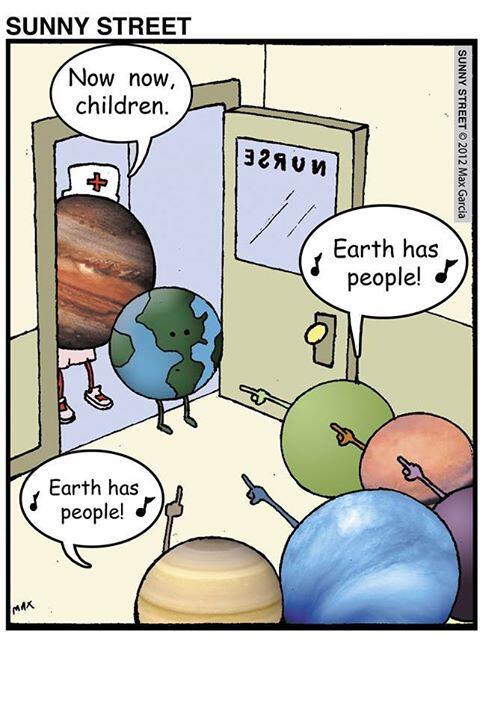
Another six biodiversity cartoons because I have a full-on month of lecturing. I’ll call this one the ‘over-population’ issue. See full stock of previous ‘Cartoon guide to biodiversity loss’ compendia here.
—

Another six biodiversity cartoons because I have a full-on month of lecturing. I’ll call this one the ‘over-population’ issue. See full stock of previous ‘Cartoon guide to biodiversity loss’ compendia here.
—
Another six biodiversity cartoons because it’s shaping up to be a crazy week. See full stock of previous ‘Cartoon guide to biodiversity loss’ compendia here.
—

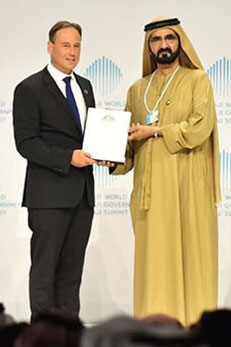
Our Most-Bestest Minister Ever (i.e., the bloke on the left; interestingly, the bloke on the right leads one of the few countries in the world with a higher per capita emissions rate than Australia)
Australia has an appalling environmental record — hell, I have even written an entire book on our sorry state of environmental affairs. Of course, environmental damage is a slow accumulation of bad political decisions, neglect, corruption, greed and society’s general I-couldn’t-give-a-shit attitude, but the record of our recent government demonstrates not just classic political buffoonery and neglect, but an outright attack on the environment.
So it was impossible to restrain a disgusted guffaw when, in February this year, our ‘Environment’ Minister won the coveted ‘Best Minister’ in the World award at the World Government Summit in Dubai by Sheikh Mohammed Bin Rashid Al Maktoum, Vice President and Prime Minister of the United Arab Emirates and Ruler of Dubai.
Deserved ridicule aside, I was asked recently by The Conversation to contribute to a special report examining the profile performance of cabinet and shadow cabinet ministers, which is not only a responsibility I take seriously, but an honour to be able to provide a serious and objective appraisal of our Most-Bestest Minister Ever. My contribution dealt specifically with the environmental portfolio, so I appraised both the sitting Minister and the Shadow Minister. Judge for yourself based on their performances. Read the rest of this entry »
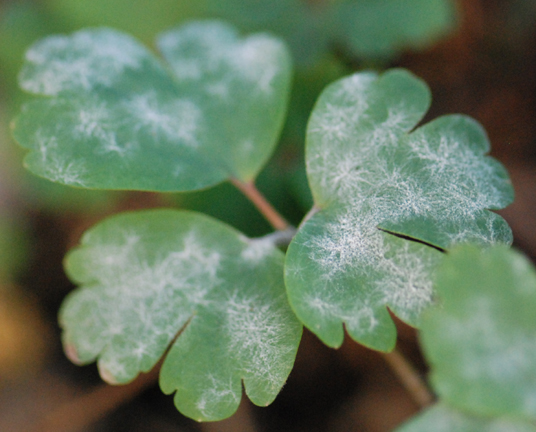
Is biodiversity good for us? In many ways, this is a stupid question because at some point, losing species that we use directly will obviously impact us negatively — think of food crops, pollination and carbon uptake.
But how much can we afford to lose before we notice anything bad is happening? Is the sort of biodiversity erosion we’re seeing today really such a big deal?
One area of research experiencing a surge in popularity is examining how variation in biodiversity (biowealth1) affects the severity of infectious diseases, and it is particularly controversial with respect to the evidence for a direct effect on human pathogens (e.g., see a recent paper here, a critique of it, and a reply).
Controversy surrounding the biodiversity-disease relationship among non-human species is less intense, but there are still arguments about the main mechanisms involved. The amplification hypothesis asserts that a community with more species has a greater pool of potential hosts for pathogens, so pathogens increase as biodiversity increases. On the contrary, the dilution hypothesis asserts that disease prevalence decreases with increasing host species diversity via several possible mechanisms, such as more host species reducing the chance that a given pathogen will ‘encounter’ a suitable host, and that in highly biodiverse communities, an infected individual is less likely to be surrounded by the same species, so the pathogen cannot easily be transmitted to a new host (the so-called transmission interference hypothesis).
So I’ve joined the ecological bandwagon and teamed up yet again with some very clever Chinese collaborators to test these hypotheses in — if I can be so bold to claim — a rather novel and exciting way.
Our new paper was just published online in Ecology: Warming and fertilization alter the dilution effect of host diversity on disease severity2. Read the rest of this entry »
Another six biodiversity cartoons for you this week (see here for why I provide six each time). See full stock of previous ‘Cartoon guide to biodiversity loss’ compendia here.
—

 I’m starting a new series on ConservationBytes.com — one that exposes the worst environmental offenders on the planet.
I’ve taken the idea from an independent media organisation based in Australia — Crikey — who has been running the Golden Arsehat of the Year awards since 2008. It’s a hilarious, but simultaneously maddening, way of shaming the worst kinds of people.
So in the spirit of a little good fun and environmental naming-and-shaming, I’d like to put together a good list of candidates for the inaugural Environmental Arsehat of the Year awards.
So I’m keen to receive your nominations, either privately via e-mail, the ConservationBytes.com message service, or even in the comments stream of this post. Once I receive a good list of candidates, I’ll do separate posts on particularly deserving individuals, followed by an online poll where you can vote for your (least) favourite Arsehat.
There are a few nomination rules, however. Read the rest of this entry »

Stop wasting time
 While I’ve blogged about this before in general terms (here and here), I thought it wise to reproduce the (open-access) chapter of the same name published in late 2013 in the unfortunately rather obscure book The Curious Country produced by the Office of the Chief Scientist of Australia. I think it deserves a little more limelight.
—
As I stepped off the helicopter’s pontoon and into the swamp’s chest-deep, tepid and opaque water, I experienced for the first time what it must feel like to be some other life form’s dinner. As the helicopter flittered away, the last vestiges of that protective blanket of human technological innovation flew away with it.
Two other similarly susceptible, hairless, clawless and fangless Homo sapiens and I were now in the middle of one of the Northern Territory’s largest swamps at the height of the crocodile-nesting season. We were there to collect crocodile eggs for a local crocodile farm that, ironically, has assisted the amazing recovery of the species since its near-extinction in the 1960s. Removing the commercial incentive to hunt wild crocodiles by flooding the international market with scar-free, farmed skins gave the dwindling population a chance to recover.
 Conservation scientists like me rejoice at these rare recoveries, while many of our fellow humans ponder why we want to encourage the proliferation of animals that can easily kill and eat us. The problem is, once people put a value on a species, it is usually consigned to one of two states. It either flourishes as do domestic crops, dogs, cats and livestock, or dwindles towards or to extinction. Consider bison, passenger pigeons, crocodiles and caviar sturgeon.
As a conservation scientist, it’s my job not only to document these declines, but to find ways to prevent them. Through careful measurement and experiments, we provide evidence to support smart policy decisions on land and in the sea. We advise on the best way to protect species in reserves, inform hunters and fishers on how to avoid over-harvesting, and demonstrate the ways in which humans benefit from maintaining healthy ecosystems. Read the rest of this entry »
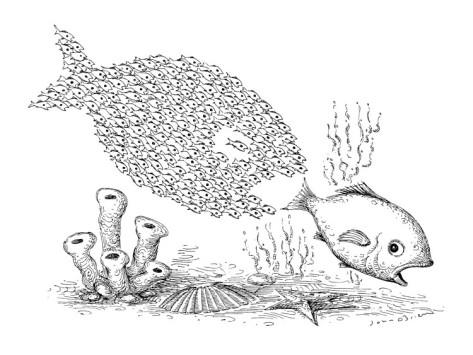 Loosely following the theme of last week’s post, it’s now fairly well established that humans tend to pick on the big species first.
From fewer big trees, declines of big carnivores, elephant & rhino poaching, to fishing down the web, big species tend to cop it hardest when it comes to human-caused ecological disturbance.
While there are a lot of different combinations of traits that make some species more vulnerable to extinction than others (see examples for legumes, amphibians, sharks & teleosts, and mammals), one of the main ones is species size.
Generally speaking, larger species tend to produce fewer offspring and breed later in life than smaller species. This means that despite larger species tending to live longer than their smaller counterparts, their ‘slow’ reproductive output means that they are generally more susceptible to rapid environmental change (mainly via human intervention). In other words, their capacity for self-replacement is often too low to counteract the offtake from direct exploitation or habitat loss.
Despite a reasonable scientific understanding of this extinction-risk principle, the degree to which human disturbance affects species’ distributions is much less well quantified, and this is especially true for marine species.
I’m proud to announce another fascinating paper led by my postdoc, Camille Mellin, that has just come out online in Nature Communications: Humans and seasonal climate variability threaten large-bodied coral reef fish with small ranges.
With the world’s largest combined dataset of coral reef fish surveys for the entire Indo-Pacific (including the coral reef fish biodiversity hotspot — the Coral Triangle), we examined which conditions best described the distribution of fishes over a range of body sizes. Read the rest of this entry »
Another six biodiversity cartoons for you this week. You might have asked yourself ‘Why six?’ — the number 6 is, of course, the smallest perfect number (i.e., the sum of its aliquot divisors is equal to the number itself: 1 + 2 + 3 = 6), and as a result, my favourite (geek). See full stock of previous ‘Cartoon guide to biodiversity loss’ compendia here.
—
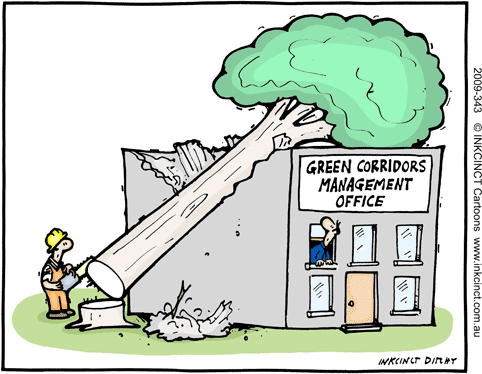
 As I did last year and the year before, here’s another arbitrary, retrospective list of the top 20 influential conservation papers of 2015 as assessed via F1000 Prime.
—
Six more biodiversity cartoons to hold you over until I get back from Germany next week (see full stock of previous ‘Cartoon guide to biodiversity loss’ compendia here).
—

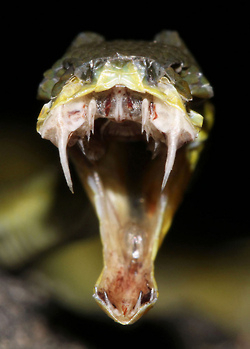 I had an interesting exchange on Twitter today that deserves some discussion, not because the brief internet argument that ensued offers some insightful wisdom (internet debates rarely do anything more than identify all those involved as fuckwits), but because it raises an interesting issue in conservation.
The abbreviated (and slightly expurgated) main message of the exchange was whether drawing attention to the potential for a species to cause harm to humans is good or bad (for the species in question).
The elasmobranchologists in particular usually become apoplectic whenever anyone calls a shark ‘deadly’, or some such similar adjective. As it turns out, the ophidiologists appear to be equally sensitive. I admit that they do have a point — it’s probably fair to assume that films like Jaws and Anaconda (or, Darwin-forbid, Sharknado) haven’t done much to make most people appreciate the amazing diversity, evolutionary adaptations and wonderful life histories of these subclasses & clades (respectively).
In fact, most marine biologists assume that Jaws in particular was responsible for decades of overt prosecution of sharks that has led to the massive population declines. However, I sincerely wonder whether the bad media was in the real culprit and over-fishing was instead the principal cause of today’s observed shark declines (the questionable nature of the numbers often cited notwithstanding). Read the rest of this entry »
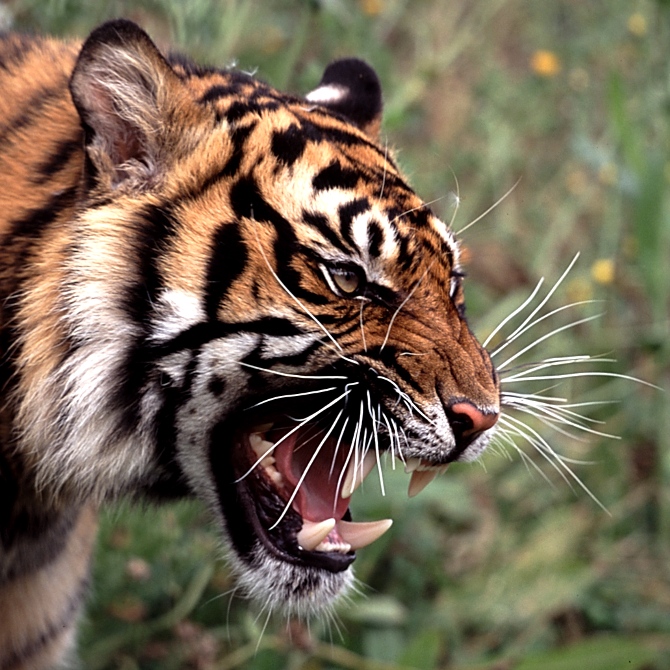 Predators.
You can either stop reading now because that’s the answer to the question, or you can continue and find out a little more detail.
I’ve just had an extremely pleasant experience reading John Terborgh‘s latest Perspective in PNAS. You know the kind of paper you read that (a) makes you feel smart, (b) confirms what you already think, yet informs you nonetheless, and (c) doesn’t take three days to digest? That’s one of those.
Toward a trophic theory of species diversity is not only all of those things, it’s also bloody well-written and comes at the question of ‘Why are there so many species on the planet when ecological theory can’t seem to explain how?’ with elegance, style and a lifetime of experience. I just might have to update my essential-ecology-papers list. If I had to introduce someone to 60 years of ecological theory on biodiversity, there’s no better place to start.
Six more biodiversity cartoons — this time, from France. They’re in French to pay hommage to my hosts (and acknowledge their fanaticism for les bandes dessinées), but don’t worry, I’ve provided full translation (see full stock of previous ‘Cartoon guide to biodiversity loss’ compendia here).
—

“Biodiversity: More and more species threatened. The good news for you is that you’re not endangered. The bad news is that neither are we.” © Roulies
 An interesting take on conference culture by Diogo Veríssimo (mastermind behind I Fucking Love Biodiversity).
—
Just a few weeks back, more than 2000 conservationists got together in Montpellier, France, for the 27th International Congress on Conservation Biology (ICCB). I have been attending these conferences since 2008, and once again had a blast. Yet as I went through the usual talks, posters, work meetings, and this and that social, I could not help but feel that the traditional conference model was hindering, not helping me, maximise my benefits.
In my experience of conservation conferences, the content is largely delivered via a one-way channel, and attendees listen passively until the chance for a question or two comes up at the end. If time allows, that is, and it rarely does. Given the huge costs (and the footprint) of these events, how can we maximise the outcomes of these meetings?
Let’s look first at what is currently the backbone of most conferences anywhere: the oral presentation. Currently, the gold standard for the vast majority of ICCB presenters is the 15-min presentation, and those who are denied that chance often say they have been “downgraded”. I find this unfortunate.
My biggest criticisms of our current approach to content management during a conference is that it leaves the discussion to happen informally and without the benefit of the collective knowledge that comes together at these meetings. Many conservationists are keen to avoid long-winded lectures in their classrooms, but when we come together, those concerns seem to go out the window. The Q&A after a talk should be the most important part of a session for either the presenter (expert feedback can save a lot of time and resources) and the audience (who otherwise cannot focus on what they think is important).
Giving sessions enough Q&A time, which I argue would have to be as long as the time given to presentations, would imply having fewer presentations — unless we have shorter presentations. The ICCB already has the speed presentation, a format that lasts just 5 minutes. Why not make that the default? Yes, presenting your content effectively in 5 minutes is an acquired skill, but not much different in kind from writing an abstract to a paper. Having presented in both traditional and speed format, I am convinced presentations strongly suffer from the law of diminishing returns, meaning the difference from the audience point of view ends up being small. This is particularly true if fewer talks means more time for the audience to interact and ask about the things in which they are interested, rather than what the presenter thinks they should learn. Read the rest of this entry »
Fourth batch of six biodiversity cartoons for 2015, because I’m travelling and haven’t had a lot of time for a more detailed post (see full stock of previous ‘Cartoon guide to biodiversity loss’ compendia here).
—

 What makes some conservation endeavours successful where so many fail to protect biodiversity? Or, how long is a piece of string?
Yes, it’s a difficult question because it’s not just about the biology – such as resilience and area relationships – in fact, it’s probably more about the socio-economic setting that will ultimately dictate how the biodiversity in any particular area fares in response to disturbance.
In the case of protected areas (that I’ll just refer to as ‘reserves’ for the remainder of this post), there’s been a lot of work done about the things that make them ‘work’ (or not) in terms of biodiversity preservation. Yes, we can measure investment, how much the community supports and is involved with the reserve, how much emphasis is put on enforcement, the types of management done within (and outside) of the reserves, et cetera, et cetera. All of these things can (and have to some extent) been correlated with indices of the fate of the biodiversity within reserves, such as rates and patterns of deforestation, the amount of illegal hunting, and the survival probability of particular taxa.
But the problem with these indices is that there are just indices – they probably do not encapsulate the overall ‘health’ of the biodiversity within a reserve (be that trends in the overall abundance of organisms, the resilience of the community as a whole to future disturbances, or the combined phylogenetic diversity of the ecosystem). This is because there are few long-term monitoring programmes of sufficient taxonomic and temporal breadth to summarise these components of complex ecosystems (i.e., ecology is complex). It’s no real surprise, and even though we should put a lot more emphasis on targeted, efficient, long-term biodiversity monitoring inside and outside of all major biodiversity reserves, the cold, hard truth of it is that we’ll never manage to get the required systems in place. Humanity just doesn’t value it enough. Read the rest of this entry »
[10.06.2015 update: Because of all the people looking for cartoon porn, I’ve slightly altered the title of this post. Should have predicted that one]
Third batch of six biodiversity cartoons for 2015 (see full stock of previous ‘Cartoon guide to biodiversity loss’ compendia here).
—

Second batch of six biodiversity cartoons for 2015 (see full stock of previous ‘Cartoon guide to biodiversity loss’ compendia here).
—


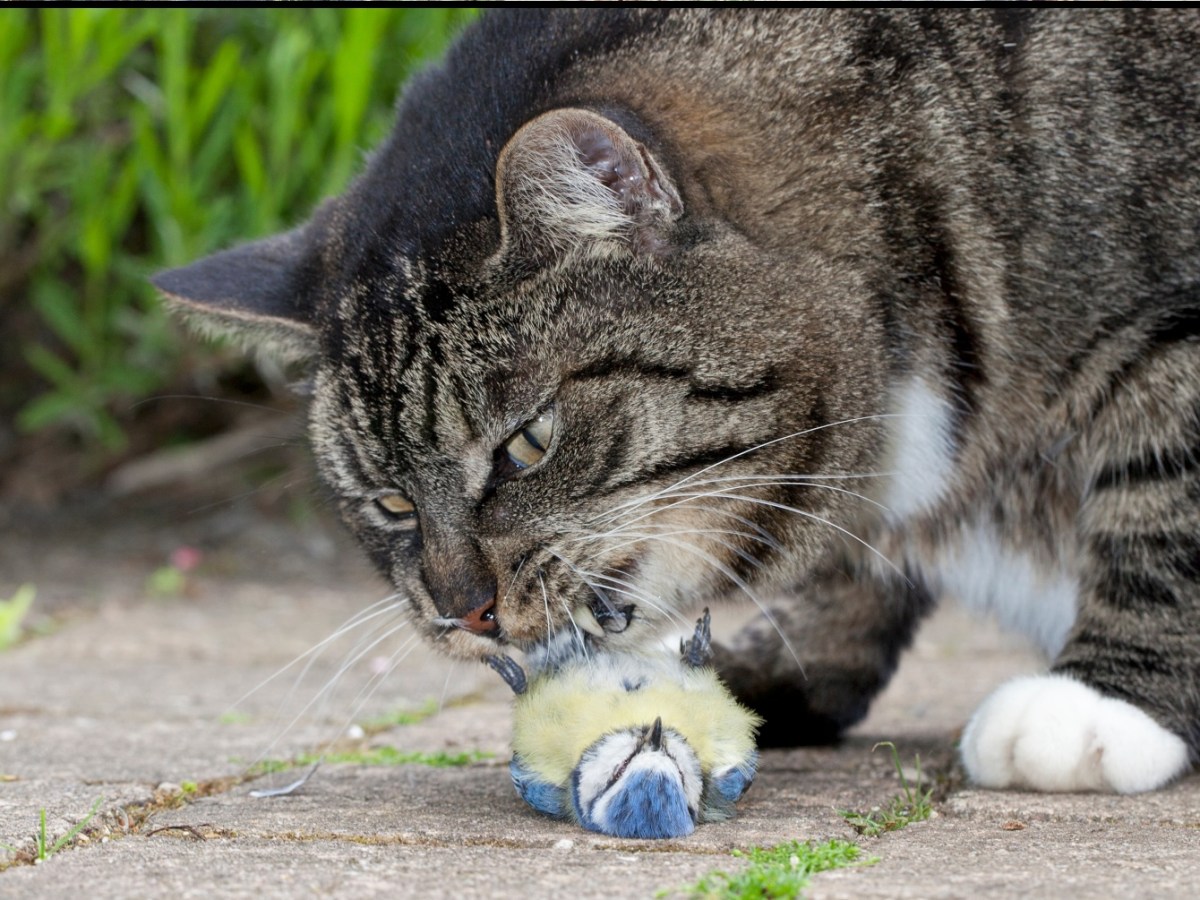
Those of us living with cats share our homes with an ancestral predator, one adapted for hunting and the frequent, exclusive consumption of meat. These instincts become fully activated outside the domestic environment, where cats pose a global threat to wildlife. Pets are family. We celebrate their arrival with the same joy as a grand…

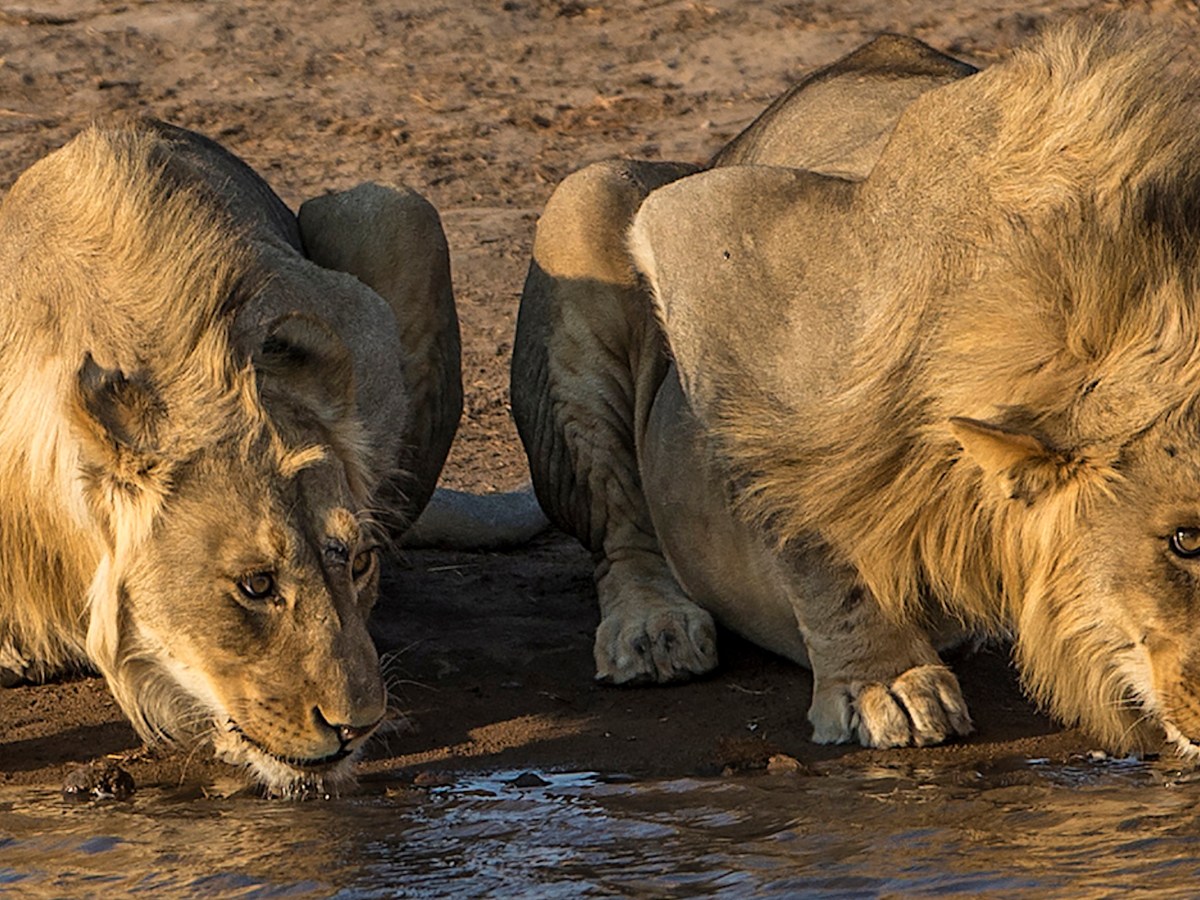
Many animals avoid contact with people. In protected areas of the African savanna, mammals flee more intensely upon hearing human conversations than when they hear lions or sounds associated with hunting. This fear of humans affects how species use and move in their habitat. Throughout our lives, we interact with hundreds of wildlife species without…
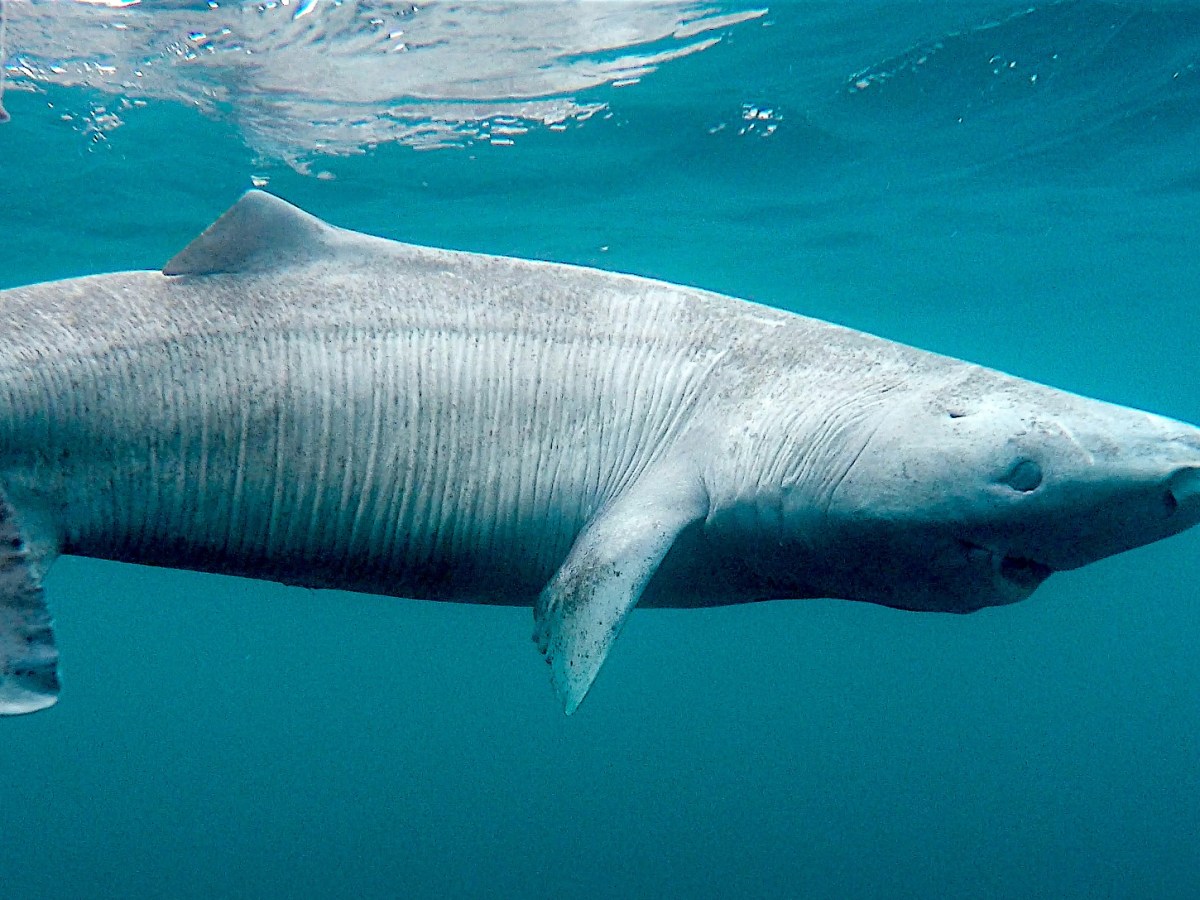
Deep-sea sharks include some of the longest-lived vertebrates known. The record holder is the Greenland shark, with a recently estimated maximum age of nearly 400 years. Their slow life cycle makes them vulnerable to fisheries. Humans rarely live longer than 100 years. But many other animals and plants can live for several centuries or even millennia, particularly…

 ConservationBytes.com