Seven signs your country has an environmental problem

29 04 2013

1. It’s almost always hazy – and not just in the cities. The particulate matter pollution makes even sunny days appear like it’s about to rain. To add insult to injury, almost every advertisement with anything to do with ‘outside’ pictures a pristinely blue sky and copious sunshine, without the hint of grey. When stepping off the aeroplane, the distinct taste of tar hits the back of your throat.

2. You can’t drink the water from the tap – not anywhere. In fact, you can’t even brush your teeth with it or risk getting some nasty intestinal parasite.

3. You can’t plant trees fast enough because the frequency of landslips kills hundreds of people yearly.

4. While catching a taxi from the airport, the driver plays a continuous loop of birds singing, because most residents never hear those sounds.

5. You have an economy in over-drive, and yet you still think of yourself as ‘developing’.

6. Emerging infectious disease jumping from livestock to humans is now a near-regular occurrence, with new and weird diseases that threaten to become human pandemics and mutating with alarming speed popping up everywhere. Read the rest of this entry »


Touchy-feely ecologists

18 04 2013

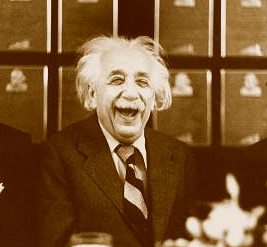
happy scientistOne of the many reasons I started this blog nearly five years ago was to engage both minds and hearts that my (and my colleagues’) scientific journal papers were failing to do. Of course we have emotional attachment to our areas of expertise (I’ve never met a good scientist who wasn’t passionate about what they studied) – but as Alejandro Frid encourages – we just have to transmit that emotional component better to our fellow human beings.

The title is not a joke about sensitive, New Age guys. I am quite serious about it. Though no academic superstar, I have been publishing in ecological and conservation journals for almost twenty years. I love the discipline. I’d hate to see it fail.

What I am talking about is this: ecologists read and write about ‘extinction’, ‘over-exploitation’, ‘climate change’ and so forth as a matter of routine. Yet at the same time, science journals are full of examples of how resources can be used more sustainably, of human behaviours that reduce the greenhouse gases that alter the climate and acidify the oceans, and of alternative economic models that value a healthy biosphere. So why do consumer apathy and political inertia still run the same old show?

I know, I know. Social scientists are working hard on this question (check out, for instance, just about any issue of Nature Climate Change). But what matters is not the rigorous answer that they might produce (we already know that it is 42 – Douglas Adams couldn’t be wrong); it is instead that most non-scientists probably don’t even care about the question. Read the rest of this entry »


Let the planting begin

3 04 2013
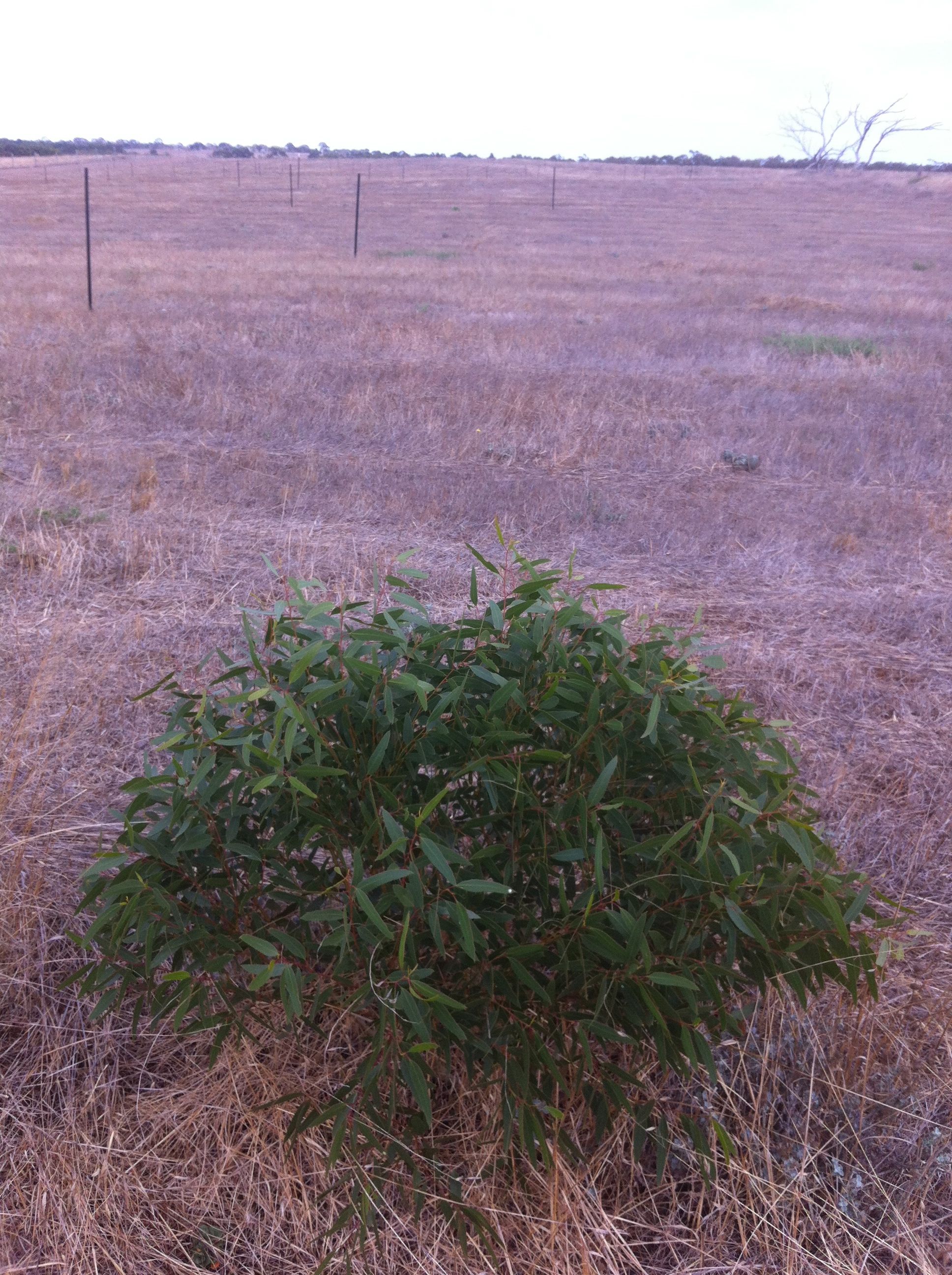
A tough little Eucalyptus porosa - one day soon this entire ex-paddock will be filled with carbon-guzzling natives.

A tough little Eucalyptus porosa – one day soon this entire ex-paddock will be filled with carbon-guzzling natives. Note the plot markers in the background.

I had a great morning today checking out the progress of our carbon-biodiversity planting experiment out at Monarto Zoo. What a fantastic effort! Briony Horner and her team have made some amazing progress.

If you haven’t read about what we’re up to, here’s a brief re-cap:

Late last year we were awarded an Australian Research Council (ARC) Linkage Project grant in which we proposed to examine experimentally the cost-benefit trade-off between biodiversity and carbon using a replicated planting regime. The approach is quite simple, but it will take many years to pay off. What we are asking is: how many different species and in what densities are required to restore a native woodland from an over-grazed paddock that provide the biggest long-term biodiversity and carbon benefits simultaneously for the lowest costs?

Read the rest of this entry »


Hot topics in ecology

5 03 2013

HotTopic copyJust a short one today to highlight a new1 endeavour by the Ecological Society of Australia.

Ecological societies around the world (e.g., Ecological Society of Australia, British Ecological Society, Ecological Society of AmericaCzech Society for Ecology, Société française d’Écologie, etc. – see a fairly comprehensive list of ecological societies around the world here) are certainly worthwhile from an academic standpoint. I’m a member of at least three of them, and over the years I’ve found them to be a great way to meet colleagues to discuss various aspects of our work. The conferences are usually a lot of fun (although I’ve generally found the Ecological Society of America conferences are too huge and unwieldy to be terribly beneficial), the talks are usually pretty good, and the social programmes tend to demonstrate just how human we scientists can be (I’ll let you read into that what you want).

An outsider could easily argue, however, that most ecological societies are archaic bastions of a former time when ecology was more a theoretical endeavour for academic circles, with little of practical use in today’s society. I’d agree that many components of these societies still hold onto elements of this sentiment, but it’s fast becoming clear that ecological societies can play an immensely important role in shaping their countries’ environmental policy. Read the rest of this entry »


Crying ‘wolf’ overlooks the foxes: challenging ‘planetary tipping points’

28 02 2013

tipping pointToday, a paper by my colleague, Barry Brook, appeared online in Trends in Ecology and Evolution. It’s bound to turn a few heads.

Let’s not get distracted by the title of the post, or the potential for a false controversy. It’s important to be clear that the planet is indeed ill, and it’s largely due to us. Species are going extinct faster than the would have otherwise. The planet’s climate system is being severely disrupted, so is the carbon cycle. Ecosystem services are on the decline.

But – and it’s a big ‘but’ – we have to be wary of claiming the end of the world as we know it or people will shut down and continue blindly with their growth and consumption obsession. We as scientists also have to be extremely careful not to pull concepts and numbers out of our bums without empirical support.

Specifically, I’m referring to the latest ‘craze’ in environmental science writing – the idea of ‘planetary tipping points‘ and the related ‘planetary boundaries‘. It’s really the stuff of Hollywood disaster blockbusters – the world suddenly shifts into a new ‘state’ where some major aspect of how the world functions does an immediate about-face. Read the rest of this entry »


Cartoon guide to biodiversity loss XVIII

13 02 2013

Here’s the latest 6 biodiversity cartoons for your simultaneous viewing pleasure and pain (see full stock of previous ‘Cartoon guide to biodiversity loss’ compendia here).

Read the rest of this entry »


Having more tree species makes us wealthier

28 01 2013

money treeAs more and more empirical evidence pours in from all corners of the globe, we can only draw one conclusion about the crude measure of species richness (i.e., number of species) – having more species around makes us richer.

And I’m not talking about the esoteric or ‘spiritual’ richness that the hippies dribble about around the campfire after a few dozen cones pulled off the bong (I’ll let the confused among you try to work the meaning of that one out by yourselves), I’m talking about real money (incorporated into my concept of ‘biowealth‘).

The idea that ‘more is better’ in terms of the number of species has traditionally found some (at times, conflicting) empirical support in the plant ecology literature, the latest evidence about which I wrote last year. This, the so-called ‘diversity-productivity’ relationship (DPR), demonstrates that as a forest or grass ecosystem gains more species, its average or total biomass production increases.

Read the rest of this entry »


Scaring our children with the future

21 01 2013

frightened childI’ve written before about how we should all be substantially more concerned about the future than what we as a society appear to be. Climate disruption is society’s enemy number one, especially considering that:

  1. all this unprecedented warming is happening on a template of highly degraded land- and seascapes. Extinction synergies (more extinctions than would otherwise be predicted by the simple sum of the different pressures) mean that climate change exacerbates the extinctions to which we are already committed;
  2. we show no sign of slowing emissions rates, partly because of the world’s ridiculous refusal to embrace the only known energy technology that can safely meet emissions-reduction requirements: nuclear power;
  3. there are 7 billion hungry, greedy humans on planet Earth, and that number is growing;
  4. scientific evidence denial, plutocracy and theocracy are all on the rise, meaning that logical, evidence-based decision making is being progressively tossed out the window.

That’s probably the most succinct way that I know of describing the mess we are in, which is why I tend to be more of a pragmatic pessimist when it comes to the future. I’ve discussed before how this outlook makes getting on with my job even more important – if I can’t reduce the rate of destruction and give my family a slightly better future in spite of this reality, at least I will damn well die trying. Read the rest of this entry »


Cartoon guide to biodiversity loss XVII

19 12 2012

I’m winding down here for the year (although there might be a few more posts before the New Year), so here’s the latest batch of 6 biodiversity cartoons (see full stock of previous ‘Cartoon guide to biodiversity loss’ compendia here).

Read the rest of this entry »


Tropical protected areas still in trouble

8 10 2012

© P. Harris

There’s nothing like a bit of good, intelligent and respectful debate in science.

After the publication in Nature of our paper on tropical protected areas (Averting biodiversity collapse in tropical forest protected areas), some interesting discussion has ensued regarding some of our assumptions and validations.

As is their wont, Nature declined to publish these comments (and our responses) in the journal itself, but the new commenting feature at Nature.com allowed the exchange to be published online with the paper. Cognisant that probably few people will read this exchange, Bill Laurance and I decided to reproduce them here in full for your intellectual pleasure. Any further comments? We’d be keen to hear them.

COMMENT #1 (by Hari Sridhar of the Centre for Ecological Sciences at the Indian Institute of Science in Bangalore)

In this paper, Laurance and co-authors have tapped the expert opinions of ‘veteran field biologists and environmental scientists’ to understand the health of protected areas in the tropics worldwide. This is a novel and interesting approach and the dataset they have gathered is very impressive. Given that expert opinion can be subject to all kinds of biases and errors, it is crucial to demonstrate that expert opinion matches empirical reality. While the authors have tried to do this by comparing their results with empirical time-series datasets, I argue that their comparison does not serve the purpose of an independent validation.

Using 59 available time-series datasets from 37 sources (journal papers, books, reports etc.), the authors find a fairly good match between expert opinion and empirical data (in 51/59 cases, expert opinion matched empirically-derived trend). For this comparison to serve as an independent validation, it is crucial that the experts were unaware of the empirical trends at the time of the interviews. However, this is unlikely to be true because, in most cases, the experts themselves were involved in the collection of the time-series datasets (at least 43/59 to my knowledge, from a scan of references in Supplementary Table 1). In other words, the same experts whose opinions were being validated were involved in collection of the data used for validation.

OUR RESPONSE (William F. Laurance, Corey J. A. Bradshaw, Susan G. Laurance)

Sridhar raises a relevant point but one that, on careful examination, does not weaken our validation analysis. Read the rest of this entry »


Cartoon guide to biodiversity loss XVI

12 09 2012

While in transit between tropical and temperate Australia, here’s the latest batch of 6 biodiversity cartoons (see full stock of previous ‘Cartoon guide to biodiversity loss’ compendia here).

Read the rest of this entry »


The invisible hand of ecosystem services

4 08 2012

I’ve just spent nearly an entire week trying to get my head around ecosystem services (ES).

You’d think that would have been a given based on my experience, my research, my writings and the fact that I’ve just spent the last week with 400 ES specialists from around the world at the 5th international Ecosystem Services Partnership (ESP) Conference in Portland, Oregon, USA.

Well, prior to this week I thought I knew what ES were, but now I think I’m just a little more confused.

Of course, I’m not talking about the concept of ES or what they are (hell, I’ve written enough about them on this blog and in my papers); my problem is understanding how we as society end up valuing them in a practical, sensible and feasible way.

So I’m going to describe the ESP Conference as I saw it, and not necessarily in chronological order.

First up is the term ‘ecosystem services’ itself – horrible name, and something rammed home again after attending the conference. Most people on the planet that are not scientists (that would be nearly everyone) just might have the most tenuous and ethereal of grasps of ‘ecosystem’ in the first place, and I’d bet that 99 % of most undergraduate students couldn’t provide a comprehensive description. This is because ecosystems are mind-bogglingly, chaotically and awesomely complex. Just ask any ecosystem ecologist.

The second part of the term – services – is particularly offensive in its presumption and arrogance. It’s not like you ring up an ecosystem and get it to clean your carpets, or fill your water tank or gas cylinder. No, the natural world did not evolve to pamper humanity; we are merely part of it (and bloody efficient at modifying it, I might add).

So try to sell this ‘incredibly complex thingy’ that is ‘there to do some (intangible) shit for us’ to the public, policy makers and politicians, and you mostly get a dog’s regurgitated breakfast and some blank, slack-jawed stares. Read the rest of this entry »


Threats to biodiversity insurance from protected areas

26 07 2012

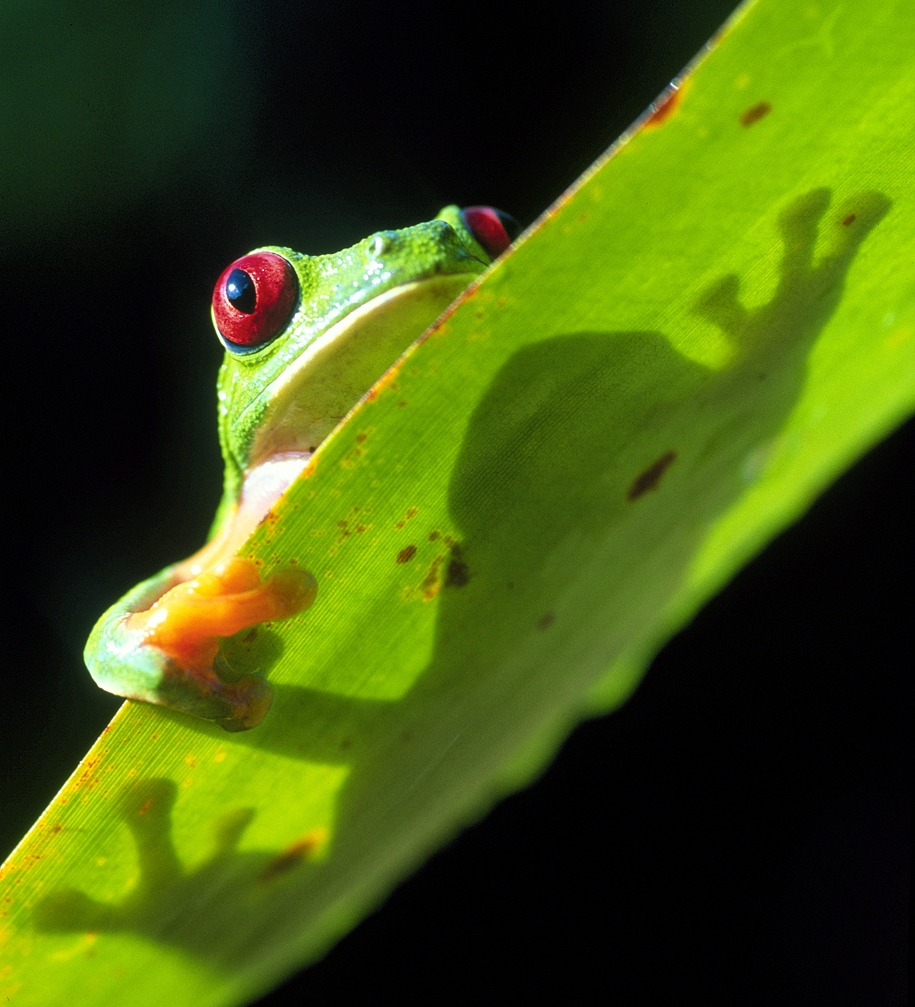
A red-eyed tree frog (Agalychnis callidryas) from Barro Colorado Island in Panama. This small island, just 1500 ha (3700 acres) in area, is one of the tropical protected areas evaluated in this study (photo © Christian Ziegler <zieglerphoto@yahoo.co>, Smithsonian Tropical Research Institute). Note: It is prohibited for any third party or agency to use or license this image; any use other then described above shall be subject to usage fees as determined solely by the photographer.

Much of conservation science boils down to good decision making: when, where and how we ‘set aside’ terrestrial or marine areas for specific protection against the ravages of human endeavour. This is the basis for the entire sub-discipline of conservation planning and prioritisation, and features prominantly in most aspects of applied conservation and restoration.

In other words, we do all this science to determine where we should emplace protected areas, lobby for getting more land and sea set aside so that we have ‘representative’ amounts (i.e., to prevent extinctions), and argue over the best way to manage these areas once established.

But what if this pinnacle of conservation achievement is itself under threat? What if many of our protected areas are struggling to insure biodiversity against human consumption? Well, it’d be a scary prospect, to say the least.

Think of it this way. We buy insurance policies to buffer our investments against tragedy; this applies to everything from our houses, worldly possessions, cars, livestock, health, to forest carbon stores. We buy the policies to give us peace of mind that in the event of a disaster, we’ll be bailed out of the mess with a much-needed cash injection. But what if following the disaster we learn that the policy is no good? What if there isn’t enough pay-out to fix the mess?

In biodiversity conservation, our ‘insurance’ is largely provided by protected areas. We believe that come what may, at least in these (relatively) rare places, biodiversity will persist despite our relentless consumerism.

Unfortunately, what we believe isn’t necessarily true.

Today I’m both proud and alarmed to present our latest research on the performance of tropical protected areas around the world. Published online in Nature this morning (evening, for you Europeans) is the 216-author (yes, that is correct – 216 of us) paper entitled “Averting biodiversity collapse in tropical forest protected areas” led by Bill Laurance. Read the rest of this entry »


Biodiversity conservation and behaviour change

23 07 2012

I have been asked by Diogo Veríssimo, a PhD student at the Durrell Institute of Conservation and Ecology (DICE) based at the University of Kent, to post a call for papers for a special issue of Conservation Evidence (details below). I’ve bumped into Diogo at a few conferences, and learnt a few weeks ago that he won the IUCN/Thomson Reuters Environmental Award for his essay entitled Greening the crisis: turning trouble into opportunity. Well done, Diogo.

Dear Colleagues,

I am inviting you to submit case-studies on behaviour change and biodiversity and conservation for a special issue in the journal Conservation Evidence, an online and open-access scientific journal that focuses on project-level conservation interventions with the aim of sharing lessons learned. The aim of this special issue is to document specific conservation interventions that delivered changes in behaviours relevant to the management and conservation of biodiversity and in this way share lessons learned.

Interventions that have not been successful are especially of interest as these allow for an understanding and discussion of what does not work and why. All case studies need to include an evaluation of the impacts of the intervention and are written by, or in partnership with, those who did the conservation work. Read the rest of this entry »


Conservation and Ecology Impact Factors 2011

29 06 2012

Here we go – another year, another set of citations, and another journal ranking by ISI Web of Knowledge Journal Citation Reports. Love them or loathe them, Impact Factors (IF) are immensely important for dictating publication trends. No, a high Impact Factor doesn’t mean your paper will receive hundreds of citations, but the two are correlated.

I’ve previously listed the 2008, 2009 and 2010 IF for major conservation and ecology journals – now here are the 2011 IF fresh off the press (so to speak). I’ve included the 2010 alongside to see how journals have improved or worsened (but take note – journals increase their IF on average anyway merely by the fact that publication frequency is increasing, so small jumps aren’t necessarily meaningful).

Read the rest of this entry »


Who’s responsible for climate change? Not ecologists, right?

19 06 2012

It’s sometimes difficult to take a long, hard look in the mirror and admit one’s failings. Today’s post is a thought-provoking challenge to all ecologists (indeed, all scientists) who gaily flit all over the known universe in the name of science. I’m certainly in one of the upper guilt echelons on this issue – and while I tell myself each January that “this year I’ll fly much less frequently”, I usually end up breaking my resolution by month’s end.

In some defence of my sins, I have to state that while I should always endeavour to fly less, I am convinced that strategic, well-planned (and usually small) meetings are some of the best ways to advance scientific ideas. As CB readers might know, I am particularly impressed with the results of dedicated workshops in this regard.

I also think that even if all aeroplanes suddenly fell from the sky and one could no longer enjoy that transcontinental G & T, we’d still be in a terribly climate-change mess – we need BIG solutions beyond simple consumption reduction.

Now I’m just making excuses. Thanks again to Alejandro Frid for providing this challenge to me and our colleagues.

Recently I asked a math savvy graduate student at Simon Fraser University, in Western Canada, to proofread an equation. ‘No problem’, she replied, ‘but could you wait a few days? I am about to fly to Korea for a conference but I will return shortly.’

Hmmmm? So this is what the system promotes: gallivanting halfway around the world and back within a week, burning extraordinary amounts of fossil fuels, all in the name of scientific career advancement. Who are the climate change culprits? Not us ecologists, right?

Of course I am being unfair to Ms. Maths Savvy. Most of us are equally guilty of boarding that big ol’ jet airliner in the name of scientific meetings or the pursuit of ecological knowledge in far off study sites. Yet the inconvenient truth, according to a recent editorial in Nature Climate Change1, is that “international air travel accounts for about 5% of global warming”. Flying all over the world in the name of ecology and conservation therefore implies that we believe that (i) there are no alternative means to accomplish the same goal with far less emissions, and (ii) that the benefits of our work outweigh the atmospheric impacts of flying. Think again.

For insight into these issues, I interviewed Kevin Anderson, deputy director of the Tyndall Centre for Climate Change Research at the University of Manchester and arguably the climate conscience of scientists. I was attracted to Anderson’s perspective because of its blunt honesty. He calls air travel “…the most emission profligate activity per hour”2 and has little patience for the irony that “international climate jamborees”, otherwise known as climate science meetings, have contributed far more to increasing carbon emissions than to any meaningful action on climate change. His recent commentary in Nature3 makes it amply clear that buying carbon offsets when flying may ease our perceived guilt but not emission rates. Read the rest of this entry »


Costs and benefits of a carbon economy for conservation

12 06 2012

I’ve had the good fortune of being involved now in a several endeavours funded by the Australian Centre for Ecological Analysis and Synthesis (ACEAS); two of those were workshops targeting specific questions regarding estimating modern extinction rates and examining the effects of genetic bottlenecks on Australian biota. The third was a bit different, to say the least – it was a little along the lines of ‘build it, and they will come‘. In other words, what happens when you bung 40 loosely associated researchers in a room for two days? Does anything of substance result, or does it degenerate into a mere talk-fest. I’m happy to say the former. The details of the ACEAS ‘Grand Workshop‘ are now being finalised in a paper that should be submitted by the end of the month. The ACEAS report is reproduced below.

The Grand ACEAS Workshop was something of an experiment: what will happen when we bring 30 of Australia’s top scientists working on land management issues into the same room?

The Grand Workshop participants came from academia, research institutions and the government, and had all received ACEAS funding for working groups. David Keith, Ted Lefroy, Jasmyn Lynch, Wayne Meyer and Dick Williams were amongst the attendees of the two-day workshop.

And when this group of people came together wanting to analyse and synthesise ecological data, great things happened.

“We decided to focus on how carbon pricing legislation will affect land use change and how will that spill over into biodiversity persistence”, said Professor Corey Bradshaw, Director of Ecological Modelling at The University of Adelaide, who led the synthesis activity at the Grand ACEAS Workshop.

“Will carbon pricing lead to good outcomes for biodiversity, or negative ones, or will it have no bearing whatsoever?”

The workshop participants broke into five groups to discuss how the carbon tax legislation will change land use when it is introduced in July 2012, and the potential impact on biodiversity.

Some of the questions asked included:

  • Is it enough simply to allow plants to re-grow to be eligible for carbon credits?
  • How will an increase in forestry plantations impact biodiversity, water catchments and fire regimes?
  • Will there be more kangaroo grazing to reduce methane emissions and erosion, replacing hard-hoofed livestock?
  • Can you receive carbon credits for shooting large feral animals like goats, camels, deer and boars?

The groups found many opportunities for positive biodiversity outcomes with the carbon sequestration activities encouraged by carbon pricing, but there are also many potential ‘bio-perversities’. Read the rest of this entry »


Humans suddenly become intelligent

1 04 2012

Some described it as the “eco-topia”; some believed they had died in the night and awoken in a different universe. Some just stood there gaping stupidly.

Yet the events of 01 April 2012 are real*. Humans suddenly became intelligent.

In an unprecedented emergency UN session this morning, all the world’s countries pledged to an immediate wind-down of the fossil-fuel economy and promised to invest in a rational combination of nuclear and renewable energy sources. Some experts believe the pledge would see a carbon-neutral planet by 2020.

Additionally, the session saw a world-wide pledge to halt all deforestation by 2013, with intensive reforestation programmes implemented immediately.

Family planning would be embraced worldwide, with a concerted effort to see the human population plateau by 2070, and begin declining to a stable 2 billion by 2300. Read the rest of this entry »


Bill Laurance wins Heineken Prize

16 03 2012

I’ve just learnt some fantastic news about my good friend and colleague, Professor Bill Laurance of James Cook University.

Bill has the distinction of being named this year’s recipient of the most-prestigious Heineken Prize for Environmental Sciences. Probably only second in prestige to the Crafoord Prize, the Heineken Prize has sent many recipients in the fields of medicine, biochemistry and biophysics on to win Nobel Prizes.

While there is still no Nobel category in ecology, conservation or the environment (there bloody well should be, in my not-so-humble opinion), this is a huge recognition of Bill’s amazing scientific track record, environmental portfolio, advocacy and expertise.

Read the rest of this entry »


Parts a whole do not make

17 02 2012

I’m particularly proud of our latest paper for three main reasons:  (1) Salva Herrando-Pérez, lead author and contributor-extraordinaire to CB, has worked extremely hard to get this one out; (2) it is published in a really good journal; and most importantly, (3) it’s the very first empirical demonstration over hundreds of species that just because you have a density effect on some vital rate (e.g., survival, fertility, dispersal), this in no way means you have any evidence at all for density dependence at the population level. Let us explain.

Quantifying variation in population size is an important element for explaining and predicting population dynamics. In models where a vital (demographic) rate responds to change in population size, those ‘density-dependent’ relationships are ecologically understood as being demographic signals of trophic and social interactions, such as parasitism, predation or competition for shelter, because the intensity of those interactions varies with population size.

In fact, density-dependent effects reflect the theoretical capacity of populations to adjust growth and rebound from low or high numbers – and so this concept has become an important metric in population management and conservation  (Eberhardt et al. 2008). Read the rest of this entry »