The few, the loud and the factually challenged

18 06 2011

© The Guardian

Here’s a little paraphrased response I received from a colleague who works for a particular agency concerned about the ridiculous politicking and misinformation associated with marine parks proposed for South Australia.

I’ve posted several times before why marine parks are a win for all involved, from the biodiversity it is meant to protect, to the fishers who benefit from the free, public-good resource that they assist in maintaining (see here, here and here). The evidence is clear world-wide: marine parks benefit pretty much everything and everyone.

However, just like the climate change denalists who use every psychological tactic in the book to try to convince people that climate change is a belief when in fact, it is a soundly evidenced phenomenon, there are those Luddites who think that any change in the marine setting fundamentally threatens their way of life.

Here’s what my colleague had to say about some recent ill-informed comments on this blog:

I wondered when they would find your blog. In my experience, do not engage. A game of intimidation has started. Read the rest of this entry »




Know thy threat

9 06 2011

Here’s another great guest post by Megan Evans of UQ – her previous post on resolving the environmentalist’s paradox was a real hit, so I hope you enjoy this one too.

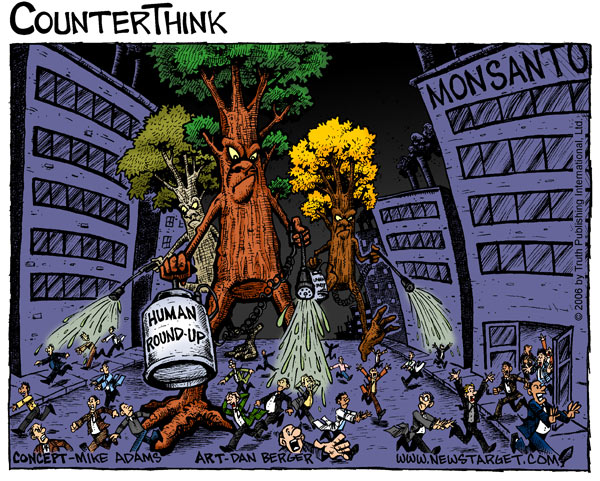
The reasons for the decline of Australia’s unique biodiversity are many, and most are well known. Clearing of vegetation for urban and agricultural land uses, introduced species and changed fire patterns are regularly cited in State of the Environment reports, recovery plans and published studies as major threats to biodiversity. But, while these threats are widely acknowledged, little has been done to quantify them in terms of the proportion of species affected, or their spatial extent at a national, state or local scale. To understand why such information on threats may be useful, consider for instance how resources are allocated in public health care1.

Threat knowledge

Conditions such as cancer, heart disease and mental health are regarded as National Health Priority Areas in Australia, and have been given special attention when prioritising funds since the late 1980s. The burden of disease in these priority areas are quantified according to the incidence or prevalence of disease or condition, and its social and economic costs. Estimates of burden of disease and their geographic distribution (often according to local government areas) can assist in communicating broad trends in disease burden, but also in prioritising efforts to achieve the best outcomes for public health. An approach similar to that used in healthcare could help to identify priorities for biodiversity conservation – using information on the species which are impacted by key threats, the spatial distributions of species and threats, and the costs of implementing specific management actions to address these threats. Read the rest of this entry »


World Environment Day and Australian forest regeneration

5 06 2011

© WWF

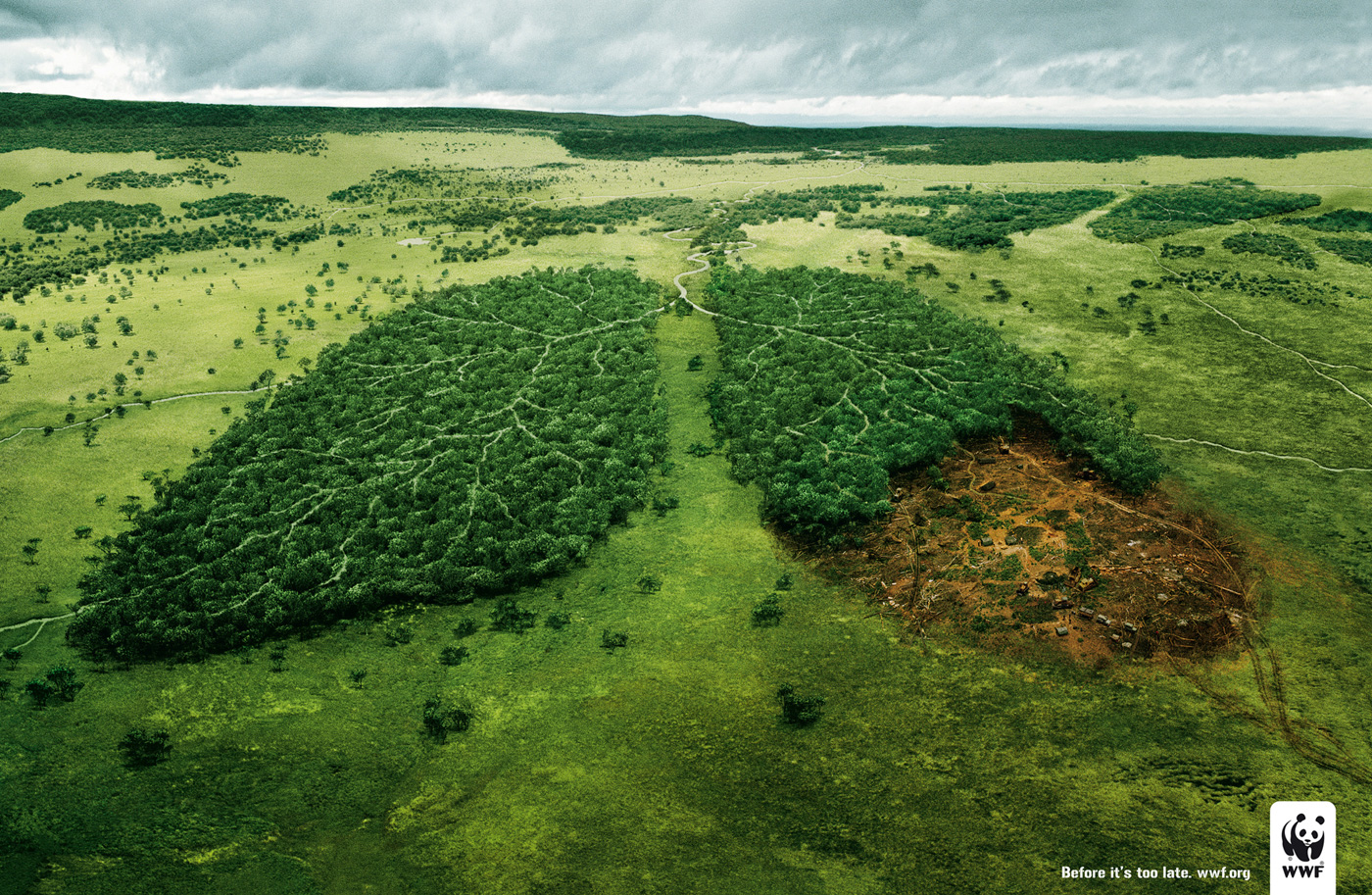
As I retweeted ABC Environment‘s sentiment for a Happy Environment Day, I added that we have little to be happy about.

However, I am happy about one thing – we’ve recently received a large ARC Linkage Grant to look at best-practice forest regeneration techniques. The Environment Institute just put out a post on it, so I’ll let Adriana’s words do the talking.

Sunday, 5 June is World Environment Day, this year’s theme is ‘Forests: Nature At Your Service’. Read on to find out how researchers at The Environment Institute are looking at ways of restoring our forests.

World Environment Day (WED) is an annual event that is aimed at being the biggest and most widely celebrated global day for positive environmental action. World Environment Day celebrations began in 1972 and has grown to become the one of the main vehicles through which the UN stimulates worldwide awareness of the environment and encourages political attention and action. Read the rest of this entry »


Cartoon guide to biodiversity loss XII

30 05 2011

The latest six cartoons… (see full stock of previous ‘Cartoon guide to biodiversity loss’ compendia here).

Read the rest of this entry »



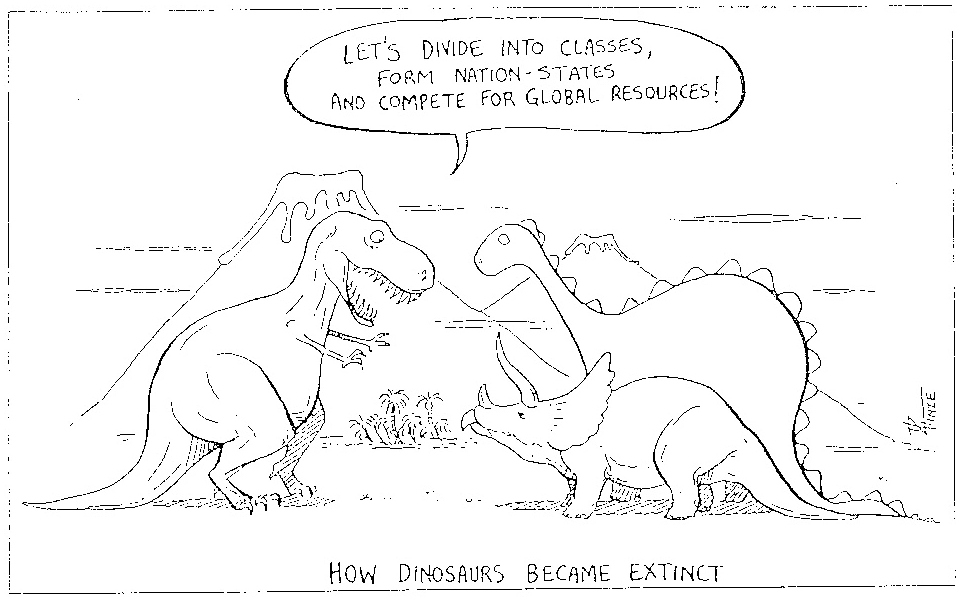
The evil sextet

18 05 2011

This post doubles as a Conservation Classic and a new take on an old concept. It’s new in the sense that it updates what we believe is an advance on a major milestone in conservation biology, even though some of the add-on concepts themselves have been around for a while.

First, the classic.

The ‘evil quartet’, or ‘four horsemen of the ecological apocalypse’, was probably the first treatment of extinction dynamics as a biological discipline in its own right. Jarod Diamond (1984) took a sweeping historical and contemporary view of extinction, then simplified the problem to four principal mechanisms:

  1. overhunting (or overexploitation),
  2. introduced species,
  3. habitat destruction and
  4. chains of linked extinctions (trophic cascades, or co-extinctions).

Far from a mere review or list of unrelated mechanisms, Diamond’s evil quartet crystallized conservation biologists’ thinking about key mechanisms and, more importantly, directed attention towards those factors likely to drive extinctions in the future. The unique combination of prehistorical through to modern examples gave conservation biologists a holistic view of extinction dynamics and helped spawn many of the papers described hereafter. Read the rest of this entry »


生态学 = ‘Ecology’ in China

13 05 2011

I’m just heading home after a very inspiring workshop organised by Fangliang He at Sun Yat-sen University in Guangzhou, China (I’m writing this from the Qantas Club in the Hong Kong airport).

Before I proceed to regale you with the salient details of the ‘International Symposium for Biodiversity and Theoretical Ecology‘, I am compelled to state publicly that I offer my sincerest condolences to Fangliang and his family; unfortunately Fangliang’s brother passed away while we were at the workshop and so Fangliang wasn’t able to spend much time reaping the fruits of his organisational labour. If you know Fangliang, please send him a supporting email.

That sad note aside, I am delighted to say that the workshop was compelling, challenging and also rather fortuitous. I was one of many overseas invitees, and I must say that I was at times overwhelmed by the size of the brains they managed to pack into the auditorium. Many colleagues I didn’t know attended, and I hope that many will become collaborators. The international invitees were: Read the rest of this entry »



Tropical forests cooking their biodiversity

5 05 2011

Another ‘hot’ essay by Bill Laurance recently published online by Yale Environment 360 (a publication of the Yale University School of Forestry & Environmental Studies). Bill asked me to relay it on ConservationBytes.com, so here it is in full:

Much attention has been paid to how global warming is affecting the world’s polar regions and glaciers. But a leading authority on tropical forests [that would be Bill] warns that rising temperatures could have an equally profound impact on rainforests and are already taking a toll on some tropical species.

On Jan. 12, 2002, in the Australian state of New South Wales, biologist Justin Welbergen was observing a colony of flying foxes for his Ph.D. research. The temperatures that day on Australia’s subtropical, eastern coast reached record highs, soaring to 42.9 ° C (109 ° F) at the weather station closest to Welbergen’s study site — nearly 8 ° C higher than the average summer maximum temperature.

The flying foxes, or giant fruit bats, normally just doze in the treetops through the day, but on this afternoon they were fanning themselves, panting frantically, jostling for shady spots, and licking their wrists in a desperate effort to cool down. Suddenly, when the thermometer hit 42 ° C, the bats began falling from the trees. Most quickly died. Welbergen and his colleagues counted 1,453 flying foxes that died from the heat in one colony alone. The scorching heat that day killed at least 2,200 additional flying foxes in eight other colonies along a 250-kilometre stretch of coastline. All the deaths occurred in colonies where temperatures soared above 41.7 ° C. Read the rest of this entry »


Classics: Effective population size ratio

27 04 2011

Here’s another concise Conservation Classic highlighted in our upcoming book chapter (see previous entries on this book). Today’s entry comes from a colleague of mine, Dick Frankham, who has literally written the book on conservation genetics. I’ve published with Dick a few times – absolutely lovely chap who really knows his field more than almost any other. It is a great pleasure to include one of his seminal works as a Conservation Classic.

This entry is highly related to our work on minimum viable population size, and the controversial SAFE index (more on that later).

Although it had long been recognized that inbreeding and loss of genetic diversity were accentuated in small, isolated populations (Charlesworth & Charlesworth, 1987), genetic hazards were generally considered to be of less consequence to extinction risk than demographic and environmental stochasticity. Frankham (1995) helped overturn this viewpoint, using a meta-analysis to draw together comprehensive evidence on the ratio of genetically effective to actual population size (Ne:N). Read the rest of this entry »


Who’s your carbon daddy?

20 04 2011

The other day, Bill Laurance asked Barry Brook and me to comment on an opinion editorial he was doing up, so I feel fully justified in reproducing it here (and he asked me to ;-). It has just been published online in Australian Geographic.

I hate to be the bearer of bad news, but here it is: China is now the biggest global emitter of carbon dioxide (CO2), the chief greenhouse gas – and Australia has helped it attain that dubious honour.

China now spews out about 6.5 billion tons of CO2 annually, whereas the USA emits 5.8 billion tons a year (based on data for 2008 compiled by the U.S. Department of Energy). Collectively, these two countries account for over 40 per cent of global CO2 emissions. Number three on the list is Russia, with 1.7 billion tons per year, followed closely by India.

Of course, China’s huge leap in emissions is largely down to its dramatic industrial and economic growth, in concert with the fact that it is the world’s most populous nation, with over 1.3 billion people. To help fuel its growth, China is now building nearly one new coal-fired power-generating plant per week. Read the rest of this entry »



Getting conservation stakeholders involved

14 04 2011

Here’s another guest post from another switched-on Queensland student, Duan Biggs. Duan, originally from Namibia and South Africa, is doing his PhD at the ARC Centre for Coral Reef Studies at James Cook University in Townsville, Queensland. His PhD is investigating the resilience of nature-based tourism to climate change. I’ve met Duan a few times, and I’m impressed by his piercing views on conservation science and its implementation. Duan has already posted here on ConservationBytes.com (‘Make your conservation PhD relevant‘) and now adds his latest post discussing a paper he’s just had published in Conservation Letters. Thanks, Duan.

Achieving conservation outcomes almost always means working with stakeholders. ConservationBytes readers who have participated in multi-stakeholder conservation processes will know how difficult they are. Even more so when parties come from very different backgrounds and cultures. Farmers feel they just cannot comprehend what scientists are saying… ecologists silently curse [CJAB’s note: well, not always silently] because government officials ‘just don’t get it’ and so forth. So often, conservation projects are impeded, or even brought to a grinding halt because the very different perspectives that stakeholders bring to the table and the inability to see eye to eye.  This has left many a fervent conservationist and scientist feeling like the associated cartoon.

However, our new paper entitled The implementation crisis in conservation planning – could ‘mental models’ help? just out in Conservation Letters suggests ways of dealing with this almighty challenge.

Effective conservation requires conservation scientists to partner successfully with managers, extractive users and other stakeholder groups. Often, key stakeholders come from very different backgrounds and cultures, and hence have a diversity of values that result in a range of perspectives on issues. These differences are frequently a source of failure in conservation projects.

Read the rest of this entry »


Resolving the Environmentalist’s Paradox

7 04 2011

Here’s an extremely thought-provoking guest post by Megan Evans, Research Assistant at the University of Queensland in Kerrie Wilson‘s lab. Megan did her Honours degree with Hugh Possingham and Kerrie, and has already published heaps from that and other work. I met Megan first in 2009 and have been extremely impressed with her insights, broad range of interests and knowledge, and her finely honed grasp of social media in science. Smarter than your average PhD student, without a doubt (and she has even done one yet). Take it away, Megan.

© T. Toles

Resolving the ‘Environmentalist’s Paradox’, and the role of ecologists in advancing economic thinking

Aldo Leopold famously described the curse of an ecological education as “to be the doctor who sees the marks of death in a community that believes itself well and does not want to be told otherwise”. Ecologists do have a tendency for making dire warnings for the future, but for anyone concerned about the myriad of problems currently facing the Earth – climate change, an ongoing wave of species extinctions and impending peak oil, phosphate, water , (everything?) crises – the continued ignorance or ridicule of such warnings can be a frustrating experience. Environmental degradation and ecological overshoot isn’t just about losing cute plants and animals, given the widespread acceptance that long-term human well-being ultimately rests on the ability for the Earth to supply us with ecosystem services.

In light of this doom and gloom, things were shaken up a bit late last year when an article1 published in Bioscience pointed out that in spite of declines in the majority of ecosystem services considered essential to human well-being by The Millenium Ecosystem Assessment (MA), aggregate human well-being (as measured by the Human Development Index) has risen continuously over the last 50 years. Ciara Raudsepp-Hearne and the co-authors of the study suggested that these conflicting trends presented an ‘environmentalist’s paradox’ of sorts – do we really depend on nature to the extent that ecologists have led everyone to believe? Read the rest of this entry »


Does the pope wear a funny hat?

5 04 2011

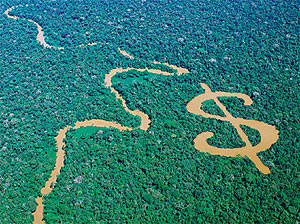
Does a one-legged duck swim in circles? Does an ursid defecate in a collection of rather tall vascular plants? Does fishing kill fish?

Silly questions, I know, but it’s the kind of question posed every time someone doubts the benefits (i.e., for biodiversity, fishing, local economies, etc.) of marine reserves.

I’ve blogged several times on the subject (see Marine protected areas: do they work?The spillover effectInterview with a social (conservation) scientist, and Failing on ocean protection), but considering Hugh Possingham is town today and presenting the case to the South Australian Parliament on why this state NEEDS marine parks, I thought I’d rehash an old post of his published earlier this year in Australasian Science:

Science has long demonstrated that marine reserves protect marine biodiversity. Rather than answer the same question again, isn’t it about time we started funding research that answers some useful scientific questions?

As marine reserves spread inexorably across the planet, the cry from skeptics and some fishermen is: “Do marine reserves work?” The science is pretty clear but acknowledgement of this by the public is another story. Let me begin with a story of my experience answering this question while communicating to stakeholders the subtleties of marine conservation planning during the rezoning of Moreton Bay.

I was asked by the then-Queensland Environmental Protection Agency to explain to stakeholders the process of marine reserve system design as it applied to the Moreton Bay rezoning. I told the gathering that the rezoning was about conserving a fraction of each mappable biodiversity attribute (species and habitats) for the minimum impact on the livelihood of others. Read the rest of this entry »


Cartoon guide to biodiversity loss XI

22 03 2011

The latest six cartoons… (see full stock of previous ‘Cartoon guide to biodiversity loss’ compendia here).

Read the rest of this entry »


Classics: demography versus genetics

16 03 2011

Here’s another short, but sweet Conservation Classic highlighted in our upcoming book chapter (see previous entries on this book). Today’s entry comes from long-time quantitative ecology guru, Russ Lande, who is now based at the Silwood Park Campus (Imperial College London).

© IBL

In an influential review, Lande (1988) argued that

“…demography may usually be of more immediate importance than population genetics in determining the minimum viable size of wild populations”.

It was a well-reasoned case, and was widely interpreted to mean that demographic and ecological threats would provide the ‘killer blow’ to threatened species before genetic factors such as inbreeding and fitness effects of loss of genetic diversity had time to exert a major influence on small population dynamics.

Read the rest of this entry »


Build a bridge out of ‘er

12 03 2011

Apologies to Monty Python and my poor attempt to make the over-used expression ‘bridging the gap’ humorous.

Today’s guest post comes from across the Pacific Ocean. Dr. Sara Maxwell is a postdoctoral fellow with Marine Conservation Biology Institute and University of California Santa Cruz, Long Marine Laboratory. She was kind enough to contribute to ConservationBytes.com about an issue I’ve covered before in various forms – making conservation research relevant for conservation action.

© R. Arlettaz

In a catalyzing article titled “From publications to public actions: when conservation biologists bridge the gap between research and implementation” in the November 2010 issue of BioScience, Raphaël Arlettaz1 and his colleagues Michael Schaub2, Jérôme Fournier3, Thomas Reichlin2, Antoine Sierro4, James Watson5 and Veronika Braunisch2 explore reasons for our hard work as conservation biologists not reaching the implementation phase. This article strongly resonated with my colleague, Kiki Jenkins6 and I, Sara Maxwell. This resulted in a series of letters published in BioScience and now we join together, along with Jeffrey Camm7, Guillaume Chapron8, Liana Joseph9, and Rudi Suchant10 to synthesize our ideas and present them to the larger conservation community via ConservationBytes.

The article that sparked the discussion

In their article, Arlettaz and colleagues highlight some of the main roadblocks to implementing conservation research. The main reasons are that:

  1. The research made by conservation biologists’ does not lend itself well to implementation, i.e., as a community we often focus on the wrong questions or address them in ways that do not lead to practical applications for practitioners;
  2. The outcomes of conservation biologists’ research tends not to reach practitioners and so fails to be put into action;
  3. When we successfully align and collaborate with practitioners, there is a lack of economic or political support to make the changes that need to happen; or
  4. Conservation biologists do not commit to engaging themselves in the implementation of their recommendations due to a lack of reward structure for this behaviour and the conflicting roles of academia and conservation.

Arlettaz and colleagues illustrate how to overcome these roadblocks using a case study of their own work on the endangered hoopoe (Upupa epops) in Switzerland, showing how they followed through the recommendations of their work to implementation and had a direct impact on species recovery. They highlight means by which other conservation biologists can do the same.

Read the rest of this entry »


Classics: Tragedy of the Commons

28 02 2011

Although not a conservation biology paper per se, Hardin’s classic essay (Hardin, 1968) changed the way we think about managing natural resources that lack definitive ownership.

The thesis of the “tragedy of the commons” is that individuals are inherently selfish and usually place their own interests first in using commonly owned resources, thereby resulting in their depletion. Hardin used a hypothetical and simplified situation based on medieval land tenure in Europe (herders sharing a common parcel of land) on which each herder was entitled to graze his cattle. Each herder maximized his gains by putting additional cattle onto the land, even if the carrying capacity of the common was exceeded and overgrazing ensued. The herder, by making an “individually rational decision,” received all the benefits from his cattle, but could in the process deplete the common resource for the entire group. If all herders make such selfish decisions then the common will be depleted, jeopardizing the livelihoods of all.

Read the rest of this entry »


Classics: Shifting baselines

14 02 2011

The Conservation Classics series will soon be collated and published in a special chapter for the book ‘Biodiversity’ to be published later this year by InTech. The chapter is co-authored by Barry Brook, Navjot Sodhi, Bill Laurance and me. This is a snippet of one ‘classic’ I haven’t yet really covered extensively on ConservationBytes.com.

Daniel Pauly’s (1995) concept describes the way that changes to a system are measured against baselines which themselves are often degraded versions of the original state of the system. Pauly (1995) originally meant it in a fisheries context, where “… fisheries scientists sometimes fail to identify the correct ‘baseline’ population size (e.g., how abundant a fish species population was before human exploitation) and thus work with a shifted baseline”. It is now considered a mantra in fisheries and marine science (Jackson et al., 2001), but it has been extended to many other conservation issues. Yet, quantifying shifting baselines in conservation is difficult, with little empirical evidence (but see Jackson et al., 2001), despite the logic and general acceptance of its ubiquity by conservation scientists. Read the rest of this entry »


S.A.F.E. = Species Ability to Forestall Extinction

8 01 2011

Note: I’ve just rehashed this post (30/03/2011) because the paper is now available online (see comment stream). Stay tuned for the media release next week. – CJAB

I’ve been more or less underground for the last 3 weeks. It has been a wonderful break (mostly) from the normally hectic pace of academic life. Thanks for all those who remain despite the recent silence.

© Ezprezzo.com

But I’m back now with a post about a paper we’ve just had accepted in Frontiers in Ecology and Environment. In my opinion it’s a leap forward in how we measure relative threat risk among species, despite some criticism.

I’ve written in past posts about the ‘magic’ minimum number of individuals that should be in a population to reduce the chance of extinction from random events. The so-called ‘minimum viable population (MVP) size’ is basically the abundance of a (connected) population below which random events take over from factors causing sustained declines (Caughley’s distinction between the ‘declining’ and ‘small’ population paradigms).

Up until the last few years, the MVP size was considered to be a population- or species-specific value, and it required very detailed demographic, genetic and biogeographical data to estimate – not something that biologists tend to have at their fingertips for most high-risk species. However, several papers published by our group (Minimum viable population size and global extinction risk are unrelated, Minimum viable population size: a meta-analysis of 30 years of published estimates and Pragmatic population viability targets in a rapidly changing world) have shown that there is in fact little variation in this number among the best-studied species; both demographic and genetic data support a number of around 5000 to avoid crossing the deadly threshold.

Now the fourth paper in this series has just been accepted (sorry, no link yet, but I’ll let you all know as soon as it is available), and it was organised and led by Reuben Clements, and co-written by me, Barry Brook and Bill Laurance.

The idea is fairly simple and it somewhat amazes me that it hasn’t been implemented before. The SAFE (Species Ability to Forestall Extinction) index is simply the distance a population is (in terms of abundance) from its MVP. In the absence of a species-specific value, we used the 5000-individual threshold. Thus, Read the rest of this entry »


Biowealth – a lexical leap forward for biodiversity appreciation

17 12 2010

Here’s a little idea I’ve been kicking around in my head that I’d like to invite you to debate. Call it an ‘Open Thread’ in the spirit of BraveNewClimate.com’s successful series.

© The Economist

Let’s face it, ‘biodiversity’ is a slippery and abstract concept for most people. Hell, even most ecologists have a hard time describing what biodiversity means. To the uninitiated, it seems simple enough. It’s just the number of species, isn’t it?

Well, no. It isn’t.

Unfortunately, it’s far, far more complicated. First, the somewhat arbitrary pigeon-holing of organisms into Linnaean taxonomic boxes doesn’t really do justice to the genetic gradients within species, among populations and even between individuals. We use the pigeon-hole taxonomy because it’s convenient, that’s all. Sure, molecular genetics has revolutionised the concept, but to most people, a kangaroo is a kangaroo, a robin is a robin and an earthworm is an earthworm. Hierarchical Linnaean taxonomy prevails.

Then there’s the more prickly issue of α, β and γ diversity. α diversity essentially quantifies species richness within a particular area, whereas β diversity is the difference in α diversity between ecosystems. γ diversity is used to measure overall diversity for the different constituent ecosystems of a region. Scale is very, very important (see our recent book chapter for more on this). Read the rest of this entry »


Want a cool conservation job in beautiful southern Australia?

14 12 2010

I was asked to post this cool-sounding job on ConservationBytes.com – relevant punters welcome to respond.

Australian Wildlife Conservancy (AWC) is a non‐profit organisation dedicated to the conservation of Australia’s threatened wildlife and their habitats. AWC now owns and manages more land than any other private conservation organisation in Australia ‐  21 properties, covering more than 2.6 million hectares ‐ protecting more than 1,200 fauna species through active land management informed by strategic scientific research.

AWC is seeking an experienced and committed ecologist who will be pivotal in the development and implementation of the conservation and science program throughout south‐eastern Australia. The position will be based at Scotia Wildlife Sanctuary (where on‐site accommodation will be provided), but will include work at other AWC sanctuaries, especially Kalamurina (Lake Eyre), Buckaringa (Flinders Ranges), Yookamurra (Riverlands), Dakalanta (Eyre Peninsula), Bowra (Mulga Lands) and North Head (Sydney) sanctuaries.

Scotia is a large property (65,000 ha) that lies on the NSW‐SA border between Wentworth and Broken Hill, and includes Australia’s largest area free of foxes, cats and rabbits (8,000 ha) and where seven regionally extinct species have been reintroduced (bilby, boodie, woylie, bridled nailtail wallaby, numbat, greater stick‐nest rat, mala and black‐eared miner). In addition, the property has outstanding conservation values because it protects habitats, in good condition, that have been extensively cleared in western NSW.

Read the rest of this entry »