Take a leaf from insurance industry’s book

18 04 2012

Just a quick one rehashing today’s media release on the iREDD paper I blogged about a while back. The full, online version is available upon request. Stay tuned for media coverage.

A group of environmental scientists say a problem-ridden economic model designed to slow deforestation can be improved by applying key concepts from the insurance industry.

REDD (Reduced Emissions from Deforestation and forest Degradation) is a UN-promoted scheme that allows countries to trade in carbon credits to keep forests intact. It is mainly targeted at developing nations where deforestation and exploitation are a major threat.

In a paper published online in the journal Conservation Letters, ecology researchers from Australia and South Africa argue that REDD projects can suffer from three major problems. They have proposed strengthening the scheme by using insurance policies and premiums, creating a new scheme known as iREDD.

“The idea of paying a nation to protect its forests in exchange for carbon pollution offsets can potentially reduce overall emissions by keeping the trees alive, and ensure a lot of associated biodiversity gets caught up in the conservation process,” says Professor Corey Bradshaw,, Director of Ecological Modelling at the University of Adelaide’s Environment Institute and a senior author of the paper.

“However, there are three main problems with REDD: these are known as leakage, permanence and additionality.” Read the rest of this entry »


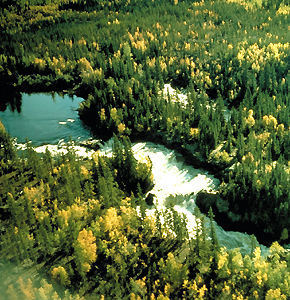
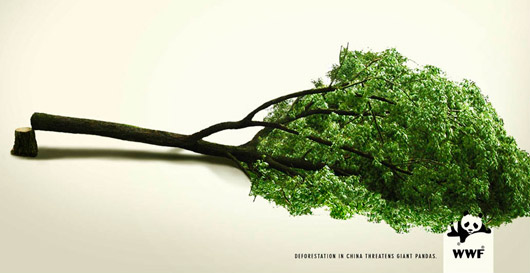
The wounded soldiers of biodiversity

10 04 2012

Here’s another great post from Salvador Herrando-Pérez. It is interesting that he’s chosen an example species that was once (a long, long time ago in a galaxy far, far away) of great interest to me (caribou – see ancient papers a, b, c, d). But that is another story. Take it away, Salva.


Figure 1. Caribou (reindeer) are ungulates weighing up to ~ 100 kg. They live in tundra and taiga in Finland, Greenland, Finland, Norway, Mongolia, Russia, Canada and USA (extinct in Sweden). The species is globally stable (‘Least Concern’, IUCN Red List), but the subspecies of woodland caribou (Rangifer tarandus caribou) is threatened in North America. Schneider and colleagues’ 7 study encompasses ~ 3,000 individuals in 12 herds (75 to 450 individuals per herd), occupying ~ 100.000 km2 of conifer forest and peatland (3,000 to 19,000 km2 per herd). Two ecotypes are recognized regionally22, namely migratory mountain herds (mostly from mountains and foothills in west-central Alberta), and non-migratory boreal herds (mostly from peatlands in central and northern Alberta). The photo shows a group of caribous grazing on subalpine vegetation from Tonquin Valley, Jasper National Park (Alberta, Canada). Photo courtesy of Saakje Hazenberg.

As conservation biology keeps incorporating management and economical principles from other disciplines, it stumbles with paradoxes such that investing on the most threatened components of biodiversity might in turn jeopardize the entire assets of biodiversity.

At the end of 2011, newspapers and TVs echoed an IUCN report cataloguing as ‘extinct’ or ‘near extinct’ several subspecies of rhinos in Asia and Africa. To many, such news might have invoked the topic: “how badly governments do to protect the environment”. However if, to avoid those extinctions, politicians had to deviate funds from other activities, what thoughts would come to the mind of workers whose salaries had to be frozen, school directors whose classroom-roof leakages could not be repaired (e.g., last winter at my niece’s school in Spain), colonels whose last acquisition of ultramodern tanks had to be delayed, or our city council’s department who had to cancel Sting’s next performance.

Thus, there are three unquestionable facts regarding species conservation:

  1. the protection of species costs money;
  2. governments and environmental organisations have limited budgets for a range of activities they deem necessary; and
  3. our way of conserving nature is failing because, despite increasing public/private support and awareness, the rate of destruction of biodiversity is not decelerating1,2.

One of the modern debates among conservationists pivots around how to use resources efficiently3-6. Schneider and colleagues7 have dealt with this question for woodland caribou (Rangifer tarandus) in Canada. A total of 18 populations of this ungulate persist in the Canadian province of Alberta, all undergoing demographic declines due to mining extractions (oil, gas and bitumen), logging and wolf predation. The species is listed as ‘threatened’ regionally and nationally. The Alberta Caribou Recovery Plan (2004-2014) is attempting to protect all herds. Under such a framework, Schneider et al.7 predicted that woodland caribou would be regionally extirpated in less than a century.

Furthermore, they estimated the costs of making each herd viable (Fig. 1), with a triple revelation. To save all herds from extinction would need ~ CA$150,000 million (beyond the available budget). The most threatened herds are among the most expensive to protect (within present management approach). Some herds would be secured through modest investment for two decades. Overall, their study suggests that Alberta’s woodland caribou would be eligible for triage, i.e., at the subpopulation level8. Read the rest of this entry »


Humans suddenly become intelligent

1 04 2012

Some described it as the “eco-topia”; some believed they had died in the night and awoken in a different universe. Some just stood there gaping stupidly.

Yet the events of 01 April 2012 are real*. Humans suddenly became intelligent.

In an unprecedented emergency UN session this morning, all the world’s countries pledged to an immediate wind-down of the fossil-fuel economy and promised to invest in a rational combination of nuclear and renewable energy sources. Some experts believe the pledge would see a carbon-neutral planet by 2020.

Additionally, the session saw a world-wide pledge to halt all deforestation by 2013, with intensive reforestation programmes implemented immediately.

Family planning would be embraced worldwide, with a concerted effort to see the human population plateau by 2070, and begin declining to a stable 2 billion by 2300. Read the rest of this entry »


Unholy trinity of leakage, permanence and additionality

13 03 2012

I begin with the proverbial WTF? The title of this post sounds a little like the legalese accompanying a witchcraft trial, but it’s jargon that’s all the rage in the ‘trading-carbon-for-biodiversity’ circles.

I’m sure that most of my readers will have come across the term ‘REDD‘ (Reduced Emissions from Deforestation and forest Degradation), which is the clever idea of trading carbon credits to keep forests intact. As we know, living forests can suck up a lot of carbon from the atmosphere (remember your high school biology lesson on photosynthesis? Carbon dioxide in. Oxygen out), even though climate change is threatening this invaluable ecosystem service. So the idea of paying a nation (usual a developing country) to protect its forests in exchange for carbon pollution offsets can potentially save two birds with one feeder – reducing overall emissions by keeping the trees alive, and ensuring a lot of associated biodiversity gets caught up in the conservation process.

The problem with REDD though is that it’s a helluva thing to bank on given a few niggly problems essentially revolving around trust. Ah yes, the bugbear of any business transaction. As the carbon credit ‘buyer’ (the company/nation/individual who wishes to offset its carbon output by ‘buying’ the carbon uptake services provided by the intact forest), you’d want to make damn sure that all the money you spend to offset your carbon actually does just that, and that it doesn’t just end up in the hands of some corrupt official, or even worse, used to generate industry that results in even higher emissions! As the buyer, of course you want to entice investors to give you lots of money, and if you bugger up the transaction (by losing the resource you are providing), you’re not likely to have any more investors coming knocking on your door.

Enter the unholy trinity of leakage, permanence and additionality.

This horrible jargon essentially describes the REDD investment problem:

Read the rest of this entry »



Sink to source – the loss of biodiversity’s greatest ecosystem service

29 02 2012

I’ve mentioned this idea before, but it’s nice when some real data support a prediction (no matter how gloomy that prediction might have been). It’s what drives scientists toward discovery (or at least, it’s what I find particularly appealing about my job).

Several years ago, my colleagues (Navjot Sodhi† and Ian Warkentin) and I wrote a major review in TREE about the fate of the world’s ‘second’ lung of the planet, the great boreal forests of Russia, Canada & Scandinavia. We discussed how fragmentation was increasing at an alarming rate, and that although most species there are still relatively intact, we stand to lose a lot of its biodiversity if we don’t halt the fragmenting processes soon. We wrote more on the subject in a paper to appear imminently in Biological Conservation.

Another component though that we raised in the TREE paper was the boreal forests were very much in danger of turning into a net carbon producer. You see, the ‘lung’ analogy is very pertinent because on average, the growth of the massive expanse of the vegetation in the forest generally takes up much more atmospheric carbon that it exudes through decay and burning (for as we all know, plants take up carbon dioxide to produce sugars during photosynthesis, and produce oxygen as a ‘waste’ product). However, as we fragment, cut down and burn the forest, it can end up producing more than it takes up (i.e., turning from a ‘sink’ to a ‘source’). We highlighted several studies indicating how insect outbreaks and human-exacerbated fire intensities and frequencies could conceivably do this.

Now Zhihai Ma and colleagues have just compiled a paper in PNAS indicating that the danger is well on the way to becoming reality in Canada. The paper entitled Regional drought-induced reduction in the biomass carbon sink of Canada’s boreal forests reports the results from 96 long-term permanent sampling plots spread right across southern Canada – from British Columbia in the far west, to Newfoundland in the far east. Read the rest of this entry »



Cartoon guide to biodiversity loss XV

13 02 2012

I’m in the field at the moment, so here are the latest six cartoons to pass the time (see full stock of previous ‘Cartoon guide to biodiversity loss’ compendia here). Enjoy.

Read the rest of this entry »



When the cure becomes the disease

6 02 2012

I’ve always barracked for Peter Kareiva‘s views and work; I particularly enjoy his no-bullshit, take-no-prisoners approach to conservation. Sure, he’s said some fairly radical things over the years, and has pissed off more than one conservationist in the process. But I think this is a good thing.

His main point (as is mine, and that of a growing number of conservation scientists) is that we’ve already failed biodiversity, so it’s time to move into the next phase of disaster mitigation. By ‘failing’ I mean that, love it or loathe it, extinction rates are higher now than they have been for millennia, and we have very little to blame but ourselves. Apart from killing 9 out of 10 people on the planet (something no war or disease will ever be able to do), we’re stuck with the rude realism that it’s going to get a lot worse before it gets better.

This post acts mostly an introduction to Peter Kareiva & collaborators’ latest essay on the future of conservation science published in the Breakthrough Institute‘s new journal. While I cannot say I agree with all components (especially the cherry-picked resilience examples), I fundamentally support the central tenet that we have to move on with a new state of play.

In other words, humans aren’t going to go away, ‘pristine’ is as unattainable as ‘infinity’, and reserves alone just aren’t going to cut it. Read the rest of this entry »


More is better

18 01 2012

In one of those rare moments of perusing the latest ecological literature, I stumbled across an absolute gem, and one that has huge conservation implications. Now, I’m really no expert in this particular area of ecology, but I dare say the paper I’m about to introduce should have been published in Nature or Science (I suspect it was submitted to at least one of these journals first). It was still published in an extremely high-impact journal in ecology though – the Journal of Ecology produced by the British Ecological Society (and one in which I too have had the honour of publishing an article).

Before I get into specifics, I have to say that one thing we conservation biologists tend to bang on about is that MORE SPECIES = BETTER, regardless of the ecosystem in question. We tend to value species richness as the gold standard of ecosystem ‘health’ and ‘resilience’, whether or not there is strong empirical evidence in support. It’s as if the more-is-better mantra strikes an intuitive chord and must, by all that’s ecologically right in the world, be true.

Of course, measuring what is ‘better’ is a difficult task, especially when we are talking about complex ecosystems comprising thousands, if not millions, of species. Does ‘better’ refer to the most temporally stable, the most genetically diverse, the most resilient to perturbation, or the provider of the greatest number of functions and hence, ecosystem services?

It’s up to you, but all these things tend to be difficult to measure for a large number of species and over time scales of sufficient duration to measure change. So the default for plants (i.e., the structural framework of almost all ecosystems) I guess has come down to a simpler measure of success – ‘productivity’. This essentially means how much biomass is produced per unit area/volume per time step. It’s not a great metric, but it’s probably one of the more readily quantifiable indices.

Enter the so-called ‘diversity-productivity relationship’, or ‘DPR’, which predicts that higher plant species diversity should engender higher net productivity (otherwise known as the ‘net biodiversity effect’). Read the rest of this entry »


When did it go extinct?

11 01 2012

It was bound to happen. After years of successful avoidance I have finally succumbed to the dark side: palaeo-ecology.

I suppose the delve from historical/modern ecology into prehistory was inevitable given (a) my long-term association with brain-the-size-of-a-planet Barry Brook (who, incidentally, has reinvented his research career many times) and (b) there is no logic to contend that palaeo extinction patterns differ in any meaningful way from modern biodiversity extinctions (except, of course, that the latter are caused mainly by human endeavour).

So while the last, fleeting days of my holiday break accelerate worringly toward office-incarceration next week, I take this moment to present a brand-new paper of ours that has just come out online in (wait for it) Quaternary Science Reviews entitled Robust estimates of extinction time in the geological record.

Let me explain my reasons for this strange departure.

It all started after a few drinks (doesn’t it always) discussing the uncertainties associated with the timing of megafauna extinctions – you might be aware that traditionally there have been two schools of thought on late-Pleistocene extinction pulses: (1) those who think there were mainly caused by massive climate shifts not to dissimilar to what we are experiencing now and (2) those who believe that the arrival of humans into naïve regions lead to a ‘blitzkrieg‘ of hunting and overkill. Rarely do adherents of each stance agree (and sometimes, the ‘debate’ can get ugly given the political incorrectness of inferring that prehistoric peoples were as destructive as we are today – cf. the concept of the ‘noble savage‘). Read the rest of this entry »


Cartoon guide to biodiversity loss XIV

30 12 2011

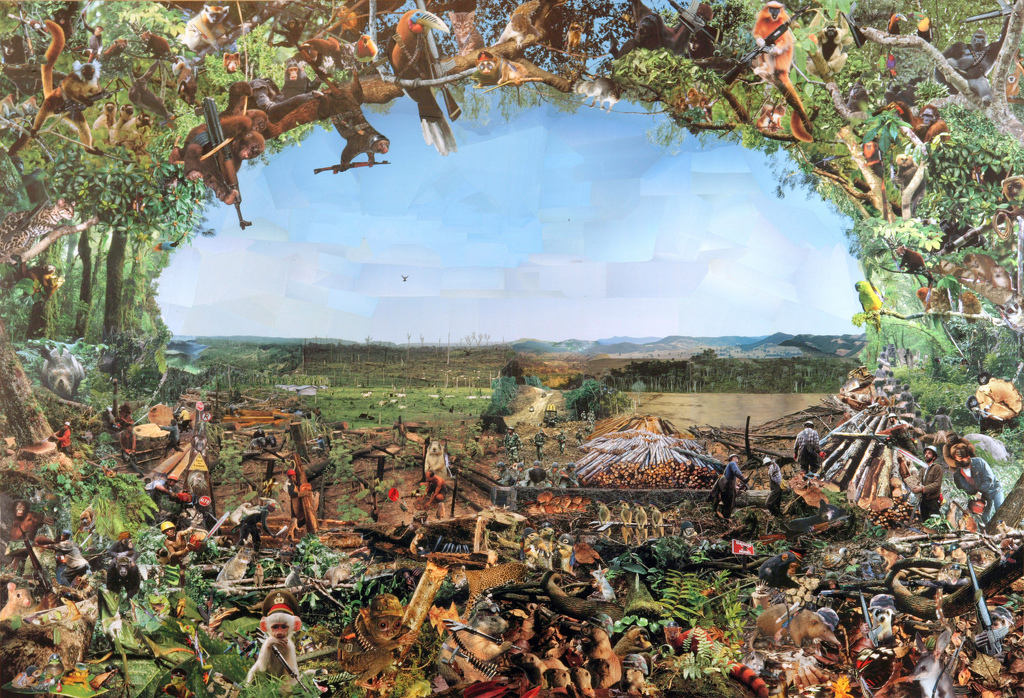
The last post of 2011, I thought I’d focus on the lighter side (that is to say, my brain is muddled by the lovely break from academia, so I don’t really feel like investing too much cerebral energy). Here, therefore, are the latest six cartoons… (see full stock of previous ‘Cartoon guide to biodiversity loss’ compendia here). May fewer species go extinct in 2012 than 2011…

Read the rest of this entry »


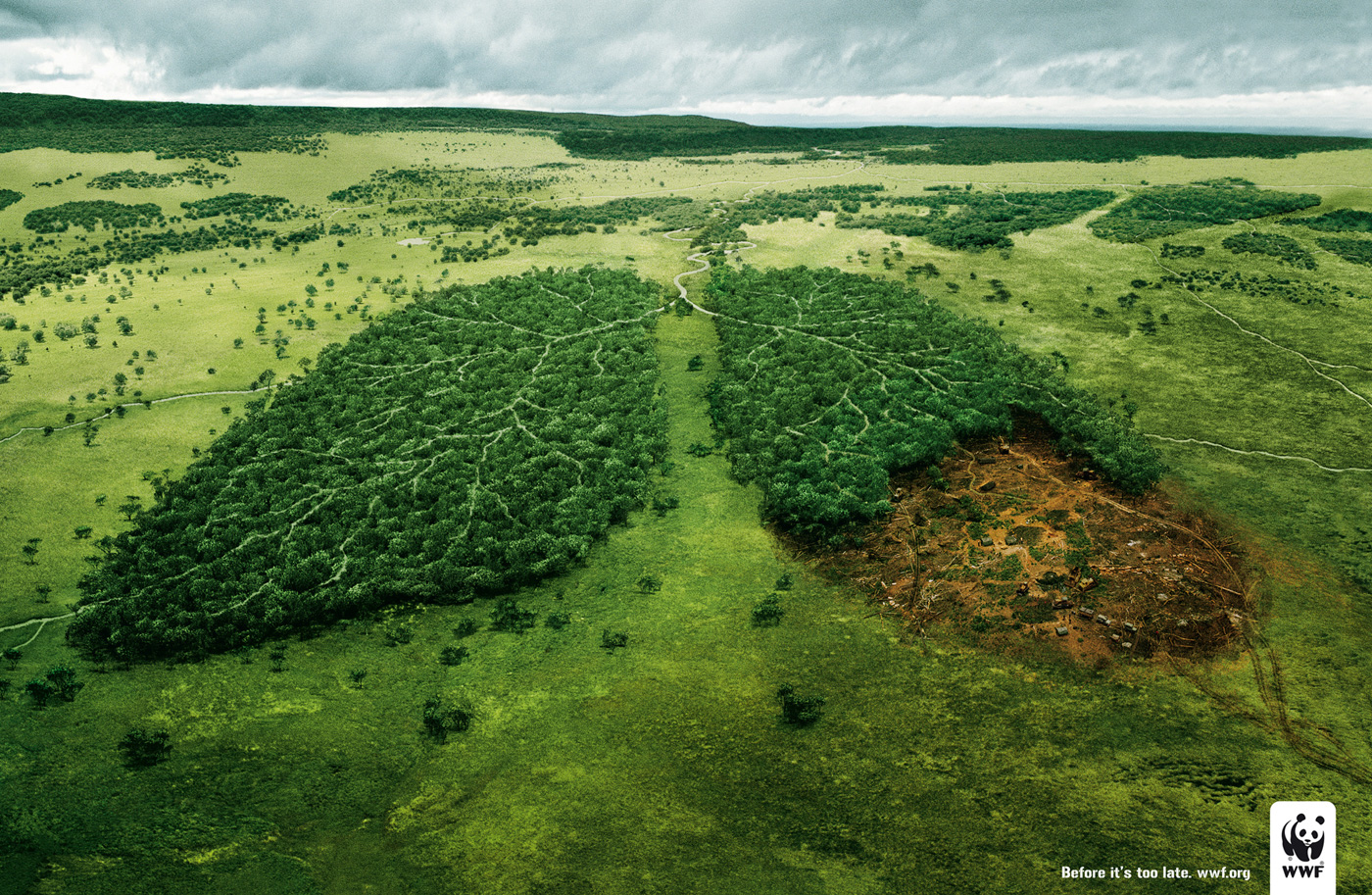
Slicing the second ‘lung of the planet’

12 12 2011

© WWF

Apologies for the slow-down in postings this past week – as many of you know, I was attending the International Congress for Conservation Biology in Auckland. I’ll blog about the conference later (and the stoush that didn’t really occur), but suffice it to say it was very much worthwhile.

This post doesn’t have a lot to do per se with the conference, but it was stimulated by a talk I attended by Conservation Scholar Stuart Pimm. Now, Stuart is known mainly as a tropical conservation biologist, but as it turns out, he also is a champion of temperate forests – he even sits on the science panel of the International Boreal Conservation Campaign.

I too have dabbled in boreal issues over my career, and most recently with a review published in Trends in Ecology and Evolution on the knife-edge plight of boreal biodiversity and carbon stores. That paper was in fact the result of a brain-storming session Navjot Sodhi and I had one day during my visit to Singapore sometime in 2007. We thought, “It doesn’t really seem that people are focussing their conservation attention on the boreal forest; how bad is it really?”.

Well, it turns out that the boreal forest is still a vast expanse and that there aren’t too many species in imminent danger of extinction; however, that’s where the good news ends. The forest itself is becoming more and more fragmented from industrial development (namely, forestry, mining, petroleum surveying and road-building) and the fire regime has changed irrevocably from a combination of climate change and intensified human presence. You can read all these salient features here.

So, back to my original thread – Stuart gave a great talk on the patterns of deforestation worldwide, with particular emphasis on how satellite imagery hides much of the fine-scale damage that we humans do to the world’s great forests. It was when he said (paraphrased) that “50,000 km2 of boreal forest is lost each year, but even that statistic hides a major checkerboard effect” that my interest was peaked. Read the rest of this entry »


Marine forests dropping off the edge

21 11 2011

This is probably a little late in terms of breaking news, but it’s good fodder for a blog post nonetheless.

I’ve done several posts now on the value (and threats) of marine macroalgae (seaweeds) – the last one hinted that a major paper was imminent regarding the fate of one of the world’s most important centres of macroalgae diversity in response to our rapidly changing climate: southern Australia.

Well, that paper has now come out in the eminent journal Current Biology headed by that crazy Aussie-Viking phycologist, Dr. Thomas Wernberg (byline here: Thomas was just awarded an Australian Research Council Future Fellowship and deserves many congratulations – not least for which the audacity to wear yellow budgie smugglers in public).

Entitled simply “Seaweed communities in retreat from ocean warming“, the short paper belies a hell of a lot of work examining over 60 years of herbarium records indicating MASSIVE shifts in the macroalgae community southwards on both the east and west coasts of Australia (see some media spots here). What do I mean by ‘massive’? Well, about 300 species on average (52 examined in most detail) shifted about 200 km south on the east coast (where warming has been most pronounced), and about 50 km south on the west coast. Read the rest of this entry »


Sustainable kangaroo harvests

10 11 2011

When I first started this blog back in 2008, I extolled the conservation virtues of eating kangaroos over cattle and sheep. Now I want to put my academic money where my mouth is, and do some kangaroo harvest research.

Thanks to the South Australia Department of Environment and Natural Resources  (DENR) and the commercial kangaroo harvest industry, in conjunction with the University of Adelaide, I’m pleased to announce a new scholarship for a PhD candidate to work on a project entitled Optimal survey and harvest models for South Australian macropods based at the University of Adelaide’s School of Earth and Environmental Sciences.

DENR is custodian of a long-term macropod database derived from the State’s management of the commercial kangaroo harvest industry. The dataset entails aerial survey data for most of the State from 1978 to present, annual population estimates, quotas and harvests for three species: red kangaroo (Macropus rufus), western grey kangaroo (Macropus fuliginosus), and the euro (Macropus robustus erubescens). Read the rest of this entry »


Mucking around the edges

8 11 2011

Barry Brook over at BraveNewClimate.com beat me to the punch regarding our latest paper, so I better get off my arse and write my take on things.

This post is about a paper we’ve just had accepted and has come out online in Biological Conservation called Strange bedfellows? Techno-fixes to solve the big conservation issues in southern Asia – and it’s likely to piss off a few people, and hopefully motivate others.

We wrote the paper for a special issue of essays dedicated to the memory of our mate and colleague, Navjot Sodhi, who died earlier this year. The issue hasn’t been released yet, but we have managed to get our paper out well before.

Like Navjot, the paper is controversial. Also like Navjot, we hope it challenges a few minds and pushes a few boundaries. We, as conservation biologists, must accept the fact that we have largely failed – biodiversity is still being lost at an alarming rate despite decades and decades of good science, sound evidence-based policy recommendations and even some rescues of species on the ‘brink’. Huge consumption rates, a population of 7 billion humans and counting, carbon emissions exceeding all worst-case scenarios, and greater disparity of wealth distribution have all contributed to this poor performance.

So what else can we do? Read the rest of this entry »


Follow the TREND

24 10 2011

A little clichéd, I know, but that’s what it says on the T-shirt.

It’s been an interesting week. Not only did I return to some much-needed field work (even if it was diving in the muck of Adelaide’s Outer Harbour with 40-cm visability), but it was also the week when the TREND project became ‘official’ with the launching of its website and its public début at the Earth Station festival in Belair National Park over the weekend.

I can see the thought bubbles already – what the hell is ‘TREND‘ (apart from the obvious)?

Admittedly a somewhat contrived acronym, TREND stands for TRends in ENvironmental monitoring and Decision making – a multi-million dollar project financed mainly by the state government of South Australia and the Terrestrial Ecosystem Research Network (TERN – I know, another bloody acronym that is weirdly similar to TREND; oh how we Aussies love our acronyms and initialisms!). Here’s the official summary:

“TREND provides a system of data collection across native ecosystems, primary production regions and marine environments. By assessing the impacts of various potential climatic and environmental shifts, TREND will provide an early warning system for changes in South Australia’s diverse environments and a lasting legacy of long-term monitoring, informed policy and proactive response to environmental change. Read the rest of this entry »


Twenty landmark papers in biodiversity conservation

13 10 2011

While I can’t claim that this is the first time one of my peer-reviewed papers has been inspired by ConservationBytes.com, I can claim that this is the first time a peer-reviewed paper is derived from the blog.

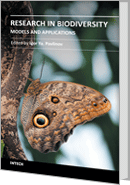
After a bit of a sordid history of review (isn’t it more and more like that these days?), I have the pleasure of announcing that our paper ‘Twenty landmark papers in biodiversity conservation‘ has now been published as an open-access chapter in the new book ‘Research in Biodiversity – Models and Applications‘ (InTech).

Perhaps not the most conventional of venues (at least, not for me), but it is at the very least ‘out there’ now and freely available.

The paper itself was taken, modified, elaborated and over-hauled from text written in this very blog – the ‘Classics‘ section of ConservationBytes.com. Now, if you’re an avid follower of CB, then the chapter won’t probably represent anything terribly new; however, I encourage you to read it anyway given that it is a vetted overview of possibly some of the most important papers written in conservation biology.

If you are new to the field, an active student or merely need a ‘refresher’ regarding the big leaps forward in this discipline, then this chapter is for you.

The paper’s outline is as follows: Read the rest of this entry »


Little left to lose: deforestation history of Australia

6 10 2011

© donkeycart http://ow.ly/6OSeX

I don’t usually do this, but I’m going to blog about a paper I’ve just had accepted in the Journal of Plant Ecology that isn’t yet out online. The reason for the early post is that the paper itself won’t appear until 2012 in a special issue of the journal, and I think the information needs to get out there.

First, a little history – In May this year I blogged about a workshop that I attended at Sun Yat-Sen University in Guangzhou, China at the behest of Fangliang He. The workshop (International Symposium for Biodiversity and Theoretical Ecology) was attended by big-wig overseas ecologists and local talent, and was not only informative, but a lot of fun (apart from the slight headache on the way home from a little too much báijiǔ the night before). More importantly, we  lǎo wài (老外) were paired with various students to assist with publications in progress, and I’m happy to say that for me, two of those have already produced fruit (one paper in review, another about to be submitted).

But the real reason for this post was the special issue of papers written by the invitees – I haven’t published in the journal before, and understand that it is a Chinese journal that has gone mainstream internationally now. I’m only happy to contribute to lifting its profile.

Given that I’m not a plant ecologist per se (although I’ve dabbled), I decided to write a review-like paper that I’ve been meaning to put together for some time now examining the state of Australia’s forests and the history of her deforestation and forest degradation. The reason I thought this was needed is that there is no single peer-reviewed resource one can turn to for a concise synopsis of the history of our country’s forest destruction. The stats are out there, but they’re buried in books, government reports and local-scale scientific papers. My hope is that my paper will be used as a general reference point for people wishing to get up to speed with Australia’s deforestation history.

The paper is entitled Little left to lose: deforestation and forest degradation in Australia since European colonisation, and it describes the general trends in forest loss and degradation Australia-wide, followed by state- and territory-level assessments. I’ve also included sections on plantations, biodiversity loss from deforestation and fragmentation, the feedback loop between climate change and deforestation, the history of forest protection legislation, and finally, a discussion of the necessary general policy directions needed for the country’s forests.

I’ve given a few titbits of the stats in a previous post, but let me just summarise some of the salient features here: Read the rest of this entry »


1 million hectares annually – the forest destruction of Indonesia

30 09 2011

© A. Kenyon http://goo.gl/UpG3m

Bill Laurance wrote a compelling and very dour piece in The Conversation this week. He asked for some ‘link love’, so I decided to reproduce the article here for ConservationBytes.com readers. Full credit to Bill and The Conversation, of course.

What comes to mind when you think of Indonesia?

For biologists like myself, Australia’s northern neighbour provokes visions of ancient rainforests being razed by slash-and-burn farmers, and endangered tigers and orangutans fleeing from growling bulldozers.

This reality is true, but there is also hope on the horizon.

Indonesia is a vast, sprawling nation, spanning some 17,000 islands. Among these are Java, Sumatra, half of New Guinea and much of Borneo.

Some of the planet’s most biologically rich and most endangered real estate is found on this archipelago.

Today, Indonesia is losing around 1.1 million hectares of forest annually. That’s an area a third the size of Belgium, bigger than Australia’s Wet Tropics World Heritage Area.

With forest loss now slowing in Brazil, Indonesia has the dubious distinction of being the world’s deforestation “leader”. No nation is destroying its forests faster.

In Sumatra, where I visited recently, the world’s biggest paper-pulp corporations are chopping down hundreds of thousands of hectares of native rainforest to make paper and cardboard.

Some of these corporations also fund aggressive lobbyists, such as World Growth in Washington DC [CJA Bradshaw’s note: see our piece on one particular patron of WG – Alan Oxley], to combat their critics and dissuade major retail chains from dropping their products. Read the rest of this entry »


Rise of the phycologists

22 09 2011

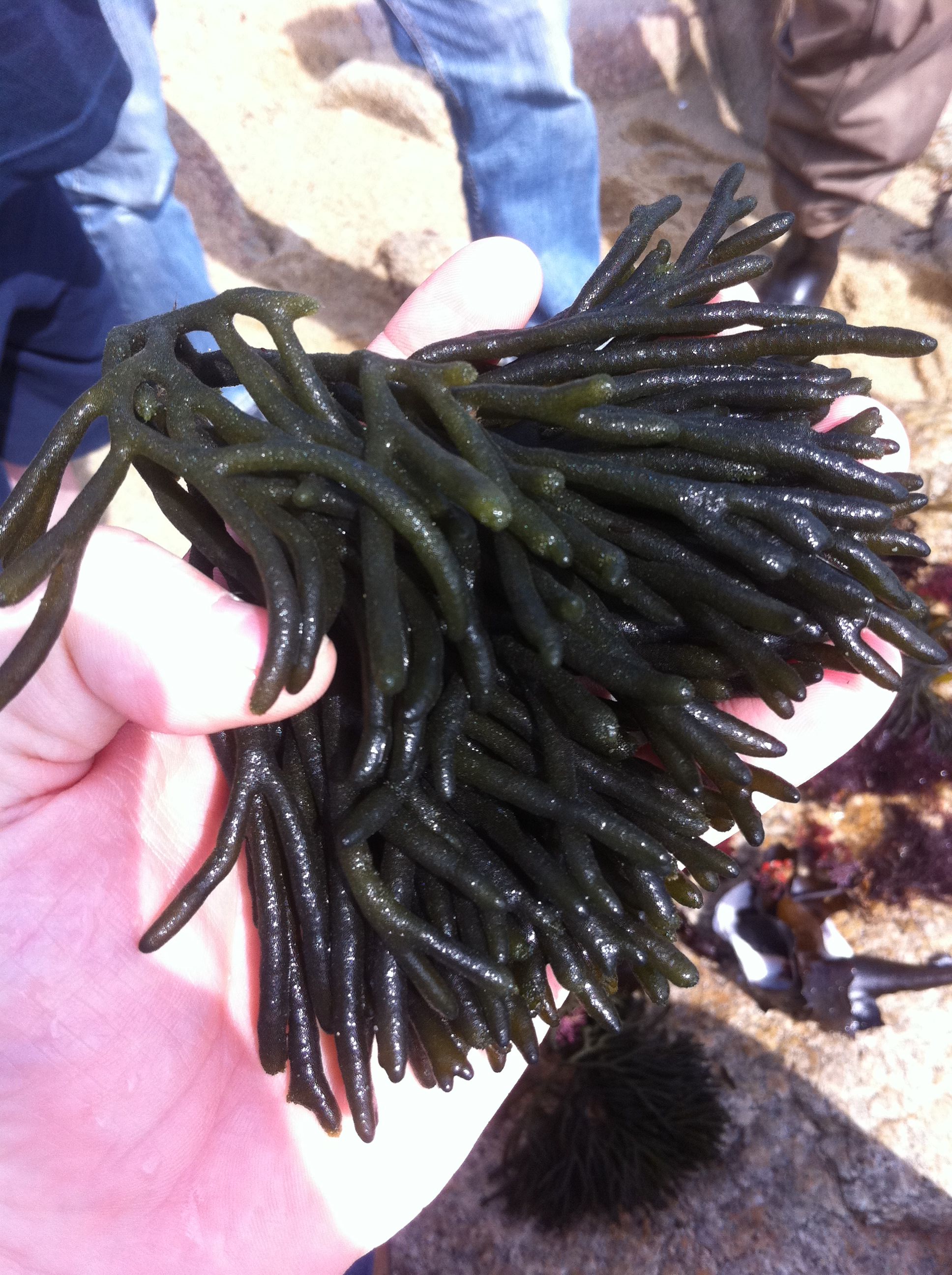
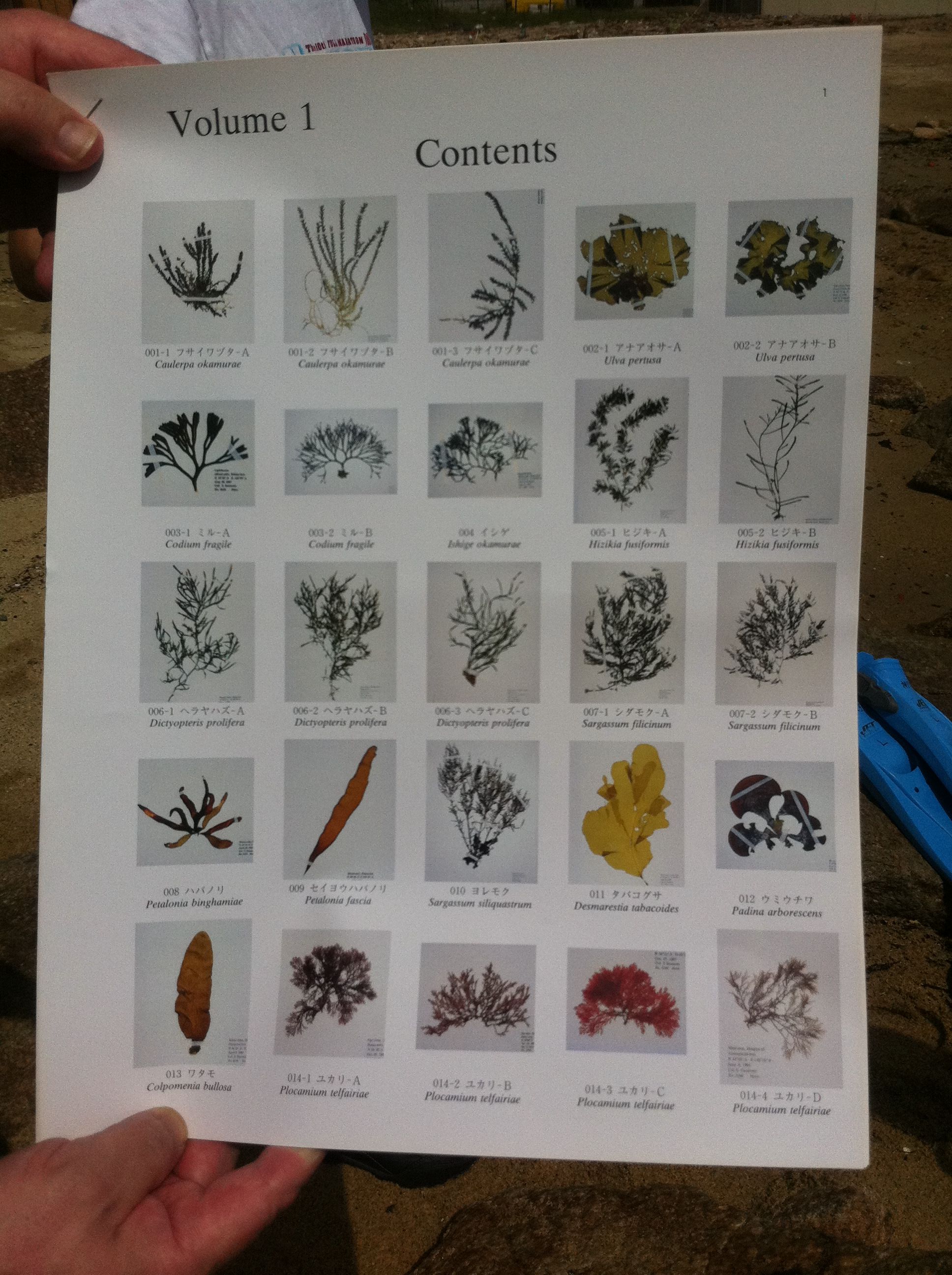
Dead man's fingers (Codium fragile) - © CJA Bradshaw

I’ve had an interesting week. First, it’s been about 6 years since I was last in Japan, and I love coming here; the food is exquisite, the people are fantastic (polite, happy, accommodating), everything works (trains, buses, etc.) and most importantly, it has an almost incredible proportion of its native forests intact.

But it wasn’t for forests that I travelled to Japan (nor the sumo currently showing on the guest-room telly where I’m staying – love the sumo): I was here for a calcareous macroalgae workshop.

What?

First, what are ‘macroalgae’, and why are some ‘calcareous’? And why should anyone in their right mind care?

Good questions. Answers: 1. Seaweeds; 2. Many incorporate calcium carbonate into their structures as added structural support; 3. Read on.

Now, I’m no phycologist (seaweed scientist), but I’m fascinated by this particular taxon. I’ve written a few posts about their vital ecological roles (see here and here), but let me regale you with some other important facts about these amazing species.

Some Japanese macroalgae - © CJA Bradshaw

There are about 12,000 known species of macroalgae described by phycologists, but as I’ve learnt this week, this is obviously a vast underestimate. For most taxa that people are investigating now using molecular techniques, the genetic diversity is so high and so geographically structured that there are obviously a huge number of ‘cryptic’ species within our current taxonomic divisions. This could mean that we’re out by up to a factor of 2 in the number of species in the world.

Another amazing fact – about 50 % of all known seaweed species are found in just two countries – Japan and Australia (hence the workshop between Japanese and Australian phycologists). Southern Australia in particular is an endemism hotspot.

Ok. Cool. So far so good. But so what? Read the rest of this entry »


Cartoon guide to biodiversity loss XIII

17 08 2011

The latest six cartoons… (see full stock of previous ‘Cartoon guide to biodiversity loss’ compendia here).

Read the rest of this entry »