 A couple of years ago, James Hansen visited Adelaide and I was fortunate enough to attend dinner with him and his lovely wife Anniek. A truly inspiring scientist in all respects. His academic track record is unbeatable, and he puts his money where his mouth is in terms of climate change activism.
In a similar vein, but something I’m not used to publishing on Conservation Bytes, my colleague Alejandro Frid requested I publish his essay here. I’m a firm advocate for standing up for evidence-based policy, and Alejandro (inspired by James Hansen), shows us how it’s done.
—
I am addressing this letter to colleagues with research careers because I am compelled to share what I learned recently by crossing a new threshold. For years I have been talking and writing about the climate change crisis. As intellectually rewarding and therapeutic as it has been, these letters to government, meetings with Members of [the Canadian] Parliament, and articles for conservation-minded audiences have accomplished nothing of substance.
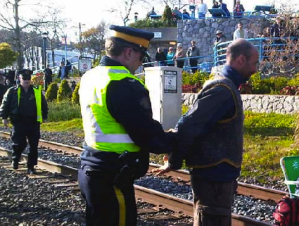
Others feel similarly. Prominent academics, fed up with governments that ignore science and heed the priorities of corporations, have turned to civil disobedience. James Hansen, a senior climate scientist with NASA’s Goddard Institute for Space Studies, led by example last year when he got himself arrested in front of the USA’s Whitehouse to protest the proposed Keystone Pipeline that would carry oil from the Alberta Tar Sands to the USA. That was his third arrest in three years; the previous two involved civil disobedience against the mining of coal, a huge contributor to greenhouse gases.
In the wake of Hansen’s arrests, on 05 May 2012, Mark Jaccard—a prominent economist, IPCC member, and professor at the Energy and Materials Research Group of Simon Fraser University—got himself arrested in White Rock, British Columbia, for blocking a coal train carrying US coal for export to China via British Columbia ports. There were 12 others with Jaccard, among them a man in his 80s, several men in their 60s and 70s, and a few youngsters like myself and my good friend Lynne Quarmby. Lynne happens to be chair of the Department of Molecular Biology at Simon Fraser University.
Shortly before the arrest, as we sat on the tracks, I told Jaccard that I had been teetering on the decision to come, but his announcement to participate sealed my decision. Jaccard replied that, given what he knew about the climate crisis and the consequences of inaction, it was impossible for him to not be here. He was echoing sentiments shared by all 13 of us on the tracks. Later, as we were released from jail, Jaccard wondered out loud whether the arrest would affect his ability to travel for work. Then he said something to the effect that, “You can forever come up with excuses, or you can get real and just do it.”
Read the rest of this entry »
-34.917731
138.603034
 I’ve written before about how we should all be substantially more concerned about the future than what we as a society appear to be. Climate disruption is society’s enemy number one, especially considering that: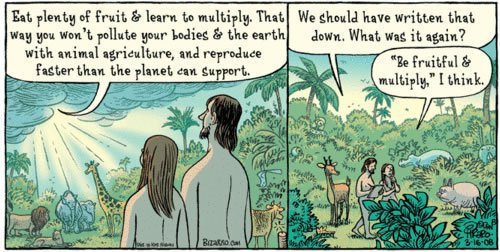


 I have, on many occasions, been faced with a difficult question after giving a public lecture. The question is philosophical in nature (and I was never very good at philosophy – just ask my












Rocking the scientific boat
14 12 2012© C. Simpson
One thing that has simultaneously amused, disheartened, angered and outraged me over the past decade or so is how anyone in their right mind could even suggest that scientists band together into some sort of conspiracy to dupe the masses. While this tired accusation is most commonly made about climate scientists, it applies across nearly every facet of the environmental sciences whenever someone doesn’t like what one of us says.
First, it is essential to recognise that we’re just not that organised. While I have yet to forget to wear my trousers to work (I’m inclined to think that it will happen eventually), I’m still far, far away from anything that could be described as ‘efficient’ and ‘organised’. I can barely keep it together as it is. Such is the life of the academic.
More importantly, the idea that a conspiracy could form among scientists ignores one of the most fundamental components of scientific progress – dissension. And hell, can we dissent!
Yes, the scientific approach is one where successive lines of evidence testing hypotheses are eventually amassed into a concept, then perhaps a rule of thumb. If the rule of thumb stands against the scrutiny of countless studies (i.e., ‘challenges’ in the form of poison-tipped, flaming literary arrows), then it might eventually become a ‘theory’. Some theories even make it to become the hallowed ‘law’, but that is very rare indeed. In the environmental sciences (I’m including ecology here), one could argue that there is no such thing as a ‘law’.
Well-informed non-scientists might understand, or at least, appreciate that process. But few people outside the sciences have even the remotest clue about what a real pack of bastards we can be to each other. Use any cliché or descriptor you want – it applies: dog-eat-dog, survival of the fittest, jugular-slicing ninjas, or brain-eating zombies in lab coats.
Read the rest of this entry »
Share:
Comments : 10 Comments »
Tags: comments, conspiracy, peer review, publishing, referees, responses, scientific process, Scientist
Categories : climate change, conservation, conservation biology, environmental science, fragmentation, habitat loss, minimum viable population, mvp, research, science, scientific publishing, scientific writing